
Traditional farmhouse interior design is rooted in practical rural buildings, honest natural materials, and rooms made for everyday comfort. Rather than applying a few rustic accessories, begin by noticing how the house is built: its proportions, circulation, windows, floors, and surviving details. This approach to traditional farmhouse architecture interior design creates a home that feels warm, useful, and connected to its setting.
Architectural context should lead decorating decisions. A beam, brick chimney, plank floor, or deep window opening can suggest appropriate colors, furniture scale, and finishes more effectively than a trend-driven shopping list. The sections below explore defining architectural features, coordinated materials and colors, room-by-room planning, and the finishing layers that make a farmhouse home feel authentic and livable.
Core Features of Traditional Farmhouse Architecture
Traditional farmhouses are often recognized by straightforward forms and functional layouts. Pitched roofs, practical routes between entry, kitchen, dining, and utility areas, substantial windows, and plainly expressed structural elements all reflect a building designed around daily work and family life. Inside, exposed beams, timber framing, masonry fireplaces, wide-plank surfaces, and generous openings can establish a strong starting point for the entire interior.
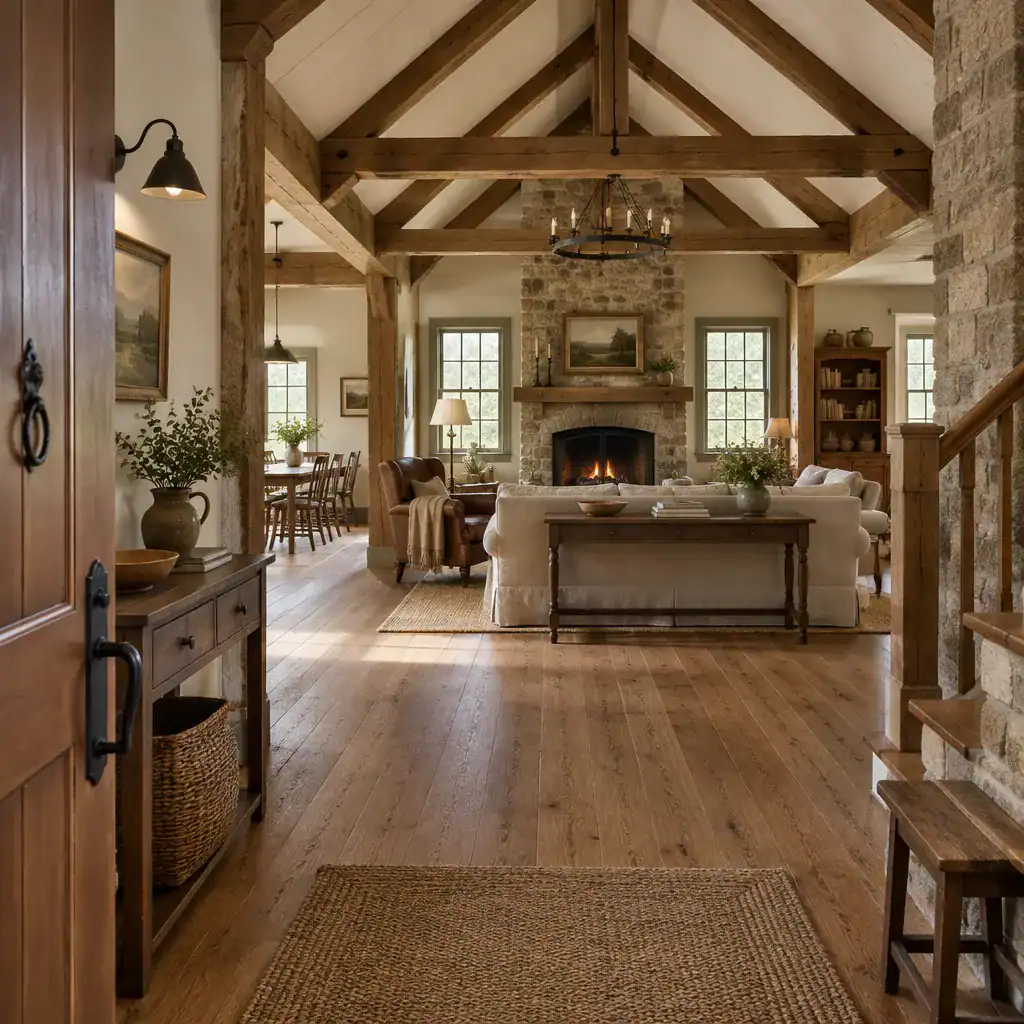
Let these existing elements influence the palette. Warm timber may call for softened plaster walls and matte metal hardware, while old brick or stone can support quieter upholstery and simpler furnishings. Authentic character comes from construction, age, proportion, and materials that belong to the building; applied faux beams, artificially distressed finishes, or decorative signs alone do not create the same result.
When renovating, preserve distinctive original details where their condition, safety, budget, and local requirements allow. Repairing old floorboards, retaining a modest mantel, or exposing sound framing can add more depth than replacing everything with new “farmhouse” products. If an original feature cannot remain, use a replacement that respects the room’s scale and material logic rather than creating an imitation focal point.
Materials, Colors, and Textures for a Farmhouse Interior
A restrained palette helps natural materials remain the focus. Start with muted neutrals such as warm white, cream, soft greige, weathered taupe, clay, olive, or faded blue, then use deeper brown, charcoal, or black in small, intentional amounts. In traditional farmhouse architecture interior design, contrast works best when it defines a useful element, such as dark window trim against pale plaster or a blackened metal light fixture above a wood table, rather than when every surface demands attention.
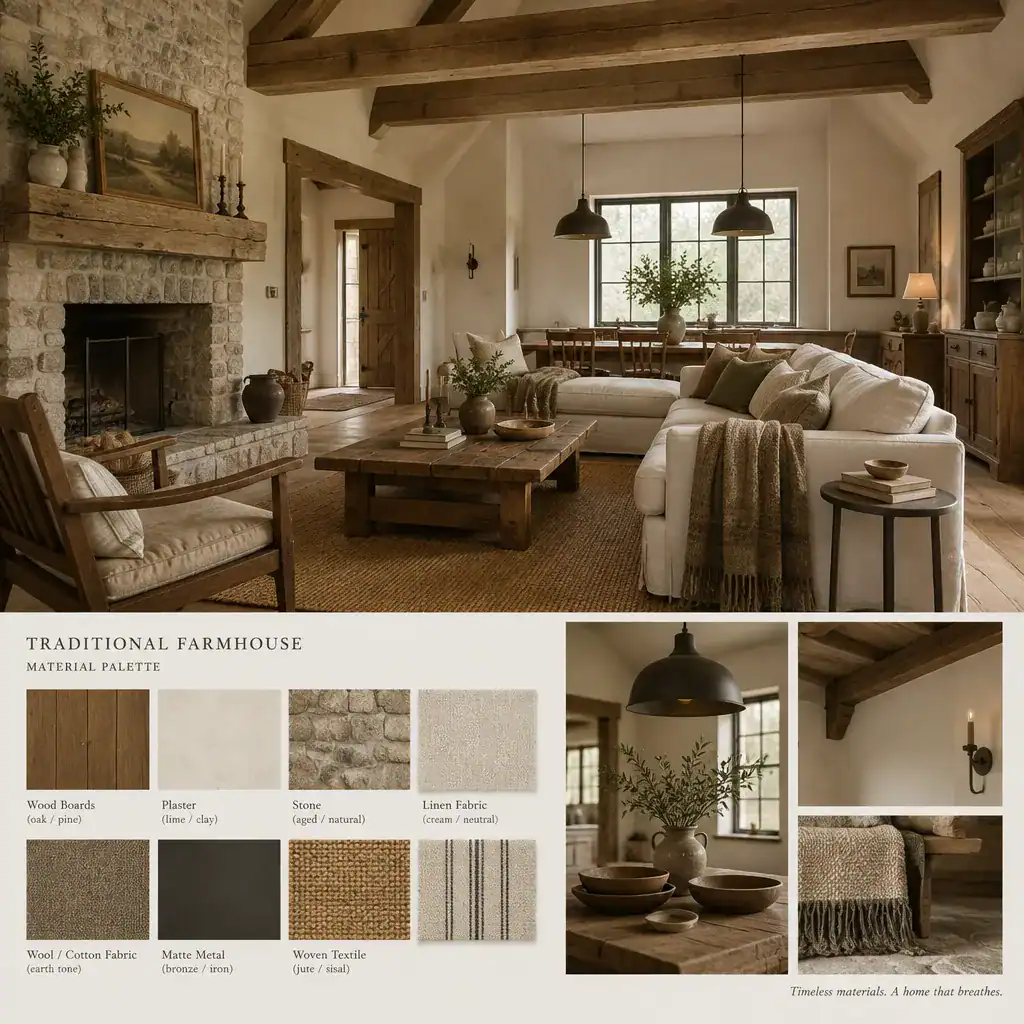
Combine wood, stone, brick, limewashed or painted plaster, aged-looking metal, and woven textiles with balance. Wood can bring visual warmth through floors, tables, shelving, and ceiling details; masonry adds weight around a hearth or floor transition; linen, cotton, wool, and jute soften the harder surfaces. These materials do not need to match perfectly. Gentle variation in grain, weave, and tone gives rooms a collected, settled quality.
Texture is especially valuable when colors are quiet. A nubby wool throw, woven shade, handmade ceramic vessel, and brushed metal sconce can make a neutral room feel layered without making it crowded. Always view paint, tile, flooring, and fabric samples in the actual room at different times of day. Sun direction, window size, and artificial light can shift undertones dramatically.
Room-by-Room Interior Design Ideas
Living areas should feel comfortable first. Arrange seating for conversation and daily use, include closed storage for clutter, and add natural texture through wood, woven fibers, and substantial textiles. A fireplace, masonry wall, original beam, or broad window can serve as the architectural focal point; let furniture support that feature instead of competing with it.
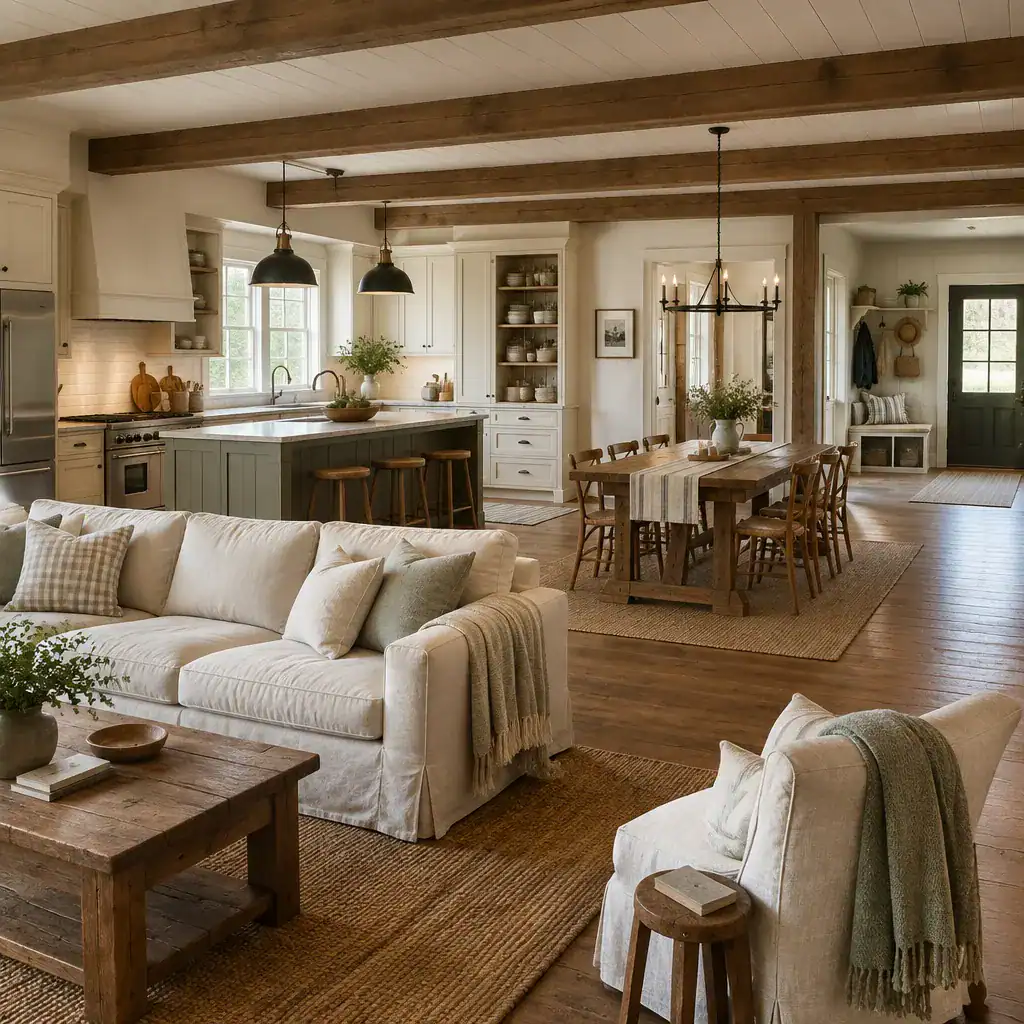
In kitchens and dining areas, prioritize durable work surfaces, sensible work zones, and a table-centered layout that welcomes both meals and projects. Traditional cabinetry, open shelving used selectively, wood or stone counters, and sturdy hardware can feel appropriate when chosen for function. Keep frequently used items within reach, but avoid turning every shelf into a decorative display.
Bedrooms benefit from simple furniture, breathable-looking bedding, and calm colors that encourage rest. Choose understated checks, stripes, florals, or solid fabrics instead of mixing many bold patterns. In entryways and utility spaces, farmhouse practicality matters most: durable flooring, wall hooks, a bench, baskets, and easy-to-clean storage create an orderly landing place for shoes, outerwear, and everyday supplies.
Furniture, Lighting, and Decor That Support the Architecture
Choose furniture with simple profiles, visible craftsmanship, and proportions suited to the room. A solid wood dining table, comfortably upholstered sofa, painted cupboard, or straightforward spindle chair can add character without making the interior feel themed. Leave enough open space for circulation, particularly in older homes where rooms may be compact or doorways narrow.
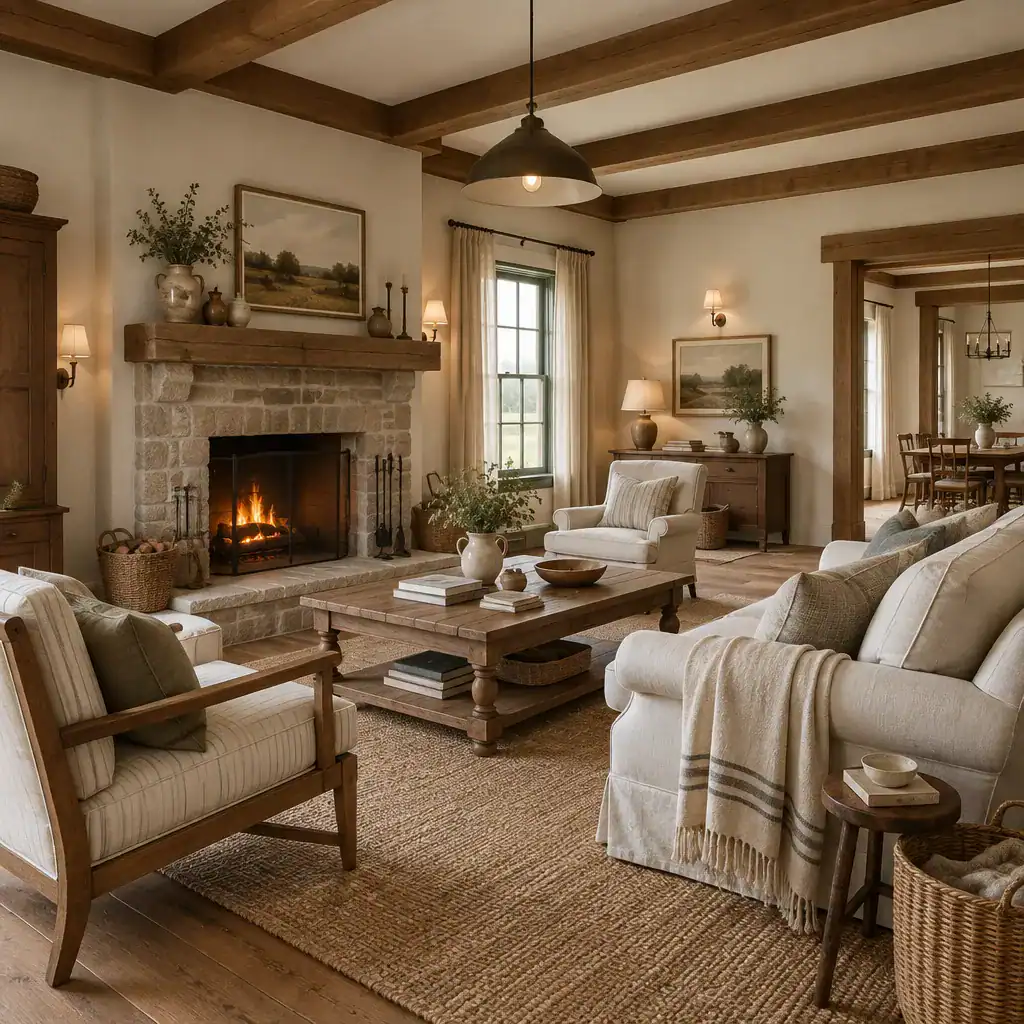
Layer lighting for comfort and usefulness. Ambient fixtures provide general illumination, task lighting supports cooking, reading, and work, and accent lights draw attention to art, shelving, or architectural texture. Select fixtures with finishes and forms that complement the house, such as simple pendants, shaded table lamps, or modest wall sconces, rather than oversized statement pieces that overwhelm the space.
Use linens, ceramics, baskets, framed artwork, and functional accessories as quiet finishing layers. A few well-chosen objects with useful or personal meaning will look more natural than a coordinated collection of rustic merchandise. Avoid excessive word signs, heavy distressing, and matching furniture sets; they can make traditional farmhouse architecture interior design feel staged instead of genuinely lived in.
How to Balance Authentic Character with Modern Comfort
First, separate the features that define the home’s identity from the features that can change. Original timber, a masonry hearth, established proportions, and distinctive millwork may be worth protecting, while worn-out storage, poor lighting, inefficient appliances, and impractical finishes can be updated for modern life. This distinction allows comfort improvements without erasing the building’s personality.
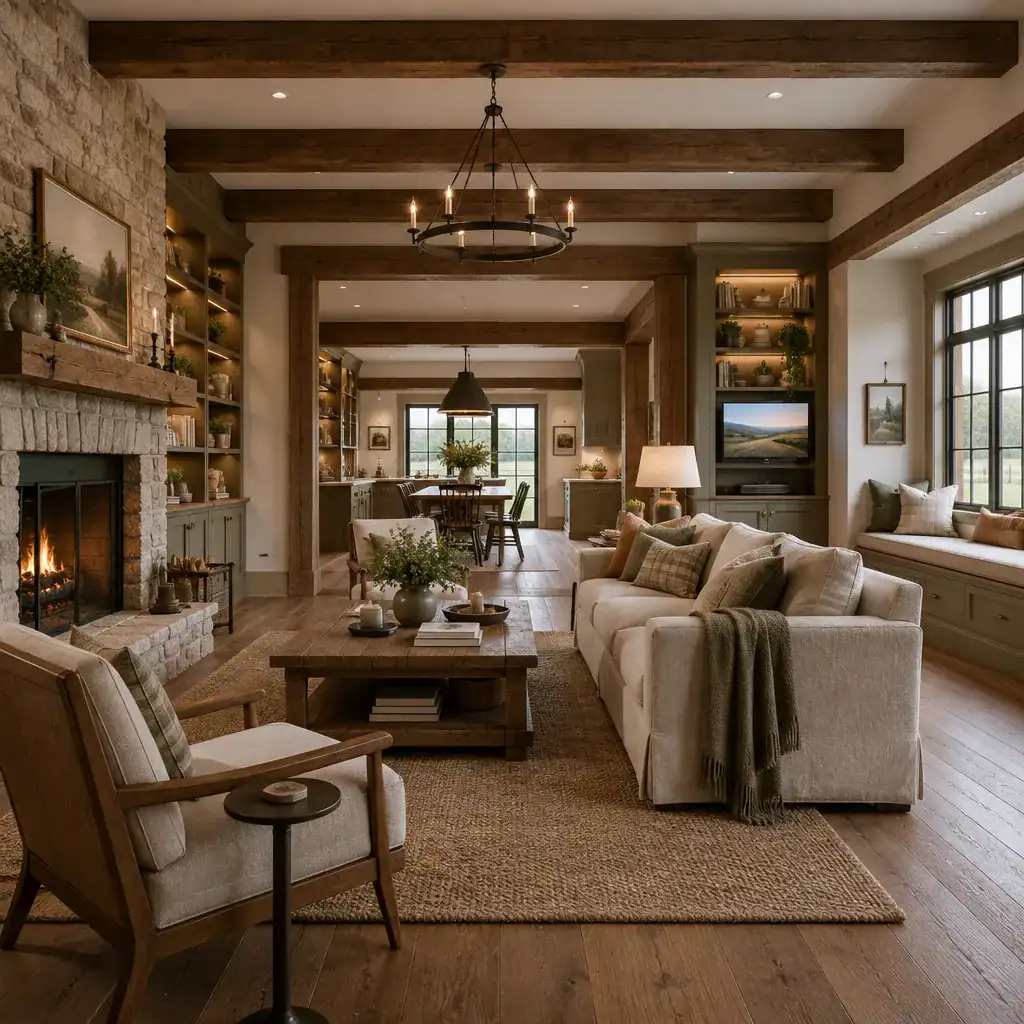
Modern conveniences are easiest to integrate when they are planned discreetly. Add practical built-in or freestanding storage, durable surfaces in high-use zones, efficient layered lighting, and intentional locations for charging, speakers, and screens. Conceal technology where possible, or choose finishes that visually recede, so it does not become the dominant feature of a traditionally detailed room.
Create continuity by repeating a few materials, colors, and forms across rooms. For example, the same warm white, wood tone, or blackened metal can appear in different ways throughout the home without making every room identical. Review the house as a whole: each addition should support the architecture, daily routines, and calm visual rhythm central to traditional farmhouse architecture interior design.
A successful traditional farmhouse interior begins with the house itself and the way its occupants live each day. Natural materials, restrained colors, functional furniture, layered lighting, and intentional decor work best when they respond to the existing architecture. Make selective, context-sensitive choices instead of adding every farmhouse trend at once, and the result can be both historically sympathetic and comfortably current.