
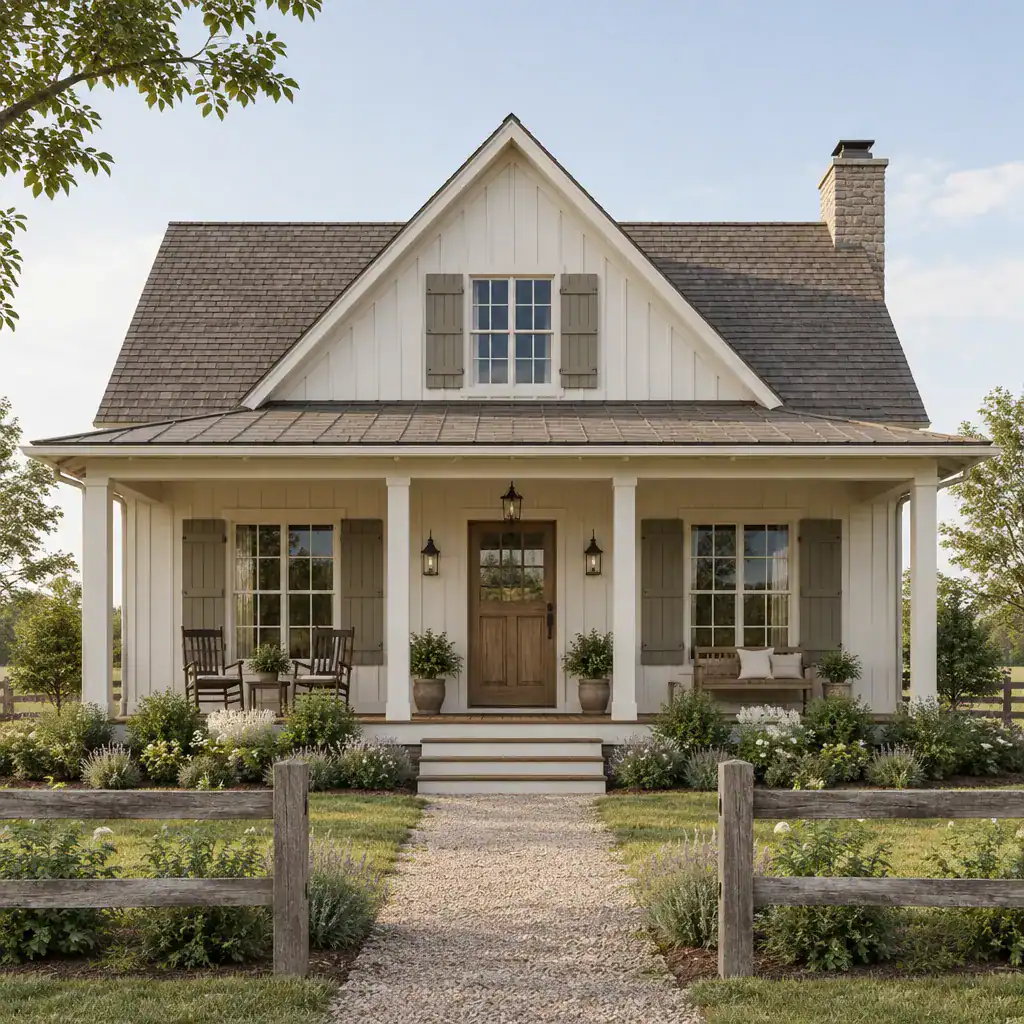
Traditional farmhouse architecture is a design language shaped by practical form, familiar materials, comfortable proportions, and an easy connection to everyday rural living. Rather than relying on elaborate decoration, it draws its character from straightforward massing, welcoming entries, useful porches, pitched rooflines, and finishes that gain warmth through age and texture.
The appeal of this style is not limited to the exterior. Traditional farmhouse architecture works best when the interior continues the same sense of utility and comfort, allowing the home’s structure, materials, furnishings, and daily routines to feel connected. This overview explores that relationship, from the architectural foundation to interior choices and modern interpretations that retain a farmhouse identity.
Traditional Farmhouse Architecture Interior
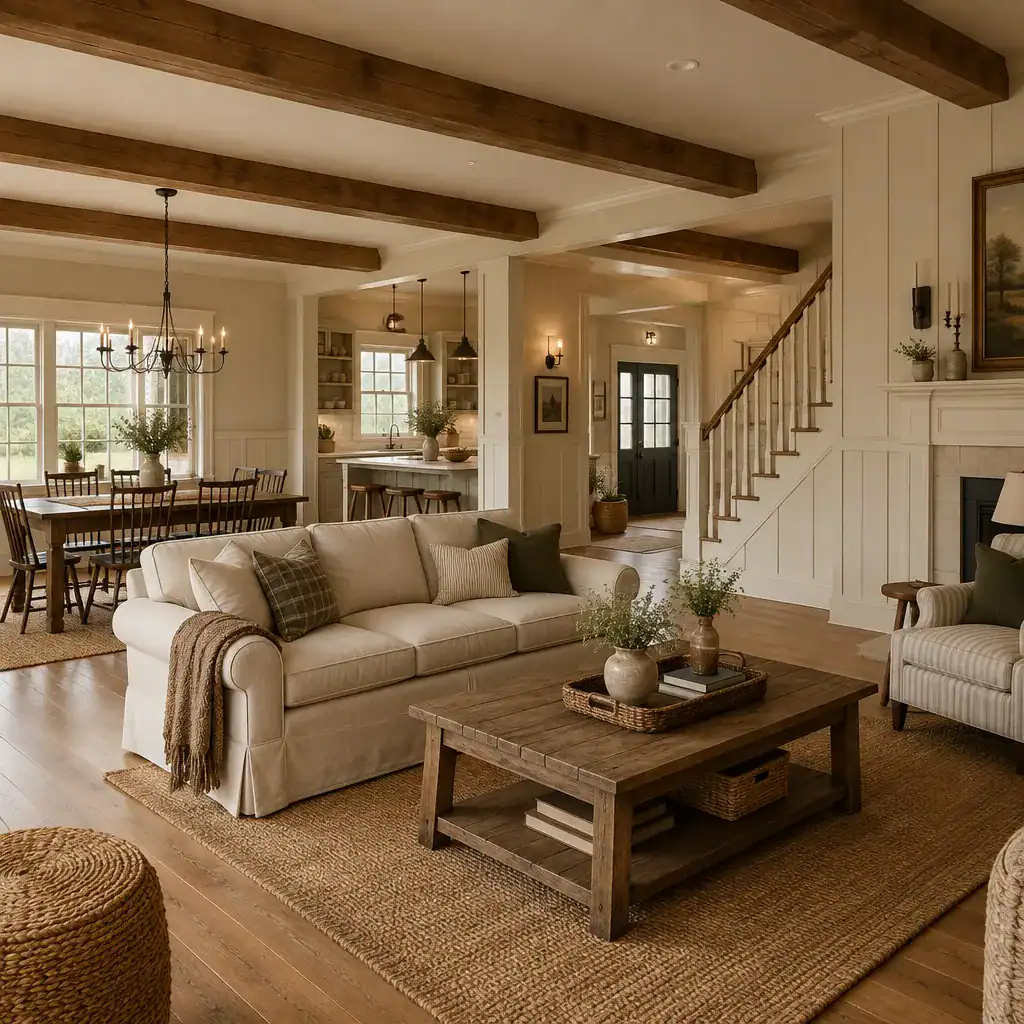
A traditional farmhouse architecture interior should feel like a natural extension of the building rather than a separate decorative theme. Simple room shapes, clear circulation, natural light, and durable-looking surfaces help create an atmosphere that is open, settled, and easy to live in. The goal is comfortable usefulness, not excessive formality.
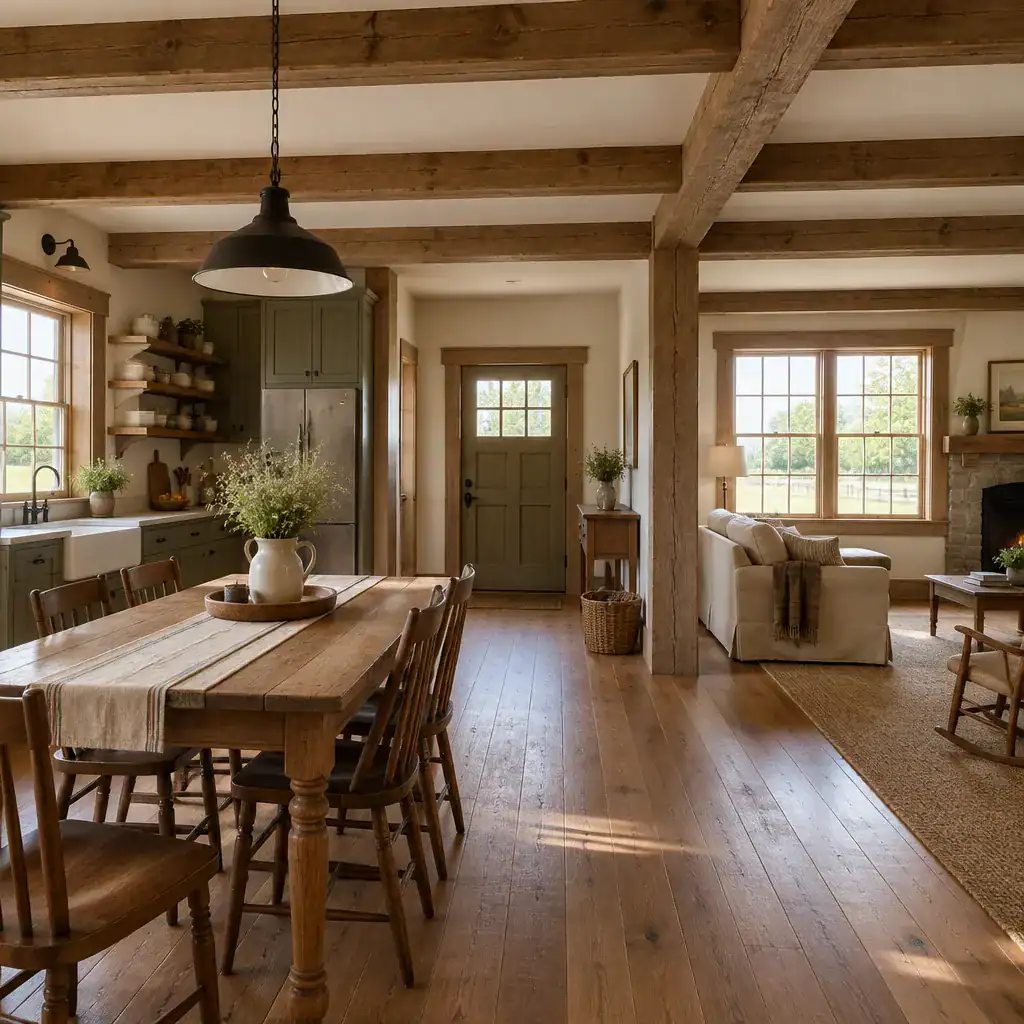
Architectural elements can establish this connection immediately. Visible ceiling beams, painted wood trim, plank-style flooring, window seats, pantry-style storage, and substantial doorways can give rooms a grounded quality. Even in a newer home, these details are most convincing when they support the scale and layout of the house instead of appearing as isolated rustic additions.
Light also plays an important role. Generous windows, glazed doors, and softly filtered daylight emphasize natural finishes and make shared spaces feel inviting. Layered lighting can maintain that warmth after dark, combining practical ceiling fixtures with table lamps, wall lights, and focused task lighting where it is needed.
Traditional Farmhouse Architecture Interior Design
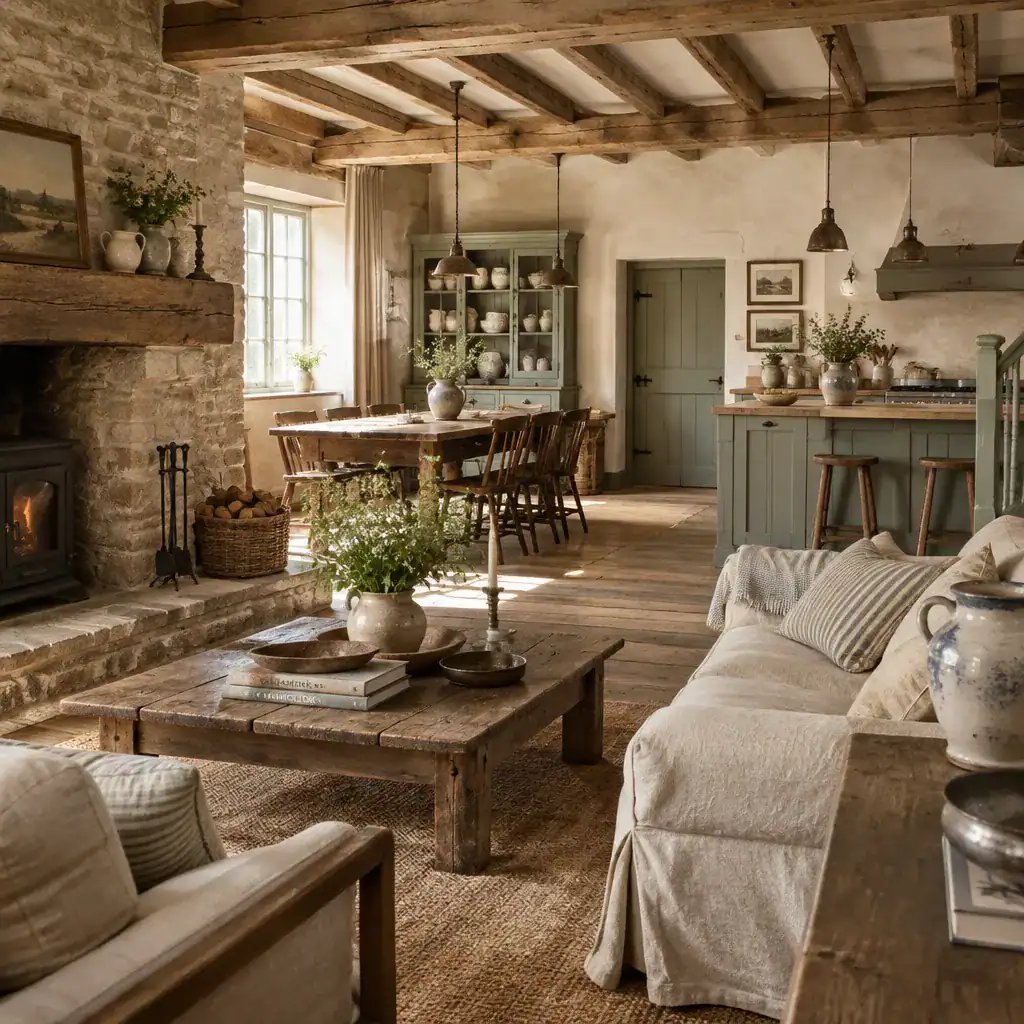
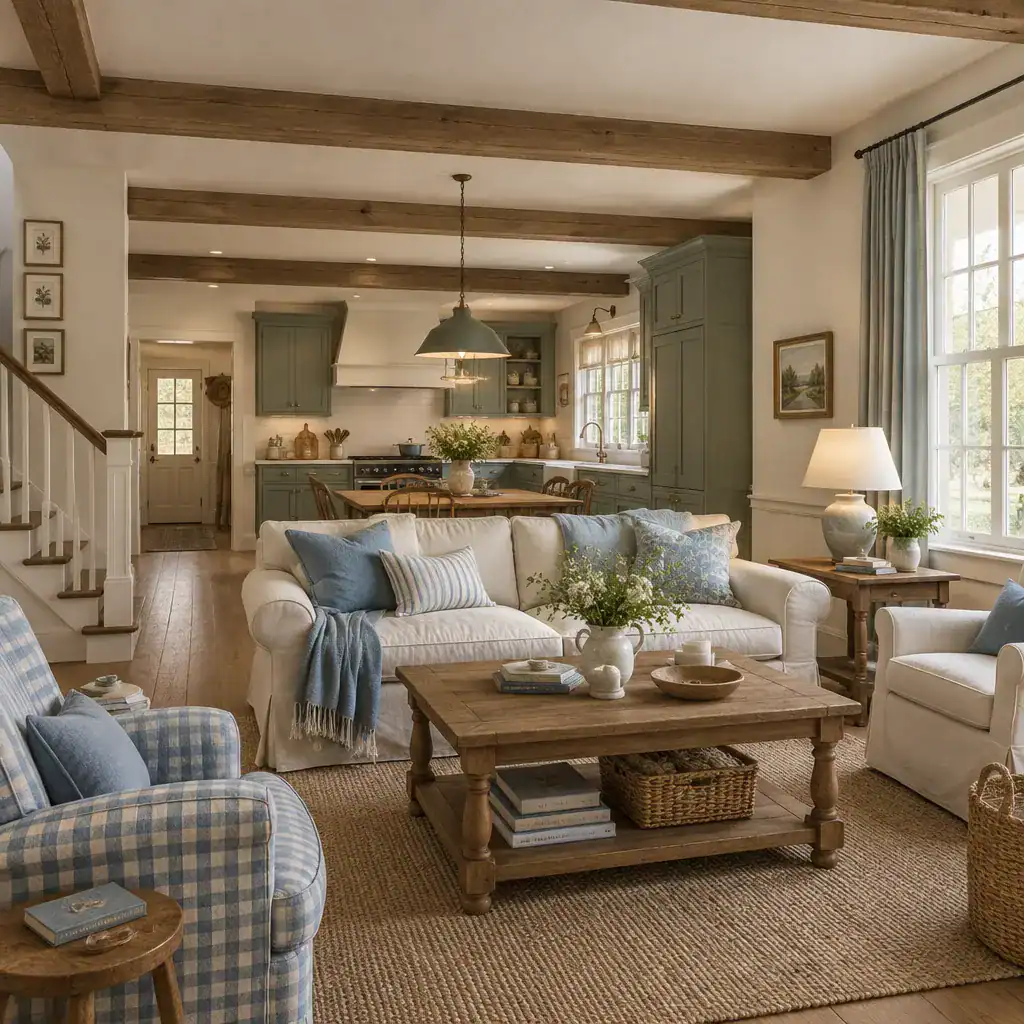
Traditional farmhouse architecture interior design begins with continuity. Layout, materials, colors, lighting, details, and furniture should all support the same calm and practical direction. A room does not need to be filled with antique-looking pieces to feel authentic; it needs a coherent relationship to the house around it.
Material choices often set the tone. Wood, painted cabinetry, brick, stone, linen, cotton, wool, and aged metals add texture without making a space feel overly decorated. Combining a few honest materials is usually more effective than layering many distressed finishes. For example, warm wood floors, simple painted walls, a ceramic tile backsplash, and aged brass hardware can create depth while keeping the setting composed.
A restrained color palette helps the architecture remain central. Soft whites, warm creams, muted greens, dusty blues, charcoal, and natural wood tones work well because they support light and texture. Stronger colors can still be used in small, intentional moments, such as a painted pantry door, an upholstered chair, or patterned textiles.
Furniture should favor simple silhouettes and genuine comfort. A substantial dining table, slipcovered seating, wooden side chairs, open shelving, and practical storage furniture can feel appropriate when their scale suits the room. Avoid turning every surface into a display; negative space allows architectural details and everyday materials to stand out.
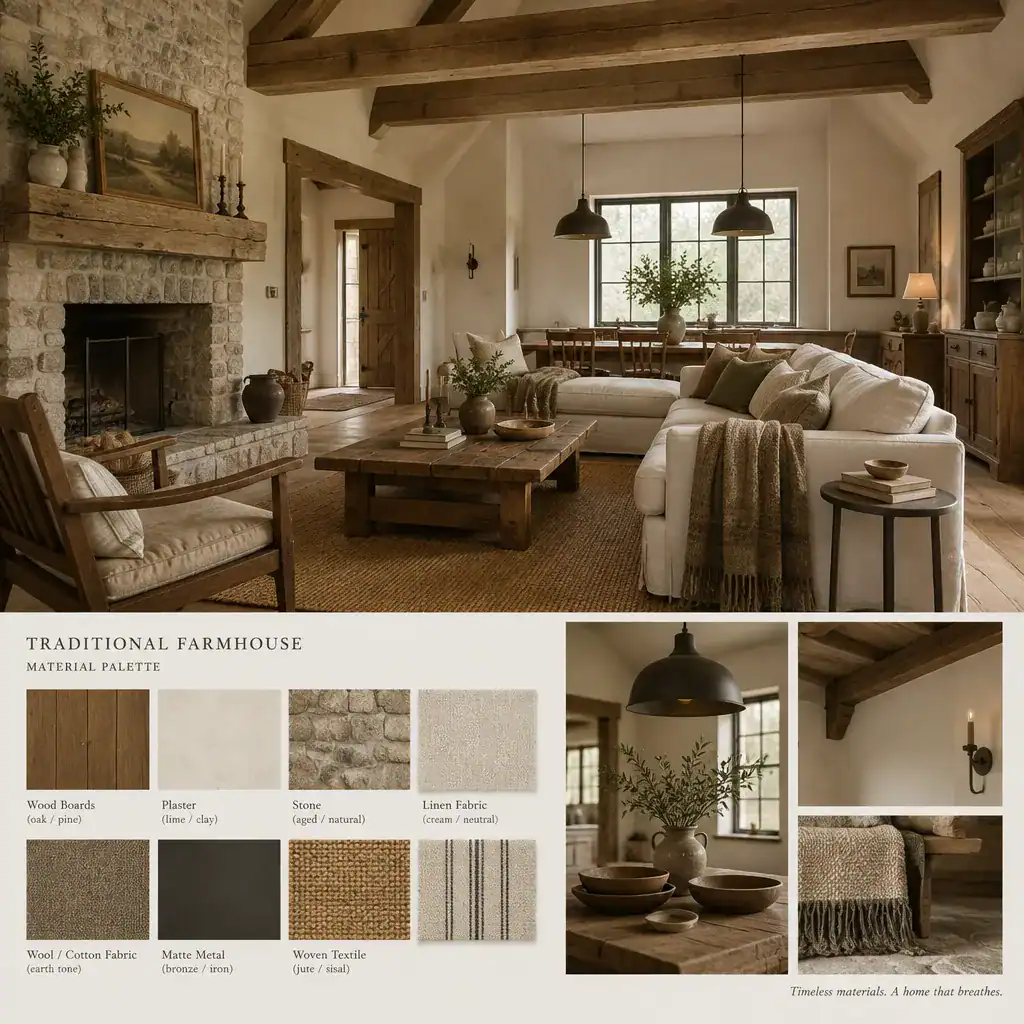
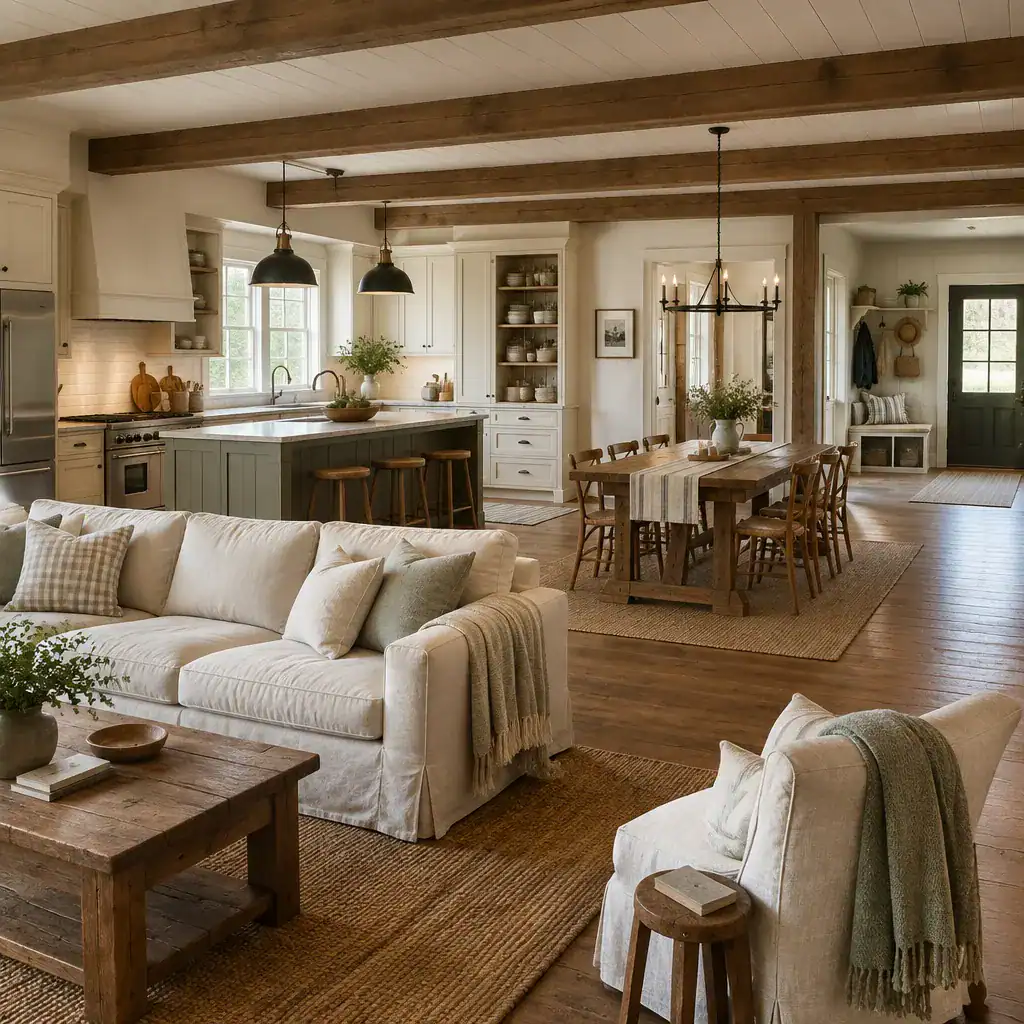
Traditional Farmhouse Interior
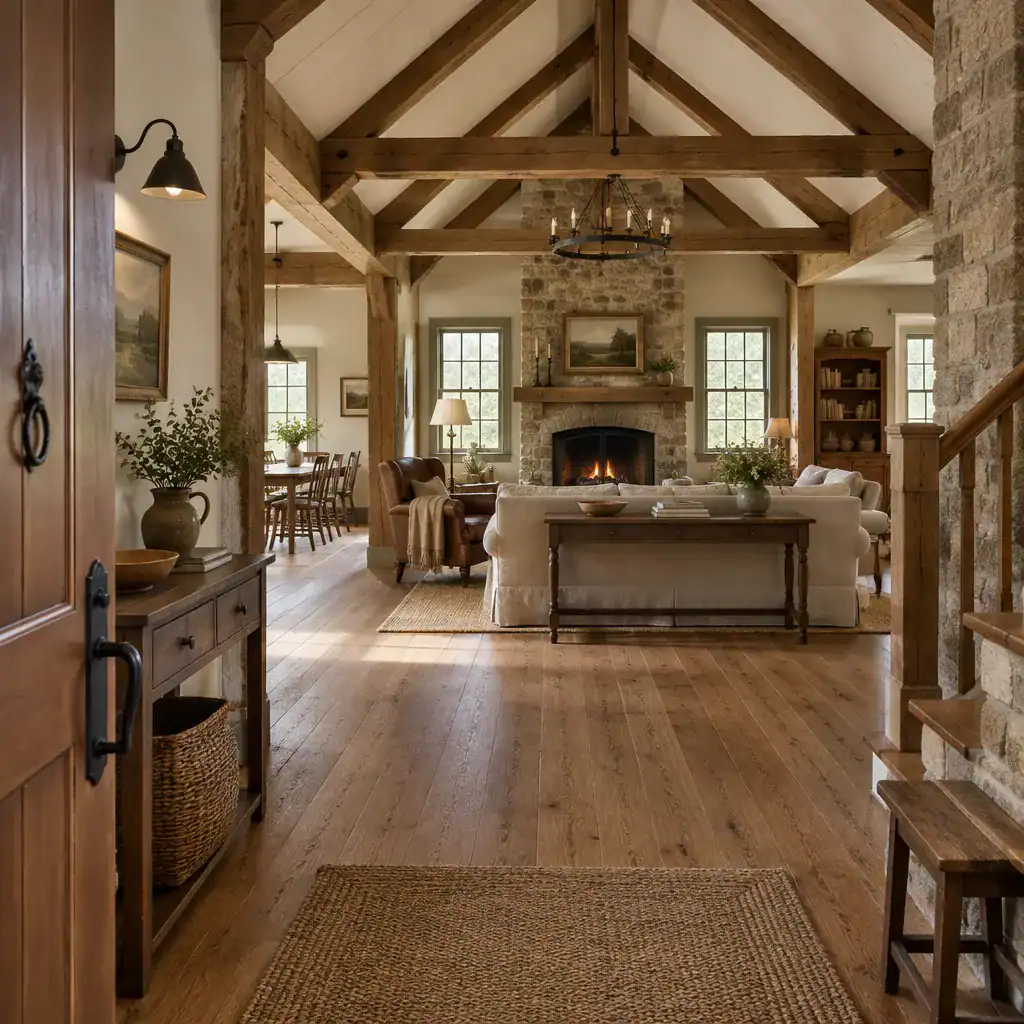
The traditional farmhouse interior is defined as much by experience as by appearance. It should support gathering, working, resting, and moving through the home with ease. Shared living areas often benefit from an intuitive relationship between kitchen, dining, and sitting spaces, while quieter rooms can retain a more enclosed and restful feeling.
Practical features contribute to the atmosphere. A mudroom bench, hooks near an entry, a deep utility sink, a freestanding cupboard, built-in shelves, or concealed storage can make the home feel prepared for daily life. These elements do more than reduce clutter; they reinforce the useful, unpretentious character that makes farmhouse spaces welcoming.
Structural details can be emphasized without becoming theatrical. A beam, framed opening, exposed brick section, wide baseboard, or paneled interior door may provide visual rhythm and a sense of permanence. When original details are absent, carefully selected millwork and finishes can suggest a similar warmth, provided they are proportionate to the room and consistent throughout the home.
Comfort should remain visible. Textiles, baskets, books, ceramics, and well-used wood surfaces add life to a farmhouse interior. The most successful rooms tend to look collected over time while remaining orderly enough for everyday routines.
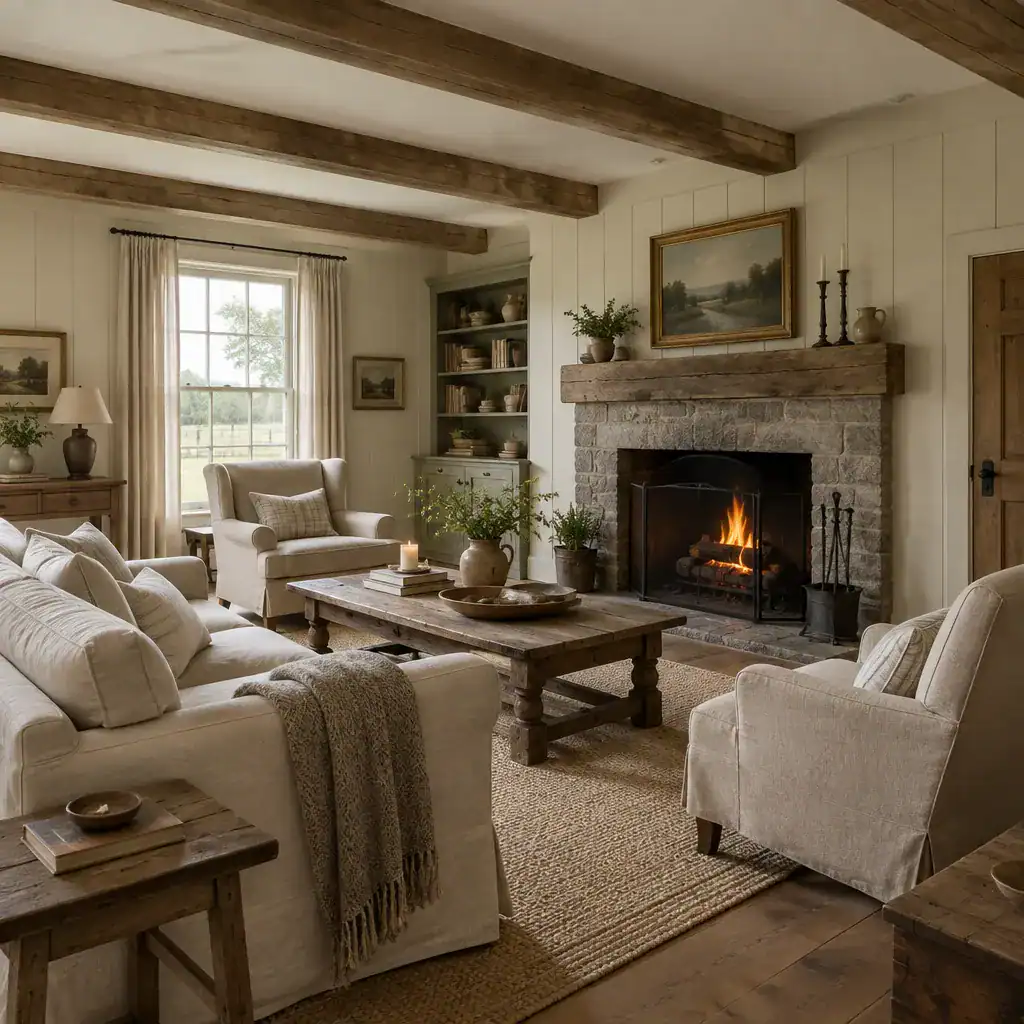
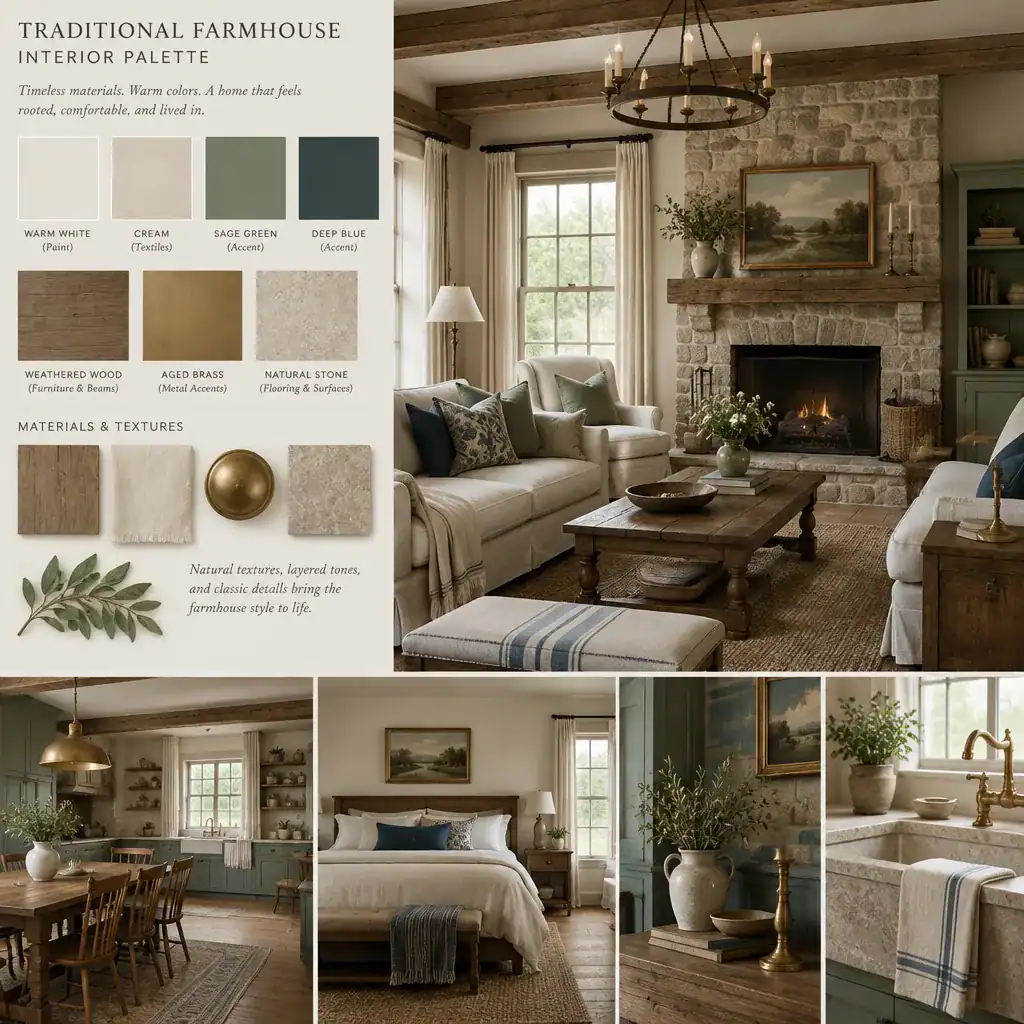
Traditional Farmhouse Interior Ideas
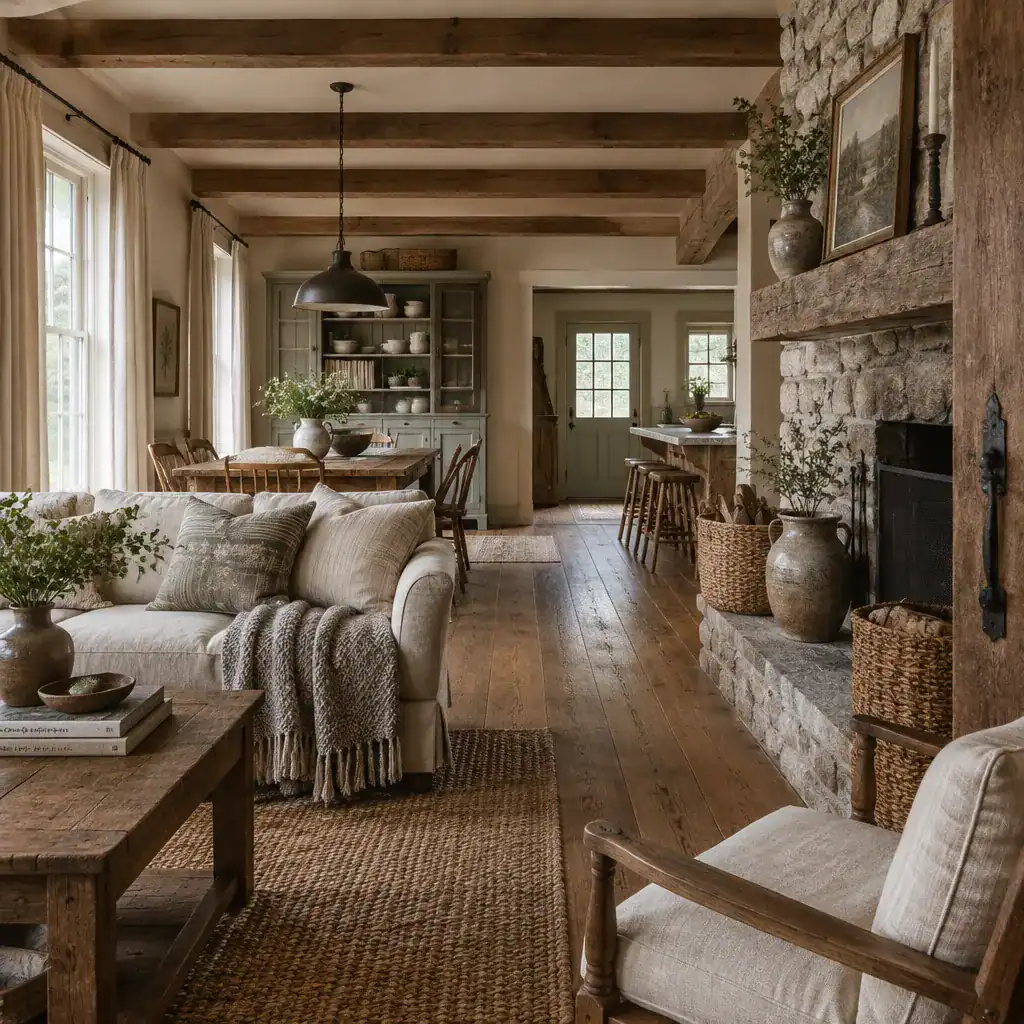
Start with material layering rather than themed decoration. Pair a wood table with woven dining chairs, a linen runner, simple ceramic serving pieces, and a modest metal light fixture. This creates warmth through contrast while keeping the room connected to the home’s practical character.
Use restrained color combinations to create visual calm. Creamy walls, muted cabinetry, natural timber, and dark accents can provide enough variation without making a space feel busy. A patterned rug or checked textile can introduce personality when balanced by quieter surrounding surfaces.
Choose furniture with uncomplicated shapes. A farmhouse table, painted cabinet, spindle-back chair, bench, or upholstered sofa with relaxed lines can establish the mood more effectively than heavily ornamental pieces. Mix finishes carefully so the room feels layered but not random.
Let practical focal points carry decorative weight. A kitchen range wall, open shelf, fireplace, pantry door, large dining table, or entry bench can become a focal area through thoughtful materials and proportion. This approach keeps decoration connected to function.
Add vintage-inspired accents selectively. An old-style pitcher, framed botanical print, weathered stool, woven basket, or schoolhouse-style light can bring character, but a few meaningful pieces are usually stronger than an entire room of replicas. Balance texture with open surfaces so the home still feels fresh and restful.
Modern Traditional Farmhouse Architecture
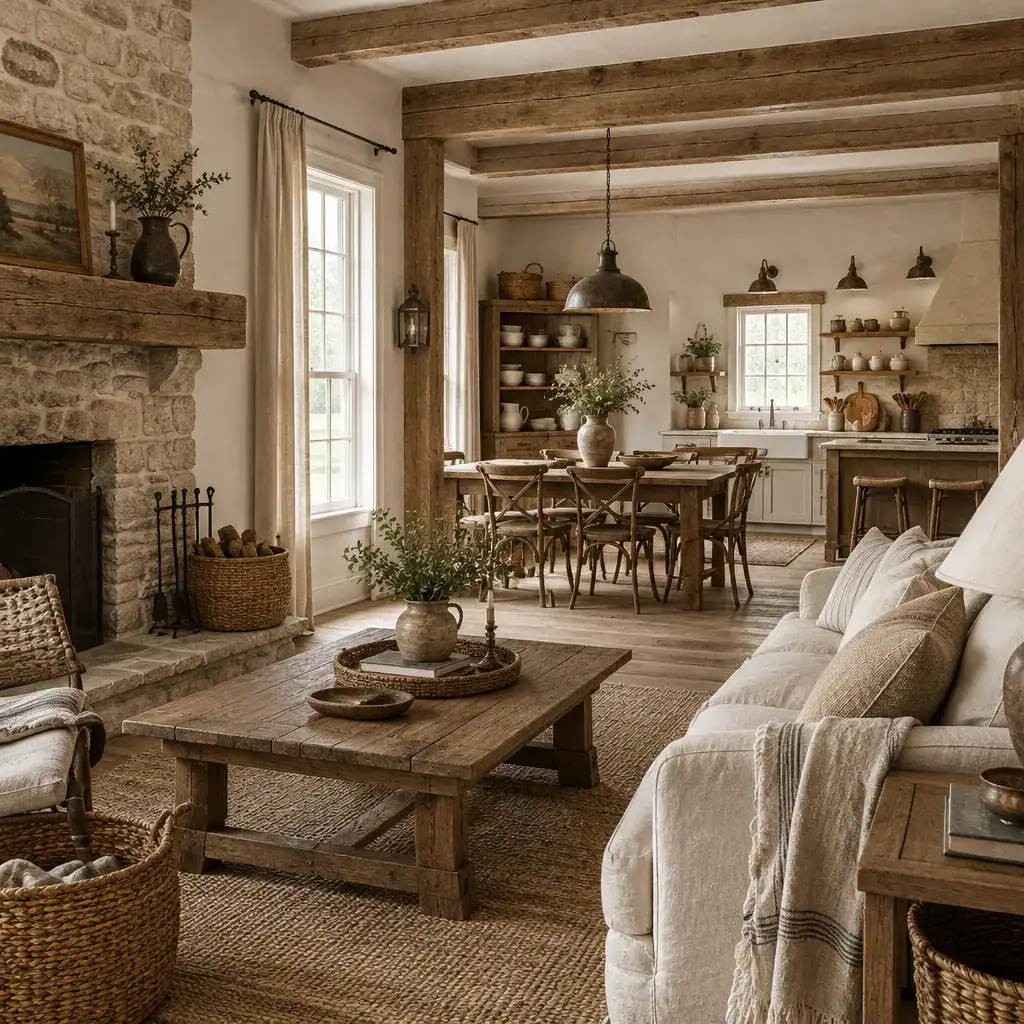
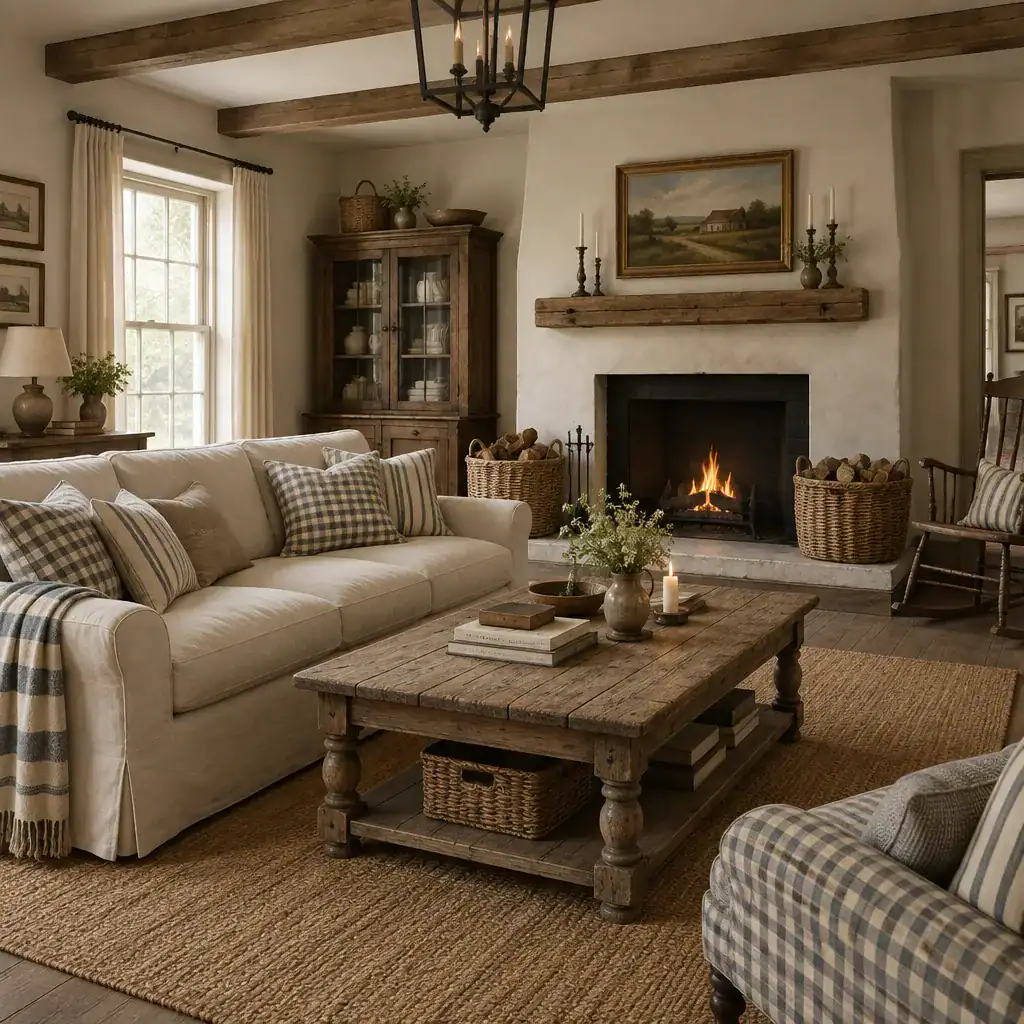
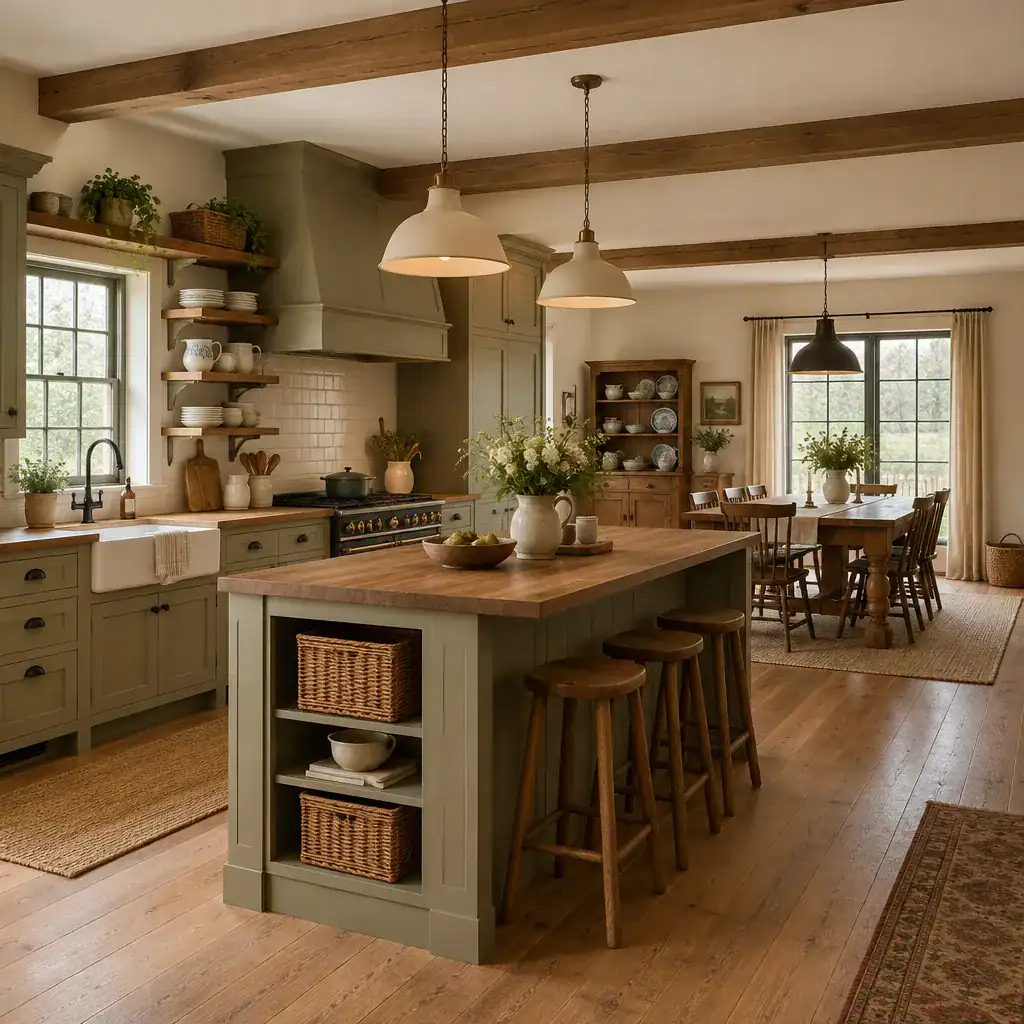
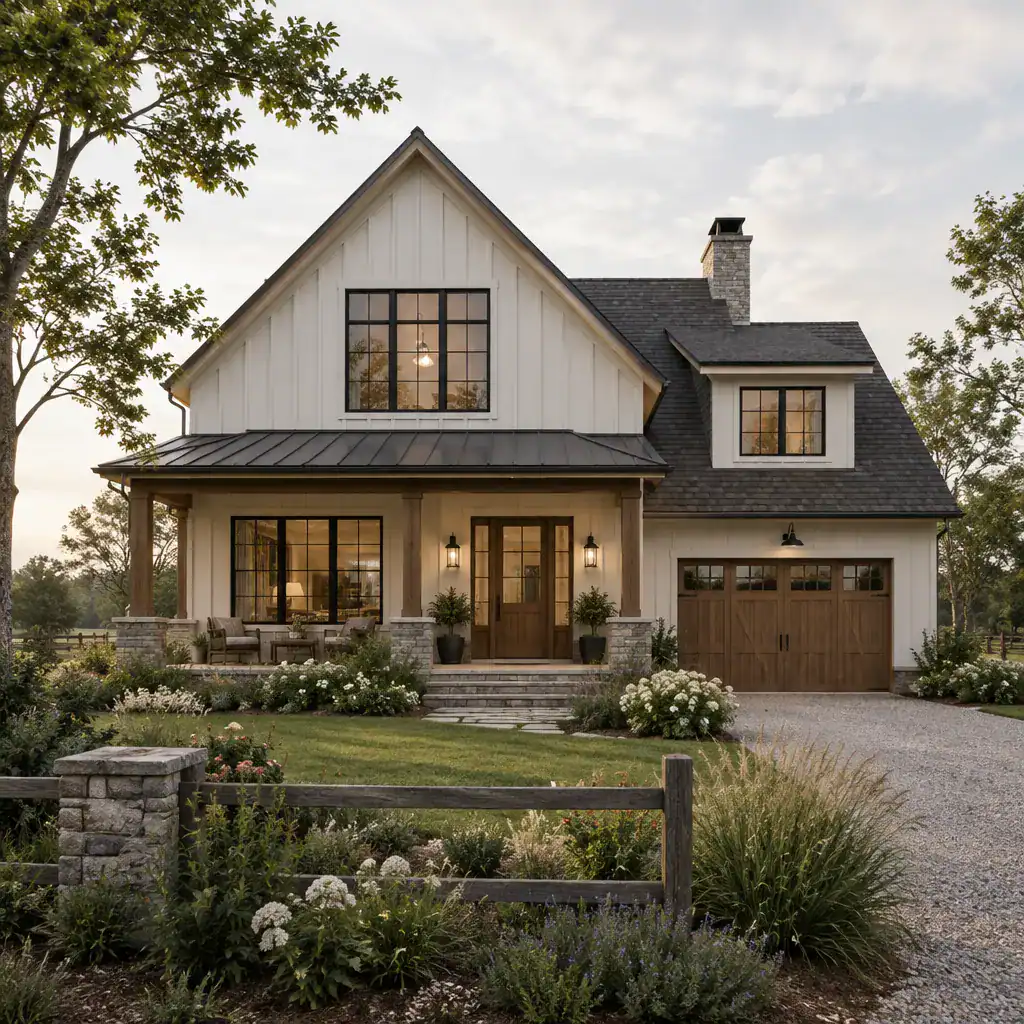
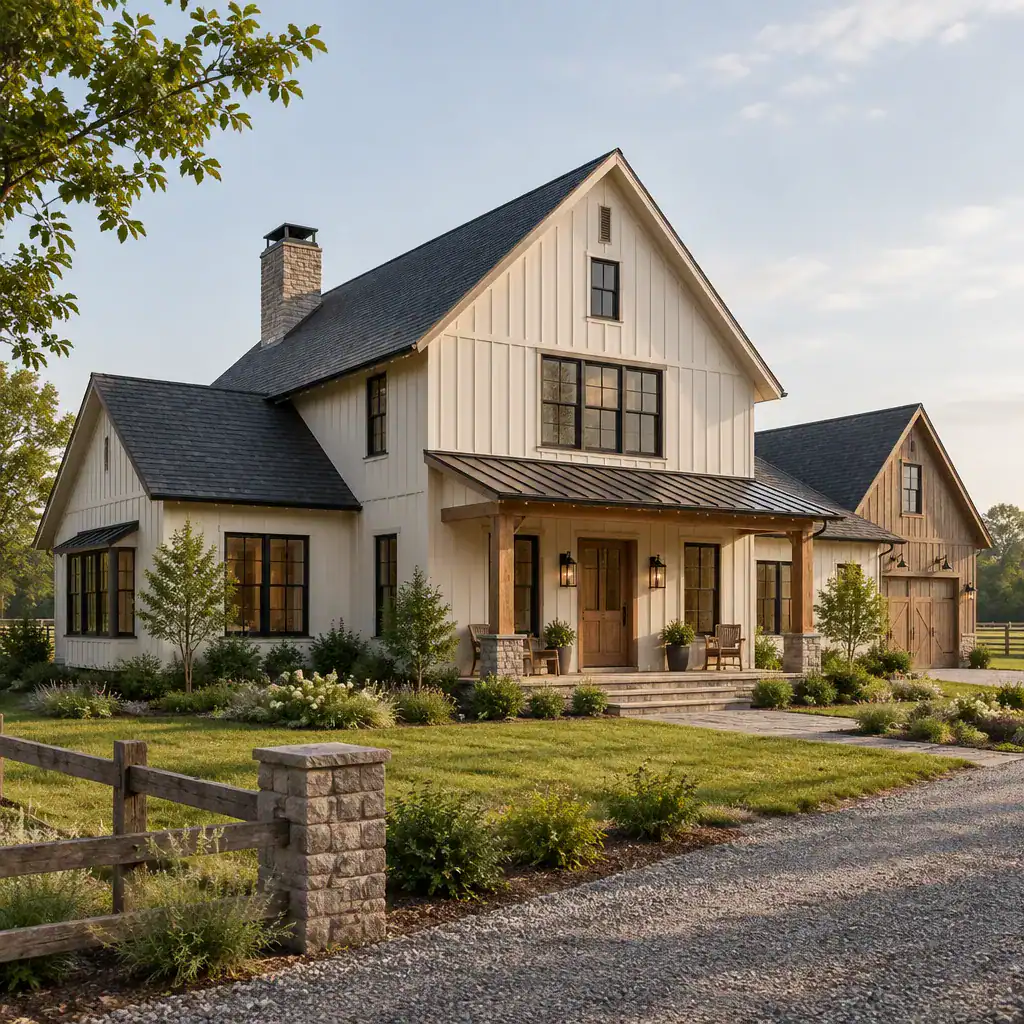
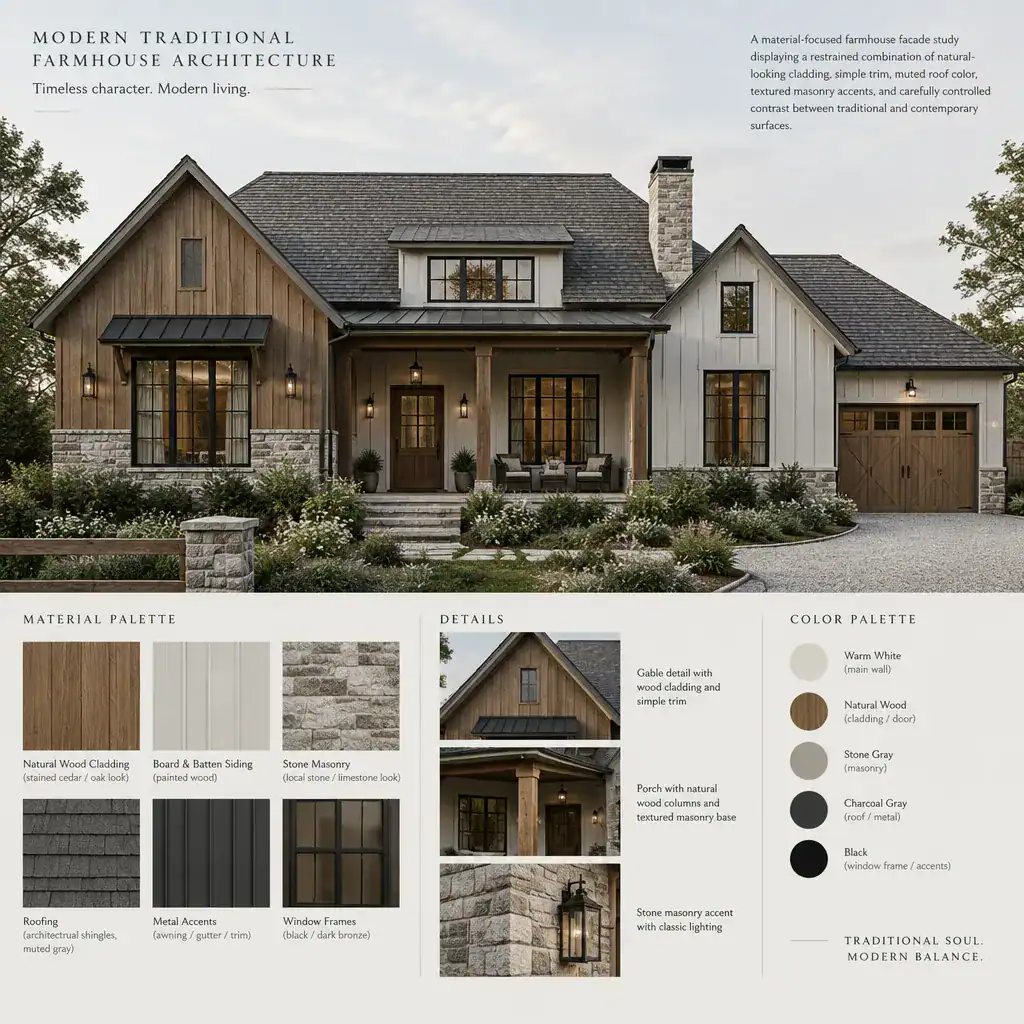
Modern traditional farmhouse architecture adapts familiar farmhouse qualities to current ways of living. It may include more open social spaces, larger glazed openings, updated kitchens, improved storage, cleaner trim profiles, or a simplified exterior palette. These changes do not automatically remove traditional character when they respect the home’s underlying proportions and material logic.
The strongest modern interpretations retain a recognizable foundation: a clear roof form, balanced exterior composition, welcoming entrance, natural or painted material palette, and an interior organized around comfort and function. Contemporary elements can then be added with restraint. Large windows, for instance, may feel compatible when their frames, placement, and scale relate to the rest of the facade.
Simplification is often a useful bridge between old and new. Instead of copying every historic-looking detail, a modern farmhouse can use fewer, better-chosen elements such as broad trim, warm wood, uncomplicated cabinetry, and straightforward lighting. This creates a home that feels rooted in farmhouse character while responding to contemporary preferences for brightness, flexibility, and clean visual lines.
When renovating an existing property, evaluate each update against the architecture already present. A new finish or opening should support the house’s scale, rhythm, and materials rather than compete with them. In a new build, the same principle helps prevent a farmhouse concept from becoming a collection of unrelated stylistic signals.
Farmhouse Traditional Style
Farmhouse traditional style is broader than a set of decorative objects. It is a cohesive approach based on simplicity, practicality, approachable materials, comfortable furnishings, and visual continuity from exterior to interior. It differs from a generic rustic look because each element has a relationship to the architecture and to the way the home is used.
To define a direction for your own home, begin with what is already there. Consider the roofline, window proportions, existing trim, floor plan, natural light, and available materials. Then select finishes and furnishings that strengthen those features. A compact house may benefit from lighter colors and streamlined storage, while a larger farmhouse-style home may support heavier timber, broader dining furniture, or more pronounced architectural details.
The best scheme is personal without losing coherence. Choose durable materials for active spaces, comfortable seating for gathering, and decorative objects that feel useful, meaningful, or visually quiet. This approach allows farmhouse traditional style to remain welcoming rather than overly styled.
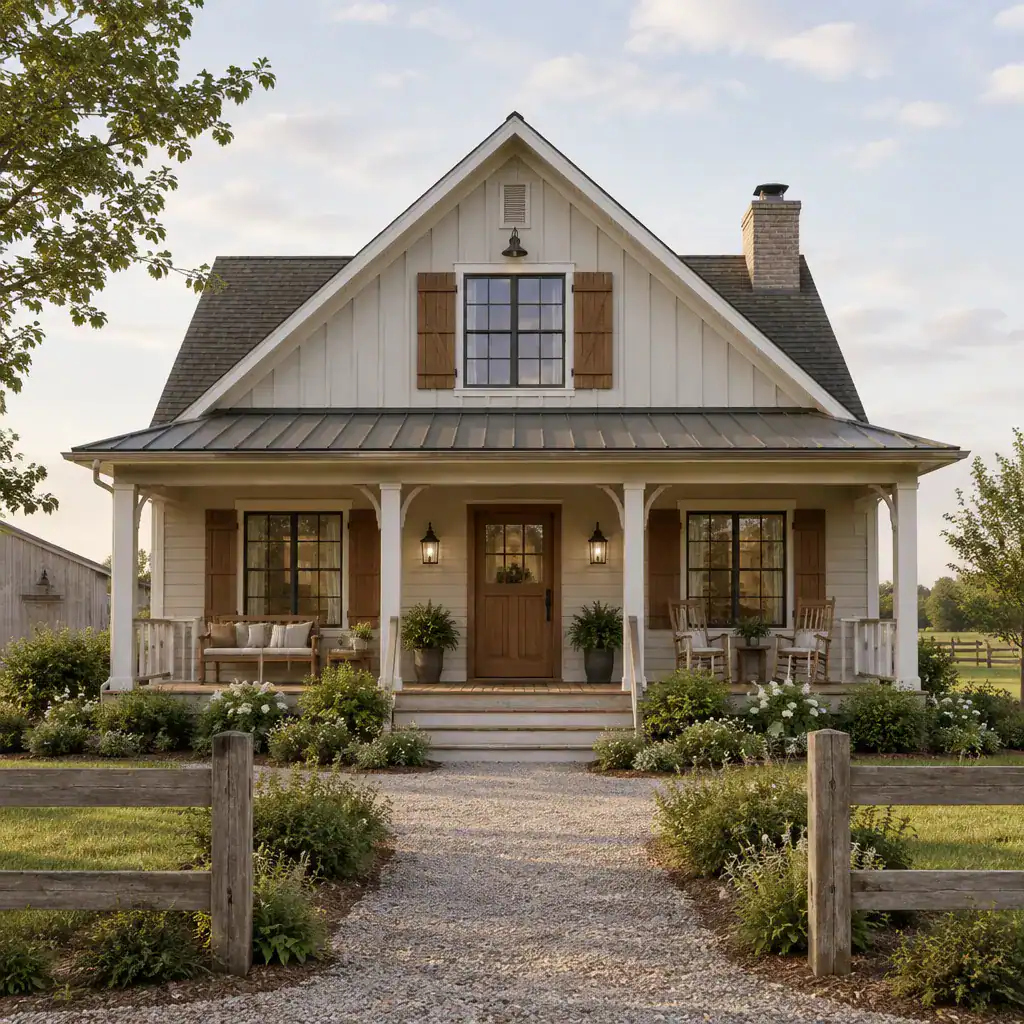
Traditional farmhouse architecture offers a useful guide for creating a home with lasting warmth and clarity. Its exterior form, interior atmosphere, natural materials, and practical details work best when they support one another. Whether you prefer a more heritage-inspired expression or a modernized interpretation, use these ideas as references rather than fixed rules. A consistent design direction, combined with attention to daily needs, can create a farmhouse home that feels both familiar and genuinely livable.