
A farmhouse-style home can feel warm, useful, and welcoming without relying on an oversized plan or elaborate finishes. A successful low cost farm house design begins with coordinated choices about the home’s size, layout, materials, labor demands, and future upkeep. When those decisions support one another, the result can have genuine character while remaining realistic to build and maintain.
Farmhouse design is especially suited to a budget-conscious project because its appeal often comes from straightforward forms, familiar materials, and practical rooms rather than complicated architecture. The most effective approach is to start with an efficient layout, keep the exterior restrained, compare materials by long-term value, improve comfort through simple planning, and schedule nonessential upgrades in phases.
Start With a Simple, Efficient Farmhouse Layout
A compact footprint and a straightforward building shape are often the strongest starting points for an affordable farmhouse. A simple rectangle or similarly uncomplicated form generally requires fewer complex connections, corners, and roof transitions than a highly articulated plan. This early choice can influence the foundation, framing, roof, exterior finish, and labor planning, making it easier to keep the overall project organized.
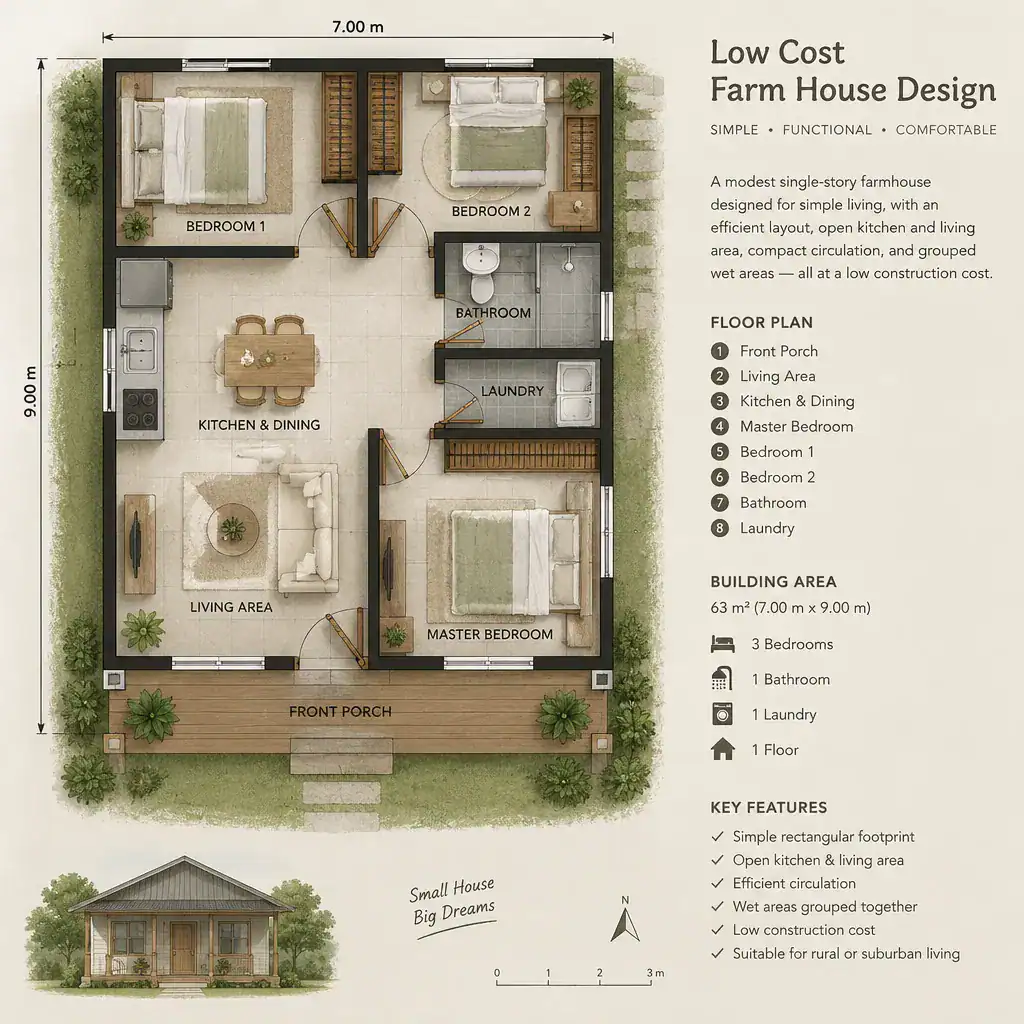
Arrange the rooms used every day around clear, direct circulation. An open or partly open kitchen, dining, and living area can reduce hallway space while creating a sociable central zone. Bedrooms can sit along a quieter edge of the home, while entry, laundry, and storage areas should serve daily routines without creating awkward corners that are hard to furnish or clean.
Where the plan allows, coordinate bathrooms, the kitchen, laundry, and other plumbing-heavy spaces. Locating these areas near one another can simplify planning for water supply, drainage, and service access. The exact arrangement should always be reviewed with qualified local professionals, since site conditions and local requirements affect what is practical.
Plan for future needs without automatically building every future room now. A flexible dining area, a well-placed closet, or an unfinished-but-planned storage zone may be more useful than adding seldom-used space at the outset. This disciplined approach gives a low cost farm house design room to evolve while keeping present priorities clear.
Use Affordable Exterior Features That Still Create Farmhouse Character
A farmhouse exterior does not need many layers of decoration to look inviting. A simple gabled roof, balanced window placement, and a clearly defined entry provide a calm, recognizable composition. Keeping the massing and roof form straightforward also connects directly to the efficient layout: a less complicated plan usually produces a more manageable exterior.
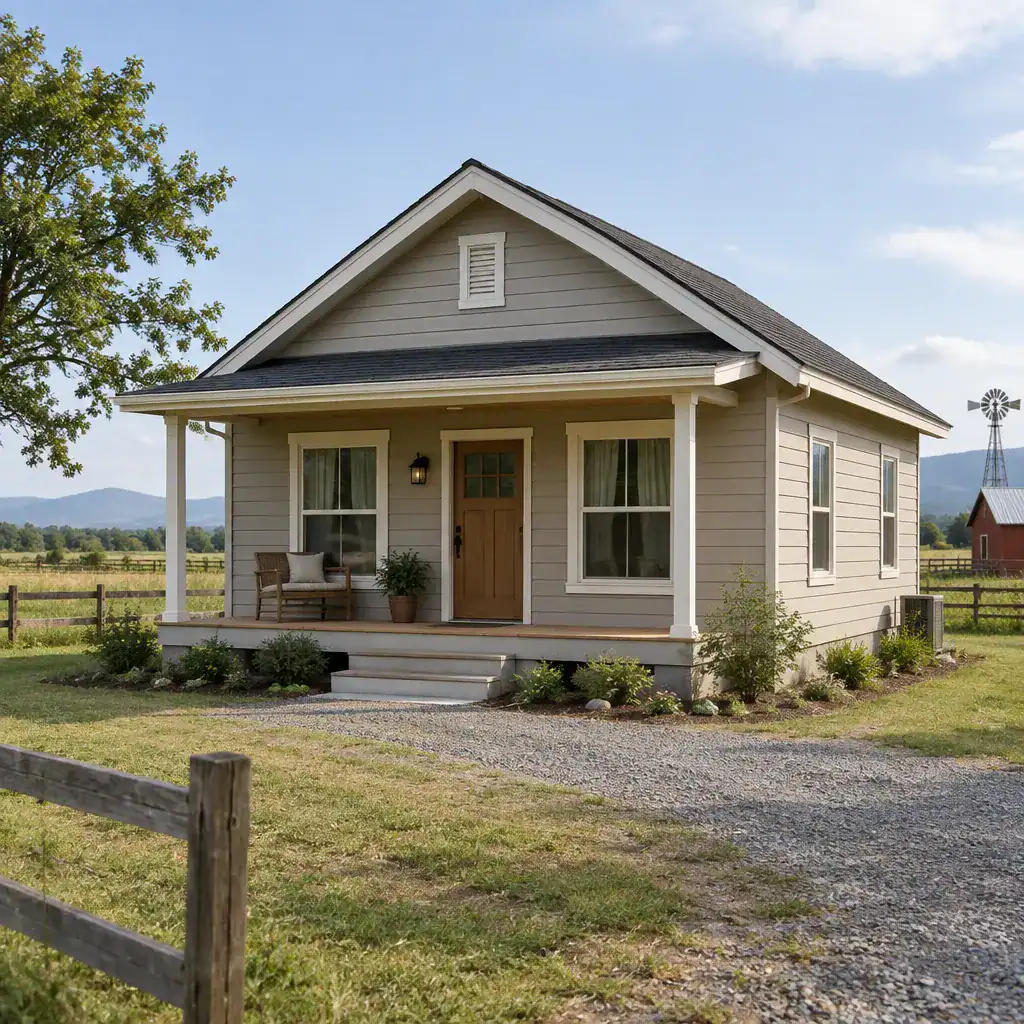
Farmhouse character can come from proportion rather than expensive ornament. A modest covered porch, practical posts, restrained trim, and a coordinated neutral color palette can make the entrance feel considered. Choose window sizes and locations that support daylight and views, but avoid adding windows solely as decoration when they complicate framing, weatherproofing, privacy, or furniture placement.
Compare siding, roofing, trim, and porch materials beyond their purchase price. Installation needs, durability in the local climate, repainting or sealing schedules, and likely repair needs all affect value over time. A simple, durable exterior finish may serve the project better than a mixed facade with multiple specialty materials and intricate details.
Before adding shutters, elaborate brackets, decorative gables, or unnecessary roof breaks, ask whether each feature improves use, weather protection, or the overall proportion of the home. If it does not, it may add construction complexity without meaningful benefit. A restrained exterior often looks more timeless and leaves more budget for essential performance features.
Choose Materials by Total Value, Not Just Initial Price
Material decisions should account for total value, not only the price shown at purchase. Installation labor, durability, routine maintenance, replacement availability, warranties, and local supply can change the real cost of a finish over the life of the home. A material that is easy for local trades to install and repair may be a more dependable choice than an initially cheaper option that requires specialized work.
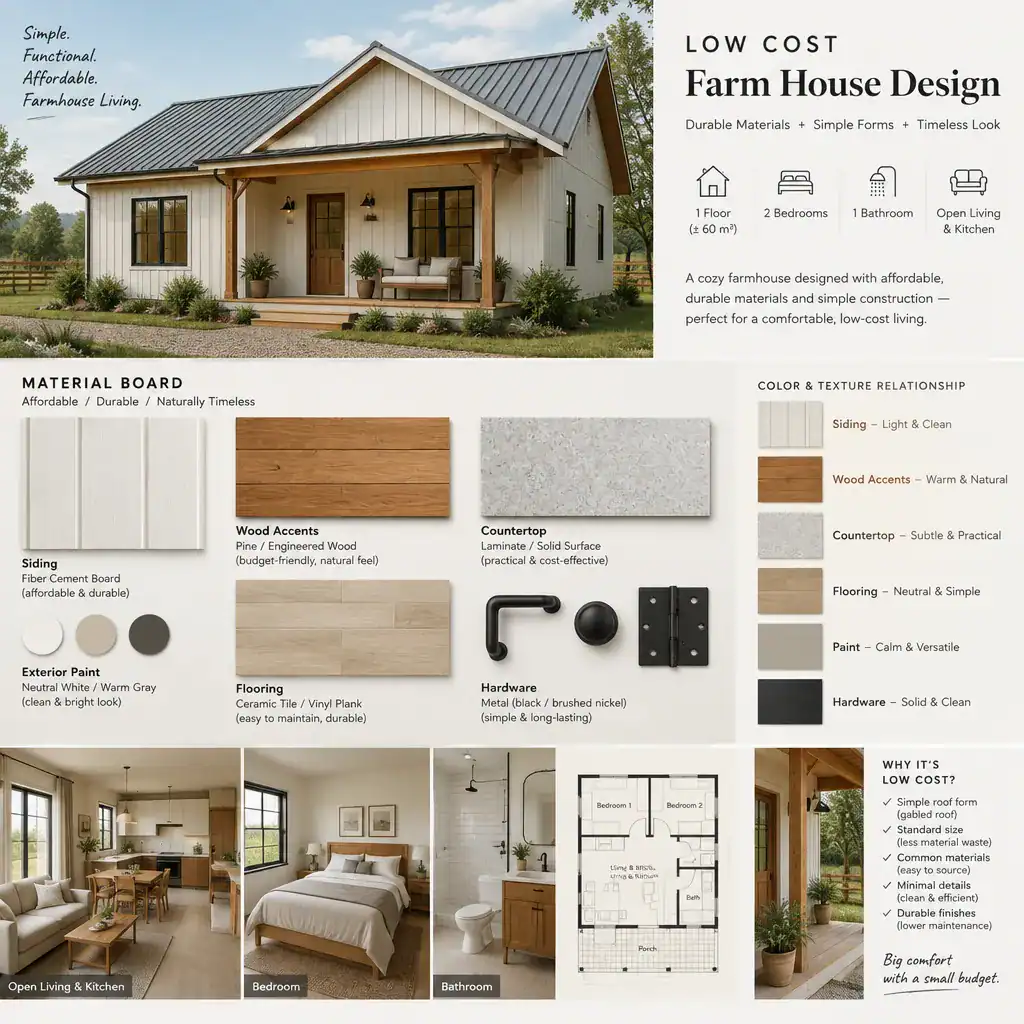
Use a limited, coordinated palette to make the home feel intentional and reduce leftover materials. For example, repeating a small range of neutral paint colors, straightforward hardware finishes, and compatible flooring tones can simplify ordering and create continuity from room to room. The goal is not to make every surface identical, but to avoid a collection of unrelated choices that create waste and visual clutter.
Put durability first in high-use and weather-exposed areas. Entry flooring, kitchen work surfaces, bathroom finishes, exterior cladding, and porch materials experience more wear than purely decorative surfaces. Spending thoughtfully in these locations can reduce disruption and replacement work later, while lower-impact decorative touches can remain simple or be postponed.
Before committing to any product, check local availability, applicable code considerations, warranty terms, and contractor recommendations. Samples should be viewed in the home’s expected light when possible. These checks help ensure that a low cost farm house design is based on materials that suit the location and can be maintained realistically.
Improve Comfort With Low-Complexity Design Decisions
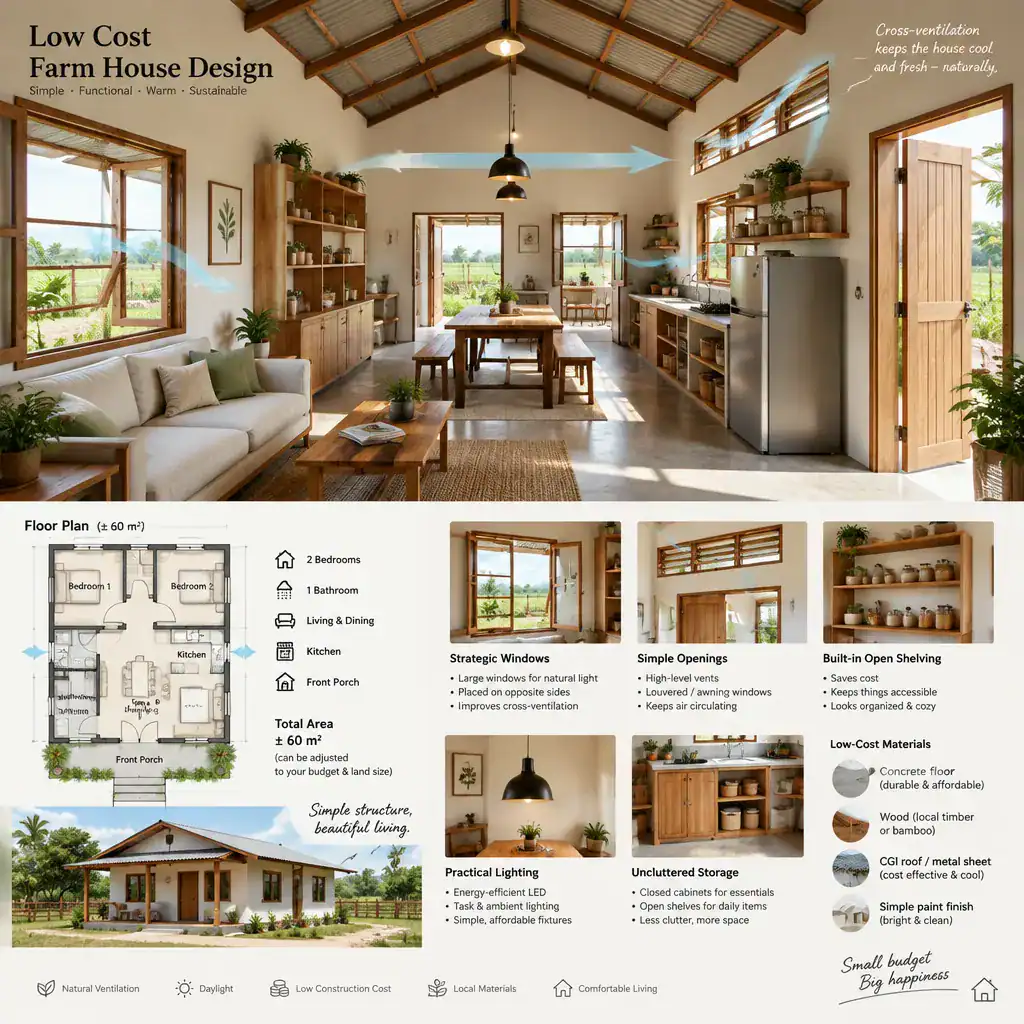
Comfort does not always require complicated systems or costly features. Thoughtful window placement, shading, ventilation planning, and orientation can support a more pleasant interior where the site and climate allow. Windows on more than one side of a main living space, for instance, may support daylight and cross-ventilation when conditions are suitable, while overhangs or a porch can help shade selected openings.
Energy performance and weather protection deserve attention early, not after cosmetic choices are made. A well-considered thermal envelope, moisture management strategy, exterior detailing, and appropriate windows can affect everyday comfort and long-term maintenance. Review these choices with qualified local designers, builders, or energy professionals who understand the climate, site exposure, and construction method.
Place storage where it supports real routines. A coat closet or bench near the entry, pantry storage near the kitchen, linen storage near bathrooms, and utility storage near the laundry can reduce the later need for extensive custom cabinetry. Open shelving can provide accessible storage in selected locations, but enclosed storage remains useful for keeping everyday items visually calm.
Select uncomplicated lighting, faucets, door hardware, and cabinet pulls that are widely available and straightforward to repair or replace. Simple fixtures can still look polished when they share a consistent finish and scale. This practical mindset protects the usability of the home without requiring every choice to be a permanent premium upgrade.
Phase the Farmhouse Project Without Losing Design Cohesion
Phasing a project can make an affordable farmhouse more achievable, provided the first stage fully addresses structure, safety, weatherproofing, and essential daily function. The initial scope should prioritize a sound foundation and structure, a protected exterior, reliable utilities, functional kitchen and bathrooms, and the basic storage and lighting needed to live comfortably. Decorative layers can follow when the budget and schedule allow.
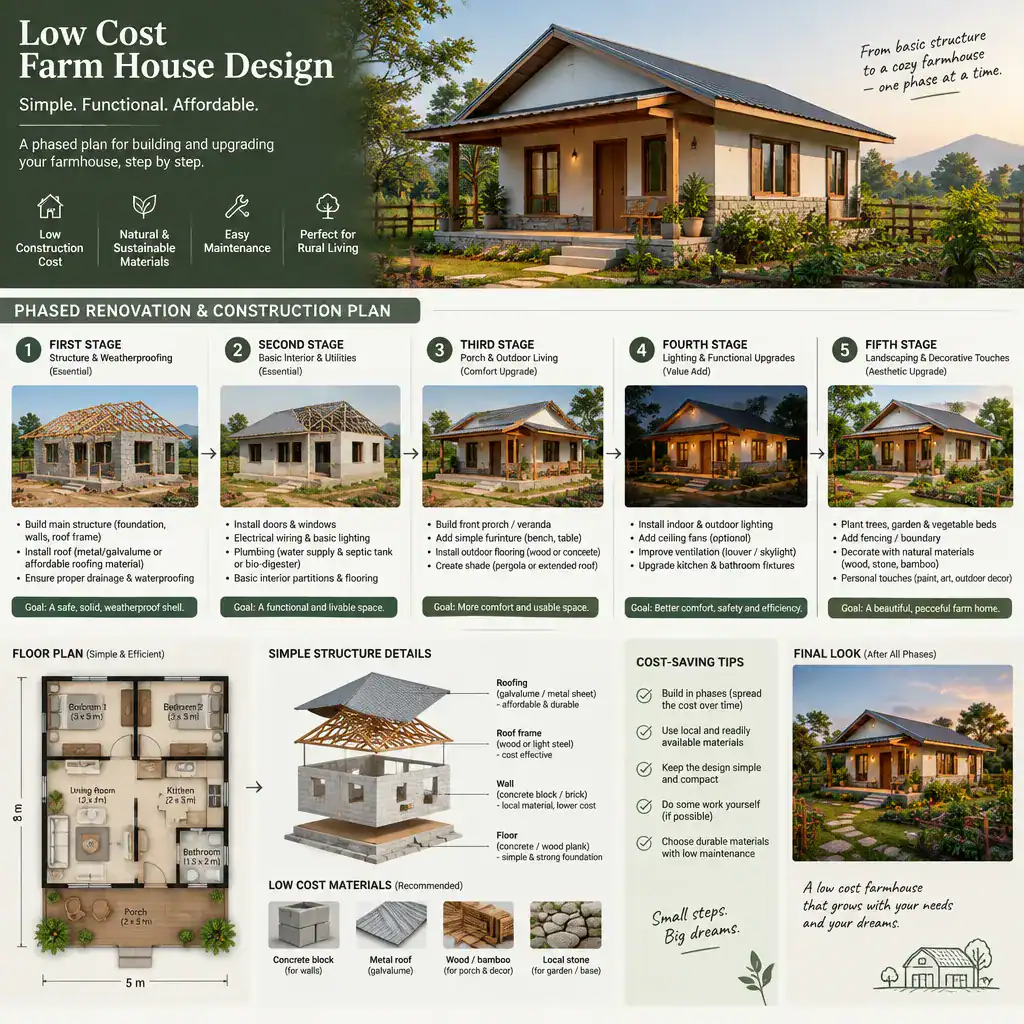
Create a simple finish plan from the beginning so later work still belongs to the same home. Record the main exterior color, trim tone, flooring direction, hardware finish, and preferred material family. With those decisions documented, a future porch update, added lighting, landscaping, or decorative accent can reinforce the original design rather than appearing disconnected.
Some items are difficult or expensive to retrofit, so identify them before construction begins. Examples may include structural support for a future covered porch, electrical capacity and conduit for later fixtures, drainage planning, accessible plumbing routes, or blocking for future grab bars and cabinetry. Planning for these possibilities does not mean paying for every upgrade immediately; it means avoiding unnecessary disruption later.
Keep a realistic budget reserve for unforeseen conditions and confirm any scope change with the project team before work starts. Furniture, movable decor, and easily replaced accessories are usually more suitable for later phases than structural or weather-related work. This approach allows a low cost farm house design to retain a coherent look while the home improves at a manageable pace.
A low-cost farmhouse is primarily the result of disciplined planning and clear priorities, not a single inexpensive feature. Start with a simple layout, use a restrained exterior, evaluate materials for their full life-cycle value, and build comfort into the plan through practical decisions. By separating essential work from optional enhancements, homeowners can protect the performance and livability of the house before focusing on decorative upgrades.
Adapt this framework to the site, local regulations, climate, available skills, and professional guidance for the project. With those realities considered early, a low cost farm house design can remain welcoming, functional, and durable while reflecting a budget that is sustainable for the people who will live in it.