
A traditional farmhouse interior is shaped by practicality, natural materials, everyday comfort, and a close relationship with the landscape outside. Rather than relying on a themed collection of rustic accessories, it uses the home’s structure and the needs of its residents as the foundation for design decisions.
When architecture and decoration are considered together, rooms feel settled, useful, and convincingly connected. This guide explores layout, materials, color, lighting, room-specific planning, and furnishing choices that can help you create an adaptable farmhouse-inspired home without trying to replicate one exact historic property.
Architectural Features That Establish a Traditional Farmhouse Interior
The strongest farmhouse rooms begin with simple forms and functional circulation. Spaces should be easy to move through, with clear connections between gathering areas, work zones, entrances, and outdoor views. An open feeling can be useful in shared rooms, but it does not require removing every wall; a sequence of comfortably scaled spaces can feel just as welcoming and practical.
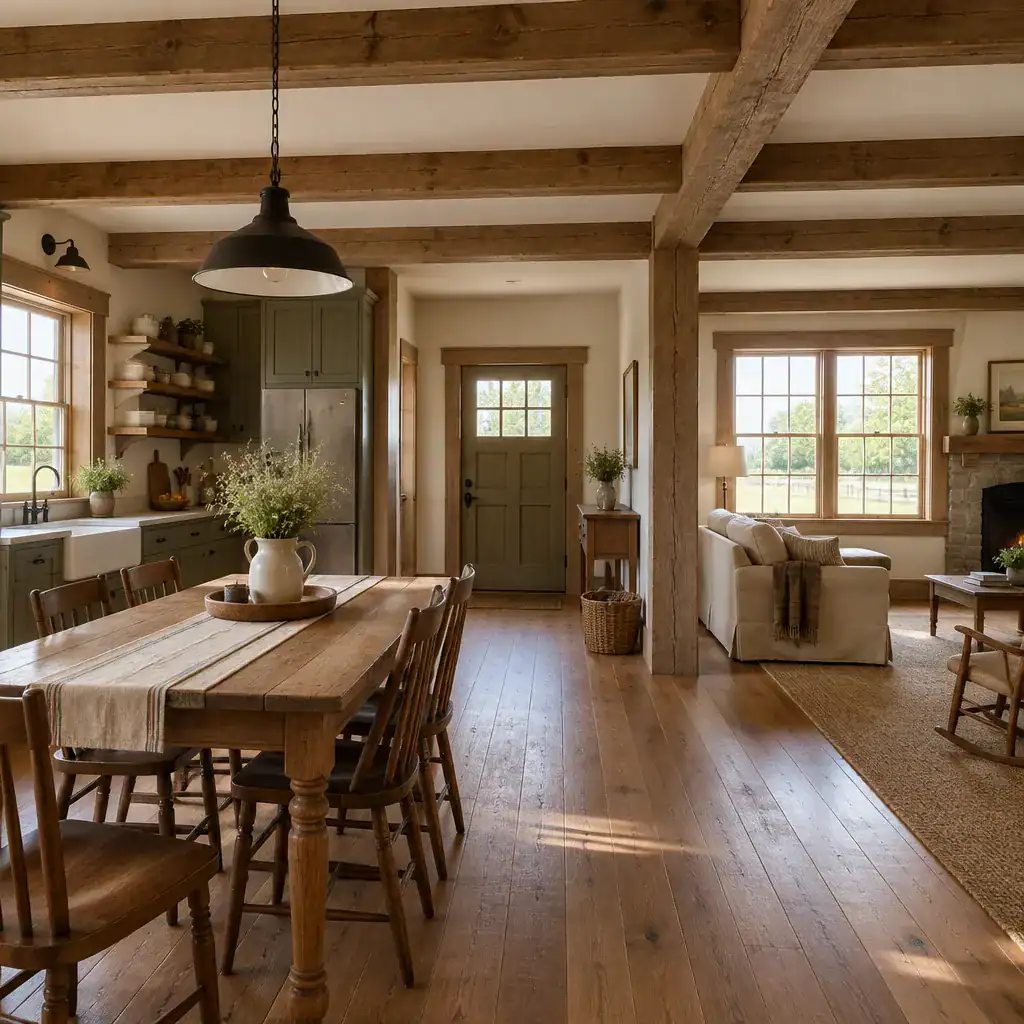
Exposed timber beams, wide-plank flooring, substantial trim, paneled doors, fireplaces, and generous windows can all reinforce farmhouse character when they suit the home. They are options rather than requirements. A modest house with original woodwork and well-proportioned windows may need little more than careful restoration, while a newer home may benefit from honest detailing such as simple casing profiles, solid interior doors, or a well-designed hearth.
Let existing details direct later choices. Darker beams may suggest lighting with warm metal or aged finishes; painted trim may lead naturally toward quieter cabinetry; a brick fireplace can become the visual anchor for seating. A traditional farmhouse architecture interior feels more credible when its visible structure and finishes do the work, instead of depending on applied faux beams, artificial distressing, or decorative signs to announce a style.
Natural Materials and Finishes for Farmhouse Character
Wood, stone, brick, plaster, painted timber, and aged-looking metal bring the texture that makes farmhouse rooms feel warm and grounded. The goal is not to make every surface old, but to select materials that feel substantial, useful, and pleasant to touch. A wood floor may carry gentle variation, while a plaster wall or handmade-look tile can provide a softer counterpoint.
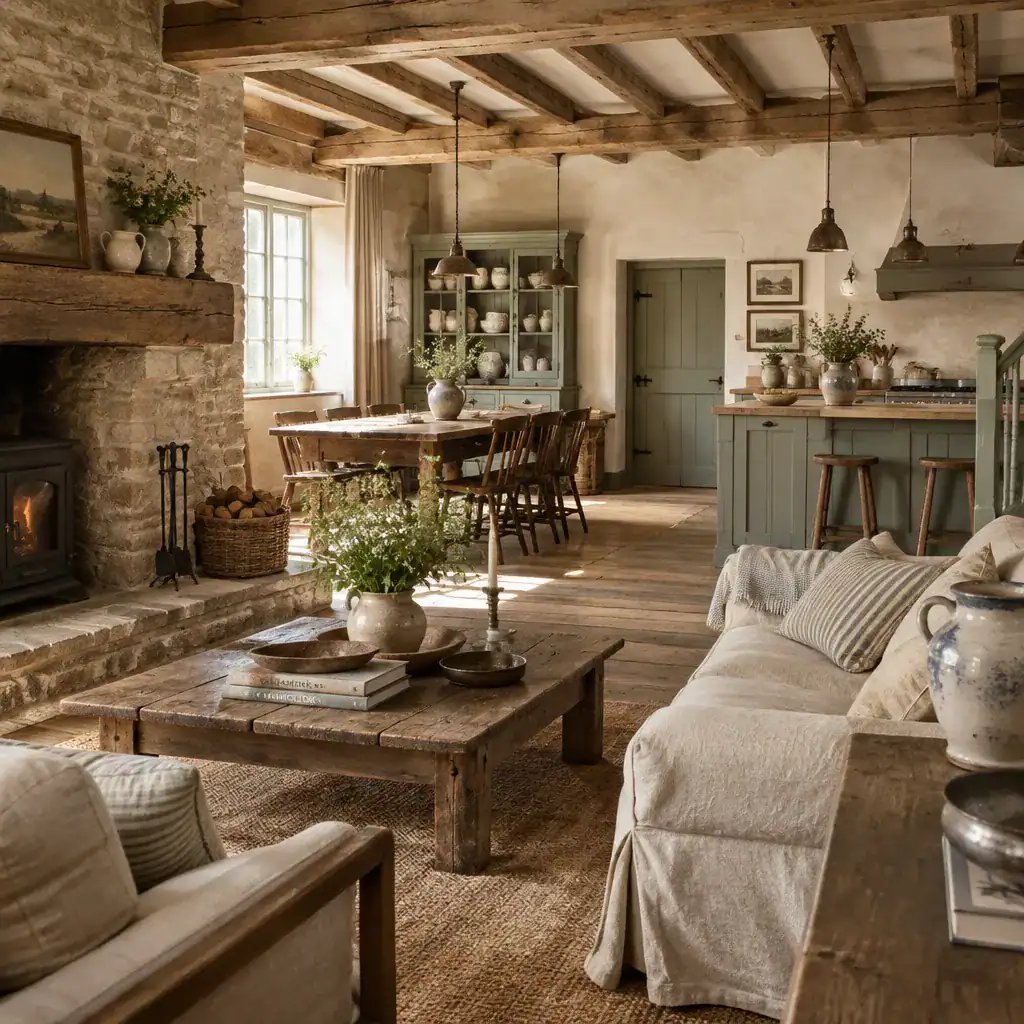
Favor matte or low-sheen finishes and surfaces with subtle irregularity over highly glossy, uniform treatments. These finishes tend to work well with daylight and make rooms feel less precious. In hardworking areas, however, durability matters as much as appearance: choose sealed stone or durable tile where water is common, washable paint in busy hallways, and wood finishes that can withstand normal family use.
Coordinate materials through undertones rather than exact matches. For example, warm oak can sit comfortably beside creamy plaster, tan stone, muted green paint, and blackened metal hardware. Repeating a few compatible tones creates continuity, while varied grain, texture, and age keep the rooms from looking overly coordinated. This balanced material approach gives a traditional farmhouse architecture interior depth without making it feel heavy.
Traditional Farmhouse Color Palette and Lighting Strategy
A restrained farmhouse palette often begins with warm whites, softened beige or gray neutrals, natural wood tones, and earthy accents. Muted greens, subdued blues, clay shades, and faded ochres can add color while preserving a calm atmosphere. These hues work best when they appear as part of an overall material story rather than as isolated trend colors.
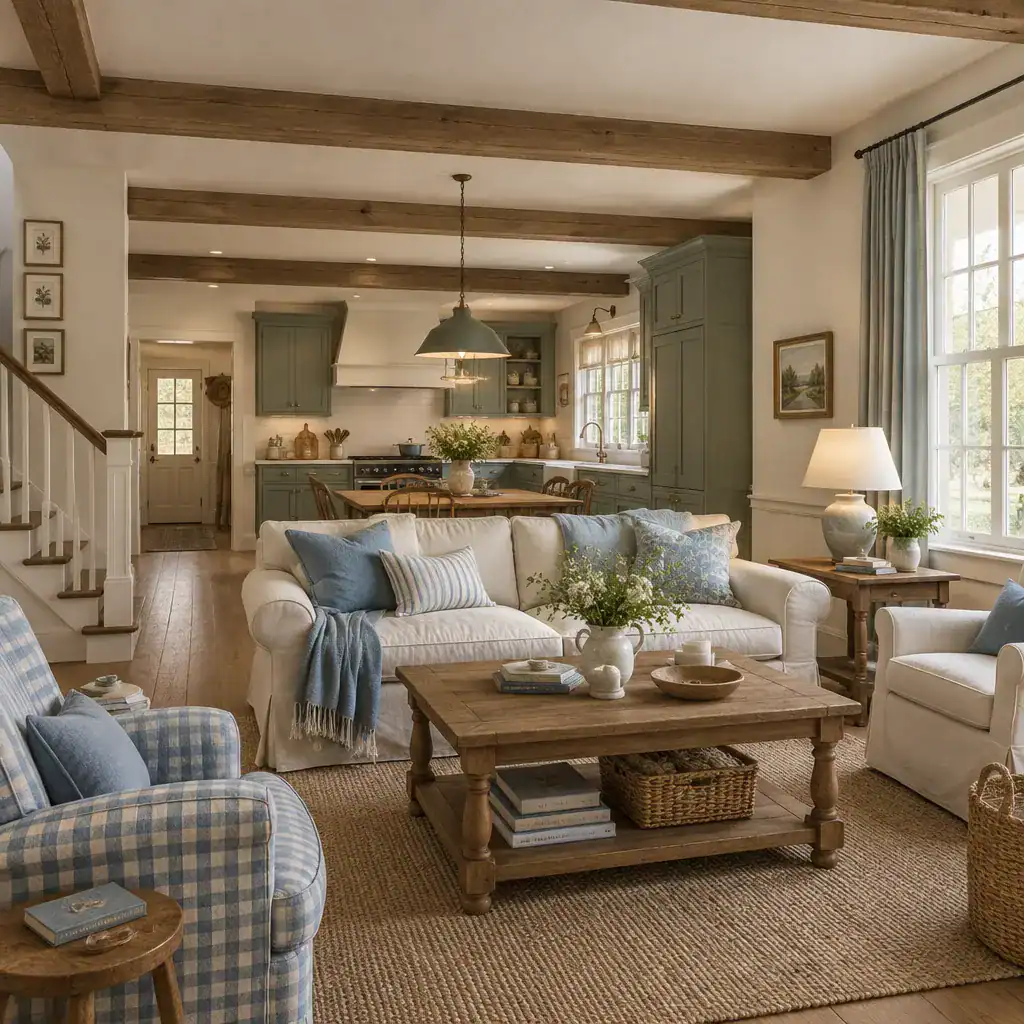
Use contrast with purpose. Warm white walls can brighten a room, deeper trim can define openings, and a muted cabinet color can give a kitchen visual weight. Textiles may introduce softer blue, green, or rust tones without making the room busy. Keeping large surfaces relatively quiet allows wood grain, stone, artwork, and daily-use objects to stand out naturally.
Layered lighting supports both comfort and function. Daylight should remain a priority, especially near dining tables, sinks, reading chairs, and work surfaces. Add ambient light through simple pendants or ceiling fixtures, task lighting at counters and bedside tables, and modest accent lighting for art or shelving. Choose finishes that relate to the room’s materials, such as aged brass, iron, ceramic, or painted metal, and place fixtures where people actually cook, read, enter, and gather.
Room-by-Room Ideas for a Traditional Farmhouse Interior
Each room should interpret farmhouse principles according to its daily use. Consistent wood tones, calm colors, durable finishes, and practical furniture can connect the home, but the layout and storage requirements should remain specific to each space.
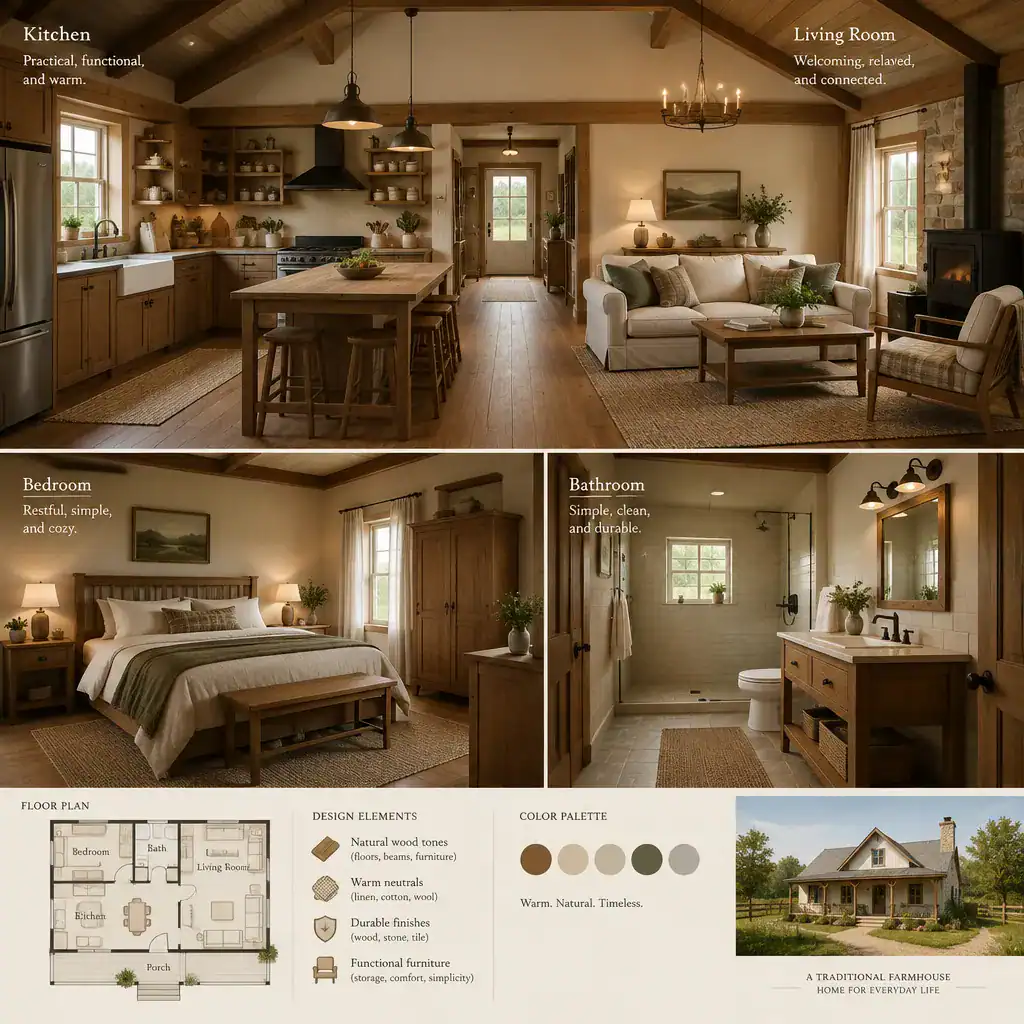
In the kitchen, organize practical work zones before choosing decorative details. Simple cabinetry, durable counters, a useful pantry or enclosed storage, and open shelving only where it will be maintained can create an efficient room. A table, island, or nearby dining area can strengthen the kitchen’s role as a welcoming place to gather.
In the living room, start with comfortable seating and an uncluttered path through the space. A fireplace, picture window, built-in cabinet, or large piece of art can serve as a focal point when a hearth is not available. Natural-fiber rugs, wood tables, linen or cotton upholstery, and tactile throws add warmth without crowding the room.
Bedrooms and bathrooms benefit from quieter finishes and thoughtful storage. Layer bedding with breathable fabrics, use muted wall colors, and select nightstands and dressers that hold everyday necessities. In bathrooms, pair practical storage with durable tile, painted wood, stone, or simple metal fittings. The result should feel restful rather than overly decorated.
Entryways and dining areas need to support routines. Durable flooring, hooks or closed storage, a bench, and good lighting help an entry manage shoes, coats, and bags. In a dining space, a sturdy table, comfortable chairs, and a fixture that provides useful light encourage meals, homework, and conversation. These functional decisions are central to a traditional farmhouse architecture interior, not secondary details.
Furniture and Decor Choices That Keep the Style Authentic
Choose furniture with practical silhouettes, visible craftsmanship, and comfortable proportions. A solid wood table, painted cabinet, upholstered sofa, spindle-back chair, or simple bench can bring farmhouse character through material and construction rather than ornament. Pieces that can age gracefully often feel more appropriate than fragile furnishings chosen only for display.
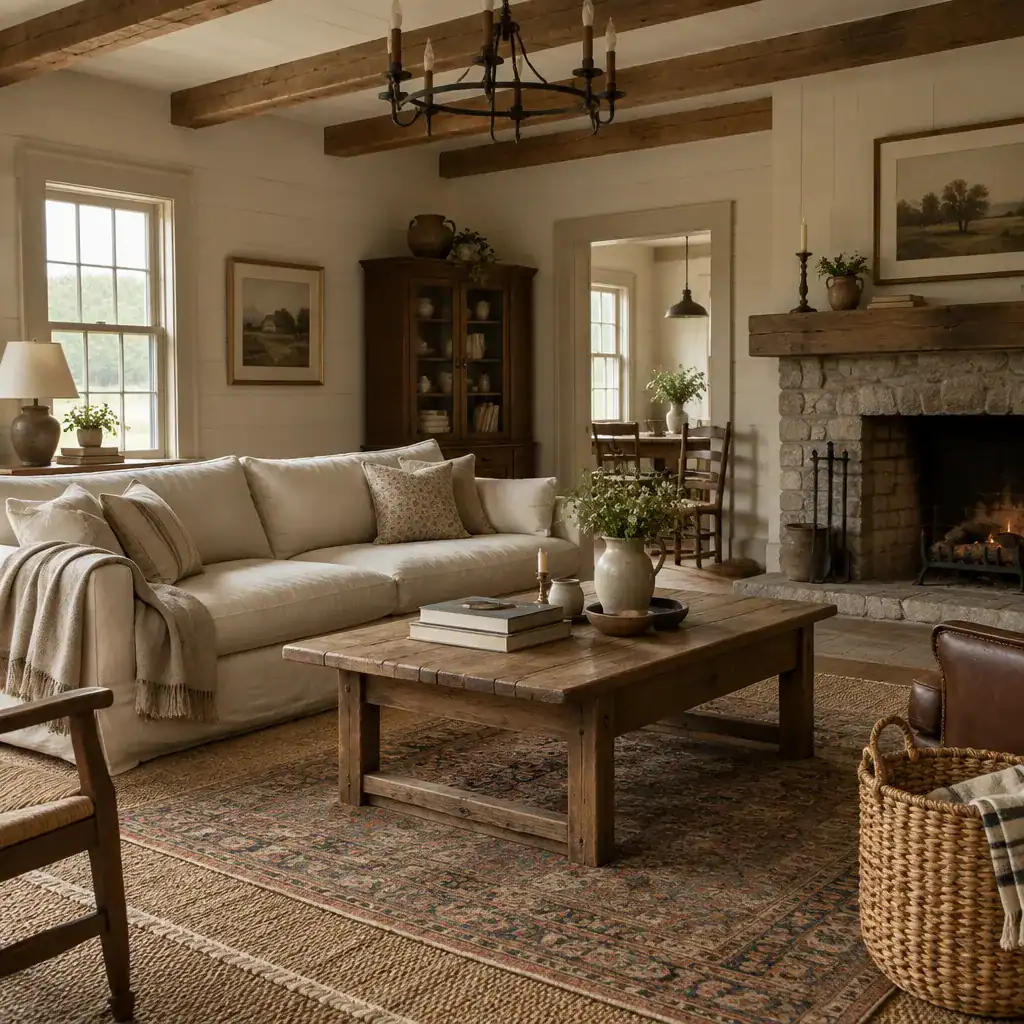
A collected mix of vintage, reproduction, and contemporary pieces usually feels more natural than a room furnished from a single collection. A contemporary lamp can work beside an older sideboard when their scale and finish relate, while a new sofa can make a vintage table more usable for daily life. The aim is a home that evolves while remaining coherent.
Use textiles, pottery, woven baskets, framed artwork, and a limited number of meaningful accessories to introduce softness and personality. Curtains, cushions, rugs, and table linens can add pattern in modest doses. Avoid repeated farmhouse symbols, excessive distressed surfaces, and crowded shelves, which can pull attention away from the architecture and make useful rooms harder to maintain.
Ultimately, a successful traditional farmhouse interior depends on the relationship between architecture, materials, layout, lighting, and everyday use. Begin with the features your home already has and the way your household lives, then make decorative choices that support those realities. Warmth and authenticity come from restraint, practical planning, and natural-feeling materials that belong to the setting.