
A porch is more than a covered spot outside the front door: it creates the transition between a cottage’s interior warmth and its garden, path, or street. A successful traditional cottage porch feels inviting at first glance while serving daily routines, from greeting visitors to setting down packages. The best results come from making connected choices about architectural character, materials, color, lighting, furniture, and accessories rather than treating each detail separately.
Start With Traditional Cottage Porch Character
Traditional cottage character is usually modest, welcoming, and closely tied to the front entry. A traditional cottage porch should make the door feel more inviting without becoming larger or more ornate than the house itself. Simple painted posts, uncomplicated railings, gently proportioned steps, and trim that echoes existing window or roof details often create a more convincing result than elaborate decorative additions.
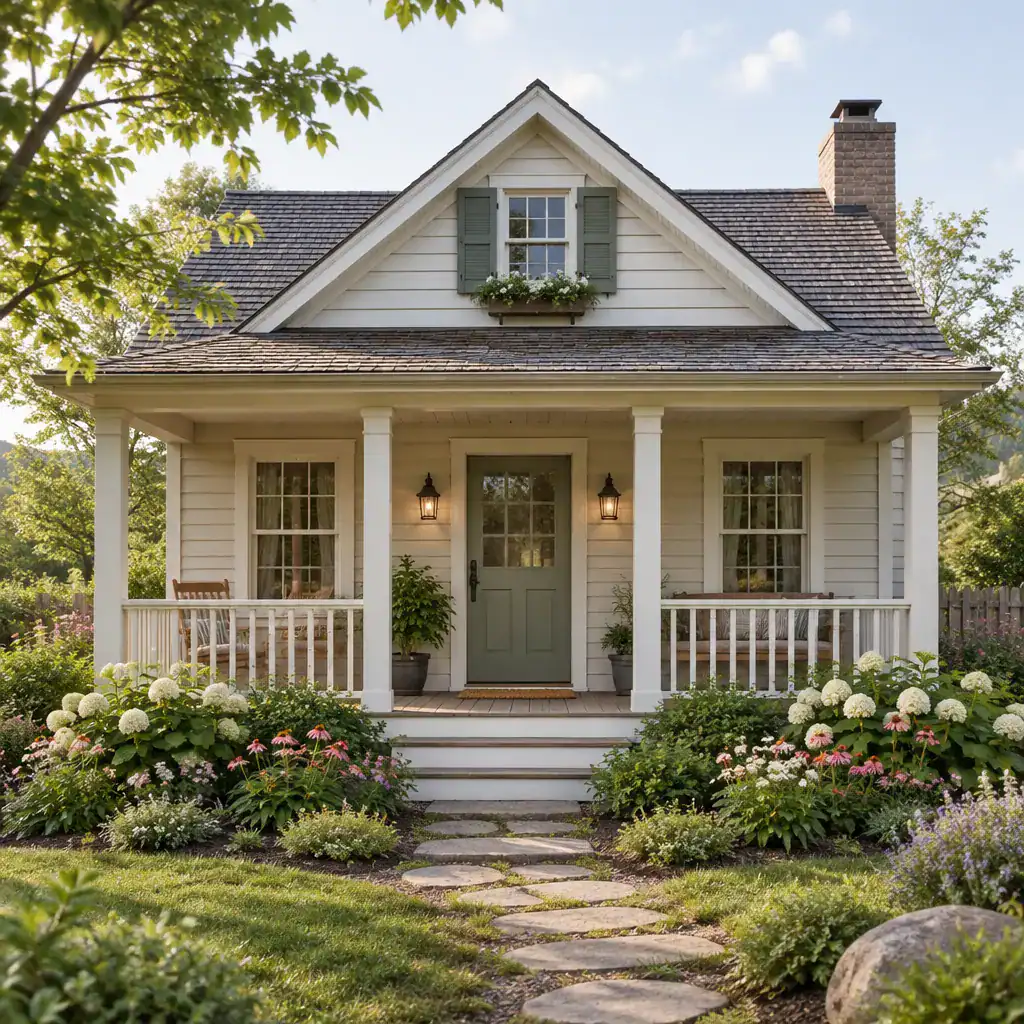
Begin by studying the facade already in place. Note the roof pitch, siding profile, window trim, masonry, and the width of the entry bay. A shallow gabled roof may suit one cottage, while a small shed roof or continuation of an existing eave may suit another. Select posts, balusters, steps, and railings in proportions that support these features. On a compact cottage, slim posts and open railings can preserve lightness; on a masonry cottage, a low brick or stone base may help the porch feel anchored.
Keep the approach authentic-looking by limiting ornamental layers. A themed porch can quickly feel cluttered when it combines oversized gingerbread trim, mismatched vintage objects, and too many signs or planters. Instead, let clear circulation, a centered or well-framed door, restrained detailing, and planting around the foundation carry the traditional appeal.
Choose Porch Materials, Colors, and Finishes
Materials shape both the mood and the maintenance demands of the porch. Painted wood offers a soft, familiar cottage appearance and can tie posts, railings, and trim together. Natural-looking timber brings warmth, particularly on a sheltered porch, while masonry can connect the entry to a brick chimney, stone foundation, or garden edging. Wood-look composite or other durable exterior finishes may be practical in exposed settings, provided their texture and color do not look out of place beside the home.
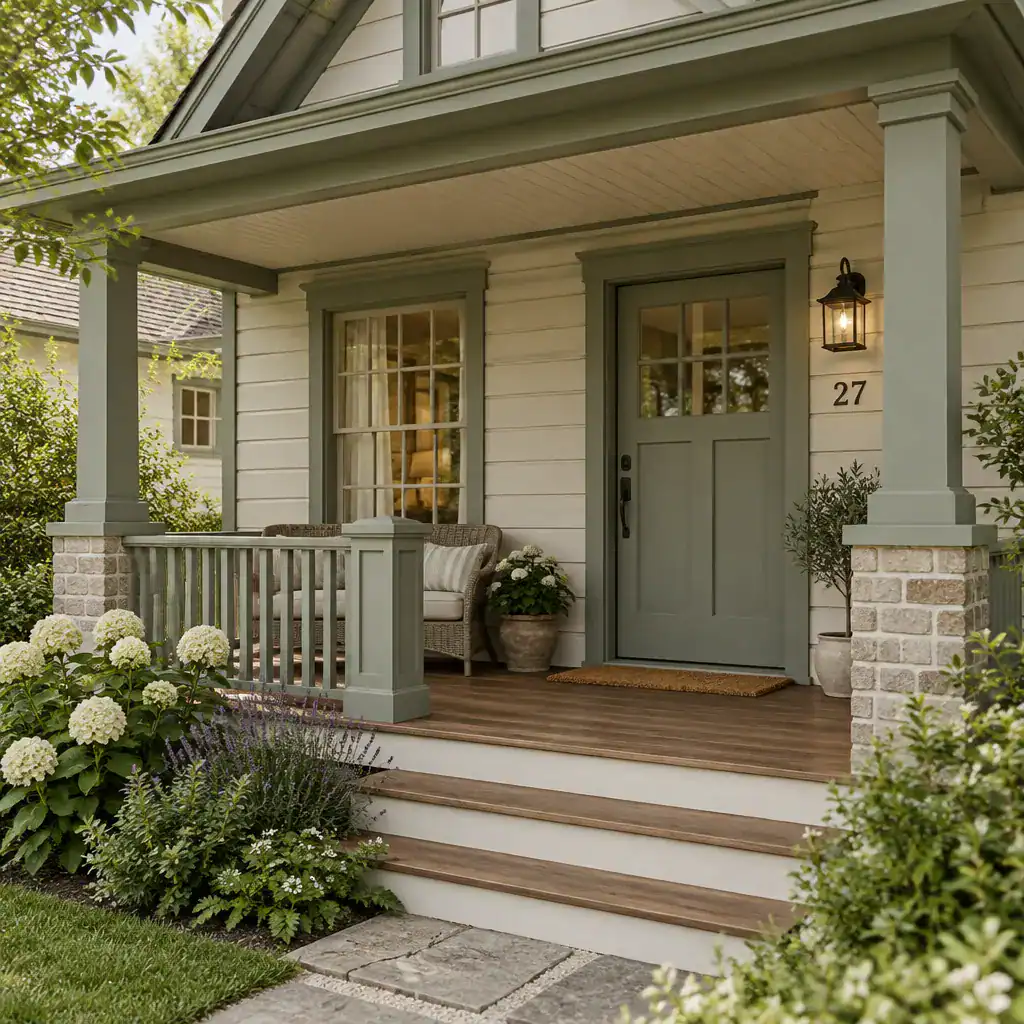
Coordinate the floor, trim, siding, and door rather than choosing each one in isolation. A restrained palette generally works best: use one primary exterior color, a complementary trim shade, and a single thoughtful accent, such as a muted blue-green, deep red, or warm ochre door. If the cottage has prominent brick or stone, pull a subtle undertone from that material into the porch paint, flooring, or planters.
Before committing, consider sun, rain, snow, humidity, and salt exposure in your area. A finish that looks ideal on a covered, shaded entry may require frequent care on a wind-driven-rain exposure. Check how new materials meet existing siding and flashing, and choose finishes you can realistically clean, touch up, or refinish over time.
Make the Porch Comfortable With Traditional Furniture
Furniture should suit the available footprint first. On a narrow entry porch, a single painted bench beside the door may provide a useful pause without blocking the path. A deeper porch can hold two simple armchairs and a small table, while a broad wraparound version can support a modest conversation area set away from the arrival route. Leave enough open space for the door swing, steps, and comfortable movement.
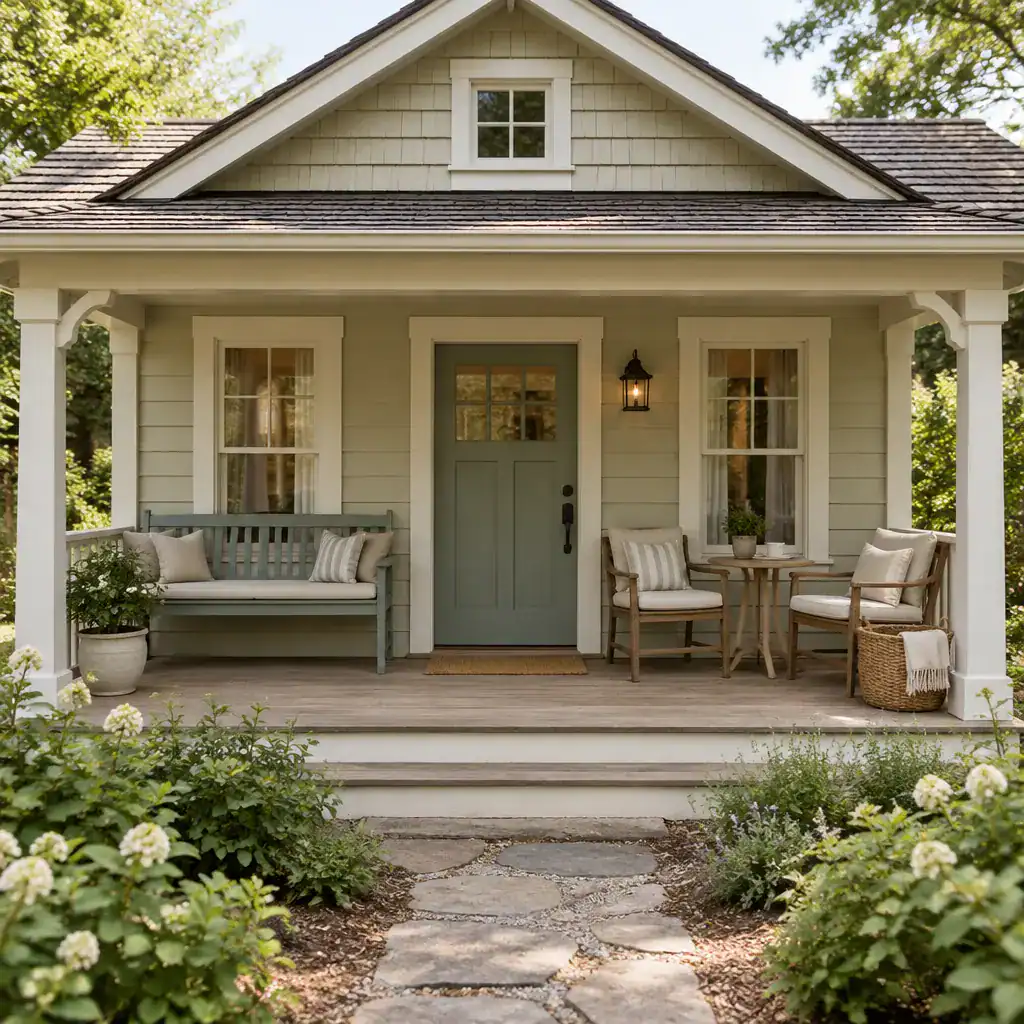
Choose classic, practical silhouettes such as slatted wood benches, spindle-back chairs, woven-look seating, or painted metal pieces with uncomplicated lines. These furnishings complement cottage architecture without making the setting feel overly formal. A small round table can hold a drink or a lantern, and a basket can discreetly store cushions or garden gloves.
Use cushions, a light throw, and a small outdoor rug sparingly to add comfort and texture. Keep the palette connected to the house, and avoid piling on layers that make the entry difficult to use. Outdoor-rated fabrics, rust-resistant hardware, and finishes suited to the porch’s level of shelter will make the arrangement easier to maintain. An traditional cottage porch feels relaxed when its furniture is comfortable but still proportionate to the architecture.
Add Lighting, Plants, and Welcoming Details
Lighting should make arrival safer and reinforce the porch’s quiet traditional character. Wall lanterns placed near the door are a dependable choice, while a pendant-style fixture can work under a higher covered ceiling. Choose a scale that relates to the door and posts, and aim light toward the lock, threshold, steps, and path instead of creating harsh glare.
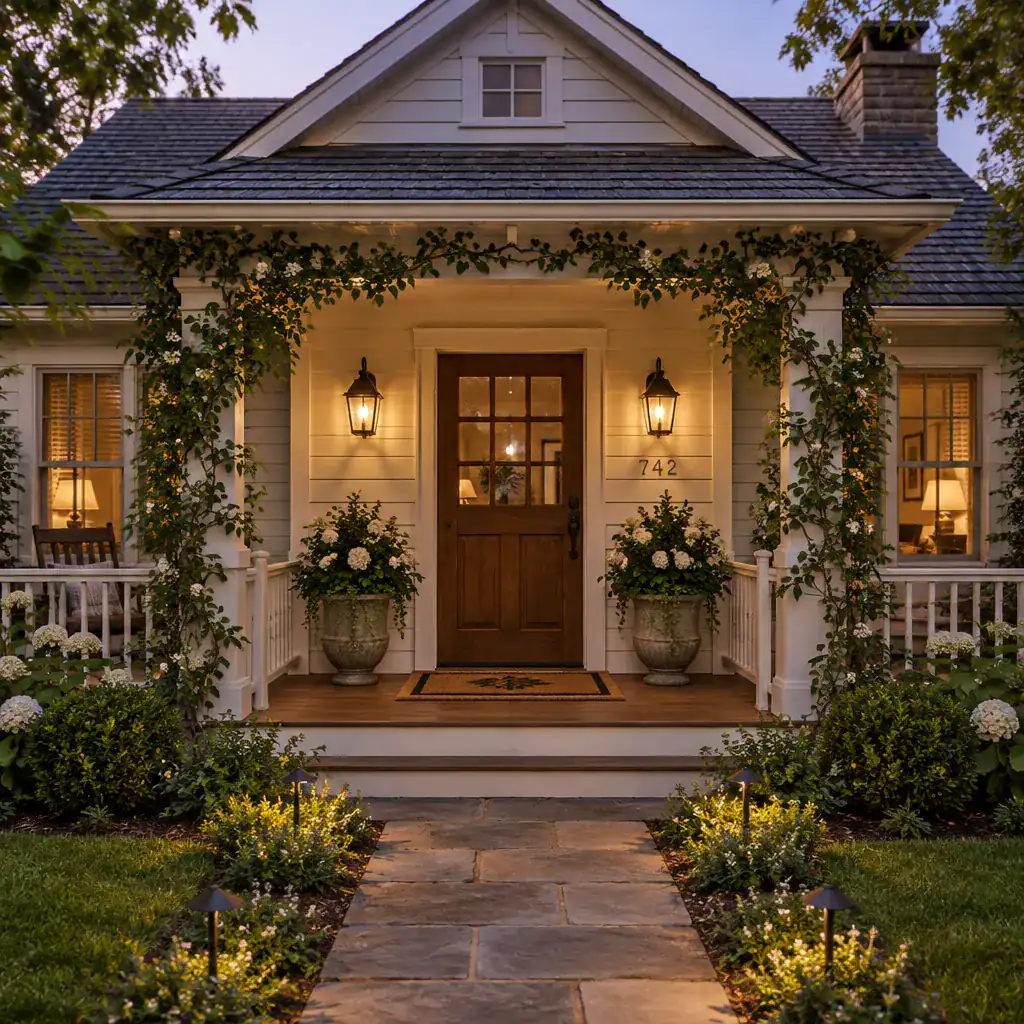
Plants help the porch belong to the landscape. A pair of planters can frame the entry, window boxes can soften the facade, and climbing greenery can add vertical interest where it will not damage finishes or obstruct light. Select plants according to the porch’s sun exposure and your willingness to water, prune, and refresh seasonal displays.
Finish with a simple doormat, readable house numbers, and textiles or planters that repeat the established colors. These details should support, not compete with, the door and architecture. Keep steps, handrails, and the route to the entry clear, and avoid dense clusters of pots or decor that create tripping hazards or visual noise.
Adapt the Design to Porch Size, Climate, and Maintenance
A small porch does not need to imitate a large veranda. Focus on a well-finished door, one useful seating element, a planter or two, and lighting that clearly marks the entry. This edited approach can make a compact traditional cottage porch feel intentional and generous rather than crowded.
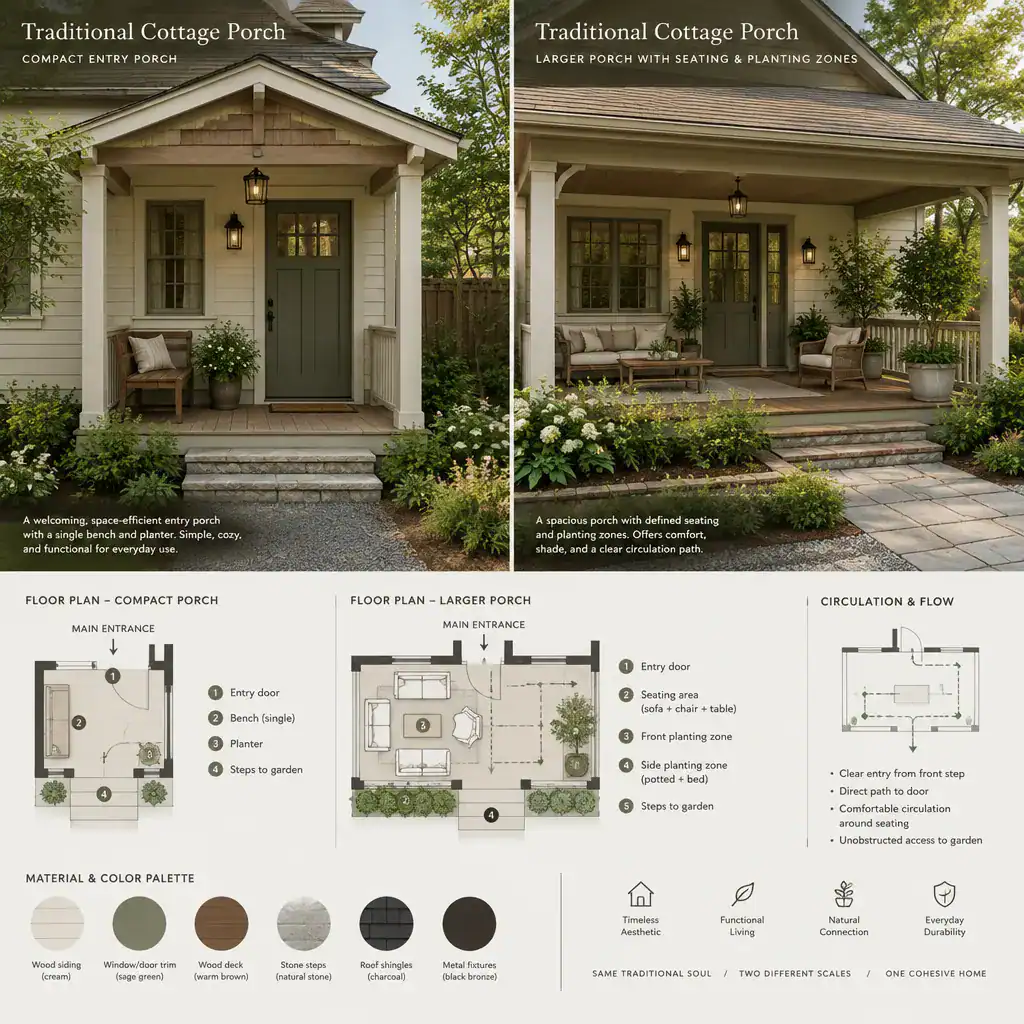
A larger porch can support distinct zones for arrival, sitting, and planting. Even so, repeat key elements such as paint color, furniture finish, and planter style so the areas read as one composition. Place the seating zone where it does not interrupt the main route, and use planting to soften edges rather than divide the porch into too many separate areas.
Adapt every selection to local conditions. Choose fabrics that tolerate the climate, plants suited to the site, and flooring and finishes appropriate for moisture, sun, or freeze-thaw cycles. Before beginning structural changes, review drainage, surface condition, railing needs, and lighting locations. Local building rules and permit requirements may apply to roofs, steps, railings, electrical work, and altered supports, so verify them with the relevant local authority or qualified professional.
The strongest cottage porches coordinate architecture, finishes, furnishings, light, and planting into one welcoming whole. Start with the character your home already has, then prioritize the updates that improve everyday use as well as curb appeal. With measured details and practical choices, an traditional cottage porch can remain inviting through changing seasons without losing its calm, familiar charm.