
English country cottage style is an informal, comfortable decorating approach inspired by rural English homes. It favors familiar materials, soft color, useful furniture, and details that suggest a home has evolved naturally over time. The result is welcoming rather than precious, with enough texture and personality to feel settled and personal.
This guide explains how to use architectural character, color, pattern, materials, furniture, and decorative layers to shape the look. Whether you live in an older cottage, a suburban house, or a contemporary apartment, the same principles can create a warm and relaxed interior without requiring a period-perfect setting.
The Defining Character of English Country Cottage Style
The heart of english country cottage style is the balance between traditional character and everyday ease. Rooms often combine natural textures, comfortable seating, practical storage, and collected objects that have visual meaning or useful purpose. Rather than aiming for a polished showroom effect, the space should feel lived in, lighthearted, and ready for daily life.
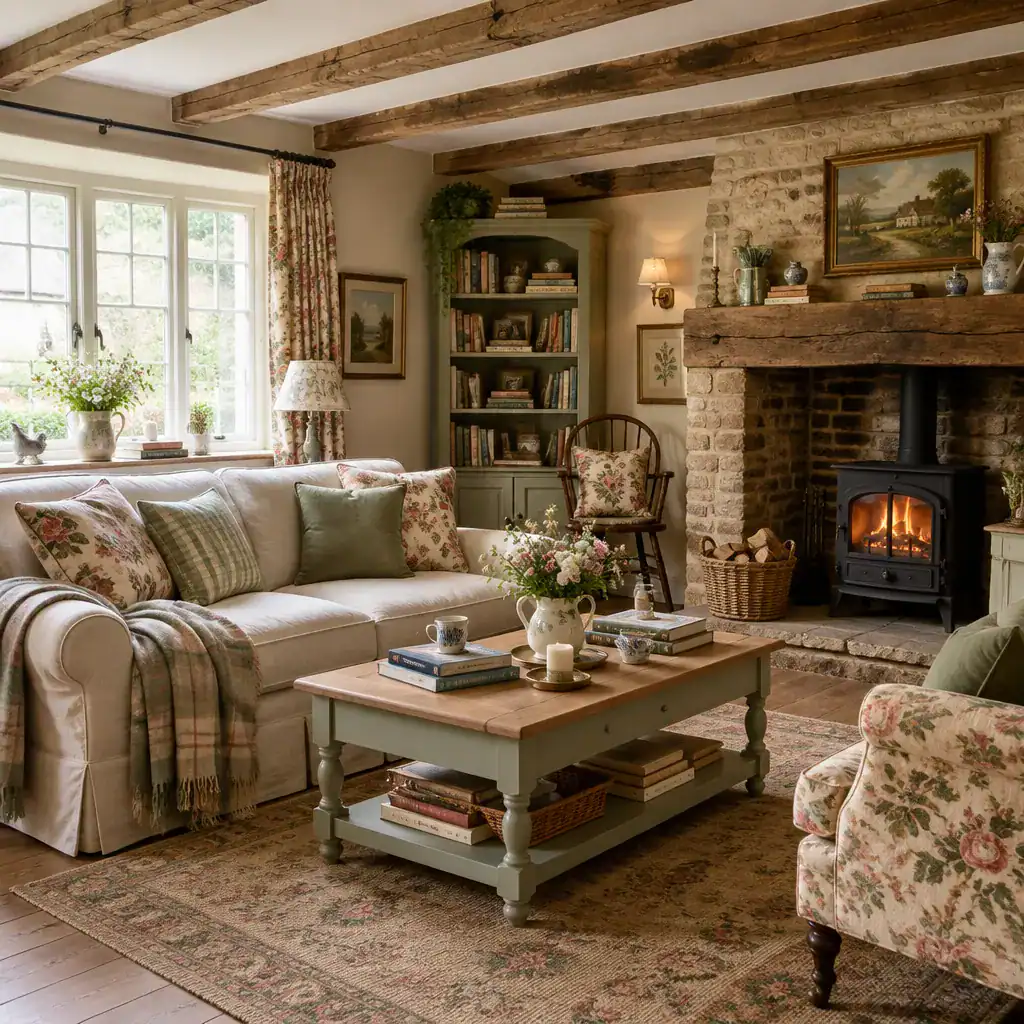
Visible craftsmanship helps establish this character. Timber beams, paneled doors, old floorboards, stone surrounds, handmade ceramics, and painted joinery all contribute warmth, but newer homes can achieve a similar feeling with simple wood furniture, textured finishes, and thoughtfully chosen traditional details.
Gentle imperfection is part of the appeal. A slightly mismatched pair of chairs, a weathered tabletop, an uneven arrangement of framed art, or a mix of old and new fabrics can make a room feel natural. This does not mean neglecting the space; it means allowing useful, well-loved pieces to look at home together.
The look differs from formal traditional interiors, which often rely on symmetry, polished finishes, and more ceremonial furniture. It also differs from heavily themed country rooms filled with obvious novelty decor. Cottage style is more restrained: it suggests rural warmth through materials, comfort, and a quietly collected arrangement.
Colors, Patterns, and Materials That Create the Look
A calm, nature-led palette gives english country cottage style its softness. Start with warm creams, muted sage and moss greens, dusty blues, gentle yellows, faded rose tones, or restrained earthy shades. These colors work especially well when balanced with off-white walls, natural wood, and stone-like neutrals.
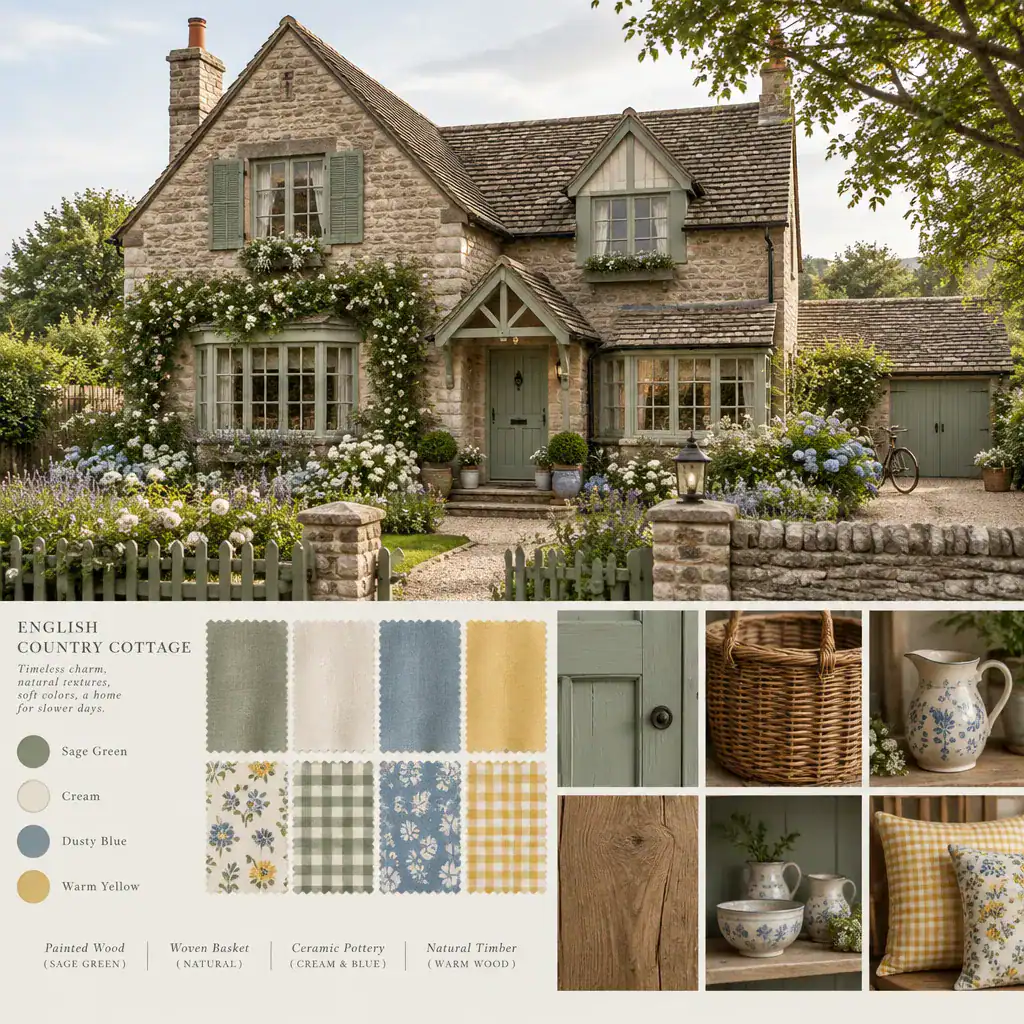
Pattern brings character, particularly through florals, gingham, ticking stripes, checks, and small-scale botanical prints. Use one pattern as the leading feature, such as curtains or an upholstered chair, then support it with quieter companions. For example, floral cushions can sit comfortably with a narrow stripe and a solid linen throw when they share a few related colors.
Materials should look tactile and believable. Painted wood and natural timber provide a useful foundation, while stone, ceramic, linen, cotton, wool, rattan, and woven fibers add warmth. A painted cabinet beside a wooden table, a ceramic lamp, and a wool rug can create depth without relying on excessive ornament.
Varying texture is as important as varying pattern. Keep the overall connection calm by repeating a few colors and material tones across the room. If wallpaper is patterned, simplify the upholstery; if fabrics are layered, let floors and larger furniture remain visually quieter.
Furniture and Decorative Layers for a Comfortable Cottage Interior
Furniture in this style should be practical first and traditional in silhouette second. Choose upholstered sofas and armchairs that invite lingering, wooden dining tables that can handle daily meals, painted cabinets for storage, and freestanding pieces that give a room a sense of history. A mix of finishes is welcome when the pieces share a warm, unpretentious scale.
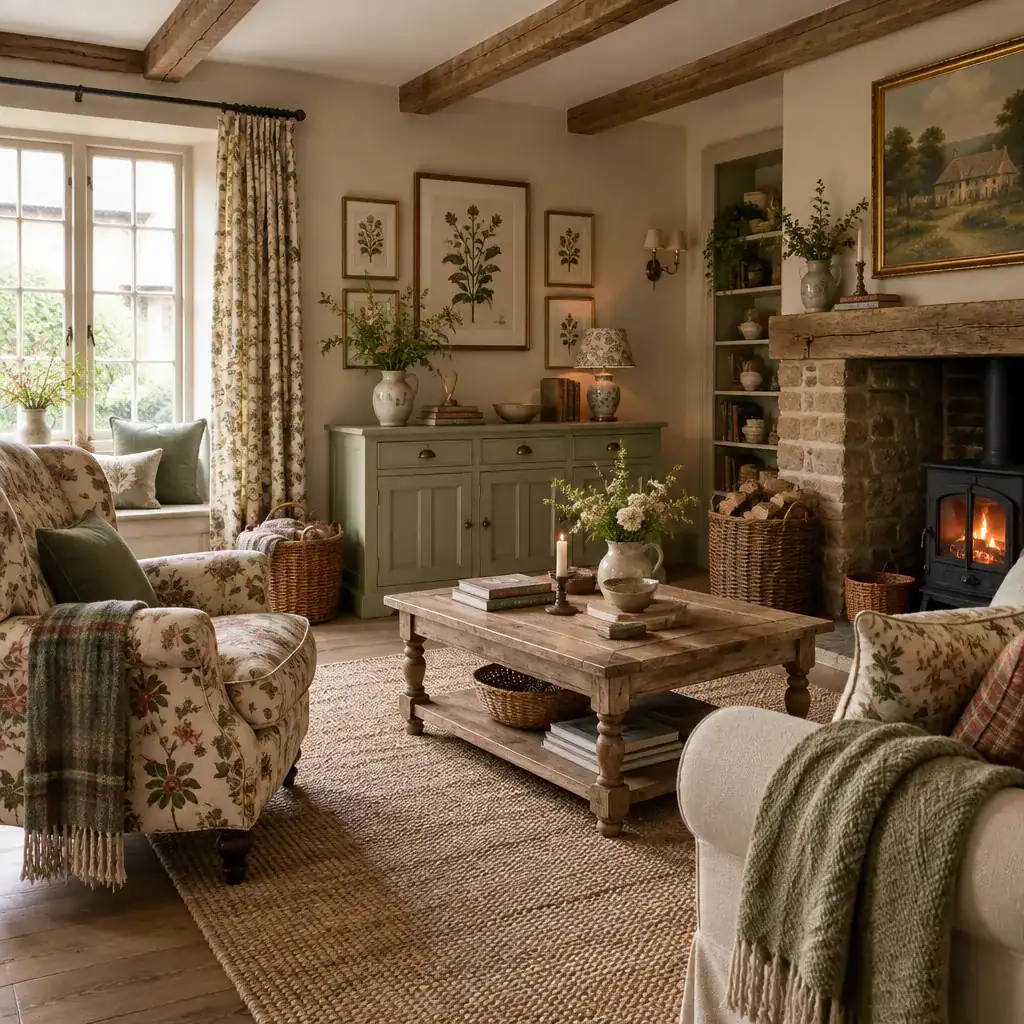
Soft furnishings make the interior feel settled. Quilts, cushions, curtains, rugs, and throws can introduce color and pattern while also improving comfort. Favor natural-feeling fabrics and layer them selectively: a rug underfoot, curtains at the window, and a throw on a chair may be enough to make a room feel generous without becoming busy.
Decorative layers can include books, ceramic pitchers, framed botanical art, simple mirrors, woven baskets, fresh or dried flowers, and vintage-inspired accessories. Display them in small groups rather than scattering them across every available surface. A bookshelf, mantel, sideboard, or windowsill can become a focused place for these personal details.
Maintain clear pathways, usable tabletops, and accessible storage. In english country cottage style, decoration should support comfort rather than compete with it. Edit items that do not add function, texture, or personal interest, and leave enough open space for the room to breathe.
Applying English Country Cottage Style Across Key Rooms
In the living room, begin with relaxed seating, soft lighting, and a comfortable focal point. A fireplace, built-in shelving, bay window, or even a well-arranged bookcase can anchor the room. Add patterned textiles through cushions, curtains, or an accent chair, then use table lamps and warm-toned bulbs to create an inviting evening atmosphere.
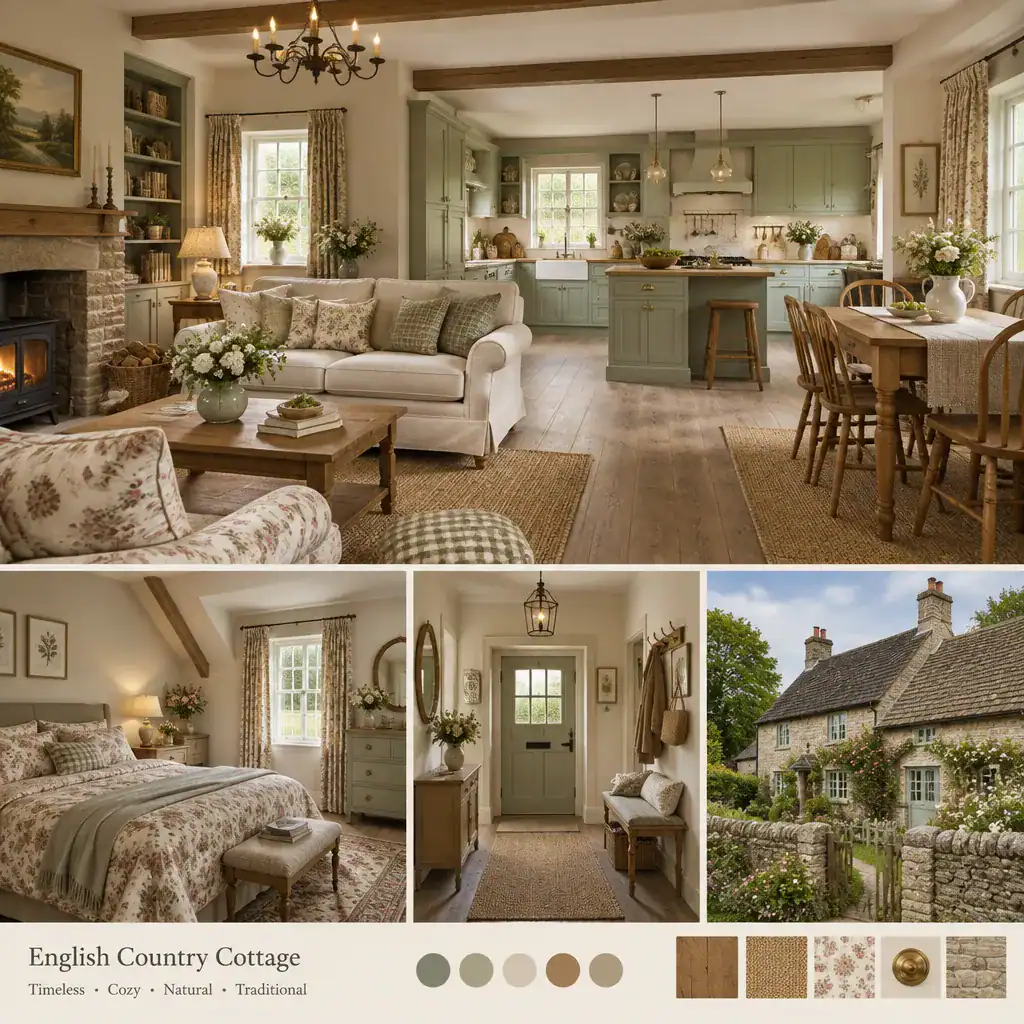
For the kitchen and dining area, painted cabinetry, open shelving, natural wood, and ceramic displays can create a welcoming setting. Keep everyday crockery within reach, use baskets for flexible storage, and center the dining area on a sturdy table that encourages gathering. Open shelves look best when they hold regularly used items rather than purely decorative clutter.
Bedrooms benefit from soft wall colors and layered bedding. Floral, checked, or striped textiles can be combined with an upholstered headboard, painted bedside table, woven rug, and simple lamp. Keep bedside accessories understated so the room remains restful while still carrying the cottage character.
In entryways and bathrooms, extend the style with practical storage and durable, natural-looking finishes. A wooden bench, peg rail, basket, or painted console can organize an entry. In a bathroom, consider ceramic accessories, vintage-inspired hardware, a framed mirror, and soft textiles, while choosing finishes that are easy to clean and suited to moisture.
How to Keep the Style Authentic Without Making It Feel Dated
Authenticity comes from a few convincing focal elements, not from filling every surface with cottage-themed accessories. A painted cabinet, a floral fabric, a wooden table, or a traditional lamp can establish the mood more effectively than a large collection of signs, novelty items, or overly coordinated decor.
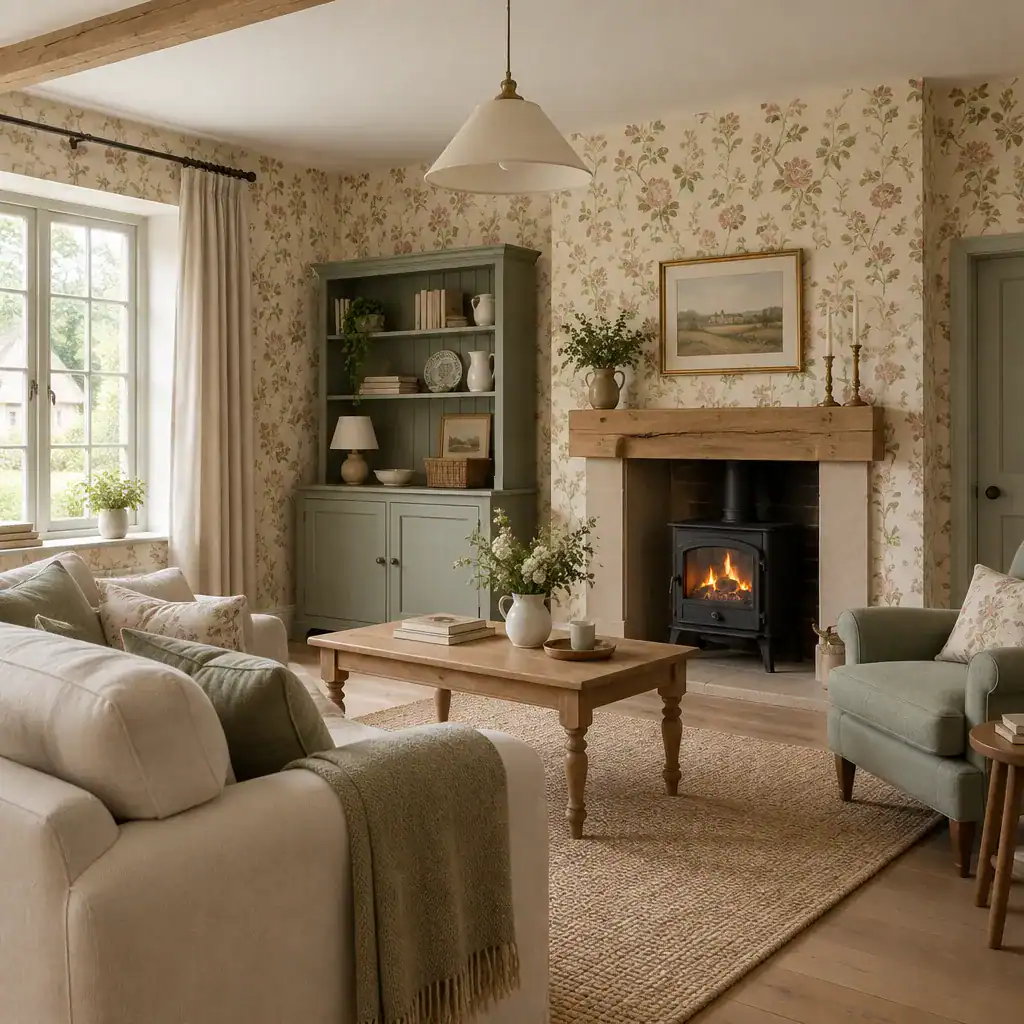
Balance antique or vintage-inspired pieces with contemporary essentials that improve comfort and function. Modern seating can work beside an older table, and discreet storage can coexist with traditional hardware. This approach lets the home serve current routines while preserving the relaxed charm of english country cottage style.
Create cohesion by repeating a restrained palette and a selected group of patterns in adjoining rooms. You do not need identical colors everywhere, but related warm neutrals, greens, blues, or faded floral notes can make the home feel connected. Limit bold patterns to the areas that can carry them, and use solids to provide visual rest.
Finally, let the home’s architecture, natural light, and proportions guide your choices. Small or dim rooms may need lighter walls, fewer patterns, and simpler displays. Larger rooms can support more layering and deeper colors. Working with the space instead of forcing a theme will keep the finished interior fresh, useful, and believable.
English country cottage style combines traditional character, natural materials, soft color, comfortable furniture, and collected details in a way that feels warm rather than overly coordinated. Begin with the room’s function and the architectural features already available, then add pattern, furnishings, and accessories in layers.
The most successful cottage interiors feel personal, welcoming, and practical. Choose pieces you enjoy using, leave room for everyday life, and allow the finished home to develop a relaxed character over time.