
A cozy cottage house interior is less about following a fixed decorating formula and more about creating a home that feels warm, comfortable, personal, and easy to live in. The look often combines soft color, welcoming furniture, natural textures, gentle lighting, and details that suggest a home has been collected and enjoyed over time.
Whether your cottage is a traditional home, a compact house, or a rental with cottage-inspired potential, the goal is to build a sense of comfort without making rooms feel overly decorated. Furniture, color, texture, lighting, and room scale all work together. Start by considering how each space needs to function, then choose elements that support that use while contributing to a consistent, relaxed atmosphere.
This overview moves from the broad cottage mood into the living room, then looks at how simpler choices and small-space planning can make the style feel practical as well as inviting.
Cozy Cottage Interior Design Living Room
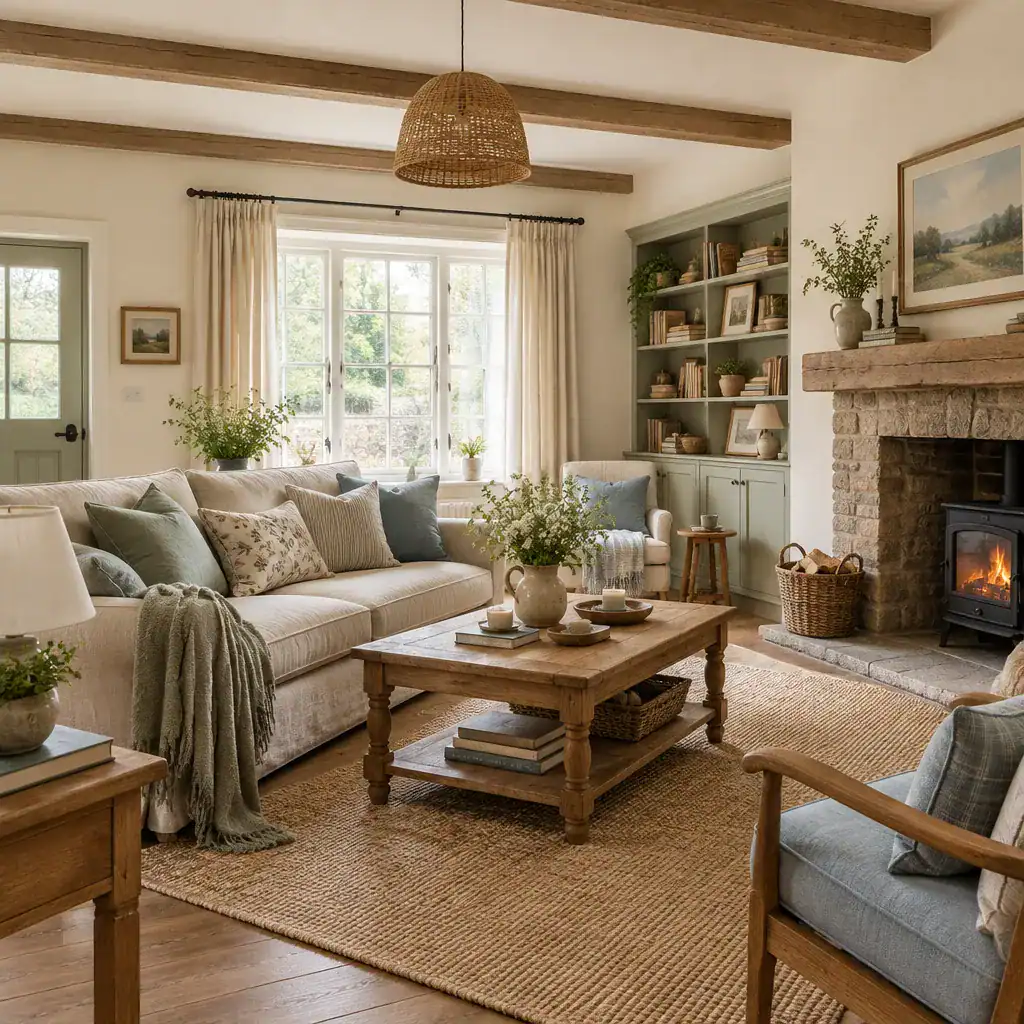
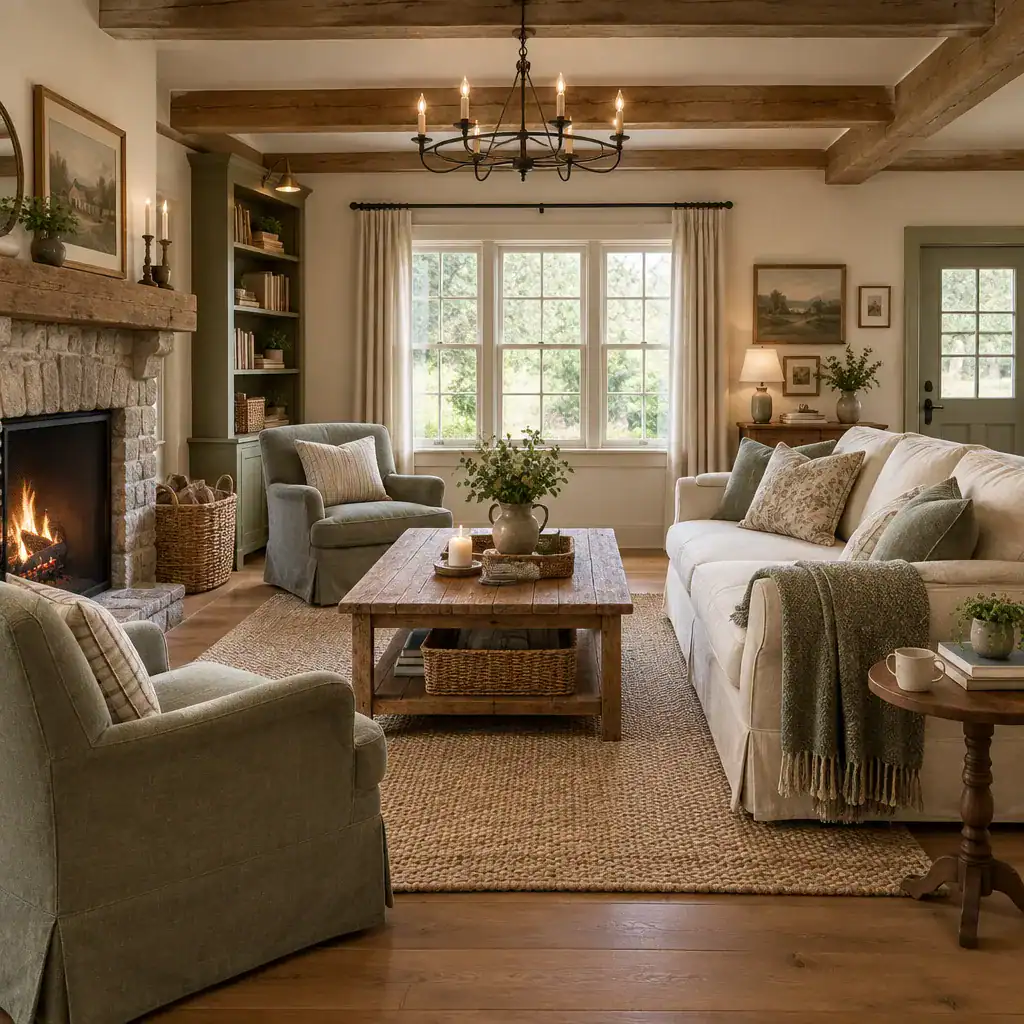
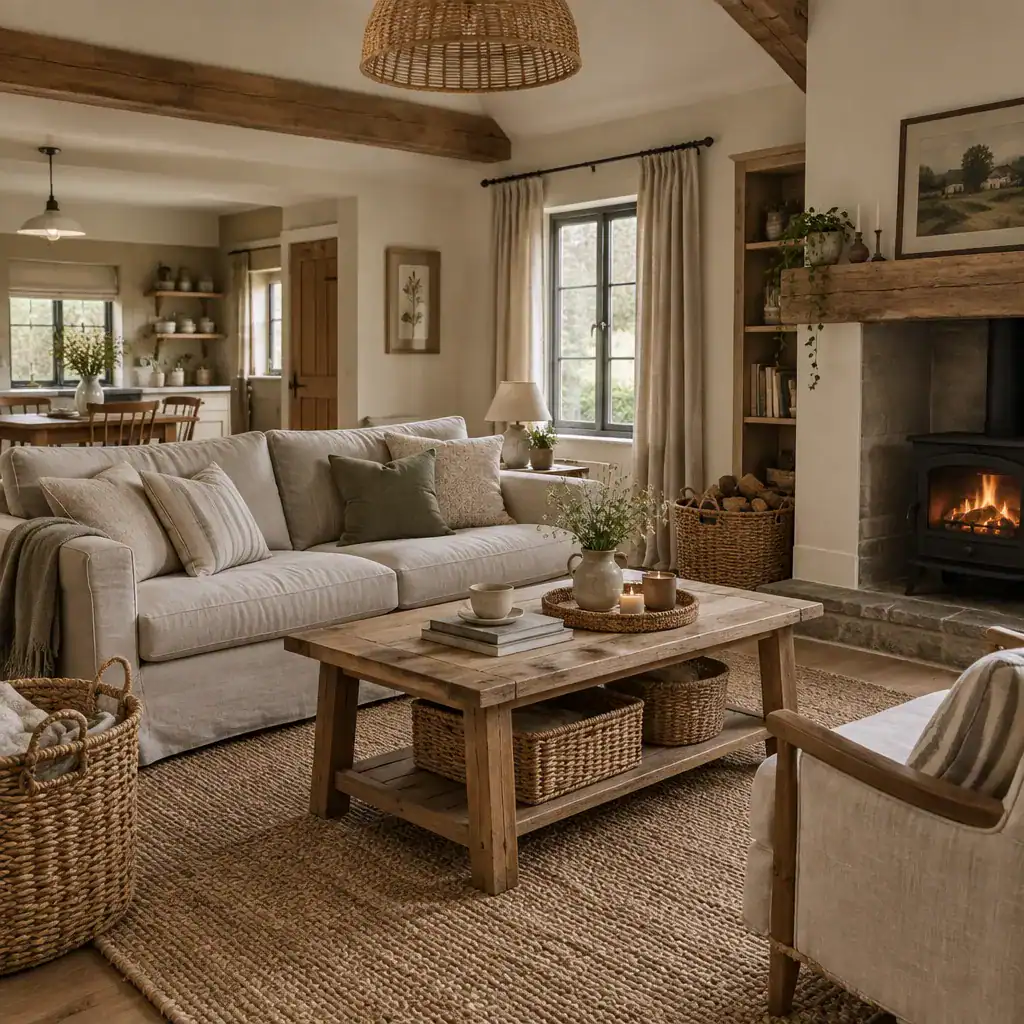
The living room is often the easiest place to establish a cozy cottage interior because it is designed around rest, conversation, and everyday comfort. Begin with a seating arrangement that feels inviting for the people who use the room. A sofa, a pair of chairs, or a compact loveseat can become the foundation, depending on the room’s proportions and the amount of available floor space.
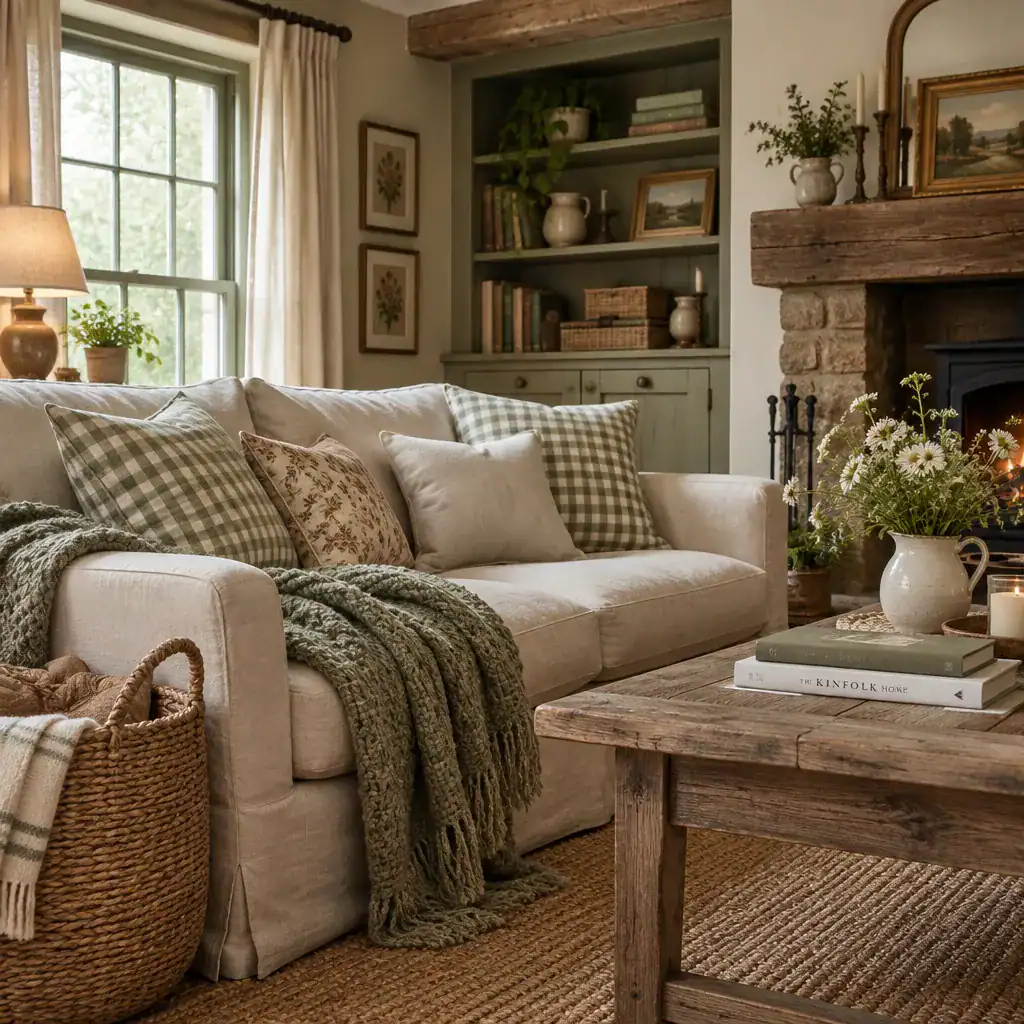
Layered textiles help the room feel softer and more settled. A woven rug, cushions in complementary fabrics, a throw blanket, and simple window treatments can introduce warmth without requiring a dramatic redesign. Rather than selecting every item separately, consider the room as a coordinated group. Soft neutrals, muted greens, warm blues, faded florals, or earthy accents may all work well when they relate to the home’s existing finishes and natural light.
Lighting also has a major role in the overall mood. A combination of table lamps, floor lamps, and ambient overhead lighting can make the room feel more relaxed than relying on one bright source. Natural-looking materials, such as wood, woven fibers, ceramic, linen, or aged metal finishes, can add cottage character in an understated way.
Keep enough open space around seating and pathways so the room remains comfortable to move through. Cottage style can include personality and decorative detail, but a living room feels most welcoming when its furnishings support real daily use. Repeating selected colors, textures, and finishes elsewhere in the home can help the living room feel connected to the larger interior rather than styled as an isolated theme.
Simple Cozy Cottage Interior Design
A simple cozy cottage interior relies on intentional choices instead of an abundance of decor. You do not need to fill every wall, shelf, or tabletop to create warmth. A small collection of useful, meaningful, or visually pleasing items can make a stronger impression than many unrelated accessories.
Choose furnishings that serve everyday life first. A comfortable chair, practical storage cabinet, sturdy side table, or well-placed bench can reinforce the cottage mood while helping the home function better. Pieces do not need to match perfectly; what matters is that their colors, scale, and finishes feel compatible. A room can feel collected over time while still appearing calm and cohesive.
Visual warmth often comes from a coordinated palette and varied texture. For example, painted surfaces, wood accents, soft upholstery, woven baskets, and natural-fiber textiles can create depth even when the color scheme remains restrained. Repeating a few selected shades or textile qualities across rooms helps the interior feel connected without becoming too uniform.
Clear circulation is equally important. Leave room to walk comfortably, open doors, and use furniture as intended. This balance allows cottage character to feel relaxed rather than crowded. When each object has a purpose or a place, the home can retain its lived-in charm while remaining easy to maintain.
Small Cozy Cottage Interior Design
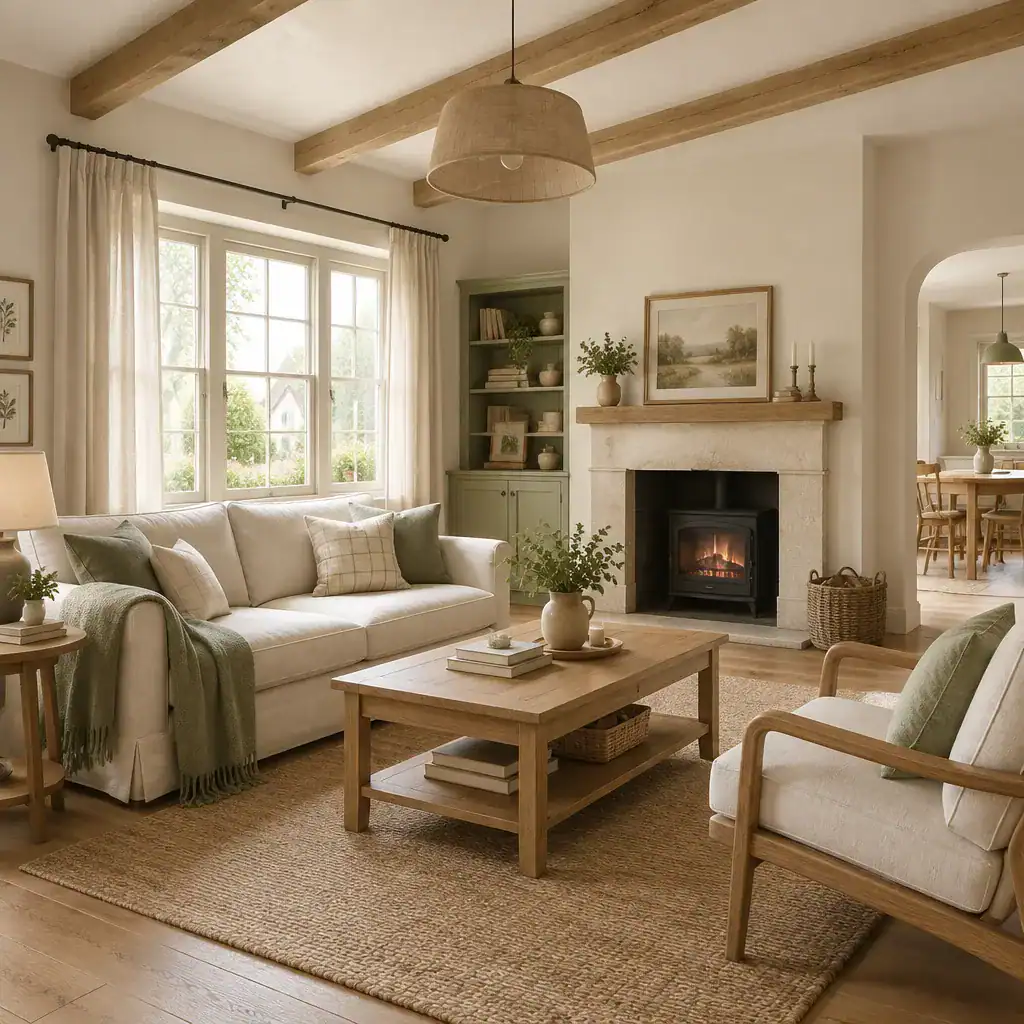
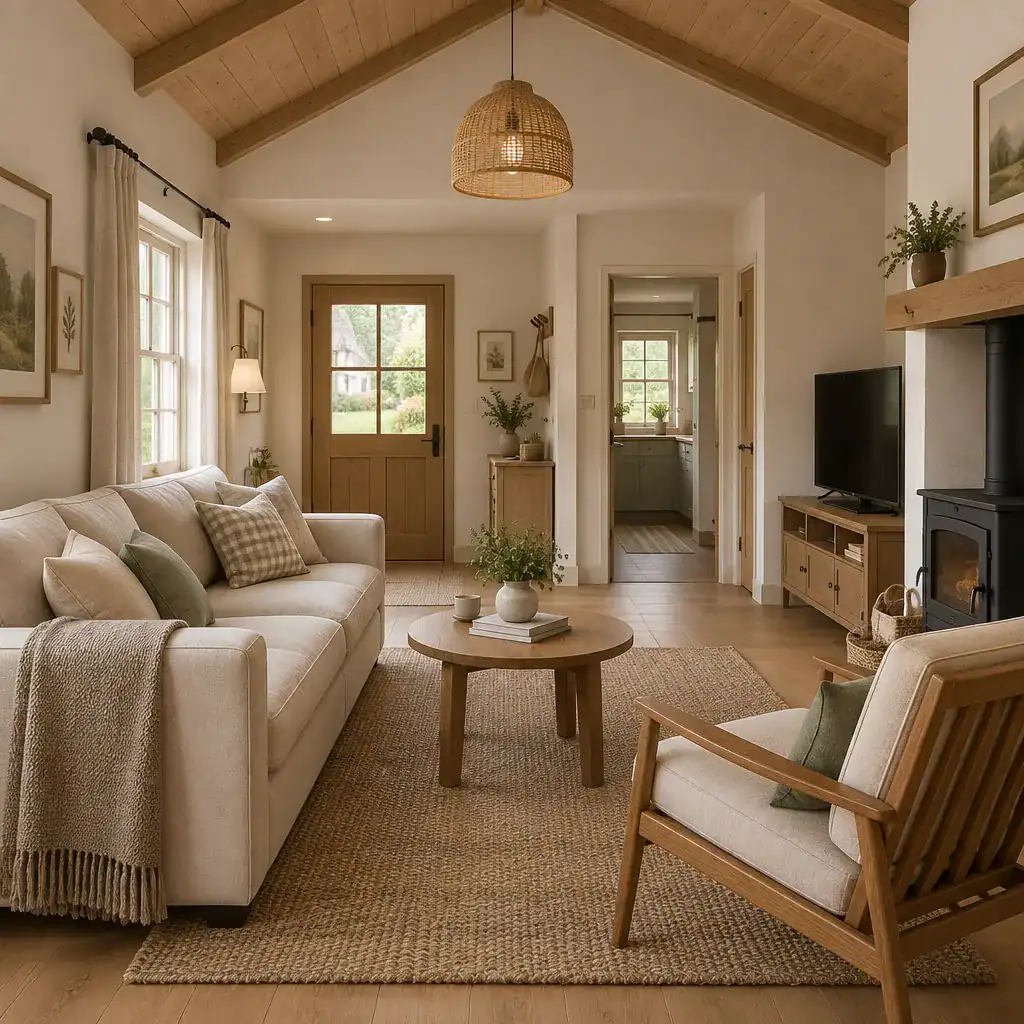
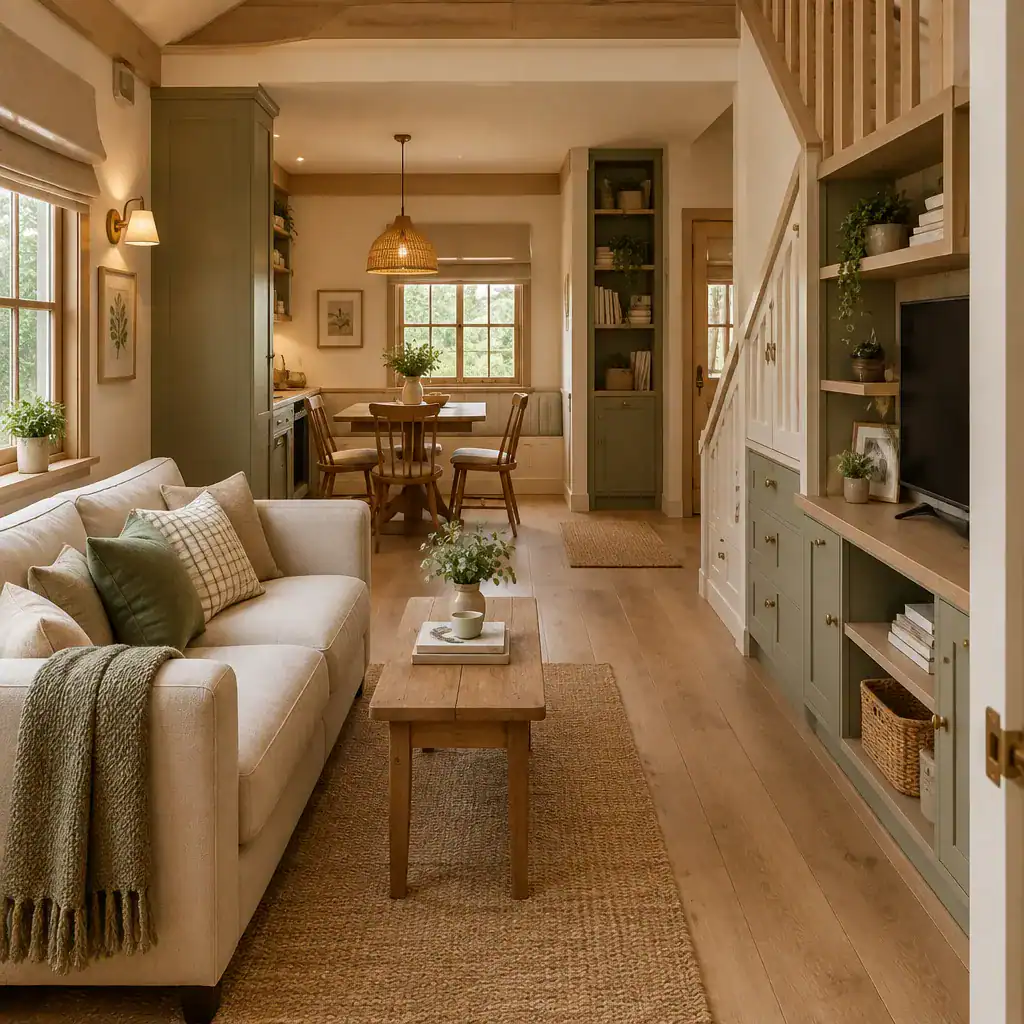
In a small cottage, every furnishing and decorative choice influences how open and comfortable the interior feels. The same principles of warmth, texture, and personality still apply, but scale and layout become especially important. Select furniture that suits the room’s proportions and leaves walkways clear. A compact sofa, narrow console, small round table, or armless chair may offer useful function without visually overwhelming the space.
Multifunctional pieces can be helpful when floor area is limited. A bench with storage, a coffee table with a lower shelf, or a dining surface that also supports occasional work can reduce the need for extra furniture. Visually lighter pieces, including furniture with open legs or slimmer profiles, may also help the room feel less enclosed while preserving a comfortable cottage atmosphere.
Use vertical surfaces thoughtfully. Wall hooks, shelves, cabinets, and carefully positioned artwork can add storage and character without taking up valuable floor space. Storage works best when it supports the home’s daily routine, whether that means organizing blankets, books, shoes, kitchen items, or seasonal accessories.
Lighting and color can help a compact cottage feel balanced. A consistent palette from one area to another creates visual flow, while mirrors or reflective accents can brighten a room when placed to suit its natural light. Soft lamps, textured fabrics, and warm materials prevent an open-looking space from feeling plain or impersonal.
Keep accessories selective. A few framed prints, a favorite ceramic piece, a plant, or a folded throw can communicate cottage personality without crowding surfaces. In a smaller home, thoughtful editing is what allows comfort and character to coexist with a practical sense of openness.
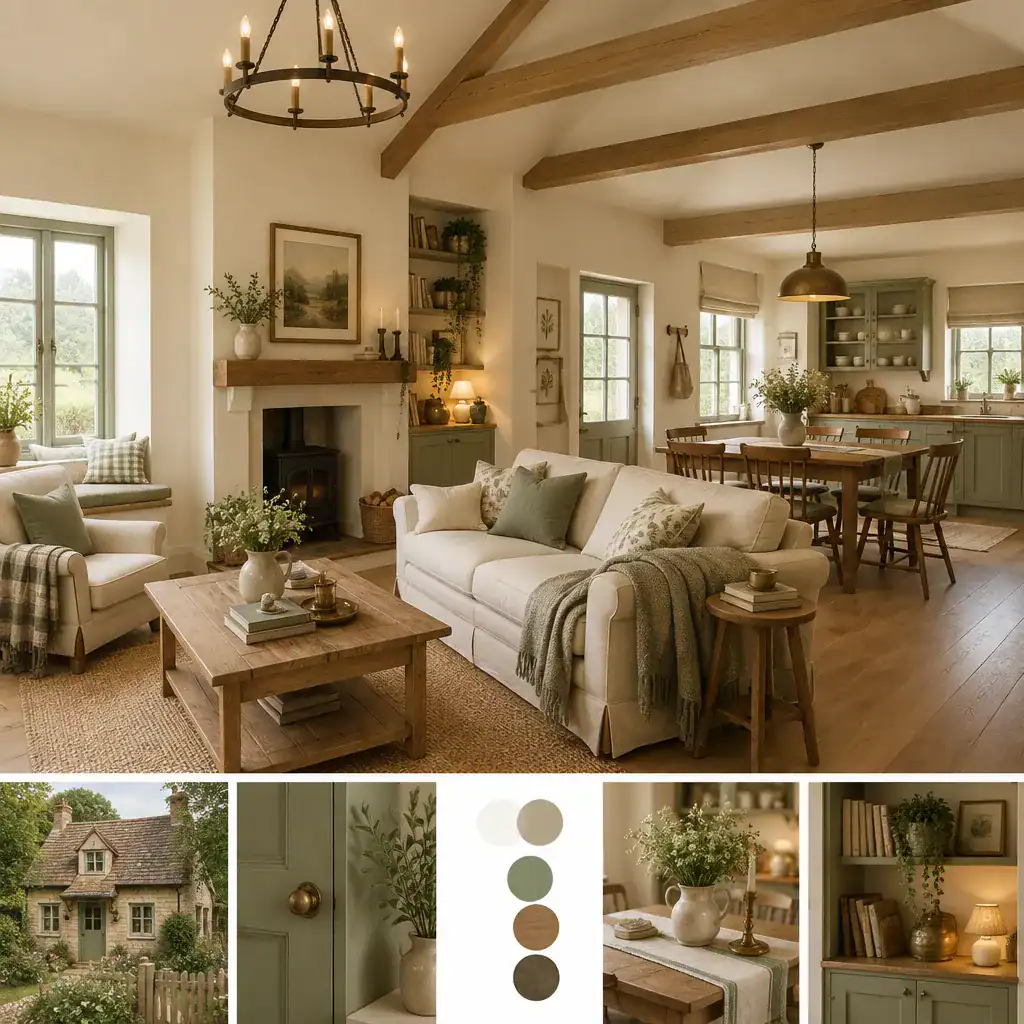
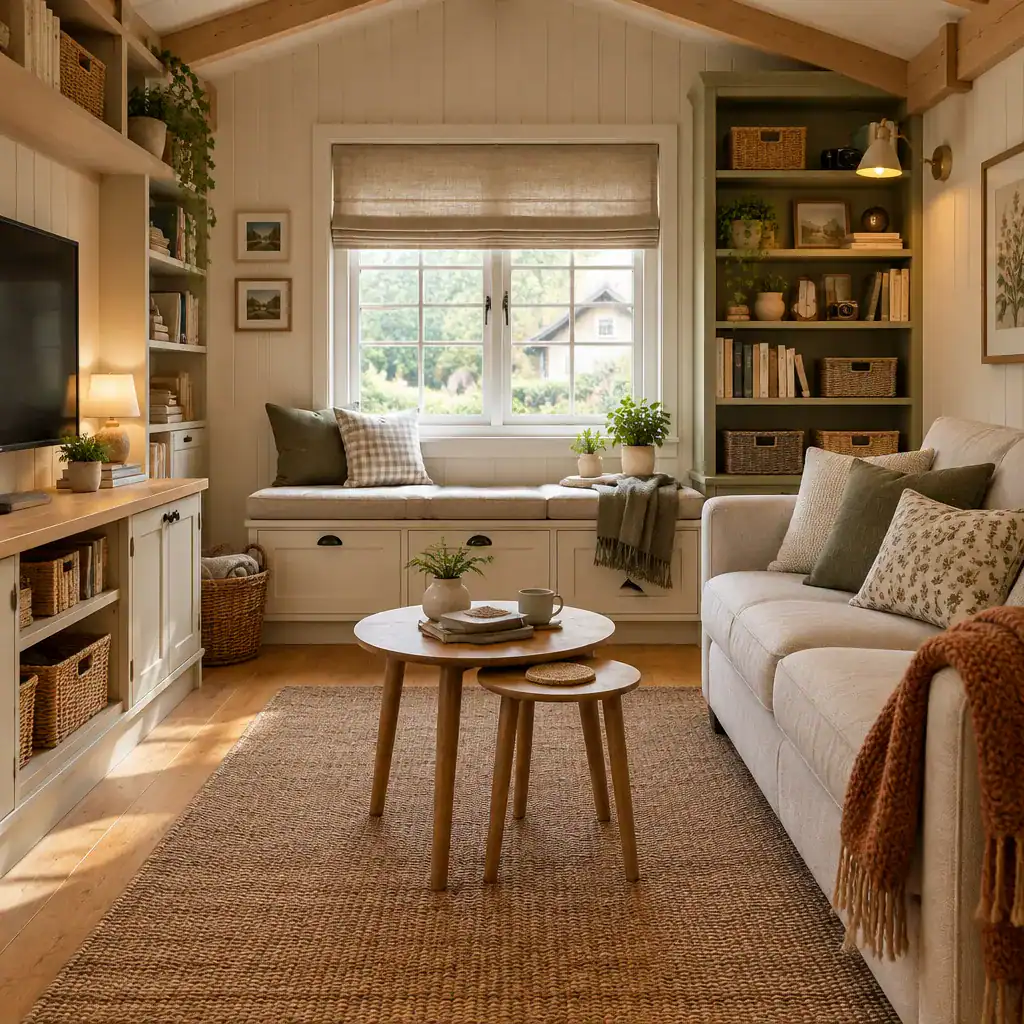
A cozy cottage house interior develops as a connected design process. Start by defining the atmosphere you want, then apply it through comfortable living room choices, simple and useful furnishings, layered texture, and lighting that supports daily life. If the cottage is small, adjust the scale and storage plan while keeping the same sense of warmth.
The most successful result does not depend on owning a large number of decorative items. It comes from understanding the room’s needs, respecting the available space, and making consistent choices in color, materials, comfort, and layout. With a thoughtful approach, a cottage interior can feel characterful, calm, and welcoming in homes of many sizes.