
An English country cottage interior feels warm, settled, and personal without needing to follow a rigid period formula. Its appeal comes from the way comfortable furnishings, gentle color relationships, natural textures, and familiar decorative details work together. Whether the home is an original cottage, a compact rental, or a newer house with cottage-inspired features, the goal is to create an atmosphere that feels welcoming and quietly collected.
A cohesive result begins with the character already present in the home. Timber beams, fireplaces, uneven walls, deep window ledges, painted joinery, or simple architectural details can all inform the decorating direction. From there, furniture, textiles, paint, and accessories can be chosen to support a relaxed traditional mood while still making every room practical for everyday life.
English Country Cottage Interior Ideas
English country cottage interior ideas work best when comfort and character are given equal importance. Start with a room that feels useful rather than overly arranged: seating should invite people to linger, storage should accommodate daily belongings, and surfaces should have enough space for books, lamps, or a small vase of seasonal greenery.
Layering adds depth, but it benefits from restraint. A floral curtain, checked cushion, woven rug, or softly patterned upholstery can create interest when balanced with quieter fabrics and simple painted surfaces. Furniture with an established appearance, such as a timeworn wood table, painted cabinet, upholstered armchair, or traditional sideboard, helps the room feel grounded. Let original architectural features remain visible where possible, since these details often provide the most convincing connection to the cottage setting.
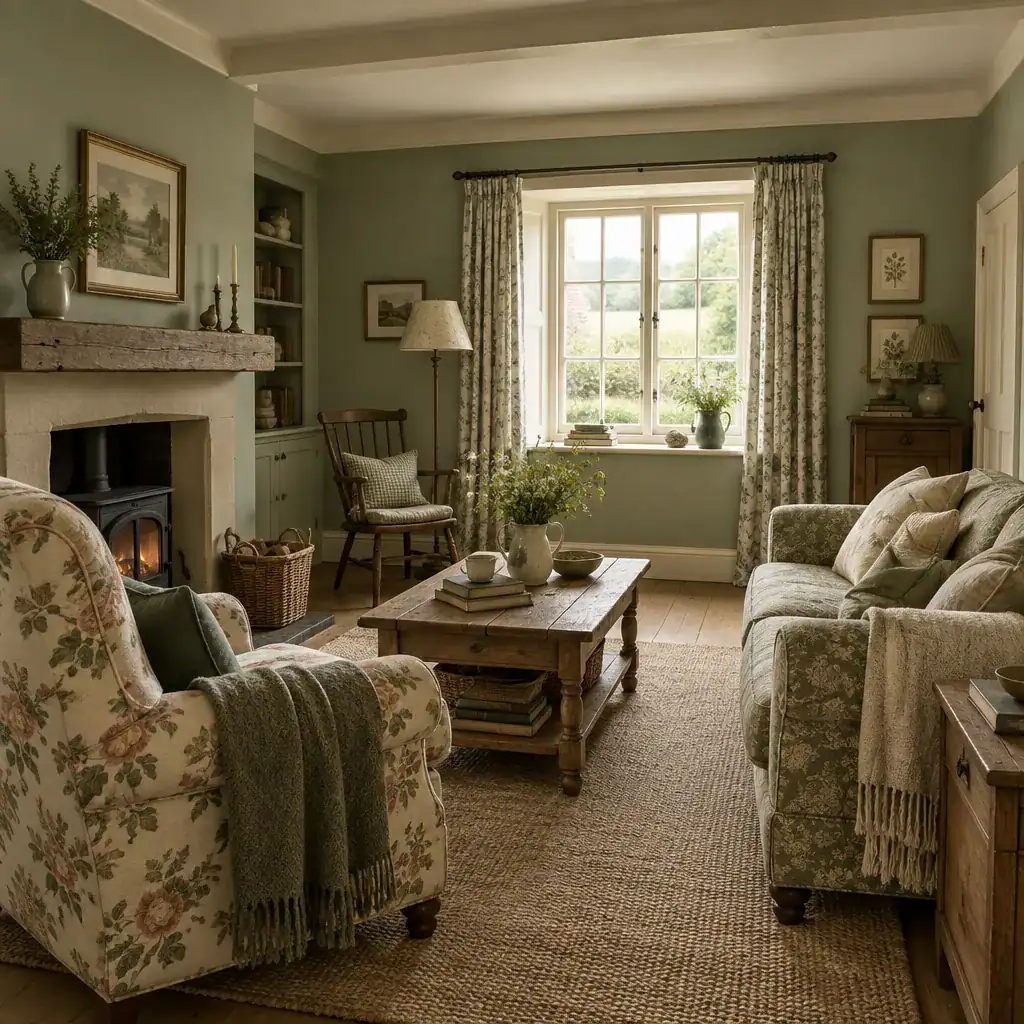
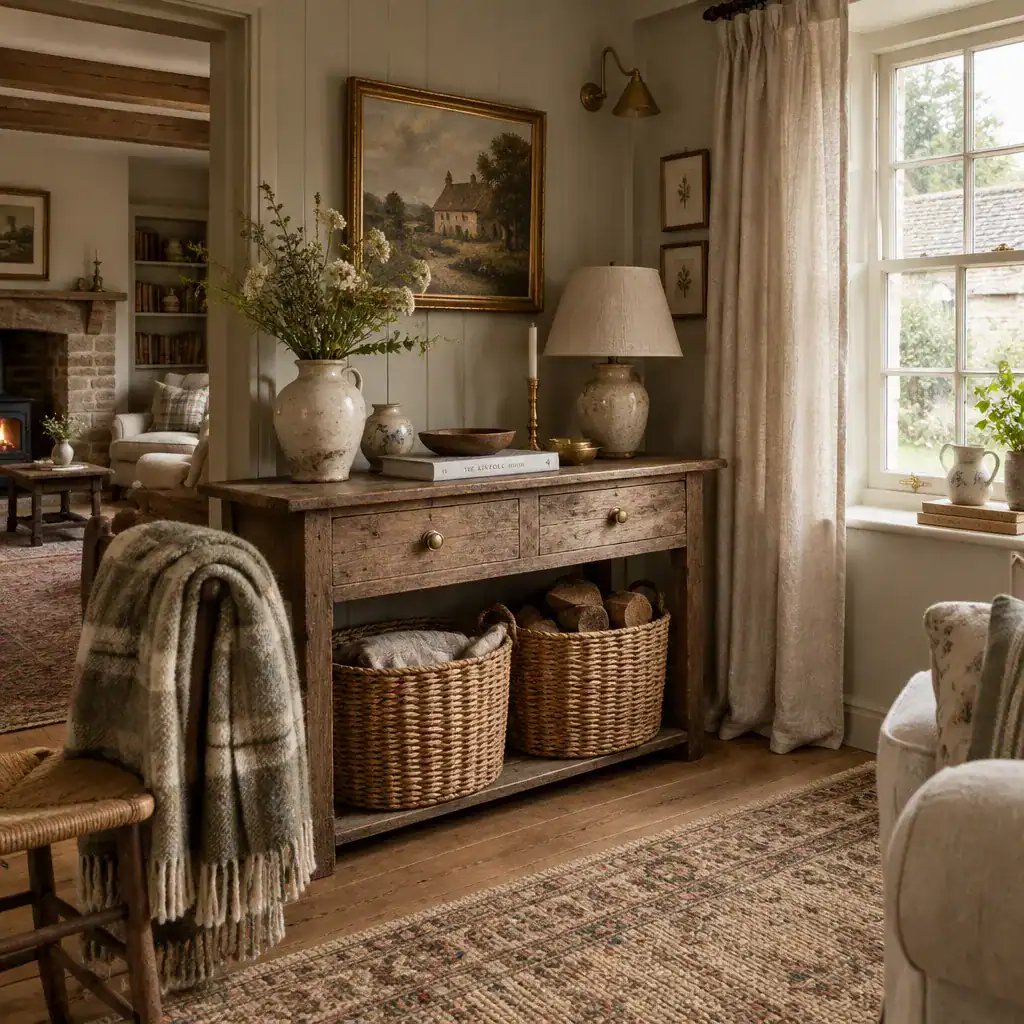
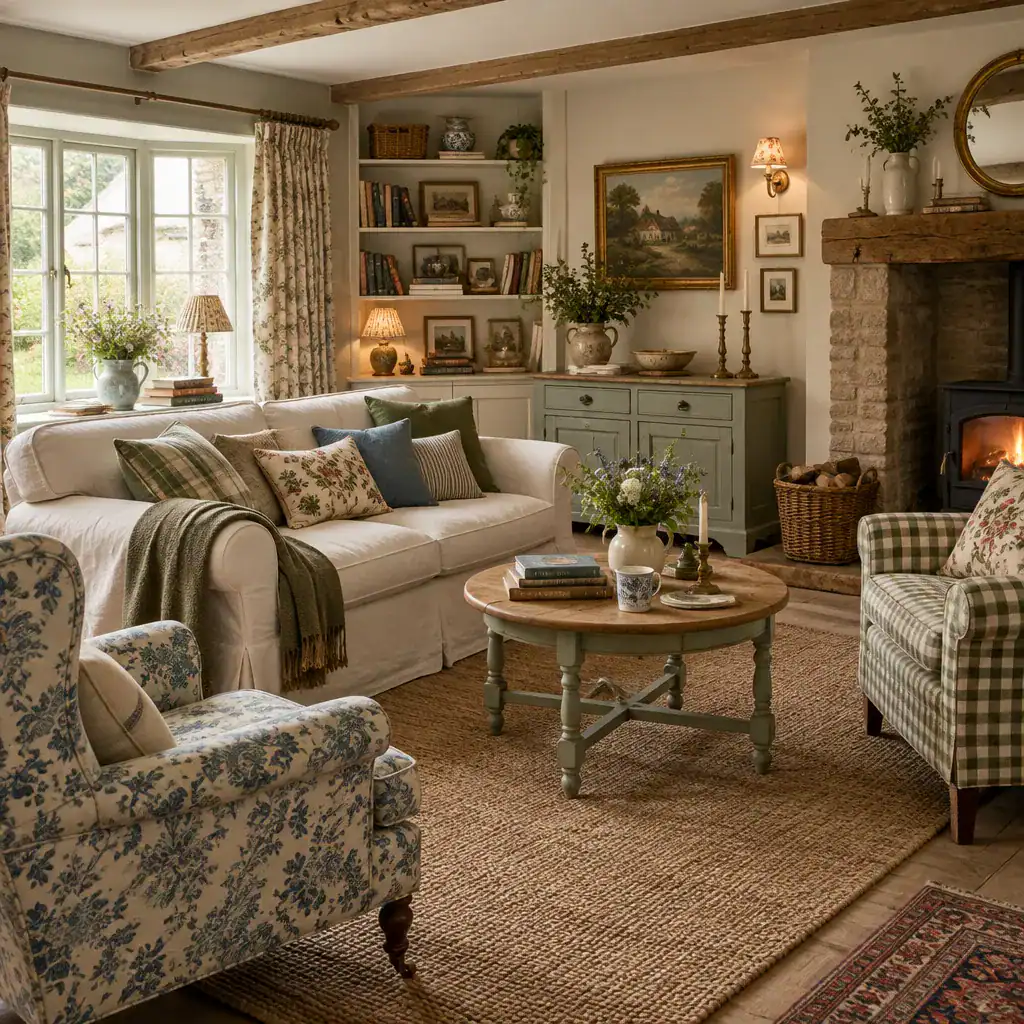
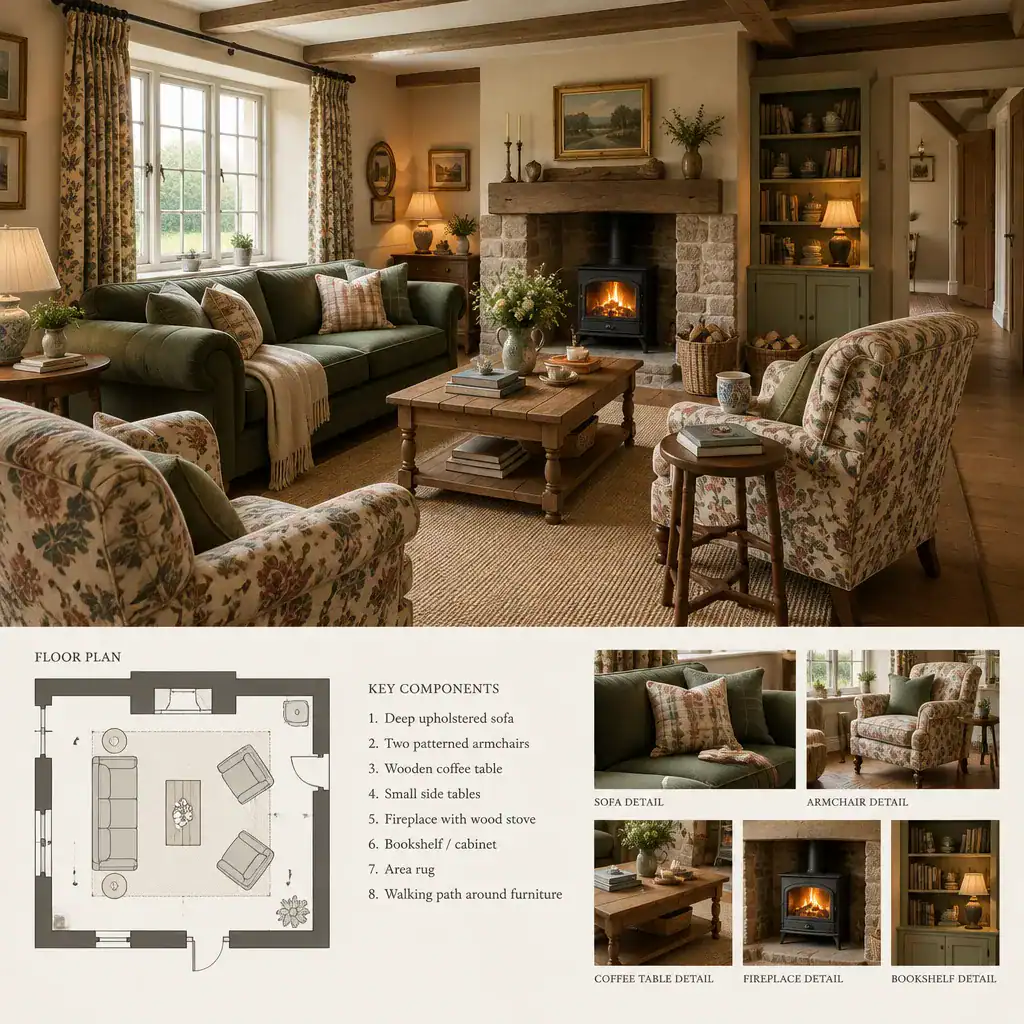
English Country Cottage Interior Living Room
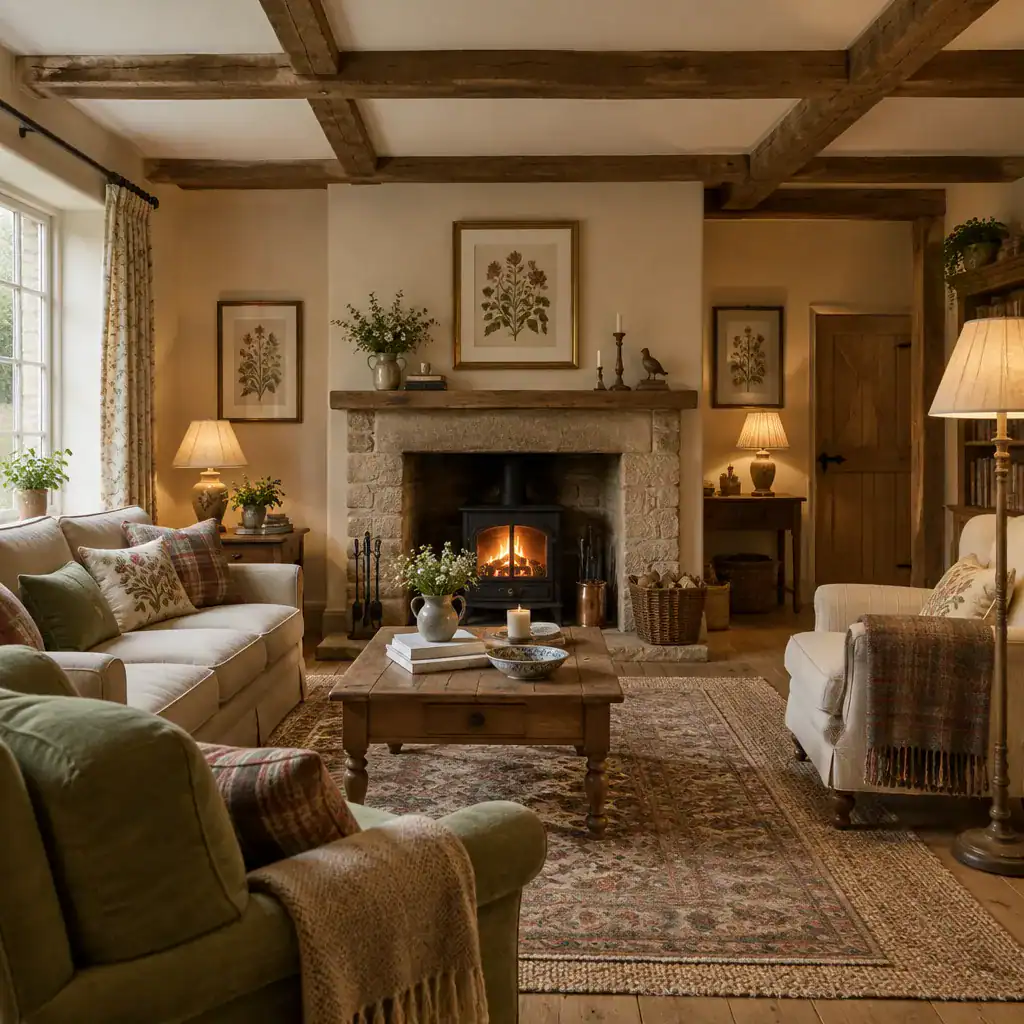
The living room is often the natural center of an English country cottage interior because it brings together comfort, conversation, and visual warmth. Begin with seating that supports daily use, such as a generous sofa paired with armchairs, a footstool, or a small bench. Upholstery does not need to match perfectly; complementary tones and related fabric weights can create a more relaxed, collected effect.
Textiles are especially useful in this room. Curtains, cushions, throws, and rugs soften hard surfaces while introducing pattern and color in manageable layers. Wood furniture can add warmth, while painted pieces may lighten a darker room or echo the finish of existing trim. Table lamps, wall lights, and a central pendant can provide a softer evening atmosphere than relying on one bright overhead fixture.
Decorative objects should feel connected to how the room is used. Books, pottery, framed artwork, baskets, and a few meaningful finds can make the space feel lived in without turning every surface into a display. The finished living room should remain comfortable enough for reading, hosting, resting, and everyday family life while visually linking to the rest of the home.
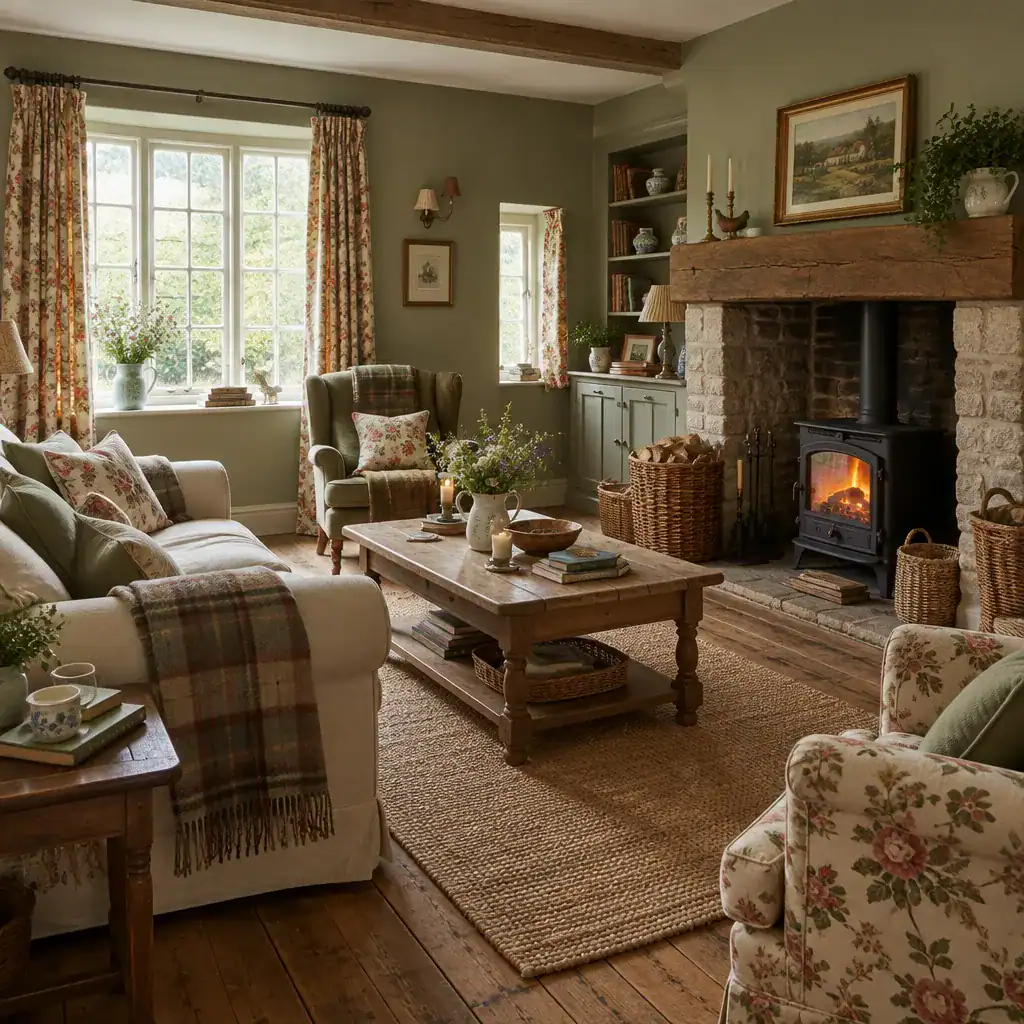
English Country Cottage Interior Paint
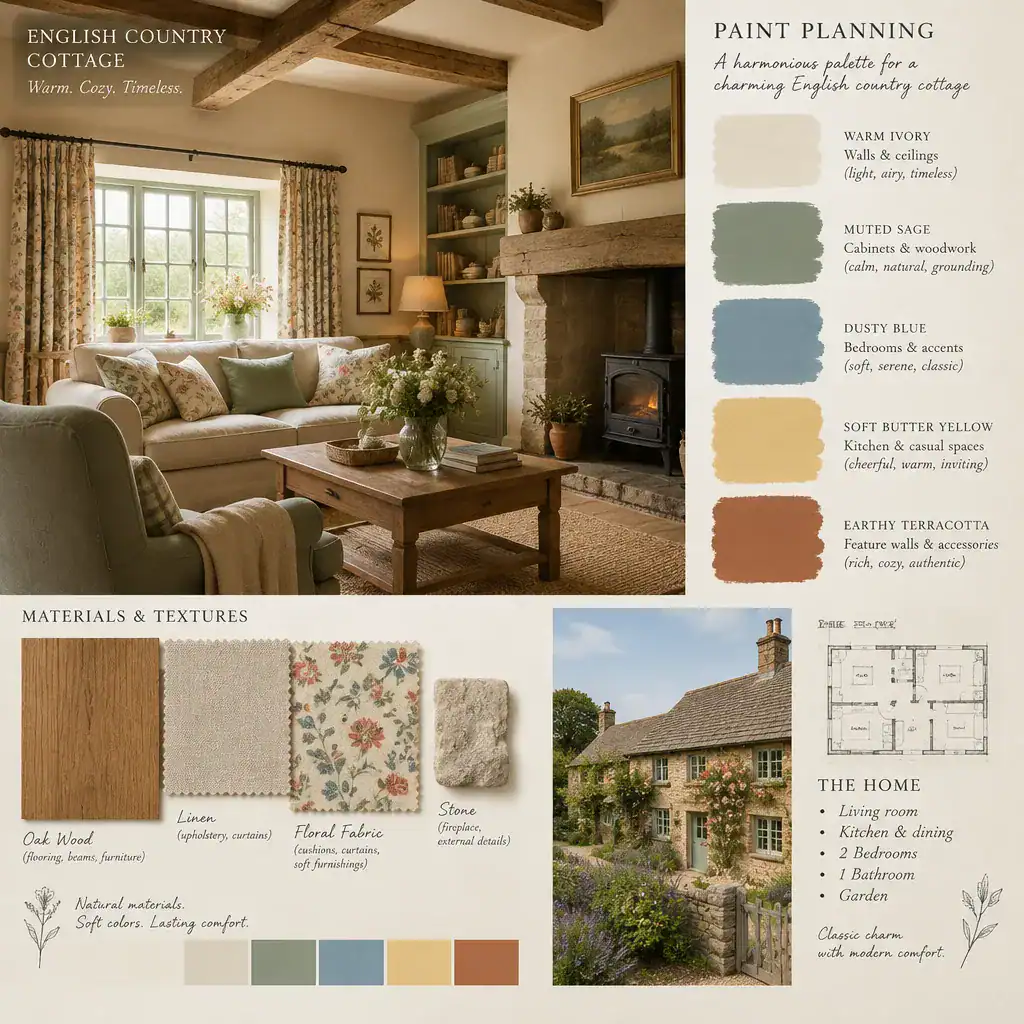
Paint has a major role in establishing the mood and continuity of an English country cottage interior. Rather than selecting each room in isolation, consider a coordinated color direction that allows spaces to flow naturally into one another. Softly related neutrals, muted natural tones, and deeper accent colors can all work well when they suit the available light, the scale of the room, and the home’s existing features.
Natural light should guide the final decision. A room with limited daylight may benefit from a lighter or warmer feeling finish, while a brighter space can often support more depth on the walls. Existing floorboards, stone, brick, timber, and built-in joinery should also influence the palette so the paint feels integrated instead of imposed.
Contrast can be used selectively to bring definition to doors, trim, shelves, fireplaces, or a focal wall. The aim is not to make every architectural edge stand out, but to use variation where it reinforces the room’s character. Repeating a few related tones across walls, furniture, and textiles will generally create a calmer and more cohesive cottage atmosphere.
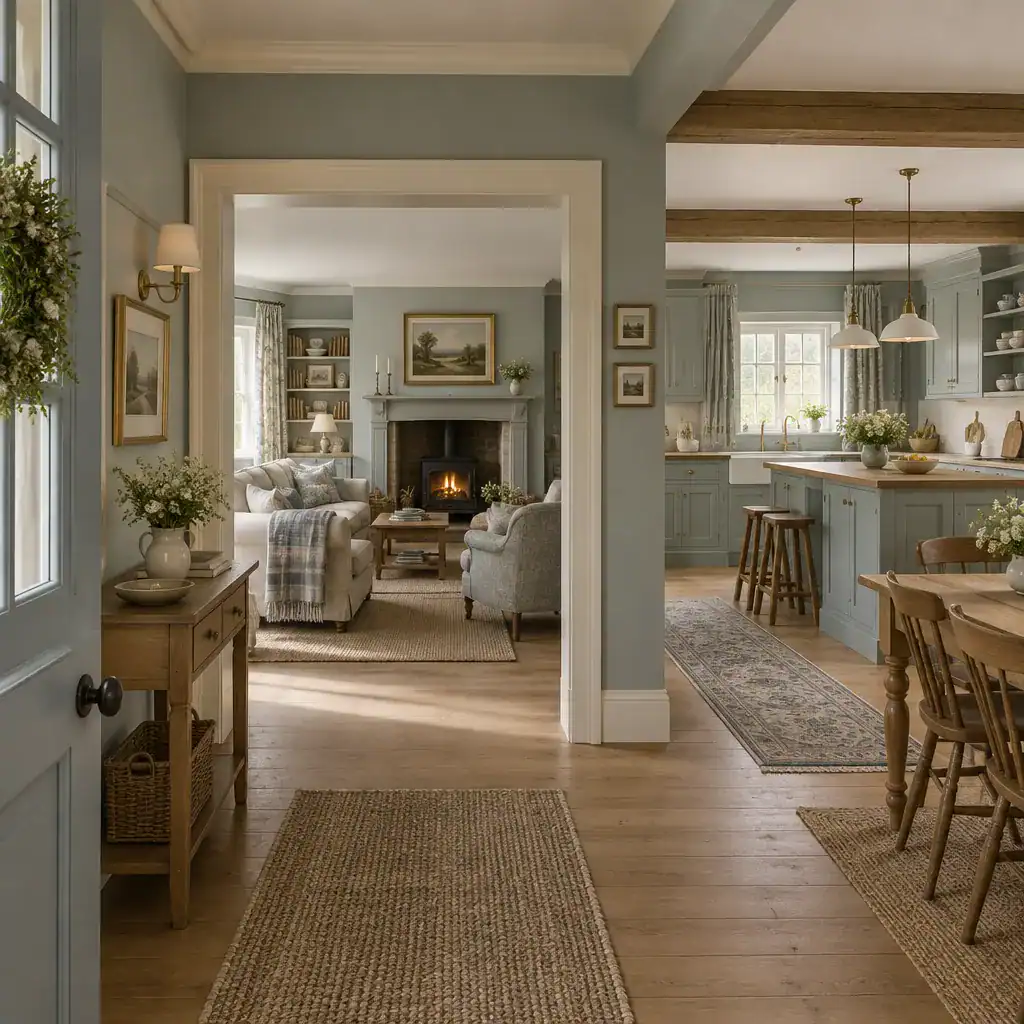
English Country Cottage Style
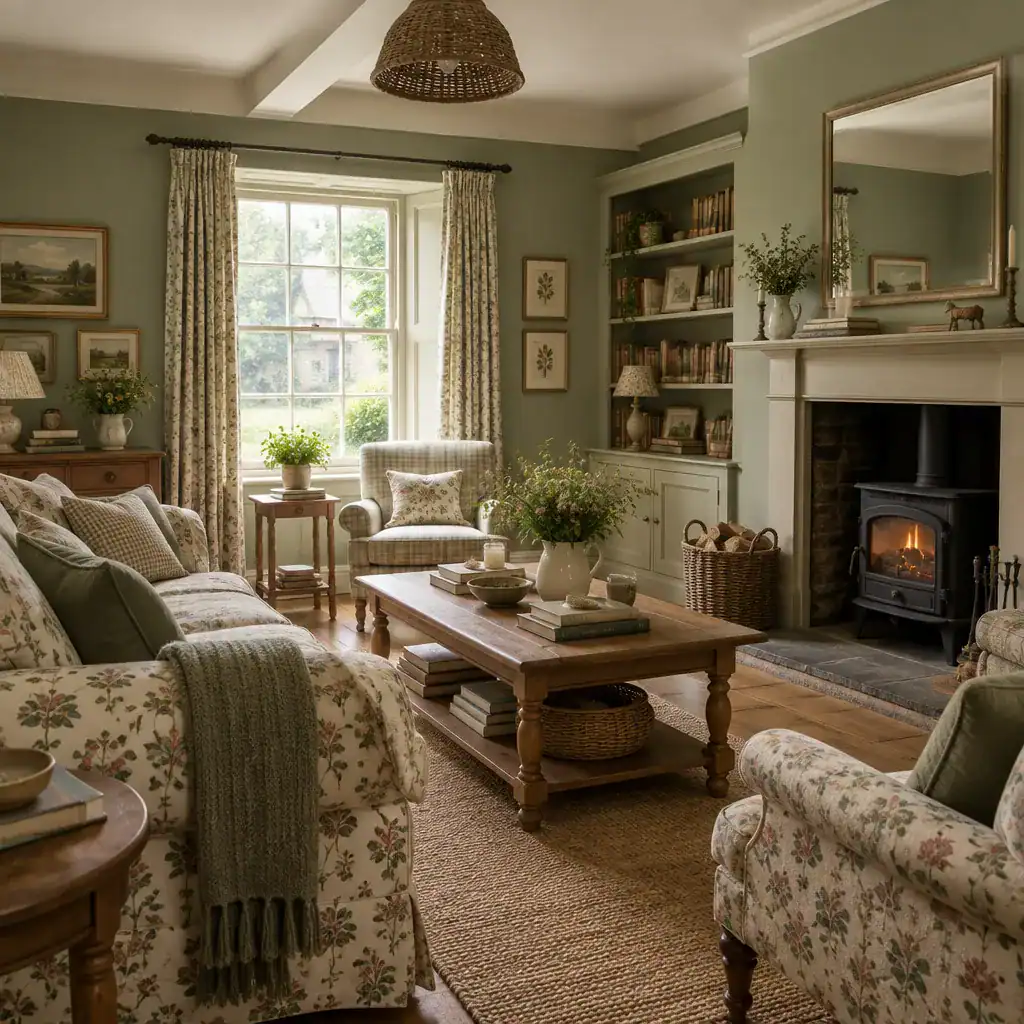
English country cottage style is defined less by any single object than by a consistent sense of relaxed traditional character. It combines visual layering with practical comfort, allowing rooms to feel warm and established while still serving modern routines. Furniture may have traditional lines, but it should be chosen for usefulness as well as appearance. Patterns may be present, but they should share a compatible color mood rather than compete for attention.
A cohesive cottage interior also avoids relying solely on vintage-looking accessories. A room filled with unrelated old objects can feel crowded or theatrical if the larger elements do not connect. Instead, evaluate each choice by asking whether it supports the same overall direction: comfortable seating, softened light, natural or painted finishes, considered color relationships, and decorative details with a sense of purpose.
The most successful spaces retain some visual calm between their layers. Plain areas of wall, simple upholstery, open floor space, and uncluttered surfaces give patterned textiles, artwork, collected ceramics, or aged furniture room to make an impact. This balance helps the style feel lived in and welcoming rather than overly styled.
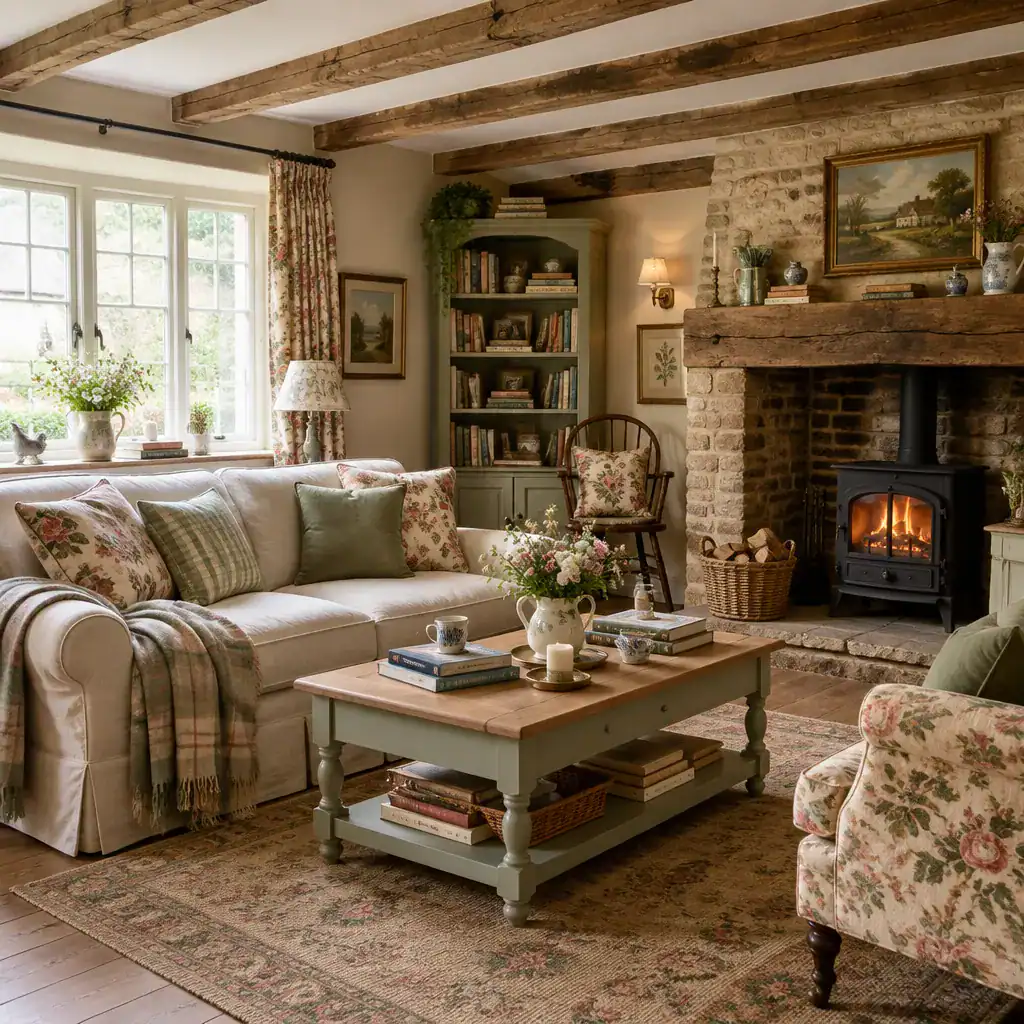
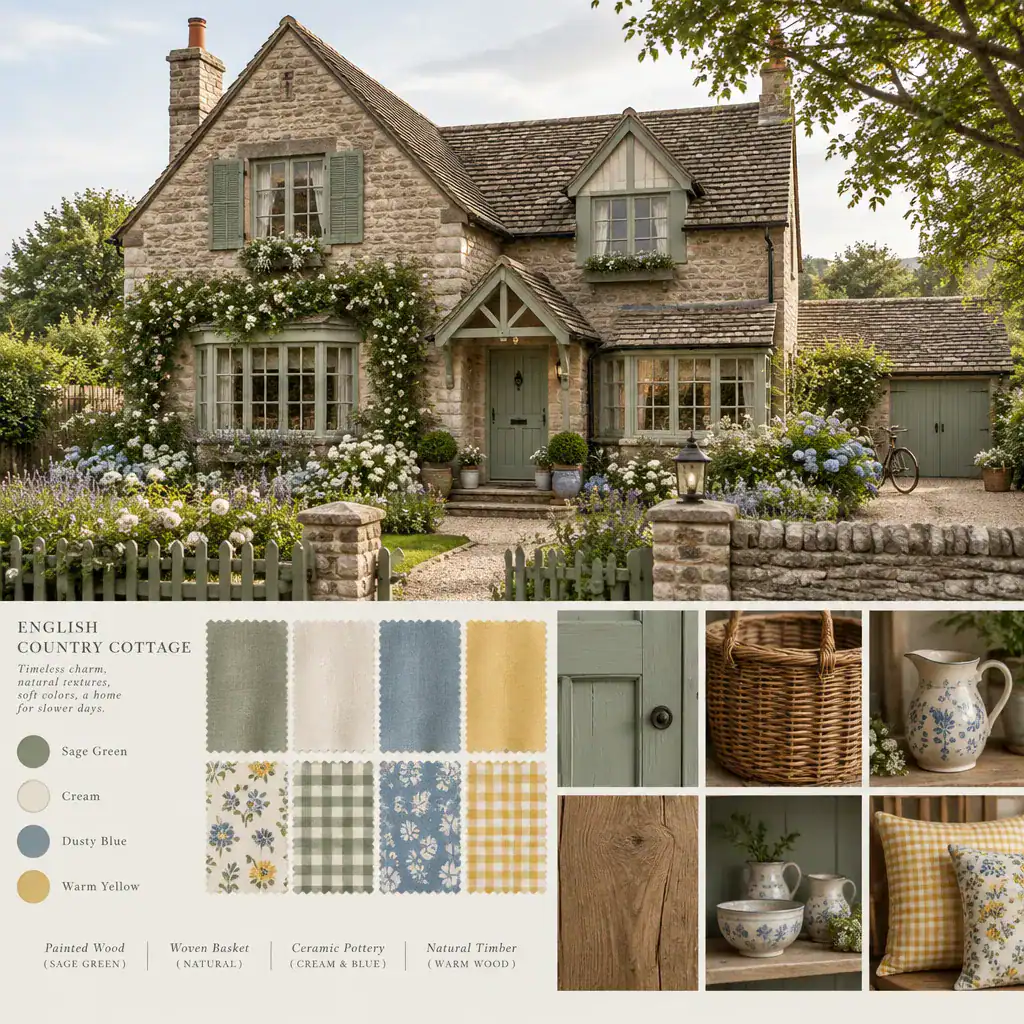
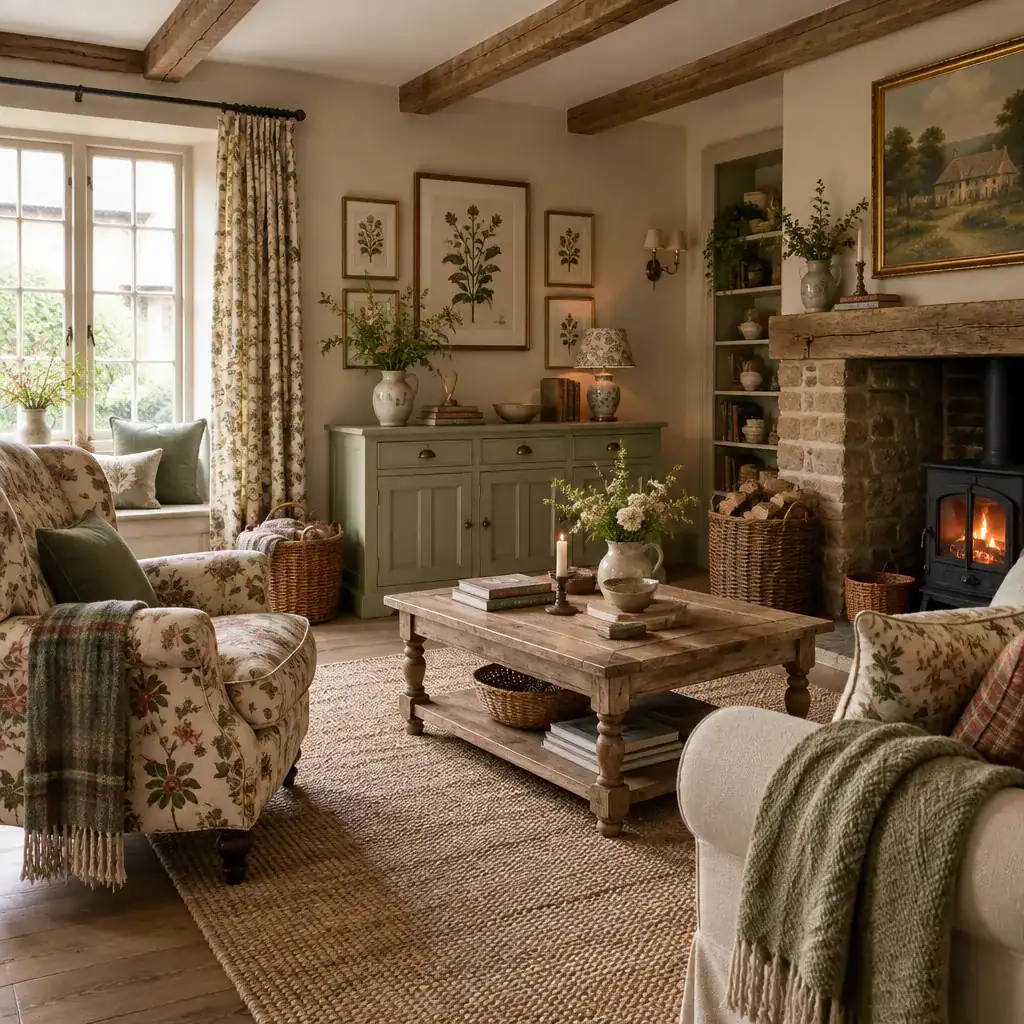
A successful English country cottage interior develops through connected choices rather than one decorative purchase. Begin with the atmosphere and architectural character of the home, then carry that direction into living room comfort, paint decisions, furniture, textiles, and finishing details. By selecting compatible elements that feel useful, warm, and personal, it is possible to create a cottage-style home that feels cohesive while remaining adaptable to individual preferences and everyday living.