
A small cottage can feel deeply personal and comfortable when every choice supports both daily living and visual calm. This guide to small cozy cottage interior design uses adaptable principles rather than one fixed floor plan, so you can apply the ideas whether you own a compact country cottage or rent a characterful small home.
Limited rooms ask for intentional decisions about layout, color, lighting, and furniture scale. The goal is to create a welcoming atmosphere without crowding each room with too much furniture or decoration. By planning circulation first and then layering color, storage, texture, light, and meaningful details, you can make a modest footprint feel warm, bright, and easy to live in.
Start With a Practical Layout and a Clear Visual Flow
Begin with how the cottage needs to function each day. Identify the routes between doors, windows, seating, dining areas, and storage, then arrange furniture so those walkways stay comfortable and obvious. A compact sofa, a narrow coffee table, and a dining table positioned close to the kitchen can make a room work harder without interrupting movement.
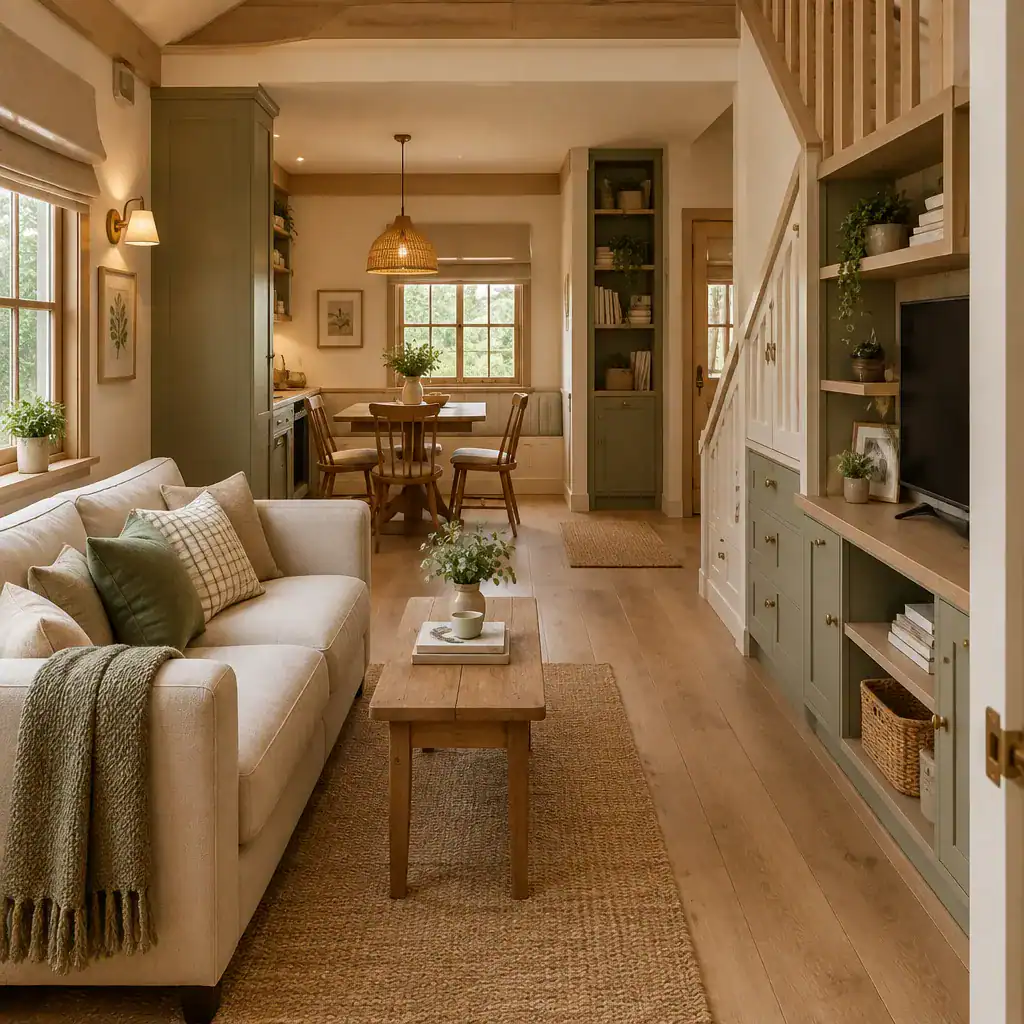
Choose pieces that suit the actual proportions of the room instead of trying to fit standard oversized furnishings into a compact area. A slender armchair, wall-hung cabinet, or petite side table often provides the function you need while leaving useful breathing room around it. Keep frequently used surfaces and main passageways clear, since visible floor area helps the interior feel more open.
Connected spaces benefit from visual continuity. Repeat a wood finish, textile tone, or accent color from the living room into the dining corner so the home reads as one considered space. This foundation makes later decorative choices feel intentional rather than crowded.
Choose a Light, Warm, and Cohesive Cottage Color Palette
A restrained palette gives a small cottage a calmer, more connected appearance. Use a light warm neutral, such as soft off-white, creamy beige, or pale mushroom, as the dominant backdrop for walls and larger furnishings. These shades reflect light gently while retaining more warmth than a stark, cool white.
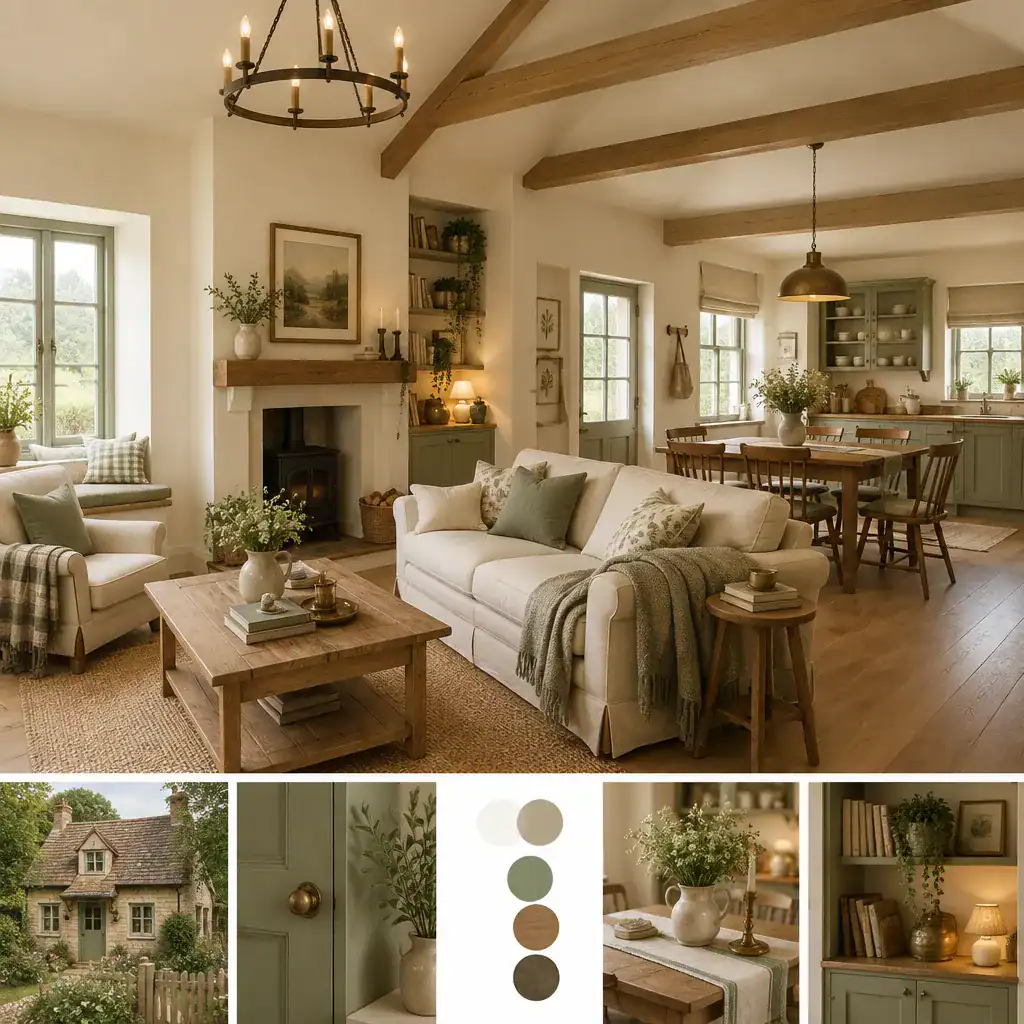
Build character with muted accents such as sage, dusty blue, clay, faded ochre, or soft berry. Introduce them through cushions, painted furniture, ceramics, or a single focal wall instead of spreading many competing colors throughout the room. In small cozy cottage interior design, controlled contrast can also appear in dark hardware, painted trim, or a weathered wood element.
Carry related tones into adjoining rooms to prevent the cottage from feeling fragmented. The kitchen may feature the same warm wall color as the living area, while the bedroom repeats a sage or clay note in its bedding. A unified palette still leaves room for each space to have its own gentle personality.
Select Multifunctional Furniture and Space-Saving Storage
In a small cottage, furniture should earn its place. A window bench with storage, nesting tables that separate when guests visit, or an extendable dining table can support several needs without permanently consuming floor space. Focus on comfortable, compact pieces rather than increasing the total number of furnishings.
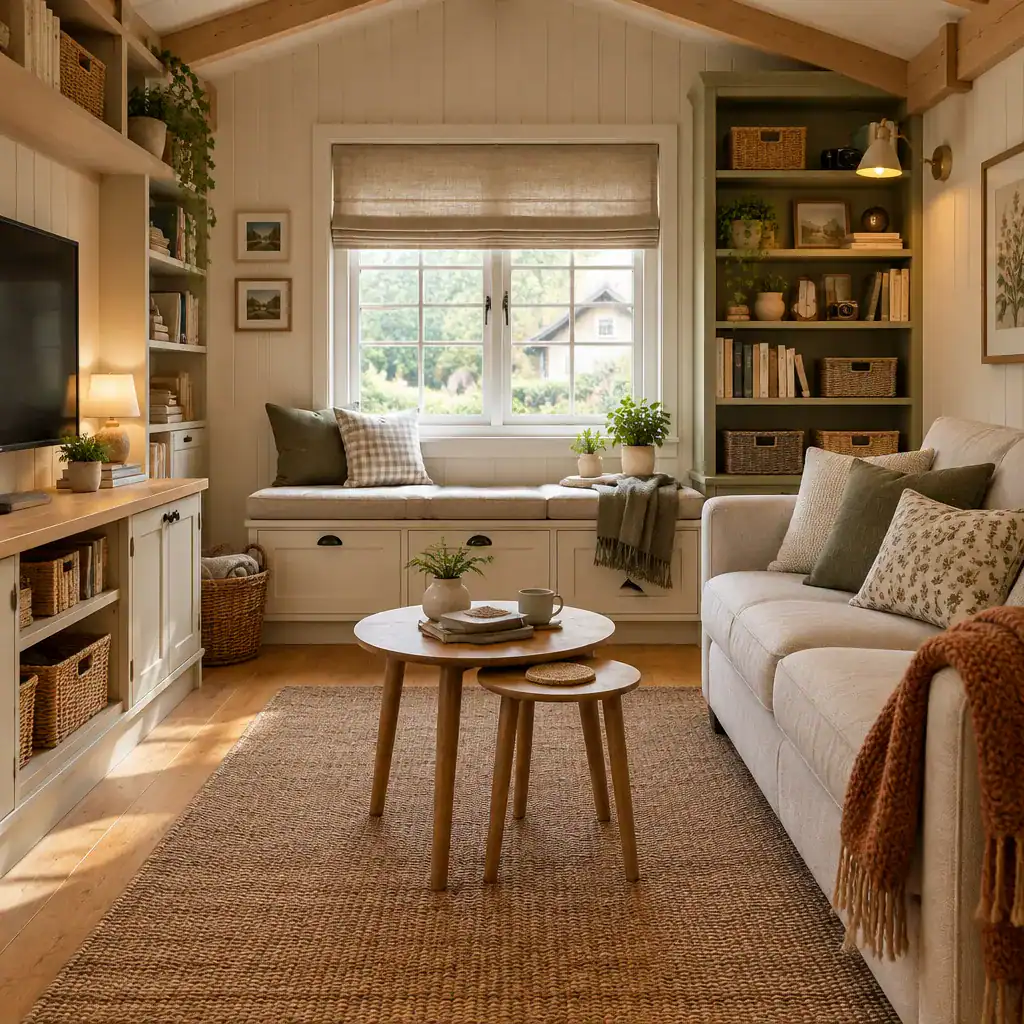
Use vertical storage whenever possible. Built-in shelves, tall cupboards, hooks, and wall-mounted rails keep practical belongings accessible while reducing pressure on the floor. Baskets can hold blankets, toys, or magazines, and closed compartments are especially useful for containing the visual noise of daily life.
Open shelving can add cottage charm, but it works best when edited carefully. Display a small collection of useful dishes, books, or handmade objects, and give the remaining items a concealed home. This balance helps small cozy cottage interior design feel collected and lived-in rather than overfilled.
Layer Natural Materials, Soft Textiles, and Cottage Details
Natural materials bring warmth that paint alone cannot provide. Combine wood furniture, woven baskets, linen-like curtains, ceramics, and textured fibers to create a tactile setting with depth. Repeating these materials across the room builds cohesion, even when individual pieces come from different sources.
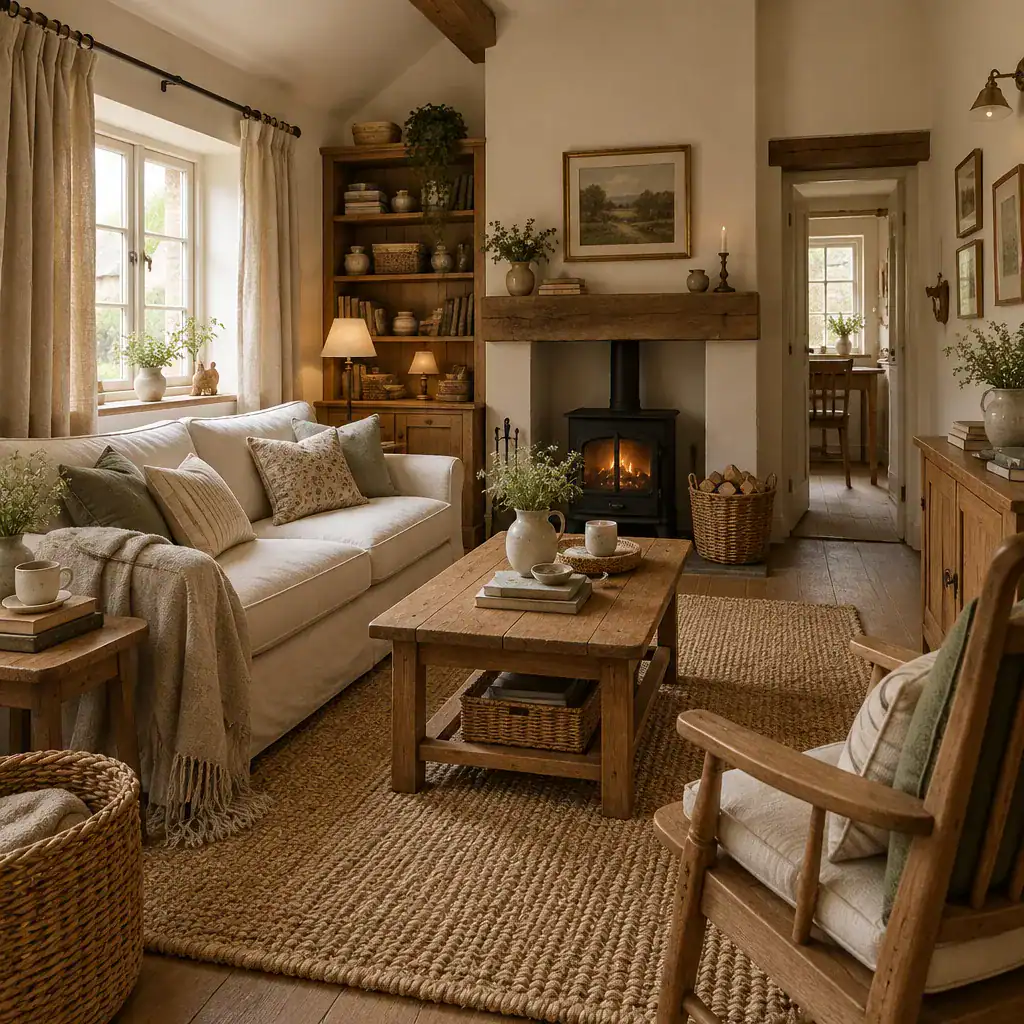
Soften the room with a well-sized area rug, cushions, throws, and curtains, but keep patterns controlled. For example, pair a subtly striped cushion with a plain wool throw and a low-key patterned rug rather than using a different bold print on every surface. Layering feels inviting when the colors and scale of the patterns relate to one another.
Add only a few distinctive details that express cottage character: exposed wood grain, a handmade-looking vase, vintage-inspired lighting, or a framed botanical print. These accents are most effective when they support the shared material palette instead of introducing unrelated decorative styles.
Use Lighting and Mirrors to Enhance Comfort and Spaciousness
A cottage feels more useful and inviting when lighting is layered. Combine general illumination, such as a compact ceiling fixture or pendant, with task lighting near a reading chair or kitchen work surface. Add accent lighting to draw attention to a shelf, artwork, or textured wall in the evening.
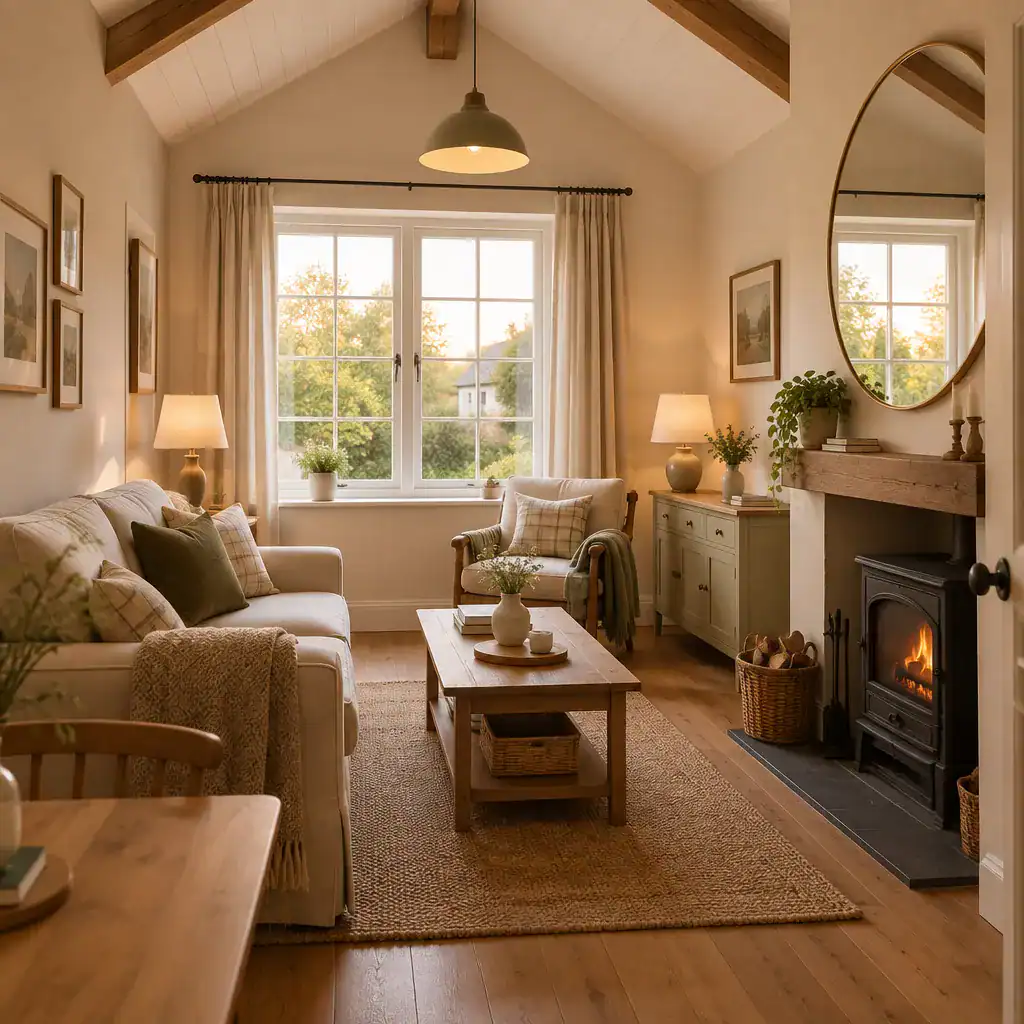
Table lamps and wall lights create the softer pools of light that make seating areas feel especially comfortable. Select warm-toned bulbs and shades that diffuse glare, particularly in rooms used for relaxing. This approach adds evening comfort without requiring one harsh overhead source to do all the work.
Mirrors can brighten a compact room when placed to reflect a window, a pleasant view, or an attractive light-filled wall. Avoid adding mirrors simply to fill every empty surface, as too many reflections can feel busy. Keep window areas as open as privacy allows, using light-filtering curtains, simple shades, or other treatments that preserve daylight.
Apply the Ideas Room by Room Without Losing Cohesion
In the living area, establish one clear focal point, such as a fireplace, window view, or favorite artwork, then arrange compact comfortable seating around it. Include nearby closed storage for everyday items so the room remains easy to use and visually restful. A cohesive palette, a natural-fiber rug, and a few tactile cushions can complete the space without overwhelming it.
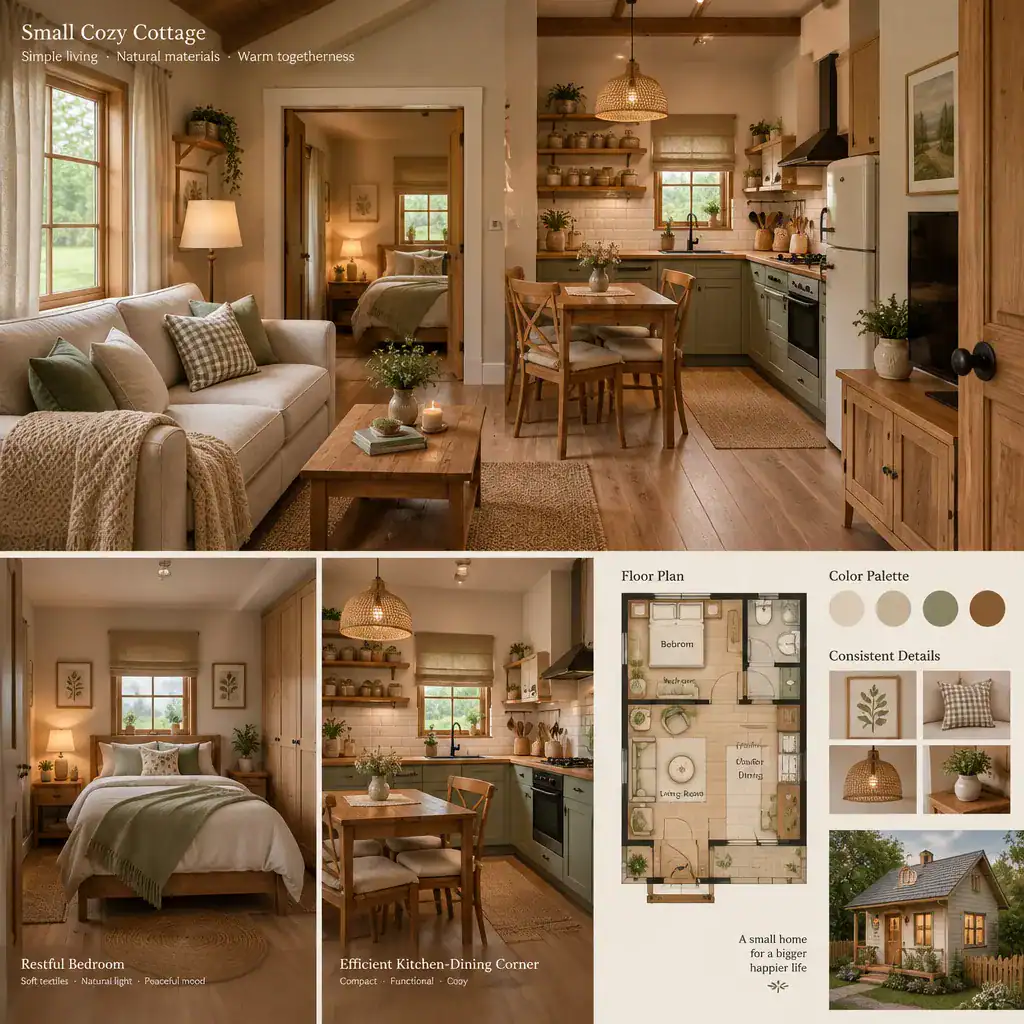
For the kitchen or dining area, prioritize efficient work surfaces and practical organization before decoration. Keep often-used tools within reach, make room for a welcoming table or breakfast perch, and use baskets or cabinetry to control clutter. Repeating the living room’s wood tone, metal finish, or accent color helps the gathering space belong to the same home.
In the bedroom, use calming colors, a bed scaled to the room, and concealed storage beneath or beside it. Simple bedding, soft curtains, and a small bedside light can create a restorative setting without requiring many accessories. Across every room, maintain the same core palette and material language while allowing a distinctive textile, artwork, or small accent to give each space individual character.
A successful small cottage interior depends on thoughtful editing, comfortable proportions, and a consistent visual language. Start with the layout and essential needs, then add color, texture, lighting, and accessories in layers. When every element has a clear purpose, small cozy cottage interior design can make limited space feel welcoming, characterful, and wonderfully complete.