
A classic cottage fireplace can become the emotional center of a living room, bringing together warmth, texture, and familiar traditional character. Whether you are renovating an original chimney breast or creating a new focal point in a newer home, this guide covers the structure, materials, mantel details, styling, and practical planning that help the result feel enduring rather than overly formal.
In many cottage interiors, the fireplace establishes the room’s visual identity because it anchors seating, introduces honest materials, and gives the architecture a sense of permanence. The most important choices include the surround material, mantel shape, hearth treatment, finish, and accessories. Considered together, these elements can create a welcoming focal point that feels naturally connected to the rest of the home.
What Defines a Classic Cottage Fireplace?
A cottage-style fireplace is usually defined by simple proportions, tactile surfaces, and an inviting lived-in appearance rather than a highly polished or ornate finish. Masonry surrounds, timber mantels, modest hearths, recessed fireboxes, and gently aged finishes all contribute to that recognizable sense of comfort. The goal is not to make every surface look old, but to choose details with visual warmth and believable texture.
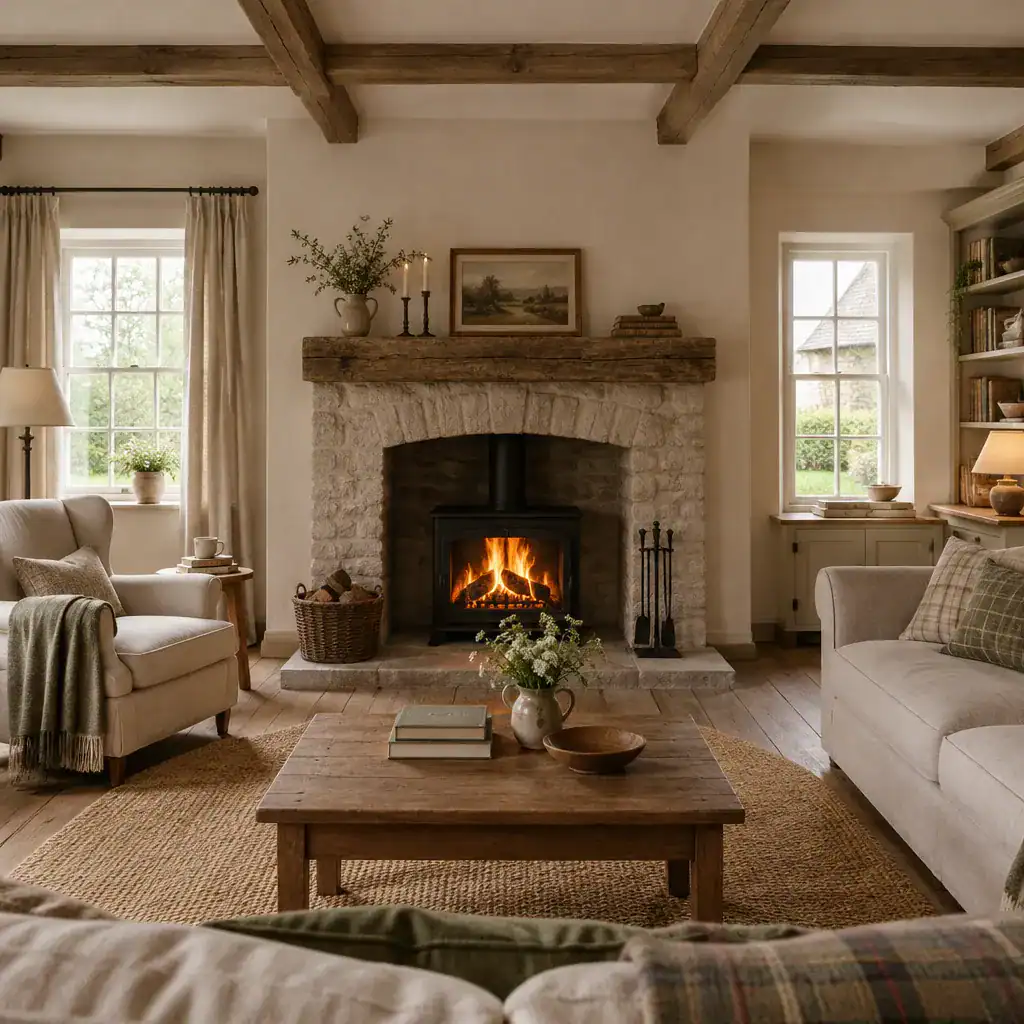
A classic cottage fireplace should read as part of the room’s architecture, not as an isolated decorative installation. Aligning its scale with nearby windows, ceiling beams, wall paneling, or built-ins helps it feel established. A simple surround with a substantial but restrained mantel often has more impact than elaborate trim or excessive ornament.
Choosing the Right Surround and Hearth Materials
Brick, natural stone, plaster, painted masonry, and tile can each support a cottage look, but they create different moods. Brick offers warmth and irregularity, while natural stone brings weight and organic tonal variation. Plaster can make the composition softer and quieter, painted masonry can lighten a dark room, and handmade-look tile can introduce subtle pattern without overwhelming the fireplace.
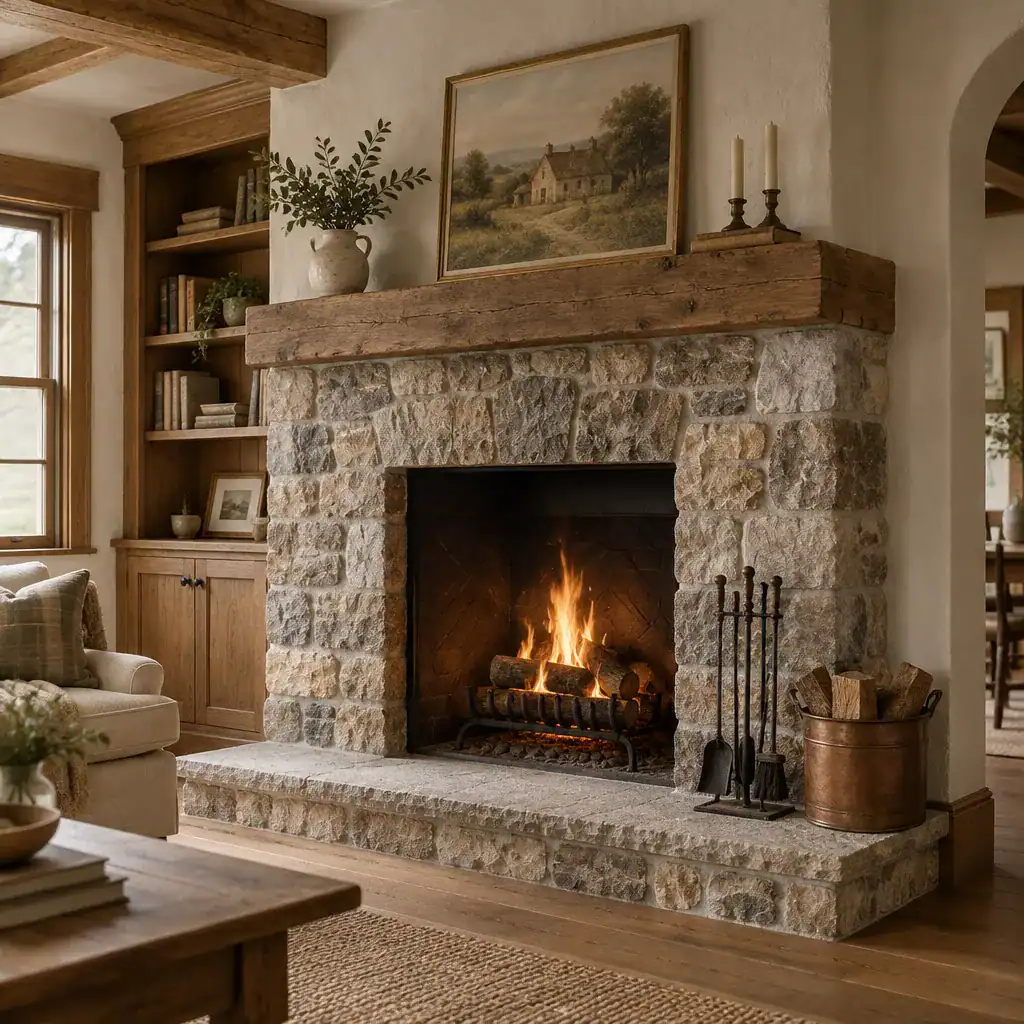
Texture, color variation, and gentle signs of age influence whether the room feels more rustic or more refined. A rougher stone surround may suit timber floors and exposed beams, whereas limewashed brick or soft painted masonry can work beautifully with pale plaster walls and quieter furnishings. Let the surround and hearth relate to existing floors, wall finishes, ceiling details, and furniture woods so the fireplace feels cohesive.
Material selection also needs practical review. Fireplace construction, heat exposure, and local safety requirements vary, so consult qualified professionals before choosing, altering, or installing a surround, hearth, or firebox finish.
Mantel and Architectural Details That Add Cottage Character
Understated mantels are often the most successful choice for a cottage room. Reclaimed timber adds grain and history, painted wood can create a lighter traditional effect, and stone can give a fireplace a grounded, architectural presence. A minimally detailed shelf is equally effective when the room already has strong material character elsewhere.
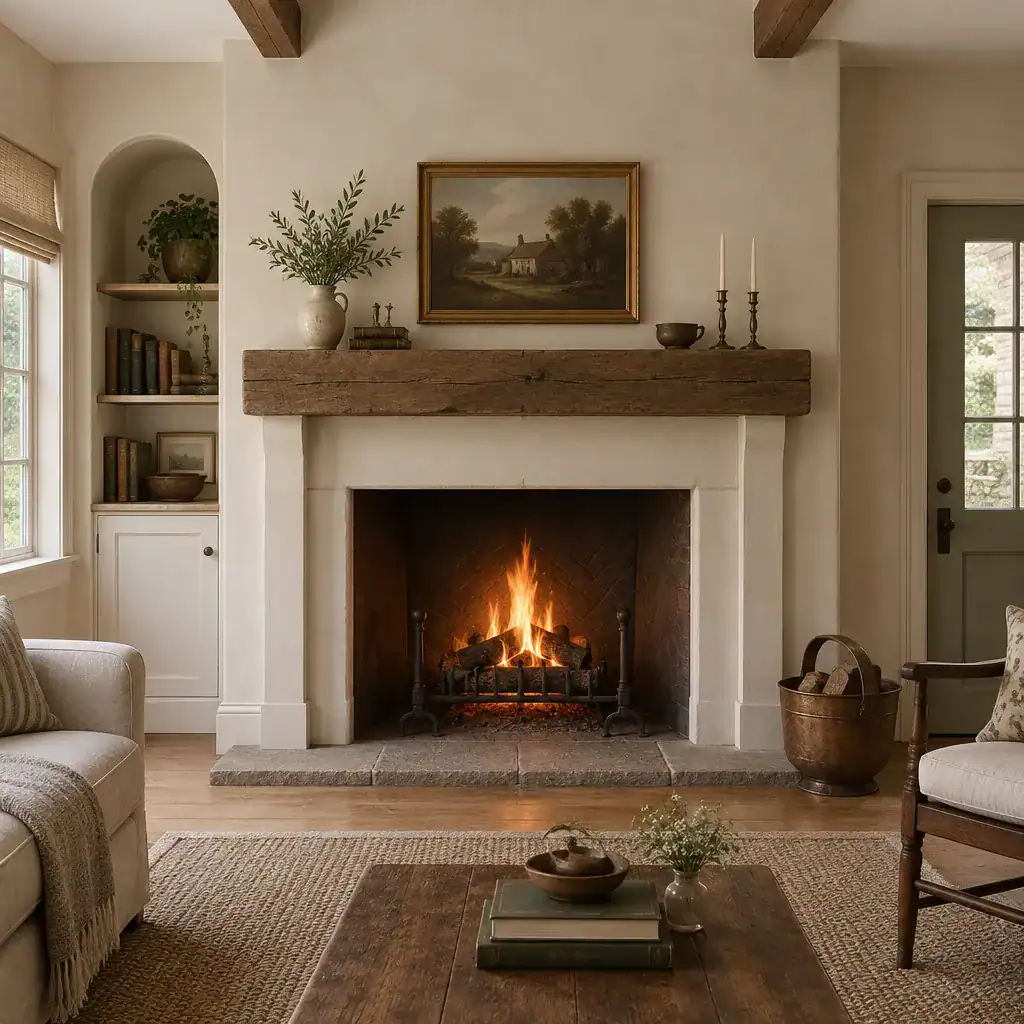
Selective details such as simple corbels, a shallow niche, exposed brick, wall paneling, or a raised hearth can add depth without making the composition busy. Balance rustic features with clean proportions: one textured surround and one strong mantel may be enough. This restraint helps a classic cottage fireplace remain calm and adaptable as furnishings change over time.
Mantel depth and clearances should support both the room layout and safe operation. Confirm installation requirements with an experienced professional, especially when using combustible timber or planning shelves, trim, and decorative finishes close to a heat source.
Cottage Fireplace Color Palettes and Finishes
Warm whites, soft creams, muted earth tones, natural stone shades, and gentle greens provide flexible starting points for a cottage mood. These colors work because they reflect natural light softly and allow masonry, timber, and textiles to contribute their own texture. A cream-painted surround with a natural wood mantel, for example, can feel fresh while remaining traditional.
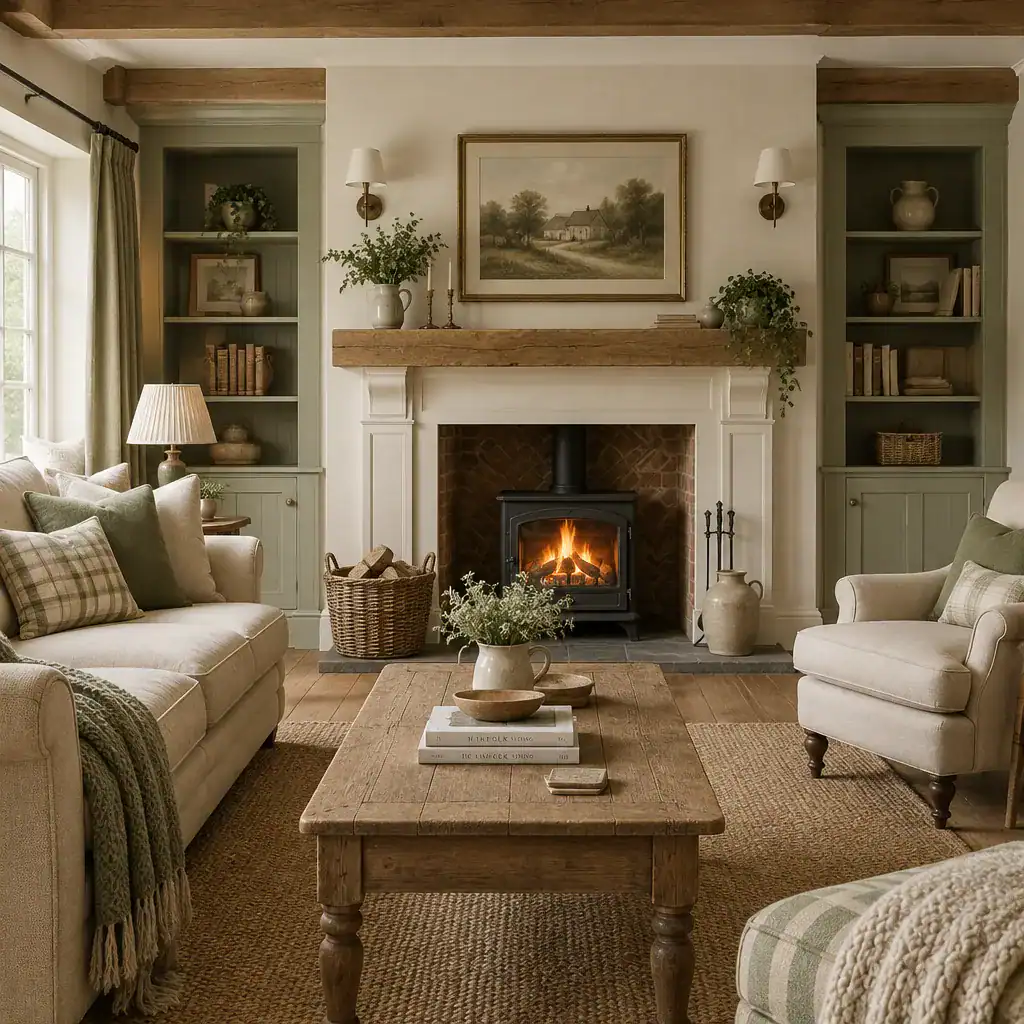
Painted surrounds tend to make a fireplace feel lighter and more integrated with the wall, while exposed masonry gives the focal point stronger visual texture. Use contrast with intention: a dark firebox can ground a pale surround, and a timber mantel can add warmth against a chalky wall finish. There is no universally correct cottage color; natural light, flooring, adjacent finishes, and the room’s overall atmosphere should guide the final palette.
Decorating a Classic Cottage Fireplace Mantel
A mantel looks most relaxed when it is layered lightly rather than filled completely. Consider a simple mirror, a small piece of framed art, handmade ceramics, candlesticks, woven objects, or seasonal branches. These pieces bring personality to the fireplace while retaining the quiet, collected quality associated with cottage interiors.
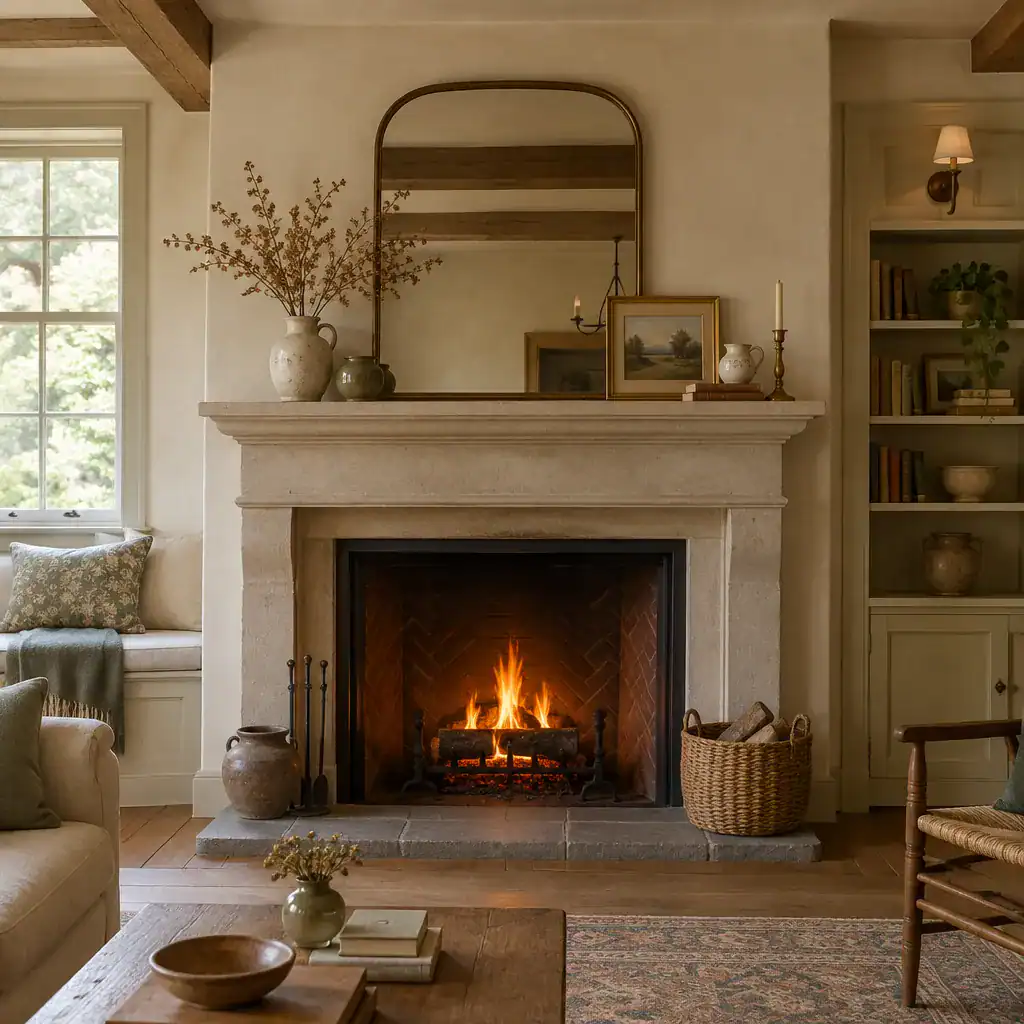
Vary the height and texture of objects, then leave enough negative space for the mantel itself to remain visible. A tall branch arrangement can balance a low ceramic vessel, while a small framed piece can soften the formality of a mirror. Coordinate the decor with nearby cushions, curtains, lighting, and wall art so the classic cottage fireplace supports the entire seating area instead of becoming a disconnected display.
Keep combustible decor and accessories away from areas affected by heat. Follow appliance guidance and local safety requirements when placing objects on or around the mantel and hearth.
Planning a Fireplace That Works for the Whole Room
Plan the fireplace in relation to seating, circulation routes, windows, built-ins, and the main visual axis of the room. A fireplace can naturally organize a conversation area, but it should not obstruct movement or compete awkwardly with another major focal point. Comfortable seating, clear paths, and balanced sightlines make the feature feel useful as well as attractive.
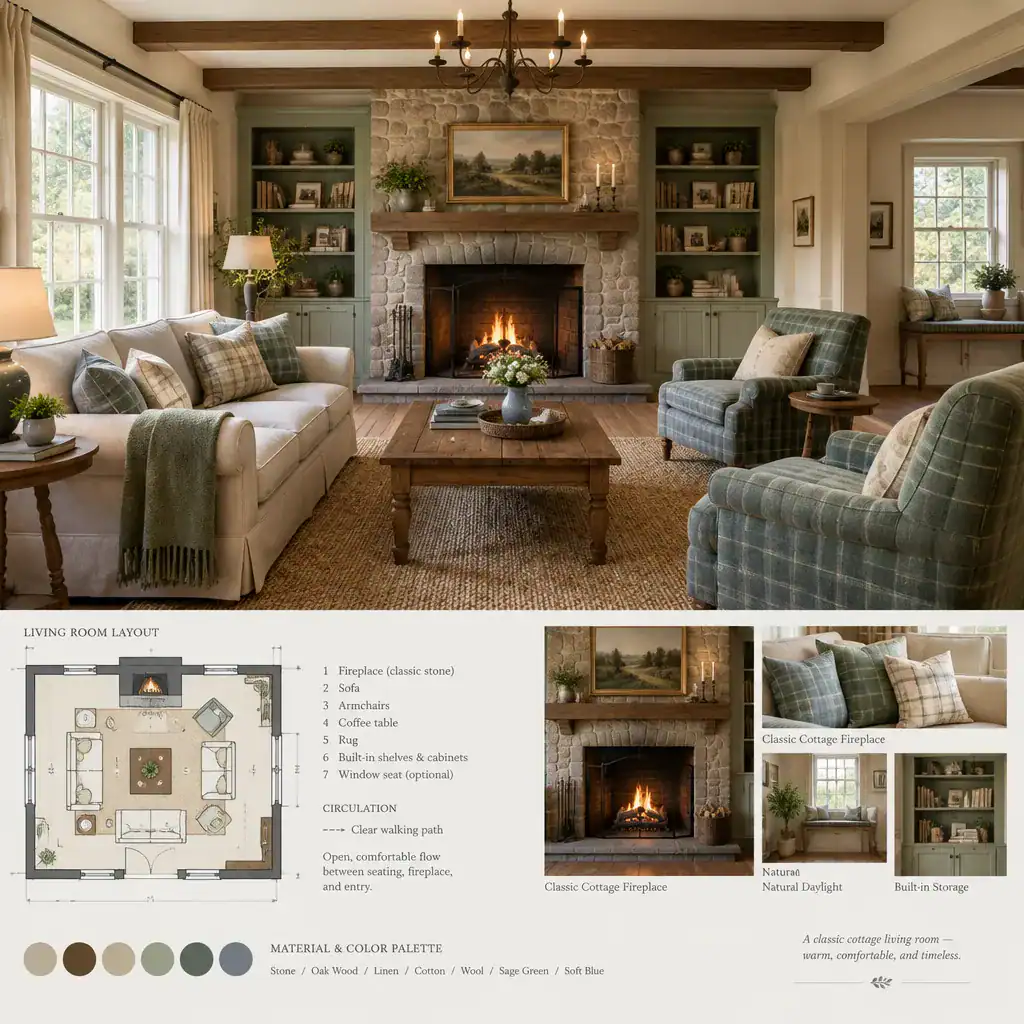
Decide early whether the fireplace will be a working appliance or a purely decorative surround, since that choice affects layout, installation, maintenance, and material decisions. For an operational fireplace, verify ventilation, fuel source, clearances, hearth requirements, and applicable regulations with qualified professionals. For a decorative feature, retain believable architectural proportions so it still contributes real presence to the room.
Use the fireplace as a starting point for the wider cottage scheme. Repeating a hearth tone in a rug, echoing mantel wood in furniture, or carrying a muted surround color into textiles can make the room feel intentional. With this approach, a classic cottage fireplace becomes part of a complete, comfortable interior rather than a standalone project.
A successful cottage fireplace relies on balanced proportions, natural texture, and thoughtful restraint. Choose materials, finishes, and decor that complement the home’s existing architecture, then pair those decisions with practical planning and professional safety guidance. The result can feel warm, timeless, and genuinely at home in the room.