
A bungalow entryway works best when it feels like a gradual transition from the sidewalk or driveway to the front door. The path, porch steps, planting beds, and small details should guide guests naturally while preserving the welcoming, low-profile character of the home. Thoughtful bungalow entryway landscaping can improve curb appeal without crowding the facade or making everyday access more difficult.
Begin by considering circulation, planting layers, architectural character, lighting, and the amount of upkeep you can realistically manage. Plants should always be chosen for the actual site, including its climate, sun exposure, soil, drainage, and local growing conditions. A well-planned approach makes the front door easier to find, safer to reach, and more enjoyable to come home to.
Start With the Bungalow Entryway Layout
Before selecting plants or materials, map the existing conditions around the front approach. Note the front walk, porch steps, driveway, utilities, property boundaries, drainage flow, and any areas that must stay open. The goal is an obvious, comfortable route to the door that does not force visitors to step through planting beds or navigate around decorative objects.
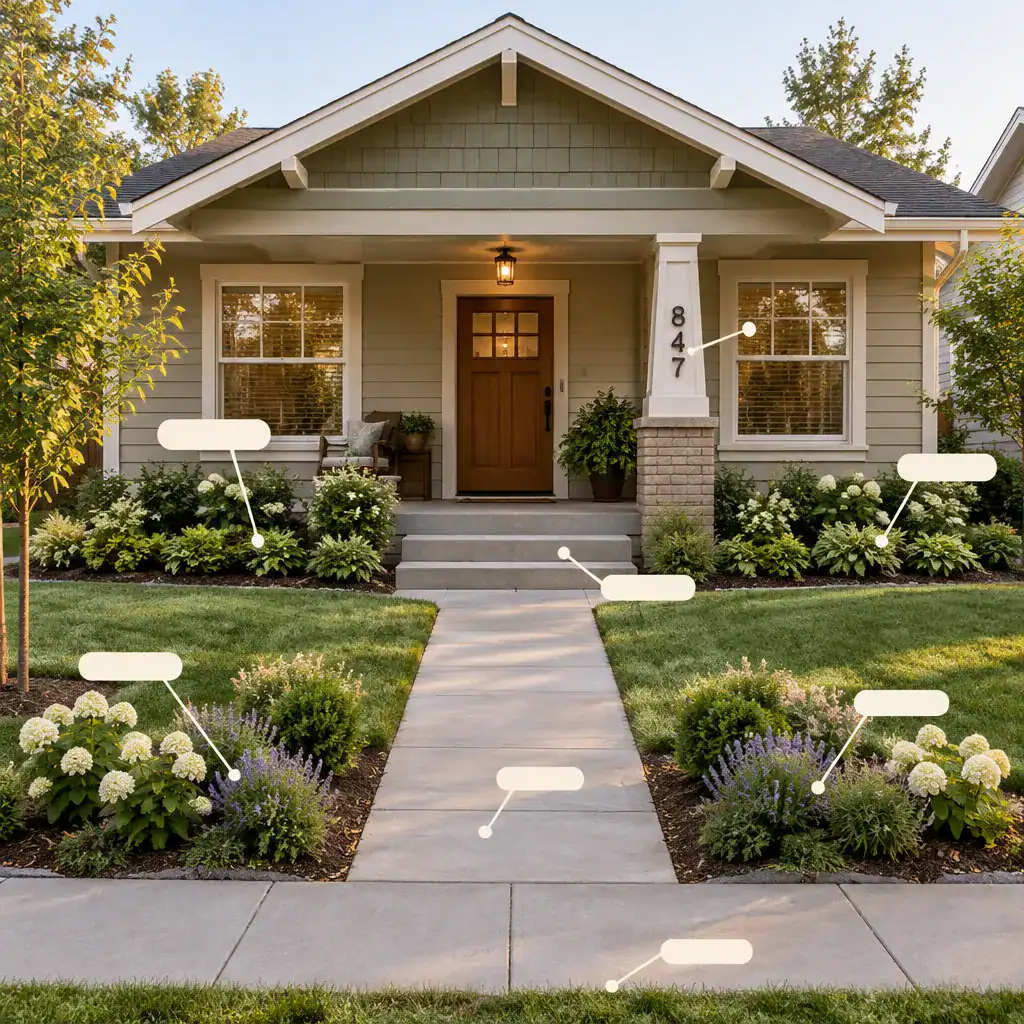
Keep the walking route visually legible from the street, especially where a driveway or sidewalk meets the path. Shrubs, ornamental grasses, and larger perennials should not conceal porch steps, windows, house numbers, or the entry itself. Check sightlines while standing at the curb, walking toward the porch, sitting on the porch, and looking out from interior windows. This simple assessment helps prevent a planted front yard from feeling hidden or confusing.
Give particular attention to practical clearances. A path should remain easy to use with groceries, deliveries, umbrellas, mobility aids, and guests walking side by side where space allows. Avoid placing sprawling plants at path edges unless you are prepared to trim them regularly. In bungalow entryway landscaping, a clear arrival route is often more valuable than filling every open patch of soil.
Choose a Landscape Style That Complements the Bungalow
The most successful landscape direction takes cues from the bungalow rather than competing with it. Look at the porch columns, roofline, siding or brick, trim colors, steps, and existing hardscape. Path materials, edging, container finishes, and plant forms can echo these elements to make the front approach feel intentional and connected.
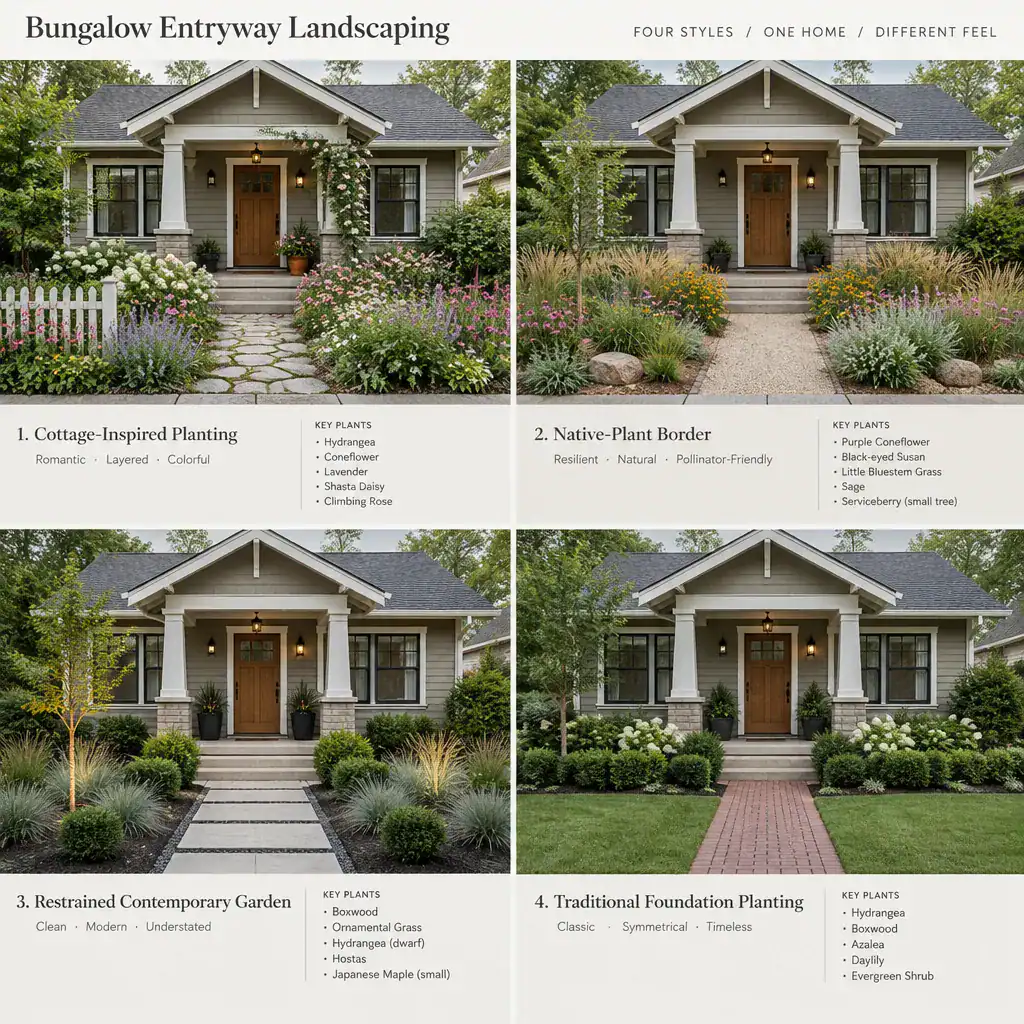
A cottage-inspired scheme can use relaxed mounds, flowering perennials, and softened path edges, provided the planting is still controlled near the walk. A tidy native-plant border may emphasize locally appropriate textures and seasonal change with a natural but organized arrangement. A restrained contemporary approach can rely on repeated plant shapes, simple edging, and a limited color palette. Traditional foundation planting typically uses balanced evergreen structure with flowering or foliage-focused plants layered in front.
When the facade has prominent brickwork, decorative trim, or a detailed porch, use a quieter planting palette so those architectural features remain visible. If the exterior is simple, additional foliage texture and a modest range of flowering plants can add interest. Avoid highly formal features that clash with an informal porch, as well as oversized boulders, tall hedges, or large containers that make a modest bungalow appear smaller.
Build Depth With Layered Planting and Seasonal Interest
Layering gives a compact entry garden depth without blocking the home. Place lower groundcovers, small perennials, or tidy edging plants closest to the walkway. Use medium-height flowering plants and foliage plants behind them, then reserve taller shrubs or upright accents for facade edges, boundaries, or locations where they will not interfere with windows and views.
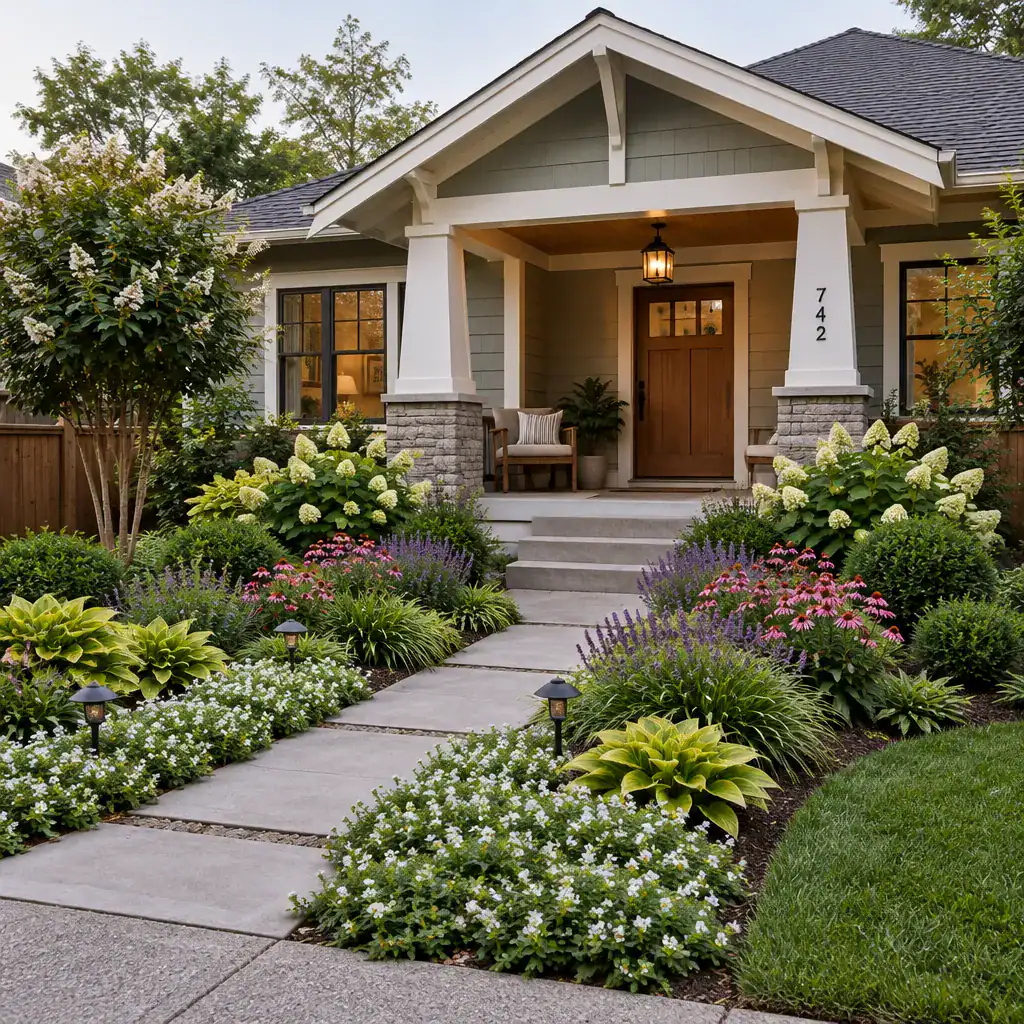
Combine evergreen structure, flowers, contrasting leaves, and seasonal accents only where site conditions support them. Repeating a few selected plant forms or colors on both sides of the approach creates a calmer composition than assembling unrelated planting pockets. Repetition can also visually lead the eye toward the porch and make an asymmetrical layout feel balanced.
Buy plants for their mature size and care needs, not only for their appearance in nursery containers. Consider how wide, tall, dense, or messy each choice may become over time. A foundation shrub that eventually covers a window or a path-edge perennial that flops into the walkway can undermine an otherwise attractive plan. bungalow entryway landscaping is generally strongest when plants frame the house and door instead of obscuring them.
Add Pathway, Lighting, and Small Decorative Details
Pathway materials should relate to the bungalow’s existing surfaces. A finish that echoes porch steps, brick accents, stone details, or established hardscape can make the route feel like part of the home rather than an afterthought. Coordinated edging also helps hold planting beds in shape and keeps soil or mulch from spilling onto the walk.
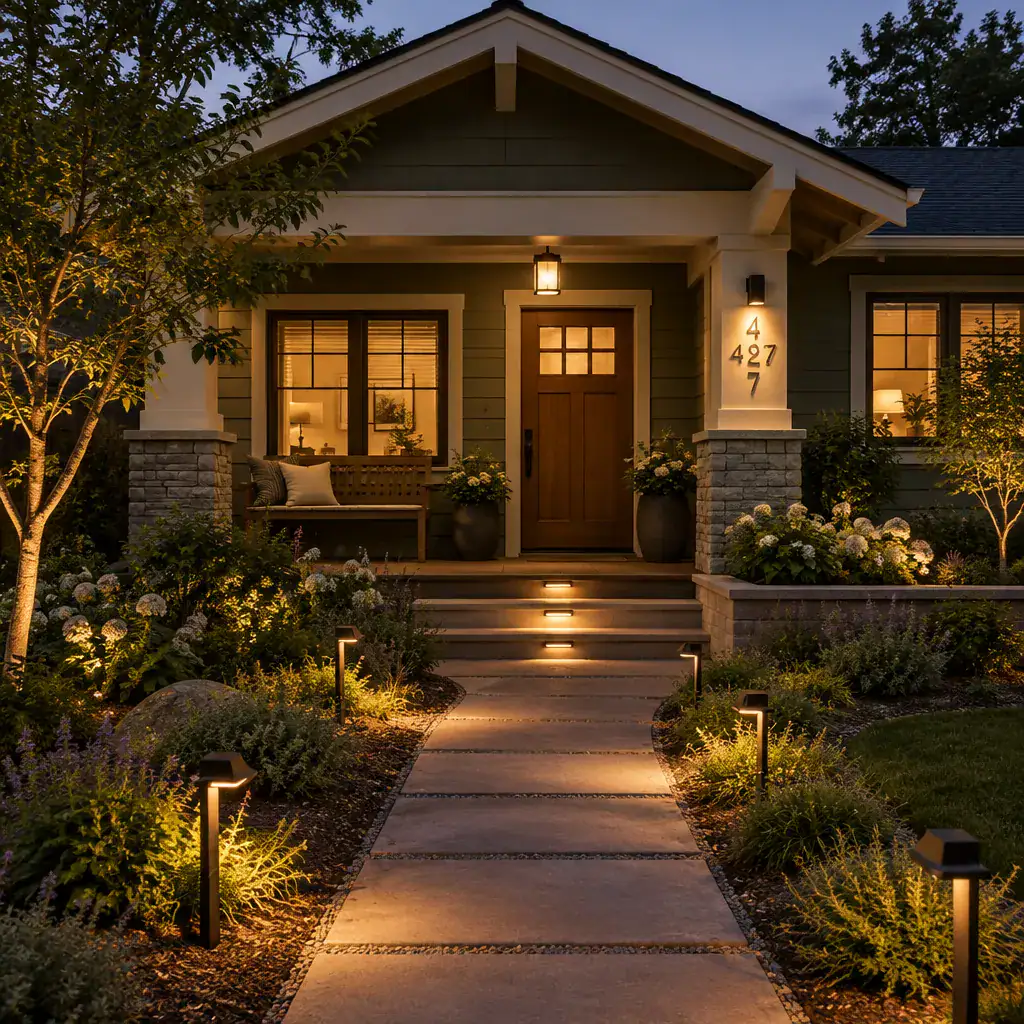
Lighting should make navigation safer after dark while remaining subtle. Aim it toward the route, changes in level, porch steps, house numbers, or a few key plants rather than creating glare toward visitors, neighbors, or interior windows. Carefully placed low fixtures and porch lighting can clarify the entrance without making a small front yard feel overdesigned.
Planters, a modest bench, a low fence, or a mailbox can add personality when they serve a real purpose and fit the available space. Keep each item in proportion to the porch and facade, and preserve access for deliveries, guests, and daily routines. A few coordinated details usually provide more charm than numerous ornaments competing for attention.
Plan for Maintenance, Drainage, and Long-Term Growth
A pleasing entryway should remain practical after its first season. Group plants with similar light and watering needs so routine care is simpler and more efficient. Leave access gaps where you can prune, weed, clean the walkway, inspect the facade, and maintain lighting or irrigation without stepping through densely planted beds.
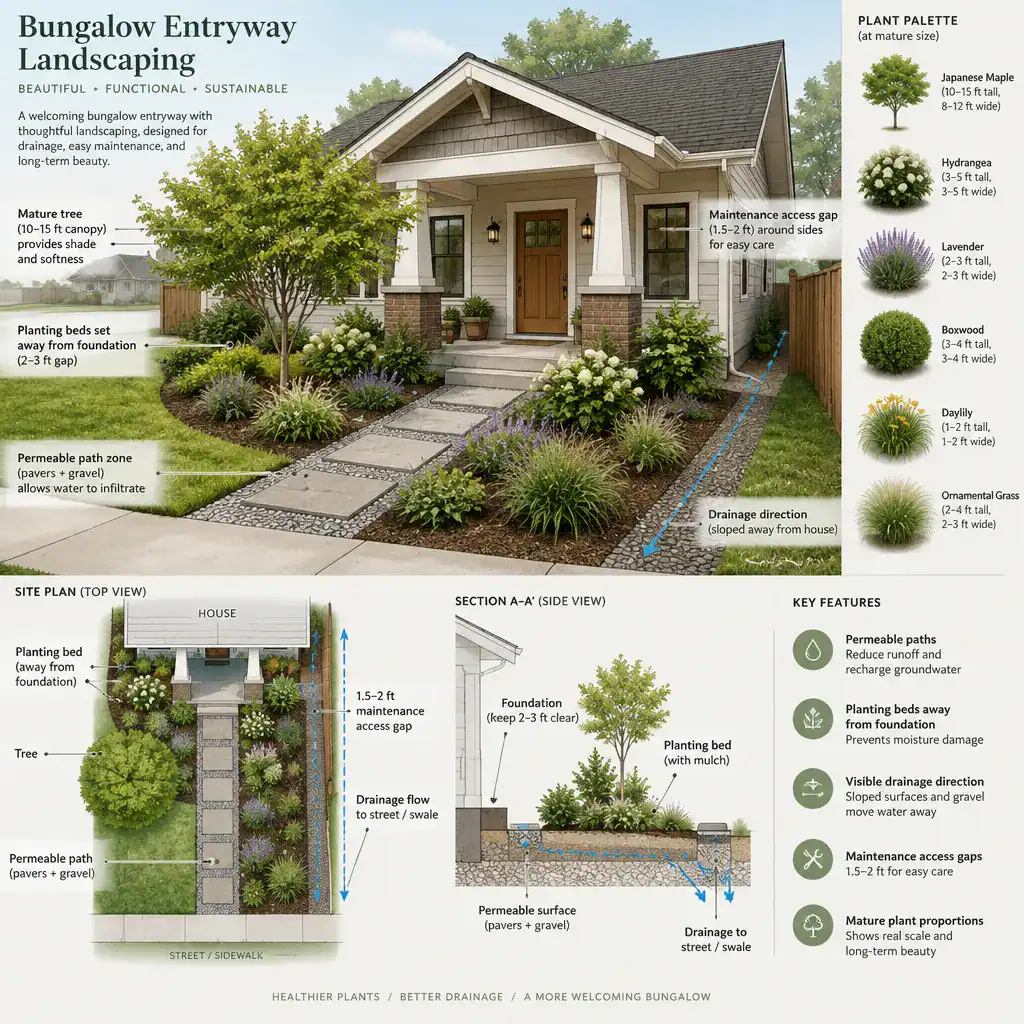
Pay close attention to drainage near paths, steps, porch foundations, and low planting areas. Water should not collect where it can make the route slippery, damage hardscape, or create persistent stress for plants. Consider how runoff moves during heavy rain, and seek advice from a qualified local professional if drainage conditions, grading, or foundation moisture are uncertain.
Review each plant’s mature dimensions, seasonal appearance, leaf drop, roots, and potential branch conflicts before installation. This review helps avoid blocked paths, crowded walls, difficult cleanup, and plants that require more intervention than expected. A manageable design is more likely to preserve the neat, welcoming effect that makes bungalow entryway landscaping worthwhile.
The strongest bungalow entryway landscapes combine a clear route, appropriately scaled planting, architectural coordination, and upkeep that fits everyday life. Assess the site first, then choose one cohesive direction rather than combining too many unrelated ideas. Before beginning work, verify local plant suitability, mature sizes, drainage needs, and any property, utility, or neighborhood requirements that may affect the plan.