
A luxury modern cottage brings together crisp architectural thinking and the reassuring ease of a home that feels personal, relaxed, and connected to its setting. Rather than choosing between a sleek contemporary look and familiar cottage comfort, this approach uses both: simple forms, natural finishes, thoughtful details, and rooms designed for everyday living. The ideas below move from exterior character and materials to interiors, lighting, and landscape integration so each decision supports one cohesive home.
Define the Luxury Modern Cottage Design Direction
The most successful luxury modern cottage concepts balance clean massing with a human scale. A simple gable or pitched roof, uncluttered elevations, and generous glazing can establish a contemporary foundation, while a sheltered entry, tactile materials, and intimate outdoor spaces preserve the inviting character associated with cottage living. Luxury does not need to mean excess; it is often most convincing in well-considered proportions, skilled craftsmanship, durable material quality, and a calm visual rhythm.
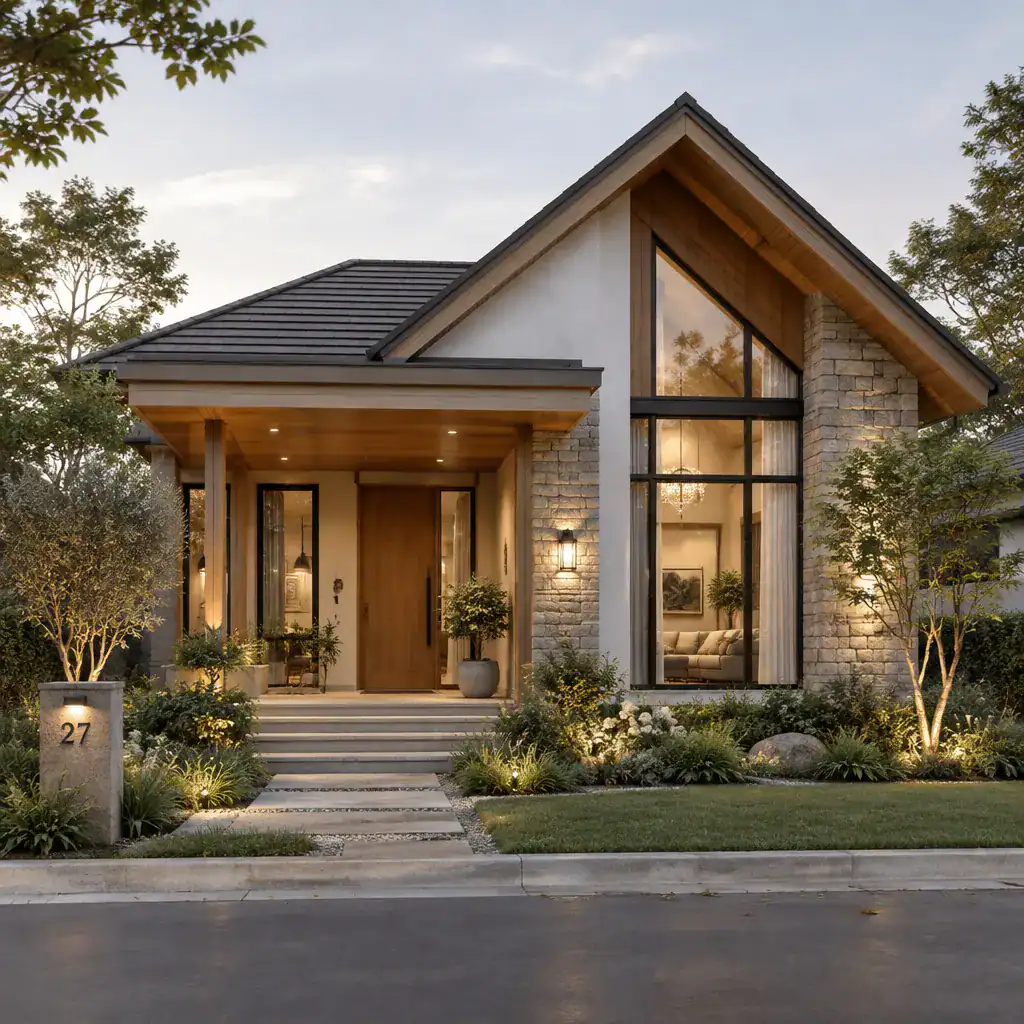
Keep ornament restrained so the architecture can feel composed rather than busy. Balanced window placement, modest trim profiles, and a limited palette of finishes help even a compact home appear refined. Just as importantly, plan for the way people will actually use the house. Comfortable circulation, useful storage, protected entrances, and places to pause can make the design feel more valuable than a collection of expensive-looking finishes.
Start with a mood board before selecting individual products. Include reference images for the roofline, siding, stone, windows, furniture, fabrics, lighting, and planting. Repeating a few compatible colors and textures across these images will reveal whether the concept feels unified. This early exercise also helps align architectural decisions with interior furnishings and the surrounding landscape.
Shape the Exterior With Cottage Character and Modern Simplicity
A welcoming exterior begins with an entry that is easy to recognize and pleasant to approach. A covered porch, recessed doorway, or simple canopy can provide useful weather protection while creating a natural moment of arrival. Pair that cottage-scale gesture with a compact pitched roof, broad contemporary windows, and understated trim to give the facade both warmth and clarity.
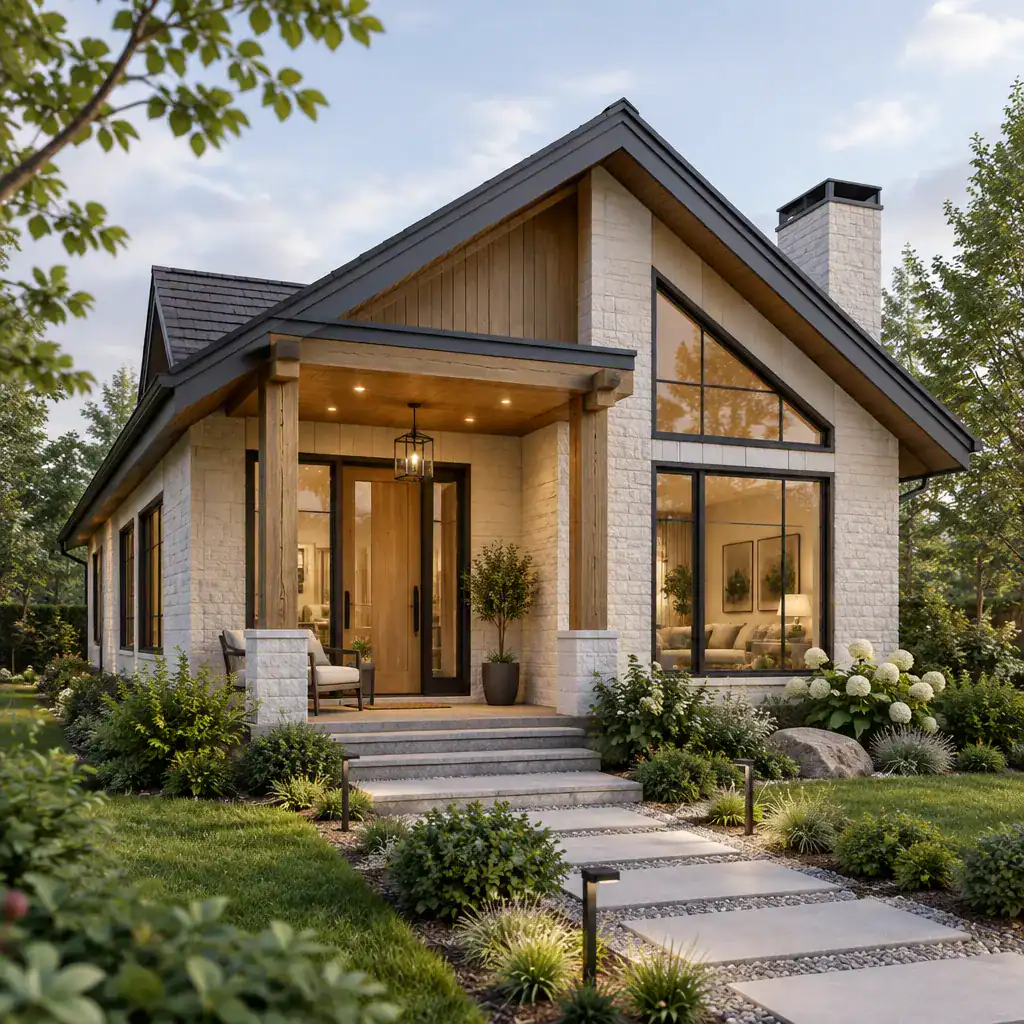
One direction is a crisp pale facade with dark window frames and metal details, which creates graphic contrast without requiring elaborate decoration. Another uses warmer siding tones, timber posts or soffits, and softer stone colors for a more organic expression. Either approach can work well when the number of finishes is controlled and their placement appears intentional.
Porches, covered walkways, and framed views toward a garden or distant landscape deepen the cottage feeling. They also create a gradual transition from outdoors to indoors, especially when the same wood, stone, or color notes appear on both sides of the threshold. Before finalizing roof shapes, window sizes, structural elements, or exterior assemblies, consult qualified professionals regarding local codes, weather exposure, site conditions, and building requirements.
Select Materials and Colors That Feel Elevated but Welcoming
Build the palette around one primary exterior finish, one complementary natural texture, and only a few accent colors. For example, textured siding may serve as the quiet backdrop, while wood introduces warmth and stone grounds the base, chimney, or entry. Dark metal can define frames and lighting, while glass opens the home to daylight and views. The goal is not one prescribed combination, but a clear hierarchy among materials.
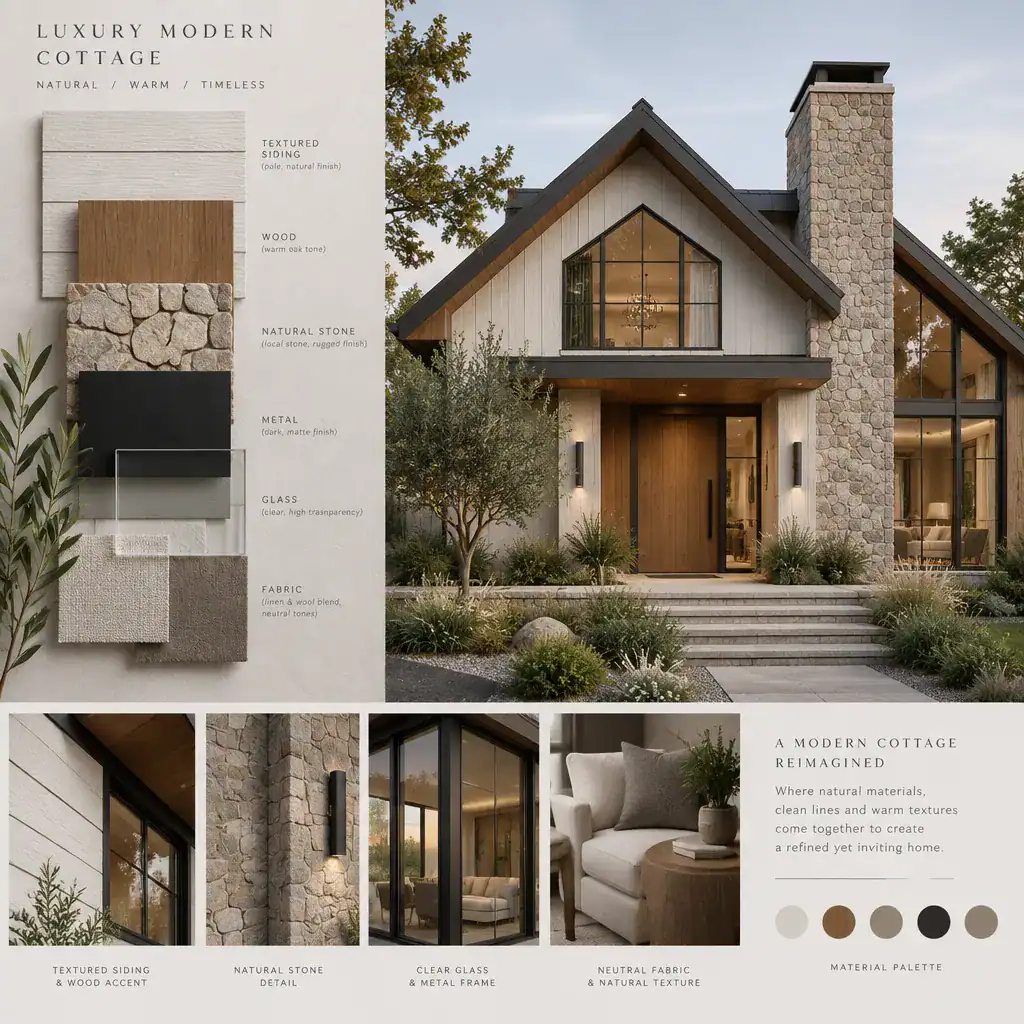
Matte, tactile, and naturally varied surfaces often make a home feel richer than highly polished finishes used everywhere. Brushed metal, oiled timber, honed stone, woven fabric, and lightly textured plaster can catch light differently throughout the day, adding depth without visual clutter. Let each material have room to register instead of competing with too many patterns or bold colors.
Review physical samples at the site whenever possible. Daylight, nearby trees, neighboring buildings, and local soil tones can make a color read very differently from a showroom display. Seeing samples beside one another also makes it easier to judge whether the palette supports the quiet, cohesive atmosphere expected from a luxury modern cottage.
Create Warm, Polished Interiors With Comfortable Modern Planning
Modern planning can make cottage interiors feel open and connected without turning every room into one undefined space. Where it suits the household, link the kitchen, dining area, and living room through shared sightlines and consistent flooring, while still creating distinct zones for gathering, working, eating, and resting. A reading corner, window seat, or small study niche can provide the sense of retreat that makes a cottage home especially livable.
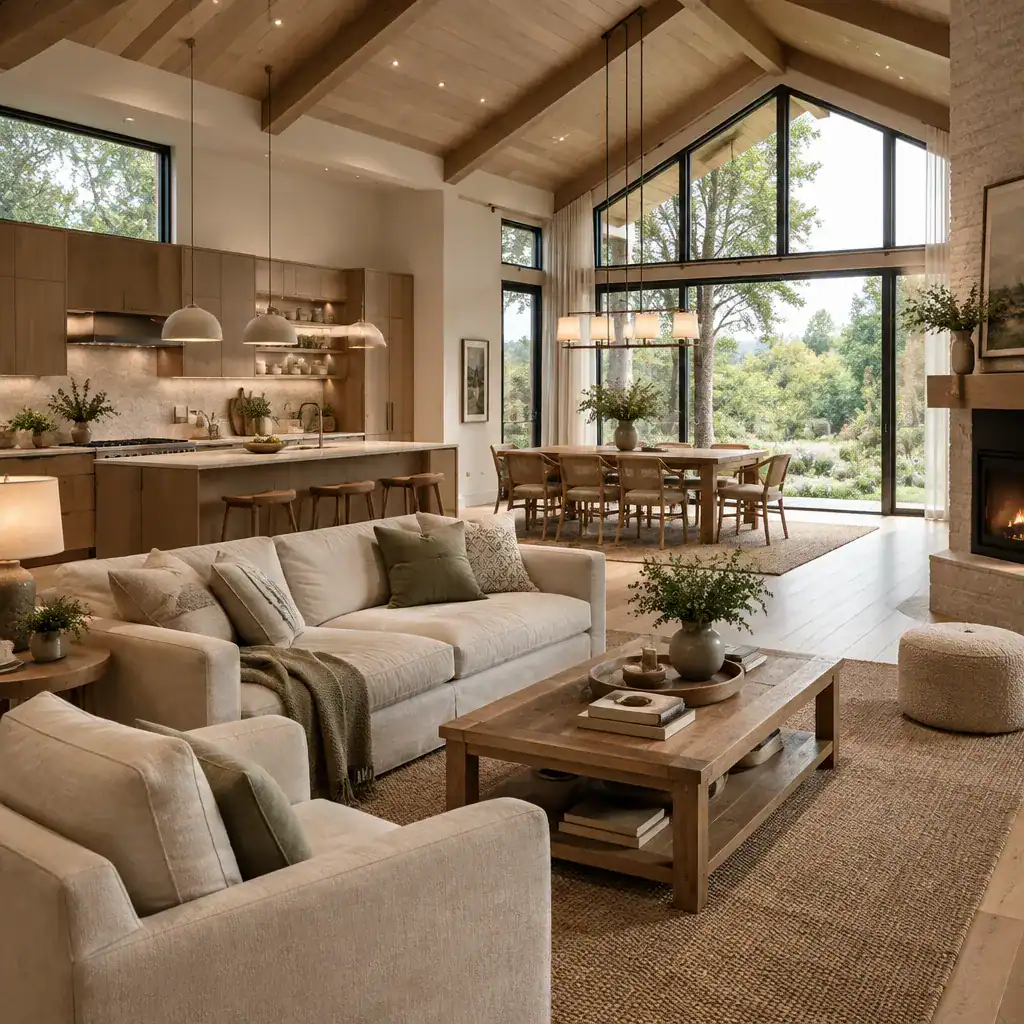
Use streamlined cabinetry and contemporary fixtures as a calm background for softer elements. Linen or wool upholstery, warm timber, textured rugs, ceramic vessels, and handcrafted-looking hardware can counterbalance clean lines without making the rooms feel themed. Select furniture that fits the scale of the room, and preserve comfortable paths between seating, doors, kitchen work areas, and storage.
Layered lighting is essential to the evening atmosphere. General lighting provides a practical base, task lighting supports cooking, reading, and grooming, and table lamps, wall lights, or subtle integrated fixtures create warmth after dark. Dimmers and thoughtfully placed fixtures allow the same space to shift from functional daytime use to a more intimate setting. Plan storage early as well, since a polished interior depends on having practical places for daily belongings.
Extend the Design Into Outdoor Living and Landscape
Outdoor areas should feel like an extension of the house rather than a separate afterthought. Coordinate patios, decks, paths, and planting beds with the exterior material palette and architectural lines. A stone terrace that echoes the entry detail, a timber deck aligned with interior flooring, or a path that leads naturally from the porch can make the property feel deliberate and complete.
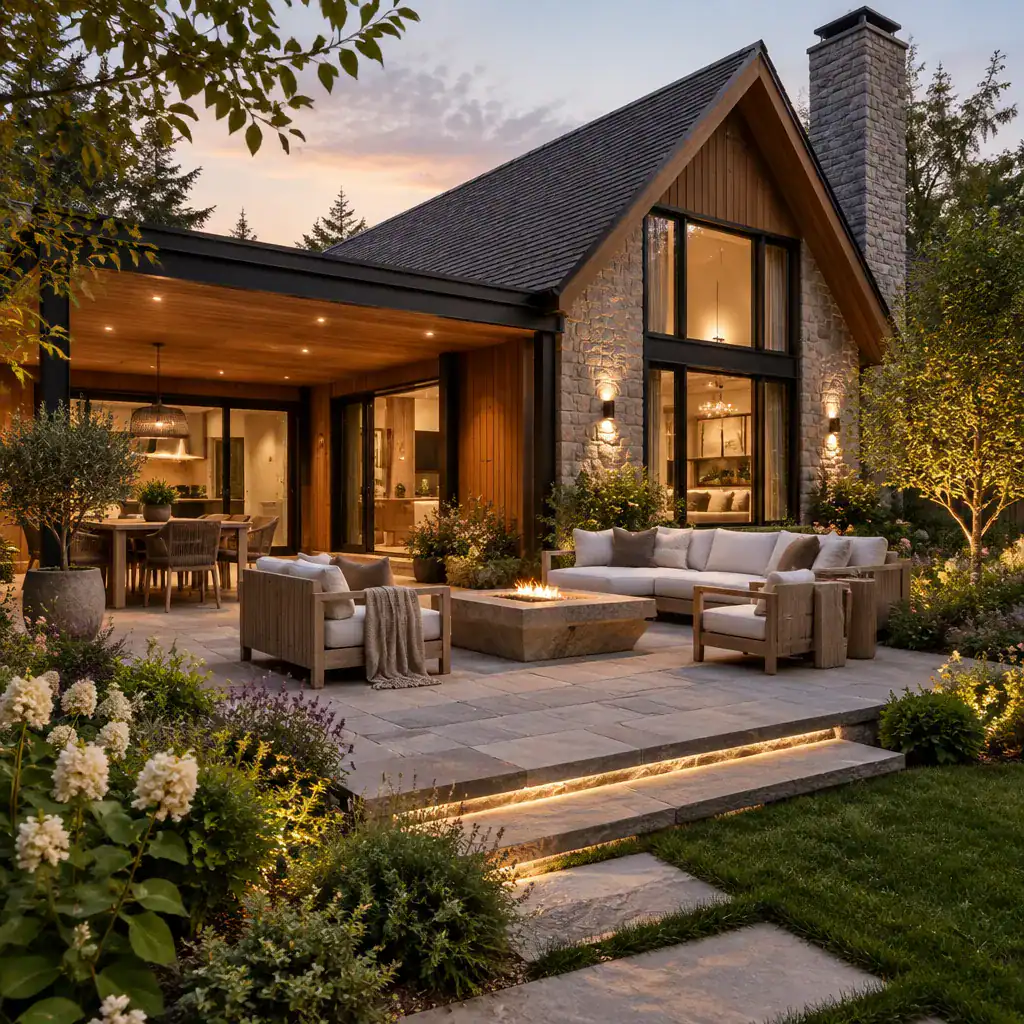
Strengthen the relationship between rooms and the site through well-placed doors, windows, covered transitions, and framed views. A dining area may open to a protected terrace, while a living room can face a garden focal point or a mature tree. These connections help a luxury modern cottage feel larger and more rooted in its surroundings without requiring an oversized footprint.
Keep planting structure simple enough to support the architecture. Layered grasses, shrubs, flowering perennials, native or climate-appropriate species, and natural ground textures can bring softness without obscuring the facade. Choose outdoor furniture, planters, and lighting with the same care given to interior pieces. Warm path lights, understated wall fixtures, and comfortable seating make the landscape usable and welcoming well beyond daylight hours.
The strongest luxury modern cottage designs unite clean forms with warmth, comfort, and a genuine sense of place. When architecture, materials, interiors, lighting, and landscape are considered as parts of one design story, the result can feel elevated without becoming formal or impersonal. Adapt these ideas to the realities of your site, climate, budget, and lifestyle, and work with qualified design and building professionals when project requirements call for their expertise.