
A traditional farmhouse interior is less about recreating a period home and more about creating rooms that feel welcoming, useful, and naturally collected over time. This practical guide focuses on building cohesive character through architectural details, comfortable layouts, tactile materials, restrained color, furniture, lighting, and decor that supports everyday living.
Farmhouse style remains appealing because it connects warmth with practicality. Its rural influence favors durable finishes, honest materials, and spaces made for gathering, but it can work in a suburban house, a newer build, or an apartment without copying every historical detail. Start by considering the atmosphere you want, then make coordinated choices for finishes, furnishings, lighting, and accessories.
Define the Core Character of a Traditional Farmhouse Interior
The best traditional farmhouse interior balances simplicity, function, warmth, and a gently lived-in quality. Rooms should feel comfortable enough for daily use, yet considered enough that materials and furnishings appear intentional rather than accidental. The goal is quiet character, not a collection of rustic symbols.
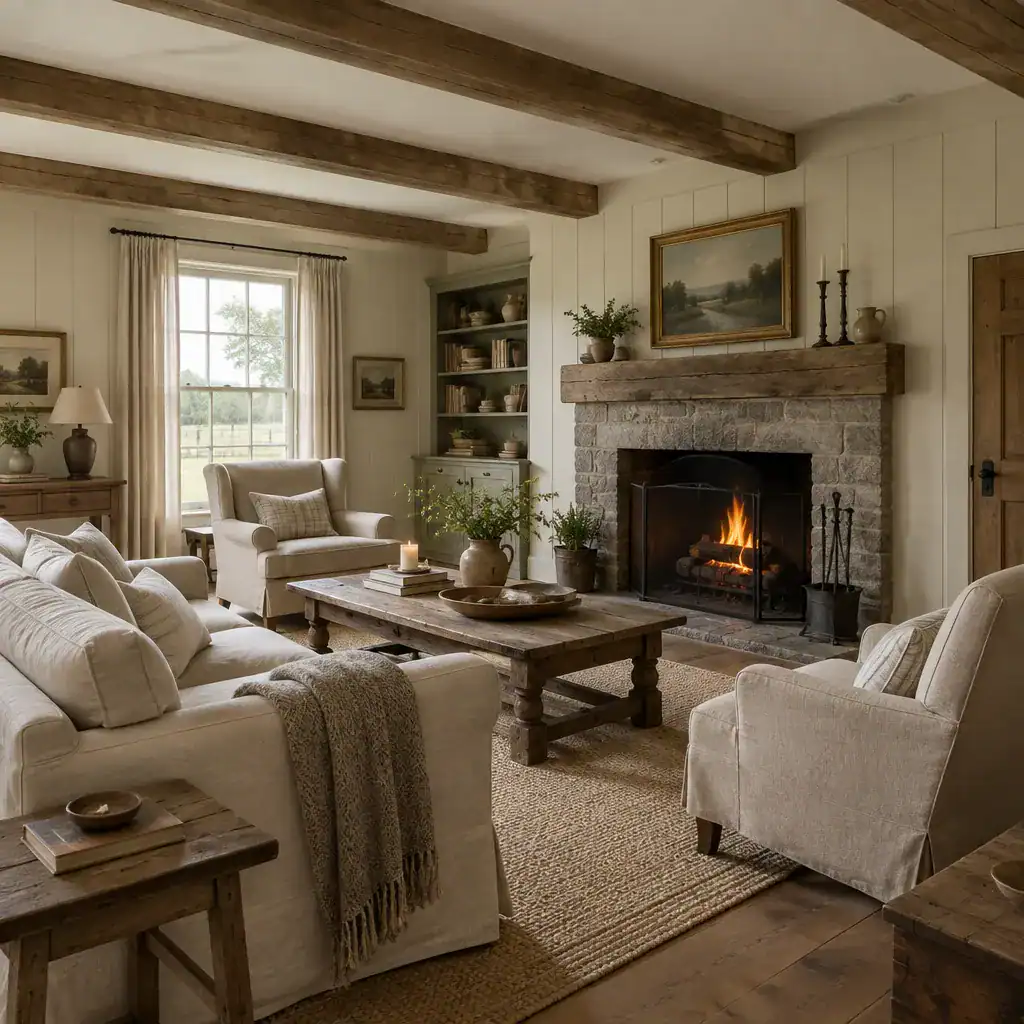
Architectural features can establish this character before any furniture is added. Visible timber beams, simple paneled walls, uncomplicated trim, deep window ledges, and a practical fireplace all support the style when they suit the home’s existing structure. If these features are absent, avoid adding several imitation versions at once; one well-executed detail, such as painted paneling or substantial wood trim, can be more convincing.
Keep the level of rustic character consistent throughout the home. For example, simple painted millwork, warm wood furniture, and a modest stone hearth work together more naturally than combining industrial pipe shelving, ornate Victorian pieces, and heavily distressed barn-door accents. Restraint allows the room to feel authentic and current rather than themed.
Build a Farmhouse Color Palette with Natural Contrast
Begin with a calm backdrop of warm white, cream, soft beige, muted gray, or gently weathered tones. These shades reflect light softly and give a traditional farmhouse interior an open, welcoming base that can carry through living spaces, hallways, and bedrooms.
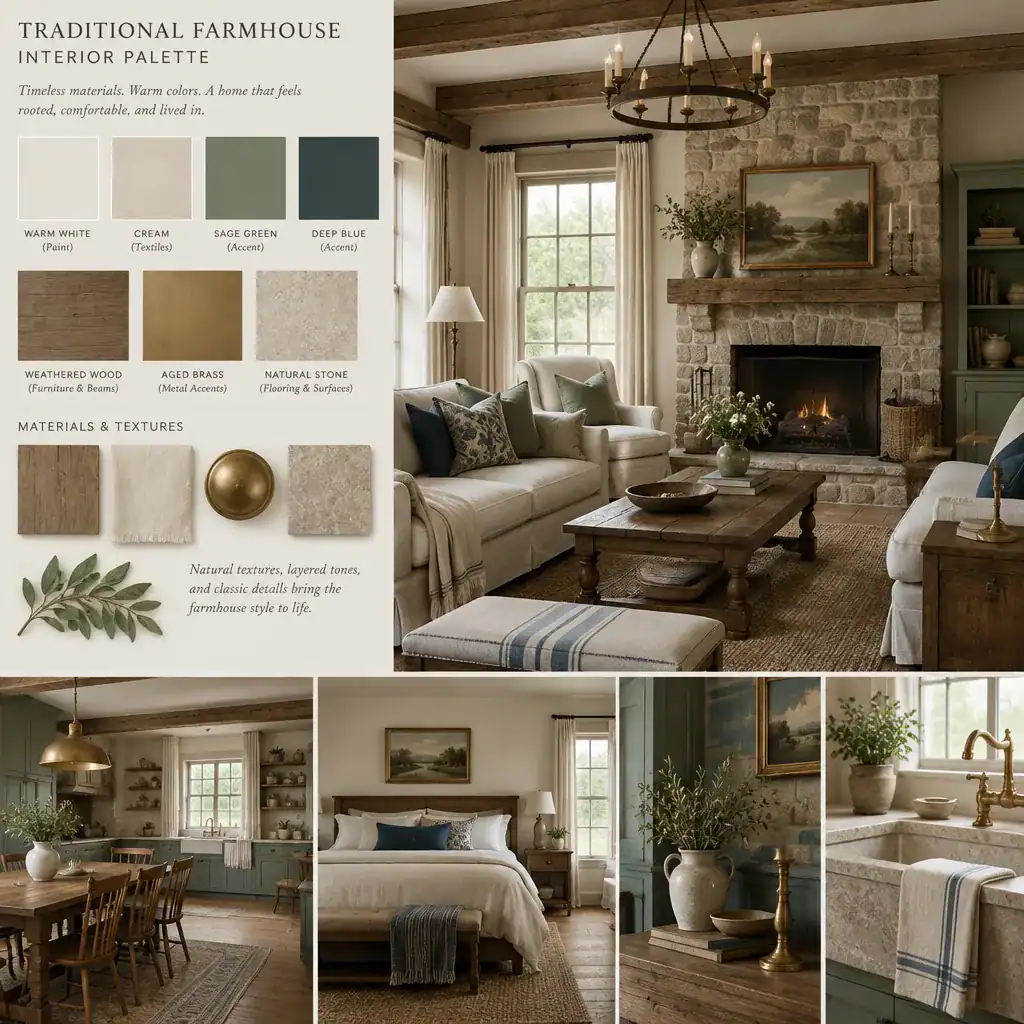
Add contrast through natural wood, aged metal, stone, muted green, or deep blue rather than using many bright accent colors. A creamy wall beside medium-toned oak flooring, for instance, can be enriched with sage upholstery, aged brass hardware, or a blue woven pillow. These darker and more tactile notes prevent pale rooms from feeling flat.
Coordinate walls, trim, cabinetry, flooring, and upholstery so each room feels related. Trim may be a softer version of the wall color, while cabinetry or a single built-in can provide deeper contrast. Avoid relying on excessive distressing, faux patina, or multiple competing accent colors; they can make the palette feel busy and weaken its calm, enduring effect.
Select Materials and Finishes That Add Authentic Texture
Natural wood, stone, linen, cotton, wool, ceramic, and aged metal give farmhouse rooms the tactile depth that paint alone cannot provide. Choose materials according to the needs of each room, selecting durable surfaces for high-use areas and softer textiles where comfort matters most.
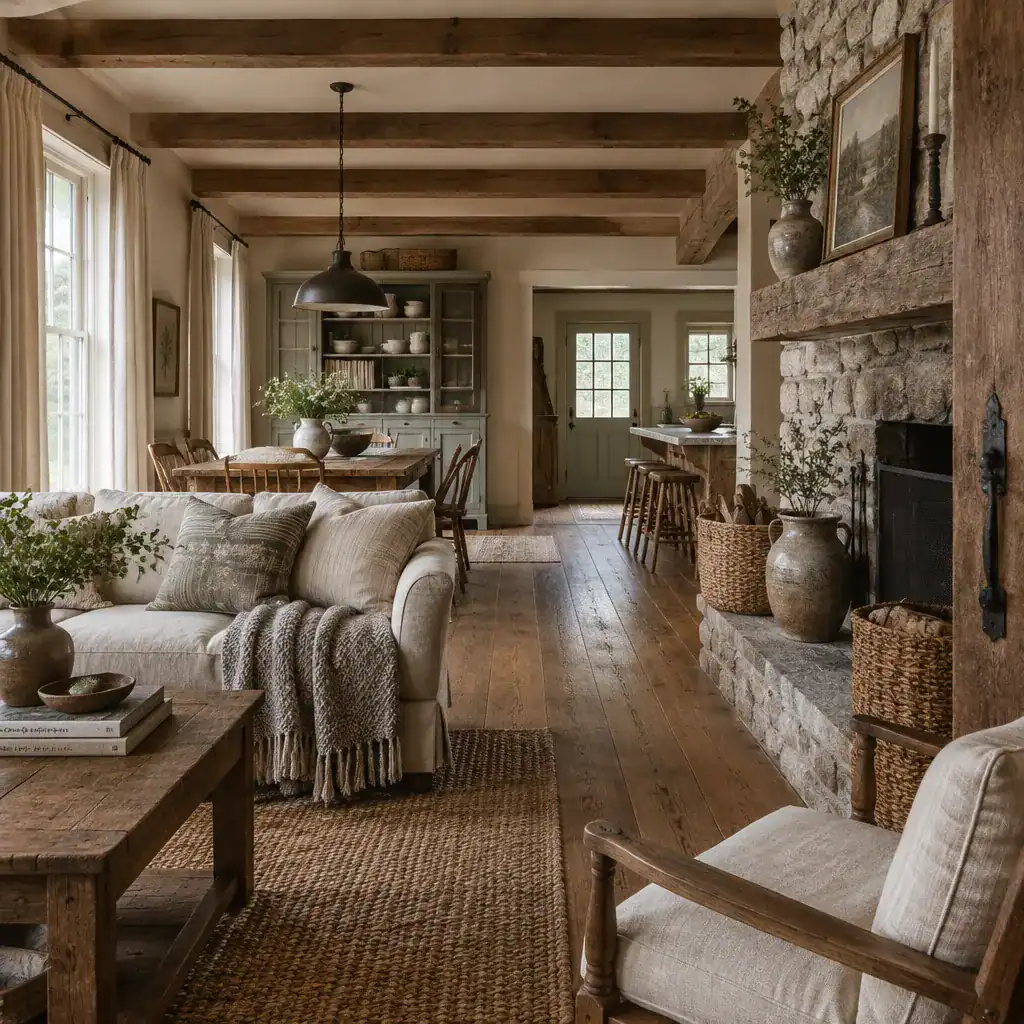
Texture can come from wide-plank flooring, a stone hearth, woven shades, linen slipcovers, cotton curtains, handmade-looking pottery, or a wool rug. Layering several subtle textures creates warmth without requiring visual clutter. A smooth painted wall, for example, is especially effective beside a weathered wood table and a softly woven textile.
Balance rougher finishes with materials that are comfortable to touch and easy to maintain. Reclaimed wood may bring character to a shelf or dining table, while sealed wood or durable stone is often a better choice for frequently used worktops. Consider cleaning needs, moisture, pets, children, and the home’s existing architecture before choosing unfinished or heavily textured materials.
Choose Furniture for Comfort, Function, and Farmhouse Proportion
Furniture in a traditional farmhouse interior should look sturdy, useful, and comfortable rather than ornate or overly coordinated. Favor simple silhouettes, visible craftsmanship, and pieces that invite daily use, such as a relaxed upholstered sofa, a solid wood coffee table, spindle-back chairs, or a practical sideboard.
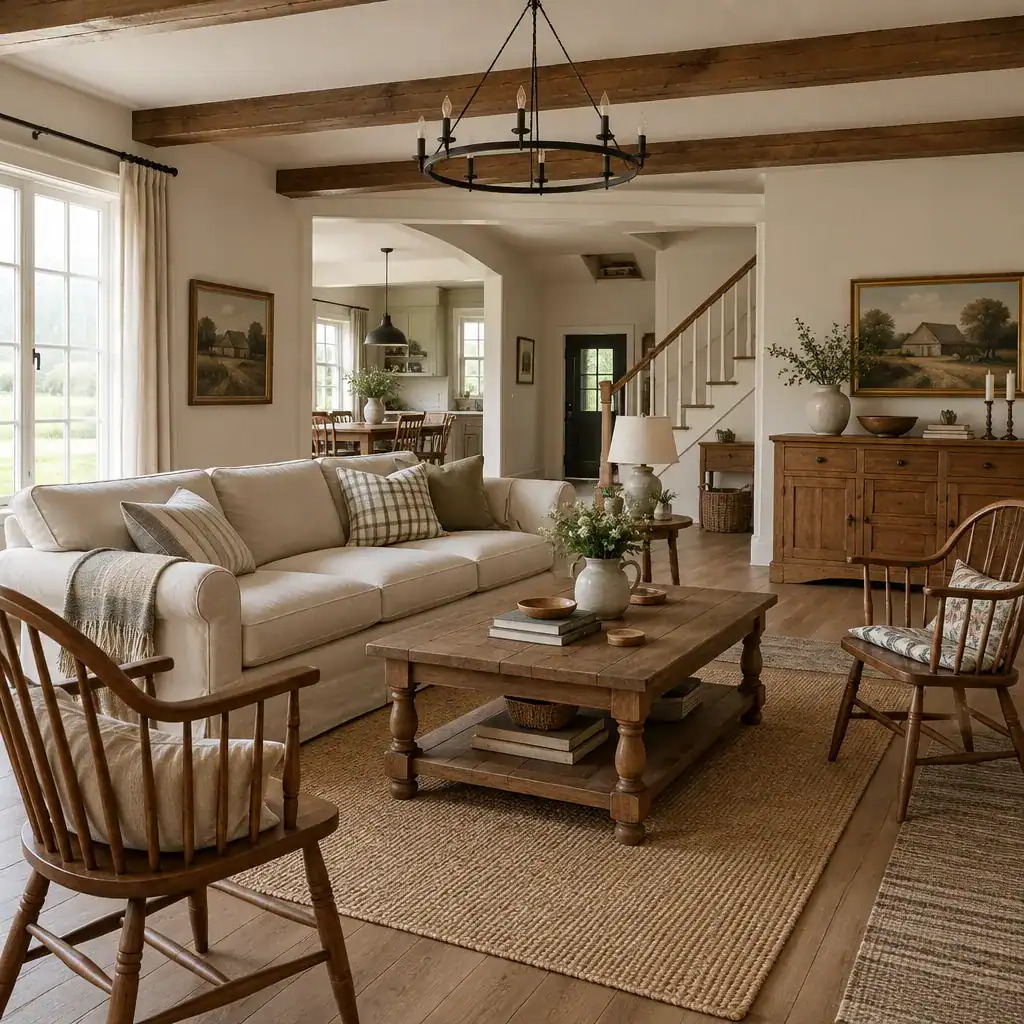
Plan furniture placement around circulation as well as appearance. Leave clear paths between seating, doors, and storage, and choose table sizes that allow chairs to pull out comfortably. A room feels more welcoming when people can move through it easily and when furnishings fit its proportions instead of crowding every wall.
Mix a few older-looking or vintage-inspired pieces with a limited number of simpler contemporary items. A traditional wood table can sit comfortably beside an understated sofa with clean lines, while an antique-style cabinet can hold practical storage. This balance prevents the home from becoming a set piece while preserving its sense of age and continuity.
Bring the Style into Kitchens, Dining Areas, and Bedrooms
In the kitchen, express farmhouse character through simple cabinetry, hardworking surfaces, understated hardware, and storage that serves the way you cook. Open shelves or glass-front cabinets can display everyday dishes, but use them selectively so the room remains easy to clean and visually calm.
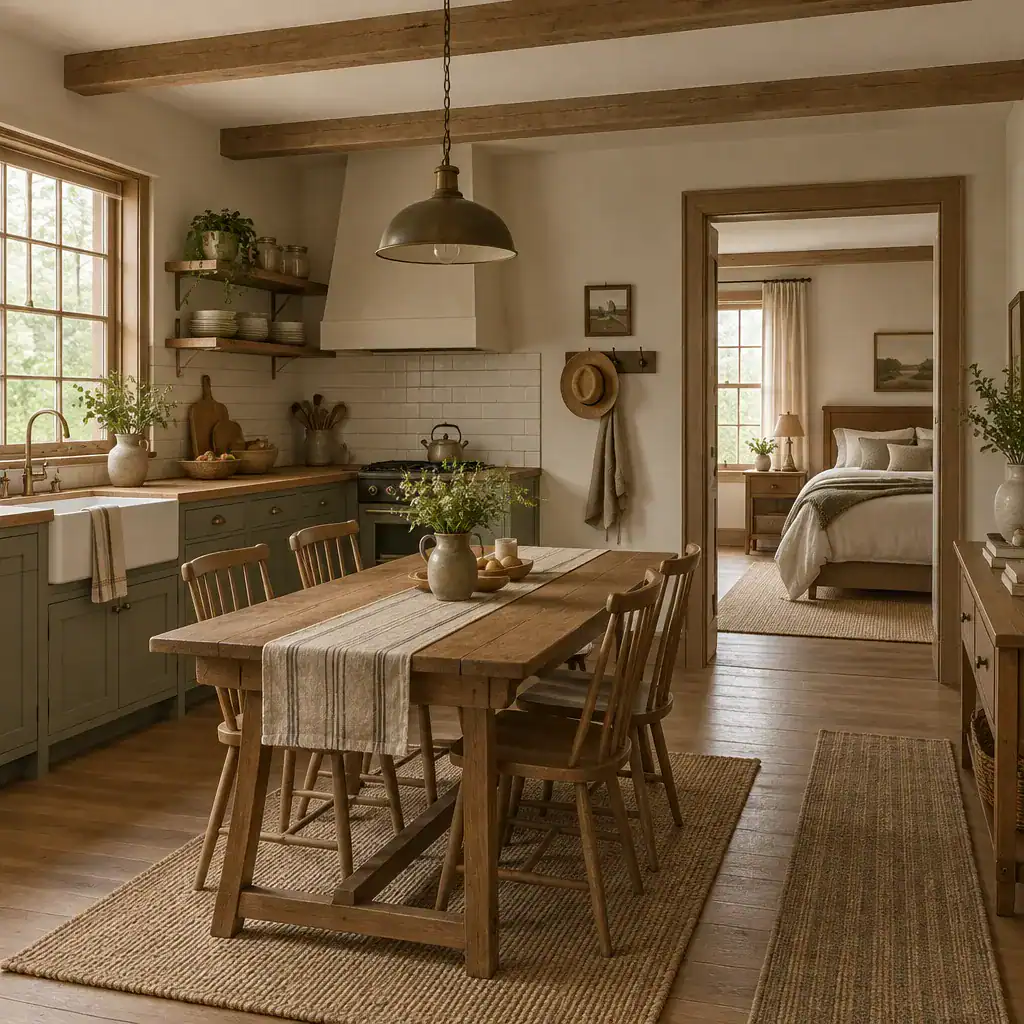
A dining area benefits from a substantial table, comfortable chairs, and lighting that works for quick breakfasts as well as longer gatherings. Wood, painted finishes, and woven or upholstered chair seats add warmth, while a straightforward pendant or shaded fixture can create a focused pool of light over the table.
Carry the same material language into bedrooms with soft bedding, simple wood furniture, natural textiles, and limited decorative layers. Repeat a selected finish, color, or hardware detail across rooms, such as warm white paint, aged brass, oak, or muted blue. Continuity makes the home feel unified, while small changes in textiles and accent colors allow each space to retain its own mood.
Finish the Interior with Lighting and Thoughtful Farmhouse Decor
Layer general, task, and accent lighting to keep rooms functional at every hour. Ceiling fixtures provide overall illumination, table lamps support reading and conversation, and small wall lights or focused lamps can highlight a hearth, artwork, or work surface. Warm, varied light makes a traditional farmhouse interior feel comfortable rather than overly formal.
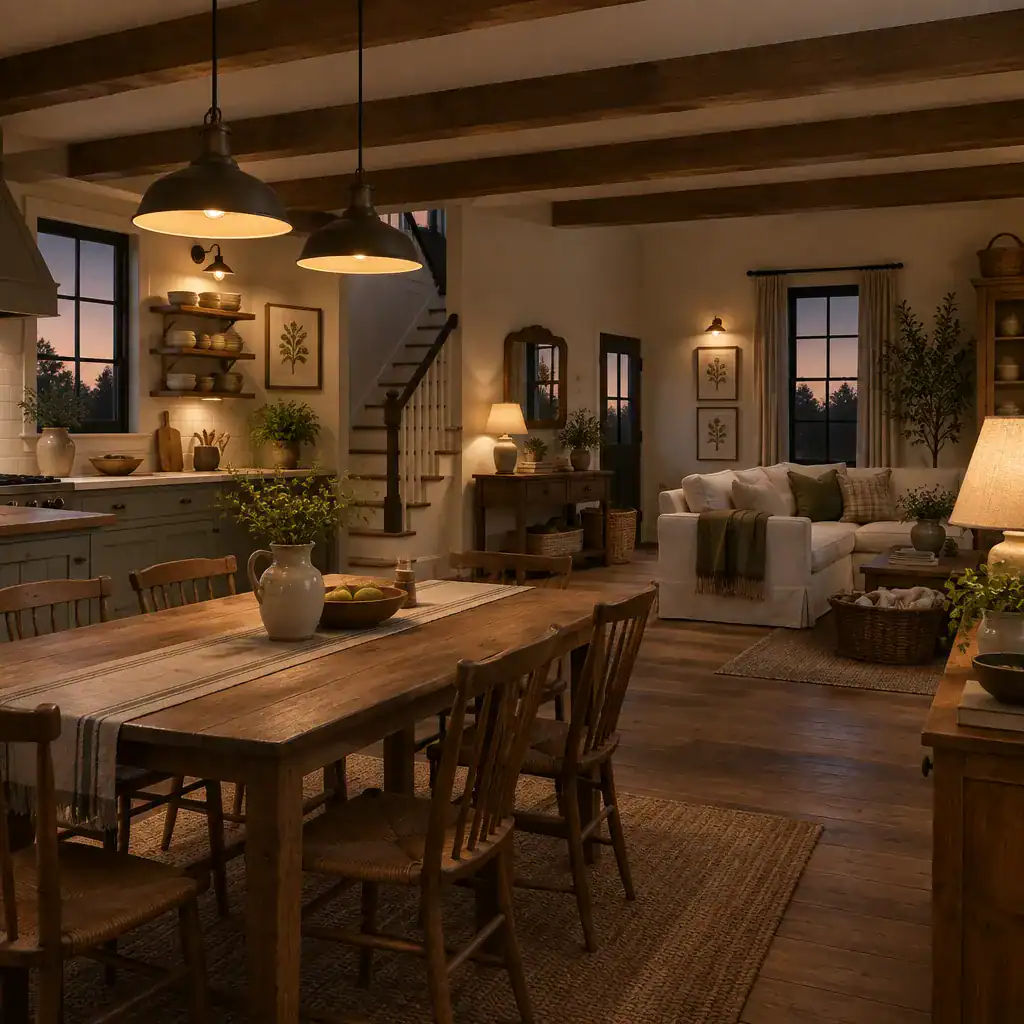
Choose fixtures with simple forms and materials that relate to the room, including aged metal, ceramic, glass, or wood. A modest pendant above a table, a ceramic table lamp on a sideboard, or a clear-glass wall sconce can add character without becoming the dominant feature.
Decor should feel collected, useful, and selective. Pottery, woven baskets, framed artwork, mirrors, plants, quilts, and attractive everyday objects can bring life to shelves and tables. Leave some surfaces open, and avoid filling the room with slogan signs, novelty accessories, or repeated rustic motifs. A few meaningful pieces have more impact than a crowded display.
A successful traditional farmhouse interior depends on consistency, comfort, natural texture, and purposeful decoration. Begin with the architecture already present, then select only the colors, materials, and furnishings that support how your household lives. When rustic character is balanced with practical contemporary comfort, the result feels warm, lasting, and personal rather than artificial or outdated.