
A cottage house is less about following one fixed style and more about creating a home with character, comfort, and a natural sense of belonging. Its appeal often comes from the way architectural proportions, materials, color, openings, furnishings, and landscape work together. A cottage can feel rustic and informal, quietly refined, bright and coastal, or more contemporary, yet the most successful examples maintain a clear thread from the first view of the exterior to the rooms inside.
Rather than treating the facade and interior as separate projects, begin with an overall direction for the home. The roofline, entry, windows, and exterior finishes establish an initial mood, while interior materials, lighting, furniture, and textiles continue that feeling in everyday spaces. The following ideas move from the broad design language of a cottage house to the details that help its exterior and interior feel connected.
cottage house design
Strong cottage house design begins with an atmosphere that can guide later decisions. A relaxed cottage may favor softened colors, casual planting, and simple details. A rustic direction can bring in more tactile wood, stone-like textures, and handcrafted-looking elements. A refined cottage may use cleaner trim, a more restrained palette, and carefully balanced symmetry, while a contemporary interpretation can simplify traditional forms without losing warmth.
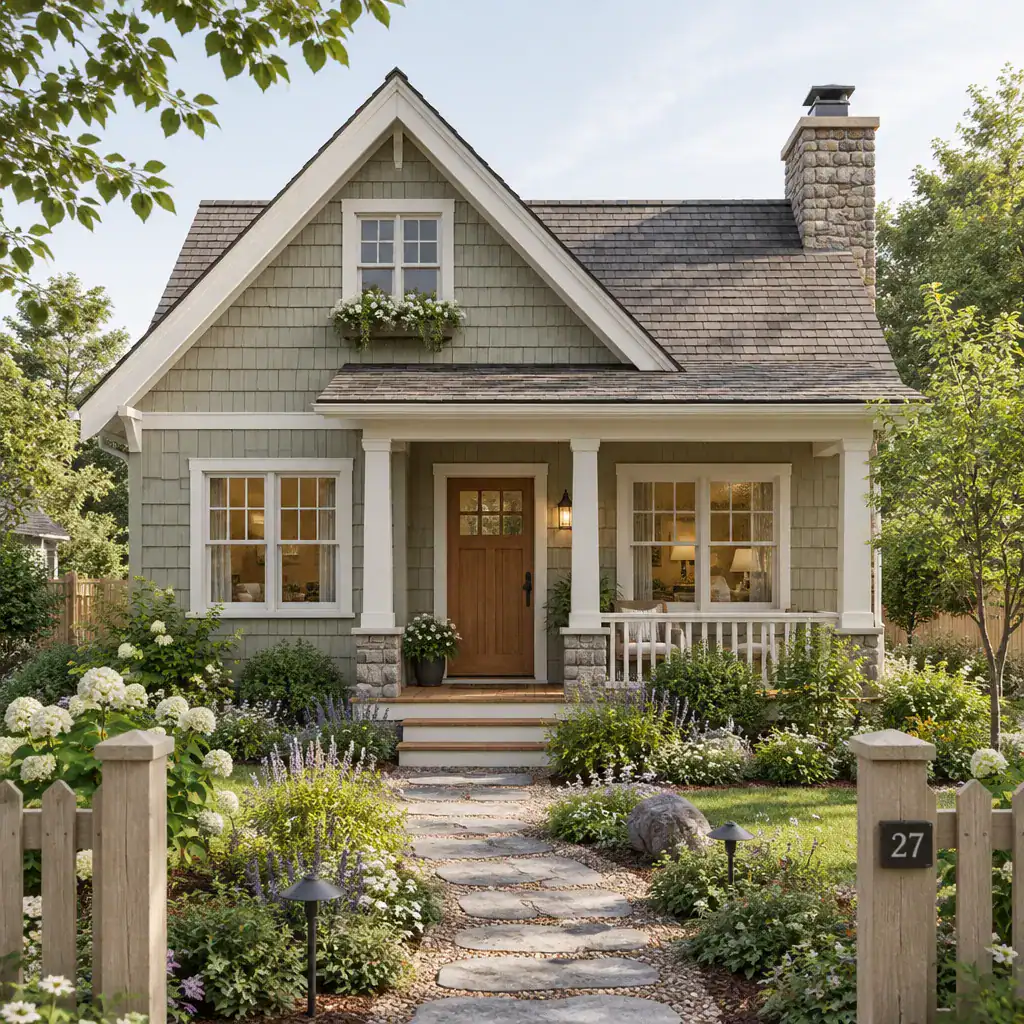
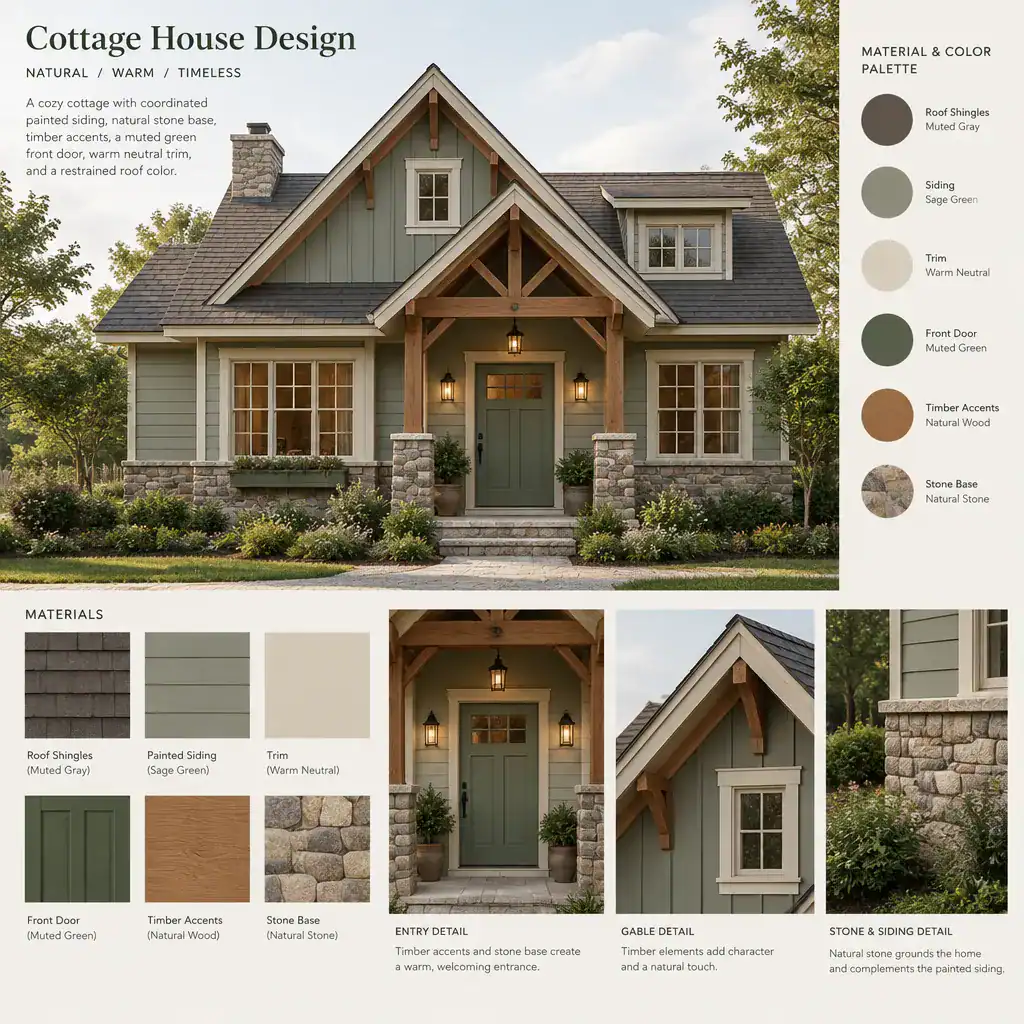
At the architectural level, roof form, facade proportions, window character, and entry design create much of the home’s identity. A welcoming front door, windows that relate comfortably to the scale of the facade, and a roofline that suits the home’s overall mass can make a cottage feel composed rather than overly decorative. Exterior materials should reinforce the chosen direction, whether they appear painted, natural, textured, or quietly understated.
The setting matters just as much as the building itself. Paths, planting, porch areas, and views toward the home shape the arrival experience and can soften the transition between architecture and landscape. Cottage character often benefits from a sense of simplicity and visible care, where selected details feel purposeful instead of competing for attention.
These early choices also create a useful foundation for the interior. A warm exterior palette may continue through painted millwork or textiles indoors, while a natural material used outside can be echoed through wood finishes, woven accents, or earthy surfaces inside. This shared language helps the entire home feel intentional.
cottage house interior
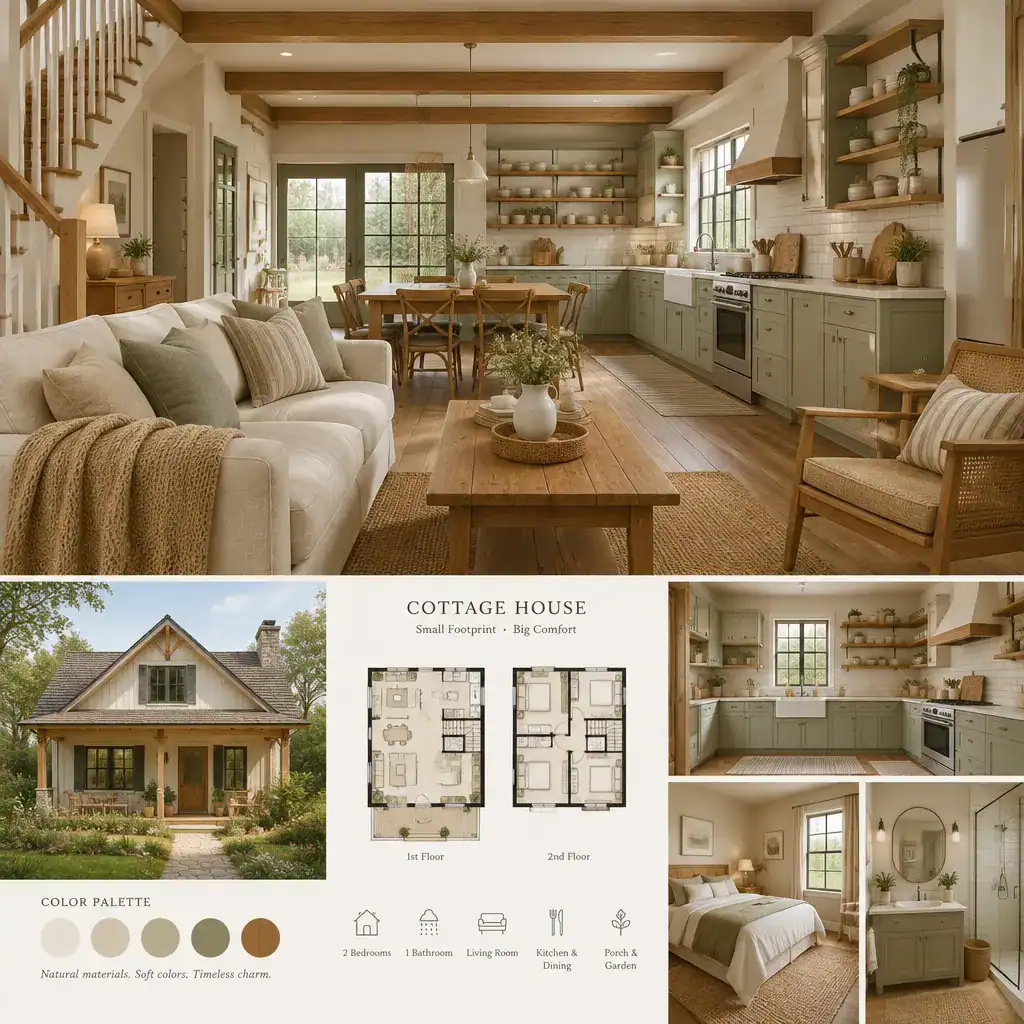
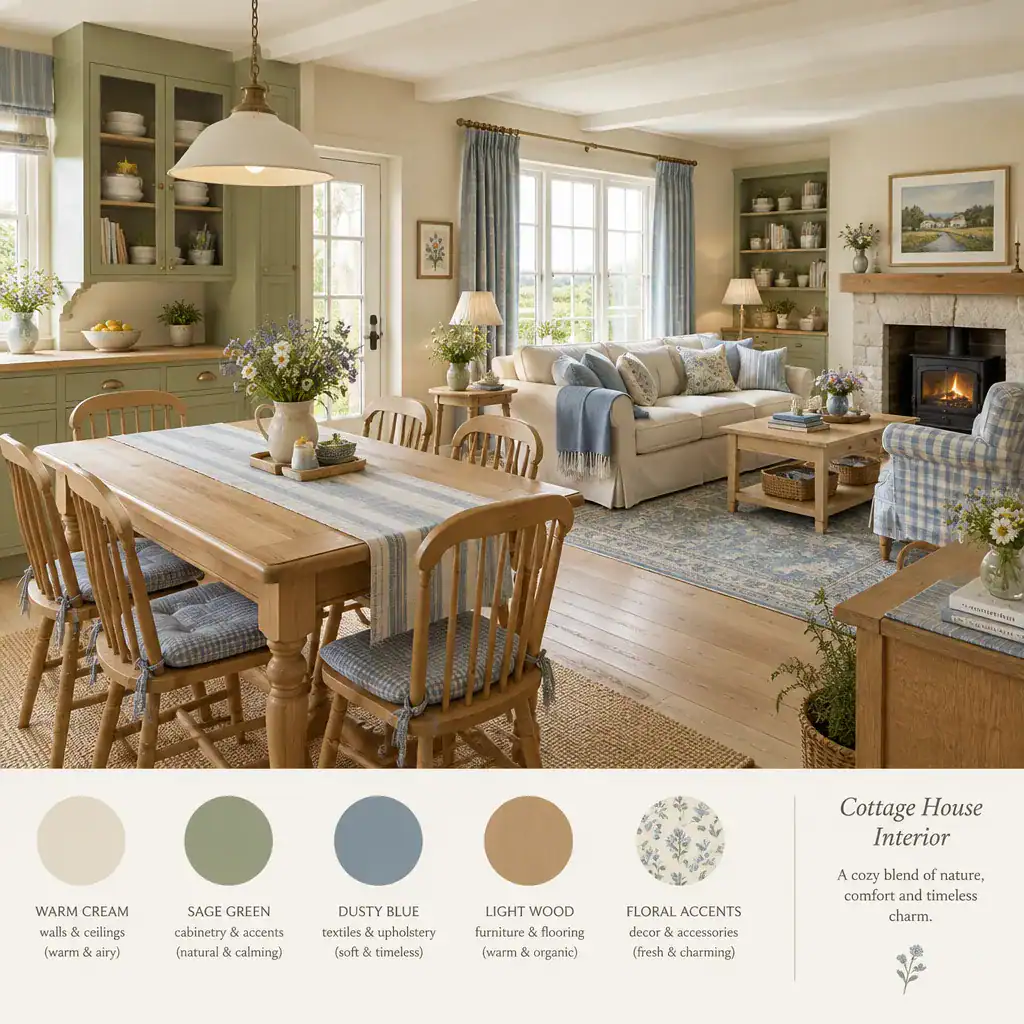
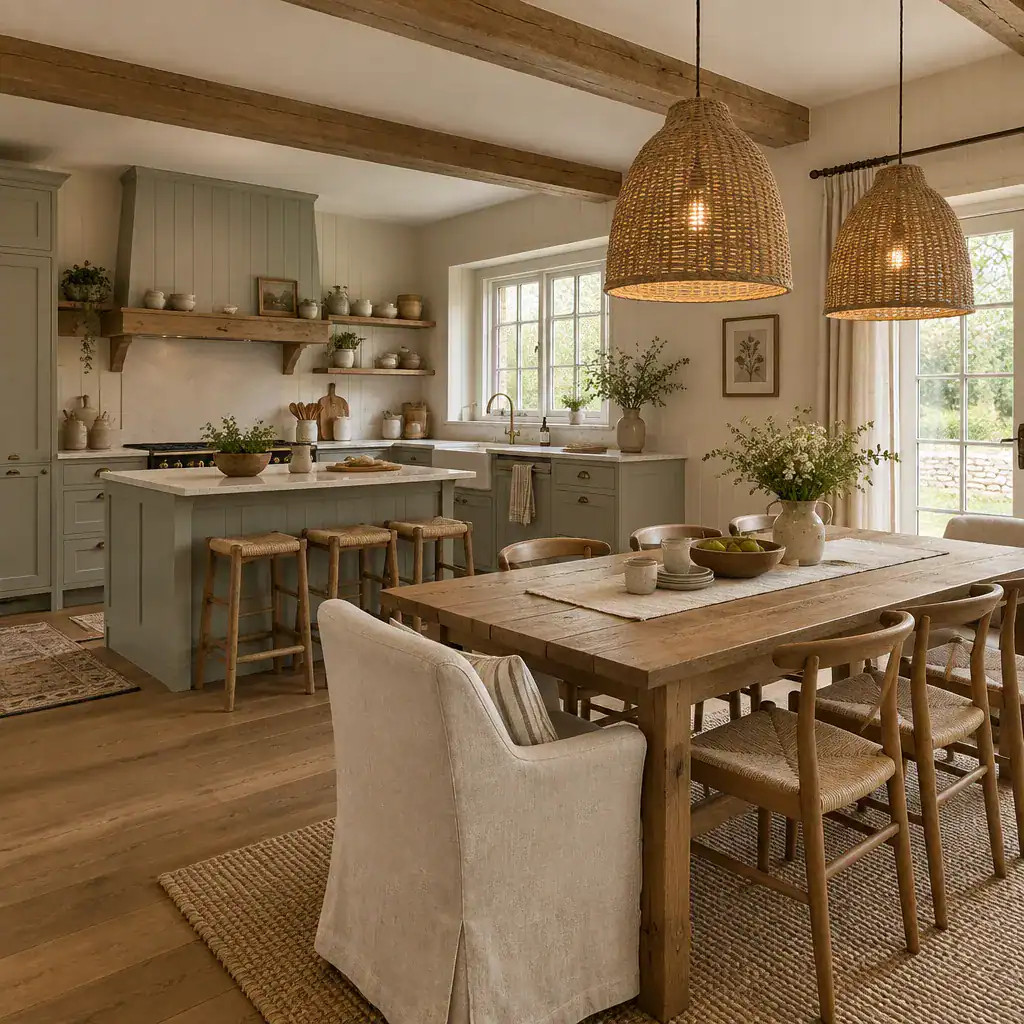
The cottage house interior should feel comfortable to use as well as pleasant to look at. Visual warmth often comes from natural-looking materials, soft textiles, layered lighting, and furnishings that encourage people to settle in. Instead of relying on decoration alone, focus on making each room feel welcoming, useful, and connected to the home’s architectural character.
Inviting seating, practical storage, and surfaces that support daily routines can make a cottage interior feel relaxed rather than staged. Wood, woven fibers, ceramic finishes, painted details, and gently textured fabrics can introduce depth without requiring every surface to be heavily embellished. Lighting can combine general illumination with table lamps, wall fixtures, and softer accent lighting to create a more settled atmosphere from day to evening.
Room relationships are equally important. Clear circulation, sightlines between shared spaces, and thoughtful transitions between open and private areas help the home function naturally. Repeating a few colors, finishes, or material cues from one room to the next can strengthen continuity while allowing each space to serve its own purpose. The interior works best when it responds to the scale, light, and mood established by the exterior.
cottage house interior design
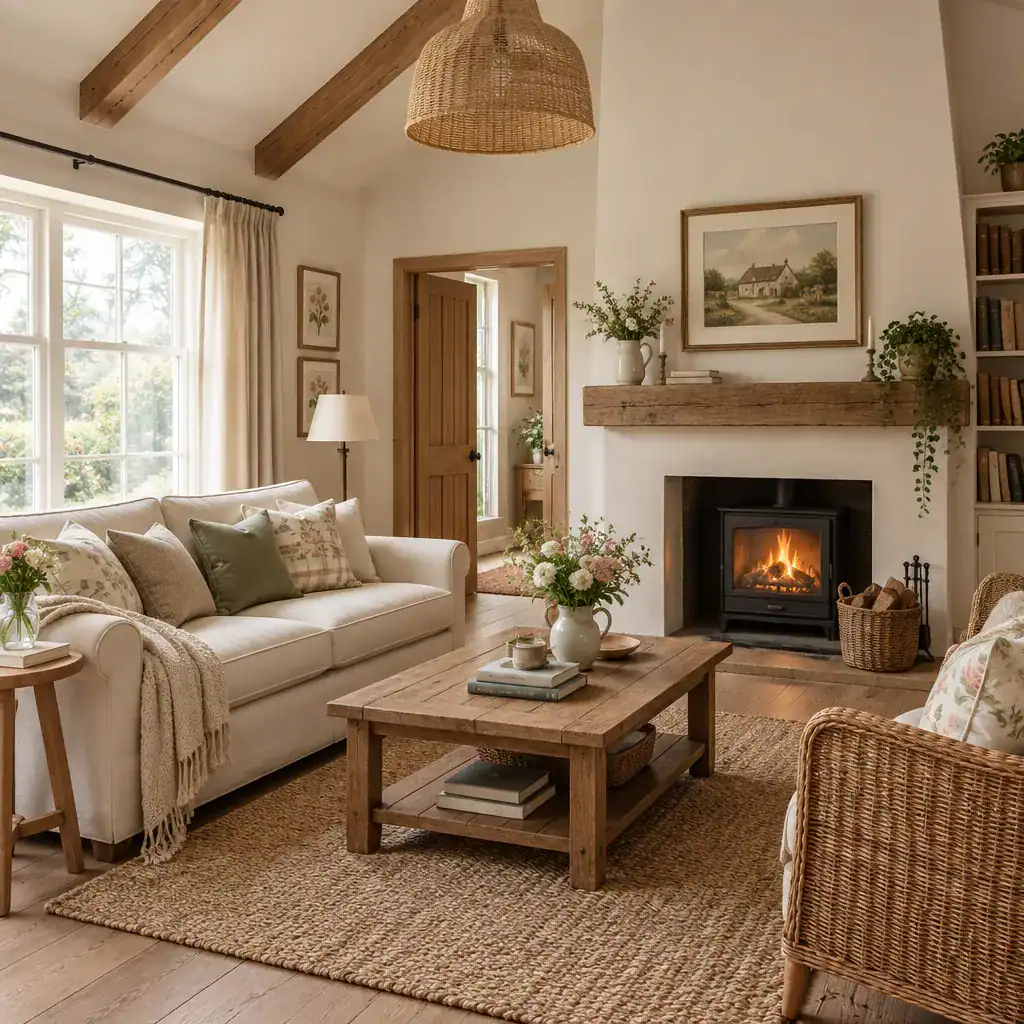
Cottage house interior design turns a general feeling of warmth into a coordinated set of choices. While the overall atmosphere may be relaxed or rustic, the design process involves selecting finishes, colors, furniture, lighting, and decorative details that support one another. A limited color direction is often easier to carry throughout the home than many unrelated accent colors.
Repeated materials can create a quiet sense of order. For example, a wood tone, painted finish, metal detail, or woven texture can appear in different forms across several rooms. The repetition does not need to be exact. Varying the scale and finish of similar elements keeps the result layered and natural rather than overly matched.
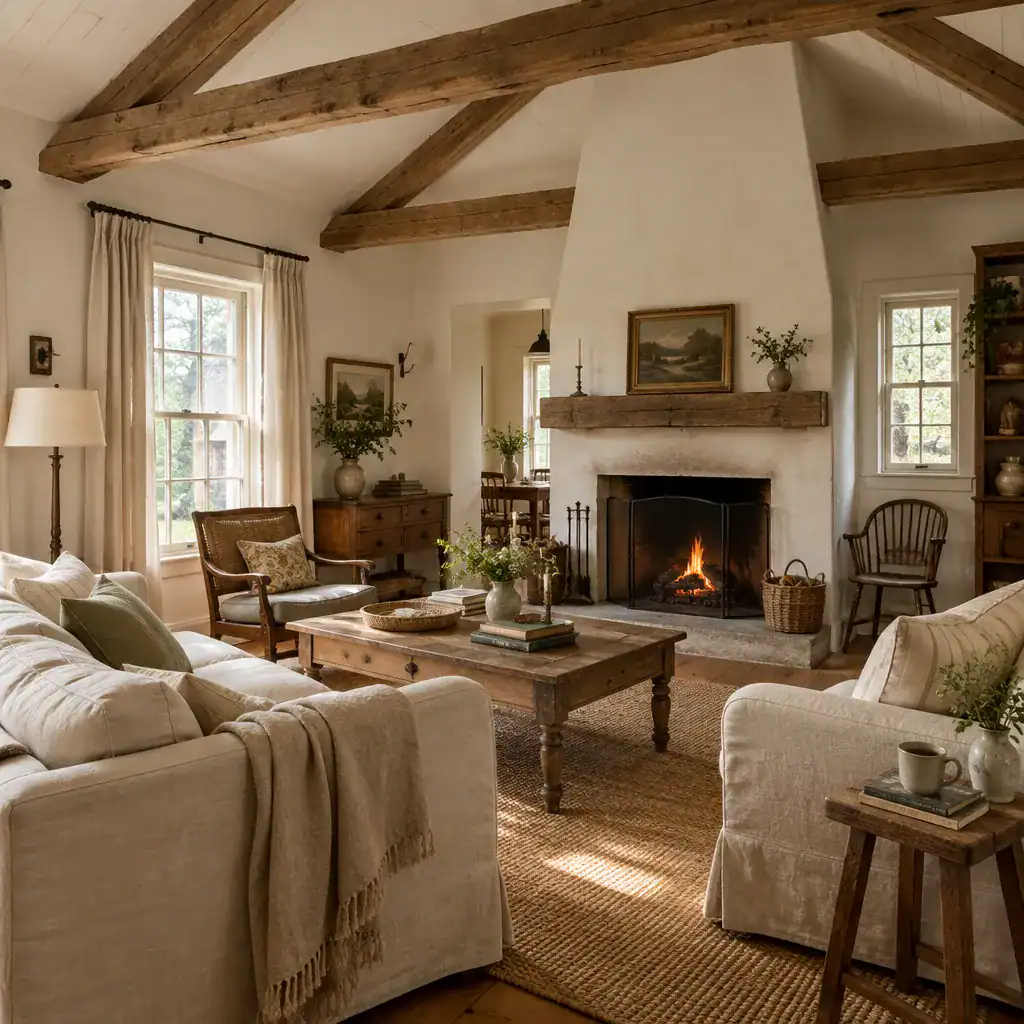
Furniture should feel appropriate to the rooms around it, leaving enough visual and physical space for the home to remain easy to use. Vintage-inspired pieces can add personality, but they work best when balanced with current comfort, durable everyday surfaces, and storage that supports modern living. A cottage scheme can include old and new elements together when they share a similar warmth, proportion, or material quality.
Intentional contrast also prevents the interior from becoming crowded or repetitive. A simple wall finish can offset patterned textiles, cleaner-lined seating can balance more traditional cabinetry, and darker accents can give definition to a light room. Look back to the exterior throughout the process: the house’s forms, trim colors, masonry, or natural surroundings can all suggest useful starting points for the interior palette.
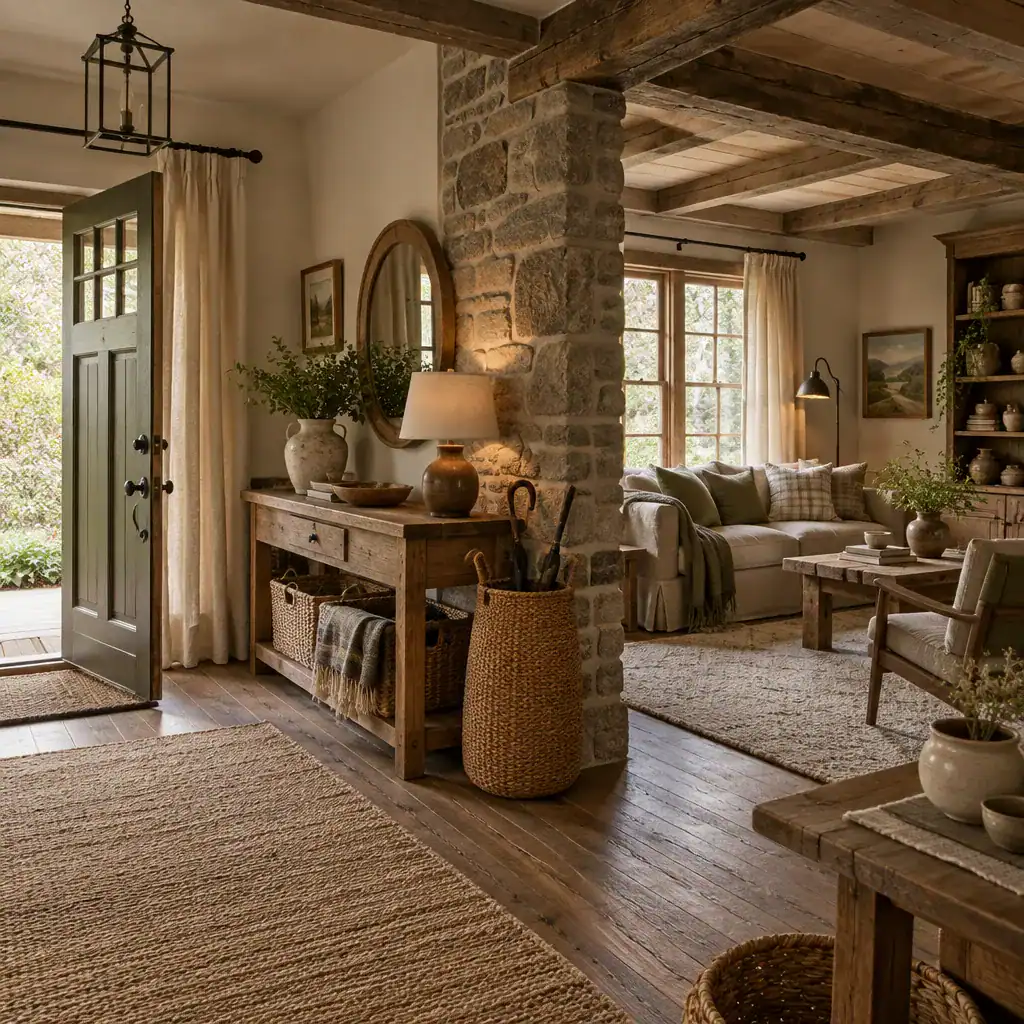
cottage exteriors interior
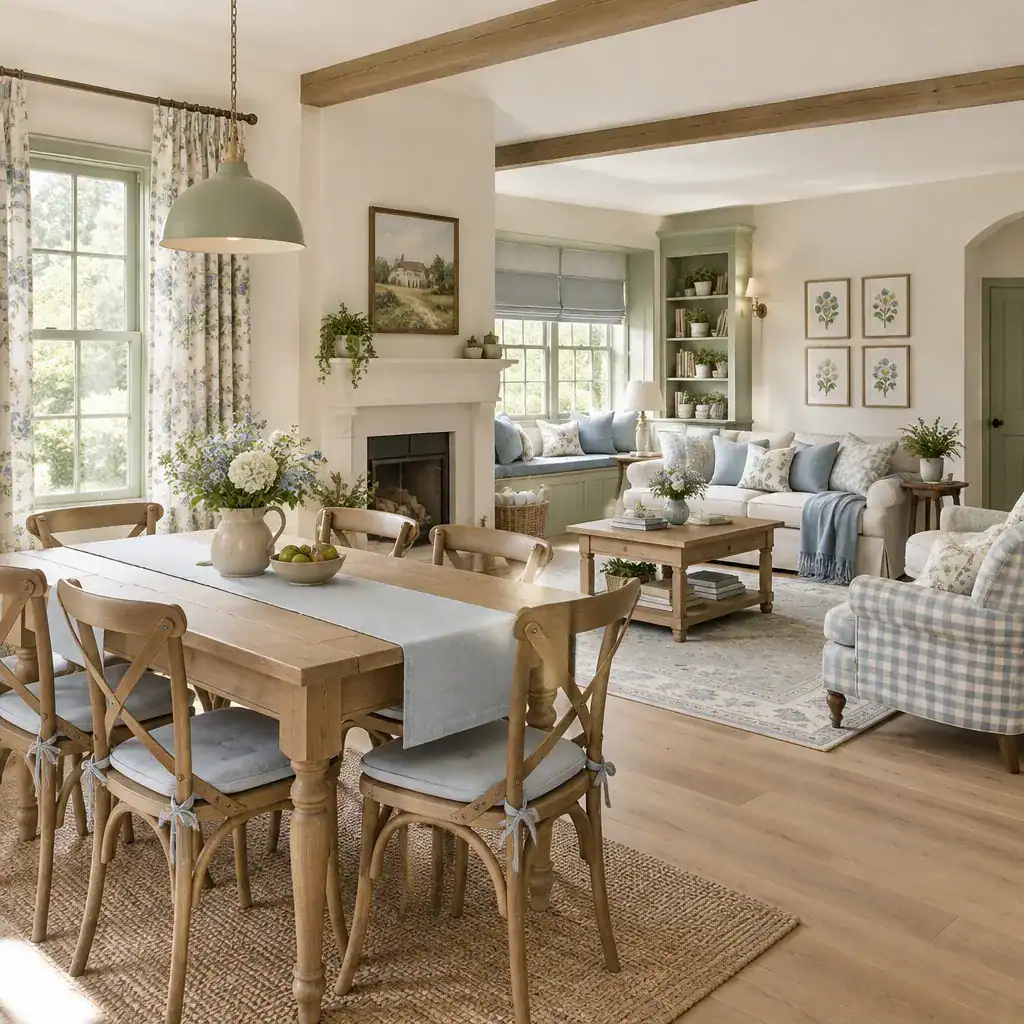
The relationship between cottage exteriors interior choices is what gives the home a complete and convincing sense of character. Exterior materials, entry details, window placement, daylight, and views all influence the experience inside. A front door can introduce a color that reappears in a small interior accent, while window trim, timber details, or textured exterior finishes can inspire related materials within living spaces.
Coordination does not mean copying every exterior element indoors. It is more effective to reinterpret selected qualities across the threshold. A weathered-looking exterior palette may become softer neutral walls and tactile textiles. A garden-facing facade may lead to interior colors drawn from foliage, flowers, soil, or stone. Natural light and framed views can become part of the decorative approach by keeping nearby furnishings and window treatments supportive rather than obstructive.
Consider the landscape and arrival sequence as part of the interior experience. A path, porch, garden gate, or planted border can set a relaxed mood before anyone enters the home. Inside, the entry can continue that mood with practical storage, warm lighting, and materials that feel connected to the rest of the house. These small transitions help the design feel continuous.
A simple coordination process can keep decisions focused. First, identify a shared visual language, such as soft color, natural texture, gentle contrast, or handcrafted detail. Next, choose a few anchor elements that express it clearly. Check transitions at the entry, near windows, and between main rooms, then remove choices that distract from the overall direction. Cohesion does not require a historically exact cottage style; it can still leave room for personal preferences, contemporary comforts, and a home that feels genuinely lived in.
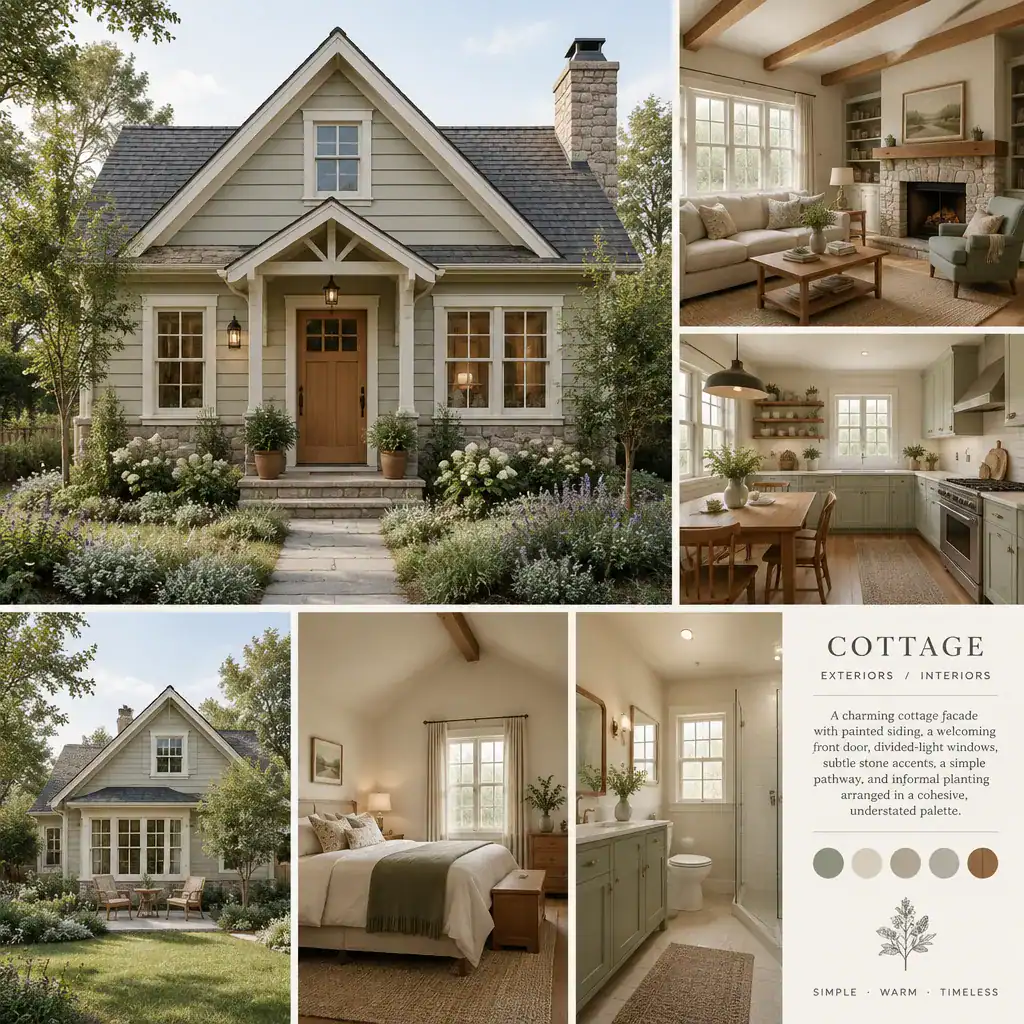
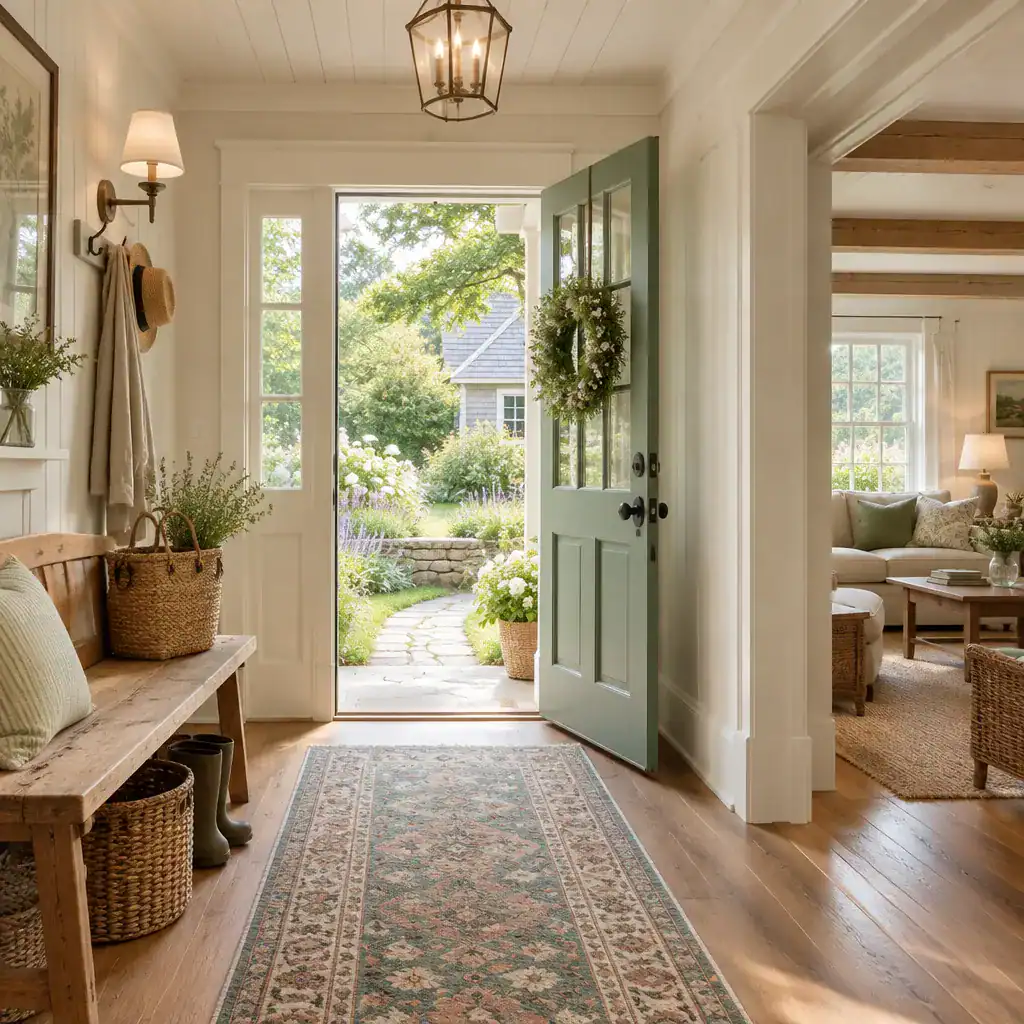
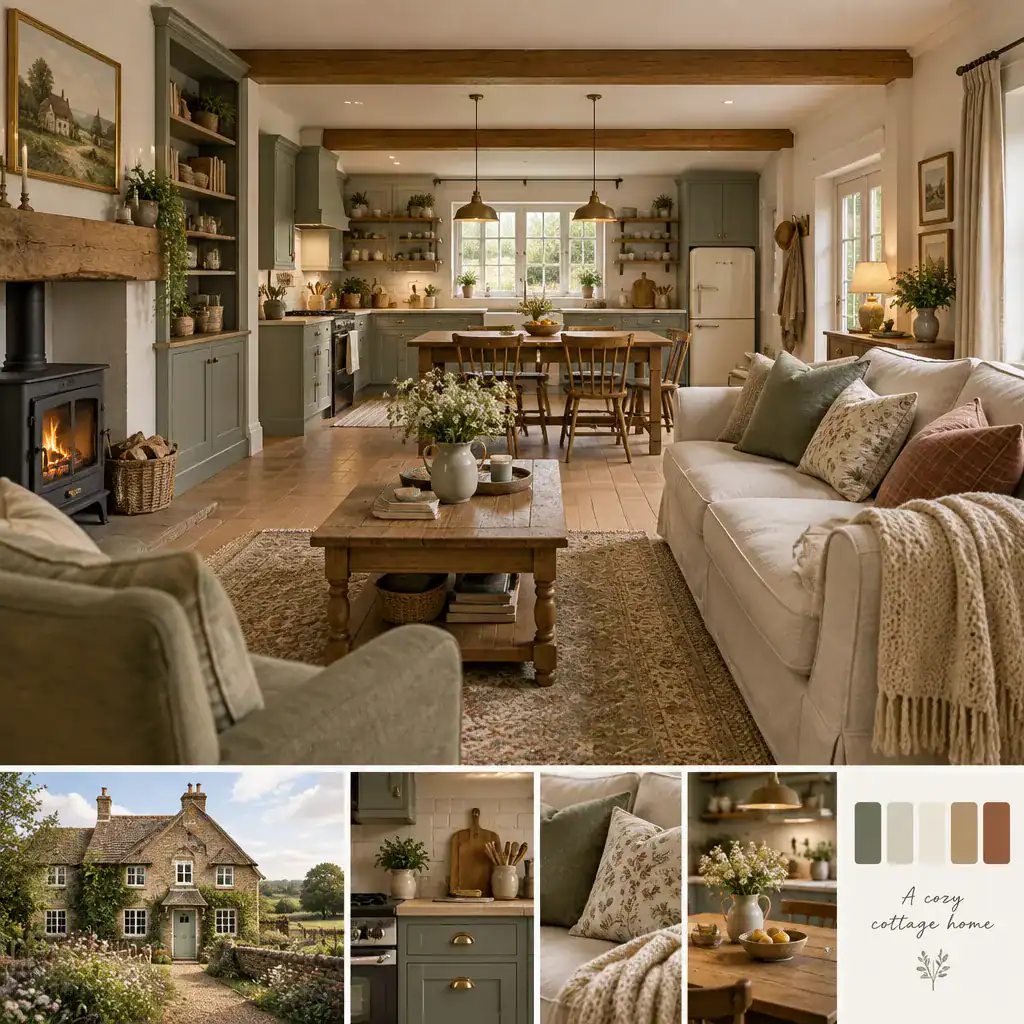
A well-planned cottage house starts with a clear overall direction and carries it through every major decision. Architectural character, comfortable interiors, coordinated finishes, and thoughtful transitions between outdoors and indoors all reinforce one another. Prioritize the roofline, facade, windows, materials, palette, and room atmosphere before focusing on smaller decorative additions. By adapting these ideas to the site, layout, maintenance needs, and daily habits of the household, a cottage-inspired home can feel cohesive, practical, and full of lasting character.