
Cottage homes are loved for their warmth, character, and easygoing sense of welcome. A successful cottage house design is not created by adding a few rustic accessories; it begins with an architectural idea that carries through the exterior, interior, and garden. By considering form, materials, color, room comfort, and landscape together, homeowners can create a home that feels personal and settled.
These ideas can be adapted for compact cottages, larger family homes, rural settings, suburban lots, or renovation projects. Rather than following one fixed formula, use the principles below to choose details that fit your location, daily routines, and preferred level of traditional or contemporary character.
Define the Architectural Character of a Cottage Home
A cottage exterior often feels most inviting when its scale is approachable, its proportions are balanced, and the entrance is easy to recognize. A pitched roof can establish a familiar silhouette, while a porch, covered stoop, or clearly framed front door gives the home a welcoming focal point. The goal is to make the house feel comfortably composed rather than overly formal or crowded with features.
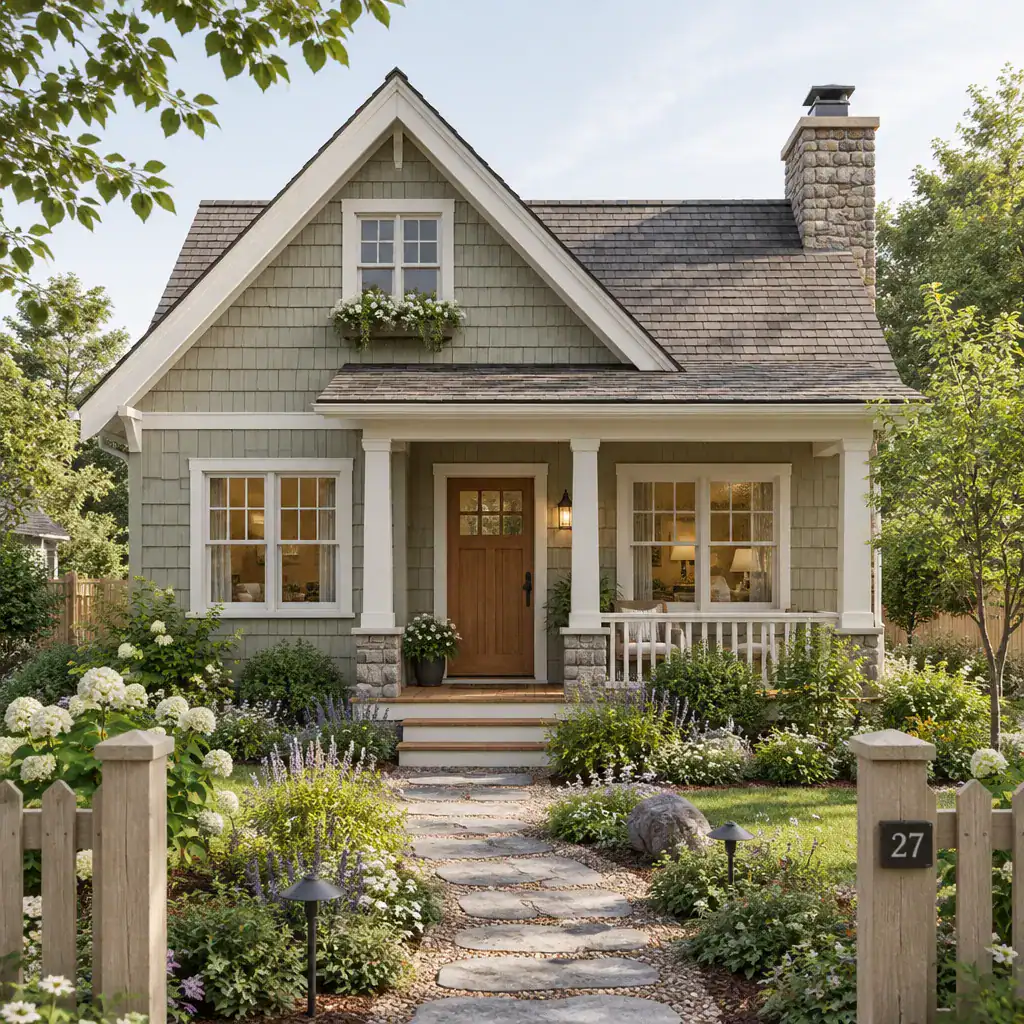
Consider details that reinforce the same architectural direction. Divided-pane windows, modest dormer-style accents, shutters, textured siding, and simple trim can all support a cottage-inspired look when used selectively. For example, a home with a steep roof and traditional windows may benefit from a restrained porch and simple siding, while a stone-accented facade may need fewer decorative additions.
Avoid combining unrelated styles simply because each one appears charming on its own. Choose a small set of features that share a common feeling, whether that is English garden cottage, coastal cottage, woodland retreat, or a cleaner modern interpretation. Let the landscape guide the mood as well: soft planting, a winding path, or open views can help the home feel connected to its surroundings and reinforce the intended atmosphere.
Choose Cottage-Friendly Materials and Exterior Colors
Exterior materials create much of the tactile quality associated with a cottage. Painted siding can provide a light, familiar backdrop, while natural stone can add visual weight around a foundation, chimney, entry, or garden wall. Brick offers another layer of texture, and timber accents can bring warmth to gables, porch details, or entry features. The most cohesive results usually come from allowing one material to lead and using others as supporting accents.
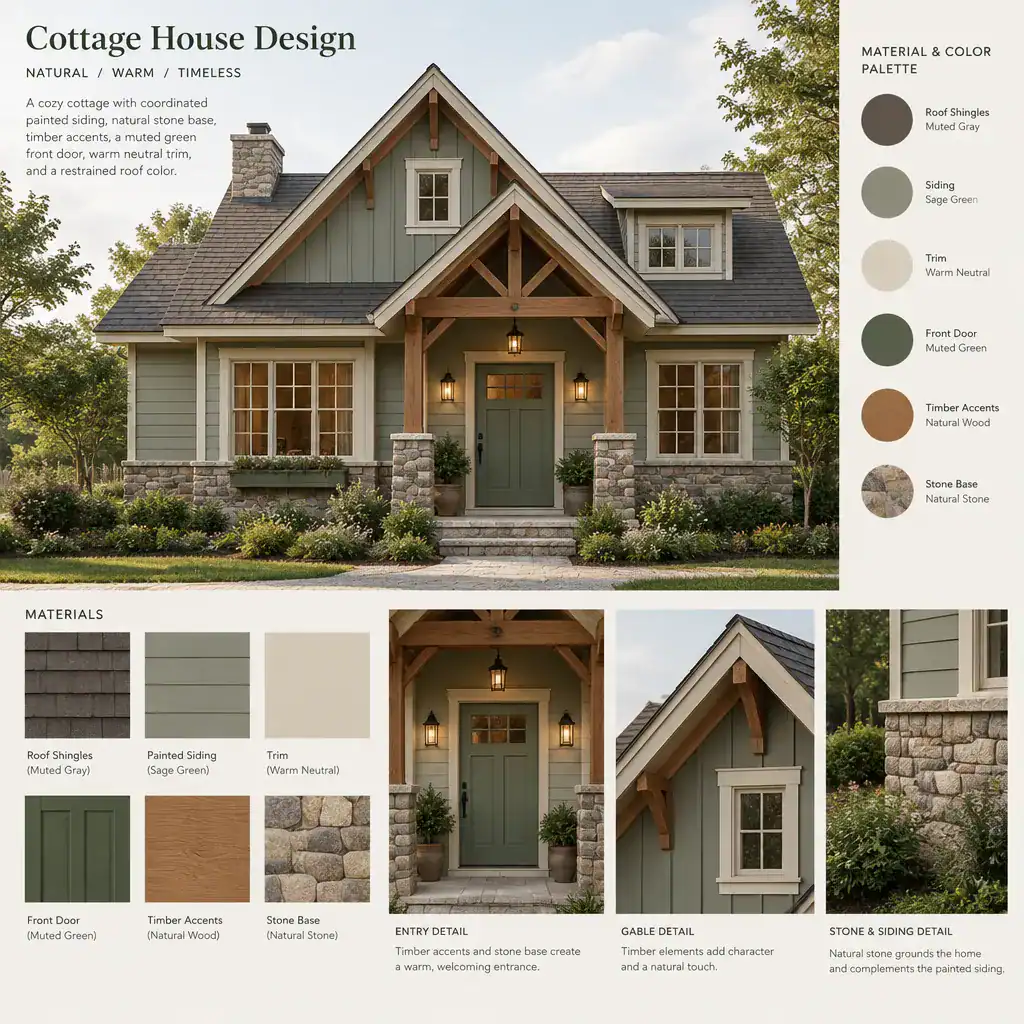
Texture helps the facade feel layered and connected to its setting. A mix of smooth painted trim, rougher stone, and natural-looking wood can create a handcrafted impression without making every surface compete for attention. Repeat materials in nearby landscape elements, such as a stone path, timber gate, or brick-edged planting bed, to make the transition from house to garden feel intentional.
Keep the color palette restrained. Soft whites, warm creams, faded grays, muted greens, dusty blues, and earthy taupes work well as calm foundations. A carefully selected front door color can provide personality, while the roof, trim, window frames, and facade should still read as one coordinated palette. In a thoughtful cottage house design, color supports the home’s form and materials instead of distracting from them.
Create a Warm and Functional Cottage Interior
A cottage interior should feel relaxed, but it also needs to work smoothly for everyday life. Natural light, clear paths between rooms, and well-placed storage keep spaces from becoming cramped or overly busy. Start by considering how people enter, cook, gather, rest, and store daily items, then layer warmth onto that practical foundation.
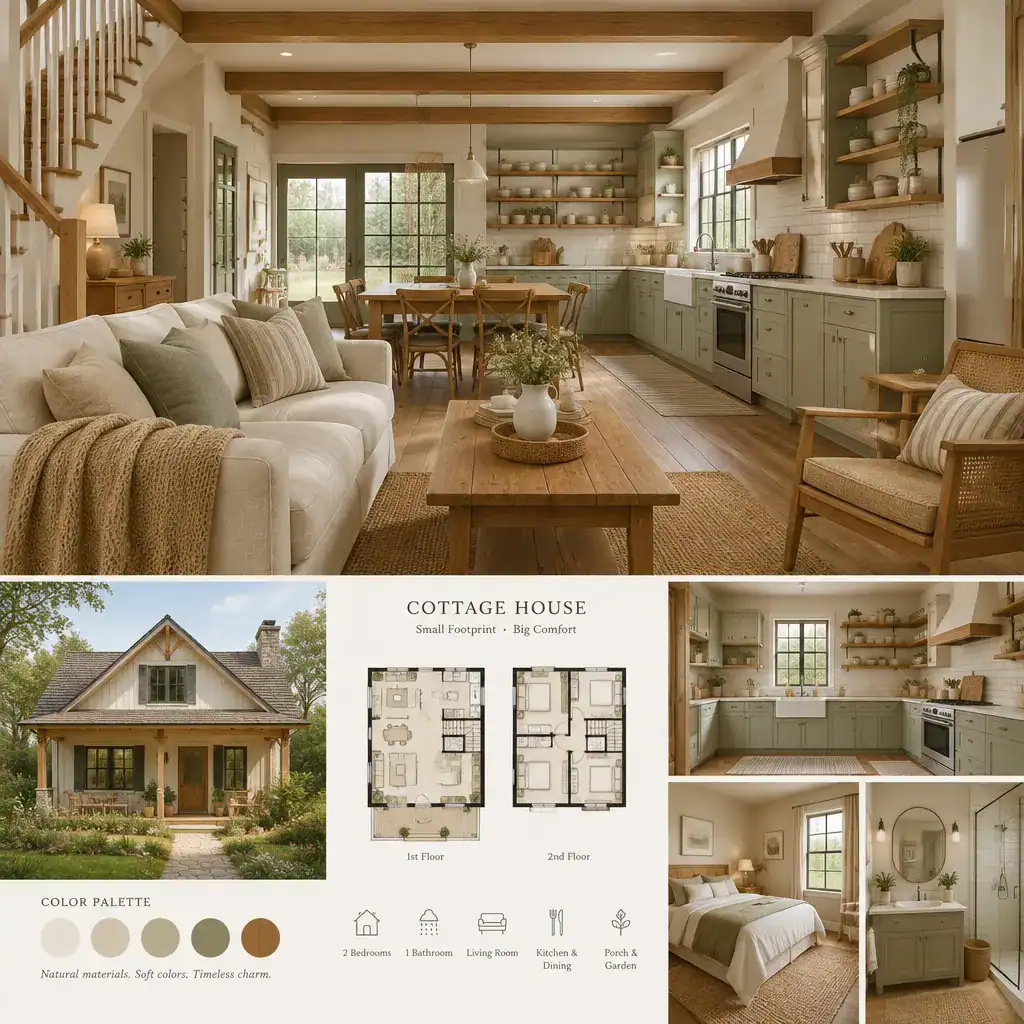
Wood details, stone surfaces, woven fibers, painted cabinetry, and softly patterned textiles can make rooms feel lived-in and comfortable. Open shelving may display useful dishes or favorite ceramics, while baskets can organize throws, shoes, or everyday supplies. These elements add texture without requiring every surface to be heavily decorated.
Carry a few repeated colors or finishes across the kitchen, living room, bedrooms, and entry so the home feels connected. A warm wood tone, muted cabinet color, or recurring fabric pattern can provide continuity from room to room. Vintage-inspired hardware, paneling, or a freestanding-style furnishing can coexist with contemporary appliances, efficient storage, and comfortable seating, allowing the interior to remain pleasant for modern routines.
Use Furniture, Lighting, and Decor to Add Cottage Personality
Furniture gives cottage rooms their sense of ease when it has comfortable proportions and visible texture. Choose pieces that invite use, such as an upholstered sofa, a painted wood table, a sturdy bench, or a reading chair with a soft throw. It is usually more effective to select a few characterful furnishings than to fill every corner with decorative objects.
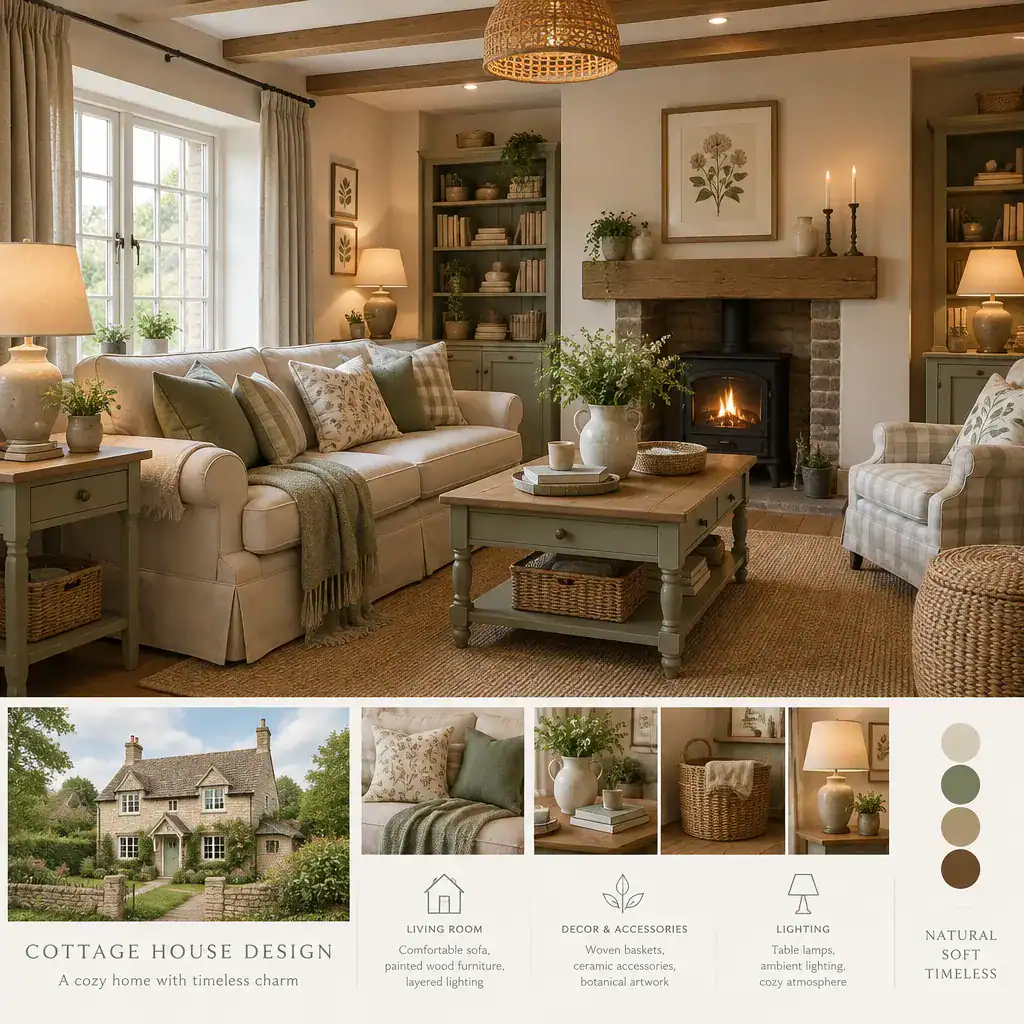
Traditional-looking furniture, handmade accents, woven baskets, pottery, framed artwork, and fresh or dried botanical stems can introduce personality. Group these items with some breathing room so each piece has a purpose. A small collection of ceramics on open shelving or botanical artwork repeated in adjacent rooms can feel more cohesive than scattered, unrelated accessories.
Layered lighting is equally important. Combine general illumination with table lamps, wall lights, pendant fixtures, or reading lights to support both tasks and a calm evening mood. Repeating selected finishes, fabrics, or colors across rooms helps decor feel like part of one home. This approach lets an cottage house design feel collected and welcoming while remaining orderly and useful.
Connect the Cottage House to Its Outdoor Setting
The cottage experience becomes stronger when the outdoor areas feel like an extension of the home. A porch, small patio, garden path, or thoughtfully framed window view can create a gentle transition between indoor comfort and the surrounding landscape. Even a modest entry can feel inviting with a clear route to the door and planting that softens the edges of the house.
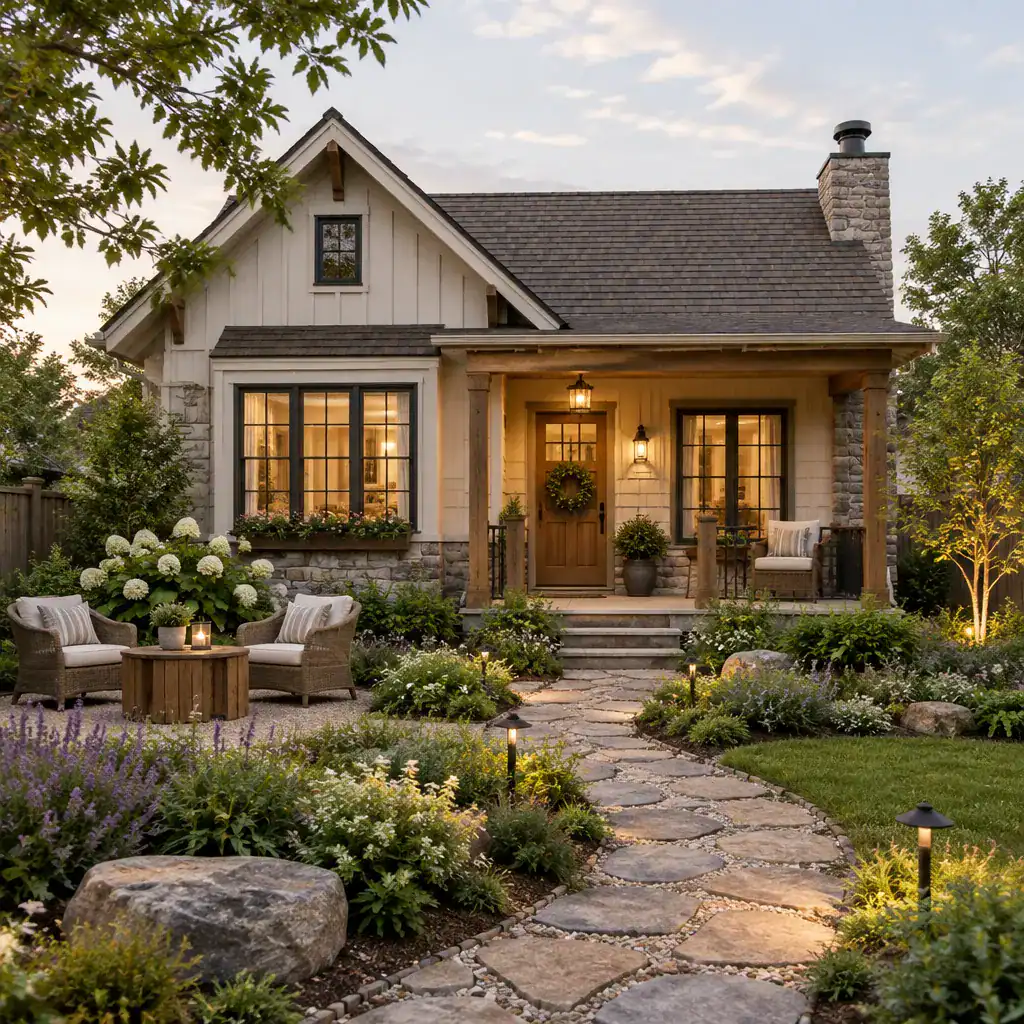
Use planting beds, low walls, paths, and simple gates to shape a welcoming approach. Materials that echo the exterior, such as stone near a stone base or timber near porch detailing, can make the site feel visually unified. Exterior seating, a small bistro table, or a bench near the entrance encourages the outdoor area to function as part of daily life rather than as a separate decorative zone.
Subtle outdoor lighting can make paths, steps, and seating areas feel more welcoming after daylight fades. Adapt every planting and hardscape decision to local climate, site conditions, available sunlight, and your preferred level of maintenance. The best landscape is one that supports the home’s character while remaining realistic for the people who will care for it.
Successful cottage homes rely on harmony between architectural details, materials, colors, interior comfort, and the outdoor setting. Begin with the atmosphere and lifestyle you want to create, then choose individual features that reinforce that vision. A consistent palette of forms, textures, and tones will provide a useful guide for future building, renovation, furnishing, and decorating decisions, helping your cottage house design remain charming and comfortable over time.