
Creating a porch that feels current without losing its easy cottage warmth is largely a matter of restraint. A successful modern cottage porch pairs simple forms and edited finishes with tactile materials, inviting seating, and details that make people want to pause at the door. This guide covers the structure, materials, color palette, furniture, lighting, and finishing touches that bring the look together.
A porch is both the visual threshold between the house and the landscape and a useful place to read, talk, greet guests, or watch the garden. Start with the cottage’s existing architecture, then make choices that suit its climate exposure, maintenance expectations, and the way your household will actually use the space.
Define the Modern Cottage Porch Look
The modern cottage look balances clean, contemporary lines with familiar cottage qualities: welcoming proportions, natural texture, and relaxed comfort. Think of a simple covered roofline, straightforward posts, uncluttered railings, and a comfortable place to sit rather than elaborate trim or a stark, empty entry. The result should feel calm and lived-in, not themed.
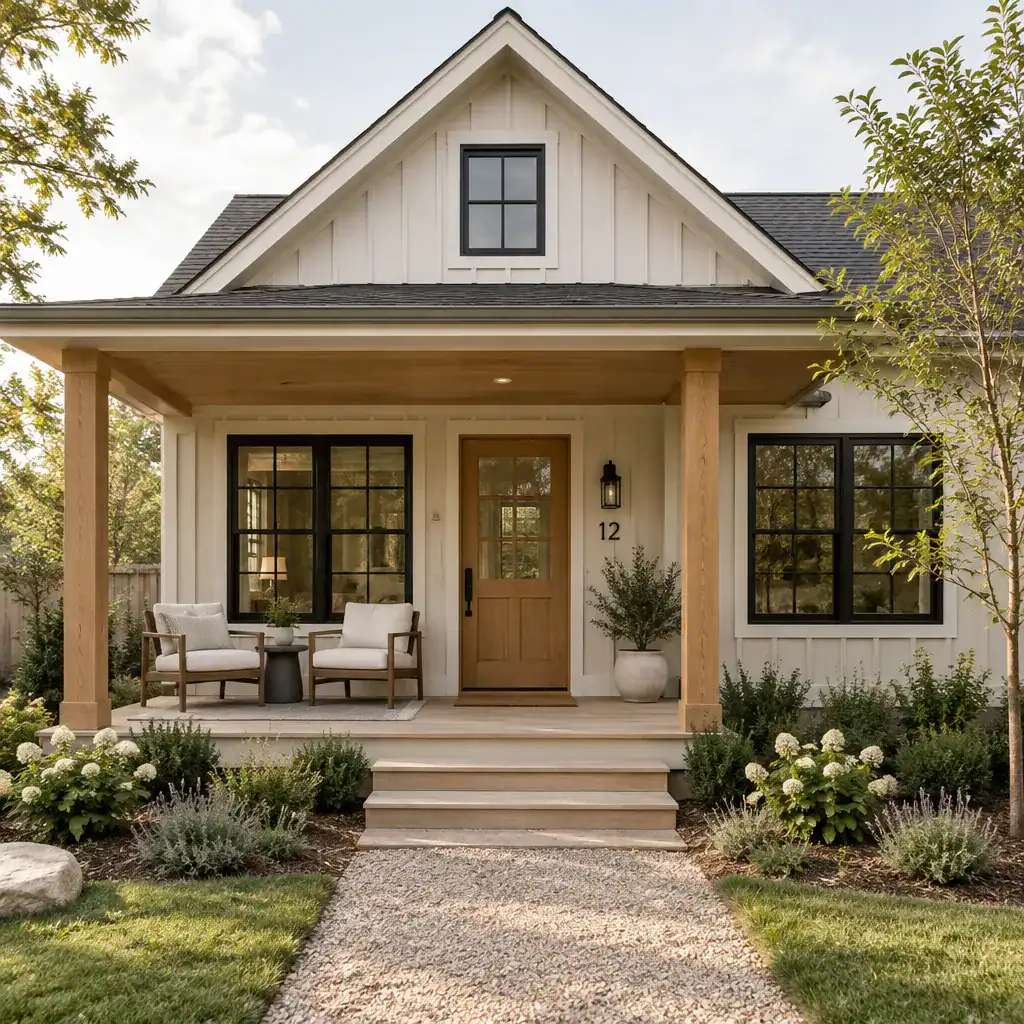
Keep the design vocabulary limited. For example, repeat one wood tone, one dark metal finish, and a restrained range of soft neutrals instead of layering many rustic finishes, decorative patterns, and competing fixtures. This edited approach helps cottage texture feel intentional while preserving contemporary clarity.
Let the house guide the final direction. Existing window frames, siding profiles, roof pitch, and front-door style can inform the porch trim, railing shape, roof details, and paint colors. A cottage with black-framed windows may suit similarly dark hardware, while an older home with painted trim may call for a softer, more traditional railing profile simplified in its detailing.
Choose Materials and Colors That Connect Old and New
Materials should give the porch visual depth while linking it to the rest of the exterior. Painted wood can create a soft, familiar cottage backdrop; natural timber brings warmth to a ceiling, door, or small accent; stone and brick add grounded texture at steps or foundations; and composite materials can offer a cleaner, more uniform appearance where that suits the design. Combining only a few of these elements usually feels more cohesive than using each one at once.
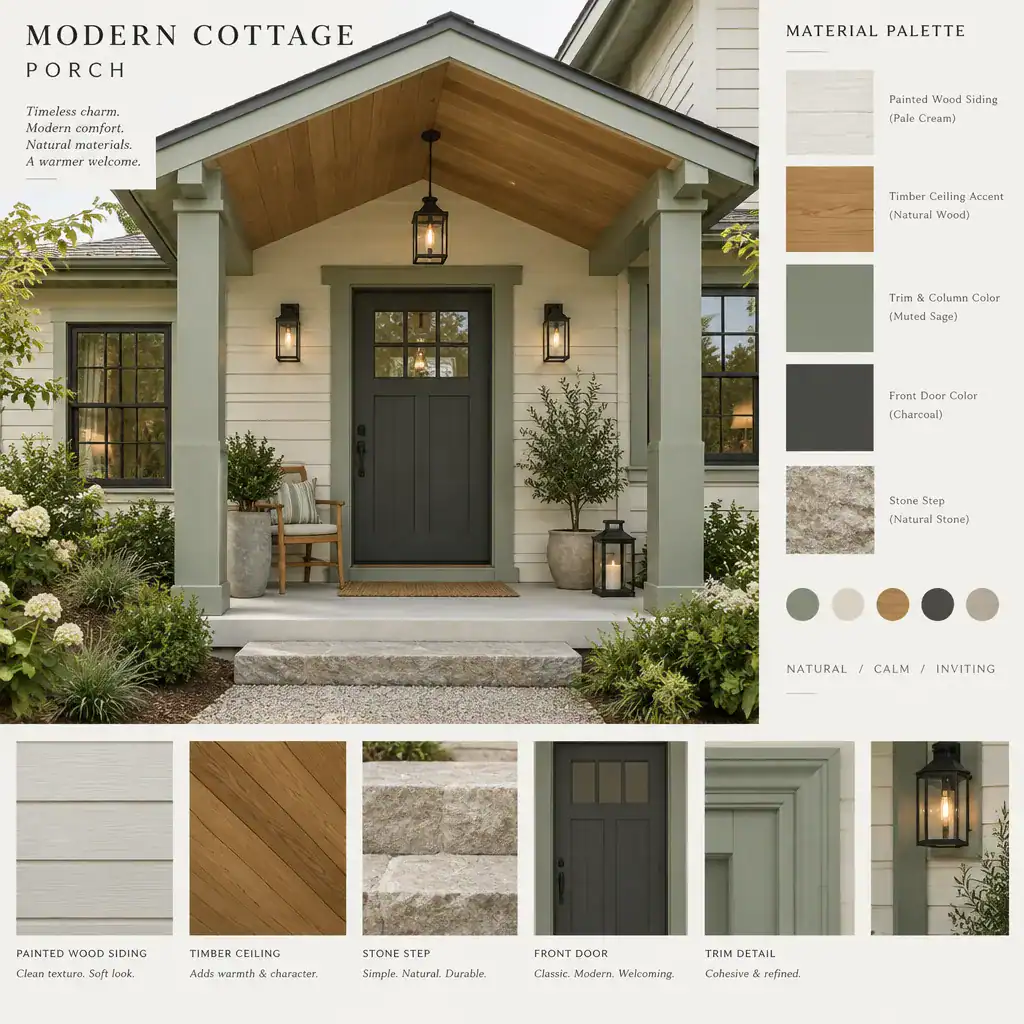
Build the palette around cottage-inspired neutrals, such as warm white, cream, pale gray, sand, or muted green. Introduce one or two deeper accents, perhaps charcoal on the door and lighting or a dusty blue on a bench, to define the space without making it busy. A modern cottage porch often feels strongest when contrast appears in carefully chosen outlines rather than in many bright colors.
Coordinate the flooring, ceiling, columns, railings, and trim as one composition. A warm timber ceiling might echo a wood door, while dark railing hardware can relate to a charcoal door and wall lantern. Before settling on materials, consider the porch’s rain, sun, wind, and dirt exposure as well as how much ongoing cleaning, repainting, or refinishing you are willing to handle.
Plan Comfortable Porch Furniture and Layout
Choose the furniture plan according to the porch’s primary purpose. A conversation porch can center on two chairs and a small table, a quiet reading spot may need one deep chair and a side table, and a garden-facing porch may work best with a compact bench or paired loungers. Defining this use early prevents attractive furniture from becoming an obstacle.
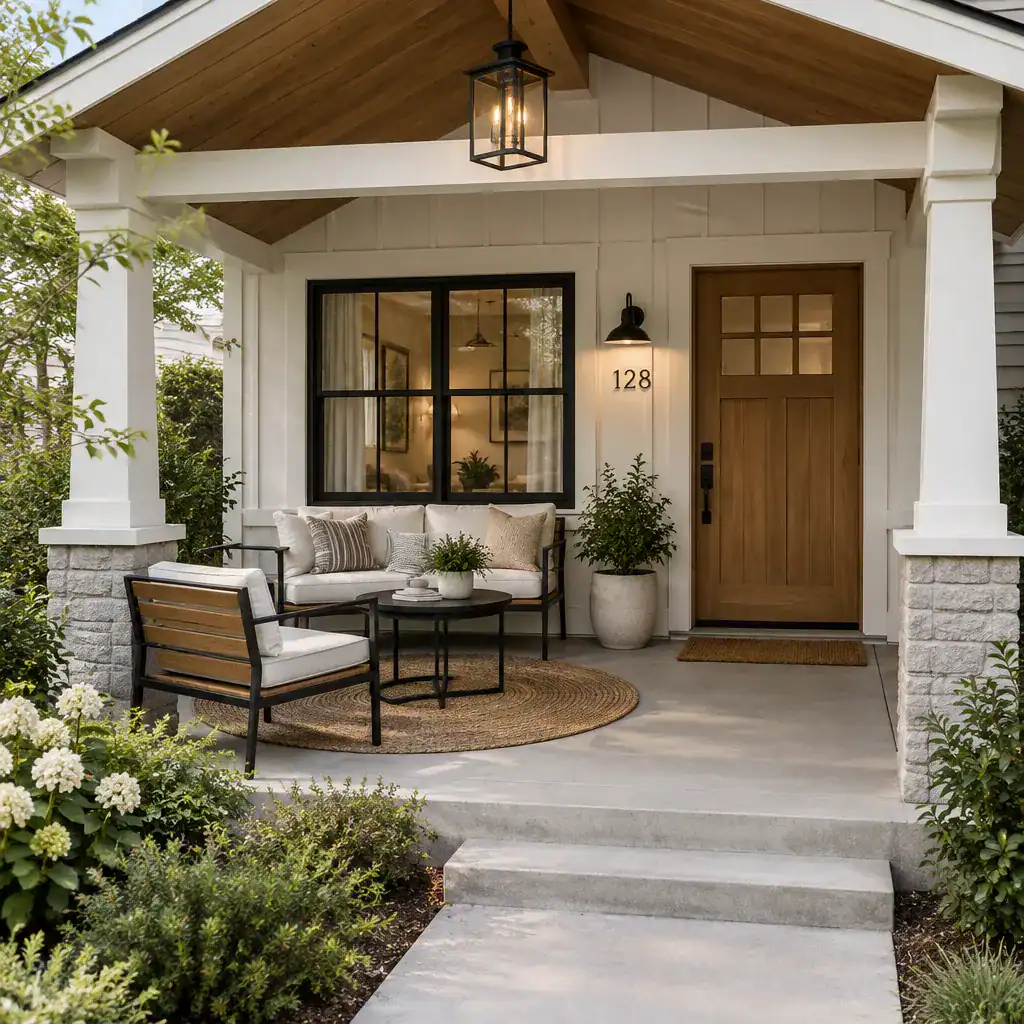
Streamlined seating with soft, outdoor-appropriate cushions creates the desired balance of modern shape and cottage ease. Add a compact table for drinks or books, and use a woven rug only when it supports the layout rather than visually filling every open area. A bench with a simple wood-and-metal frame, for instance, can feel light enough for a narrow porch while still being welcoming.
Protect circulation to the front door at all times. Leave the entry route visually and physically clear, avoid placing tables where they narrow the approach, and select pieces that match the porch’s scale. Smaller porches benefit from furniture with open legs and modest profiles, while broader porches can accommodate a larger seating group without losing their sense of openness.
Add Lighting and Architectural Details
Layered lighting makes the porch usable and inviting after daylight fades. Begin with a welcoming entry fixture beside or near the front door, then add gentle ambient illumination beneath a covered ceiling if appropriate. A reading chair or seating corner can also benefit from a focused task light, provided it does not introduce glare or visual clutter.
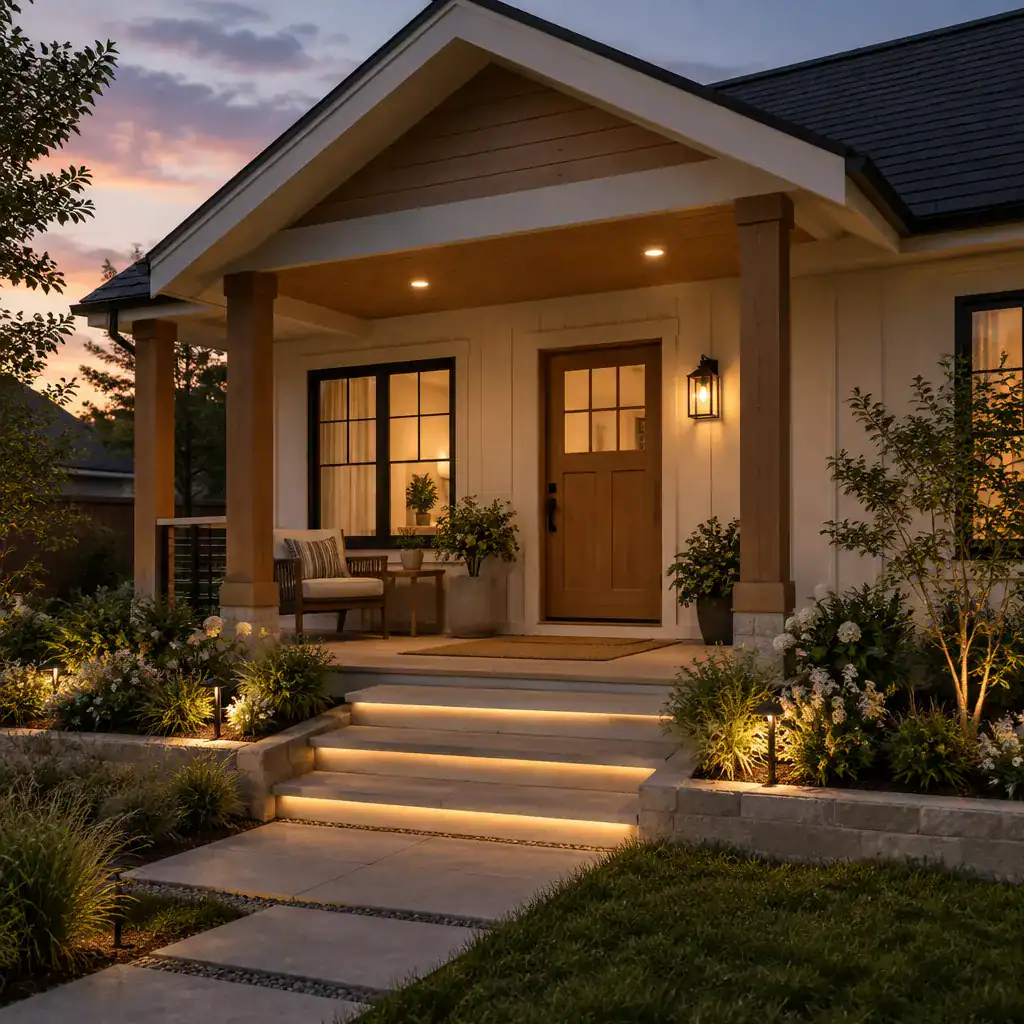
Repeat lighting finishes in the door hardware, house numbers, railing details, or planters to create a unified appearance. Matte black can sharpen a pale exterior, while aged bronze or another subdued finish may complement warmer timber and cream trim. The goal is coordination, not exact matching of every surface.
Use lighting and simple detailing to draw attention to the features that already give the porch character: ceiling boards, substantial posts, a clean railing, stone steps, or a distinctive front door. Place fixtures so guests can see the threshold and walking route at night, while keeping the light considerate of nearby windows, neighboring homes, and planting beds.
Finish the Porch With Natural and Functional Decor
Decor should add softness and personality without turning the porch into a display shelf. A pair of ceramic planters, a textured doormat, a few neutral cushions, a woven basket, and one small decorative object can provide enough cottage warmth. Natural fibers, leafy greenery, and handmade-looking surfaces work especially well against clean-lined furniture.
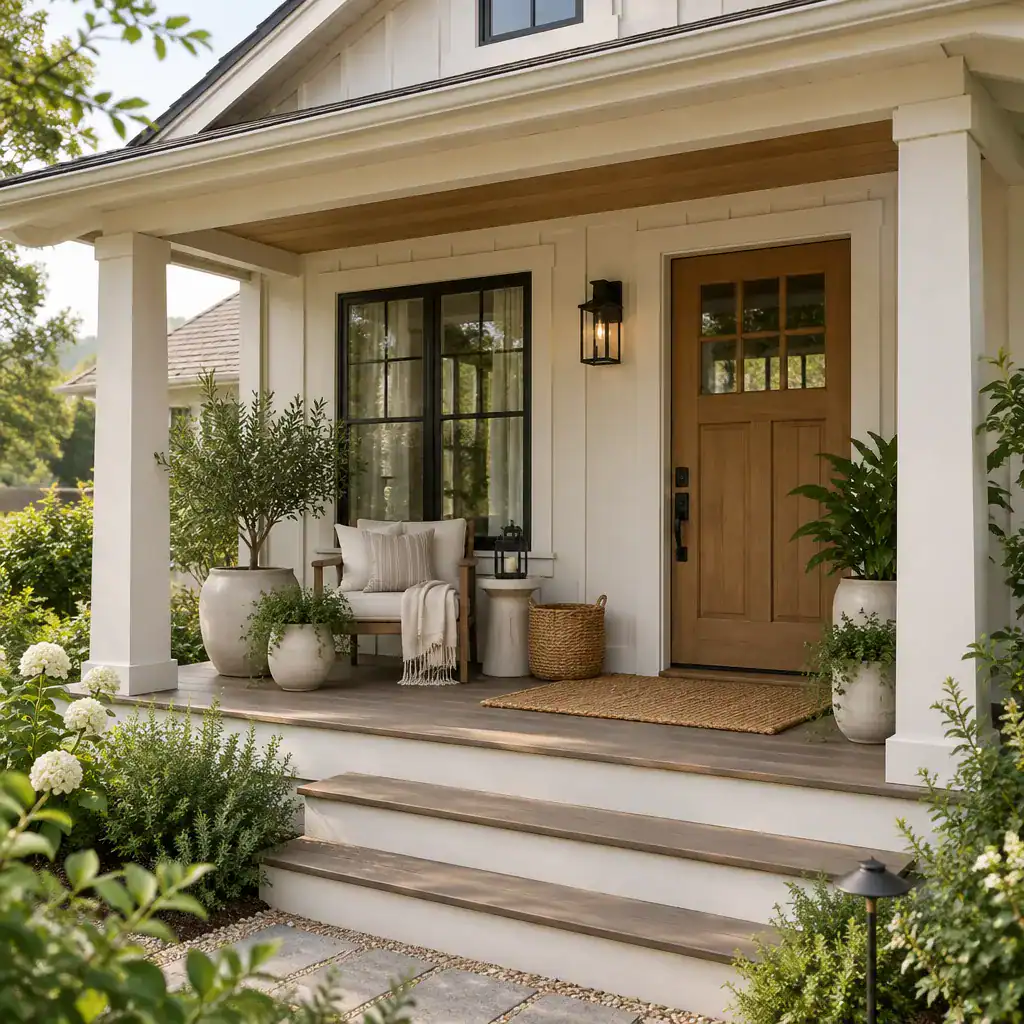
Select plants and containers based on the porch’s actual sunlight, shelter, exposure, and the level of care you can maintain. Repeating a container color or foliage tone helps the arrangement look composed. You can also echo exterior colors through cushions, a rug, or a basket so the porch reads as part of the home rather than a separate decorative zone.
Keep seasonal accents simple and easy to remove. A lightweight wreath, a change of pillow covers, or a small seasonal planter can refresh the space without requiring extensive storage or disrupting daily use. This approach allows the modern cottage porch to remain practical throughout the year.
Use a Practical Checklist Before Finalizing the Design
Before committing to the design, review how the porch will be used, how much open floor area is available, and how people will move through the entry. Account for weather exposure, packages, shoes, garden tools, and any storage needs that affect the everyday function of the space. A clear plan is more useful than adding furnishings one piece at a time without considering the whole porch.
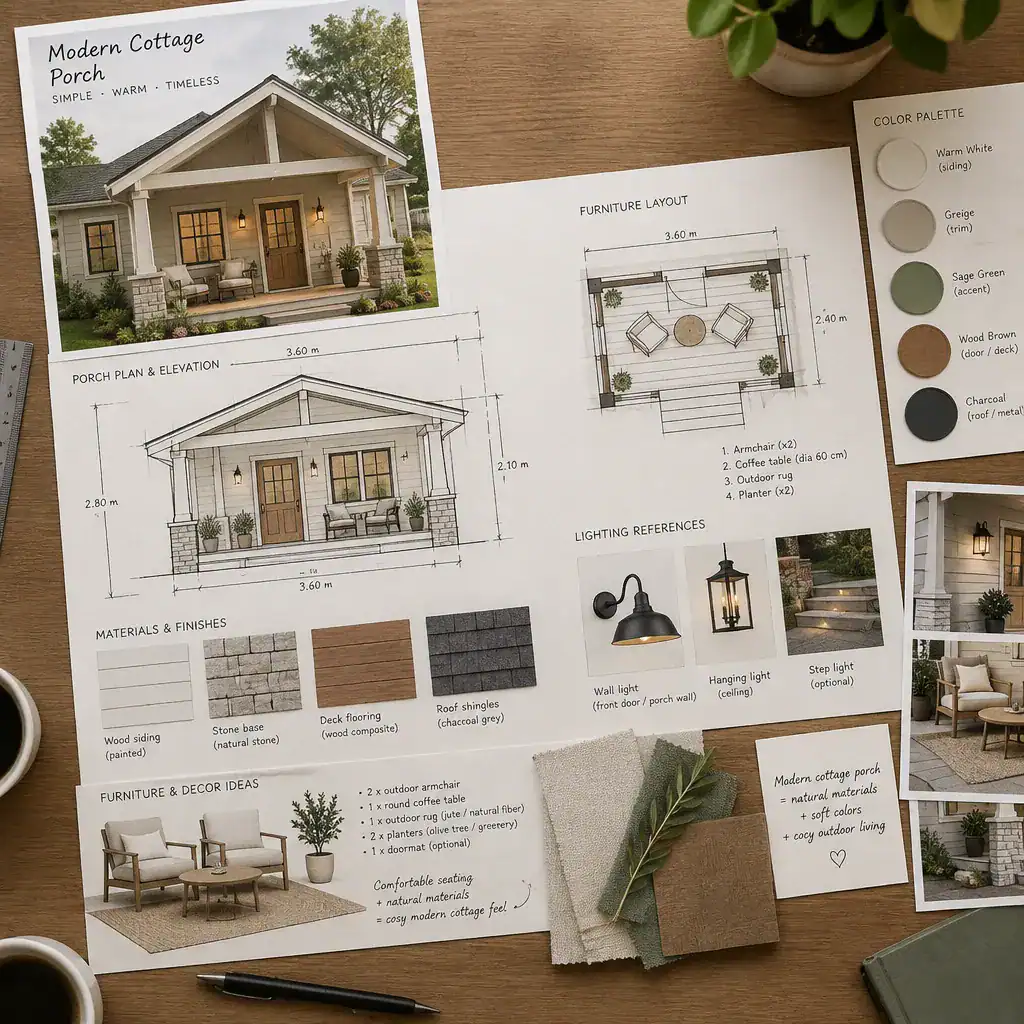
Look at your chosen materials, furniture, lighting, and decor together. They should align in color temperature, scale, and visual weight: a delicate lantern may disappear beside heavy stone, while oversized furniture can overwhelm slender cottage posts. Reviewing samples and a simple layout sketch together can reveal mismatches before they become part of the finished porch.
Prioritize safe, accessible movement at steps, thresholds, railings, and nighttime walking paths. Then separate essential improvements, such as surfaces, access, and lighting, from optional styling elements, such as cushions and decorative planters. Completing the project in manageable stages can preserve the visual plan while making decisions easier.
A well-designed modern cottage porch combines contemporary restraint with the warmth that makes cottage homes feel approachable. Begin with the architecture and practical demands of the entry, then build outward through coordinated materials, comfortable furniture, useful lighting, and a few natural finishing details. That sequence creates an outdoor space that is cohesive, welcoming, and easy to enjoy every day.