
A traditional cottage kitchen is valued for its warmth, simplicity, and comfortably lived-in character. It favors useful details, tactile materials, and familiar forms over showy decoration, creating a room that feels inviting from the first morning coffee to the last meal of the day. The look works just as well in an older cottage as it does in a newer home that needs a softer, more enduring atmosphere.
The most successful result comes from coordinating the practical and visual decisions from the outset. Consider the layout, cabinetry, worktops, colors, lighting, storage, and personal finishing touches as parts of one plan. This approach leaves room for individual taste while ensuring the kitchen supports how your household actually cooks, cleans, gathers, and stores everyday essentials.
Core Features of a Traditional Cottage Kitchen
The style balances rustic ease with orderly planning. Framed cabinets, modest raised or recessed panel doors, natural-looking finishes, simple open shelves, and aged-style knobs or cup pulls can establish the character without making the room feel formal. A traditional cottage kitchen should feel useful and settled rather than staged, so let practical elements such as a sturdy worktop, accessible crockery, and well-placed drawers contribute to its charm.
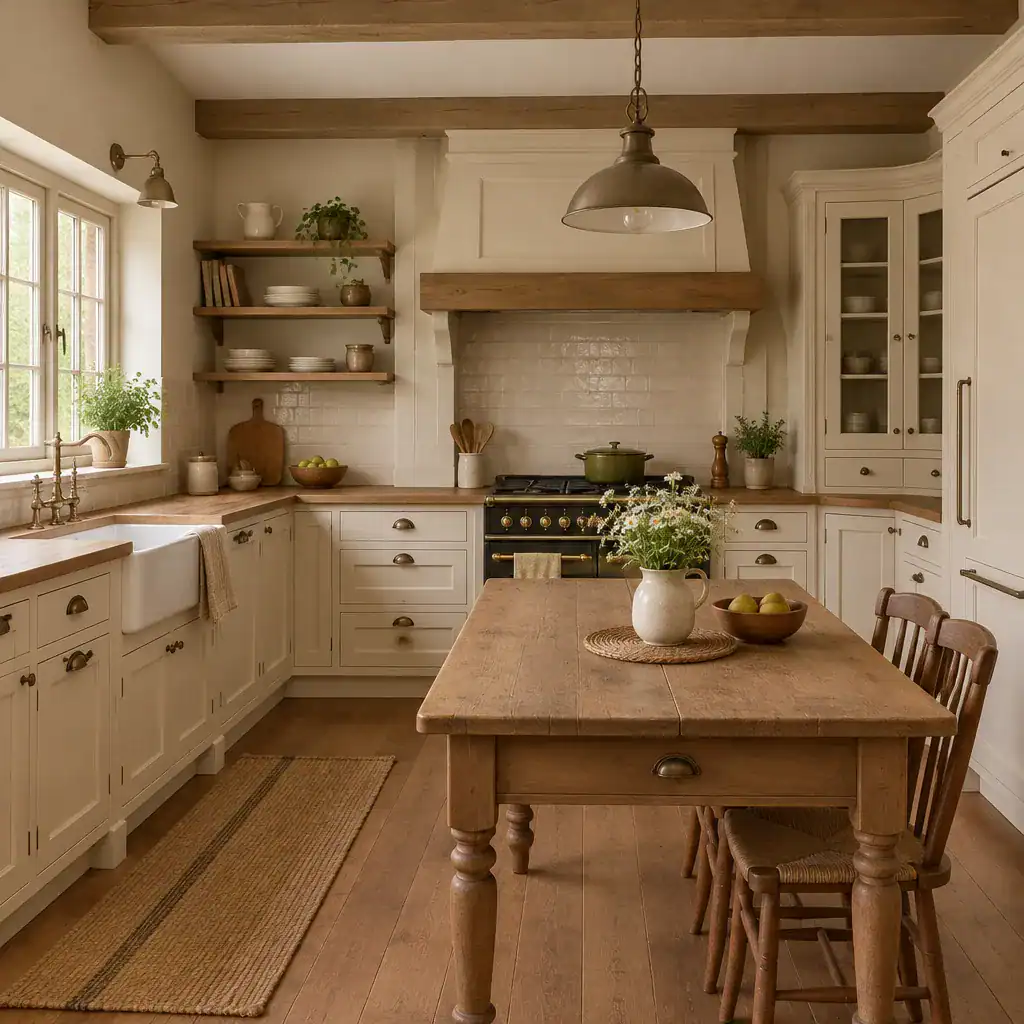
Authenticity does not require distressed paint on every cabinet or a decorative object on every ledge. Choose a limited family of recurring details, such as cream framed cabinetry, warm wood, blackened metal hardware, and a quiet handmade tile, then repeat them with restraint. This gives the room visual continuity while allowing individual materials to stand out.
Choosing the Layout and Functional Zones
Plan the kitchen around clear zones for preparation, cooking, washing, storage, and serving. In a compact room, a single wall or L-shaped arrangement can preserve valuable floor space, while a galley kitchen benefits from keeping frequently used items close to their relevant task areas. Larger open kitchens may accommodate an island, dresser, or central table, but circulation should remain comfortable around these features.
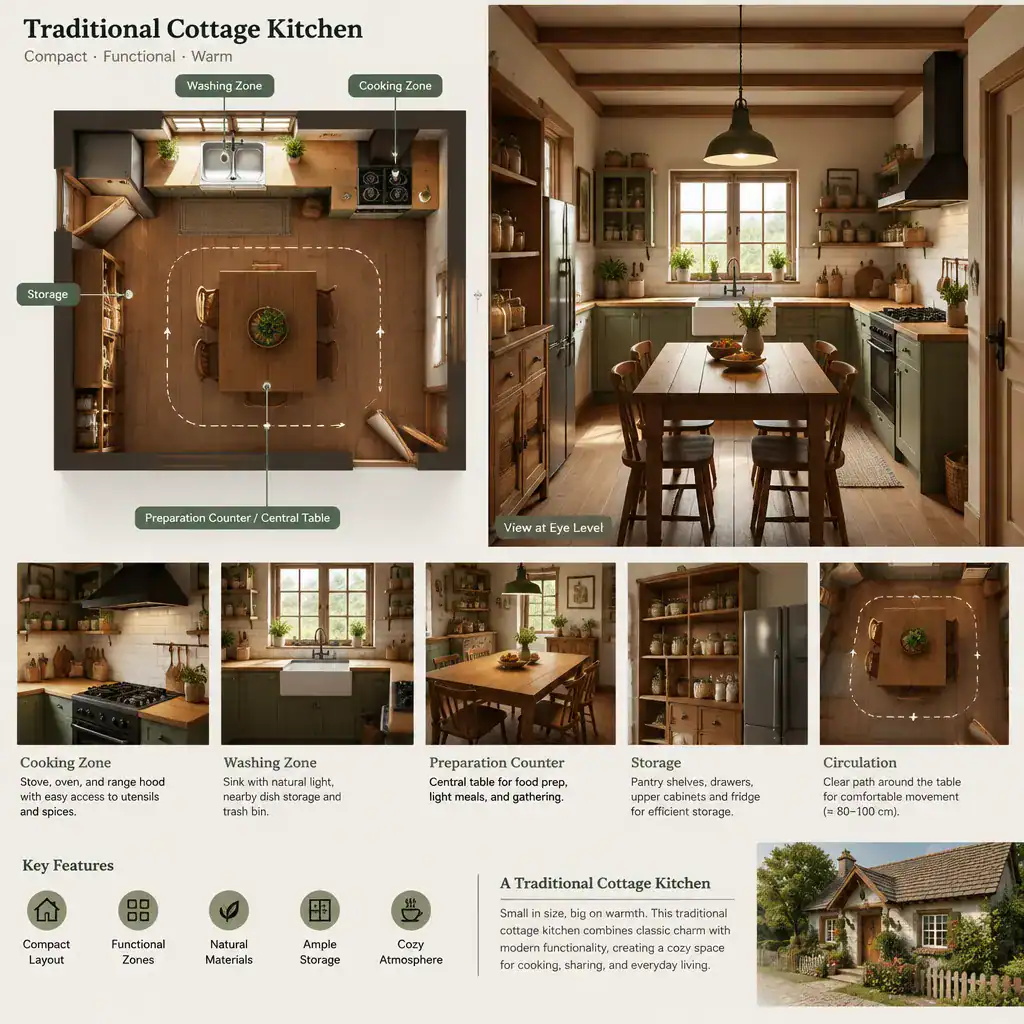
Protect usable counter space near the sink and hob, and place everyday storage where it can be reached without crossing the room repeatedly. Before selecting cabinets, review existing plumbing and electrical locations, door swings, windows, and the paths people use through the space. This early assessment can prevent a charming plan from becoming inconvenient in daily use.
For example, a small kitchen may use shallow shelves for frequently used cups while keeping bulk supplies in closed base cabinets. In a larger room, a table can act as a serving and gathering area without interrupting the main preparation route. The goal is not one universal arrangement, but a layout that fits the room shape and household routines.
Cabinetry, Worktops, and Material Direction
Painted framed cabinetry is a reliable foundation for cottage character, especially in soft cream, muted green, warm gray, or gentle blue. Natural wood accents can appear on shelving, a table, interior cabinet details, or a freestanding dresser. Keep panel profiles understated so the joinery reads as traditional without becoming overly ornate. A traditional cottage kitchen often gains more character from a few well-chosen tactile contrasts than from elaborate decoration.
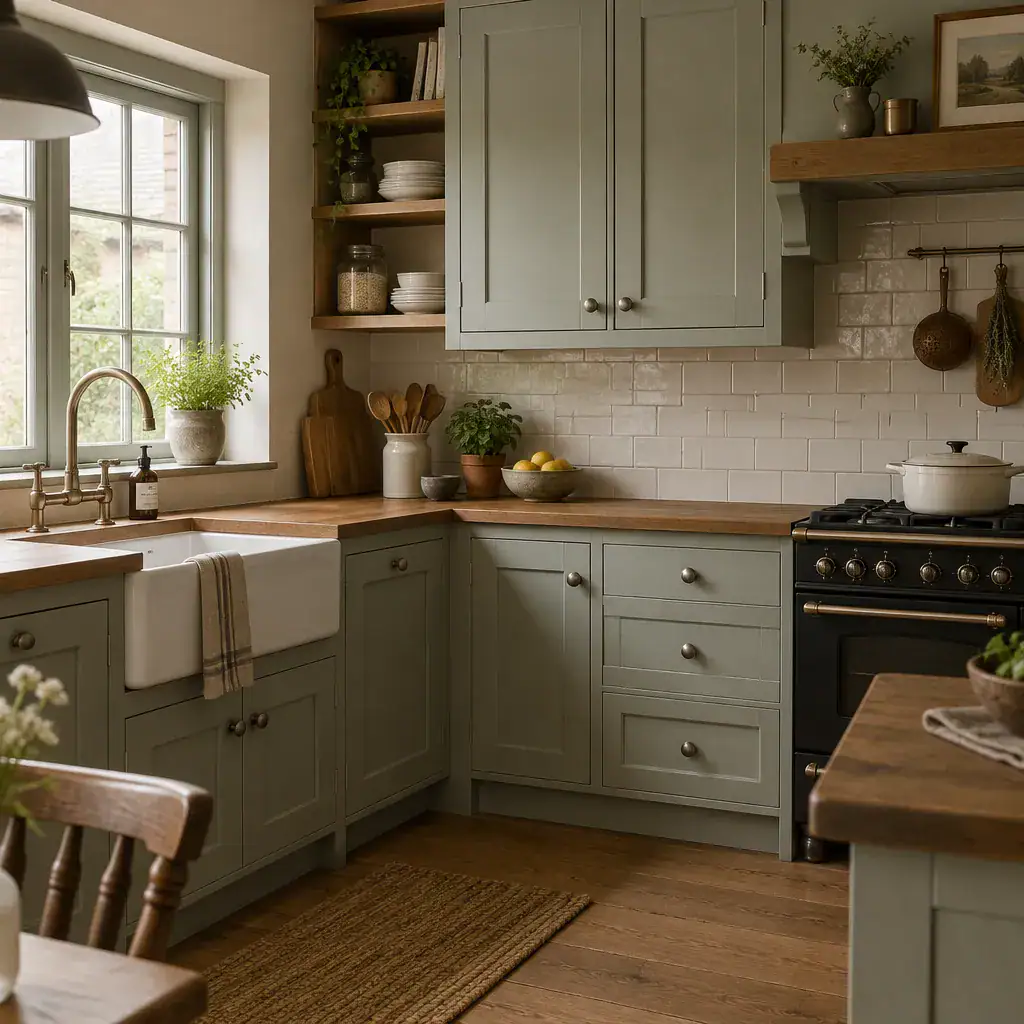
Worktops strongly affect the room’s balance. Wood brings warmth but needs regular care, while stone-look, composite, or durable laminate options can offer a calmer appearance with easier maintenance. Consider how the worktop’s color and texture relate to cabinet paint, wall finishes, and hardware. Simple metal knobs, timber shelving, and a subtle wall treatment can feel cohesive when their undertones work together.
Evaluate every material for durability, cleaning demands, ongoing maintenance, and suitability for your cooking habits. A finish that looks beautifully rustic but marks easily may be best reserved for a table or shelf rather than a heavily used preparation surface.
Color, Lighting, and Decorative Details
Build the palette around soft neutrals, muted natural shades, or one carefully chosen heritage-inspired color. Cream, putty, sage, dusty blue, warm white, and natural timber can create a relaxed backdrop, while deeper tones may work well on a pantry door, island base, or lower cabinets. Keep the overall contrast measured so the room remains calm and light feels able to move across the surfaces.
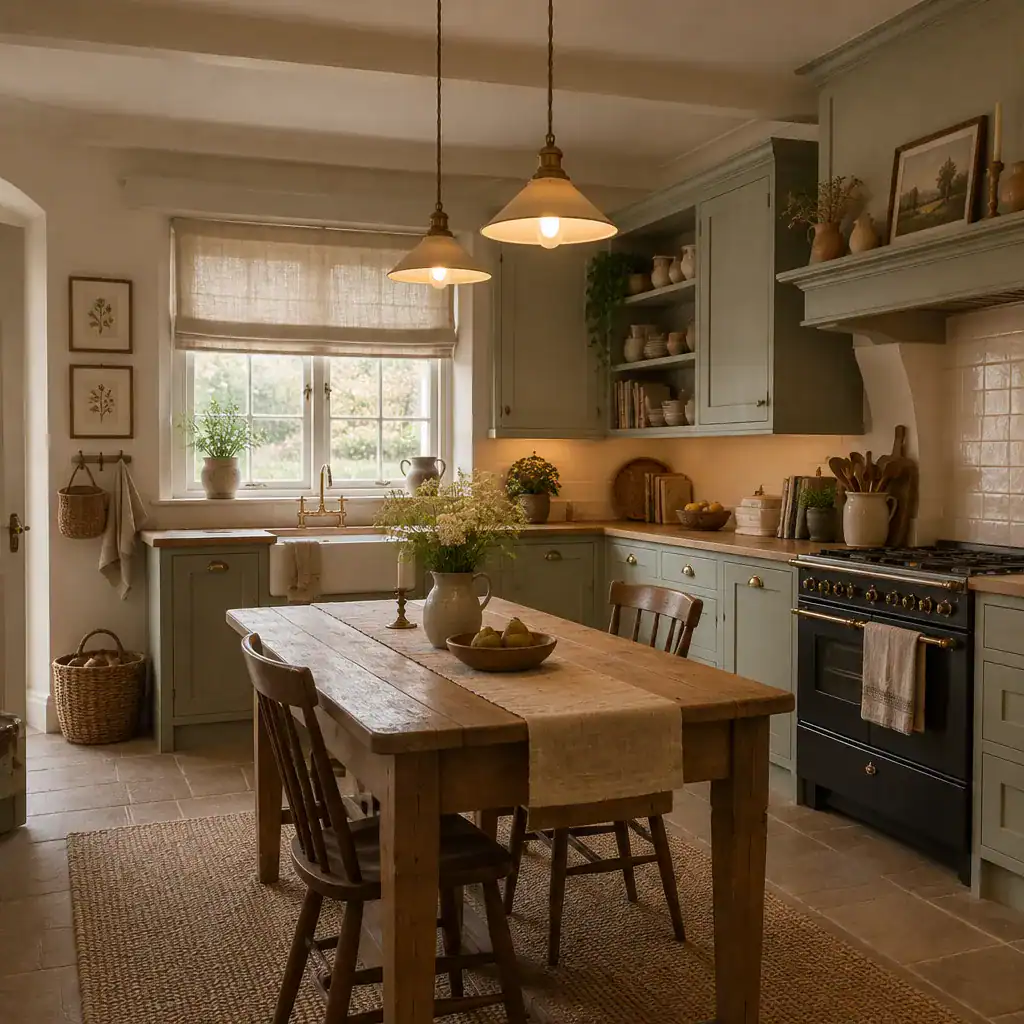
Layered lighting makes the kitchen more functional and more welcoming. General ceiling lighting handles overall visibility, task lighting helps at worktops and the sink, and a pendant above a table or island can add evening warmth. Choose fixtures with simple, familiar silhouettes and finishes that connect to cabinet hardware rather than competing with it.
Use linen window treatments, pottery, woven baskets, framed artwork, and everyday utensils as selective accents. A traditional cottage kitchen feels personal when its objects have a purpose or a story, not when every surface is filled. A few open shelves can display useful bowls and mugs, while closed cabinets keep visual noise under control.
How to Keep the Style Practical and Cohesive
Modern appliances and storage systems can sit comfortably within a cottage-inspired scheme when they do not become the visual focal point. Integrate appliances with surrounding cabinetry where practical, select restrained finishes, and use internal drawers, pull-out organizers, or pantry storage to improve everyday access. The traditional character should come from the room’s overall composition, not from sacrificing convenience.
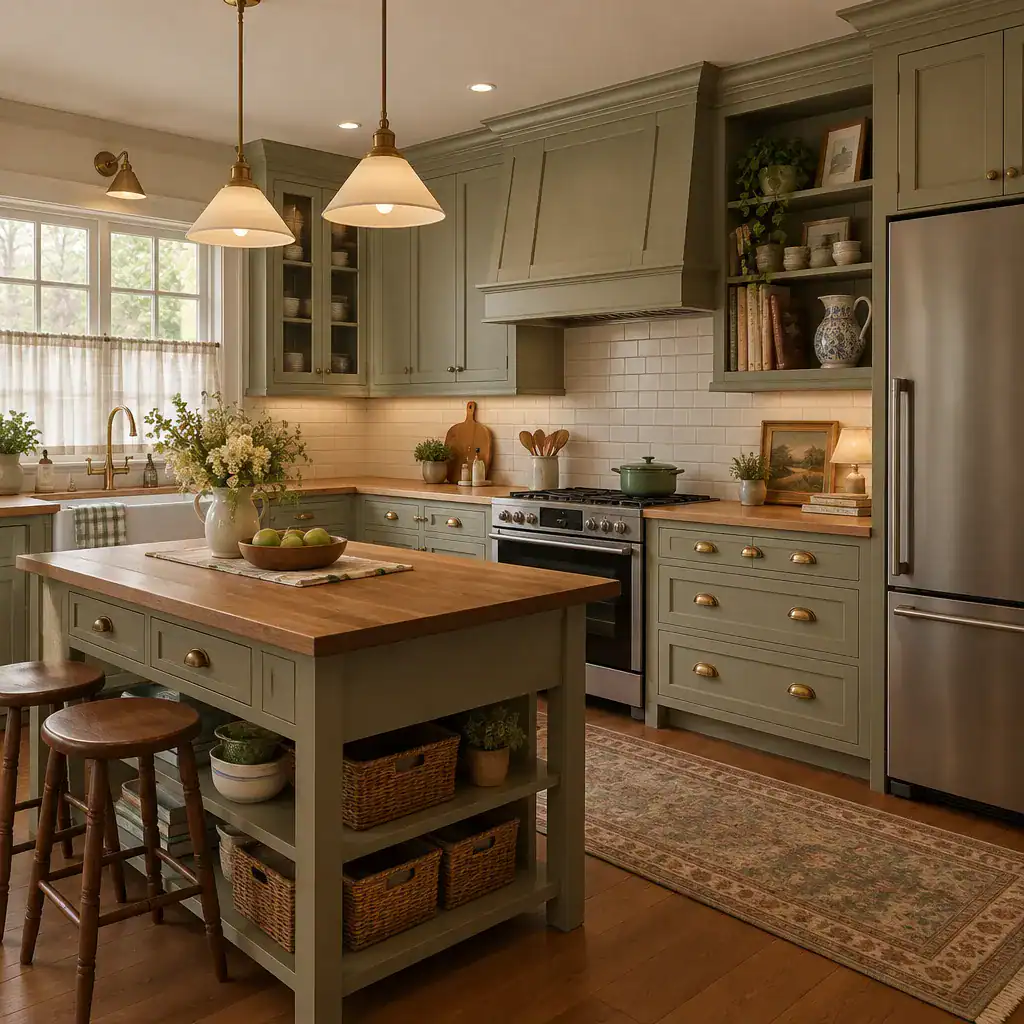
Repeat a small number of finishes throughout the room: perhaps one cabinet color, one wood tone, one hardware finish, and one wall material. Limit open shelving to areas that can be kept tidy, and assign homes for frequently used items so counters remain available for work. This disciplined approach keeps a traditional cottage kitchen relaxed rather than cluttered.
Before committing to purchases, review the plan as a whole. Confirm that the layout supports daily movement, finishes match your willingness to maintain them, lighting covers preparation and evening use, and storage matches what you own. Finally, check that the room includes a few personal elements without losing the clear, restful character that makes the style appealing.
Traditional cottage kitchen design succeeds through a coordinated mix of warmth, simplicity, practical planning, and restrained character. Begin with the room’s layout and daily needs, then use cabinetry, surfaces, and storage to create a dependable foundation. Color, lighting, and meaningful accessories can then personalize the result, giving the kitchen a timeless atmosphere that feels genuinely connected to the people who use it.