
Marble has long been associated with high-end homes because it brings depth, movement, and a sense of permanence that manufactured surfaces rarely replicate. Yet a refined villa is not created by adding stone to every available wall and floor. The strongest results come from careful selection, deliberate placement, and a palette that makes marble feel integral to the architecture. A successful modern luxury villa design using marble finishes considers color, veining, room function, lighting, adjacent materials, and the details that will remain visible for years.
This guide explores how to shape a cohesive marble direction, choose suitable slabs and finishes, place stone across key spaces, and balance it with furniture, lighting, and warmer materials. It also covers practical planning so the finished villa feels composed rather than cold, excessive, or visually disconnected.
Establish a Modern Marble Design Direction
Start with the atmosphere the villa should create before reviewing individual slabs. A calm, softly minimalist home may favor pale stone with fine, low-contrast veining, while a dramatic home may use a darker marble feature wall or a strongly patterned island as its visual anchor. Warm marble with beige, sand, tobacco, or subtle rosy undertones can soften crisp contemporary architecture. A gallery-like direction can rely on quiet surfaces, sculptural forms, and a limited set of carefully framed stone moments.
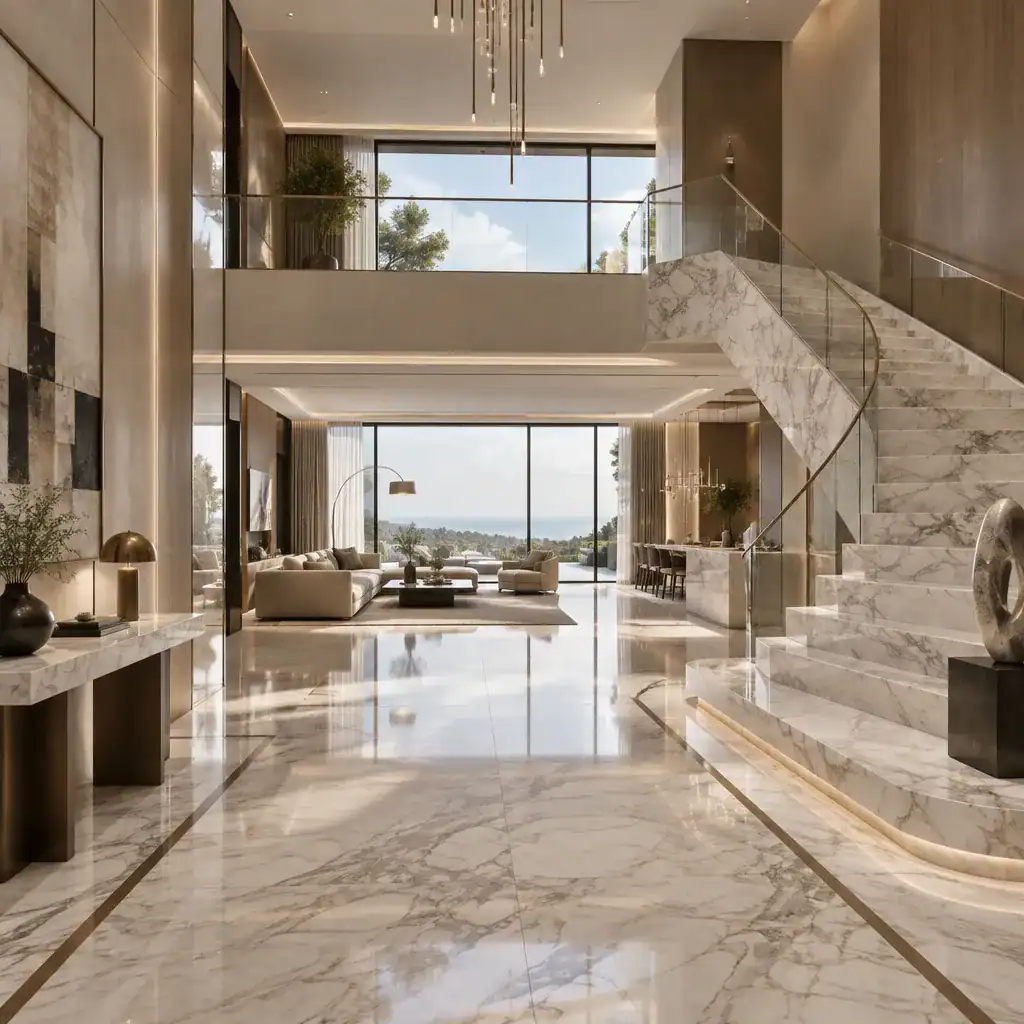
Build the scheme around a restrained base palette of two or three core tones, then let veining, texture, or a measured contrast provide the interest. Repeat a marble tone, a vein color, or a related stone finish along connected circulation routes so the home reads as one composition. This does not require marble in every room; a foyer floor may relate to a staircase surround, for example, while living-area walls remain softly plastered.
Let the architecture guide where marble earns attention. Natural light, framed garden views, double-height volumes, and the approach through the home can identify the most appropriate focal points. In a modern luxury villa design using marble finishes, the stone is most compelling when it clarifies an arrival, frames a view, or emphasizes a significant architectural element rather than competing with all of them.
Select Marble Colors, Veining, and Surface Finishes
Light marble creates an open, luminous foundation and can make expansive rooms feel calm, particularly when paired with warm white walls and timber details. Dark marble brings stronger contrast and can give a fireplace, powder room, or bar area a more intimate character. Warm-toned selections are useful when a villa needs softness without sacrificing a tailored contemporary appearance. The right direction depends on the desired atmosphere, daylight exposure, and the contrast between stone, cabinetry, and metalwork.
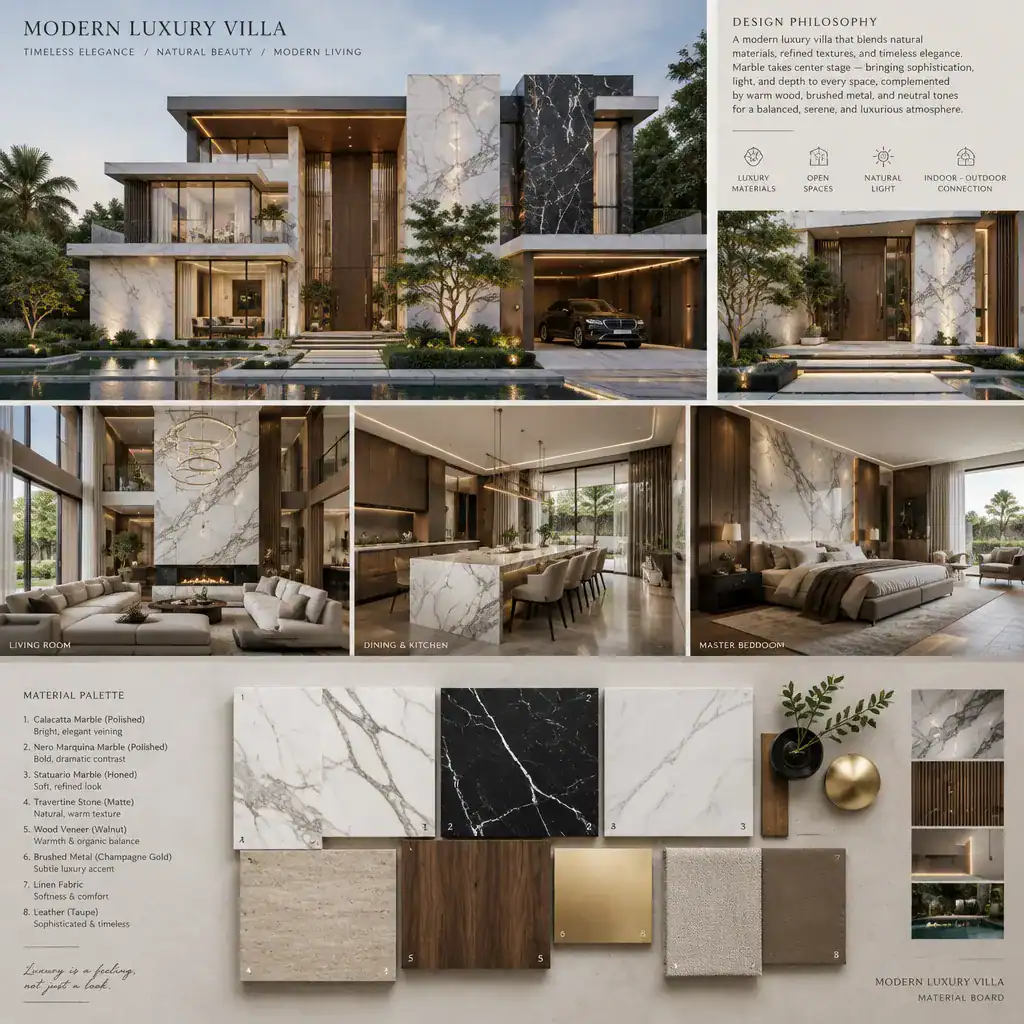
Veining should be scaled to its application. Bold veins can become an artful statement on a fireplace, island, shower wall, or bookmatched panel. Quieter patterns are often easier to use over broad, continuous flooring because they allow furniture, views, and architecture to remain legible. Combining one expressive marble with a more restrained companion stone can create hierarchy without making the interior busy.
Surface finish affects both appearance and location. Polished marble reflects light and lends formality, but its sheen should be tested where glare may be an issue. Honed marble offers a softer, more understated look that works well in many contemporary spaces. Textured finishes can add tactile depth in selected areas, subject to supplier and installer confirmation for the intended use. Always review full-size samples, not only small swatches, under the villa’s daytime and evening lighting before approving the palette.
Apply Marble Across Key Villa Spaces
Entryways, feature walls, fireplaces, staircases, kitchen islands, and bathroom vanities offer distinct opportunities for marble to become architectural rather than merely decorative. An entry floor can establish the home’s material language, while a sculptural staircase or a fireplace surround can serve as a memorable focal point. In kitchens, a well-detailed island can carry the strongest pattern, allowing perimeter cabinetry and walls to stay visually quiet. In bathrooms, a vanity or one shower plane may provide sufficient luxury without enclosing the entire room in the same stone.
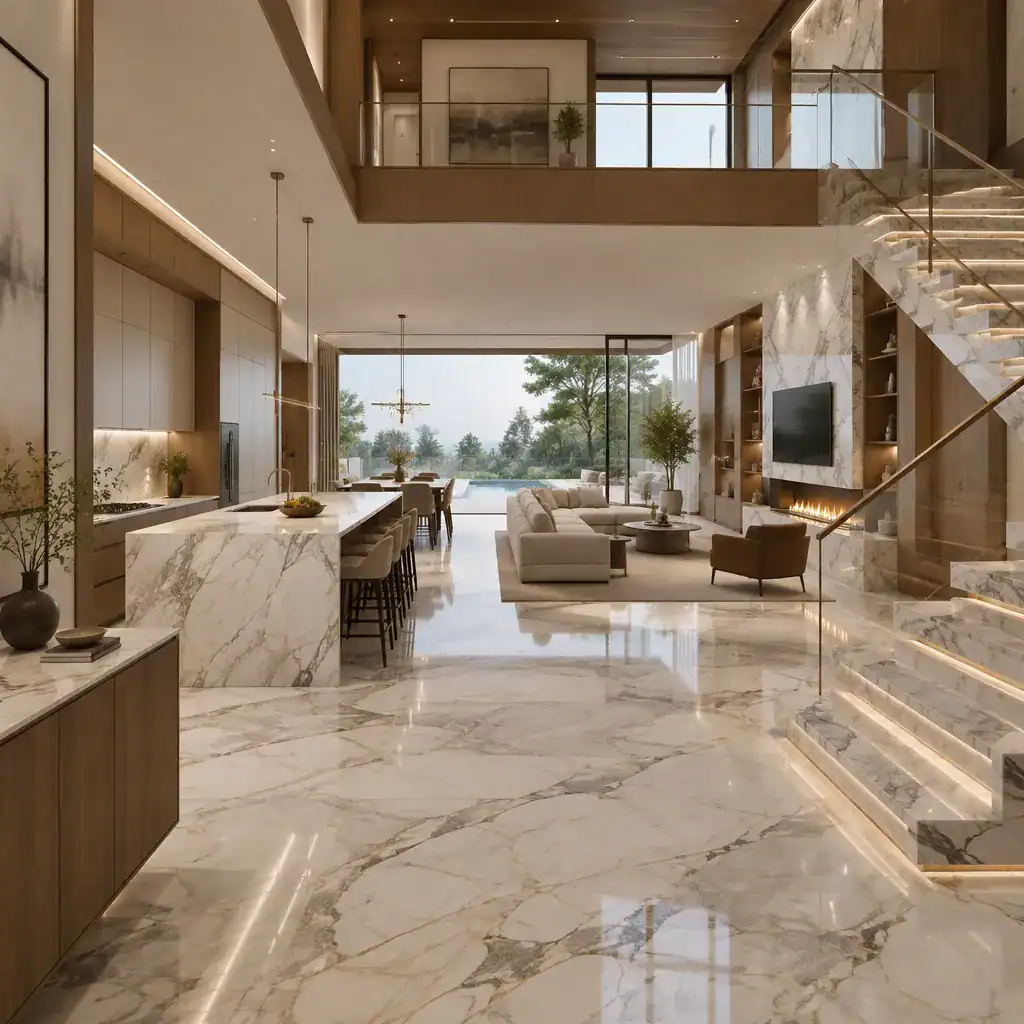
Connect visually adjacent spaces through selective repetition. For instance, use the same marble family in the foyer and living-room fireplace, then shift to a quieter related stone in the kitchen. This establishes continuity while giving each room its own identity. Surround broad marble surfaces with simple cabinetry, restrained wall treatments, and uncluttered furniture arrangements so the stone has room to register.
Plan the technical-looking visual details early because they strongly affect the final impression. Discuss slab direction, bookmatching where desired, joint locations, edge profiles, and transitions to timber, tile, or other flooring with the design and fabrication team. A considered modern luxury villa design using marble finishes makes these junctions feel intentional, especially at stair landings, island corners, fireplace returns, and door thresholds.
Balance Marble with Lighting, Furniture, and Complementary Materials
Marble changes throughout the day, so lighting should reveal its movement without turning reflective surfaces into a source of glare. Use daylight as a starting point, then layer ambient illumination, focused wall washing, and decorative fixtures where appropriate. Aim light to model texture and veining, particularly on a feature wall, while avoiding a uniformly overlit interior that flattens the stone’s character.
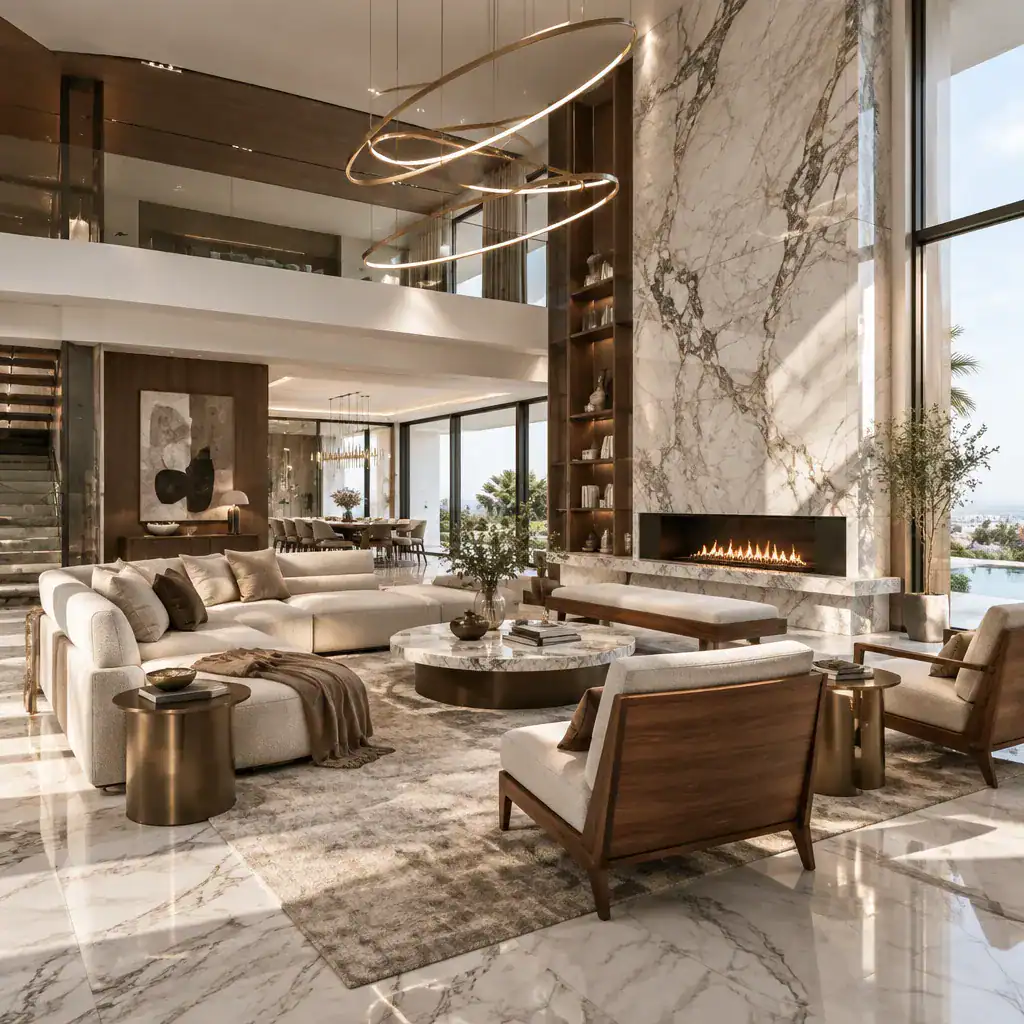
Introduce tactile contrast with timber, glass, brushed or patinated metal, hand-finished plaster, and upholstery. Wood can counter the coolness of pale or gray marble; textiles soften acoustics and make generous rooms more inviting; metal adds a precise contemporary note. These pairings give a villa dimension and prevent smooth stone from dominating every sensory experience.
Choose furniture with silhouettes that preserve sightlines to the most important marble surfaces. Low-profile seating, open-leg tables, and carefully scaled pieces can keep a room from feeling crowded, while still delivering comfort. Accent colors should be used sparingly and drawn from the stone, landscape, or broader palette. In this way, modern luxury villa design using marble finishes remains coherent rather than becoming a collection of separate statement pieces.
Plan Marble Details for Durability and Maintenance
Each application should reflect how the room will be used. Kitchens, bathrooms, exterior-adjacent areas, and high-traffic entry zones may have different exposure to moisture, spills, abrasion, and cleaning routines. Discuss the suitability of a particular stone and finish for each location with qualified suppliers, fabricators, designers, and installers rather than assuming one marble treatment is appropriate throughout the villa.
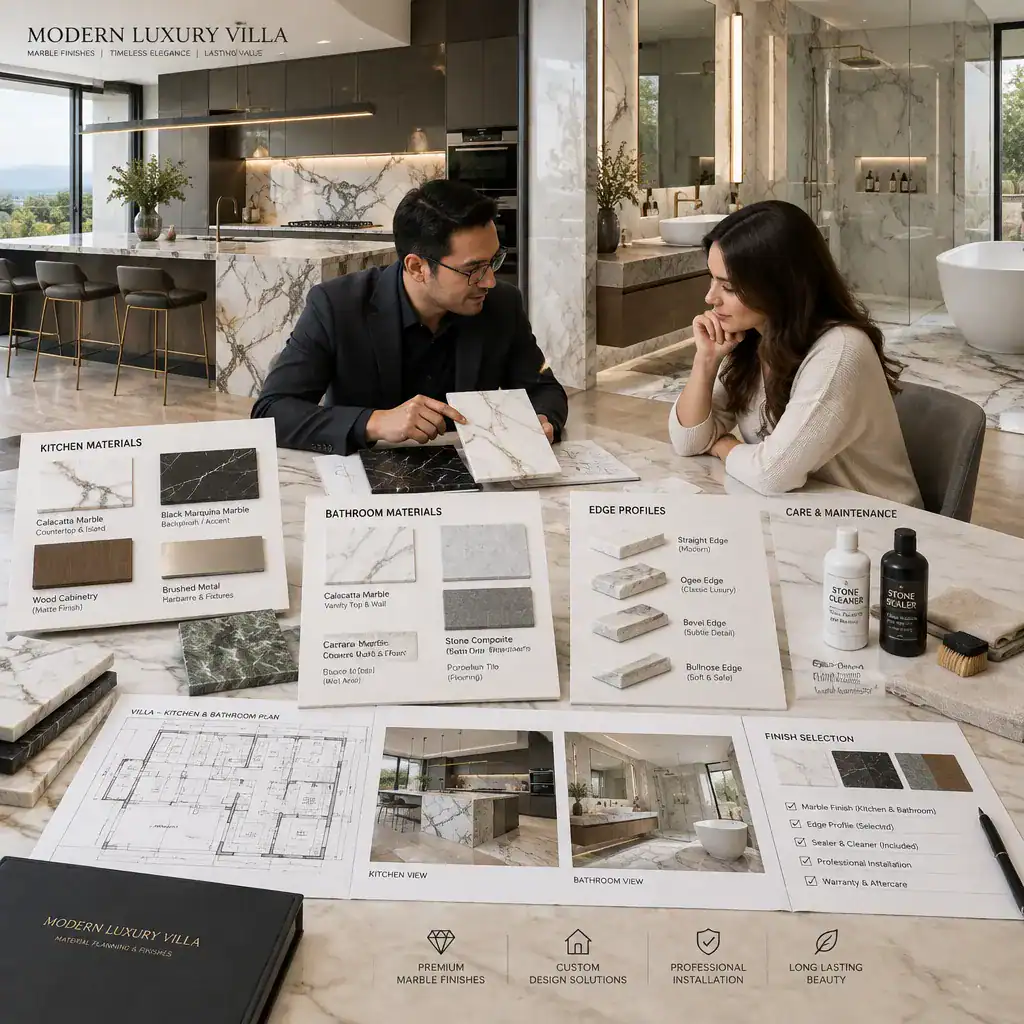
Include sealing, routine cleaning, stain prevention, and care expectations in the project conversation before work begins. Ask stone professionals to explain recommended products and to confirm appropriate edge profiles, installation methods, substrate conditions, and transition details for the chosen applications. These decisions support both the appearance of the stone and a more manageable ownership experience.
Keep a record of the selected marble, finish, supplier, fabrication drawings, and care guidance. Where feasible, retain information about slab batches and spare material for potential future repairs or replacements. This simple documentation helps preserve design continuity if a surface needs attention years after installation.
A memorable marble villa relies on editing, coordination, and suitability, not on maximizing the amount of stone. Finalize a focused palette, view full-size samples in the actual setting, and let each marble application serve a clear architectural purpose. By coordinating decisions with qualified design and stone professionals before installation, homeowners can create a modern villa that feels luxurious, warm, and enduringly balanced.