
A modern cottage kitchen brings together the calm efficiency of contemporary design and the familiar comfort of a well-loved home. The result does not depend on a large room, a complete renovation, or one fixed budget. Whether you are updating a compact galley kitchen, working around original beams, or refreshing a newer cottage-style space, the same approach can be adapted to what is already there.
This style works because it pairs relaxed character with practical planning. Clean surfaces, useful storage, and clear work areas make daily cooking easier, while warm materials, gentle color, and personal details keep the room inviting. Start by setting the overall mood, then coordinate cabinetry, materials, lighting, storage, and finishing touches so each decision supports the next.
Define the Modern Cottage Kitchen Look
The most successful modern cottage kitchen schemes balance clean, simple lines with details that feel warm, lived-in, and approachable. Think of a restrained foundation—unfussy cabinetry, open circulation, and a limited color palette—enriched by a few tactile or timeworn elements, such as wood grain, handmade-look tile, or a vintage-style light fixture.
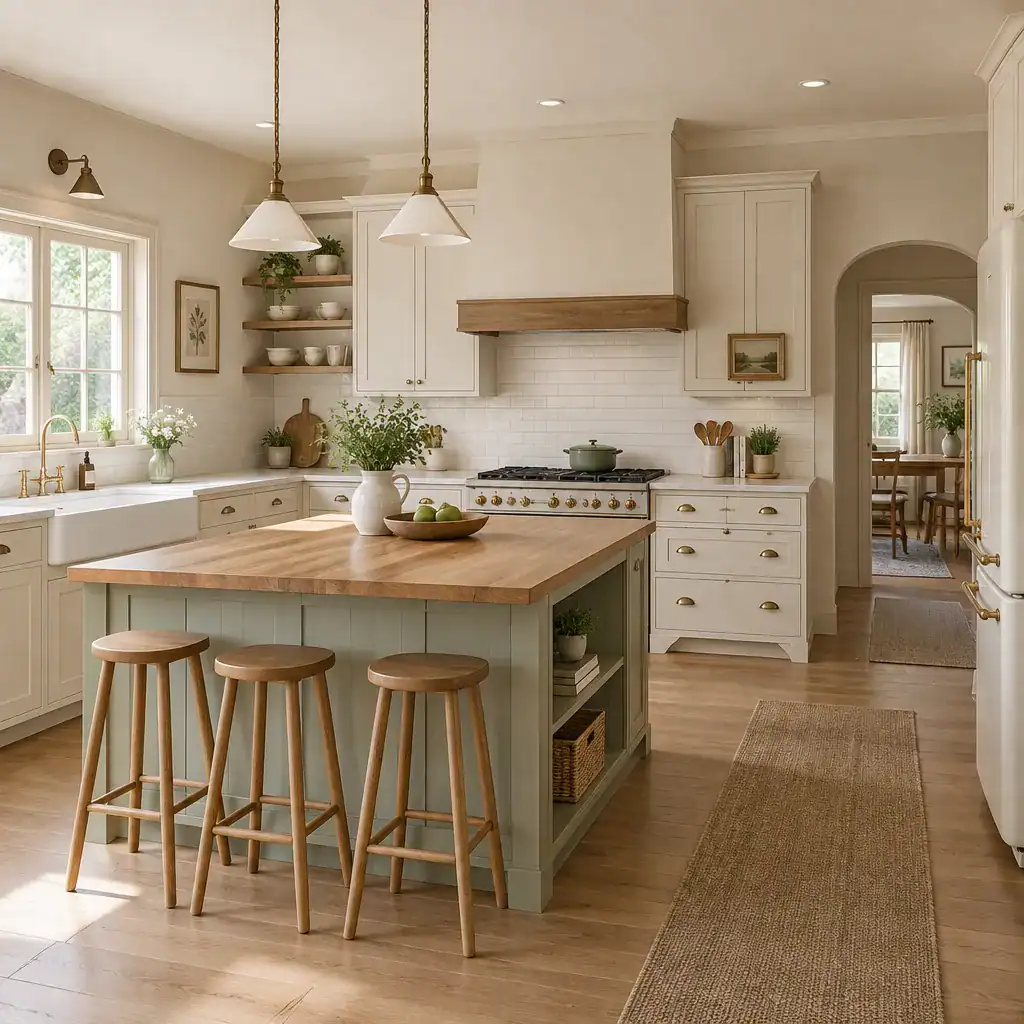
Avoid treating every surface as an opportunity for decoration. A room with patterned tile, ornate hardware, rustic timber, and heavily detailed cabinets can lose the clarity that makes the modern side of the look feel fresh. Instead, choose a small number of character-rich focal points and let quieter elements create breathing room around them.
Look closely at the architecture before selecting finishes. Exposed wood, traditional trim, uneven plaster, original floorboards, or charmingly irregular walls can become cues for a warmer direction. In a newer home with fewer inherited details, a natural wood accent, softly painted cabinets, or a ceramic backsplash can introduce cottage character without making the kitchen feel artificially themed.
Choose Cabinetry, Colors, and Hardware That Connect Both Styles
Cabinetry is the visual anchor of a modern cottage kitchen. Simple shaker doors and understated panel profiles are especially flexible because they reference traditional joinery while remaining neat enough for a contemporary room. Painted cabinets can create a soft, tailored backdrop, while natural wood fronts or a wood island can add depth. If you combine finishes, keep the contrast controlled, such as painted perimeter cabinets with one wood focal element.
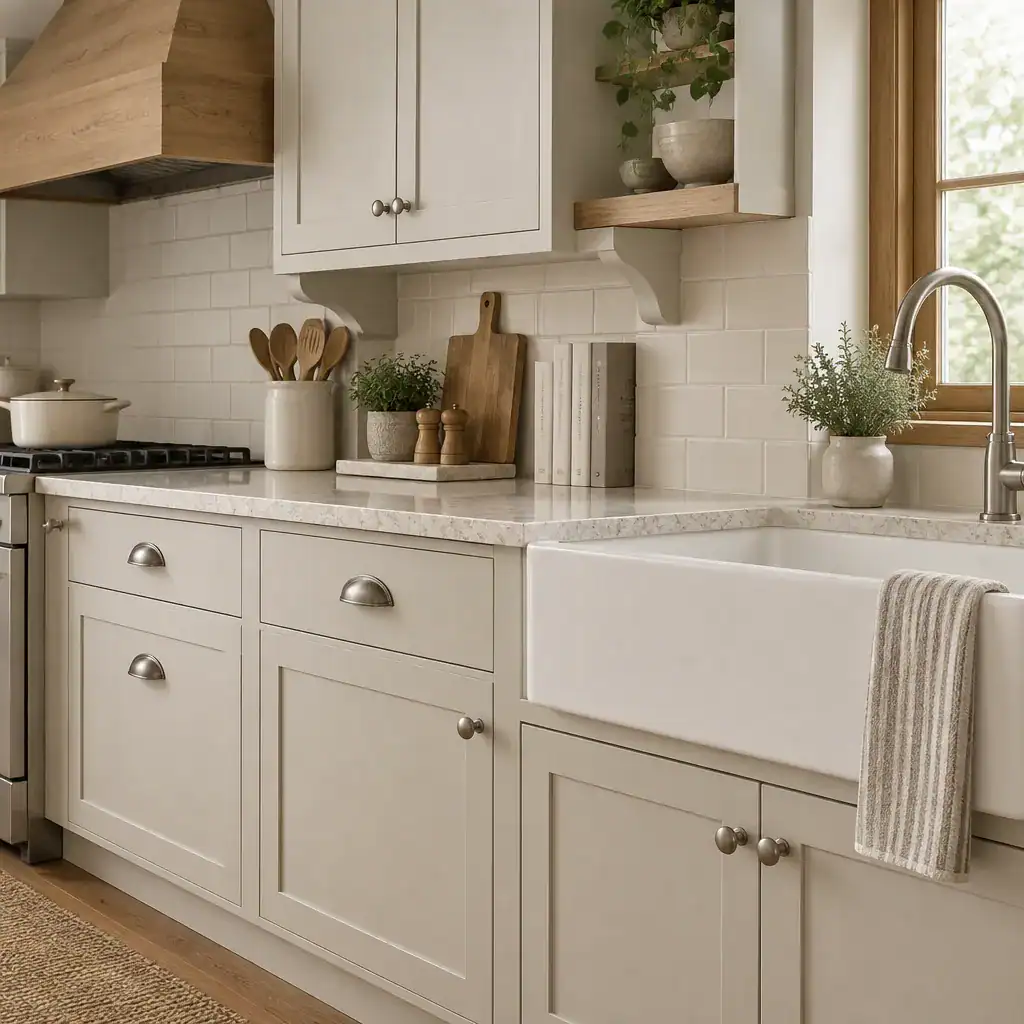
Soft neutrals and muted, nature-inspired hues help preserve an airy cottage atmosphere. Warm white, putty, mushroom, pale sage, dusty blue, and subdued clay tones are adaptable options that can feel inviting without visually weighing down the room. Use darker tones selectively, perhaps on a lower cabinet run, island, or pantry door, to add definition while keeping the overall impression light.
Hardware can shift the style emphasis in a subtle but meaningful way. Slim brushed-metal pulls or simple bar handles lean more contemporary, while cup pulls, knobs, and softly aged finishes offer a more traditional note. Consider both shape and scale: oversized decorative hardware may dominate a quiet kitchen, while small, consistent pieces allow cabinetry and materials to remain the focus.
Coordinate cabinet color with wall paint, countertops, and the rooms seen from the kitchen. A repeated undertone—warm, cool, earthy, or neutral—will make transitions feel intentional. This does not mean every finish must match exactly; it means they should appear to belong in the same visual family.
Layer Natural Materials With Practical Kitchen Surfaces
Natural materials give a modern cottage kitchen its tactile warmth, but restraint keeps the composition current. Wood can appear in flooring, stools, shelves, a vent surround, or an island detail. Stone, ceramic, metal, and woven fibers can add their own texture, creating a layered room that feels comfortable rather than flat.
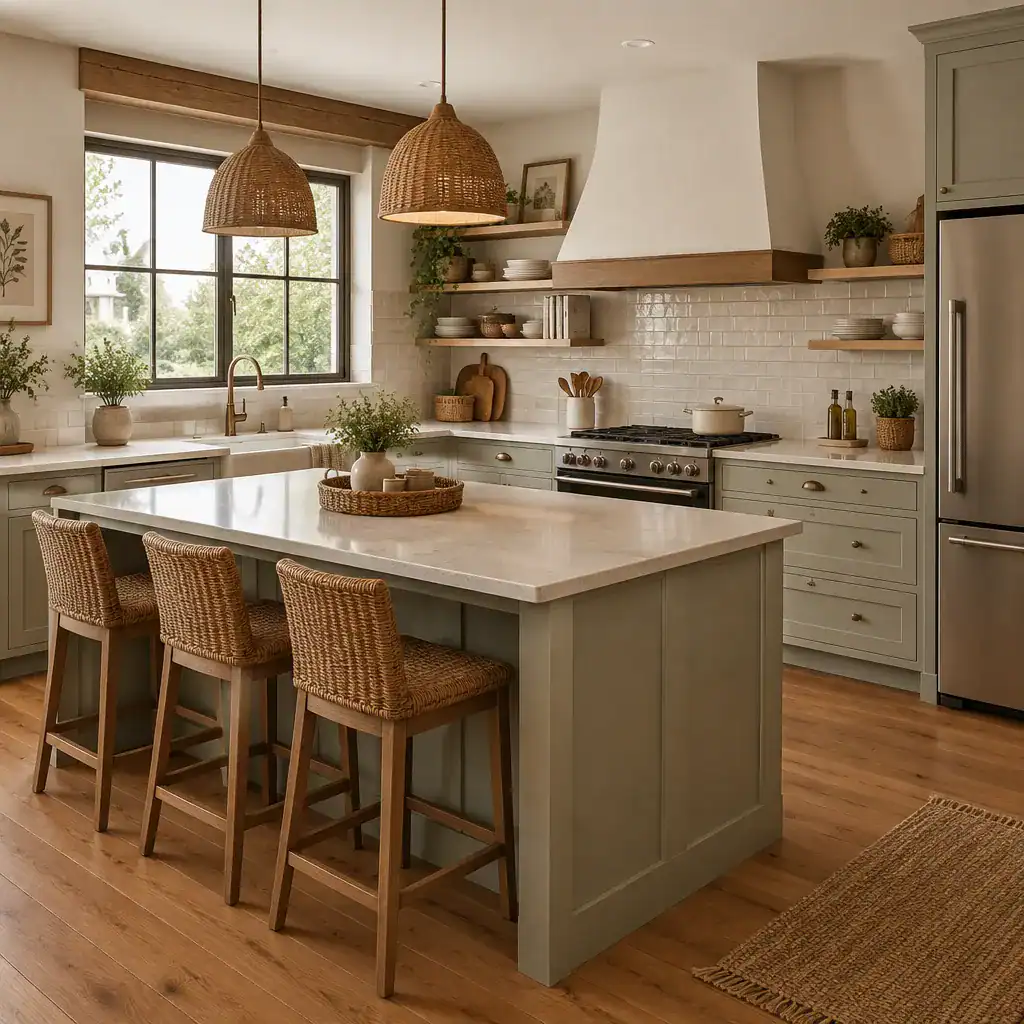
Choose hardworking surfaces based on how the kitchen is actually used. A household that cooks often may prefer an easy-care countertop and a backsplash that is simple to wipe down. If the room already has prominent timber, patterned flooring, or strong architectural texture, a quieter countertop and understated tile can prevent the material palette from becoming busy.
A plain work surface or a simple backsplash is often what keeps the room feeling modern. Warmth can then arrive in smaller, easier-to-change accents: a wood cutting board, woven shade, ceramic bowl, linen runner, or aged-metal tap. Coordinate tones rather than forcing exact matches. For example, pale oak, warm white tile, and brushed brass can relate through their soft warmth even though each has a different texture and finish.
Plan Lighting, Storage, and Layout for Everyday Use
Function is what allows cottage character to feel relaxed instead of cluttered. Layer lighting so the kitchen supports both practical tasks and slower daily moments: task lighting under cabinets or over work areas improves visibility, ambient lighting gives the room an even glow, and a decorative pendant or wall light adds personality. Dimmers can help the same space move from food preparation to evening gathering.
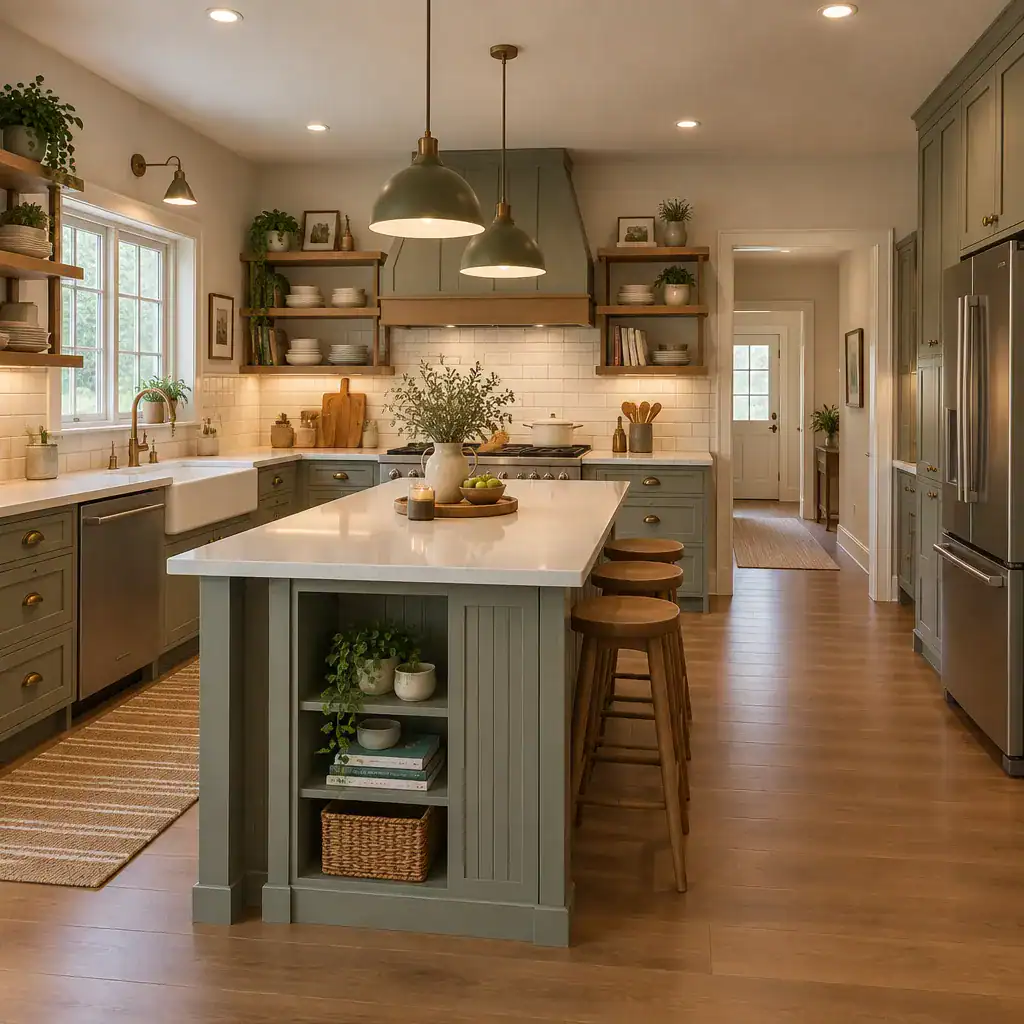
Storage should conceal the everyday items that create visual noise while leaving room for a few attractive, useful pieces. Deep drawers, organized cabinets, and a pantry zone can keep cookware and staples accessible. Selective open shelving can display mugs, bowls, cookbooks, or ceramics, but it works best when it is edited and does not become overflow storage.
Plan clear zones for preparation, cooking, cleaning, and serving, placing frequently used items nearby whenever possible. An island may support prep work, seating, or storage, but it is only one option; a table, peninsula, or uninterrupted counter can be equally practical. Let the final arrangement respond to the room’s dimensions, circulation paths, windows, doors, and existing services rather than forcing a predetermined layout.
Finish the Space With Cottage-Inspired Details
Finishing details give an modern cottage kitchen its personal, settled quality. Choose accessories with a purpose: ceramic vessels that hold utensils, linen towels used every day, a woven basket for produce, fresh greenery near a window, or simple artwork that softens a blank wall. Vintage-inspired accents can add charm, particularly when their form remains clean and their number stays limited.
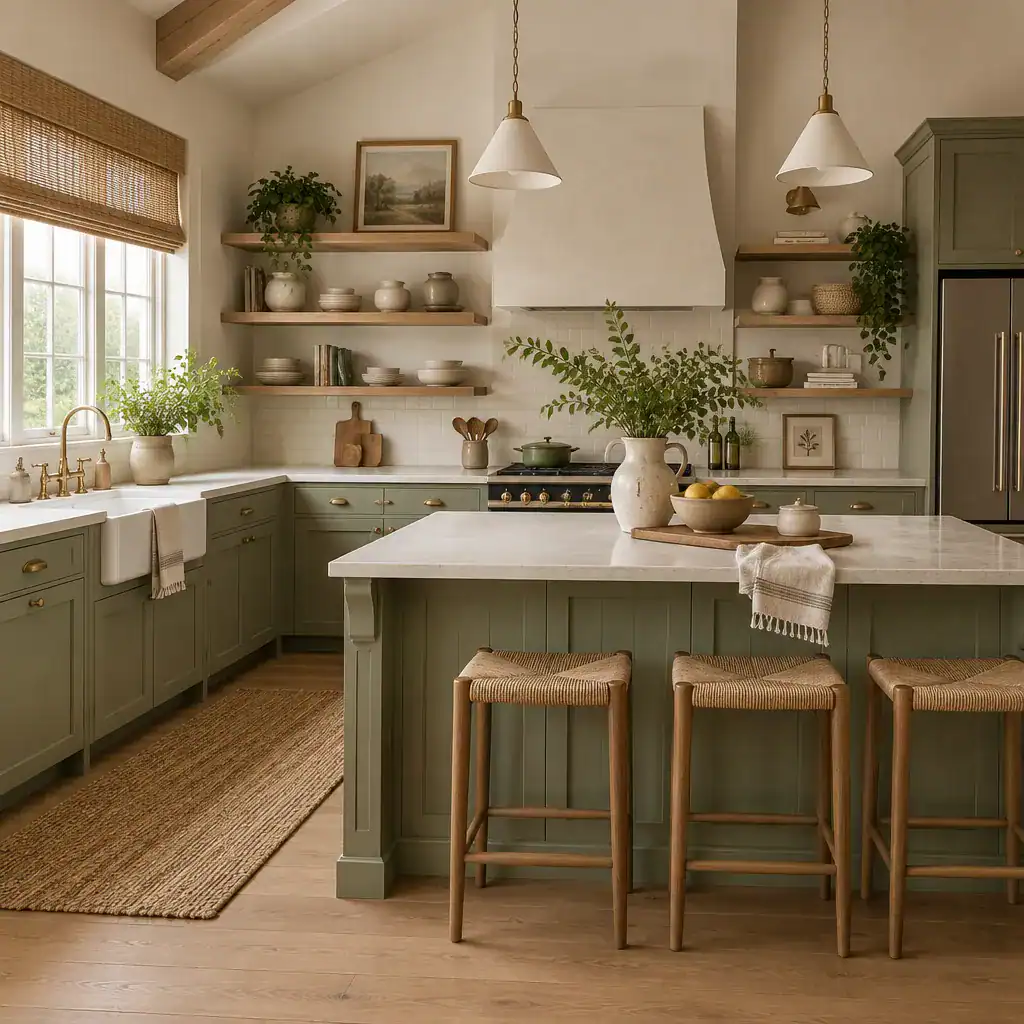
Open displays need editing to remain appealing. Group a few related objects by color, material, or function, then leave some empty space around them. This approach makes ceramics and collected pieces feel considered while protecting the uncluttered quality that distinguishes the modern side of the style.
Extend the kitchen palette into nearby dining and living areas through repeated colors, wood tones, metal finishes, or textiles. A muted cabinet color can reappear in dining-chair cushions, while a woven kitchen shade can connect with a basket or rug in the next room. These quiet links make the home feel cohesive. Most importantly, select details that assist daily life, not just a styled photograph.
Modern planning creates the function, while cottage-inspired materials and details provide the warmth. Prioritize the architecture already present, your maintenance preferences, the storage you truly need, and the way your household uses the room. Build the design gradually with a coordinated palette and a few carefully chosen focal details, and the kitchen can feel both efficiently current and comfortably at home.