
A luxury contemporary cottage brings together the ease of a relaxed retreat and the polish of thoughtful modern design. It is a flexible direction rather than a fixed formula, so it can suit a compact country renovation, a coastal getaway, or a newly built home with cottage-scale proportions. The goal is to retain a sense of intimacy and belonging while editing each choice for clarity, comfort, and enduring appeal.
The most successful spaces balance elevated finishes with approachable daily living. Architectural character, material selection, color, lighting, furnishings, and the relationship to the outdoors all work together to create a home that feels refined without becoming formal or precious.
Define the Luxury Contemporary Cottage Aesthetic
Contemporary cottage style starts with clean, legible forms, then softens them through natural texture and inviting scale. A simple gable, a pitched roof, broad windows, and uncluttered elevations can reference familiar cottage architecture, while timber, stone, limewash-like plaster, and layered planting prevent the result from feeling severe. Welcoming proportions matter as much as the silhouette: entries should feel sheltered, rooms should feel usable, and details should support a relaxed rhythm.
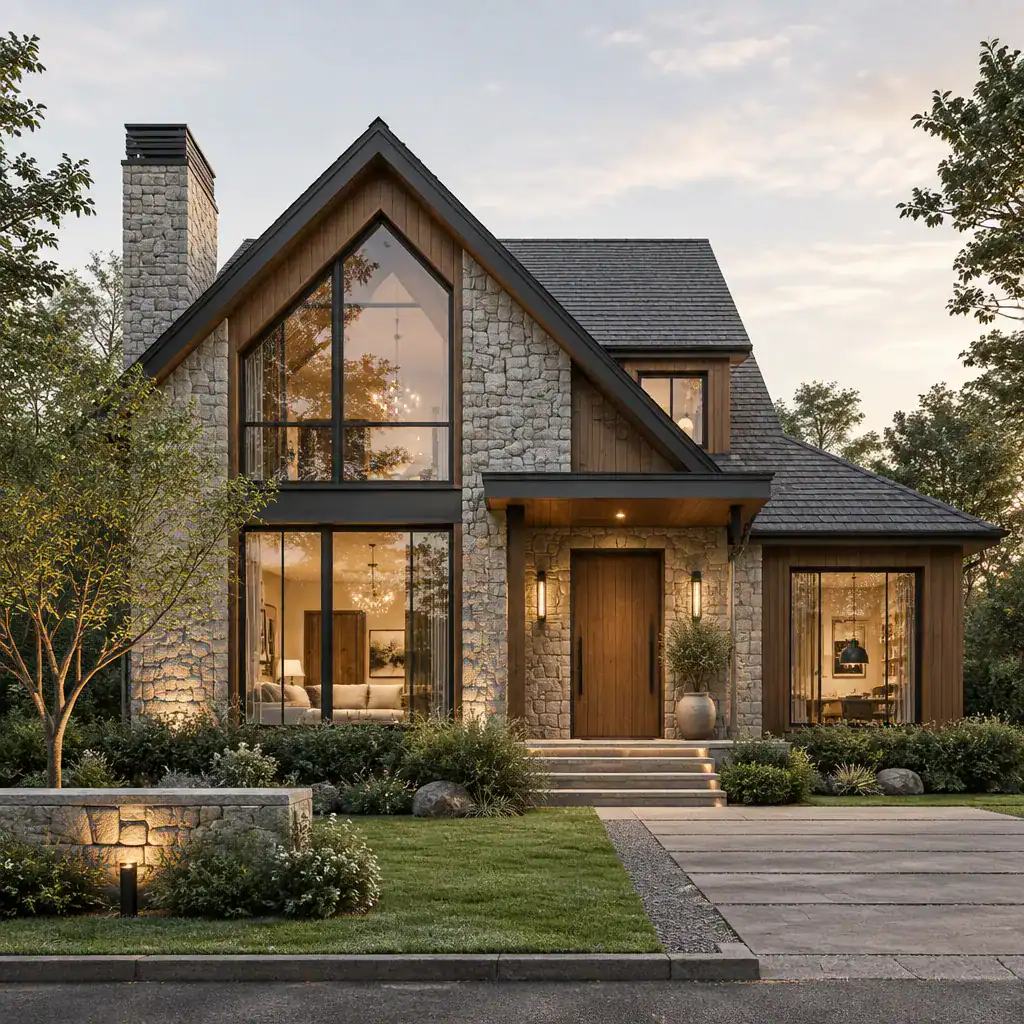
Luxury in this setting is expressed through quality, restraint, and cohesion rather than ornate trim or an abundance of expensive-looking finishes. Well-fitted joinery, substantial hardware, comfortable upholstery, tactile surfaces, and a considered view can feel more elevated than decoration alone. A contemporary cottage differs from a fully rustic home by avoiding excessive weathered finishes and overtly themed details. It also differs from farmhouse style, which often leans more traditional, and from strict minimalism, which may remove the warmth, texture, and softness that make cottage living appealing.
Shape the Exterior With Contemporary Cottage Character
Begin with an exterior composition that is calm and balanced. Clean rooflines, carefully spaced windows, restrained trim, and a clear front-door moment establish contemporary order while preserving cottage familiarity. A gabled roof can remain simple and crisp, and large glazed openings can bring in daylight without turning the facade into a purely modern glass box. Consider a recessed doorway, a modest porch, or a sheltered threshold to make the arrival feel personal and protected.
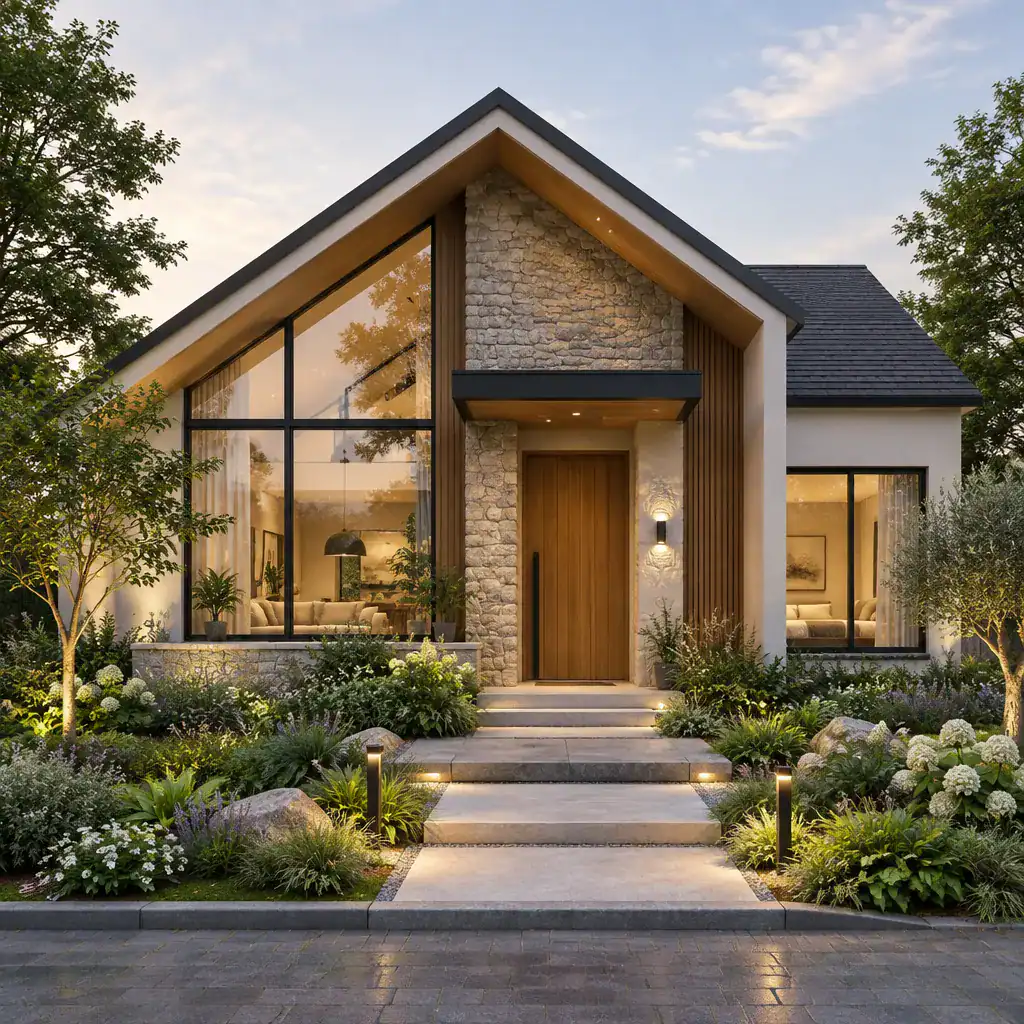
Limit the number of exterior finishes so every material has room to register. Pale render or painted cladding may form the main field, with natural stone grounding the entry or chimney and timber used for a door, screen, soffit, or small architectural accent. This combination feels composed when the tones relate rather than compete. Extend the same measured approach outdoors with a simple path, low layered planting, and subtle pathway or wall lighting. The landscape should soften the home and connect it to its setting instead of overwhelming its architecture.
Use Layered Materials and a Restrained Color Palette
Develop a coordinated material palette before choosing cushions, art, or small decorative objects. This early step makes it easier to create continuity from the entry to the living spaces and out to the terrace. Pair tactile natural materials, such as warm oak, honed stone, linen, wool, or handmade ceramic, with smoother contemporary elements including soft plaster, brushed metal, clear glass, and streamlined cabinetry.
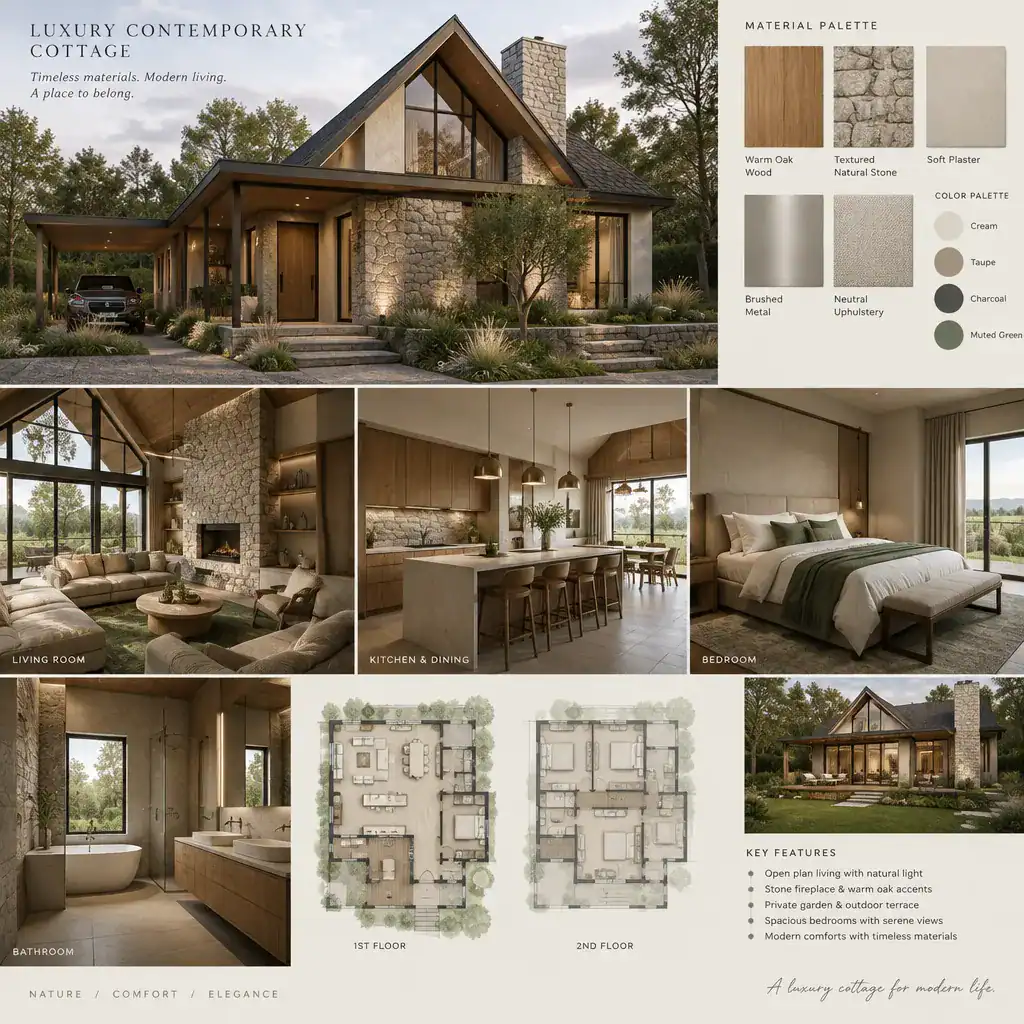
Choose a calm base of cream, warm white, taupe, greige, or pale mineral gray, then add depth through charcoal, deep brown, muted green, or aged bronze. A darker accent can define window frames, lighting, joinery, or a fireplace surround without introducing visual noise. In an luxury contemporary cottage, contrast should feel intentional: a textured stone wall can sit beside smooth cabinetry, or a tailored neutral sofa can be warmed by a woven rug and timber table. Repeating finishes in a few rooms helps the entire home feel collected and settled.
Create Comfortable Rooms With Contemporary Furnishings
Furnish rooms for real use first. Select sofas and chairs with simple silhouettes, generous cushions, and durable upholstery that invites daily lounging. Rounded edges, softly structured forms, and substantial wood pieces can counterbalance clean architectural lines. A contemporary approach does not require furniture to be spare; it requires each piece to earn its place through comfort, proportion, and material quality.
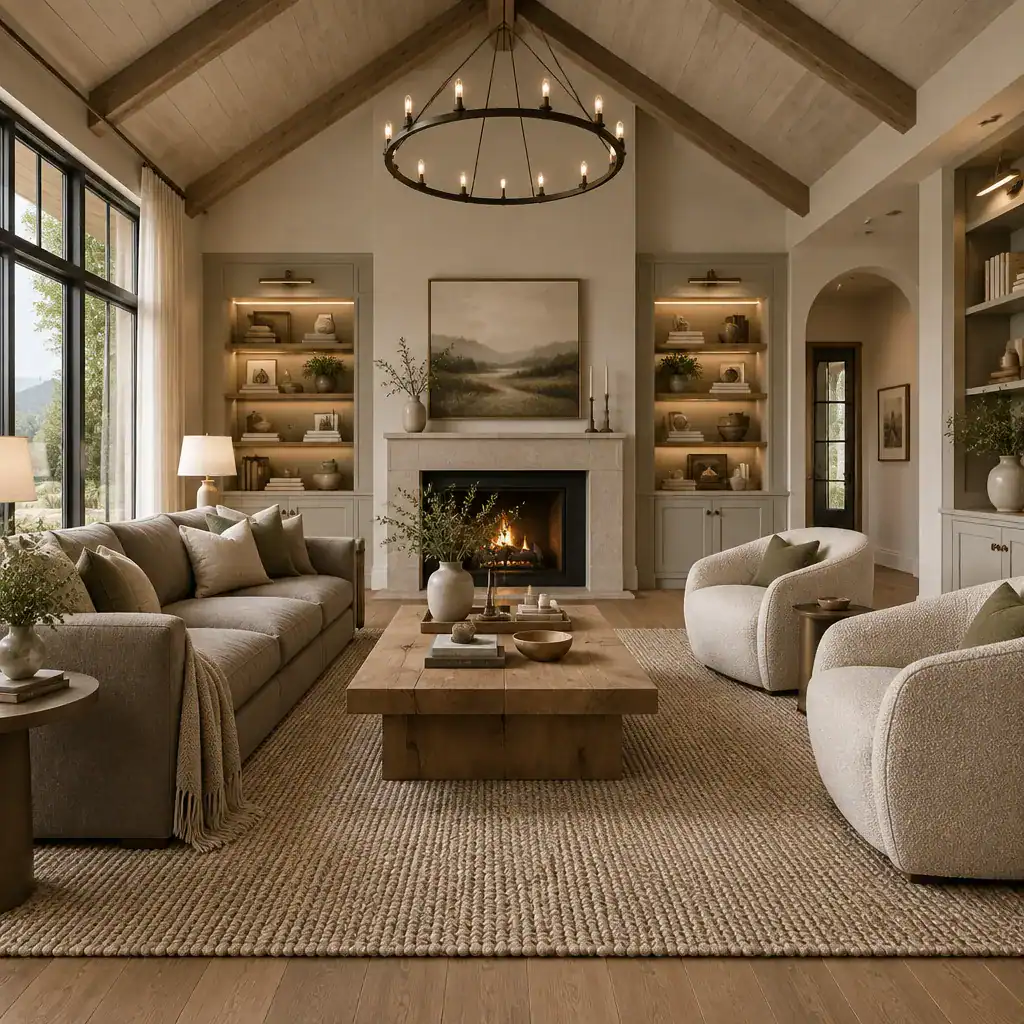
Mix tailored seating and modern tables with handcrafted accents, vintage-inspired lighting, woven baskets, pottery, or a timeworn side chair. These elements add character without relying on an overly rustic theme. Plan circulation so there is space to move naturally around seating groups, dining tables, and kitchen islands. Built-in cabinetry, window seats, concealed storage, and edited open shelving keep practical items accessible while allowing the room to remain visually calm. The result should feel polished enough for entertaining but easy enough for a rainy afternoon indoors.
Connect Light, Views, and Outdoor Living
Light is one of the strongest tools for making a cottage feel open and elevated. Position windows to frame gardens, trees, water, or distant views, and use glazed doors where they can create a direct relationship with a patio, courtyard, or terrace. Even in a smaller plan, long sightlines through adjoining rooms can make the interior feel more spacious and connected to the landscape.
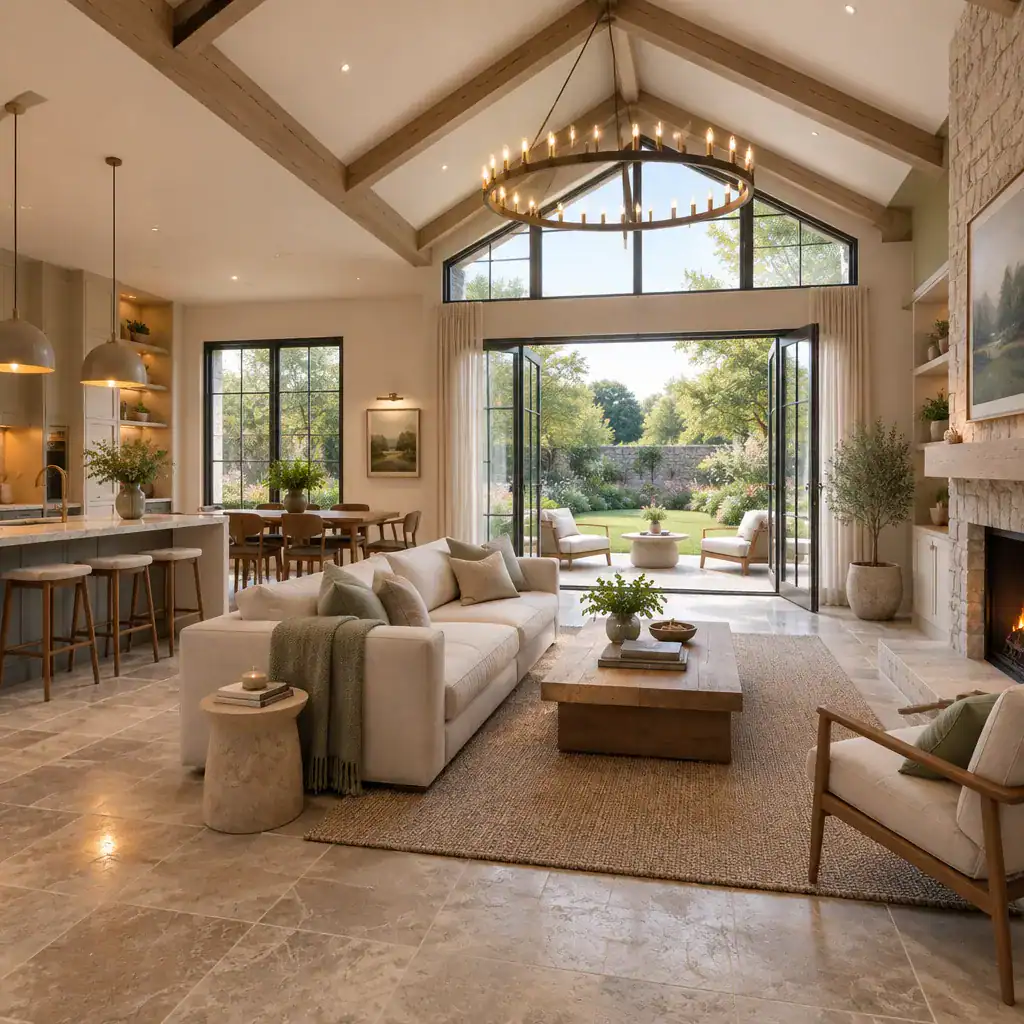
Layer ambient, task, and accent lighting rather than depending on one central fixture. Soft ceiling lighting can establish an overall glow, while pendants, reading lamps, under-cabinet lights, and wall sconces make individual activities more comfortable. Dimmers help shift the mood from practical daytime use to a quiet evening atmosphere. Carry related finishes across the threshold with stone paving, timber details, planting tones, or outdoor fabrics that echo the interior palette. This continuity makes exterior areas feel like genuine rooms of the home.
Avoid Common Design Imbalances
The style is most convincing when it avoids extremes. Too many rustic motifs, such as distressed signs, heavy barn-door references, overly rough timber, and decorative antiques in every corner, can make the home feel themed rather than contemporary. Choose a few authentic textural notes and let simpler forms provide balance.
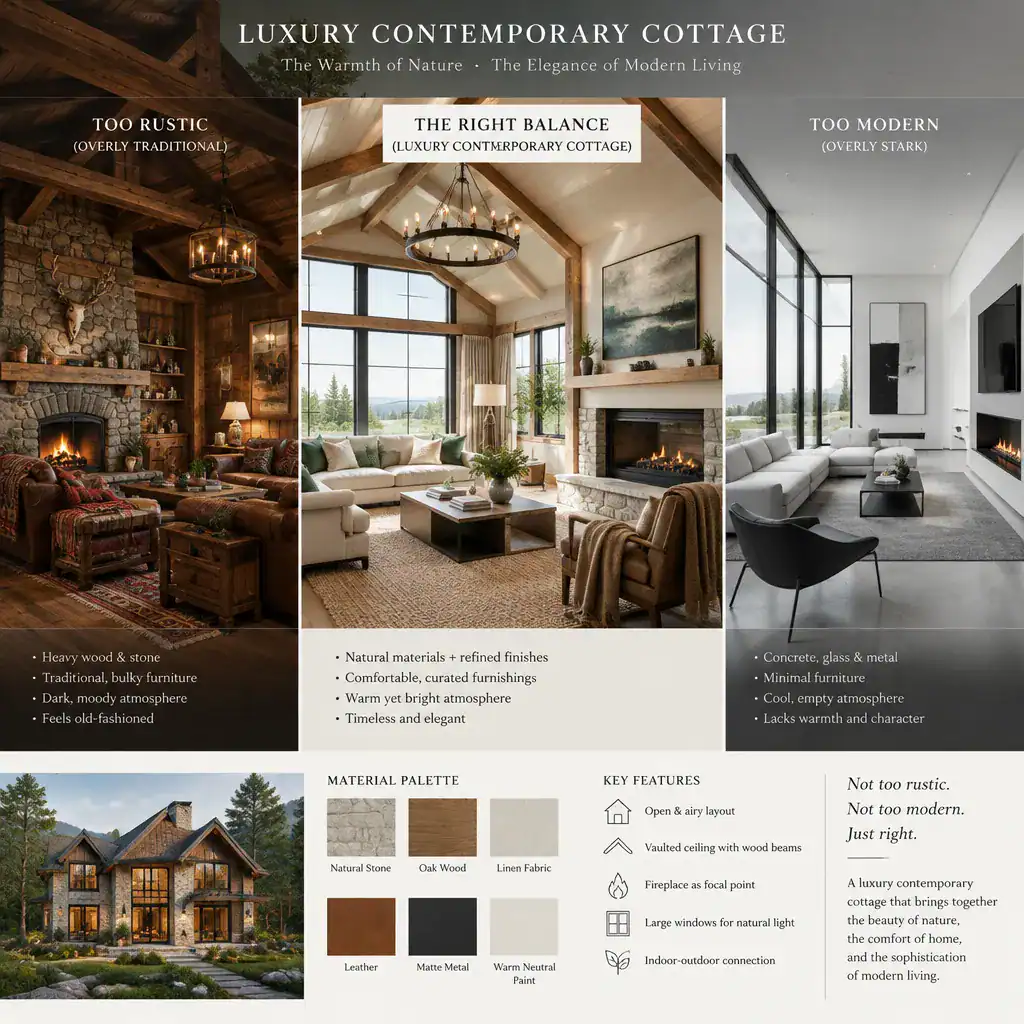
The opposite problem occurs when glossy finishes, rigid geometry, or sparse furnishings remove the softness that gives cottage spaces their appeal. An luxury contemporary cottage should not feel like a showroom: it needs tactile fabrics, practical seating, warm lighting, and personal objects with breathing room around them. Repeat a limited family of materials, colors, and shapes throughout the property to create consistency. For example, if warm oak, pale stone, dark bronze, and muted green appear in the main living area, carry variations of those elements into bedrooms, bathrooms, and outdoor spaces.
A successful luxury contemporary cottage is built on restraint, material integrity, everyday comfort, and a meaningful connection to nature. Start with a clear core palette, select finishes that age gracefully, and adapt the design to the property’s architecture, climate, and surrounding landscape. With those decisions in place, modern simplicity and cottage warmth can support each other in a home that feels both refined and genuinely welcoming.