
English cottage living rooms feel welcoming because they combine familiar furniture, gentle color, and layers that invite everyday use. Rather than copying a single picture-perfect space, you can create the mood through thoughtful choices in materials, furniture shapes, patterns, lighting, and the personal details you display.
The style is comfortable, layered, and traditionally inspired without needing to look formal. A few well-chosen colors, tactile fabrics, aged finishes, and meaningful accessories can translate its relaxed character to a period home, rental, or newer living room.
The Defining Character of an English Cottage Living Room
An English cottage living room balances warmth, practicality, vintage influence, and a collected-over-time feeling. It may include a dependable sofa, a worn wood table, a favorite armchair, shelves of books, and objects that have a story or simply make the room useful. The goal is not perfection; softly faded fabric, gently weathered wood, and slightly mismatched finds can make the space feel settled and approachable.
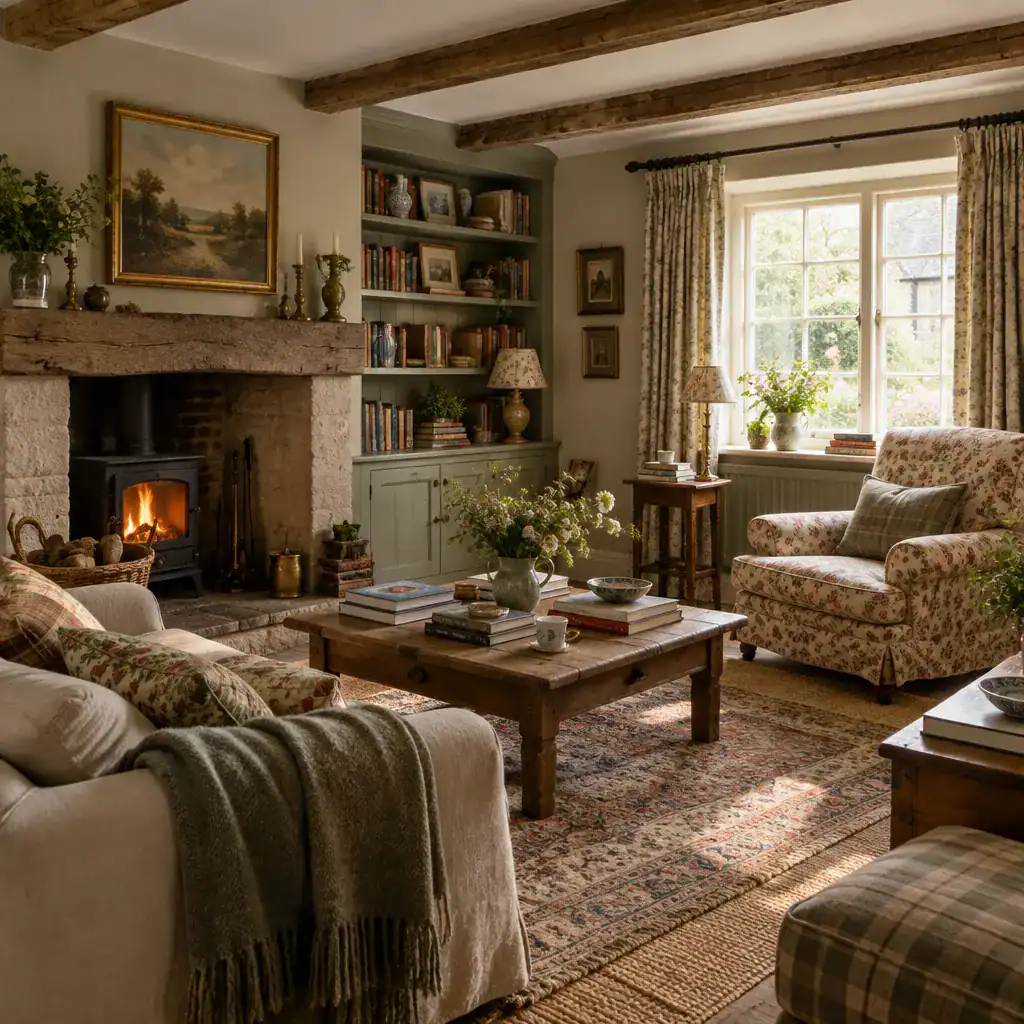
Softness is especially important. Rounded furniture profiles, fabric lampshades, rugs, curtains, and cushions reduce the severity of hard surfaces, while traditional details add visual familiarity. This is what separates the look from a more formal traditional room: the best english cottages interiors living room schemes are designed for reading, resting, hosting friends, and living with daily imperfections, not for keeping untouched.
Let the room develop a little visual age through finishes that do not feel overly slick or identical. A painted side table beside natural timber, a vintage-style picture frame, and a faded floral textile can work together when their colors and scale feel related. Edit only enough to keep pathways clear and surfaces usable.
Color Palettes for a Soft Cottage Atmosphere
Start with a calm base of warm cream, putty, soft stone, or gentle beige, then introduce muted colors that feel softened rather than sharp. Sage and moss greens, faded blue, dusty rose, muted ochre, and earthy brown tones all suit a cottage-inspired room. These shades create depth while preserving the relaxed, light-filled quality associated with the style.
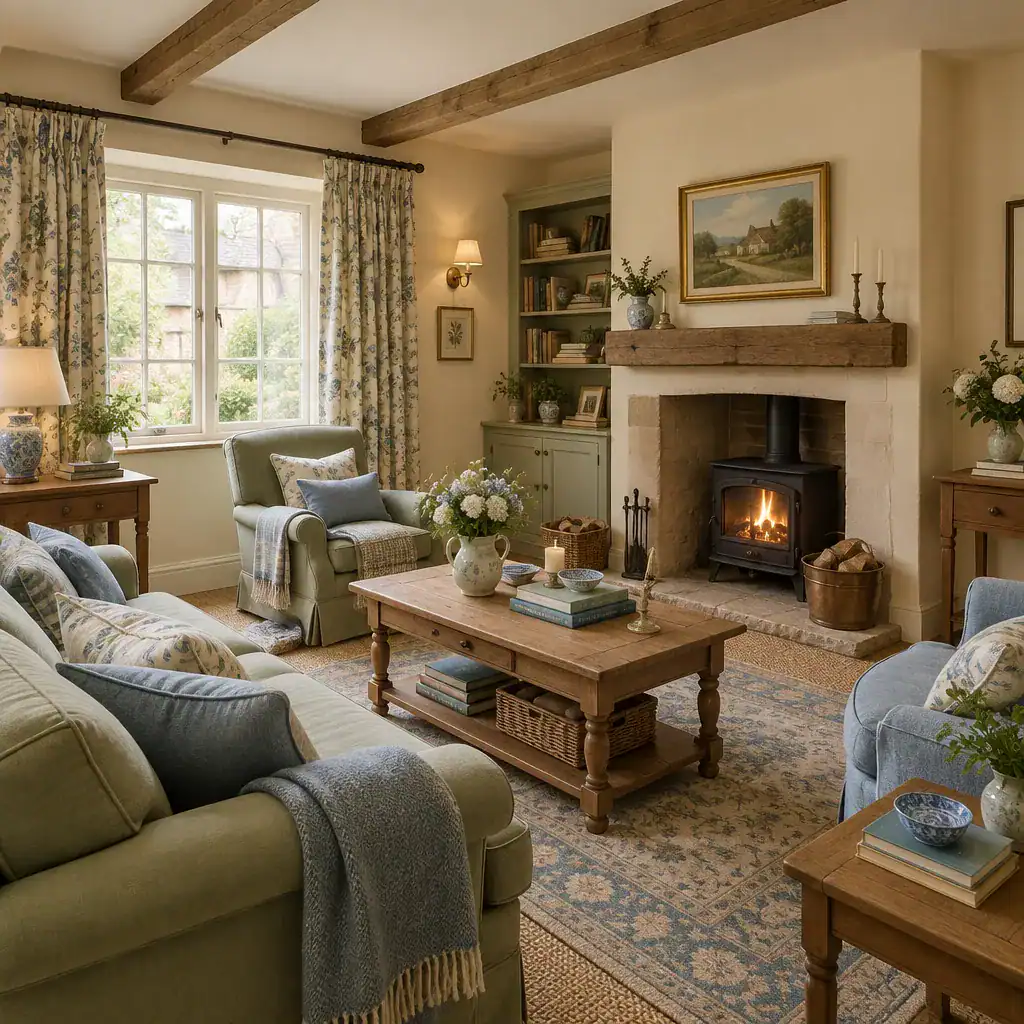
Distribute color across the room instead of matching every item exactly. For example, cream walls can support a sage sofa, floral curtains with faded blue notes, and a rose-toned cushion. Repeating one or two hues in small doses helps the arrangement look intentional while allowing wood, woven fiber, and artwork to add contrast.
A deeper accent, such as forest green, muted navy, oxblood, or charcoal brown, can give the room definition. Use it selectively on a painted cabinet, a cushion border, a lampshade, or fireplace trim. In english cottages interiors living room styling, a dark note works best as an anchor among lighter, softer surfaces rather than as the dominant color in a compact or dim room.
Furniture, Fabrics, and Layered Comfort
Choose seating for genuine comfort first. A sofa with a gently rounded arm, a slipcovered silhouette, or tailored upholstery in linen-look cotton, wool, or a durable woven fabric can form an easy foundation. Add one or two armchairs with traditional proportions, perhaps in a subtle floral, small check, or plain textured fabric, to make conversation seating feel natural.
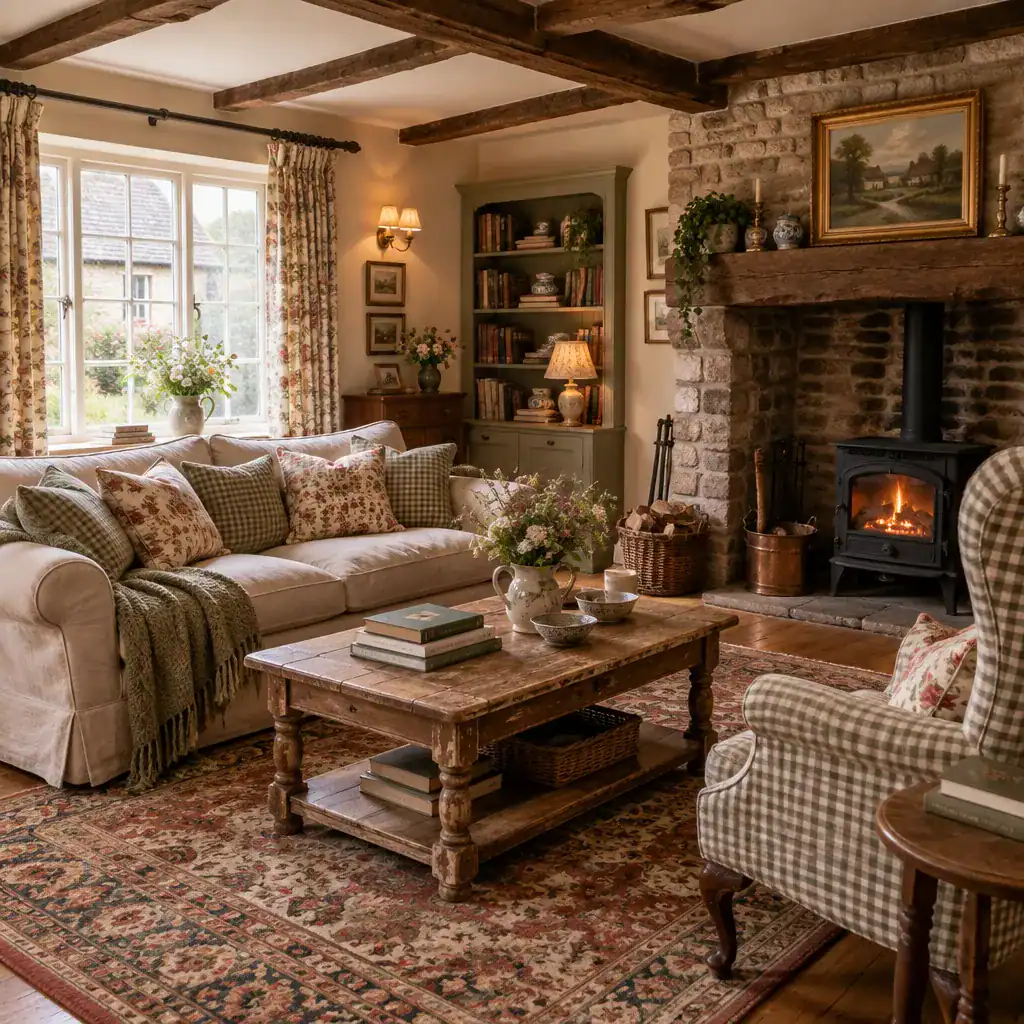
Natural wood tables, painted occasional furniture, woven baskets, and a substantial area rug build useful visual depth. Layer cushions in varied textures, then add a throw in wool, knit, quilted cotton, or brushed fabric. These elements make the room feel warmer while also making it more practical for quiet evenings and casual gatherings.
Patterns are most successful when they vary in scale. Pair a medium floral with a small check, narrow stripe, or restrained botanical motif, and keep at least one larger surface plain to give the eye a place to rest. A floral chair may sit comfortably near striped cushions if their colors overlap. Arrange furniture around conversation, a fireplace, a window view, or a coffee table that can be reached easily; the room should never feel like a display assembled only for appearance.
Architectural Details, Lighting, and Decorative Accessories
Existing features can give the room an immediate cottage starting point. A fireplace, painted beams, paneling, cottage-style windows, built-in shelving, or painted trim deserves attention because it provides structure before accessories are added. If these features are absent, do not force them; natural finishes, traditional furniture, and carefully chosen art can provide the same sense of character.
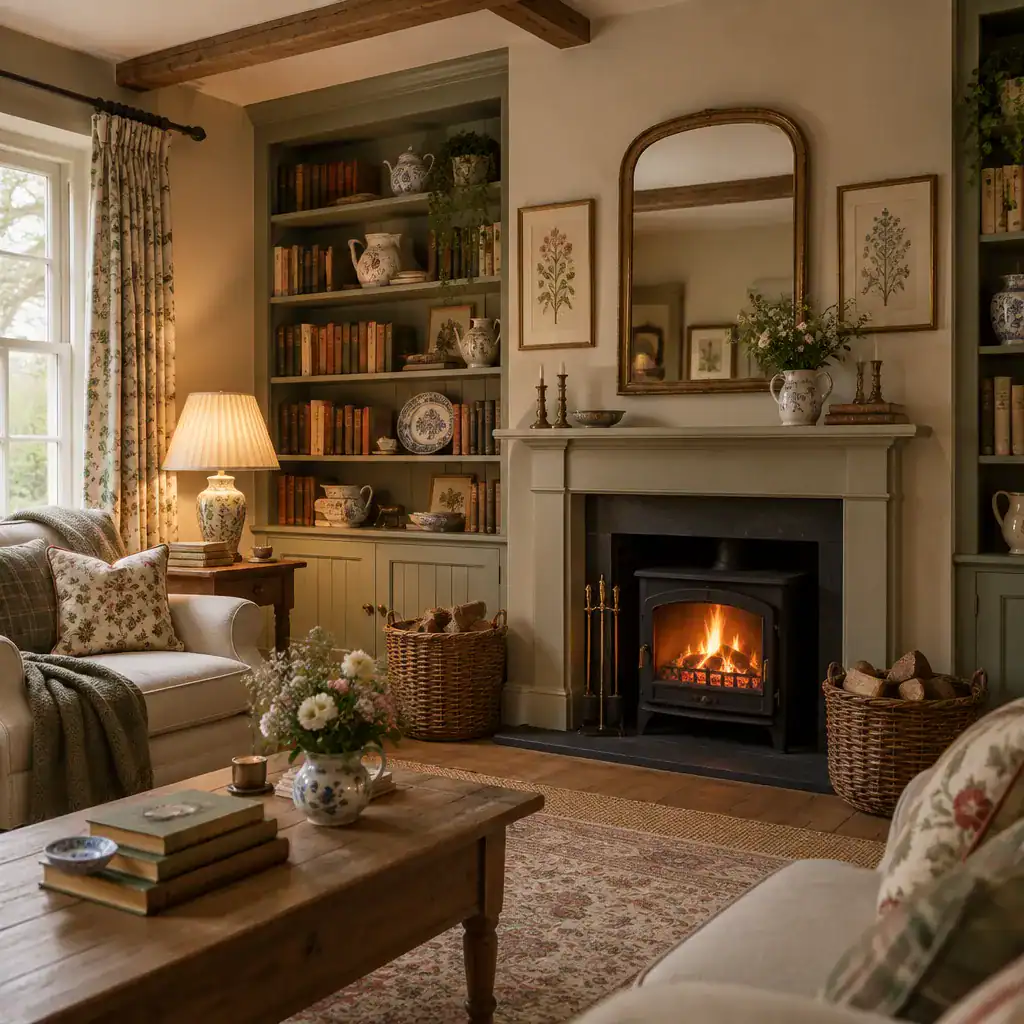
Use several gentle light sources instead of relying on one bright ceiling fixture. A table lamp beside an armchair, a floor lamp near the sofa, and a small lamp on a console produce a warmer evening atmosphere. Fabric or pleated shades help diffuse light, while warm-toned bulbs can make creams, woods, and textiles feel more inviting.
Accessories should look collected but remain purposeful. Frame botanical art, stack books where they will be read, fill a ceramic vessel with fresh or dried flowers, and use baskets for throws, magazines, or children’s items. Mirrors can brighten a darker corner, while a small vintage-style object adds personality. Repeat a material or color, such as brass, timber, sage green, or blue-and-white ceramic, so the room reads as cohesive rather than cluttered.
How to Adapt the Look to Your Existing Living Room
Build the look in stages. First establish a base palette with wall color, a rug, or the largest upholstered piece. Next, identify one or two focal features, such as a fireplace, sofa, bookcase, or picture window. Layer textiles afterward, then add meaningful accessories gradually. This order keeps each choice connected to the room rather than turning decorating into a collection of unrelated purchases.
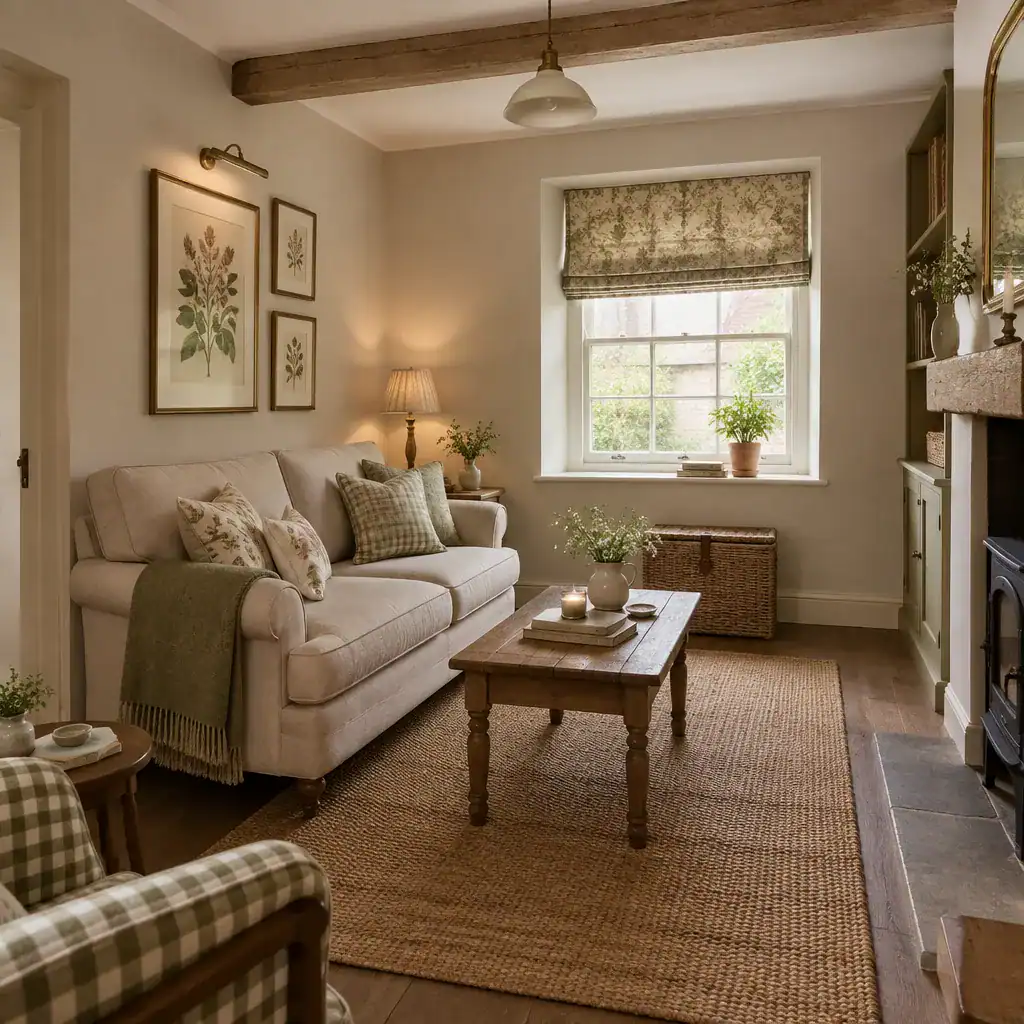
A modern room can take on cottage character without major renovation. Try soft neutral paint, a textured or slipcovered sofa, a small wood table, botanical artwork, woven storage, and one vintage-inspired accent. These elements introduce warmth and traditional reference while allowing contemporary architecture and existing furnishings to remain useful. A room does not need antique furniture to capture the ease of english cottages interiors living room design.
In a small living room, favor furniture with flexible functions and visible legs or lighter profiles where possible. Limit bold patterns to a few cushions, a chair, or curtains, and use closed baskets or cabinets to organize everyday items. Keep accessories edited, choose lamps that do not crowd tabletops, and leave clear circulation space. Above all, select pieces that make daily life more comfortable; decoration should support how you live, not simply imitate a style.
An English cottage living room comes together through warmth, layered texture, traditional references, and personal character. Build it gradually, allowing useful furniture, favorite fabrics, and meaningful objects to shape the result. When comfort remains the priority, english cottages interiors living room ideas can create a relaxed home that feels enduring rather than overly styled.