
A porch feels classic and cottage-inspired when its proportions, traditional details, natural-looking finishes, and lived-in warmth work as one composition. It should also serve as a useful transition between the home and the outdoors: a sheltered place to pause, greet visitors, enjoy fresh air, or relax with a drink. Before choosing decor, consider the porch structure, its connection to the facade, durable finishes, seating needs, lighting, and the amount of upkeep the household can manage.
Start With Traditional Porch Architecture and Proportions
Begin with the architectural framework, because depth, roof form, columns, railings, steps, and trim set the tone long before accessories are added. A simple pitched roof, painted wood posts, modest railings, and well-scaled steps can make a classic cottage porch feel established and inviting. Study the home’s roofline, siding, window trim, and entry door first, then select porch details that repeat or complement those features rather than competing with them.
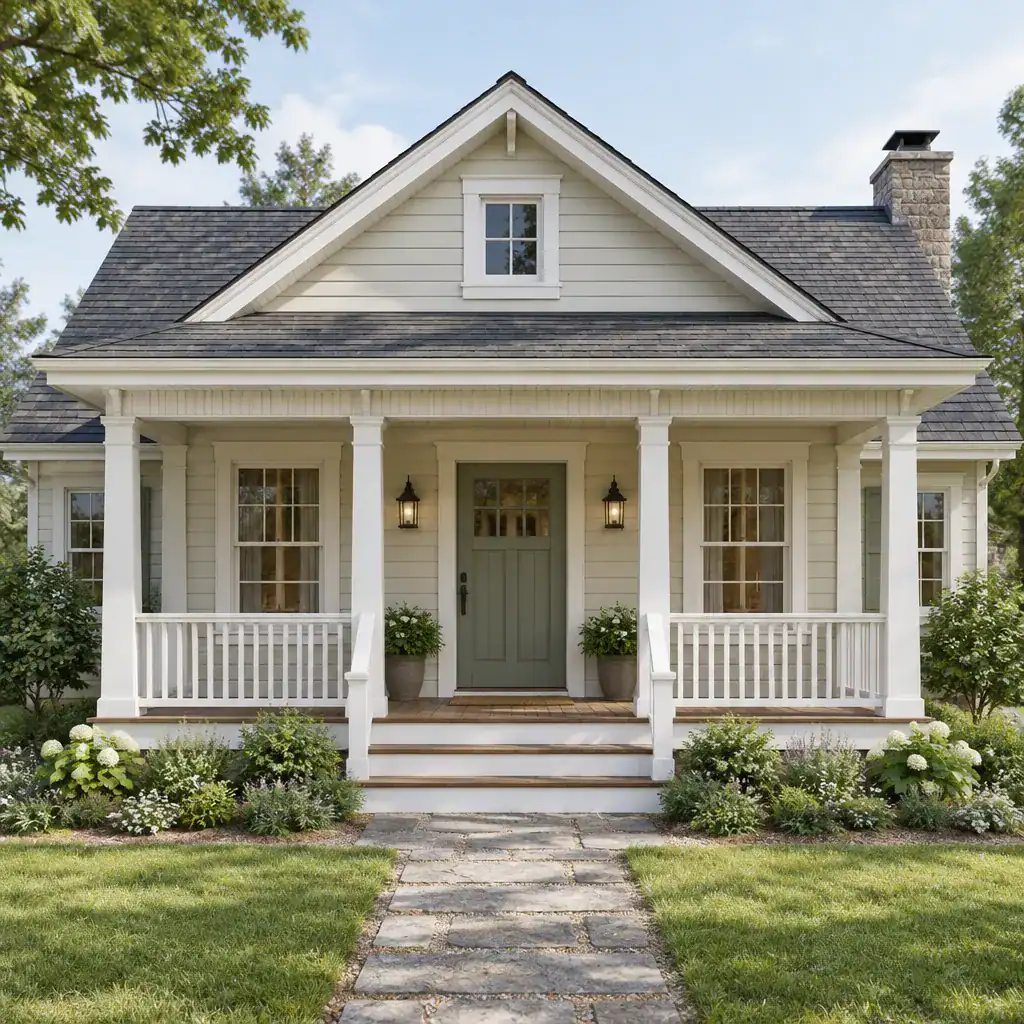
An open porch offers the strongest visual and physical connection to the garden and street, while a screened porch can improve comfort where insects or weather exposure are concerns. A partially enclosed design may provide additional privacy and shelter, but it should still relate clearly to the original facade. In every option, protect circulation: leave a clear route from steps to door, keep columns in proportion to the roof they support, and avoid adding decorative pieces that make a small entry feel crowded.
Choose Materials, Colors, and Details That Build Cottage Character
Material choices should look coordinated with the house while responding to local weather and budget. Painted wood is a familiar cottage finish for columns, railings, and trim, while natural wood accents can add warmth at the door, ceiling, or furniture. Choose porch flooring and siding-adjacent finishes for their ability to handle moisture, sun, and daily wear, rather than assuming a single material will suit every climate.
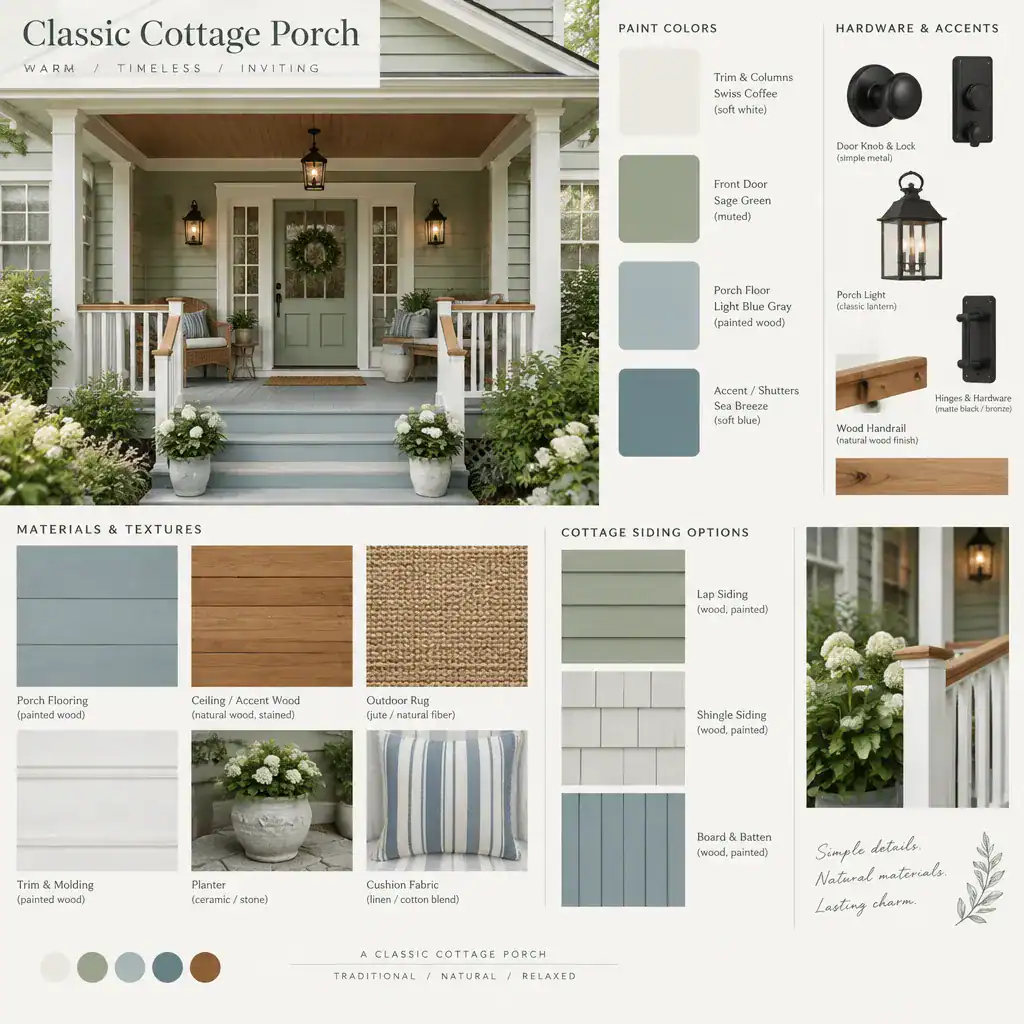
Build the palette around the existing exterior. Soft neutrals, muted green, gentle blue, and classic white often support a traditional look, especially when one color is used as the main field and another defines trim or the front door. Use details selectively: simple brackets, shutters, flower boxes, and traditional metal hardware can enrich a classic cottage porch without overwhelming it. Before committing, review maintenance needs, weather exposure, and any relevant local building or neighborhood requirements.
Make the Porch Comfortable With Purposeful Furniture and Lighting
Choose furnishings based on how the porch will be used and how much clear floor area it has. Two chairs and a small side table create an easy conversation spot, while a bench offers flexible seating for a narrow entry. On a larger porch, a compact table can support morning coffee or casual meals. Select weather-suitable pieces with comfortable proportions, but keep enough space for the front door, steps, and everyday movement.
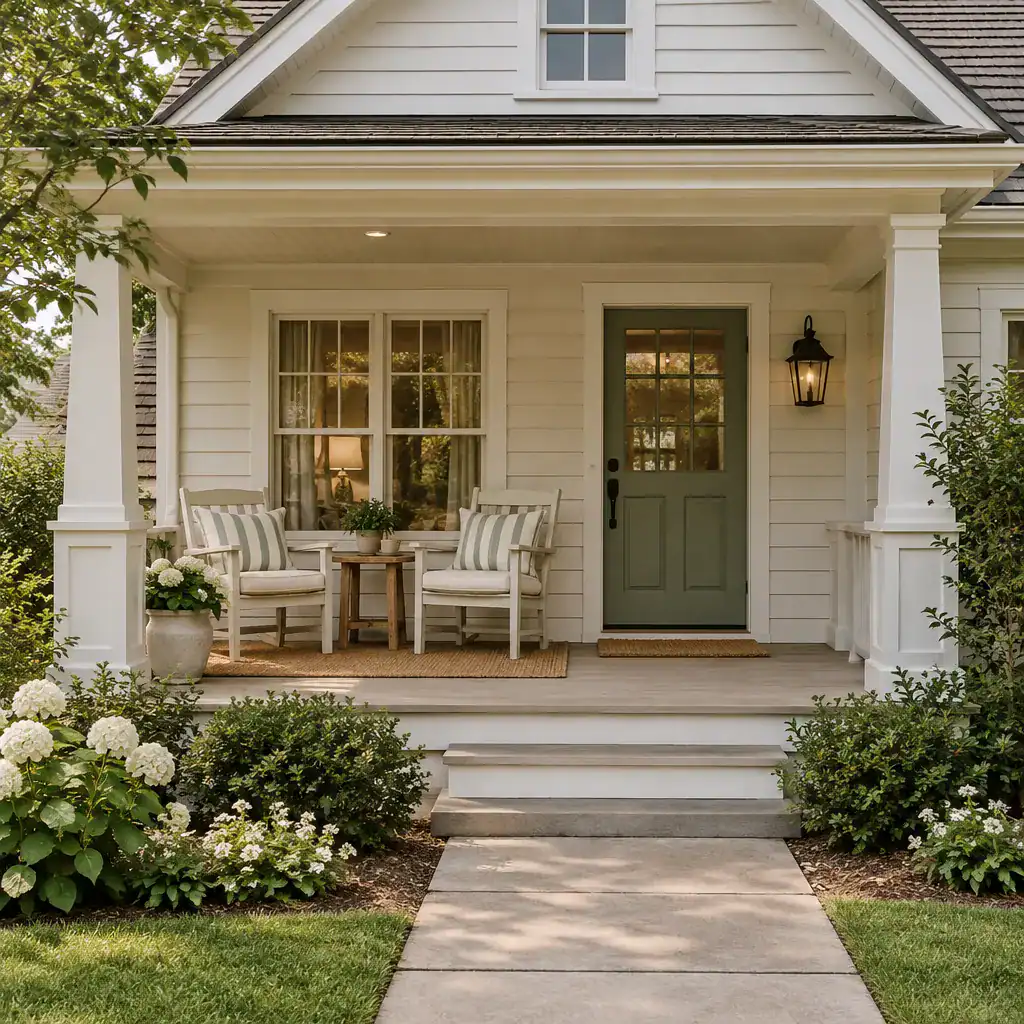
Lighting should make arrivals safer and evenings more comfortable while matching the exterior’s character. A porch pendant, wall lanterns, or subtle accent lighting can provide layers of illumination without creating visual clutter. Add outdoor-rated cushions, a durable rug, and a few textiles only where they can be maintained easily. In a classic cottage porch, these soft elements should enhance comfort rather than hide the architecture or obstruct the route to the entry.
Add Welcoming Cottage Styling Without Overcrowding the Entry
Styling is most effective when it frames the entrance instead of filling every open surface. Potted plants, seasonal flowers, a simple wreath, and a welcoming doormat bring color and personality to the porch. Pair planters and accessories with the chosen palette and architectural finishes, such as painted pots that echo the trim or understated metal lanterns that relate to the door hardware.
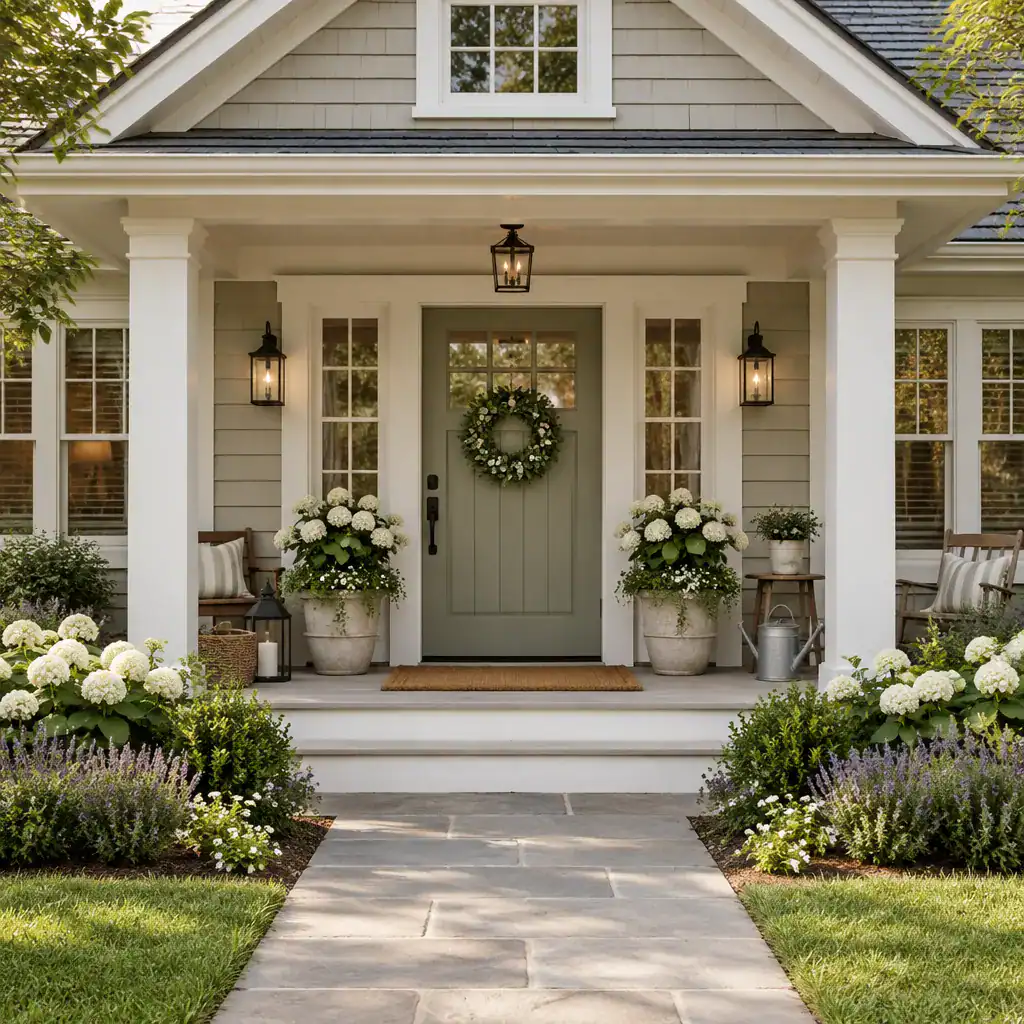
Keep containers, lanterns, and decor clear of steps, drainage paths, door swings, and the main walking route. Symmetry can lend order to a formal entry, while an asymmetrical grouping may suit a more relaxed facade if it remains balanced. Seasonal updates do not need to alter permanent features: refreshed cushions, a new wreath, or containers planted for the season can give a classic cottage porch a fresh look with minimal effort.
Plan a Classic Cottage Porch Around Maintenance and Everyday Use
A lasting porch plan accounts for the practical work behind its welcoming appearance. Review drainage at the porch edge, surface wear on flooring and steps, paint upkeep on exposed trim, storage for furniture during harsh weather, and access for replacing or cleaning light fixtures. These checks help prevent attractive choices from becoming difficult to live with over time.
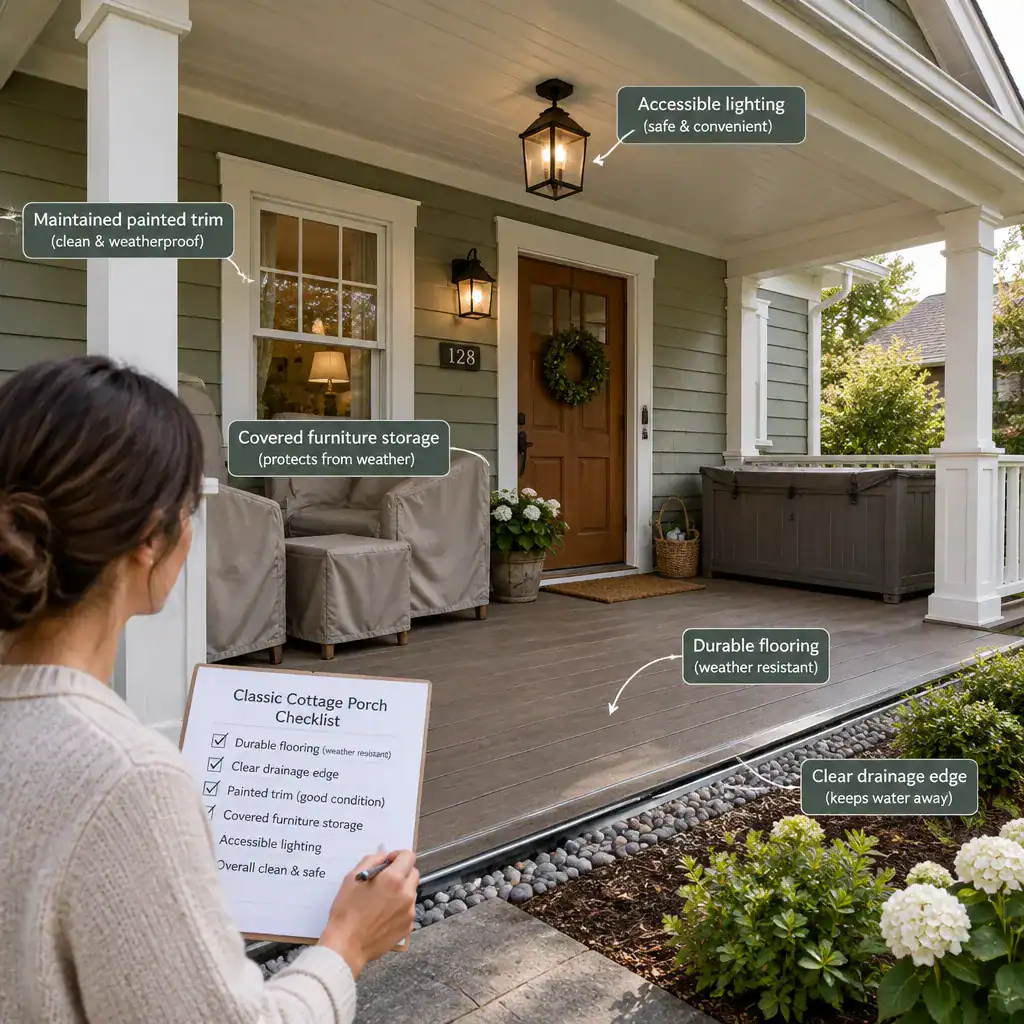
Separate durable investments from flexible updates. Roof structure, flooring, railings, and fixed lighting deserve careful planning because they are more costly to change, while textiles, plants, and smaller furnishings can evolve with the seasons. Where structural, electrical, railing, or permit requirements apply, consult qualified local professionals and confirm applicable rules. Finally, assess the porch from the street as well as from inside the entry: it should improve curb appeal while functioning smoothly for the people who use it each day.
Creating lasting cottage appeal means coordinating architecture, materials, furniture, lighting, and decor instead of treating each as an isolated choice. The most successful porch respects the home’s existing character and supports the household’s real routines, whether that means welcoming guests, enjoying quiet outdoor time, or simply making arrivals more pleasant. Start by assessing the current facade, define the desired use, and prioritize the improvements that will make the greatest visible or functional difference first.