
Finish selection strongly shapes the way a low-profile bungalow is perceived. The right mix can emphasize its welcoming porch, broad roofline, simple massing, and connection to the landscape, while an unplanned mix can make those features feel fragmented. bungalow natural material finishes can include authentic wood, stone, brick, clay, and plaster, as well as carefully chosen alternatives that recreate a natural visual character.
This guide compares material qualities for exterior and interior use, explains ways to coordinate several textures, and outlines practical questions about upkeep and installation. The goal is not to prescribe one style, but to help you build a limited palette that suits your home, site, and preferences.
Build a Natural Material Palette Around the Bungalow’s Character
Begin with the architectural elements that already define the bungalow or appear in its plan: the roof form, porch depth, columns, window trim, front door, and entry sequence. A home with substantial tapered columns may welcome a heavier stone base, while a simpler bungalow with clean trim may feel more balanced with timber cladding and a quiet plaster-like wall finish.
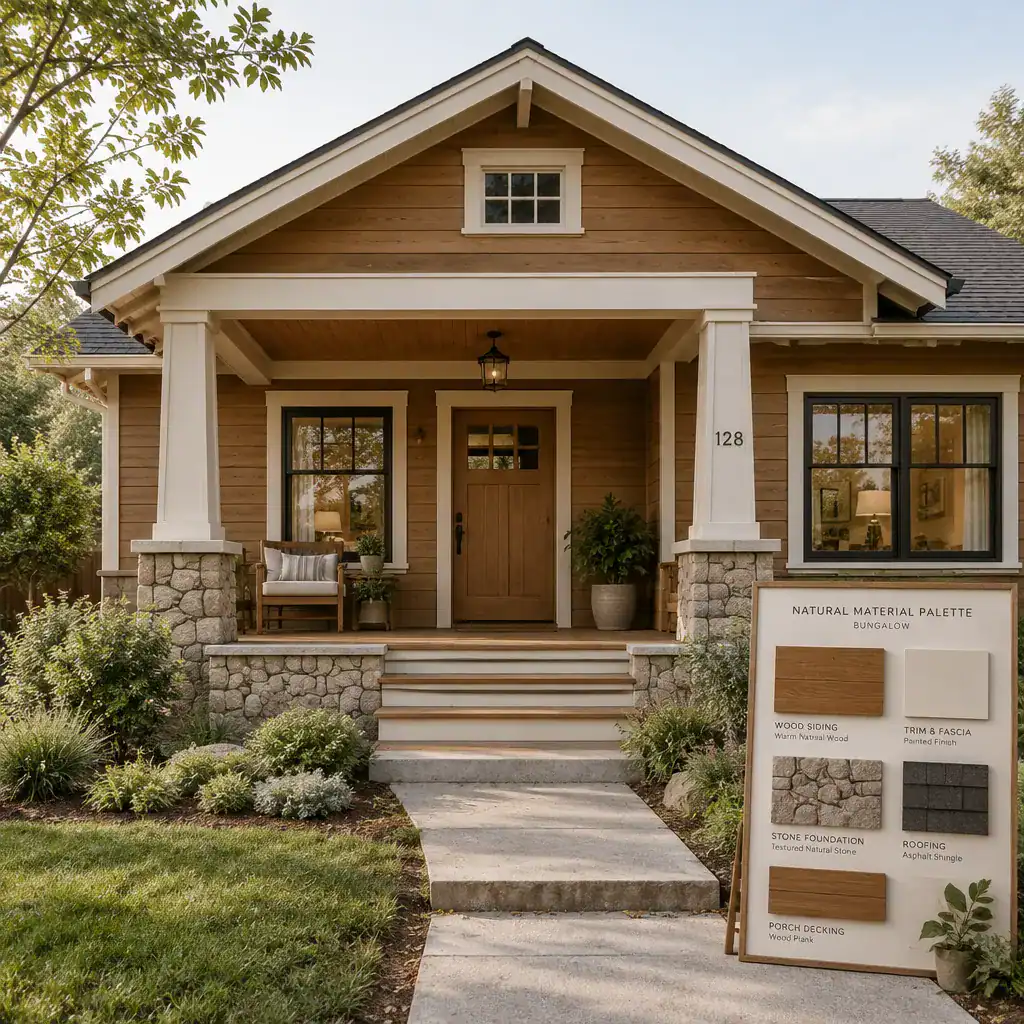
Create hierarchy by choosing one primary finish, one supporting finish, and only a few accents. For example, wood siding can lead the facade, stone can ground the foundation or porch piers, and painted trim can clarify edges around windows and eaves. This approach prevents every surface from competing for attention.
Balance smooth and textured materials rather than placing strong texture everywhere. A rough stone accent can sit comfortably beside smooth painted trim or refined timber boards, while heavily textured cladding, brick, and decorative tile used together may feel overly busy. View samples outdoors and indoors in daylight, shade, and artificial evening light before making a final decision, since undertones and texture often change with the setting.
Compare Natural Finish Options for Bungalow Exteriors
Exterior materials contribute different visual qualities. Wood siding and wood accents bring warmth and a handcrafted feeling; stone suggests visual weight and a strong base; brick introduces pattern and familiar permanence; clay-based finishes can add earthy color; and mineral-looking render offers a quieter, continuous surface. Each can support a bungalow’s character when used with restraint.
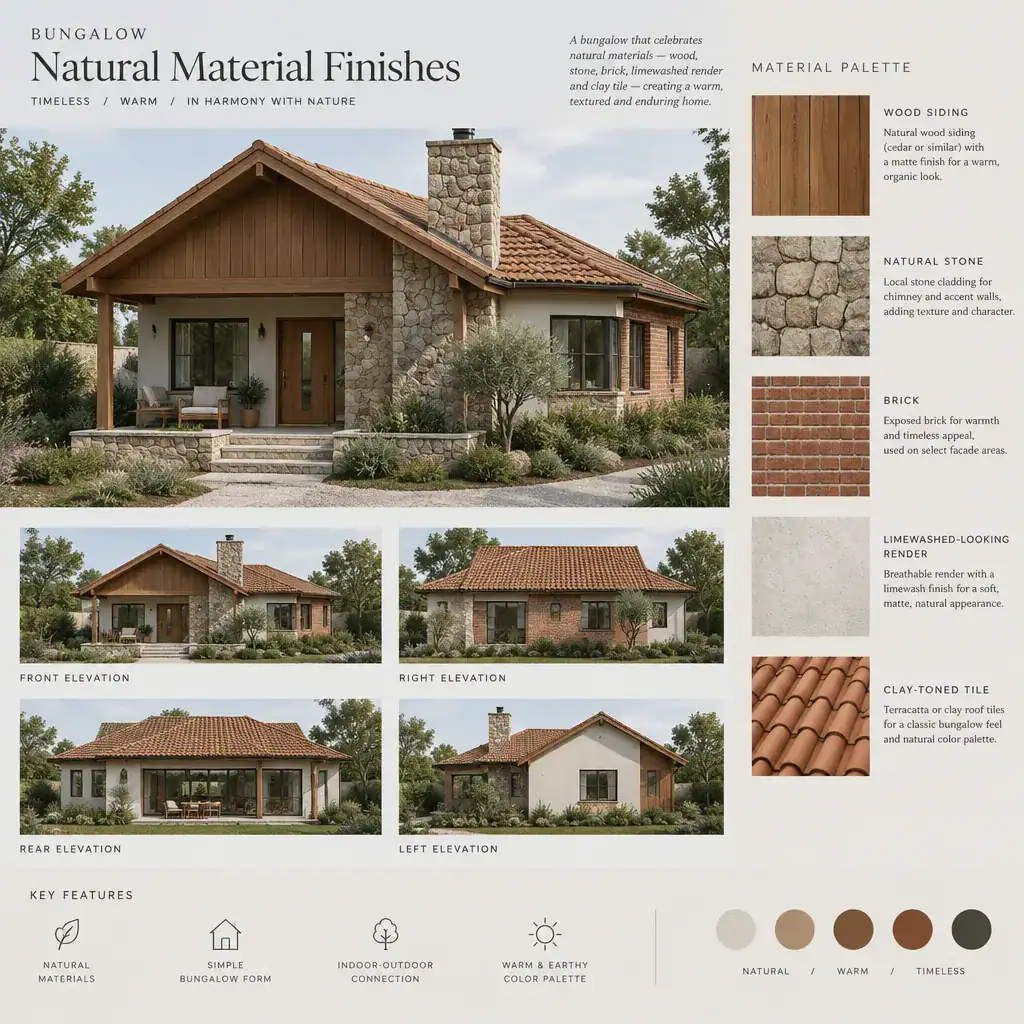
Wood can be considered for siding, gable details, porch ceilings, brackets, shutters, or an entry door surround. Stone often works as a foundation accent, chimney facing, porch pier treatment, pathway edge, or entry surround. Brick can define a low plinth, garden wall, path, or facade area, while clay-toned tile may suit steps, porch floors, or boundary-wall caps. Render can unify larger wall planes and allow timber or masonry details to stand out.
Before specifying any exterior finish, confirm local climate suitability, weather exposure, installation requirements, and expected maintenance with qualified professionals. Ask how a proposed finish relates to wall construction, drainage details, roof runoff, sun exposure, and the conditions around porches, paths, and retaining areas. bungalow natural material finishes are most successful when visual goals and location-specific requirements are considered together.
Bring Natural Finishes Into Bungalow Interiors
Interior finishes can continue the exterior palette without making every room look the same. Timber, natural stone, brick, ceramic tile, woven materials, and textured plaster can add warmth and depth to the rooms where bungalow living typically unfolds.
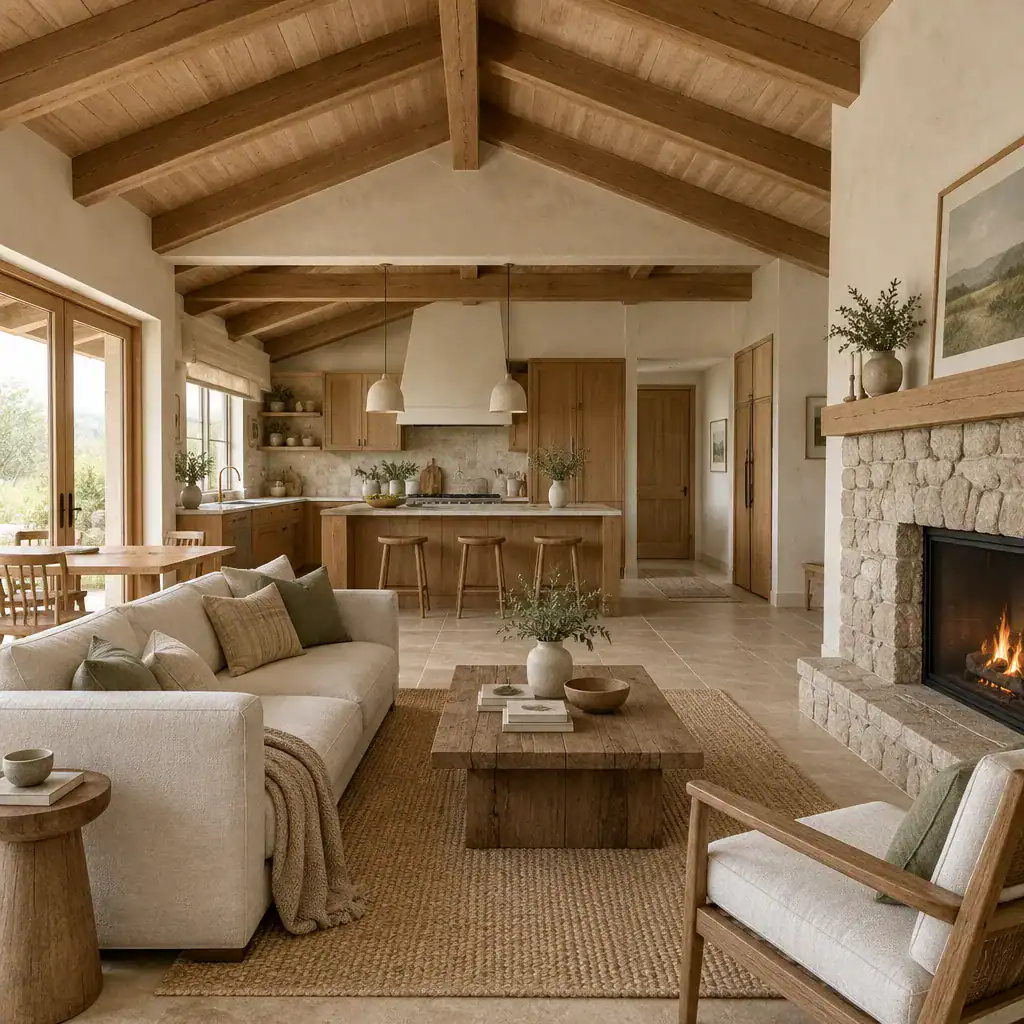
In an entryway, a timber bench, tiled threshold, or plaster-textured wall can establish the palette on arrival. A living room may use wood shelving, a stone or brick hearth surround, woven shades, or a subtle plaster feature wall. In the kitchen, warm wood cabinetry can pair with a ceramic tile backsplash, while a bathroom may use tile, stone-look details, and timber accents in locations appropriate for their care needs. Bedrooms can remain calm with timber trim, woven lighting, and softly textured wall finishes.
Repeat materials in smaller details to make rooms feel connected. The wood species or tone used at the porch ceiling might reappear in entry shelving or window trim. A stone tone from an exterior pier may guide the fireplace surround, and a clay-colored tile can return at a kitchen backsplash or threshold. Keep moisture-sensitive or high-maintenance materials in areas where their cleaning, sealing, and ongoing care can be realistically managed.
Combine Wood, Stone, Brick, and Plaster Without Losing Cohesion
Several natural-looking materials can work together when their differences are controlled by scale, texture, and color temperature. Warm-toned wood can soften muted gray or beige stone, red-brown brick can provide pattern against soft plaster, and a calm plaster field can give textured materials space to stand out.
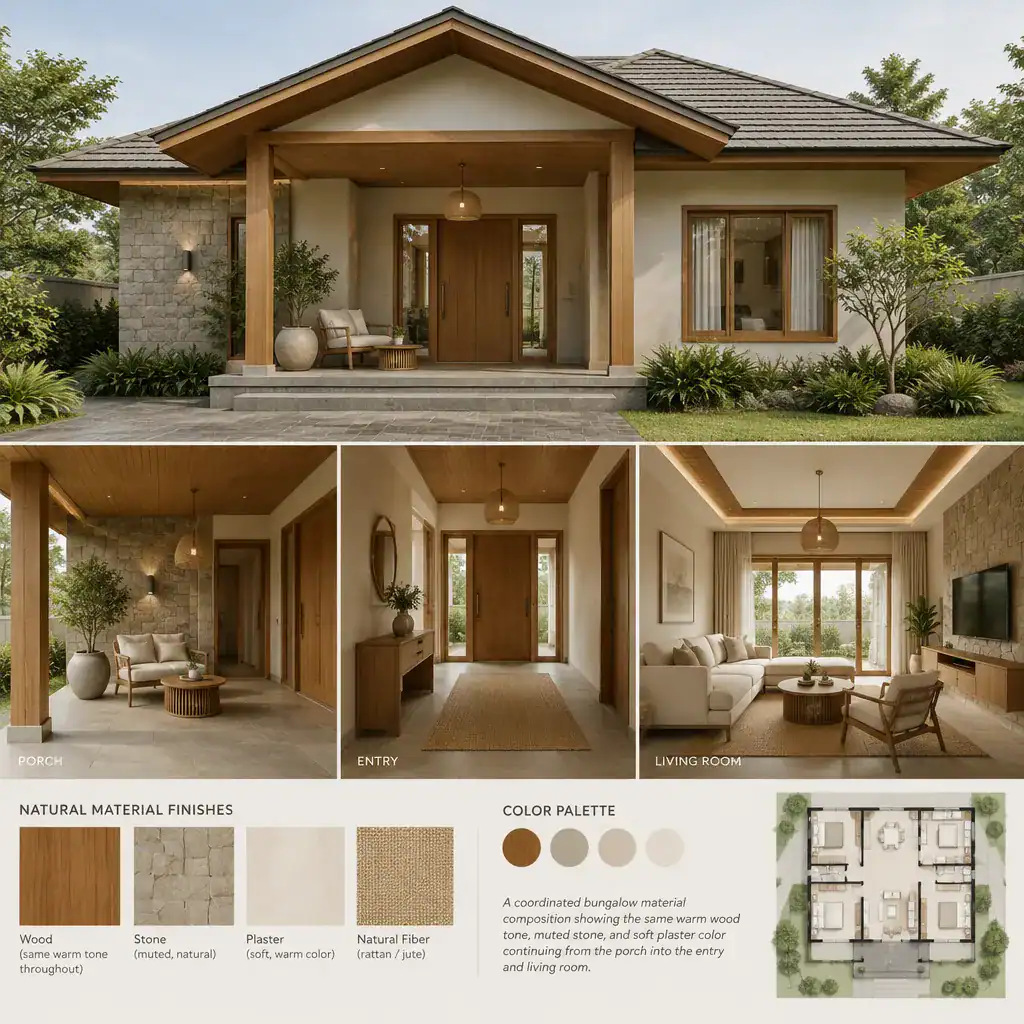
Repeat one material or color at transition points between exterior and interior. A warm wood front door, for instance, can relate to interior shelving or cabinetry. A muted stone tone at the porch can continue through an entry floor detail, while a soft plaster color can appear on both an exterior sheltered wall and an interior living-area wall.
Do not give every material equal visual weight. Let one finish lead, such as siding, plaster, or flooring, and let stone, brick, and wood details play supporting roles. Review the whole palette beside permanent elements that are difficult to change, including roofing, existing flooring, countertops, window frames, and doors. This wider view helps avoid combinations that look appealing on individual samples but conflict when assembled.
Evaluate Finish Choices Before Installation
Samples provide more useful information than a small online image. Compare pieces for color variation, texture, edge profiles, joint patterns, and surface reflectivity, then place them beside existing materials or planned selections. A finish that appears neutral in a showroom may read warmer, cooler, darker, or more textured at home.
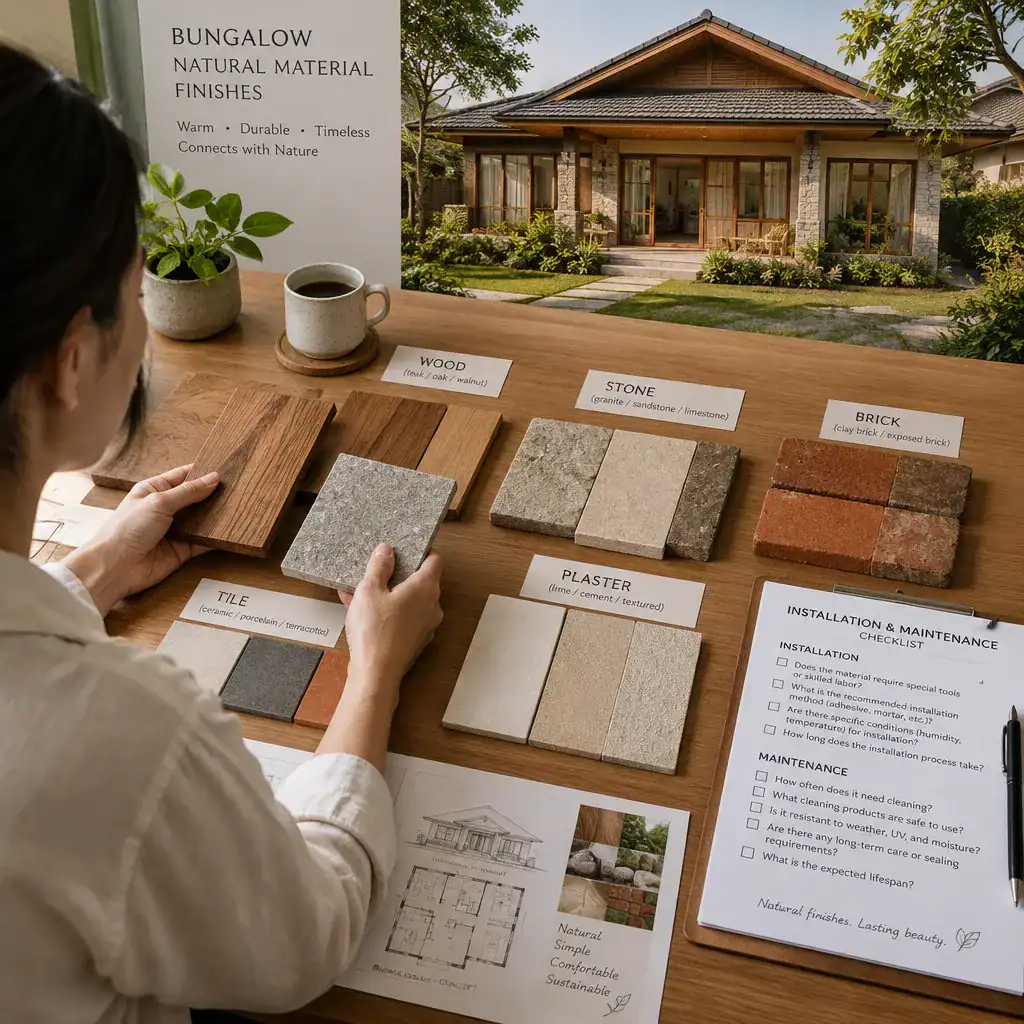
Ask suppliers or contractors how the material is sourced, installed, sealed, cleaned, repaired, and maintained. Request clarity about visible variation between batches, likely touch-up methods, and whether replacement pieces may be available later. These questions are particularly useful for bungalow natural material finishes that will be used across several connected areas.
Match the finish to its intended exposure. Consider rain and direct sun on exterior walls, moisture in bathrooms, foot traffic on floors and paths, heat around hearths, and contact with food or cleaning products in kitchens. Document the approved palette with product names, colors, supplier details, sample photos, and installation notes so later repairs or additions can remain consistent.
Natural Bungalow Finish Ideas by Design Direction
A warm rustic direction may combine medium-to-dark timber, irregular-looking stone, clay-toned brick, and textured plaster in softened earthy colors. A light and minimal palette can use pale wood, smooth mineral-looking walls, lightly colored stone, and simple trim profiles. Both directions can use related materials while producing very different impressions.
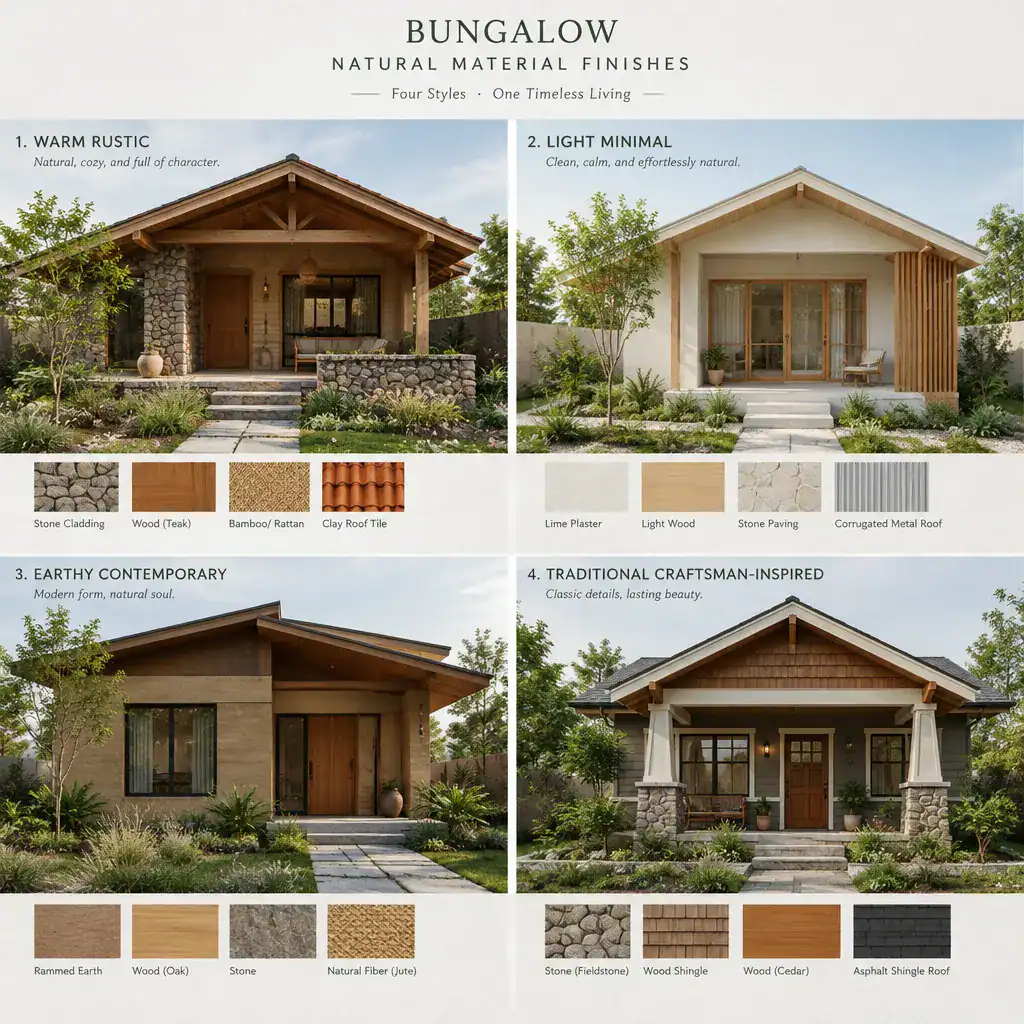
An earthy contemporary bungalow might pair streamlined wood cladding with large-format ceramic tile, restrained stone accents, and matte plaster. A traditional craftsman-inspired approach can emphasize visible porch details, warm wood trim, brick or stone bases, and more defined joint patterns. Color, brick or tile layout, trim depth, and surface texture all influence the final look as much as the material category itself.
Adapt each direction to the site, neighboring homes, existing structure, and your own preferences rather than treating a reference image as a fixed formula. Narrow the design to a manageable group of finishes before requesting detailed quotes. A clear shortlist makes it easier to compare options and assess whether bungalow natural material finishes suit the project scope and maintenance expectations.
Successful bungalow finishes depend on thoughtful coordination, appropriate application, and realistic maintenance planning. Test samples in the actual home environment, confirm technical suitability with qualified professionals, and keep records of final selections before installation. A limited palette of well-connected materials will usually create a more intentional, welcoming result than a larger collection of unrelated finishes.