
A well-planned bungalow garden facade treatment considers the house and its front garden as one composition, not as separate projects. The ideas in this guide can be adapted to different bungalow footprints, established materials, budgets, and maintenance preferences, from a light refresh to a more coordinated exterior update.
The front garden, facade, route to the door, and entrance all share the same first impression. Start by assessing the bungalow, then choose a visual direction, organize planting and circulation, and finally refine the materials and details. This sequence helps changes feel appropriate to the home’s character, sunlight, drainage, and everyday access needs.
Start by Reading the Bungalow’s Existing Facade
Before selecting plants or paving, study what is already working on the front elevation. Notice the roofline, porch shape, window placement, cladding or masonry, and location of the front door. These elements establish the visual rhythm that the garden should support rather than compete with.
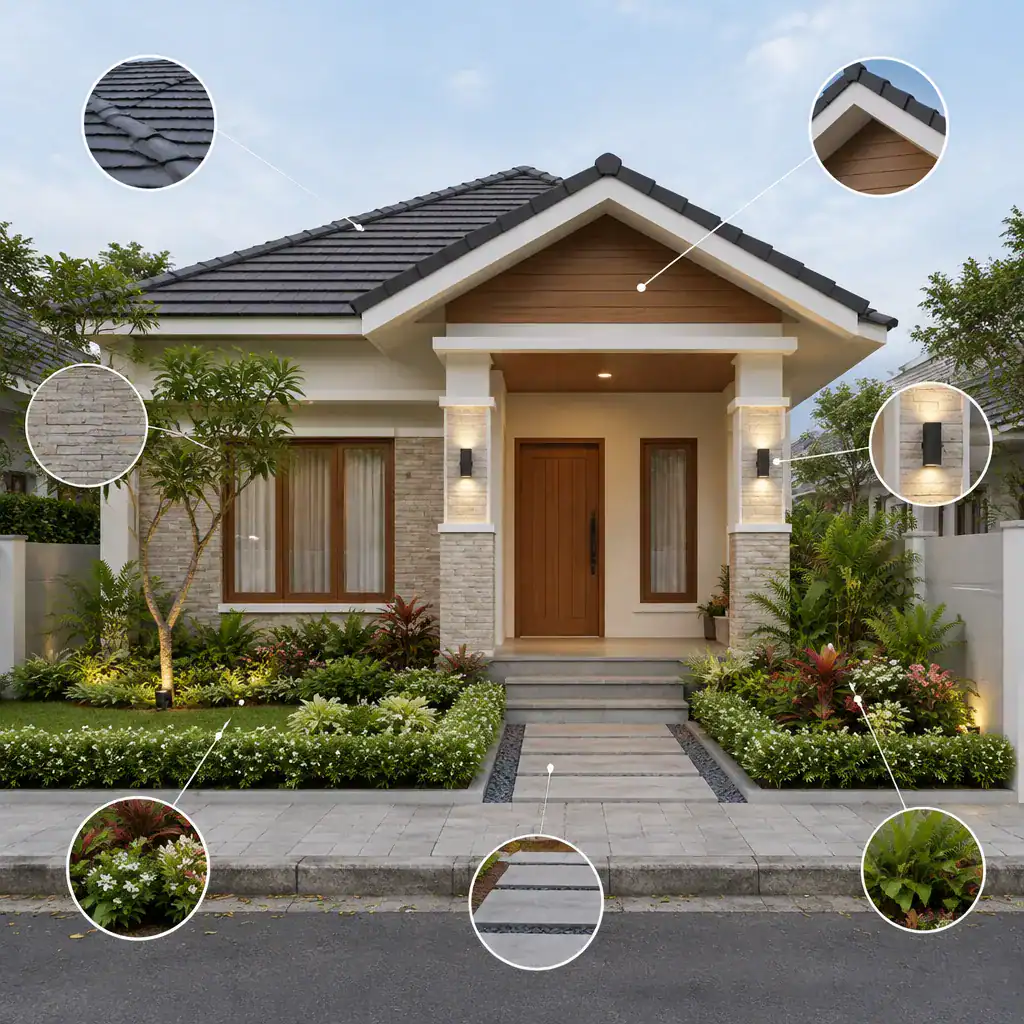
Use the existing palette as a starting point. Brick undertones, painted trim, roof color, timber details, and stonework can guide choices for path surfaces, bed edging, planters, and foliage tones. A warm brick bungalow, for example, may suit earthy gravel, weathered timber, and soft green planting, while a bungalow with crisp pale render may work well with cleaner paving lines and cooler foliage contrasts.
Proportion and site conditions matter as much as appearance. Check the views from the street and from key windows, the direction of sun, areas where water collects, the width of access routes, and how visitors approach the front door. Keep architectural details worth preserving, such as distinctive masonry, a solid porch structure, or original window proportions. Features that feel tired, including peeling paint, mismatched hardware, or damaged edging, may benefit from a restrained refresh before decorative work begins.
Choose a Coordinated Garden and Facade Design Direction
A clear design direction prevents a front exterior from becoming a collection of unrelated ideas. A restrained cottage-inspired approach can pair softened edges, flowering layers, and natural materials with a traditional bungalow. A clean contemporary approach uses simpler planting masses, repeated forms, and uncluttered hardscape. A natural low-maintenance approach can emphasize durable planting, looser texture, and materials that weather quietly.
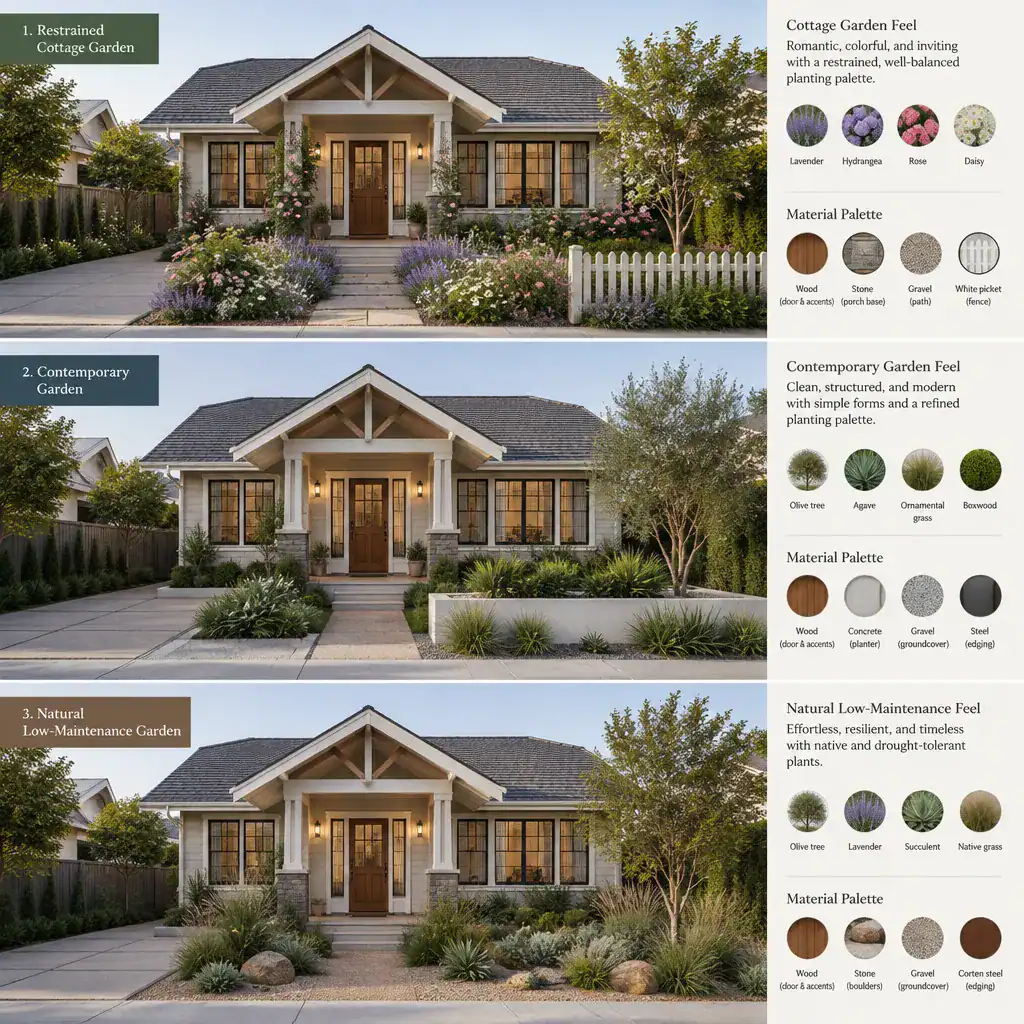
Match the garden’s formality to the architecture. A compact bungalow with traditional porch details may look more convincing with gentle curves and informal planting than with severe geometric beds. Conversely, a bungalow with broad horizontal lines and minimal trim can often carry a more ordered path and a limited, structured plant palette. The goal is not to copy a style exactly, but to choose one that makes the existing facade feel more intentional.
Create a small palette before buying materials. Combine a few related facade colors, one or two hardscape finishes, contrasting but compatible foliage textures, and a controlled accent color. Repeat a selected shape, color, or material across the path, porch, planters, and planting beds. This repetition gives a bungalow garden facade treatment a sense of continuity without making every surface identical.
Organize Planting, Pathways, and Entry Visibility
Planting should frame the bungalow and guide attention toward the entrance, not conceal the elevation. Build layers with low plants at the edge, medium-height shrubs below windows, and taller forms placed where they will not block the door, porch, or important facade features. This arrangement creates depth while keeping the home readable from the street.
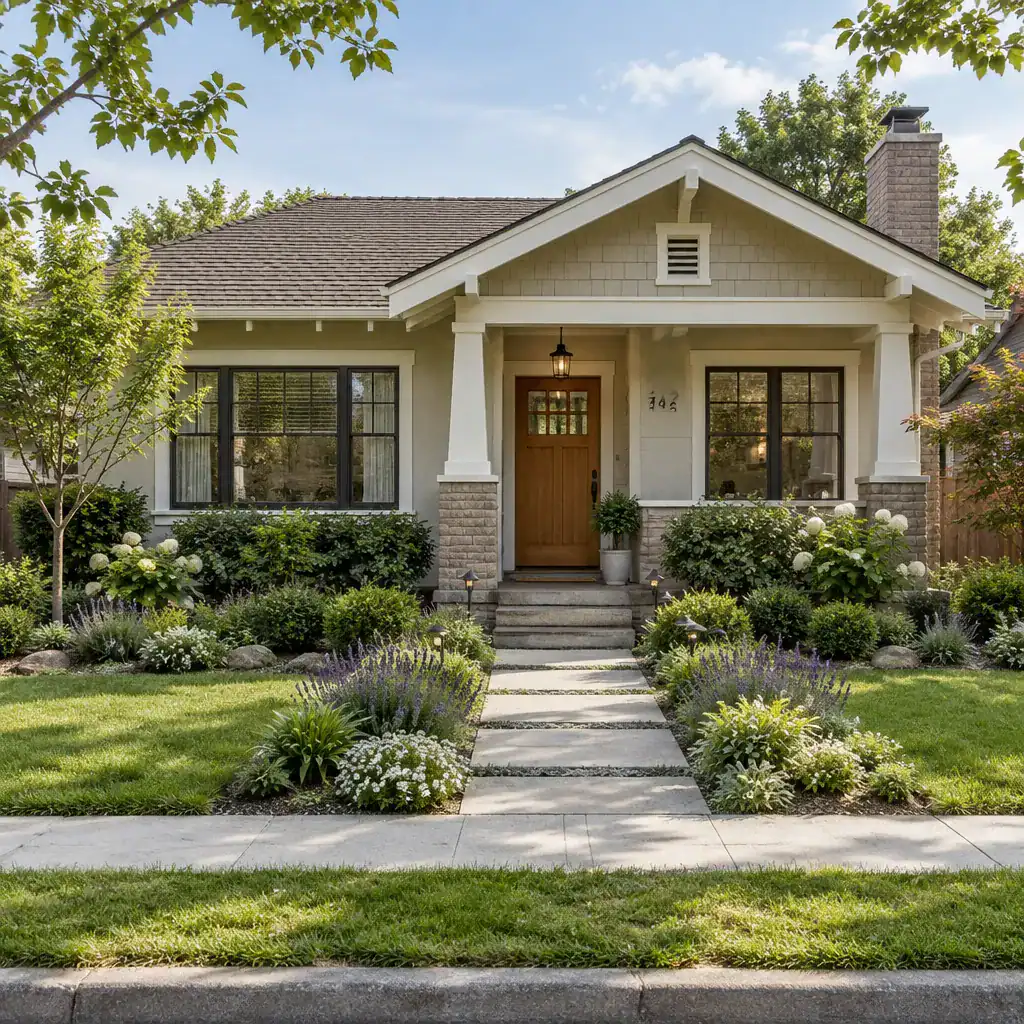
The route to the front door should be immediately understandable from the street or driveway. A path does not need elaborate decoration, but its surface, edging, and alignment should make movement comfortable and clear. Use a modest shift in plant height, texture, or density near the entry to create a focal point, while leaving sufficient open space for people, deliveries, and routine maintenance.
Select plants for the actual site rather than for a photograph. Consider local climate, seasonal sun, soil type, drainage, expected mature size, and the amount of pruning or watering you can realistically provide. A limited group of plants repeated in appropriate places is often easier to maintain and more calming than many individual varieties. In a successful bungalow garden facade treatment, the planting supports the scale of the house through every season.
Refine the Facade with Materials, Color, and Lighting
Porch surfaces, paving, edging, planters, and facade finishes should look related, even when they are not exact matches. For example, a charcoal path edge can echo a dark roof or window frame, while a timber planter can pick up the warmth of a porch beam. Choose materials with compatible color temperature and texture so the house and garden read as one exterior scheme.
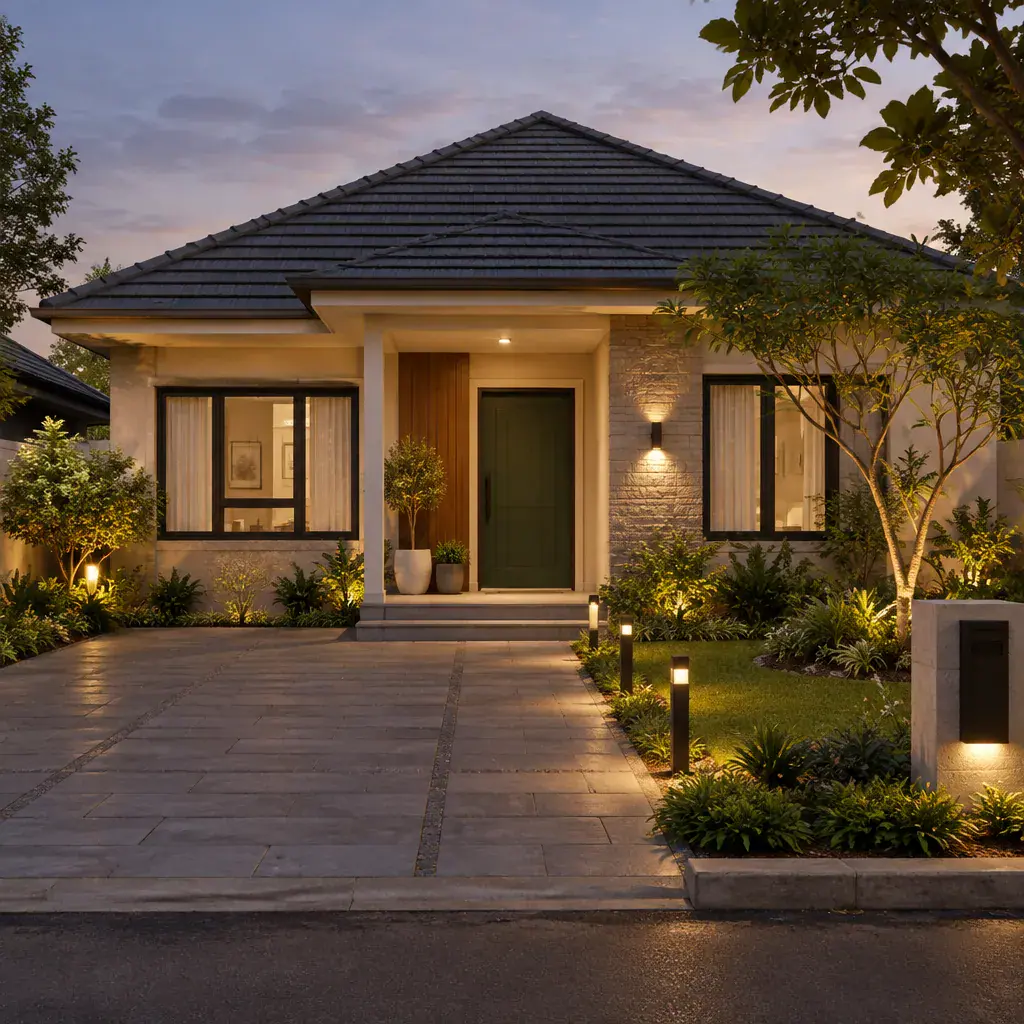
Use the front door as a controlled accent rather than introducing many competing colors. A deeper or brighter door color can provide identity, especially when it is echoed subtly in a planter, house number, or porch accessory. Keep surrounding trim and garden colors quieter so the entrance remains the main point of focus.
Lighting should first help people move safely and recognize the entry. Low-glare path lights, a well-positioned porch fixture, and gentle illumination near a change in level are usually more useful than dramatic effects. In the evening, lighting can reveal a masonry texture, a porch post, or a carefully shaped plant, but avoid over-lighting every feature. Daytime relies more on color and texture, while evening design depends on contrast, shadow, and a clear focal point.
Keep the Treatment Practical and Visually Balanced
Review the maintenance requirements before committing to the final layout. Consider how often planting needs pruning, whether paving can be cleaned easily, how painted finishes will weather, where drainage must remain clear, and how exterior lighting can be accessed for replacement or repair. A practical plan protects the appearance of the front exterior over time.
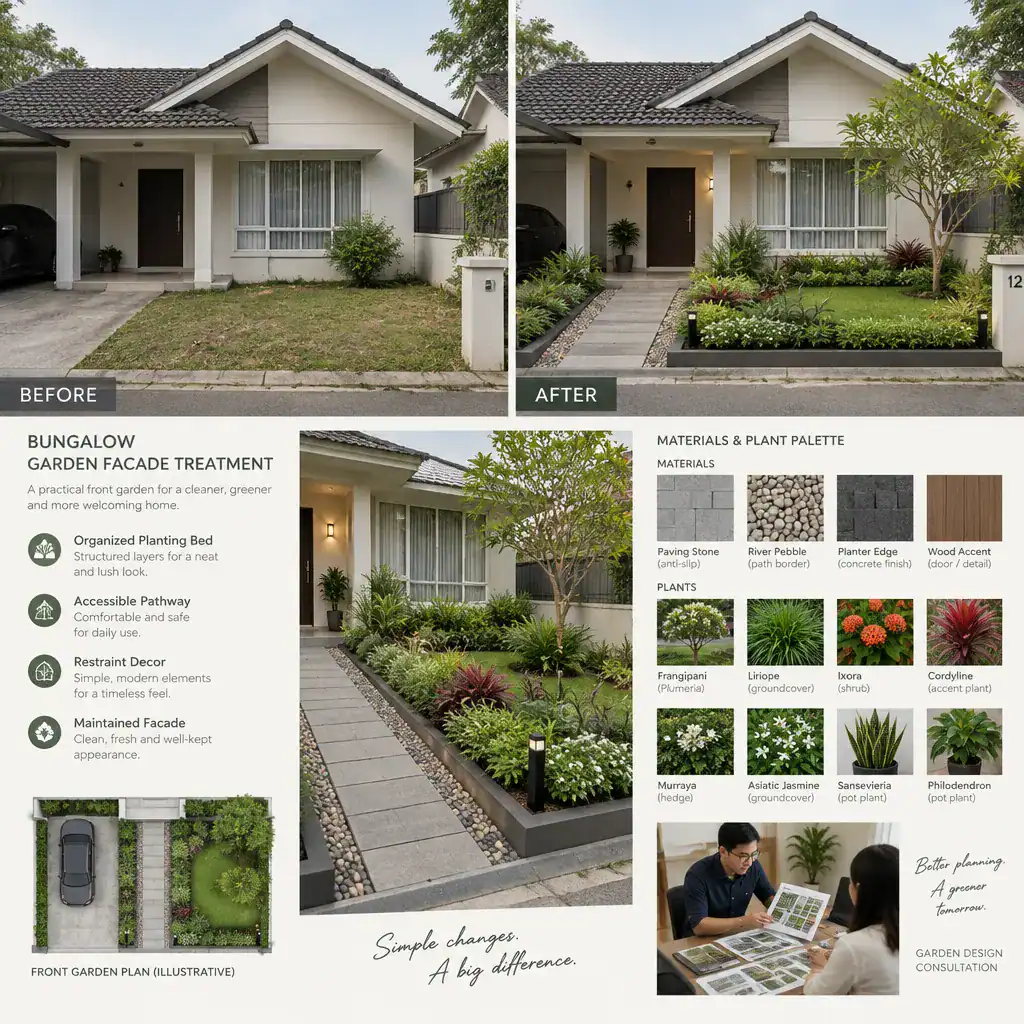
Avoid crowding the facade with excessive plant varieties, ornaments, colors, or containers. Too many focal points can make a single-storey elevation feel smaller and obscure the route to the door. Leave visual breathing room around windows, porch steps, and pathways, and let a few well-chosen elements carry the design.
When several updates are needed, work in phases. Address access, drainage, damaged surfaces, and essential facade repairs first. Then establish the path and bed structure before adding planting, planters, lighting, and decorative details. Test paint samples against the exterior in changing daylight, lay out temporary path lines, and position containers before purchasing permanent materials. This measured process makes the bungalow garden facade treatment easier to adjust and less likely to feel disconnected.
A successful bungalow garden facade treatment connects architecture, planting, circulation, materials, and lighting into one welcoming front elevation. Assess the existing facade, choose a compatible direction, organize the garden and entry route, refine the visual details, and review long-term maintenance. By adapting every decision to the bungalow’s established character and local growing conditions, homeowners can create an exterior that feels balanced, useful, and genuinely at home on its site.