
A well-planned shared garden can strengthen the low-rise, neighborly character of a bungalow court while giving residents a pleasant place to pause, meet, and spend time outdoors. The best approach is adaptable: the right arrangement will depend on the site’s dimensions, local climate, available budget, accessibility requirements, and planting conditions.
A bungalow court communal garden can serve as both a visual focal point and an everyday gathering place, rather than leftover open space between homes. Planning should consider how people move through the court, which activities they share, where privacy is needed, how planting performs, and who will maintain the space over time.
Start With the Bungalow Court’s Shared Garden Goals
Begin by deciding what the garden should do for its residents. It may support informal socializing, quiet relaxation, ornamental planting, edible gardening, or a balanced mix of these uses. A clear purpose helps prevent a design from becoming crowded with features that compete for space or create conflicting expectations.
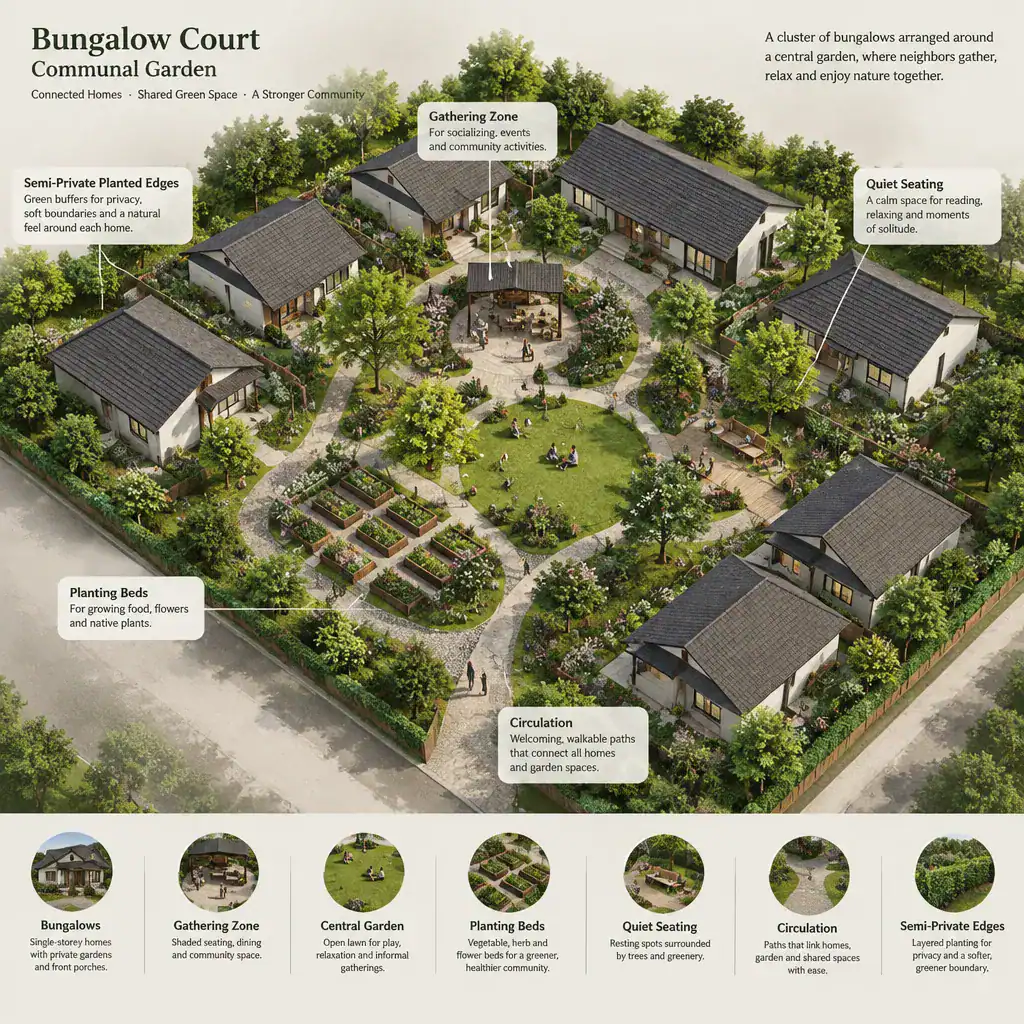
Gather input before drawing a layout. Consider resident preferences, the needs of children or pets, areas of sun and shade, drainage concerns, and landscape features already worth retaining. This early review can reveal whether a seating area needs shade, whether wet areas need a planting-led solution, or whether an existing tree should become a central feature.
It is also useful to distinguish truly communal areas from semi-private edges near each home. Shared amenities should be easy to reach and clearly welcoming, while planted buffers and thoughtful spacing can help residents retain a comfortable sense of personal territory at their doors and windows.
Plan a Clear and Inclusive Garden Layout
A successful bungalow court communal garden is organized around intuitive movement. Create a circulation route that connects bungalow entrances with seating, planting areas, and other shared features, so people can move naturally without crossing through spaces that feel reserved for another resident.
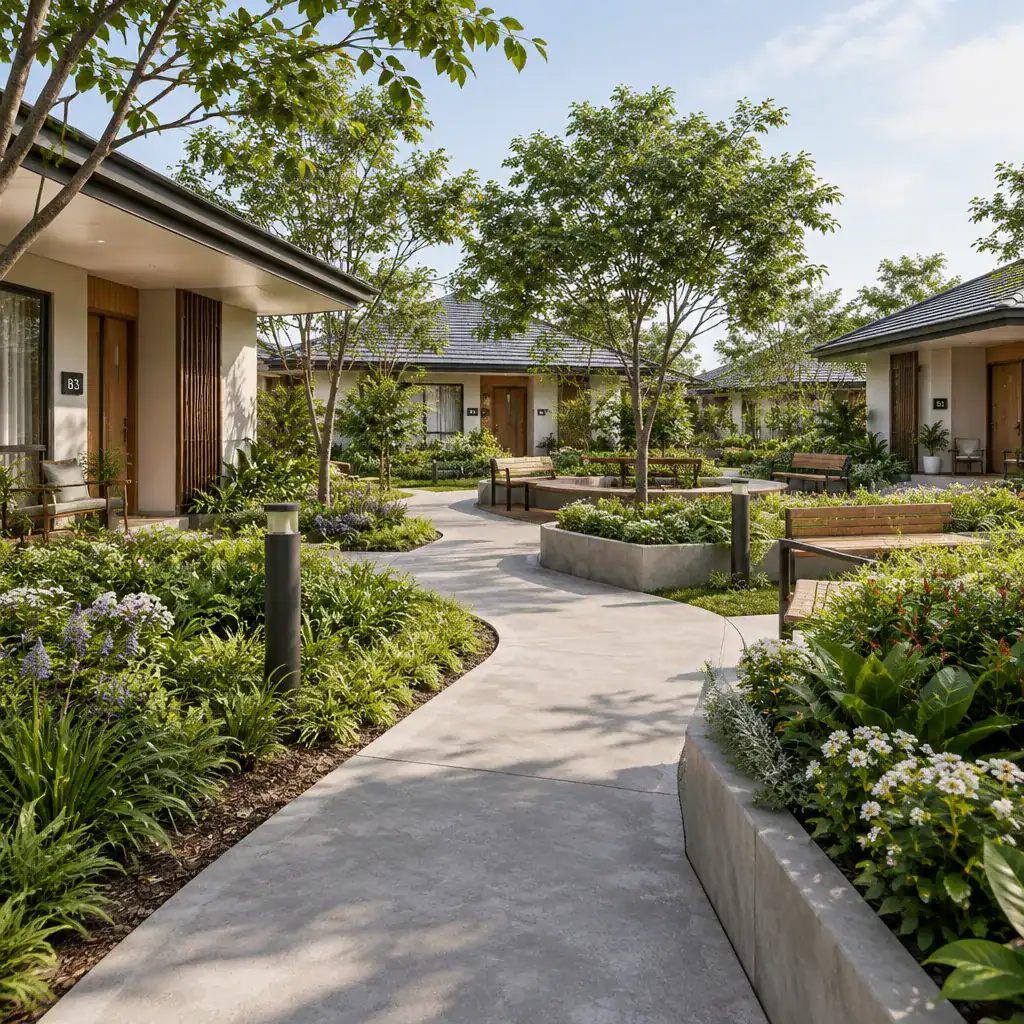
Keep routes visually open and physically clear. Stable surfaces, continuous connections, reduced trip hazards, and convenient resting points make the garden more welcoming to residents and visitors with different mobility levels. Paths should support access without dominating the landscape or turning every open area into pavement.
Use one or two focal points to give the court a recognizable center. A shade tree, a central planted bed, a seating group, or a modest courtyard feature can provide this identity. Position focal elements so they are visible from key routes while still allowing clear sightlines to entrances and shared spaces.
Combine Social Spaces With Quiet Retreats
Provide a central seating area where residents can talk, enjoy casual meals, or hold small activities, but avoid treating the entire garden as one active room. A defined social zone gives community use a natural home and leaves other parts of the landscape calmer.
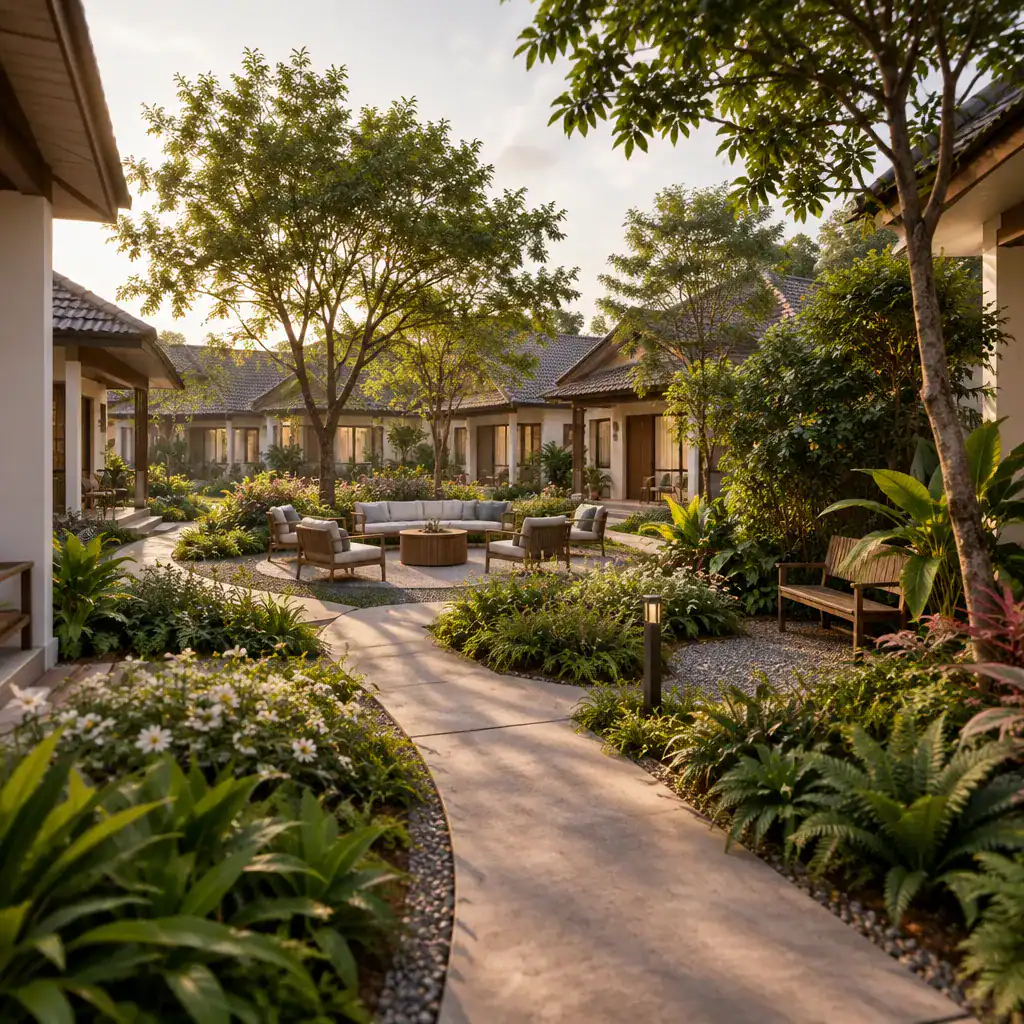
Balance this shared center with smaller seating niches along planted edges. A bench facing a garden border, for example, can support reading, reflection, or a conversation between two people. These retreats are especially valuable when residents have different schedules and different preferences for activity.
Choose furniture arrangements that can accommodate changing group sizes and preserve room to pass around them. Planting, low screens, trellises, or a shift in garden character can define each zone without creating concealed corners. Maintaining reasonable visibility supports both comfort and everyday safety.
Use Planting to Add Character, Shade, and Privacy
Layered planting gives a bungalow court communal garden depth, seasonal interest, and a softer relationship between buildings and shared outdoor areas. Combine trees or taller structural elements, shrubs, perennials, groundcover, and seasonal accents where they suit local growing conditions.
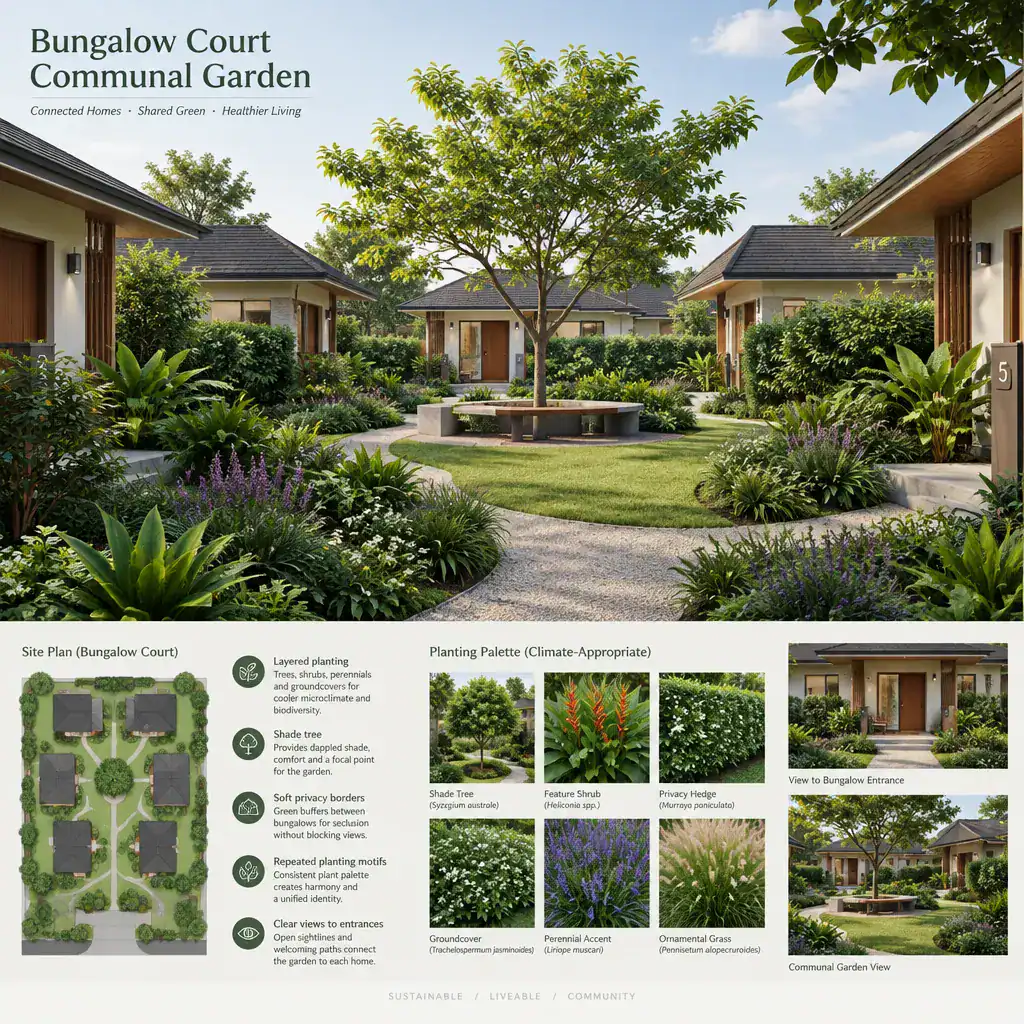
Place taller planting with care. It can soften views between homes and shared gathering areas, yet it should not block entrances, important sightlines, or useful natural light. Planting near windows and paths works best when it provides a buffer without making residents feel enclosed.
Choose plants based on the local climate, site exposure, soil conditions, and the community’s realistic capacity for watering and care. Rather than relying on a universal plant list, repeat a restrained selection of forms, textures, or colors across the court. This creates visual connection among multiple bungalow entrances while keeping maintenance and replacements easier to manage.
Select Shared Features That Are Practical to Maintain
Shared features should make daily use easier, not add avoidable chores. Durable seating, shaded resting areas, well-considered waste and recycling locations, modest lighting, irrigation access, and secure storage for communal gardening tools can all support a functional garden.
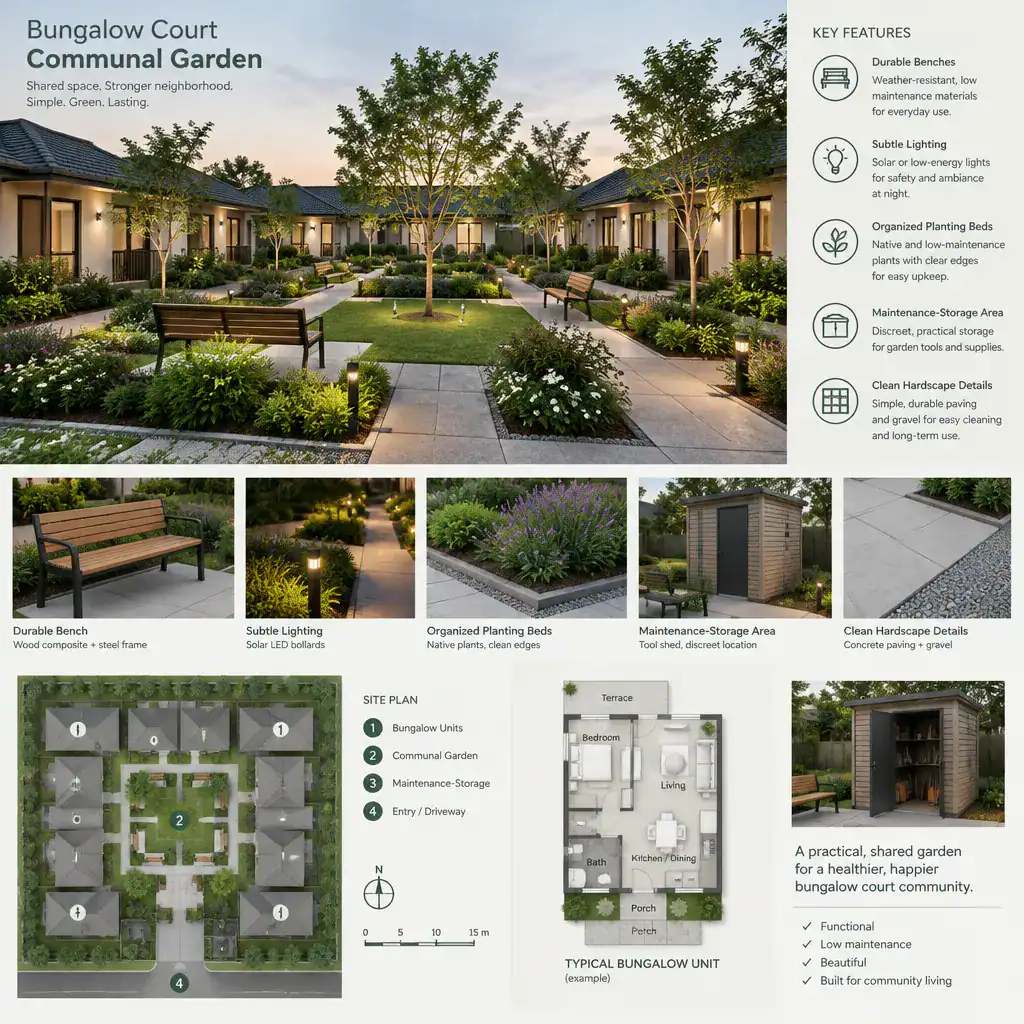
Coordinate furniture and hardscape finishes with the architecture of the bungalows, while also considering weather exposure, cleaning, repairs, and eventual replacement. Materials that look appropriate on installation day may be less suitable if they require specialized care or are difficult to renew in small sections.
Agree on a realistic maintenance approach before adding extensive beds or decorative elements. Watering, pruning, leaf collection, weed control, furniture care, and the sharing of responsibilities all need a clear plan. Avoid features that appear attractive but leave ownership unclear, demand excessive upkeep, or trigger conflicts between resident uses.
Protect Comfort, Privacy, and Everyday Community Use
Comfort depends on how the garden works across the day and throughout the year. Shade, seating orientation, planting, and appropriately placed lighting can make a bungalow court communal garden feel inviting without directing glare or activity toward nearby homes.
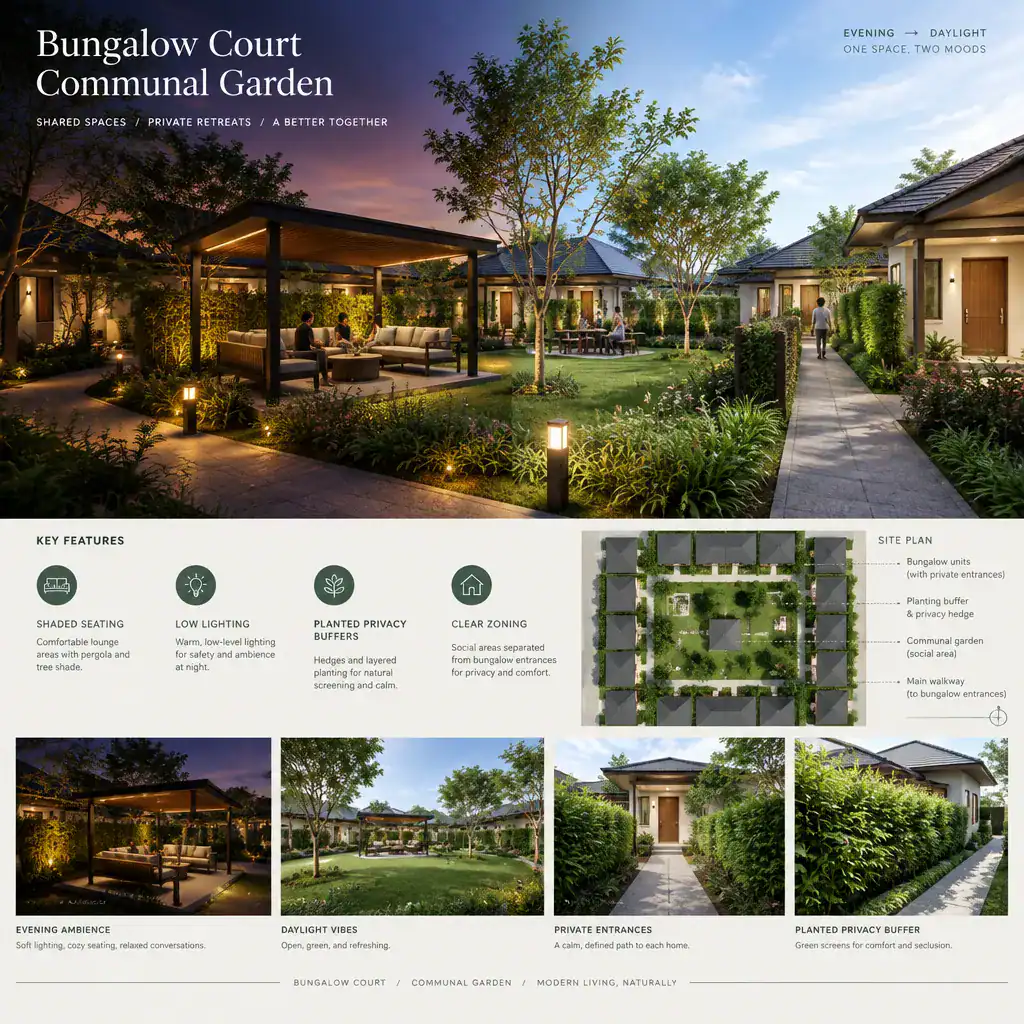
Review the likely effects of noise, evening gatherings, views into homes, and the distance between social areas and bungalow entrances. Planted buffers and careful seating placement can preserve privacy, while low, purposeful lighting can support safe movement without overwhelming the setting.
Simple shared-use guidelines help the garden remain pleasant for everyone. Residents may wish to agree on reservations for group use, gardening tasks, furniture placement, pet expectations, and respectful quiet periods. Discuss proposed changes with residents and confirm applicable local requirements before adding structures, lighting, drainage alterations, or permanent landscaping.
The strongest bungalow court communal gardens balance shared activity with privacy, accessibility, visual identity, and manageable maintenance. Start with resident needs and site conditions before choosing plants, furniture, or decorative details. Then follow a practical sequence: define goals, map circulation, zone activities, structure planting, select durable features, and agree on long-term upkeep.