
A traditional farmhouse interior is built around warmth, simplicity, and the quiet practicality of rooms meant to be used every day. These traditional farmhouse interior ideas can be adapted to a compact cottage, a renovated rural house, or a newer home that needs more character. The goal is not to recreate a museum-like past, but to create spaces that feel welcoming, useful, and settled over time.
Traditional farmhouse decorating relies on natural materials, functional layouts, comfortable furnishings, and understated details. It should feel collected rather than themed, with a balance of honest wood, soft textiles, useful storage, and a few personal objects. The following room-by-room approach covers the foundational palette, material choices, furniture, lighting, and styling principles that help the whole home feel connected.
Build the Traditional Farmhouse Foundation with Color and Materials
Start with a restrained palette that gives the home a calm, unified backdrop. Warm whites, cream, oatmeal, taupe, soft gray, faded green, muted blue, and earthy brown work well together. Use darker accents sparingly through charcoal hardware, deep wood tones, blackened metal, or a single painted furniture piece, so the rooms retain depth without losing their softness.
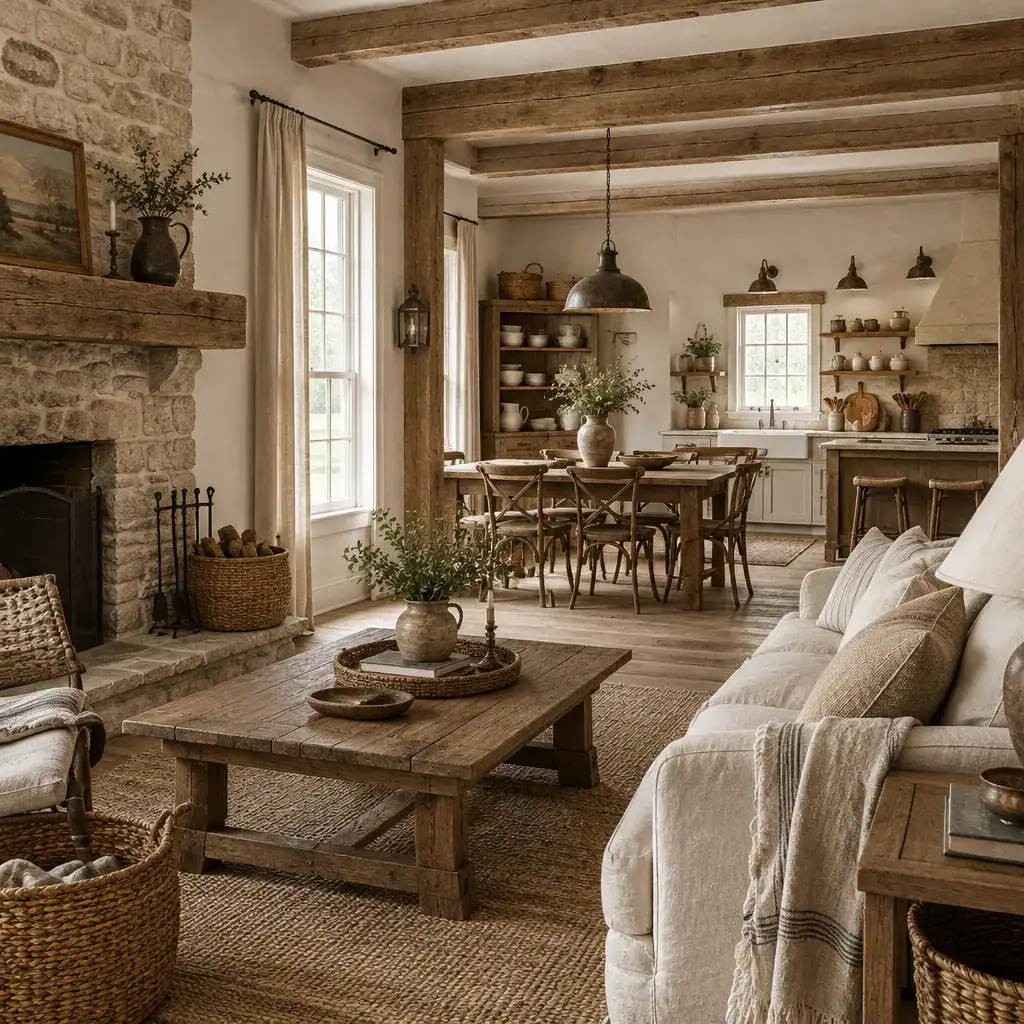
Choose materials that look and feel natural: wood with visible grain, stone, linen, cotton, wool, woven fibers, and aged metal. A painted wall can sit comfortably beside a timber table, while a stone hearth or ceramic vessel adds another grounded texture. Balance characterful finishes with clean, well-kept surfaces. A worn tabletop or antique chest can add history, but peeling paint, excessive distressing, and too many rough finishes may make a room appear neglected rather than authentic.
Repeat a small selection of colors and materials throughout the home. For example, carry warm white walls, medium-toned wood, linen curtains, and dark metal details from the living room into the kitchen and bedrooms. This limited vocabulary is one of the most effective traditional farmhouse interior ideas because it creates connection without requiring identical furniture in every room.
Create a Welcoming Traditional Farmhouse Living Room
Make the living room a place for conversation and rest by beginning with comfortable, durable seating. A linen-look sofa, cotton slipcovered chairs, or upholstered pieces in warm neutral shades provide an easy foundation. Arrange seating to face one another where possible, rather than placing every piece against a wall, and leave clear paths for everyday movement.
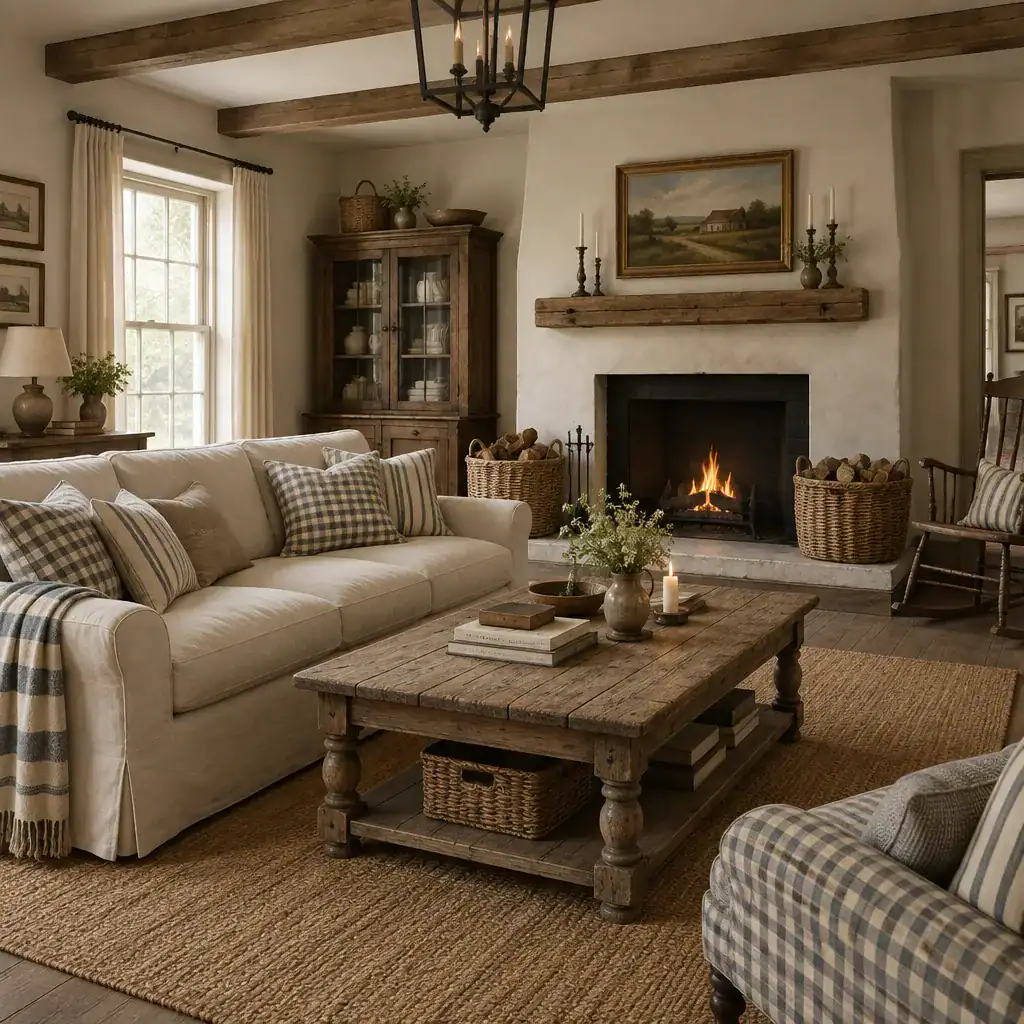
Ground the arrangement with a solid wood coffee table, then add useful side furniture such as a small chest, painted side table, or simple bench. Woven baskets can hold throws, books, or children’s items, while a wool rug and layered cushions bring in softness. Checks, narrow stripes, and subtle botanical patterns add interest when used in a limited mix of colors.
If the room has a fireplace, built-in shelving, exposed beams, or a simple paneled wall, let that feature lead the composition. Keep mantel and shelf displays selective, using a few books, pottery pieces, framed art, or a small plant instead of filling every surface. Among practical traditional farmhouse interior ideas, mixing one or two vintage-inspired pieces with reliable newer furniture keeps the room comfortable and lived-in rather than staged as a period display.
Design a Functional Traditional Farmhouse Kitchen and Dining Area
A farmhouse kitchen should support real cooking, storage, and gathering. Practical painted cabinetry, open shelves, or glass-front cupboards can display everyday dishes while keeping them within reach. Wood counters or wood accents, durable stone-look work surfaces, and uncomplicated metal hardware introduce warmth without sacrificing easy maintenance.
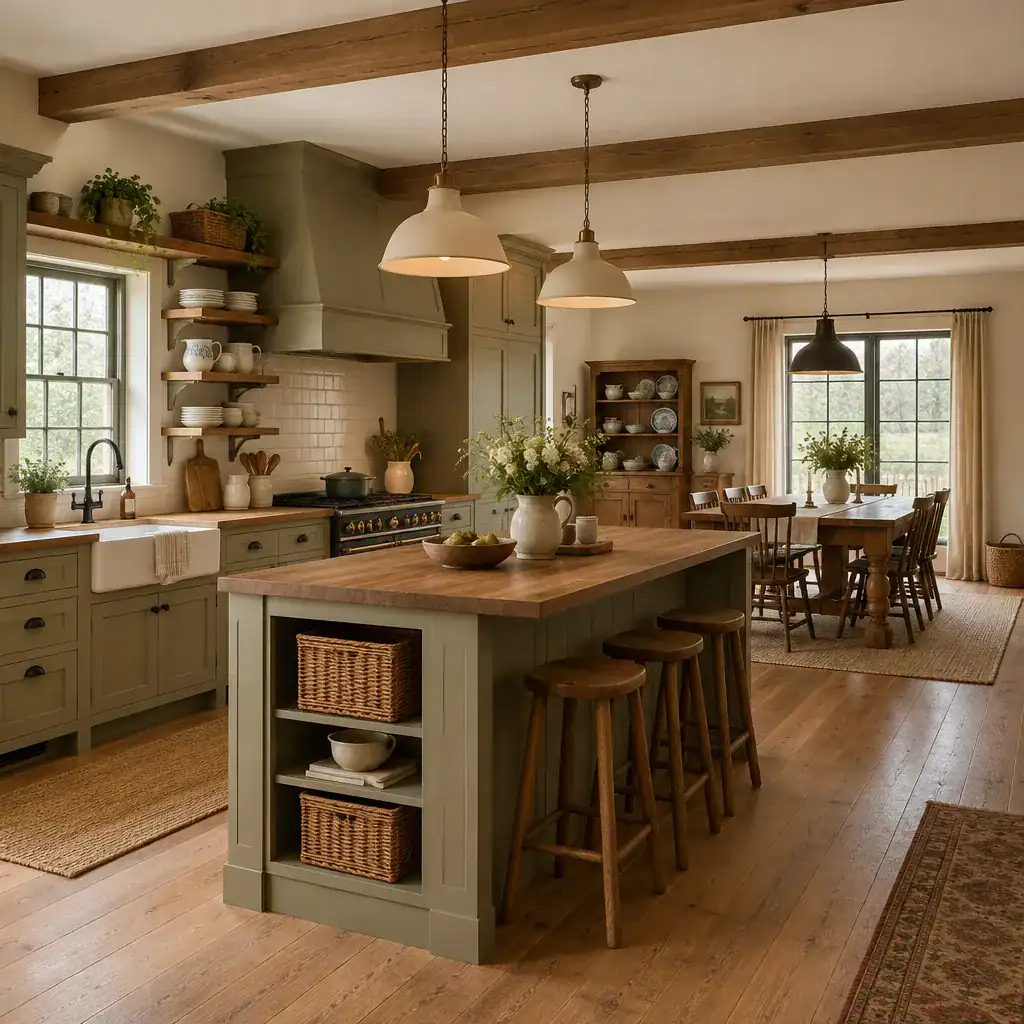
Where it suits the architecture and budget, details such as an apron-front sink, beadboard, simple paneling, or a wood shelf can add character. Avoid treating every wall as a display area. Keep counters mostly open, and limit shelves to useful ceramics, a few cutting boards, frequently used cookware, and baskets that conceal smaller supplies. Visual order allows the materials to stand out.
Connect the kitchen and dining area with a substantial wood table that can handle daily meals, homework, and guests. Pair it with chairs that are comfortable enough for long meals, whether matching wood chairs, a bench on one side, or a modest combination of both. A simple pendant, lantern-style fixture, or shaded light over the table reinforces the warm gathering atmosphere and ties the two spaces together.
Add Traditional Farmhouse Character to Bedrooms and Entryways
Bedrooms benefit from a quieter version of the farmhouse palette. Use a simple wood or painted bed, a practical dresser, and breathable bedding in cotton, linen, or washed quilted layers. Soft neutral sheets with a coverlet, blanket, and a few pillows create comfort without making the bed overly ornate.
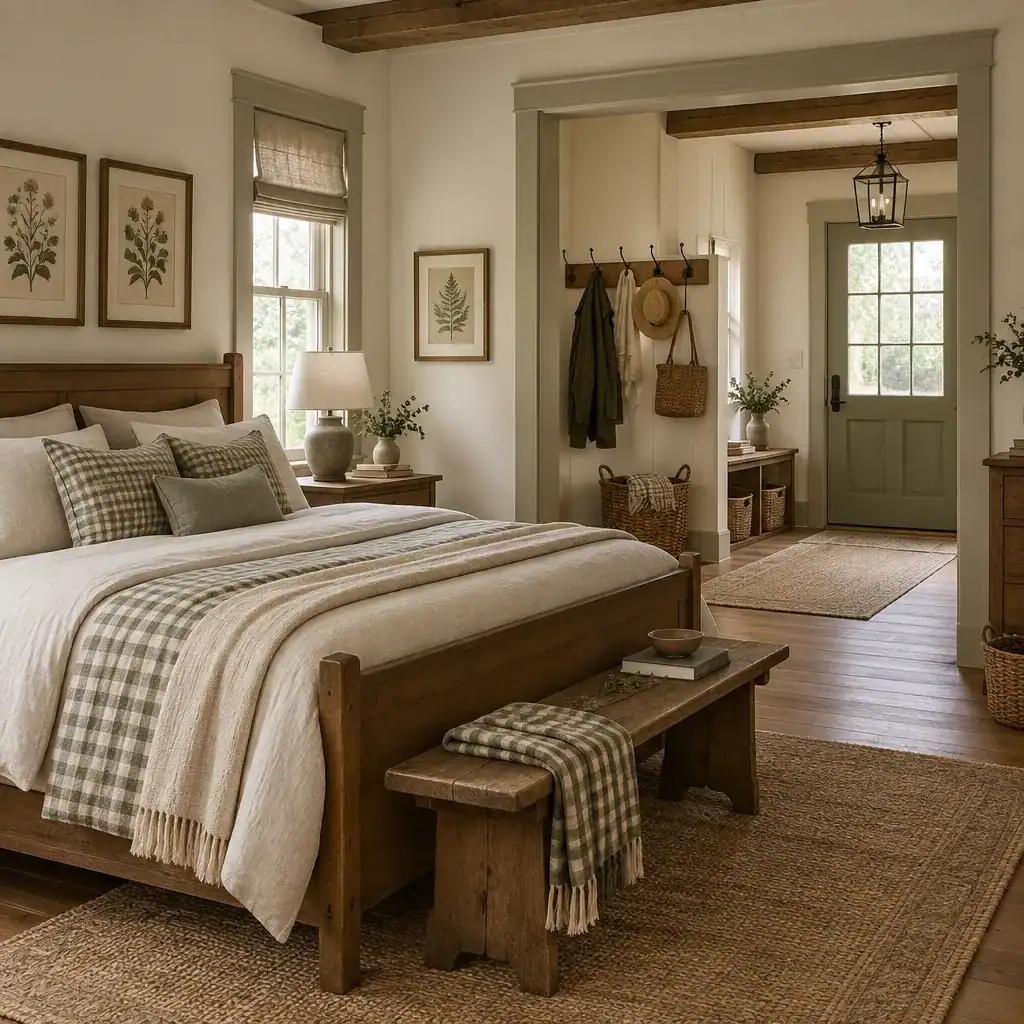
Patterns should be modest and coordinated. Ticking-inspired stripes, small checks, subtle florals, and narrow bands of color are all suitable, but use only a few at once so the room remains restful. Framed botanical prints, quiet landscapes, or heritage-inspired artwork can bring personality to the walls without turning the space into a decorative theme.
In the entryway, emphasize the working character of the style. A wooden bench, wall hooks, a shallow cabinet, and baskets for shoes, scarves, or pet supplies make arrival and departure easier. Choose durable flooring and surfaces that tolerate daily wear. These practical details make the entry feel welcoming while supporting the calm, useful atmosphere found elsewhere in the home.
Choose Lighting, Furniture, and Accessories Without Overdecorating
Choose lighting with uncomplicated silhouettes and finishes that relate to the room’s natural materials. Aged brass, matte black, bronze, weathered iron, and painted metal can work well in pendants, sconces, table lamps, and ceiling fixtures. Warm bulbs and layered lighting make wood, textiles, and neutral paint colors feel more inviting in the evening.
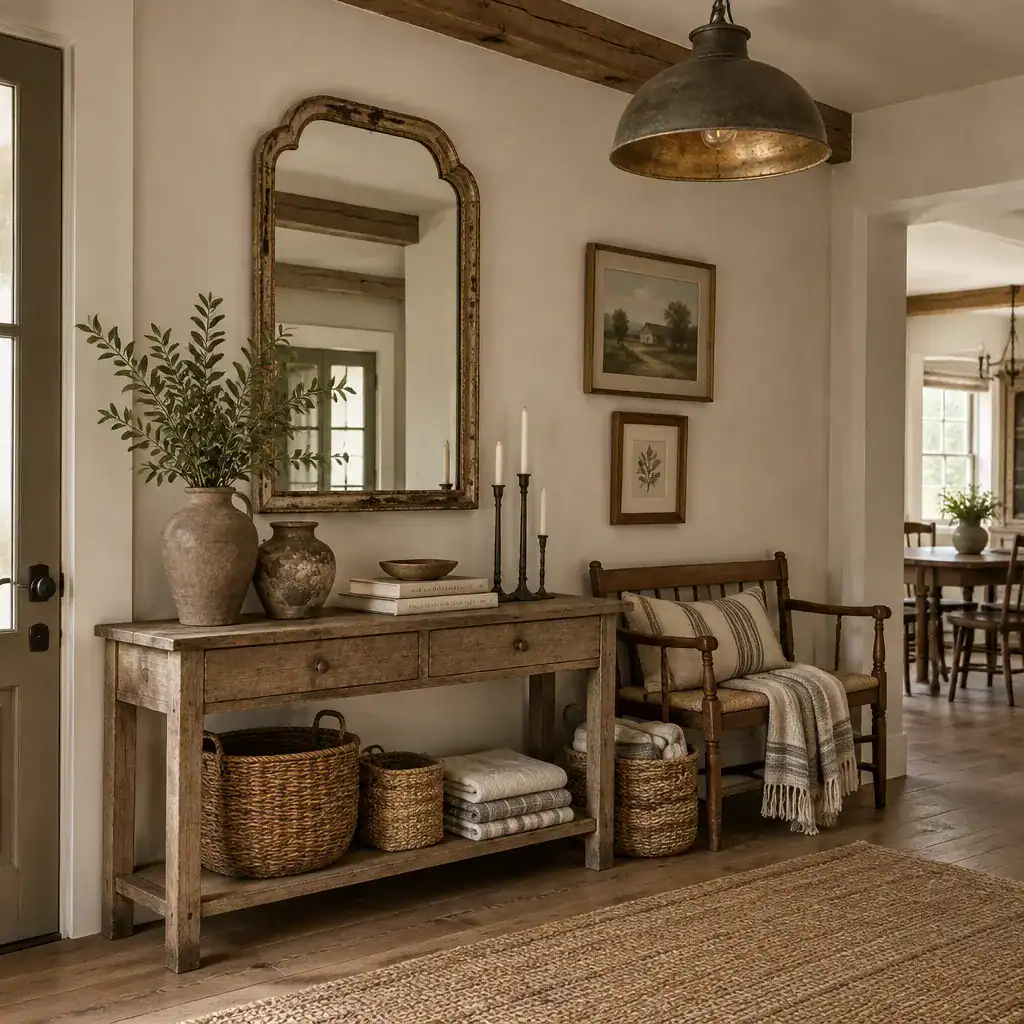
Favor furniture that shows useful craftsmanship: sturdy tables, cupboards with storage, well-proportioned seating, and pieces with finishes that can accommodate ordinary wear. A handmade-looking cabinet, a simple spindle chair, or a substantial console adds more character than a collection of novelty décor. Buy or retain pieces for how they function as well as how they look.
Accessories work best when they are meaningful or useful. Pottery, cutting boards, baskets, folded quilts, vintage-style mirrors, framed artwork, and a few books can provide the finishing layer. Avoid excessive word signs, repeated farm-animal motifs, artificial distressing, and unrelated objects gathered only to fill empty space. Restraint lets each chosen piece contribute to the room.
Keep the Whole Home Cohesive and Livable
A cohesive farmhouse home repeats related elements instead of matching everything exactly. Carry similar wood tones, textile textures, metal finishes, and neutral colors from room to room, while allowing each area to have its own purpose and personality. This approach makes the house feel considered, not catalog-perfect.
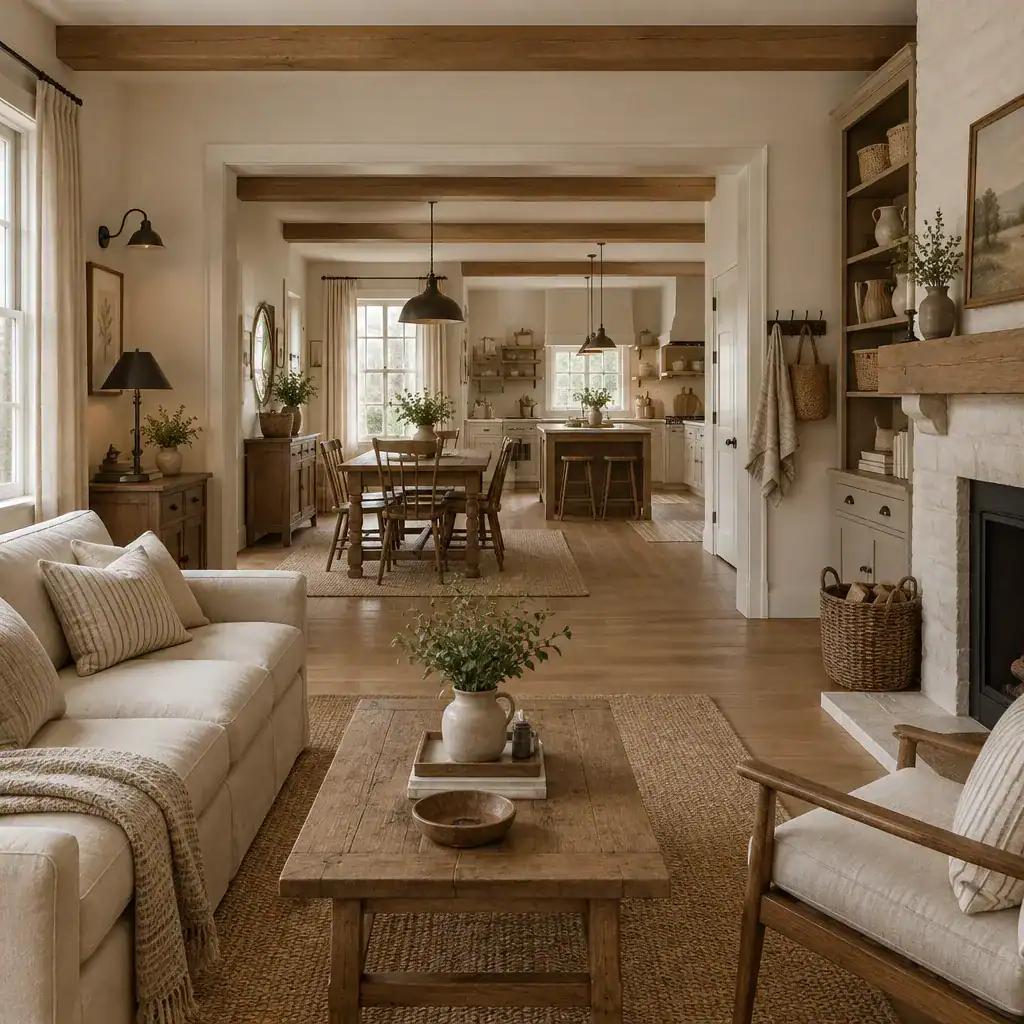
Leave enough open space for circulation, and prioritize storage before adding more decorative layers. Closed cabinets, baskets, drawers, and hooks help maintain a relaxed appearance while keeping daily items accessible. Heritage-inspired details can coexist with contemporary necessities when modern appliances, washable fabrics, efficient lighting, or durable finishes improve comfort and upkeep.
Before adding another accessory, review each room for balance between texture, pattern, empty space, and function. The strongest traditional farmhouse interior ideas give rooms visual warmth while leaving them easy to clean, navigate, and enjoy. A home that accommodates everyday life will always feel more convincing than one designed only for display.
Traditional farmhouse style is most successful when warmth, utility, natural materials, and restraint work together. Begin with a consistent palette and a few durable foundational pieces, then add textiles, lighting, artwork, and collected accents gradually. Over time, the most appealing rooms become personal and comfortable, with character that feels naturally earned rather than artificially applied.