
A barn-inspired home can feel grounded and familiar, while eclectic layers make it personal, expressive, and far from formulaic. The most successful approach connects the building’s sturdy forms, tactile finishes, and practical spaces with furnishings and art that look intentionally gathered over time.
Rather than treating every choice as a separate statement, plan visual relationships between large architectural elements and smaller decorative details. The ideas below cover exterior character, layout, materials, color, furniture, and implementation so a rustic eclectic barn house feels warm, functional, and confidently collected.
Define the Rustic Eclectic Barn House Design Direction
Rustic character begins with practical-looking forms and materials that communicate natural warmth: timber, stone, aged metal, limewashed surfaces, wide-plank floors, and barn-inspired rooflines or openings. Eclectic character adds a deliberate mix of eras, patterns, artwork, and furnishings. Together, they create a home that respects agricultural-inspired simplicity while leaving room for individual stories.
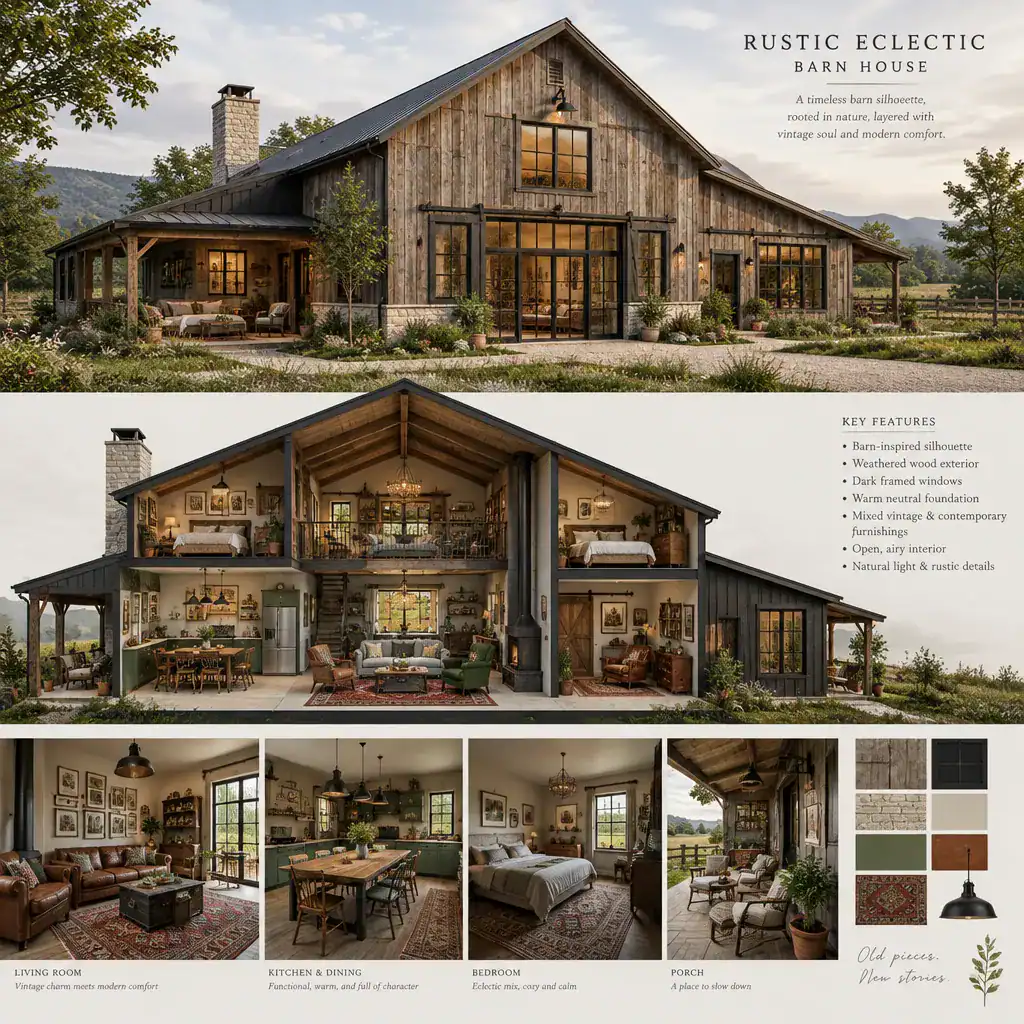
Set a connecting thread before collecting finishes and decor. A restrained warm-neutral base, repeated blackened metal, one dominant wood tone, or a consistent sense of visual warmth can unite varied pieces. For example, a vintage painted cabinet, contemporary sofa, patterned kilim, and handmade ceramic lamp can coexist when their undertones and scale feel related.
Intentional variety has editing behind it. Each contrasting piece should contribute a useful function, a meaningful story, or a clear visual role. An unplanned accumulation of unrelated objects, finishes, and colors has no hierarchy, making rooms feel busy rather than layered. Decide what deserves attention, then allow quieter elements to support it.
Shape the Barn-Inspired Exterior and Entry Experience
A barn-inspired exterior does not require one fixed formula. Start with a strong, simple massing, a generous roof presence, and openings scaled to the building rather than scattered as decoration. A gabled volume, broad overhangs where appropriate, large glazed doors, or tall windows can reference barn architecture while still suiting a contemporary renovation or new-build design.
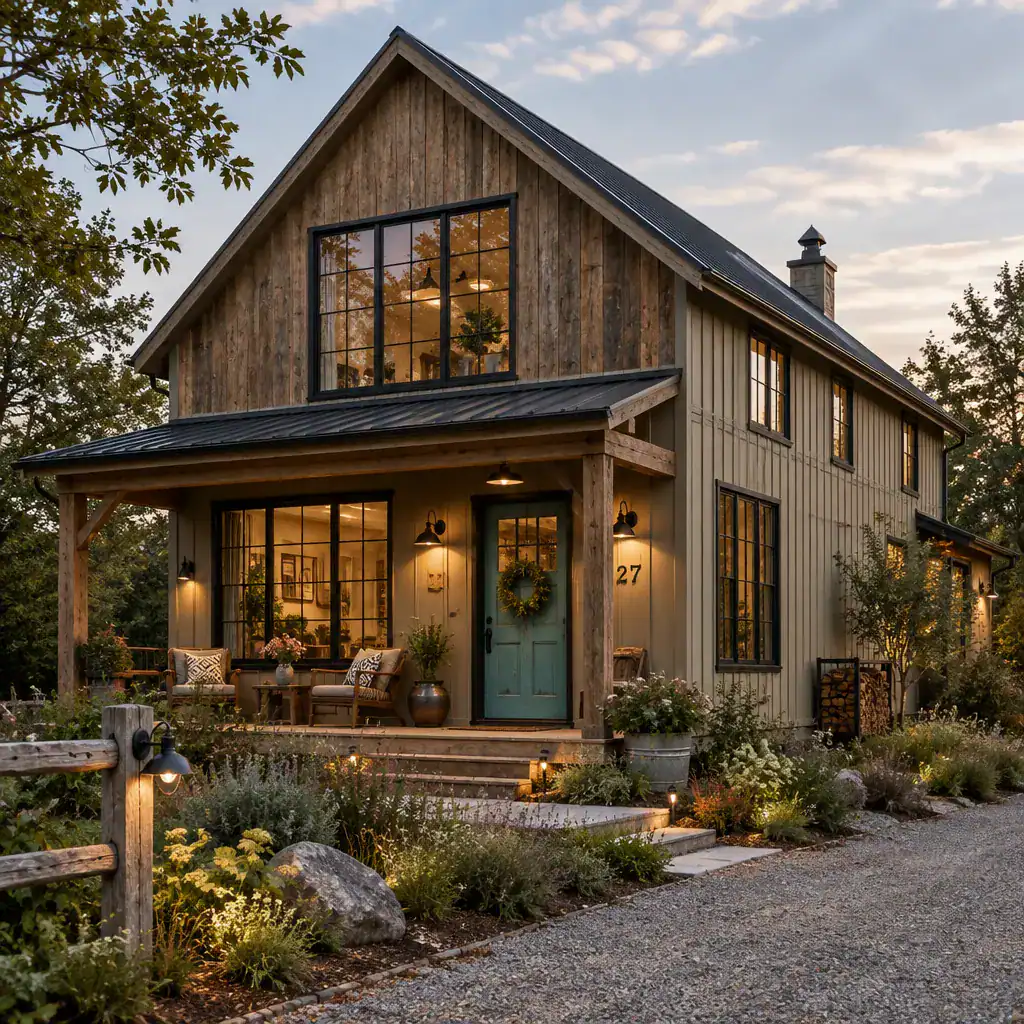
Use siding, trim, doors, and lighting to refine the first impression. Natural-looking timber or weathered-look cladding can pair well with muted painted siding, dark-framed windows, and a distinctive entry door in clay red, deep green, or softened blue. Keep the contrast selective: cleaner trim profiles, a crisp metal light fixture, or one sculptural planter can prevent rustic surfaces from feeling overly heavy.
Make the arrival sequence practical as well as welcoming. A covered threshold, bench, hooks, room for deliveries, and lighting that makes pathways legible support daily use. Repeat an exterior material or color inside, such as the entry door hue, dark window frames, oak tone, or aged-bronze finish, to make the transition into the home feel natural.
Plan a Comfortable and Flexible Barn House Layout
A comfortable barn-house plan relies on clear links between the entry, living room, kitchen, dining area, outdoor spaces, and the routines that connect them. Place circulation where it feels intuitive, avoiding routes that cut directly through conversation areas or work zones. If the household regularly brings in muddy boots, groceries, pets, or sports gear, provide storage and landing space near the entrance.
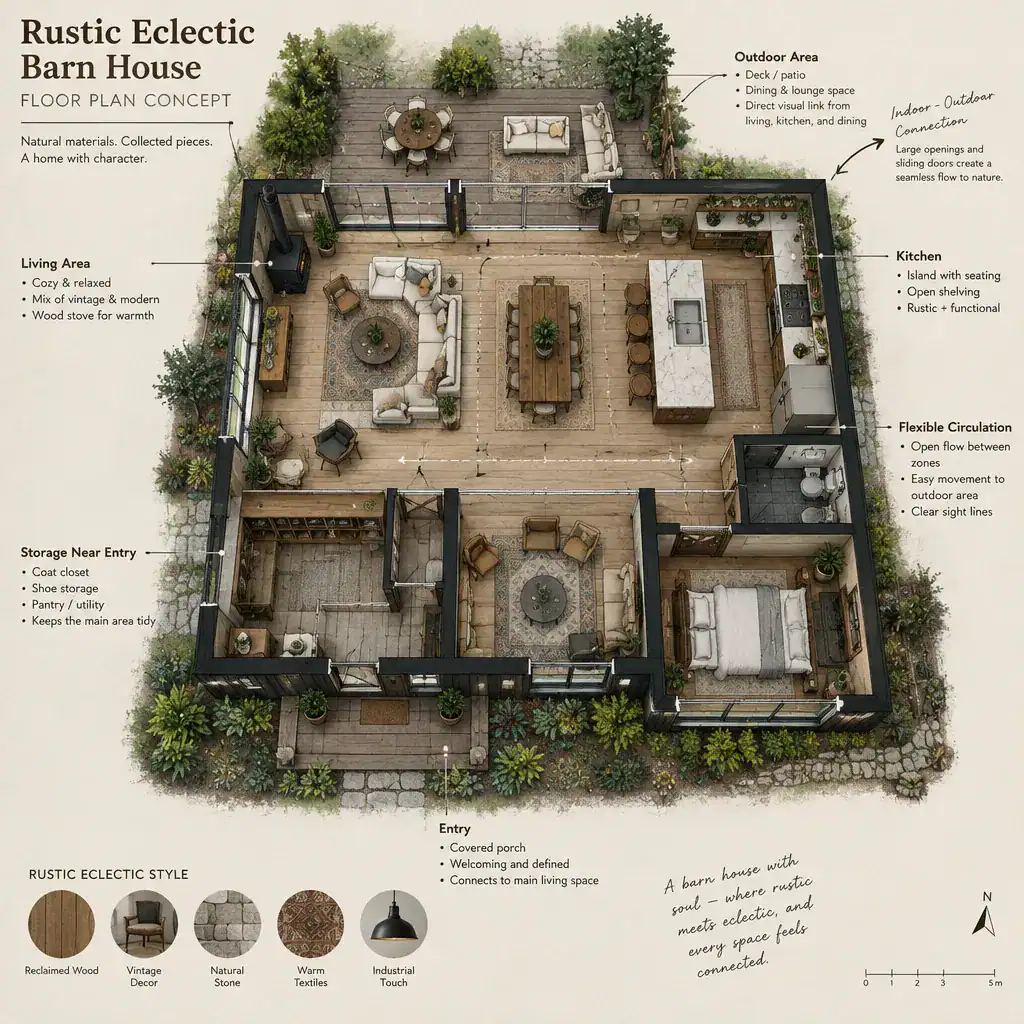
Open or visually connected interiors benefit from gentle zoning. Define the living area with a rug and furniture grouping, distinguish dining with a pendant and table shape, or signal the kitchen boundary through an island material or ceiling change. These moves preserve openness while helping each activity feel settled. Sightlines to a porch, garden, or patio can further extend the shared living area.
Support spaces make the plan work harder. Consider a mudroom function, pantry storage, utility zone, enclosed coat storage, or flexible room that can serve as a hobby space, guest room, or office. In tall volumes, use furniture with enough visual weight, substantial lighting, curtains, cabinetry, or exposed structural detail to keep the room from feeling empty and difficult to furnish.
Layer Rustic Materials with an Eclectic Color and Texture Palette
Build the palette around calm warm neutrals such as soft cream, mushroom, oat, warm gray, or muted taupe. Then introduce selected accents through paint, tile, textiles, art, and furniture. Muted green, dusty blue, clay, ochre, or deep plum can bring personality without competing with the natural warmth of wood and stone.
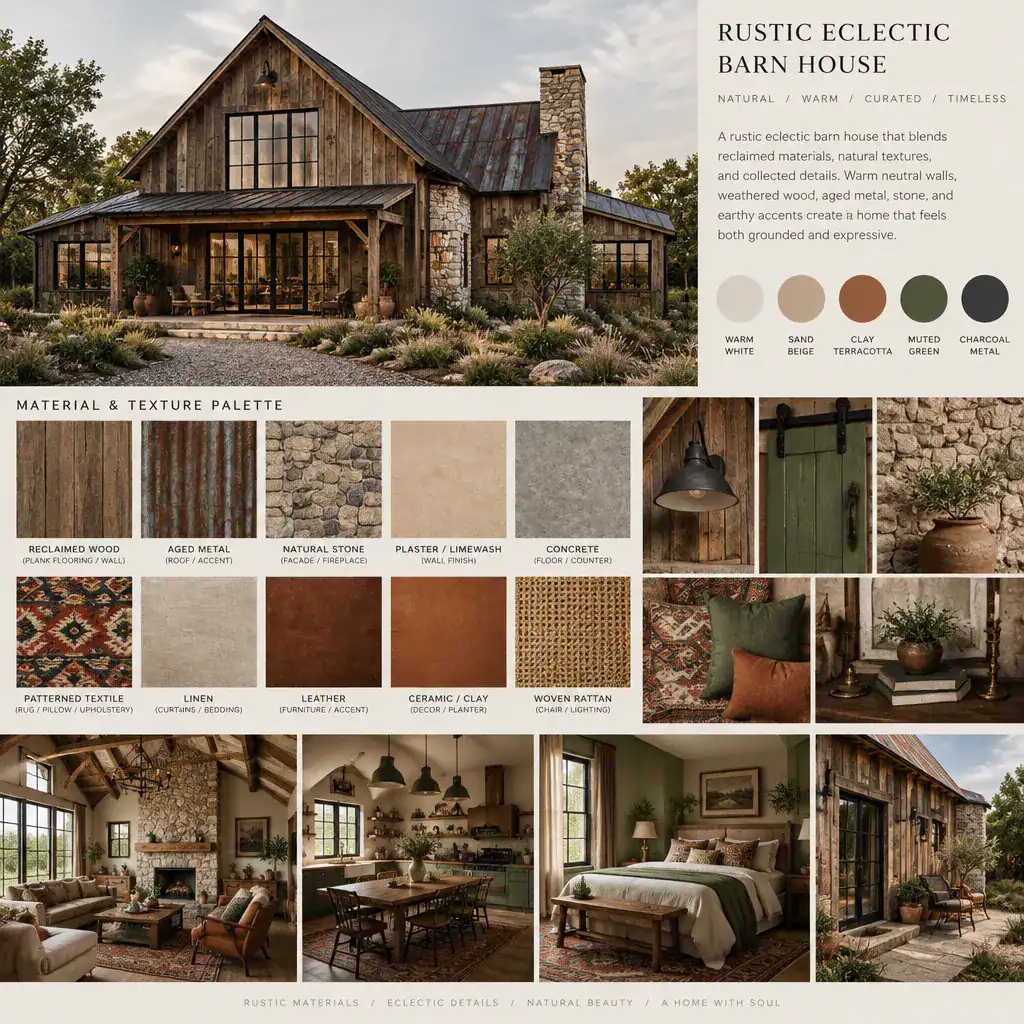
Give materials distinct visual roles. Rustic textures, such as reclaimed-looking wood, tumbled stone, woven fiber, and aged metal, add warmth and depth. Smoother plaster, honed stone, simple cabinetry, clear glass, or tailored upholstery provide relief and balance. Repeating a small number of finishes across rooms, perhaps oak, aged brass, and soft black metal, helps the eclectic mix read as one home.
Patina and variation can be assets rather than flaws, especially on wood, leather, handmade tile, and vintage metal. Still, choose surfaces according to where they will be used. A heavily textured finish may be appealing on a feature wall but less convenient in a high-splash kitchen zone, while flooring and upholstery should suit the household’s cleaning, wear, and maintenance needs.
Furnish and Decorate with Collected Eclectic Character
Begin with foundational furniture that fits the room’s proportions and supports everyday comfort. A well-scaled sofa, durable dining table, proper bedside storage, and functional seating establish order before distinctive pieces arrive. Then introduce vintage finds, handmade objects, contemporary accents, or globally inspired textiles that give the space its collected identity.
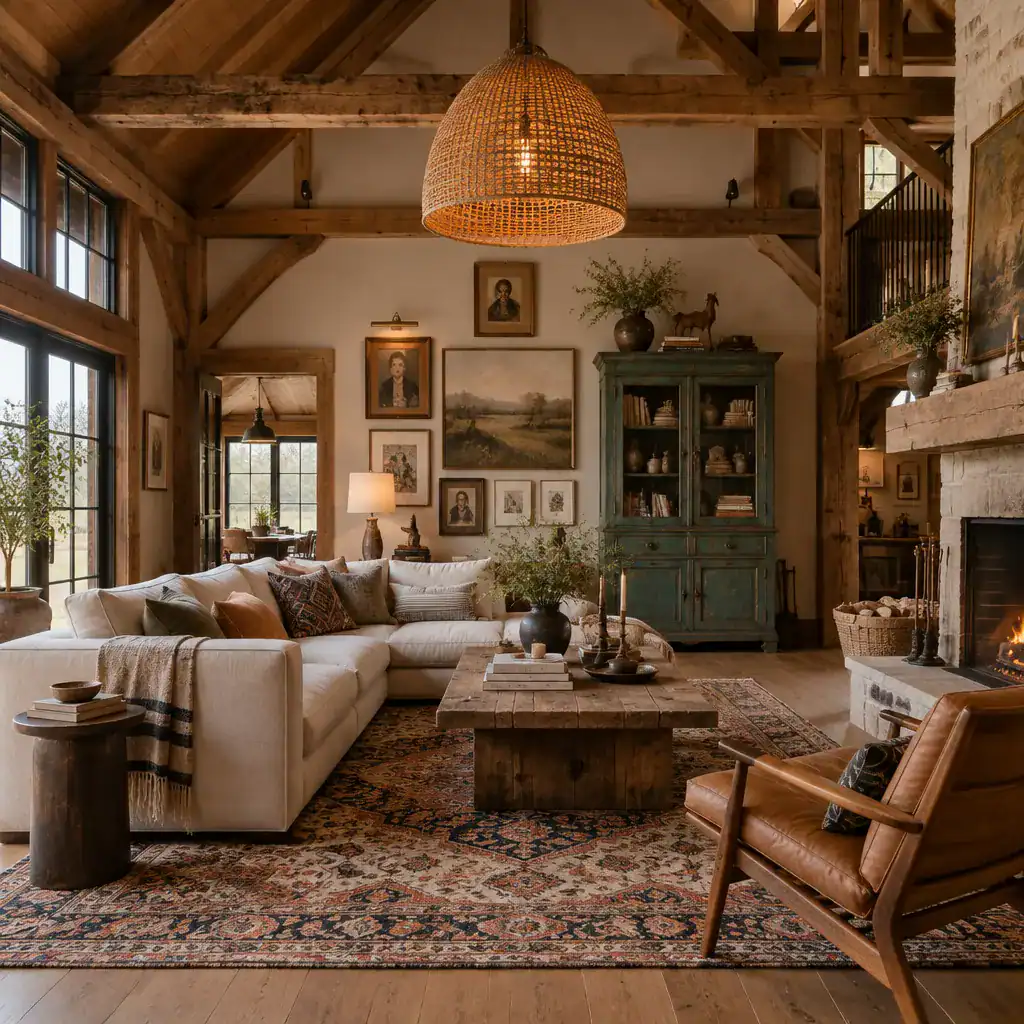
Give each room a primary focal point. In a living room, that may be a fireplace, large artwork, antique cabinet, or dramatic light fixture. Once that anchor is chosen, limit competing statements so the architectural details remain visible. Rugs, cushions, books, ceramics, greenery, and smaller artworks can add personality without covering every surface or wall.
Old and new pieces do not need to match. They need a relationship through color, material, proportion, or function. A streamlined chair may work beside a weathered trunk when both share dark timber tones, while a modern pendant can complement a traditional table if their scale feels balanced. This editing process gives a rustic eclectic barn house a layered look without visual confusion.
Keep the Design Cohesive During Planning and Execution
Create a room-by-room design brief before finalizing purchases or construction decisions. For each space, note its purpose, dominant materials, accent colors, focal point, lighting needs, and storage requirements. This simple reference makes it easier to test whether a new finish or furnishing supports the whole-house direction rather than becoming an isolated impulse.
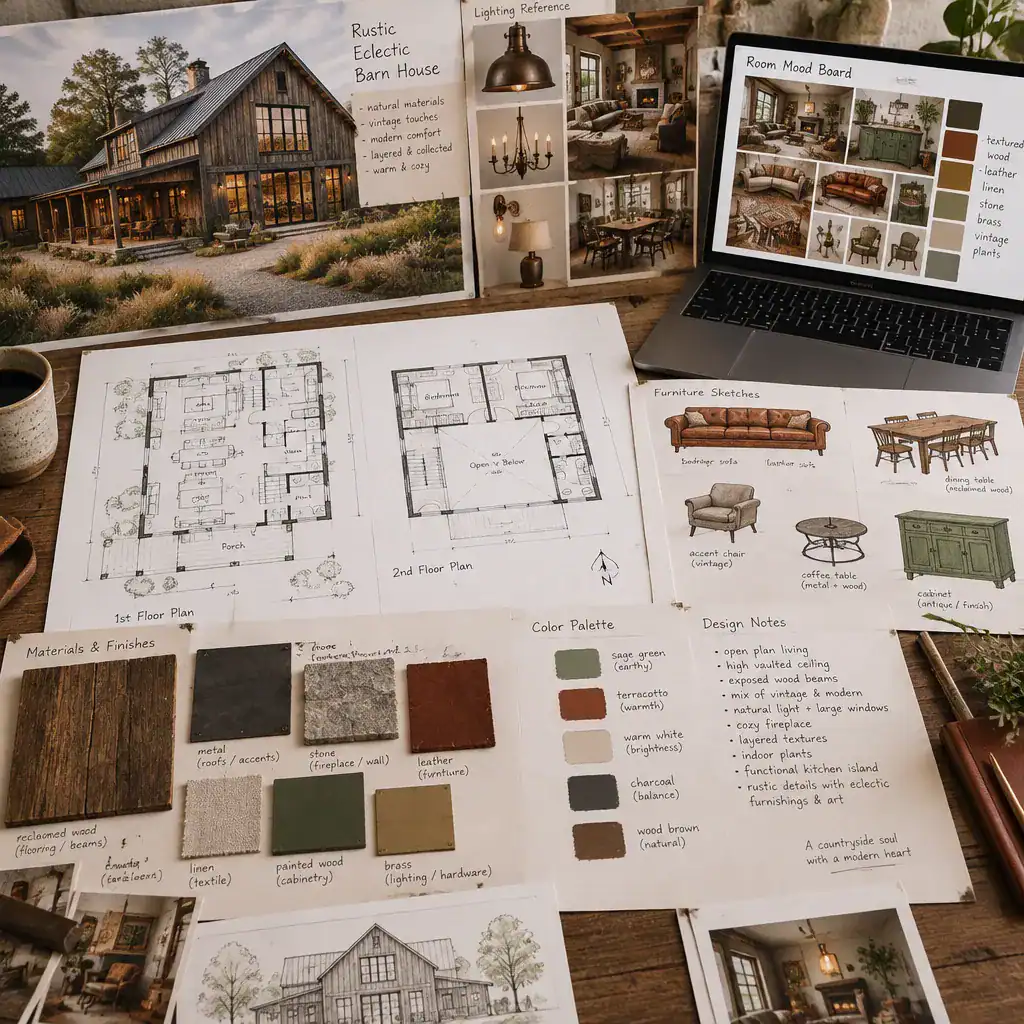
Review samples together whenever possible. Place paint cards beside flooring, cabinet finishes, hardware, tile, fabric, and lighting references, and view them in the room’s changing daylight. A finish that looks appealing in isolation may be too cool, too glossy, or too visually active when paired with the rest of the palette.
Prioritize durable and maintainable choices that suit the climate, household habits, budget, and project constraints. Before construction or renovation begins, consult qualified professionals to confirm project-specific structural conditions, building-code requirements, moisture control, fire safety, electrical work, and installation details. Thoughtful coordination early on protects both the character and performance of the finished home.
The strongest rustic eclectic barn house designs let their rustic architectural foundation and eclectic personal details reinforce one another. Begin with functional needs, sensible circulation, and a cohesive base palette, then add expressive accents with intention.
As plans develop, revisit scale, material compatibility, storage, and the relationship between indoor and outdoor spaces. By reviewing professional requirements before implementation and editing each decorative layer carefully, you can create a rustic eclectic barn house that feels enduring, useful, and unmistakably your own.