
English cottage walls feel inviting because they build character in layers: gentle color, familiar images, natural materials, and details that appear to have been gathered over time. A successful english cottage decor wall does not depend on matching sets or a heavily themed display. Instead, it balances wallpaper or paint with artwork, mirrors, textiles, and well-spaced decorative accents. This guide explains how to choose those layers with enough intention to create warmth while keeping every room comfortable and easy to live with.
Start with an English Cottage Wall Foundation
Begin with a backdrop that supports the room rather than competing with its furnishings. Warm creams, softened greens, muted blues, earthy browns, and weathered neutrals all provide a calm cottage base. These colors can make dark timber, painted furniture, floral fabrics, and aged accessories feel connected, while still allowing the room to receive plenty of light.
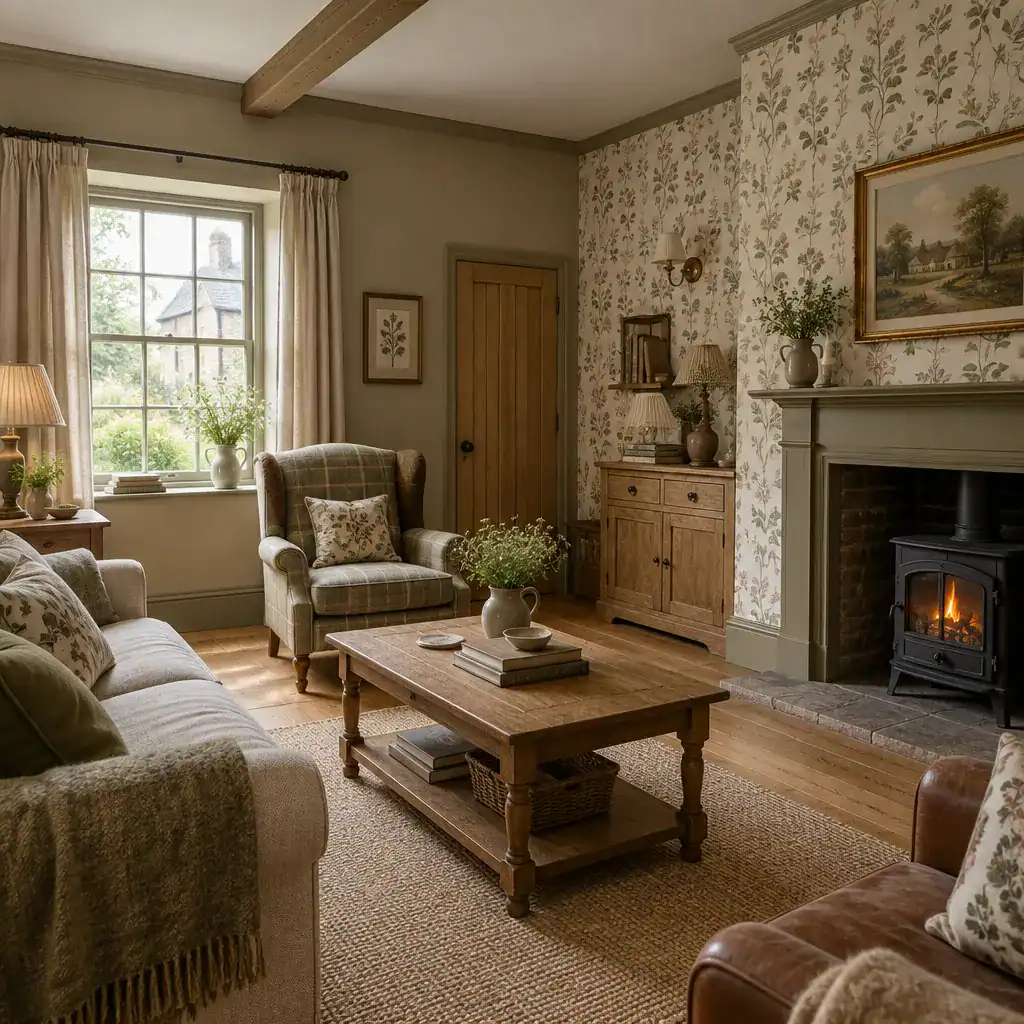
Wallpaper is an effective option when you want the wall itself to carry some of the decorative story. Small-scale botanical trails, delicate florals, narrow stripes, and heritage-inspired prints bring pattern without overwhelming a compact room. Use a busier paper on one feature wall if the rest of the space already includes patterned curtains or upholstery, or use it throughout a room with simpler furnishings. For a quieter approach, painted walls can gain depth through limewashed-looking texture or softly uneven finishes.
Architectural details also help a new or plain room feel more settled. Beadboard, simple wood paneling, picture rails, and modest trim add shadow, rhythm, and a useful boundary for paint or wallpaper. Consider the room’s daylight, flooring, and nearby furniture before deciding on a finish. A dim room may benefit from a lighter wall color and reflective trim, while a room with pale floors can accommodate deeper, more enveloping paint.
Layer Artwork for a Collected Cottage Gallery Wall
Artwork gives cottage walls their personal, gathered quality. Mix botanical studies with small landscapes, still-life paintings, family-style portraits, and decorative prints that share a sense of quiet observation. The most convincing arrangements often combine subjects rather than repeating one image type, so a meadow scene can sit naturally beside a flower study or a bowl of fruit.
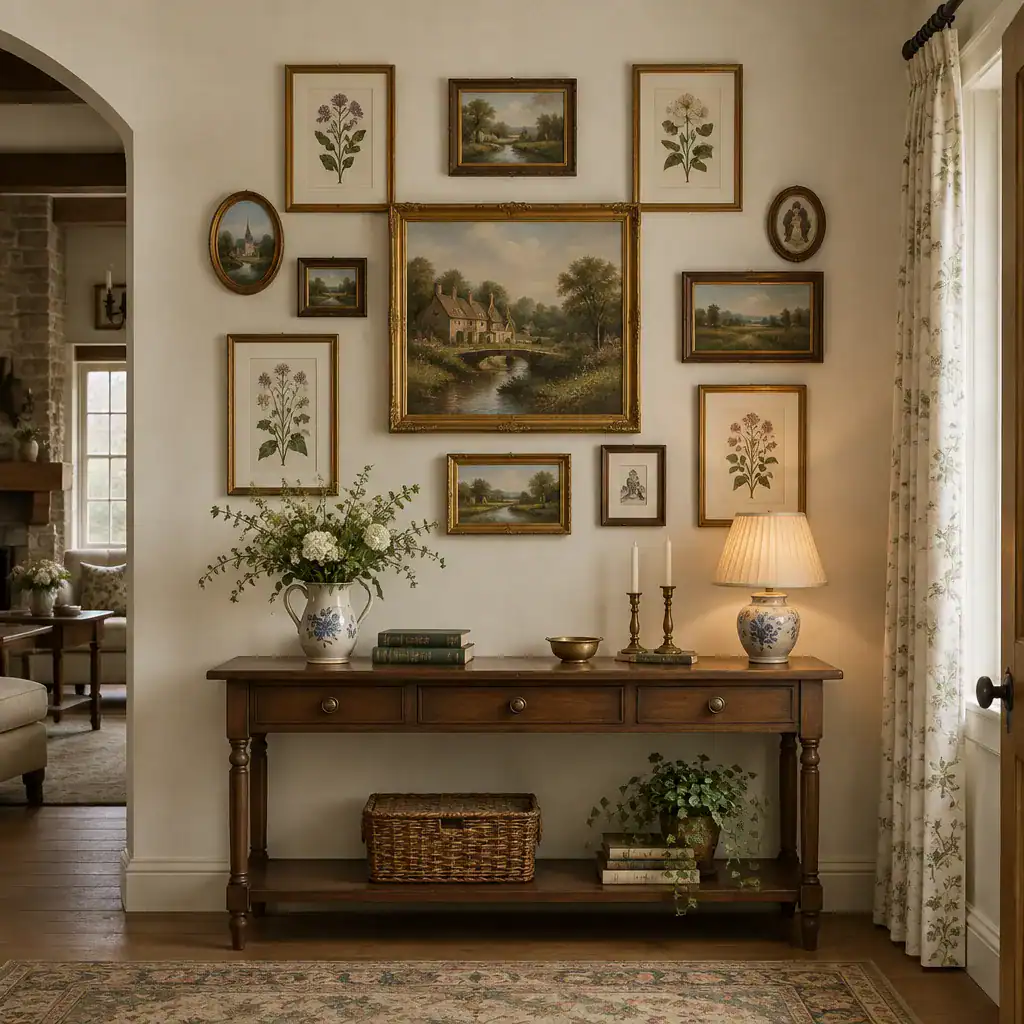
Varied frames are welcome, provided they have a common thread. A compatible range of aged wood, muted gilt, dark metal, or cream-painted frames will look collected rather than random. Let one larger picture act as the visual anchor, then arrange smaller works around it with deliberate spacing. The pieces do not need to form a strict grid, but each should have enough breathing room to be seen.
A gallery wall can suit more than a large living room. Try a vertical composition on a narrow stair wall, a compact grouping above a bedroom chair, or a low arrangement over an entryway console. In a dining area, artwork above a sideboard can create a focal point that feels relaxed and conversational. This flexible approach lets an english cottage decor wall reflect the scale and function of the room.
Use Mirrors, Plates, and Textiles to Add Cottage Texture
Walls feel richer when every item is not a framed picture. A softly aged mirror can brighten a shadowy corner by reflecting daylight and the room beyond, while its worn wood or gently patinated frame adds informal character. Position one above a mantel, sideboard, or narrow table where it has a clear relationship to the furniture below.
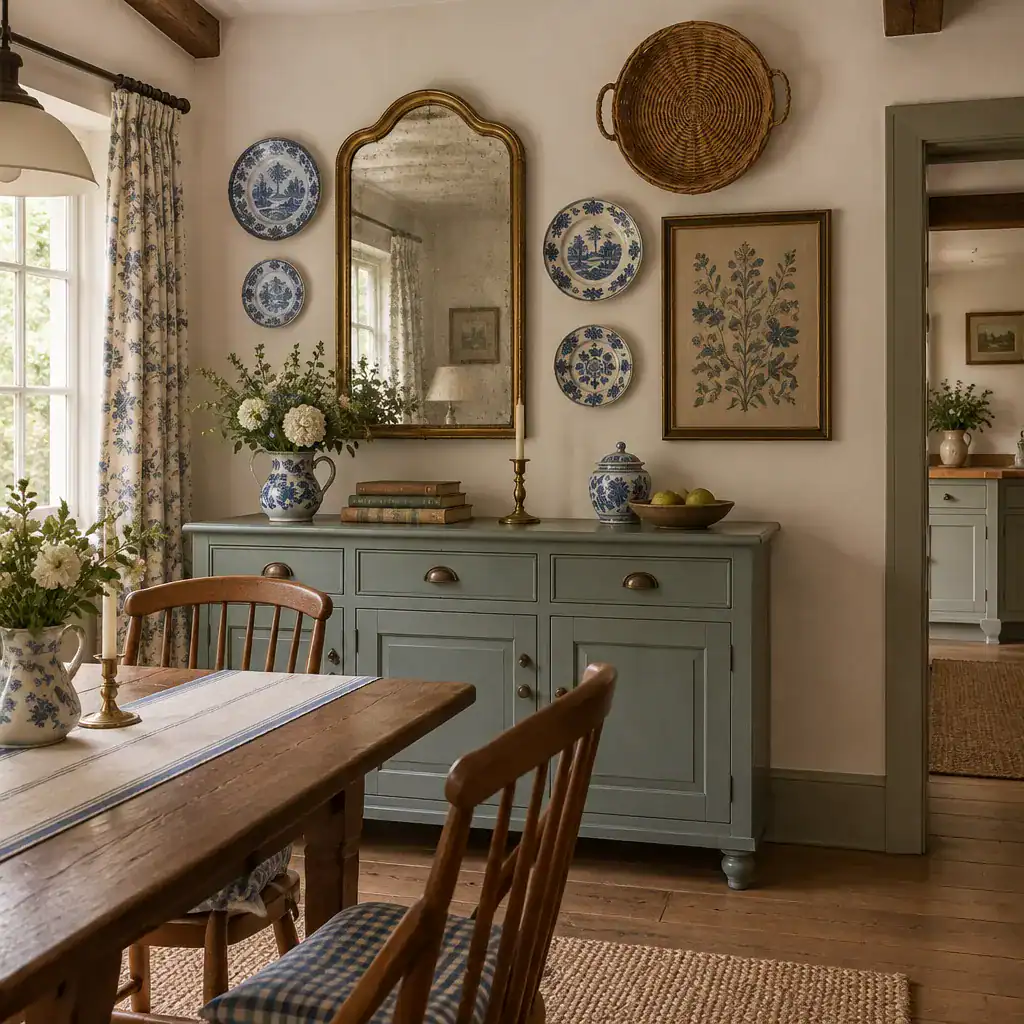
Decorative plates, woven baskets, textile hangings, and framed fabric introduce shape and tactility. Blue-and-white ceramics can complement a cream or soft green room, while a floral textile can echo patterns found in cushions or curtains without adding another hard-edged frame. Repeated rounded forms, natural fibers, and a little gentle patina make the wall feel softer and more dimensional.
To keep these mixed objects intentional, group them through a shared color, motif, or material. For example, a cluster of botanical plates can surround a small mirror, or a woven basket can balance a framed linen panel in a neutral scheme. The result should feel like a thoughtful collection, not every available object placed on display.
Coordinate Color, Pattern, and Natural Materials
English cottage style is more about relationships than a fixed palette. Soft green and warm cream may be paired with muted blue, while earthy brown, faded red, or restrained floral tones can add depth. Choose one or two recurring colors and carry them across wall art, upholstery, curtains, rugs, and small accessories. This repetition gives a layered room a clear visual thread.
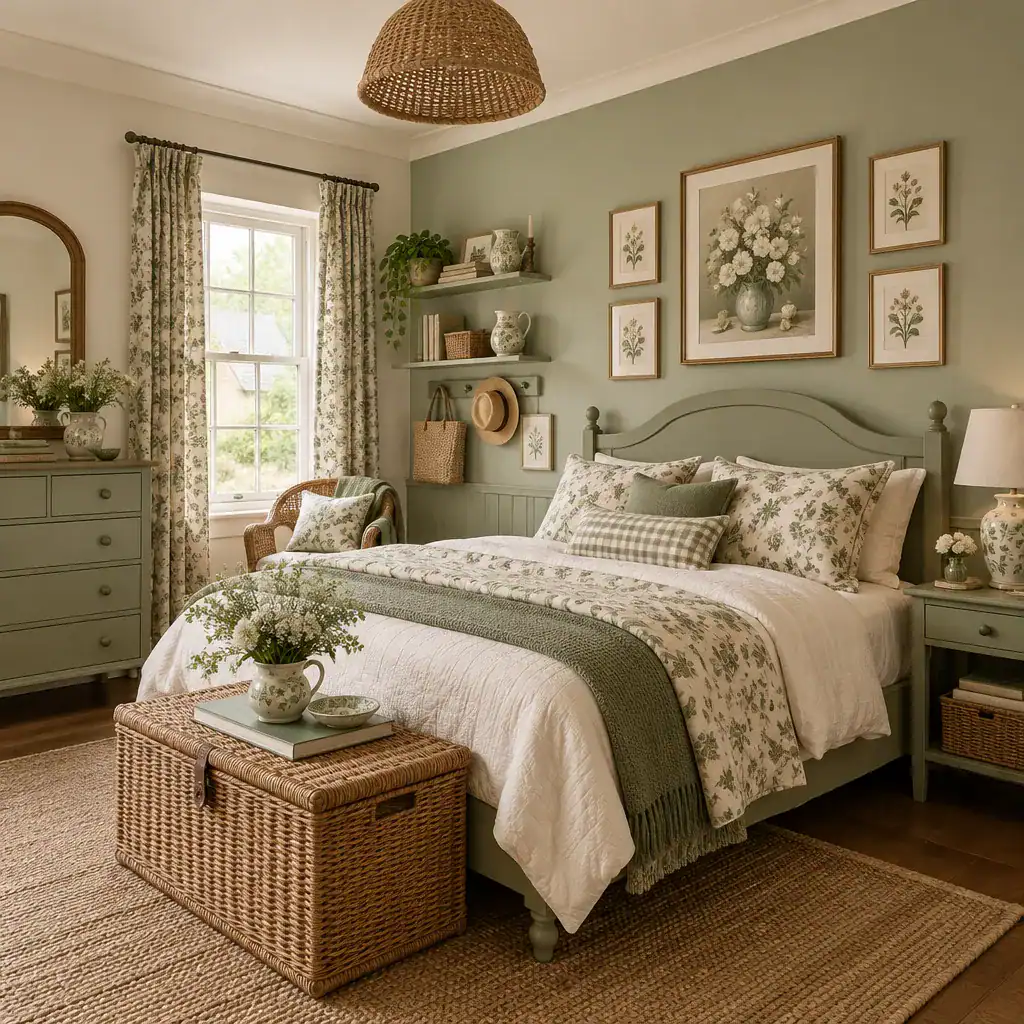
Natural and timeworn materials strengthen that thread. Painted wood works well beside oak or other natural timber, while aged metal, woven fibers, ceramic, and linen introduce useful variation. Rather than replacing existing finishes, use wall decor to connect with them: select warm-toned frames near wood furniture, or add ceramic plates that pick up the tones in a tiled hearth or painted cabinet.
Pattern needs a quieter partner. If wallpaper or curtains are floral, choose simpler artwork mats, plainer textiles, or a less elaborate frame profile nearby. If the wall is a solid muted color, it can carry more expressive art or a patterned fabric panel. This balance allows an english cottage decor wall to remain lively without becoming visually tiring.
Style English Cottage Walls by Room and Scale
Match the arrangement to the way a room is used. Bedrooms generally benefit from calmer artwork and smaller, gently layered groupings that support rest. Living rooms can accommodate a more conversational mix of landscapes, portraits, and mirrors around seating areas. In an entryway, a mirror, a small print, or a practical display above a console creates a welcoming focal point without taking up valuable circulation space.
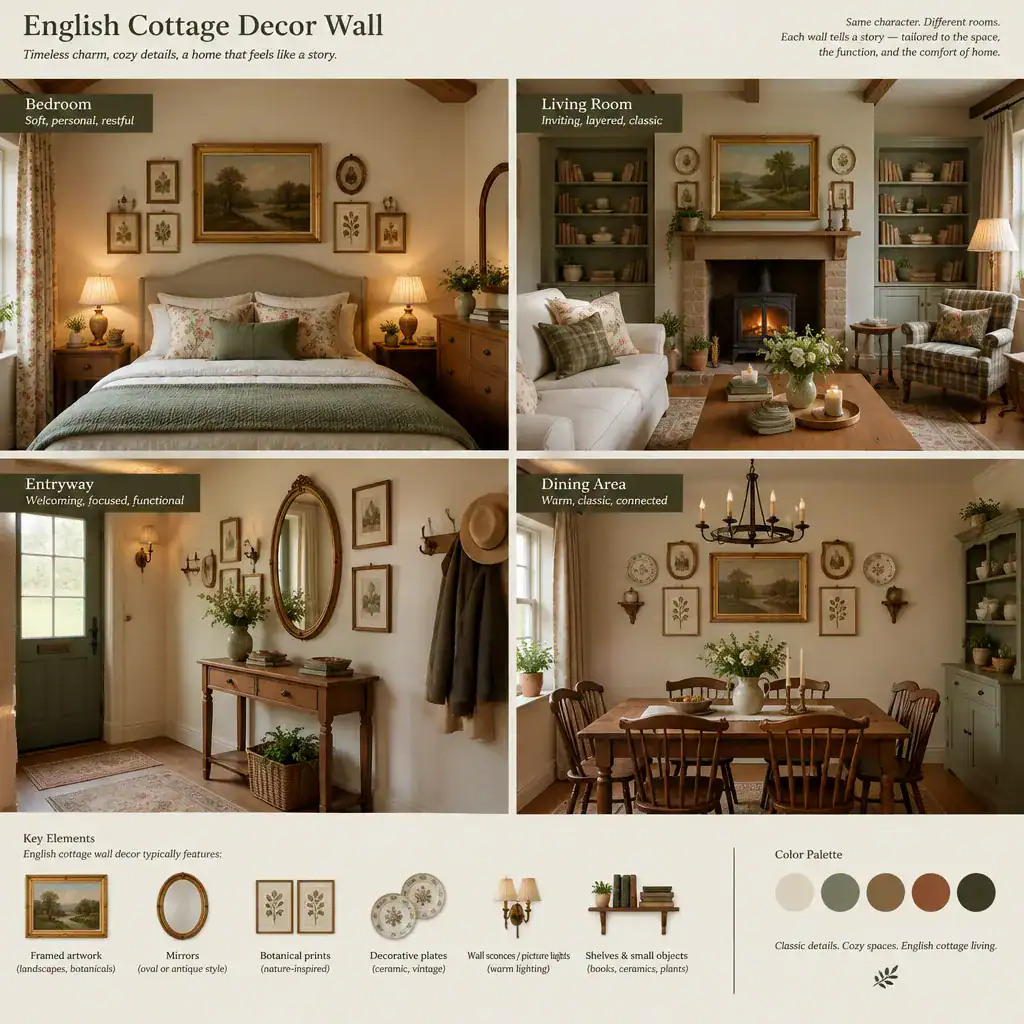
Dining rooms are particularly suited to plate walls, still-life art, or a decorative composition above a sideboard. In every room, let wall width, ceiling height, furniture dimensions, and viewing distance determine the scale. A broad sofa needs a wider visual grouping than a small bedside table, while a tall stairwell can support a vertical trail of frames that would feel oversized in a low-ceilinged room.
Before making holes or applying permanent treatments, test the composition with paper templates or temporarily place objects using removable methods. Step back from the usual viewing point and check whether the arrangement relates to the furniture, has sufficient negative space, and feels balanced from side to side. This simple step makes it easier to refine a english cottage decor wall before it becomes permanent.
English cottage wall decor is at its best when warmth, personal meaning, natural references, and controlled layering work together. Start with one foundation treatment or one focal arrangement, then build gradually in response to the room’s existing light, finishes, and furnishings. Prioritize cohesion and comfort over a rigid formula, and the finished walls will feel collected, welcoming, and genuinely your own.