
A welcoming cottage interior is less about copying a single look and more about creating rooms that feel settled, useful, and personal. This practical guide to cottage house interior design can be adapted for an original period cottage, a compact weekend retreat, or a newer home with cottage character. The goal is a warm, timeless result that supports daily life rather than a heavily themed space.
Cottage interiors are loved for their comfort, architectural character, natural materials, and unhurried atmosphere. Thoughtful choices in color, finishes, furniture, lighting, and room styling help those qualities work together. By planning each layer with restraint, you can make a home feel collected and cozy without allowing it to become crowded.
Define the Cottage Interior Design Direction
A successful cottage room balances rustic character with everyday comfort and a quiet sense of elegance. It may include aged timber, a painted fireplace, linen upholstery, or a well-worn table, but these features should feel useful and believable rather than decorative props. Start by considering how you want the home to feel: airy and coastal, garden-inspired, softly traditional, or clean and updated with historic touches.
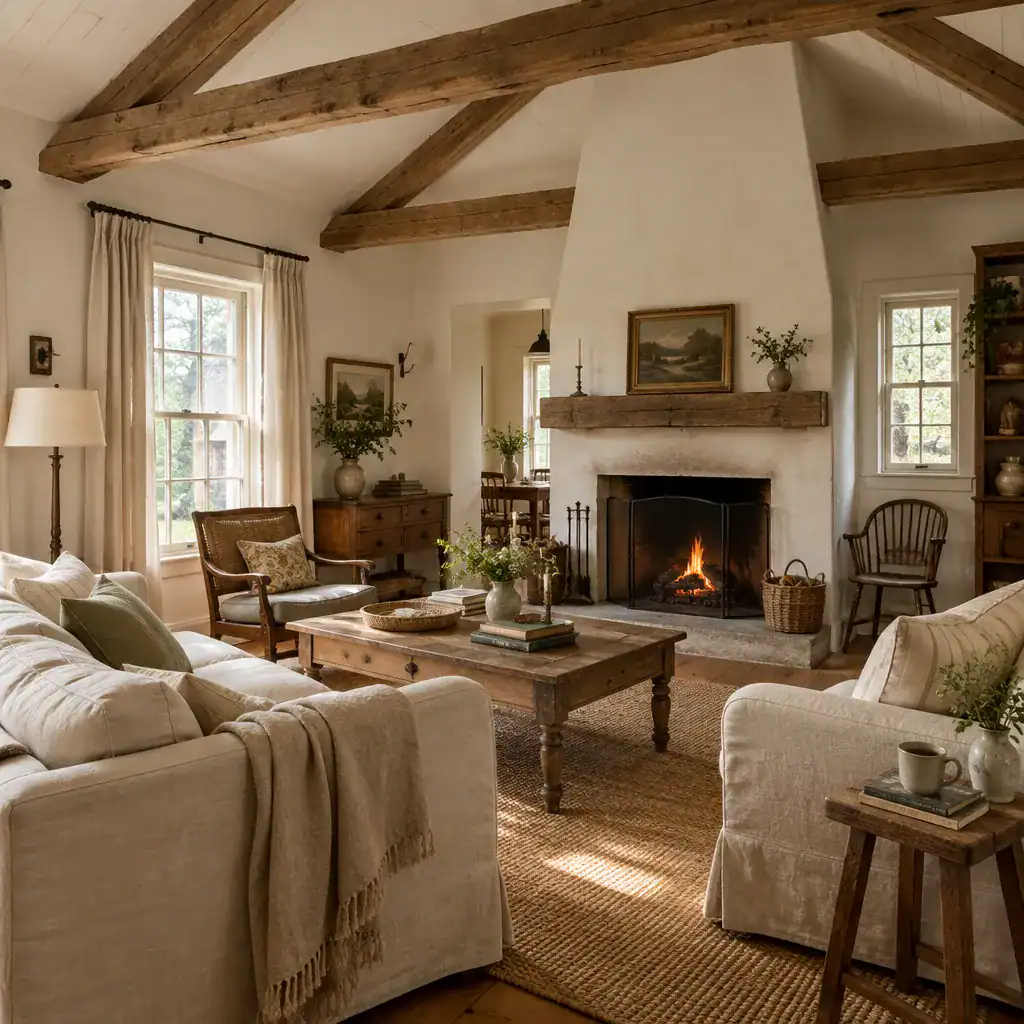
Before buying anything, identify the architectural details that already give the home its identity. Exposed beams, original floorboards, a stone hearth, deep window ledges, paneling, and built-in cupboards are often worth preserving or highlighting. Repairing and simplifying these features can have more impact than adding many new accessories.
Choose a consistent mood early, then use it to assess furniture and decorative purchases. An authentic layered look can mix old and new, but it repeats a few visual cues, such as warm wood tones, softened colors, or simple handcrafted forms. A room full of unrelated signs, distressed finishes, and novelty rustic motifs can feel staged instead of lived in. In cottage house interior design, character comes from the relationship between the room and its contents.
Choose a Soft Cottage Color Palette
Build your palette around calm neutrals and gently muted shades that make the rooms feel restful. Warm off-white, cream, soft putty, pale mushroom, and light greige create a flexible foundation, while faded sage, dusty blue, muted clay, or softened butter yellow can add gentle distinction. These colors do not need to make every room identical; they should simply share a similar level of softness and warmth.
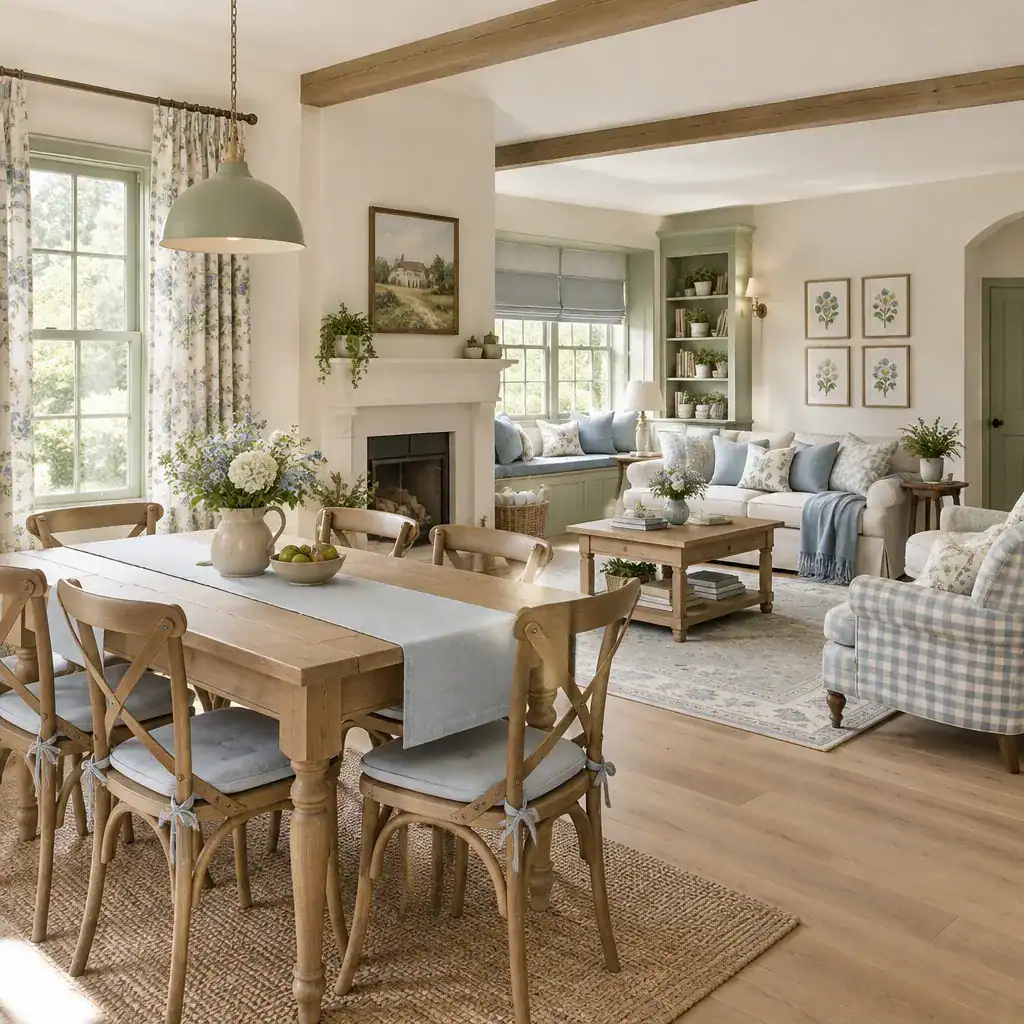
Think of wall color, trim, upholstery, and accessories as connected layers. For example, warm white walls may sit beside painted woodwork, a sage upholstered chair, natural oak furniture, and blue-striped cushions. A restrained background allows floral fabrics, checked linens, wood grain, and handmade pottery to feel purposeful rather than competing for attention.
Always test paint and fabric samples in the actual room. Daylight, window direction, surrounding trees, and evening lamps can substantially change the appearance of undertones. View samples beside flooring, fixed cabinetry, and key textiles at different times of day before committing to a combination.
Layer Natural Materials, Textures, and Finishes
Natural materials give cottage rooms their depth and visual warmth. Wood, stone, linen, cotton, wool, rattan, and ceramic accents work especially well because they introduce subtle variation without demanding bright color or excessive ornament. Use what suits the home and climate instead of trying to include every material in every room.
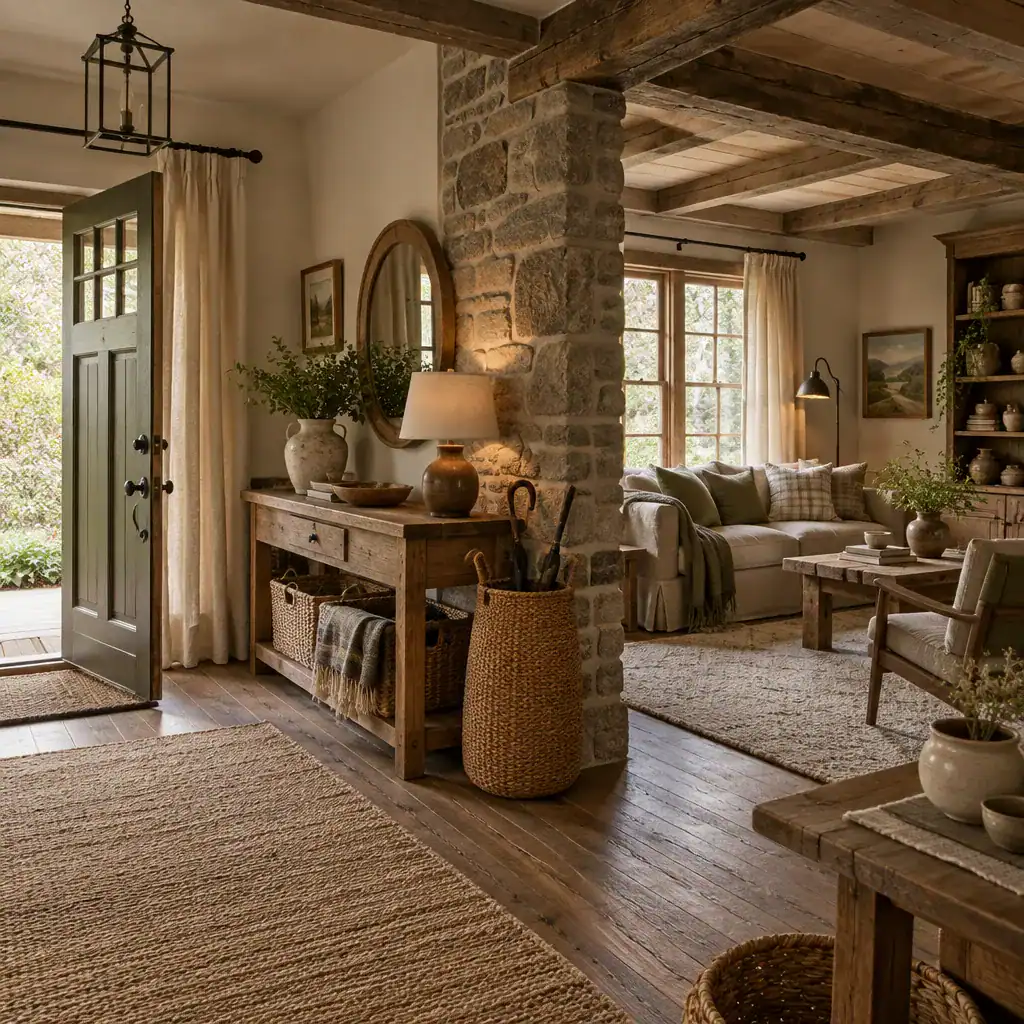
Texture is most effective when it is built into useful items. A wool rug softens a sitting room, linen curtains filter daylight, cotton cushions add comfort, and woven baskets conceal everyday supplies. Throws, upholstered seating, ceramic lamps, and simple pottery can add tactile interest while still serving a purpose. This approach makes cottage house interior design feel warm without relying on shelves crowded with small objects.
Balance rough or aged surfaces with cleaner, simpler elements. Pair reclaimed-looking timber with plain painted walls, a rugged stone surround with a smooth plaster finish, or woven seating with tailored upholstery. In high-use spaces, choose durable materials and consider their care needs. A washable slipcover, sealed wood surface, practical entry rug, or easy-clean kitchen wall finish can preserve the relaxed look through everyday use.
Select Comfortable Furniture and Cottage-Appropriate Lighting
Choose furniture for comfort, proportion, and circulation first. A cottage can have compact rooms, uneven corners, or low ceilings, so pieces should leave clear routes for moving through the space. Deeply comfortable seating, a table sized for regular meals, and storage that is easy to reach will make the home more inviting than furniture selected only for its vintage appearance.
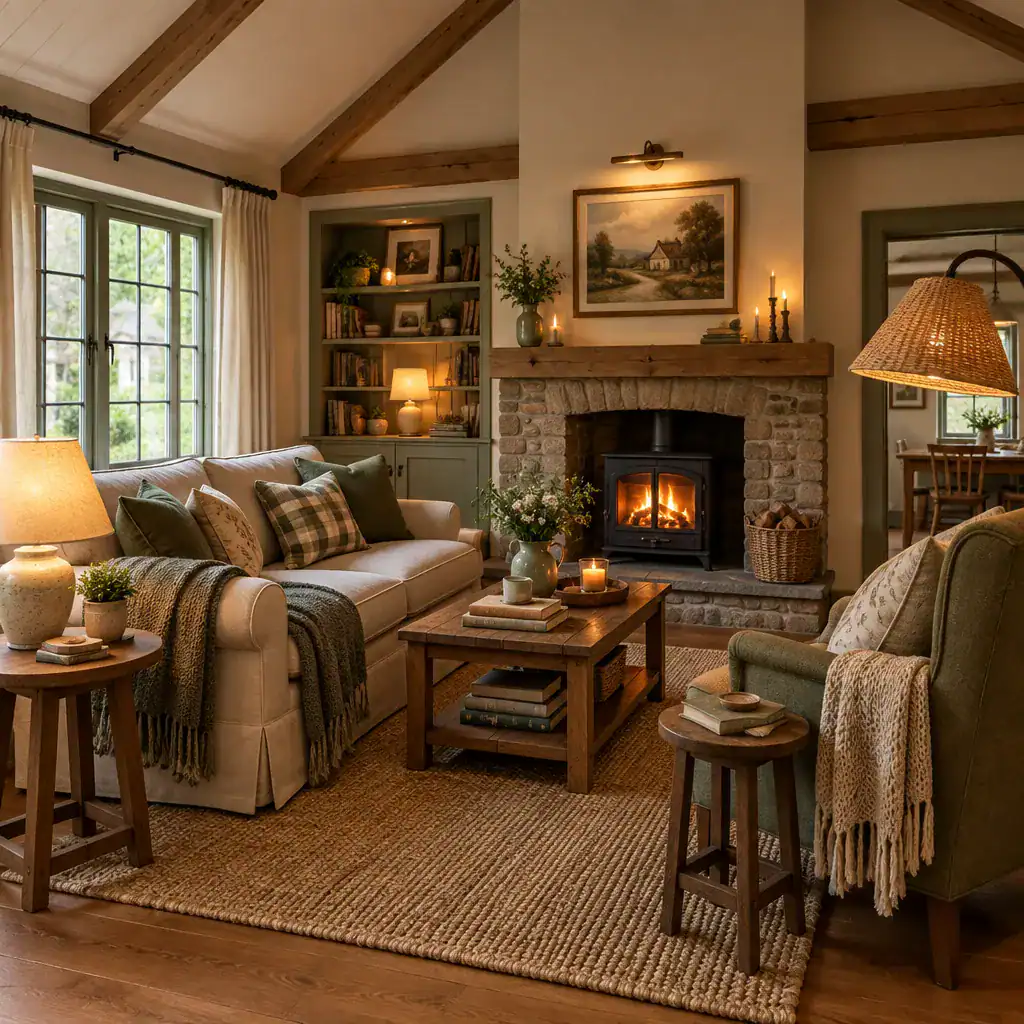
Mixing simple contemporary pieces with vintage-inspired or handcrafted furniture prevents the interior from looking frozen in one era. A clean-lined sofa can sit comfortably beside an old painted sideboard or a turned-leg chair when colors, woods, or fabrics are repeated across the room. Avoid forcing every item to match; cohesion is more important than a complete furniture set.
Lighting should support how each room is used. Combine general light for overall visibility, task light for reading, cooking, and grooming, and accent light for warmth around a fireplace, artwork, or shelving. Table lamps and floor lamps often create a softer evening atmosphere than relying only on ceiling fixtures. Fixtures in aged brass, ceramic, wood, woven fiber, or simple painted metal can complement cottage architecture when their scale and finish suit the room.
Apply Cottage Design Ideas Room by Room
Carry the same palette and materials through the house, then adjust their use for each room’s needs. This creates continuity while allowing the kitchen, bedroom, and entryway to remain practical in their own ways.
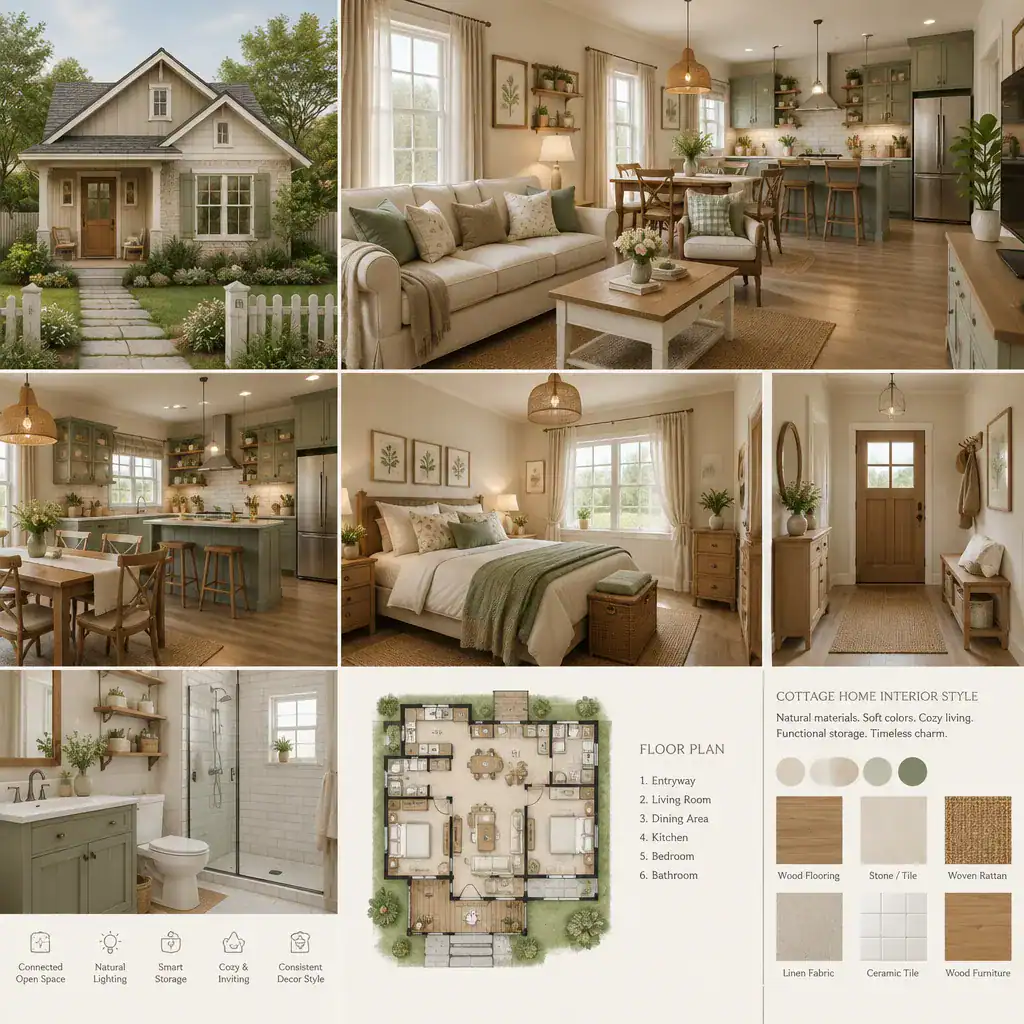
In the living room, arrange comfortable seating around a useful focal point, such as a fireplace, a window view, or a bookcase. Add a rug, cushions, curtains, and one or two meaningful objects rather than filling every open surface. In the kitchen and dining area, prioritize accessible storage, durable natural finishes, and a table that encourages people to gather. Open shelving or glazed cabinets can display everyday ceramics, but closed storage is equally important for visual calm.
For bedrooms, use calm colors, soft bedding, modestly scaled furniture, and curtains or shades that support rest. A quilt, linen coverlet, upholstered headboard, or painted bedside table can introduce cottage character without overloading the room. In entryways and bathrooms, hooks, baskets, textured runners, and vintage-inspired hardware offer useful detail. Select easy-to-maintain surfaces in these hardworking areas, particularly around wet shoes, frequent handwashing, and daily storage.
Avoid Common Cottage Interior Design Mistakes
The most common problem is treating every surface as an opportunity for rustic accessories, floral patterns, or vintage finds. A few well-chosen pieces have more impact when there is open wall space, clear tabletops, and room for the architecture to be seen. Edit collections so that favorite objects can be appreciated instead of disappearing into visual noise.
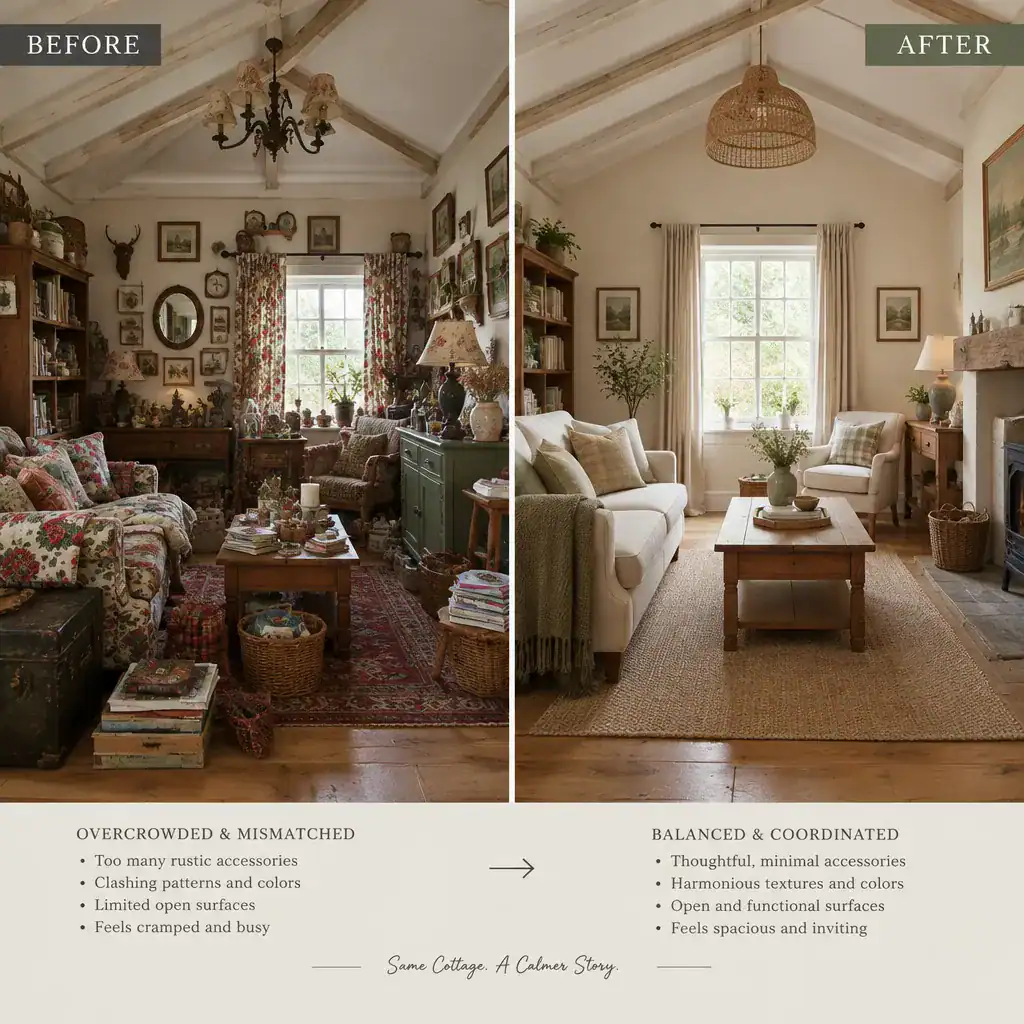
Another issue is visual flatness. If everything is painted the same tone or made from the same weathered finish, the room can lose depth. Vary texture, scale, and material finish by combining smooth ceramics with woven fibers, soft upholstery with timber, or a small patterned fabric with a larger plain surface. Let one or two elements take the lead rather than asking every item to be special.
Never sacrifice circulation, storage, or maintenance for a decorative theme. Keep pathways clear, use furniture that supports the room’s actual activities, and provide a place to put away daily clutter. The final edit should bring attention back to useful furnishings and meaningful architectural details. This is what allows cottage house interior design to feel personal, not overdone.
A successful cottage interior comes from cohesive choices, not one decorative trend. Begin with the home’s architecture, establish a flexible palette, and introduce practical layers of natural material, comfortable furniture, and gentle light over time. When comfort, usability, and personal character remain the priorities, the home will feel warm and enduring.