
A cottage-inspired home feels relaxed, warm, and personal because it favors comfort over formality and character over perfection. A successful cottage house interior does not require a period-perfect look; it can blend familiar materials, useful furnishings, and meaningful objects in a way that supports modern routines. Start by considering how color, finishes, furniture, lighting, and decorative layers will work together from room to room.
Define the Cottage Interior Character
Begin with a mood that feels informal, welcoming, and connected to natural materials. Think soft surfaces, honest wood finishes, useful storage, and rooms that invite people to settle in. The goal is to create a cottage house interior with traditional warmth while still accommodating contemporary needs such as durable seating, convenient lighting, and uncluttered organization.
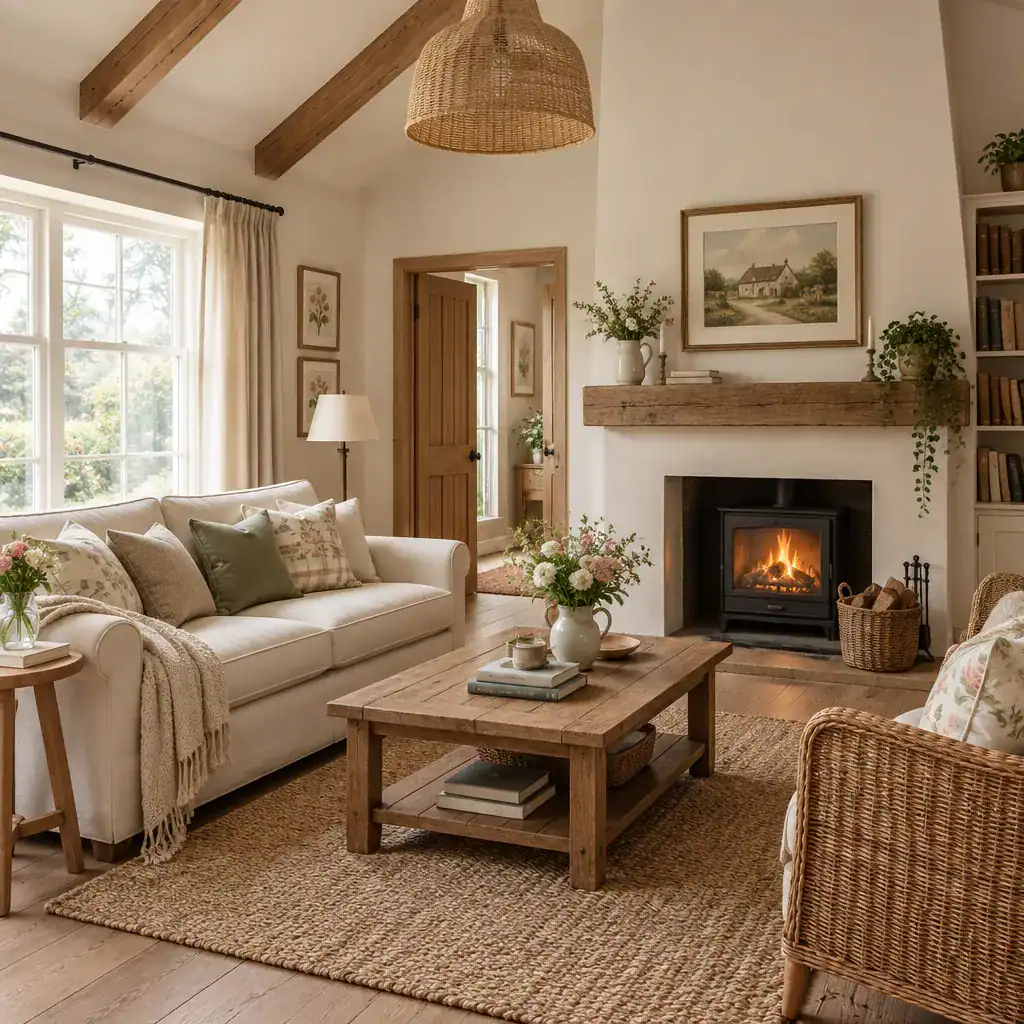
Choose a clear visual direction before buying furniture or accessories. You might lean toward painted country details, a quieter rural minimalism, or a gently vintage collected look. Keep that direction consistent in major finishes and larger pieces, then use personal objects sparingly. Restraint prevents the home from feeling crowded or overly themed, allowing its character to develop naturally.
Choose a Soft Cottage Color Palette
Build the foundation with warm neutrals, such as cream, soft beige, warm white, or muted gray, or use nature-inspired shades including sage, dusty blue, clay, and faded ochre. These colors create a calm backdrop for wood, stone, woven fibers, and layered textiles. In a cottage house interior, one or two gentle accent colors are usually enough to add interest without disrupting the restful atmosphere.
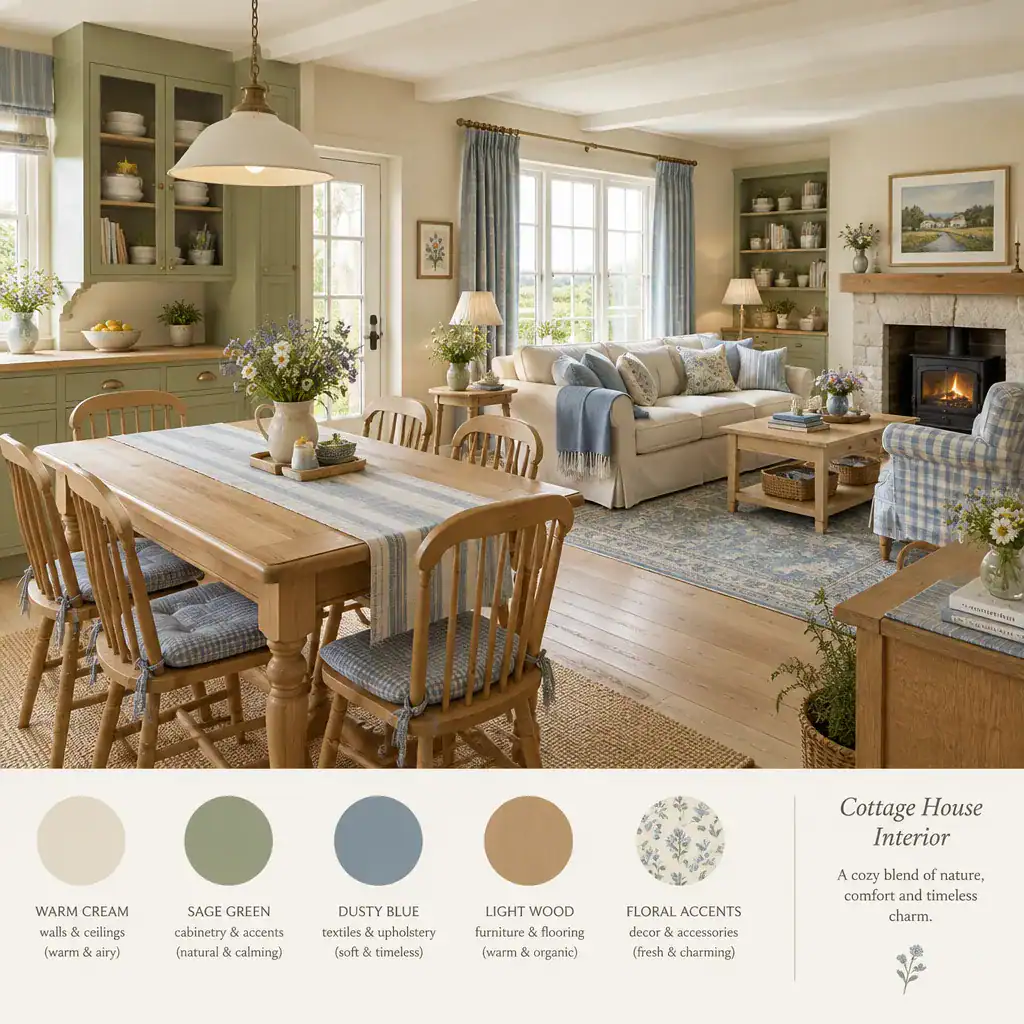
Carry accent tones through upholstery, curtains, artwork, table linens, or small accessories rather than introducing many unrelated colors. Check each paint choice against the undertones of flooring, cabinetry, woodwork, stone, and fabric samples. Use stronger contrast selectively, such as on a fireplace surround, interior door, or cabinet base, to define architectural features without making the room feel harsh.
Layer Natural Materials and Comfortable Textures
Natural materials give cottage rooms their visual warmth and tactile appeal. Combine timber, woven fibers, cotton, linen, ceramic, and stone-like finishes in balanced layers. A painted wood cabinet, timber table, linen curtain, and ceramic tableware can create depth without relying on excessive ornament.
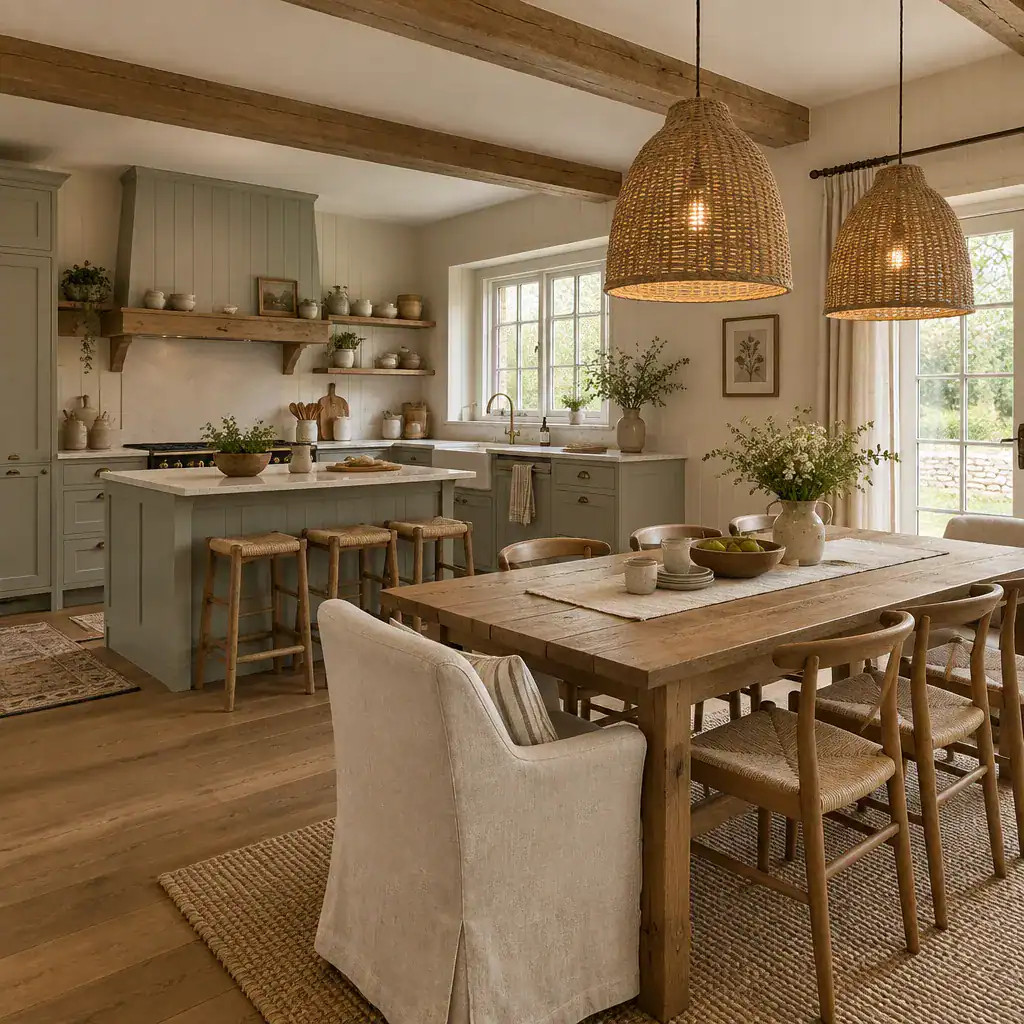
Use permanent elements to establish character first. Flooring, wall paneling, simple cabinetry, ceiling beams, or a modest tiled hearth can make a strong contribution to the cottage house interior before accessories are added. Select upholstery and textiles that look inviting and suit daily use, then repeat a small group of finishes across adjoining rooms. For example, the same light wood tone or woven basket texture can link the kitchen, dining area, and living room.
Arrange Furniture for Comfort and Daily Living
Arrange shared rooms around everyday comfort rather than formal symmetry. Give the living area comfortable seating, a reachable surface for drinks or books, and clear paths between seating, doors, and adjoining spaces. Sofas and chairs with approachable proportions, softly shaped arms, painted wood, or naturally finished timber tend to support a relaxed cottage mood.
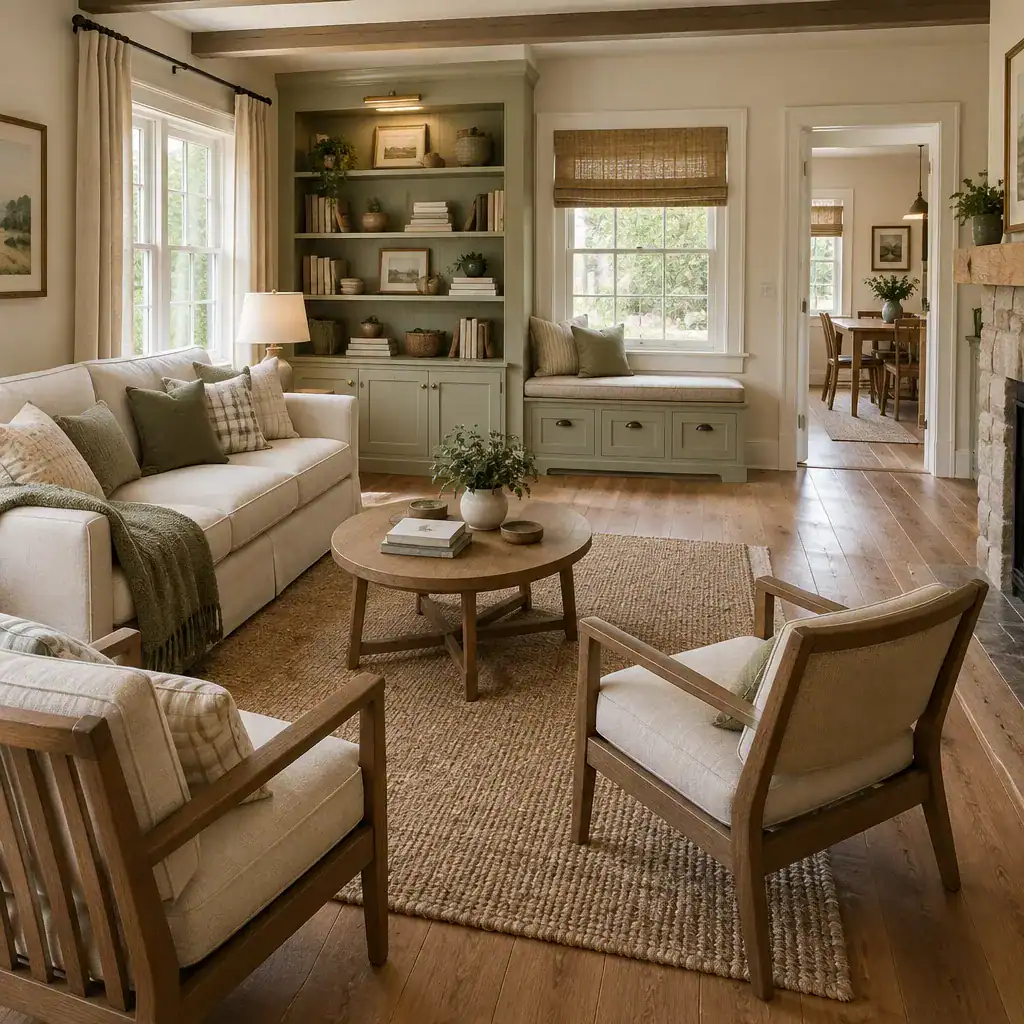
Mix practical display and storage through open shelving, side tables, benches, cupboards, and baskets. Open shelves can hold frequently used ceramics or a small collection of books, while a storage bench can conceal linens, games, or seasonal items. Avoid filling every corner simply because a piece fits there. Visual breathing room makes a cottage house interior more usable and helps its most meaningful details stand out.
Coordinate Lighting and Decorative Details
Layer lighting so each room can support different activities. Ambient lighting creates an overall glow, task lighting helps with reading, cooking, and bedside routines, and accent lighting draws attention to artwork, shelving, or a textured wall. Table lamps, fabric shades, wall sconces, and modest pendants with simple traditional or handcrafted forms can reinforce the cottage character.
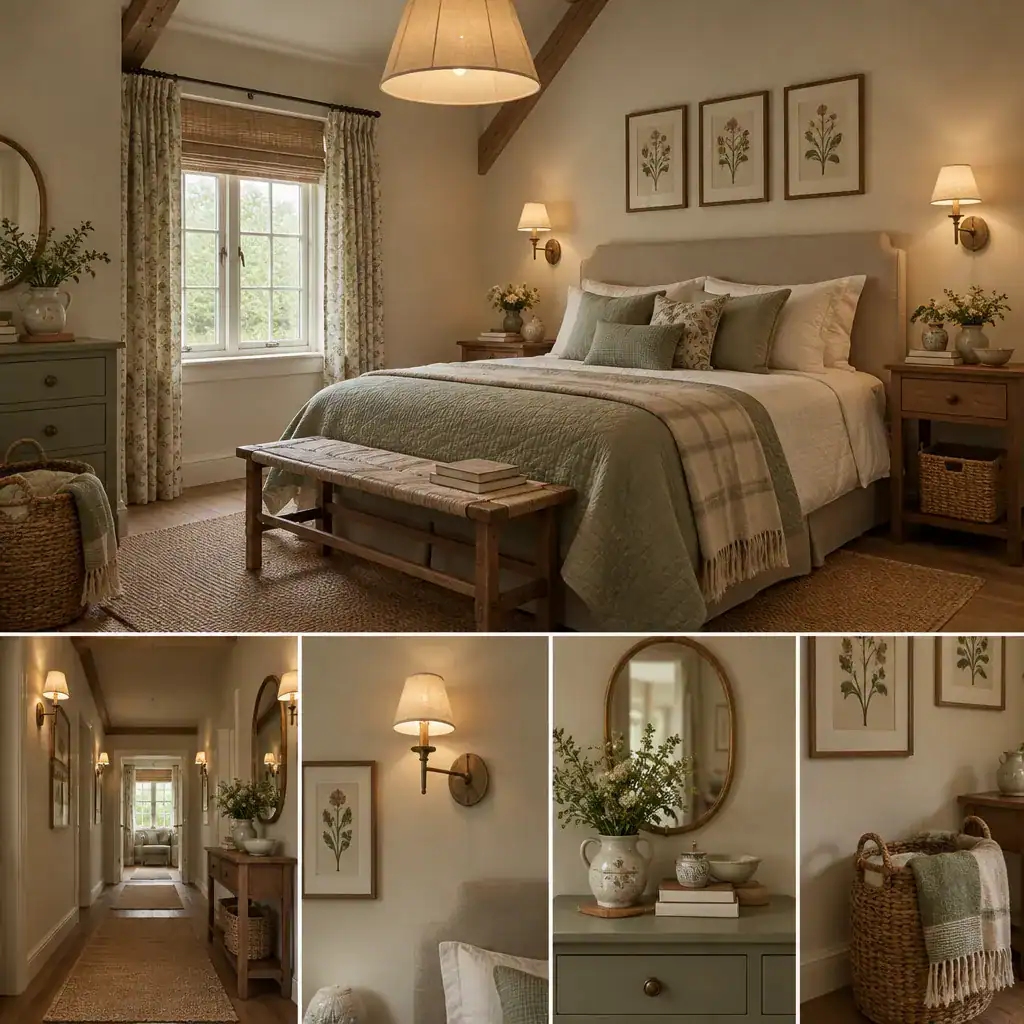
Add personality through a restrained selection of framed artwork, ceramics, baskets, mirrors, plants, and textiles. Botanical prints, a handmade-looking bowl, or a woven basket can provide character when each item has room to be noticed. Repeat complementary details, such as muted metal finishes, soft floral patterns, or natural woven textures, across rooms while allowing the kitchen, bedroom, and living area to remain functional in their own ways.
A cohesive cottage home comes from combining a relaxed palette, natural materials, comfortable furniture, and personal details with care. Build the look gradually around how each room is actually used, rather than trying to decorate every surface at once. When color, texture, lighting, and storage work together, the result feels practical, connected, and genuinely lived in.