
Cottage style is less about copying one historic look and more about creating a home that feels comfortable, personal, and connected to its setting. Whether you are renovating a compact cottage, building a new one, or softening the character of a larger house, the most effective choices work together: welcoming architecture, tactile materials, gentle color, useful rooms, and relaxed outdoor areas. These cottage design ideas explore each of those layers so you can choose details that suit your lifestyle rather than follow a rigid formula.
Start by noticing what your home already offers, from its roofline and natural light to the size of its rooms and garden. The following sections cover exterior proportions, materials and colors, living spaces, kitchens, dining zones, and outdoor rooms, helping you build a cohesive cottage atmosphere one considered decision at a time.
Create a Welcoming Cottage Exterior
A welcoming exterior often begins with clear, modest forms. A balanced pitched roof, a front door that is easy to find, and framed or divided-light windows can give a house an approachable sense of character. Natural wall texture, a small porch, shutters where appropriate, or a simple canopy can make an entry feel settled and lived-in without adding unnecessary ornament.
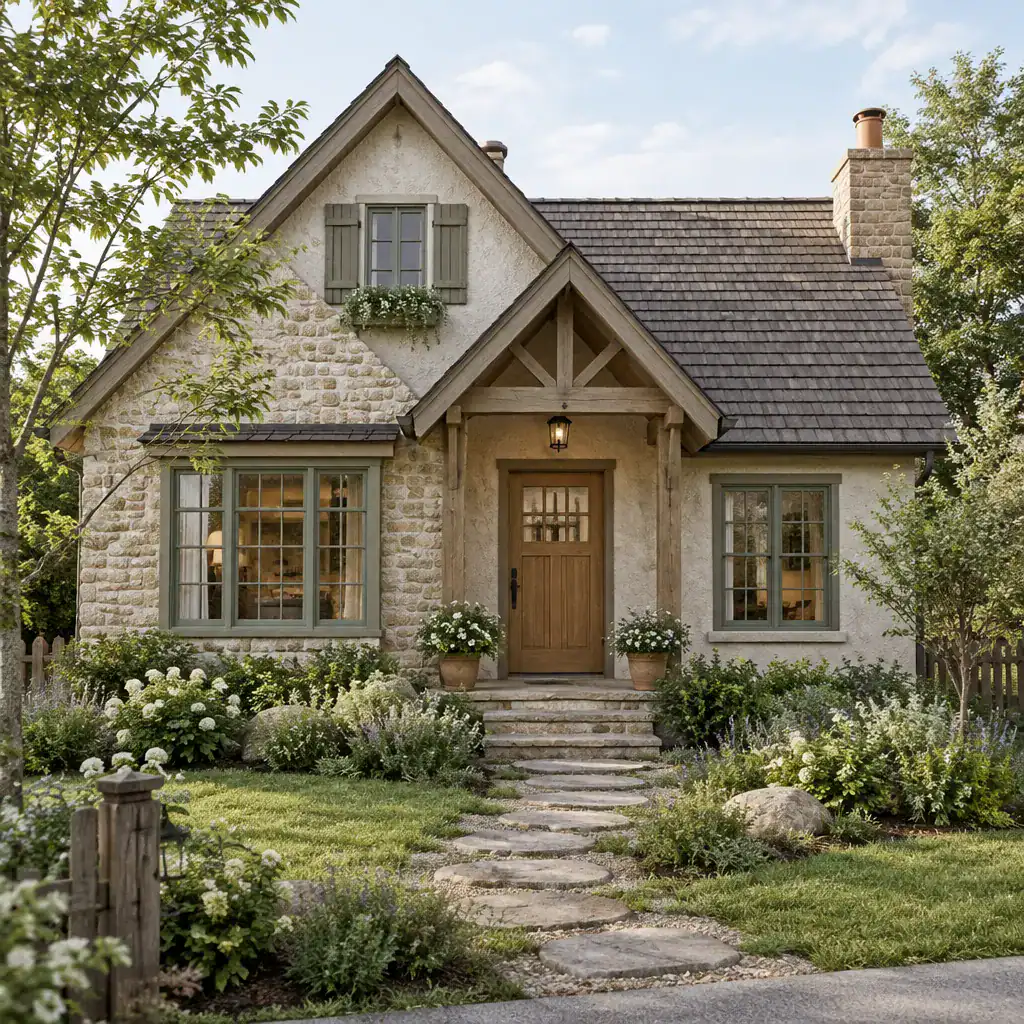
Pay attention to proportion as you select exterior features. Window sizes should relate comfortably to the wall space around them, and the entry should feel prominent enough to welcome visitors without overpowering the facade. If your home is small, a restrained roof profile and a few well-placed details may be more effective than elaborate trim. On a larger home, repeated window shapes, porch posts, and material bands can help break up the scale.
Let the landscape participate in the first impression. A path that leads naturally to the door, low planting around the foundation, and layered greenery near the entry can connect the building to its site. Choose plants and hardscape materials suited to local climate and maintenance preferences, then repeat their relaxed, natural character near patios or side entrances.
Use Natural Materials and Soft Cottage Colors
Wood, stone, brick, plaster, and natural-looking finishes bring visual warmth because they offer variation in grain, tone, and texture. You might use timber for a door, ceiling detail, shelving, or furniture; stone or brick for a hearth, path, or foundation accent; and light plaster or painted siding for calm surrounding surfaces. The goal is not to use every material at once, but to combine a few that feel compatible.
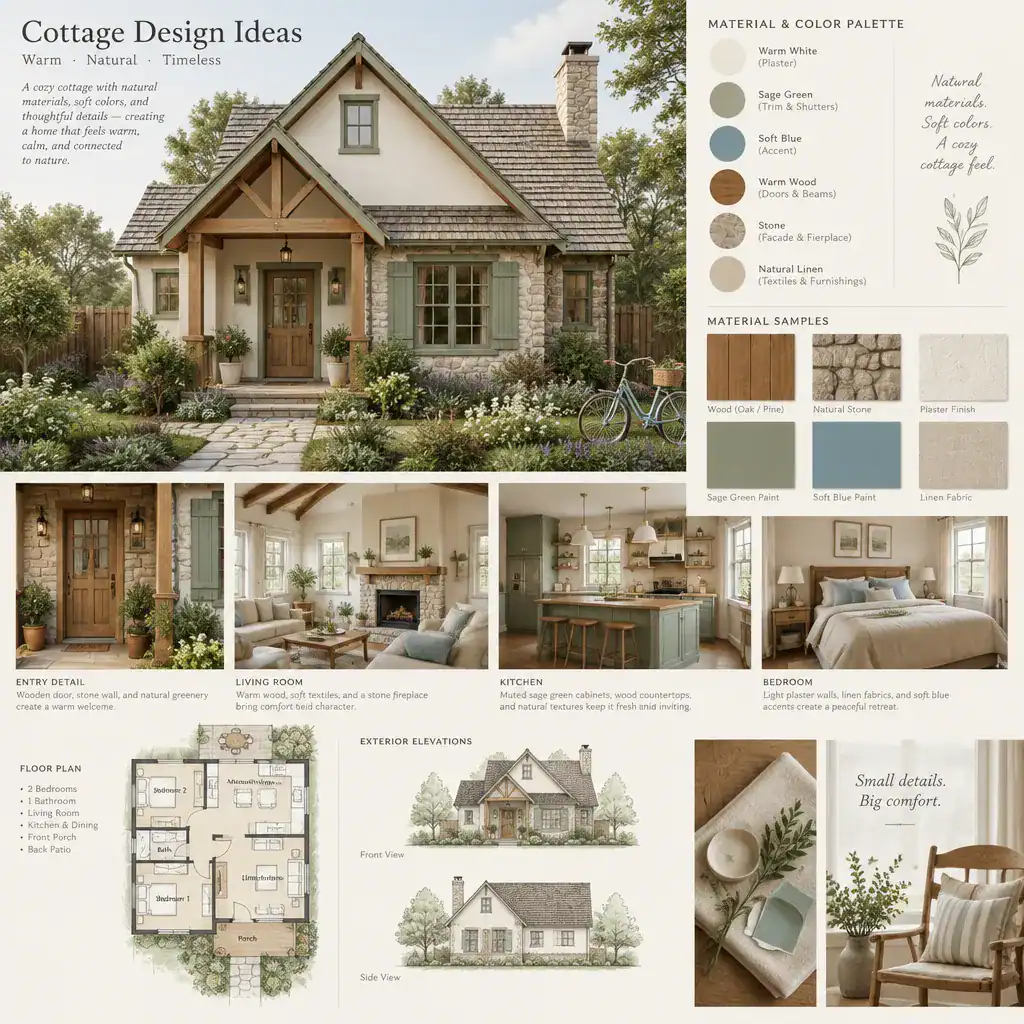
A restrained palette helps these textures stand out. Warm whites, soft beige, muted sage, dusty blue, gentle gray, and earth-toned accents can create a quiet backdrop that works across changing seasons. Consider the light around your property and the colors of nearby trees, stone, or neighboring buildings before committing to exterior paint. Inside, a related palette can move from room to room while allowing slightly deeper or lighter variations.
For cohesive cottage design ideas, repeat selected finishes rather than introducing a new statement in every space. The wood tone on an entry bench might reappear in kitchen shelving, while a soft green front door can be echoed in cushions or dining chairs. These links create continuity between indoors and out while still leaving room for personal objects.
Plan Comfortable Cottage Interiors
Cottage interiors should support the way people actually live. In a living room, arrange seating for conversation and relaxation, keeping pathways clear between doors, windows, and adjacent rooms. A sofa paired with a few movable chairs, a practical coffee table, and layered lighting can make even a compact room feel sociable and flexible.
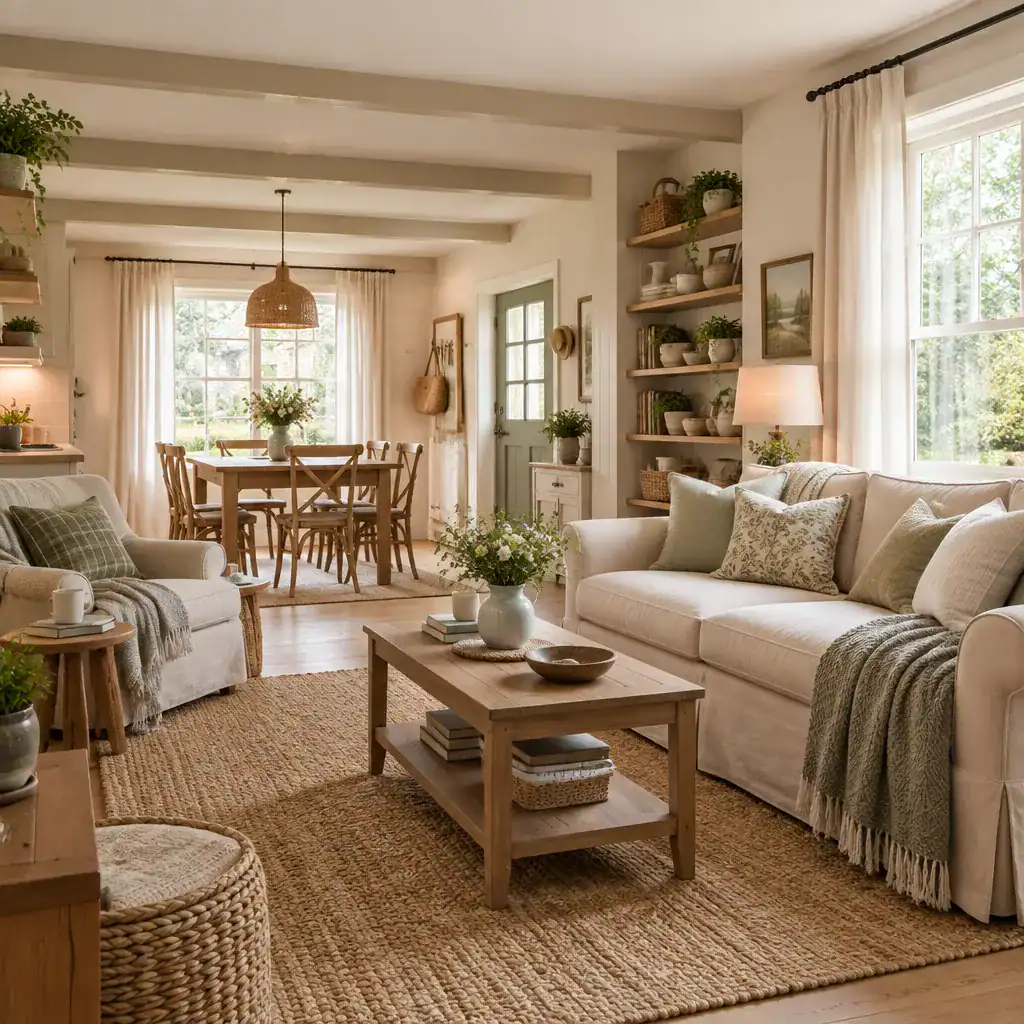
Character often comes from tactile, everyday details: simple trim, open shelving, painted woodwork, woven rugs, linen-like curtains, and a mix of wood and upholstered furniture. A vintage-inspired lamp, framed artwork, or inherited table can add personality when it has breathing room around it. Choose pieces for comfort and function first, then use decorative accents to tell a quieter story.
Keep the balance between charm and usability by giving possessions a home. Closed cabinets, baskets, drawers, and built-in storage where feasible can contain daily clutter, while a few open shelves display useful ceramics or favorite books. This approach allows the room to feel collected rather than crowded.
Add Cottage Character to the Kitchen and Dining Area
A cottage kitchen can be hardworking and inviting at the same time. Painted cabinetry, simple knobs or pulls, durable work surfaces, and open shelves for frequently used dishes create a relaxed, handcrafted impression. Select cabinetry colors that relate to the wider palette, and choose surfaces based on your cooking habits, maintenance tolerance, budget, and the existing conditions of the room.
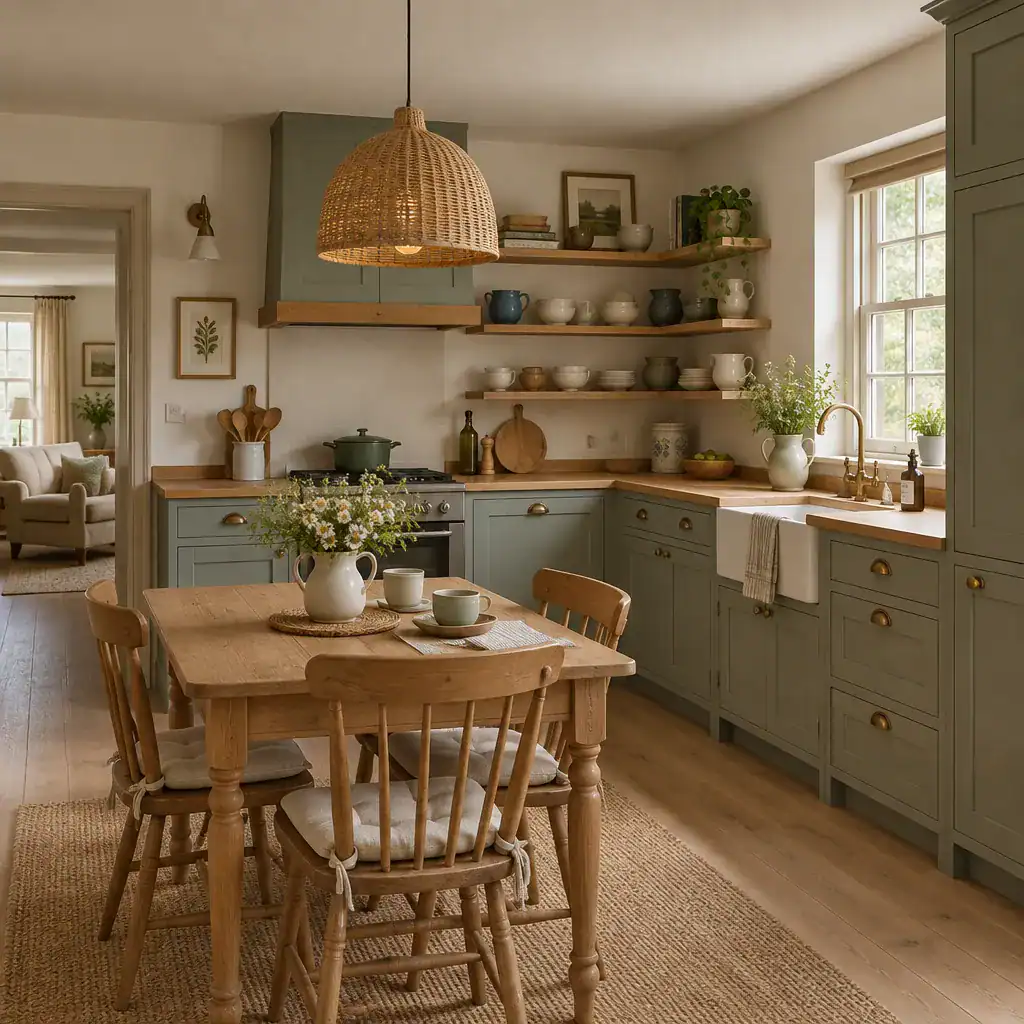
Use lighting and everyday objects to add personality with restraint. A woven or metal pendant above a table, a small lamp on a counter, neatly displayed cookware, and a few ceramics can make the space feel warm without reducing work area. Natural-fiber runners and seat cushions offer softness, especially when the kitchen has hard floors or crisp painted finishes.
Connect the dining area to the kitchen through repeated materials and practical storage. A wood table that relates to the countertop tone, chairs in a shared color family, and a sideboard for linens or serving pieces make the two areas feel intentional. These cottage design ideas are especially useful in open-plan homes, where visual consistency helps define separate functions without enclosing them.
Extend the Cottage Style into Outdoor Spaces
Outdoor areas can continue the home’s welcoming character with informal planting, gently curving paths, and simple places to pause. A small patio, bench near the entry, sheltered porch, or compact dining spot can be designed around how you expect to arrive, relax, share meals, or enjoy the garden. Prioritize circulation and daily use before adding decorative features.
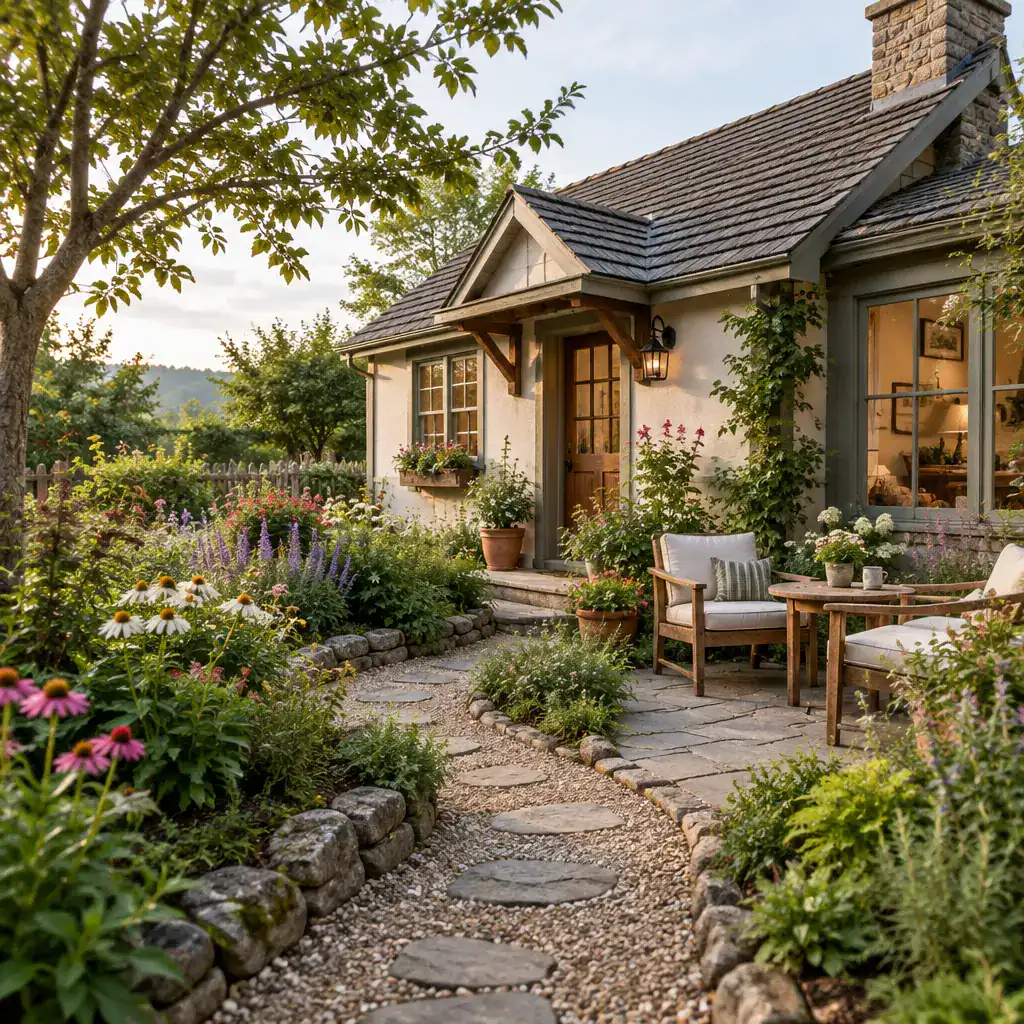
Repeat materials from the house where appropriate to make the transition feel natural. Stone edging may relate to a foundation detail, a wood seat may echo an interior timber finish, and planters can pick up a muted door or trim color. Mixed-height planting, seasonal flowers, grasses, and shrubs can create a softer garden texture, but the exact planting plan should reflect local conditions and the level of care you want to provide.
Keep outdoor spaces comfortable rather than overly formal. A clear path, a small surface for a drink, weather-suitable seating, and modest lighting may be all that is needed. The best gardens feel like an extension of the home, not a separate display area.
Combine Cottage Details Without Making the Home Feel Cluttered
A coherent cottage home usually relies on a limited set of recurring details. Choose one or two wood tones, a coordinated family of soft colors, and consistent metal or hardware finishes, then carry them through key rooms and exterior zones. This gives varied spaces a shared visual language without forcing them to look identical.
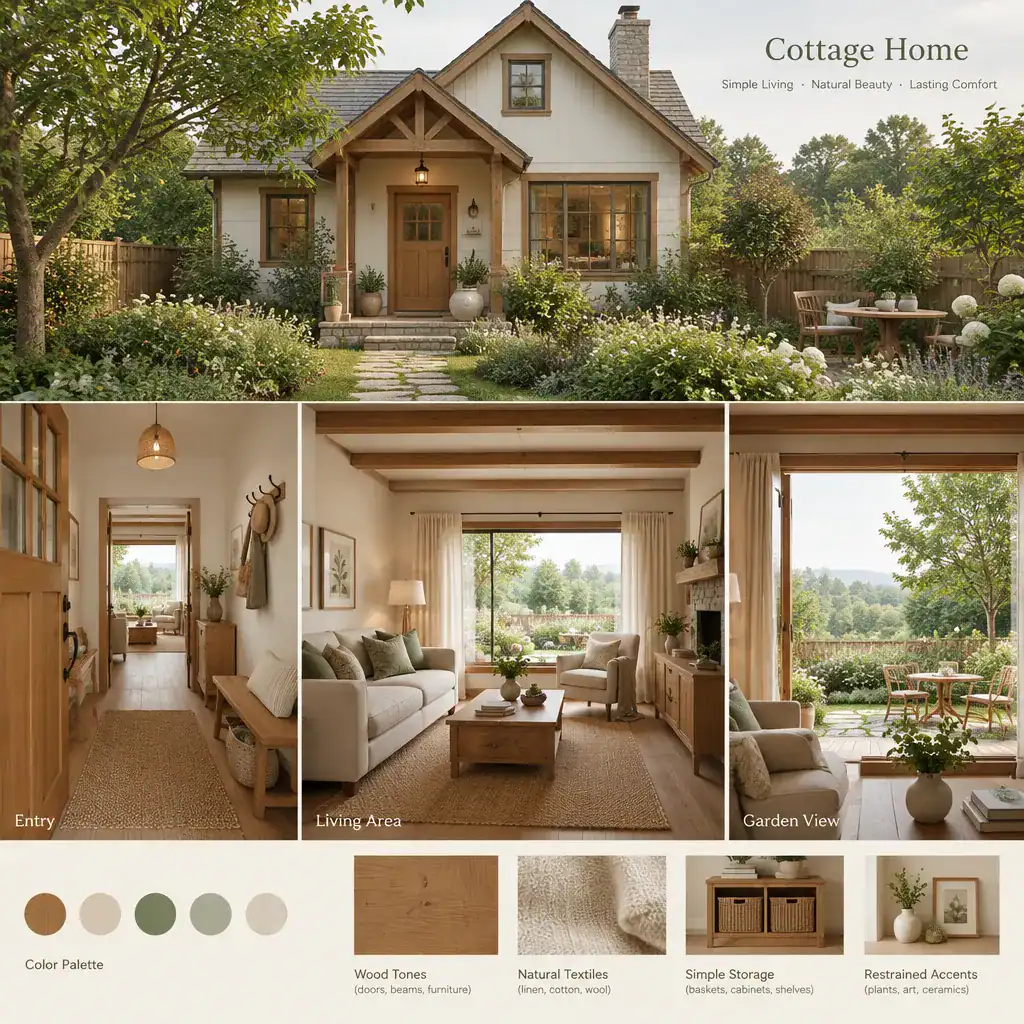
Balance focal points with quieter surfaces. A textured fireplace, patterned rug, painted cabinet, or garden gate can provide character, while simpler walls, clear countertops, and calm upholstery allow the eye to rest. Useful storage is essential here: it lets meaningful accessories remain visible without turning every ledge or shelf into a display.
Review each room, entry, and garden area as part of one overall story. Ask whether a new finish, color, or decorative object supports the home’s established vocabulary of comfort, natural texture, and practical use. This makes cottage design ideas feel intentional, even when they are introduced gradually over time.
Successful cottage design brings together welcoming architecture, natural materials, comfortable furnishings, and outdoor spaces that connect naturally to the house. The result does not depend on matching every detail; it depends on selecting elements that feel compatible and useful in daily life.
Begin with the area that needs the most attention, whether that is the front entry, living room, kitchen, or patio. Add complementary colors, textures, and furnishings step by step, and let your home’s size, setting, and routines guide each choice. With that approach, cottage character can feel personal, enduring, and entirely suited to the people who live there.