
Wood cladding brings warmth, depth, and a tactile quality to the crisp geometry often associated with contemporary villas. A successful modern villa exterior design with wood cladding is not simply about adding timber to a wall; it depends on deciding where the material belongs, how much of it to use, and how it relates to the rest of the architecture.
Before choosing a facade direction, consider cladding coverage, wood tone, board orientation, neighboring materials, and the conditions at the site. Sun, rain, humidity, wind, planting, and the desired aging appearance all affect whether a visually appealing concept will remain practical over time.
Start With a Balanced Modern Facade Composition
Use wood as an architectural focal point rather than automatically wrapping every elevation. Concentrating cladding around an entry volume, an upper-level box, a balcony, a garage surround, or a screened outdoor living zone can give the villa warmth while preserving the calm, simple planes that define modern design.
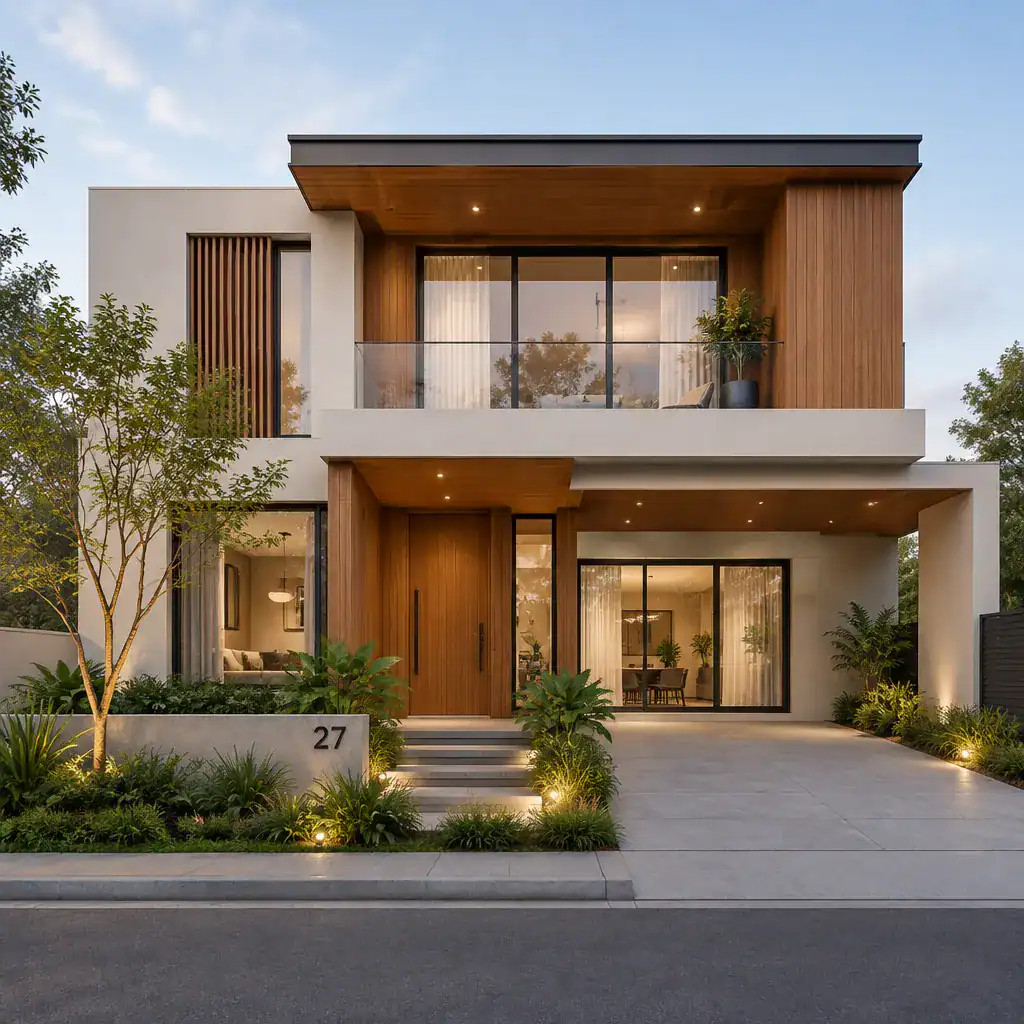
Balance timber with smooth stucco, concrete, stone, glazing, or restrained metal details. Recessed openings and broad glass areas can make a wood-clad volume feel lighter, while a stone or concrete base can visually ground it. Dark window frames often provide a clear edge between materials without adding unnecessary decoration.
Board direction changes perceived proportion. Horizontal boards can visually widen a long facade, while vertical boards can emphasize height and make a compact upper story appear more slender. Mixing directions can work when it follows the building volumes, such as horizontal boards on a low entry wing and vertical boards on a taller balcony enclosure. Coordinate these transitions with major architectural lines so the facade feels intentional. This approach gives a modern villa exterior design with wood cladding a measured rhythm instead of a patchwork appearance.
Choose the Right Wood Cladding Expression
The right wood expression depends on the atmosphere you want the villa to create. Light tones can feel airy beside pale stucco and open glazing, medium tones can offer a natural, grounded contrast, and dark tones can create a more dramatic connection with charcoal frames or metalwork. None is universally best; the setting, daylight, and overall palette should guide the choice.
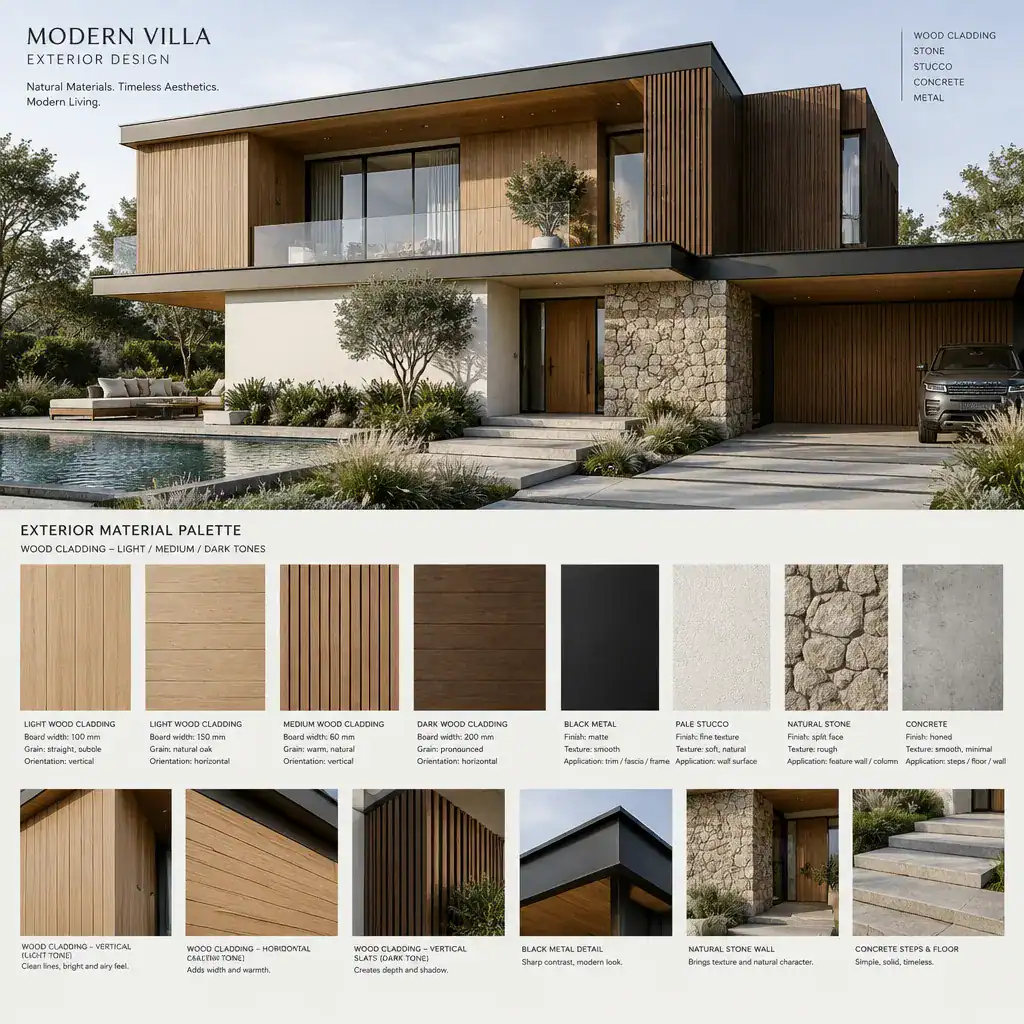
Board width, joint spacing, grain pattern, texture, and installation direction also shape the result. Narrow boards can create a more detailed rhythm, while wider boards may read as calmer and more monolithic. Smooth finishes support a refined contemporary look, whereas brushed or textured surfaces can add a more tactile character. Consider how close visitors will stand to the facade as well as how the cladding will read from the street.
Exterior wood can change through natural variation, stain selection, paint, and weathering. Review physical samples outdoors whenever possible, because daylight can reveal undertones and grain that do not appear accurately on a screen. Manufacturer documentation can also clarify intended finish appearance, exterior suitability, and expected care needs before the facade palette is finalized.
Combine Wood With Complementary Exterior Materials
Wood is especially effective in a modern villa because it can soften concrete, stone, glass, and metal without removing their clean-lined character. The key is a restrained palette: select a few materials with distinct roles rather than introducing many competing finishes.
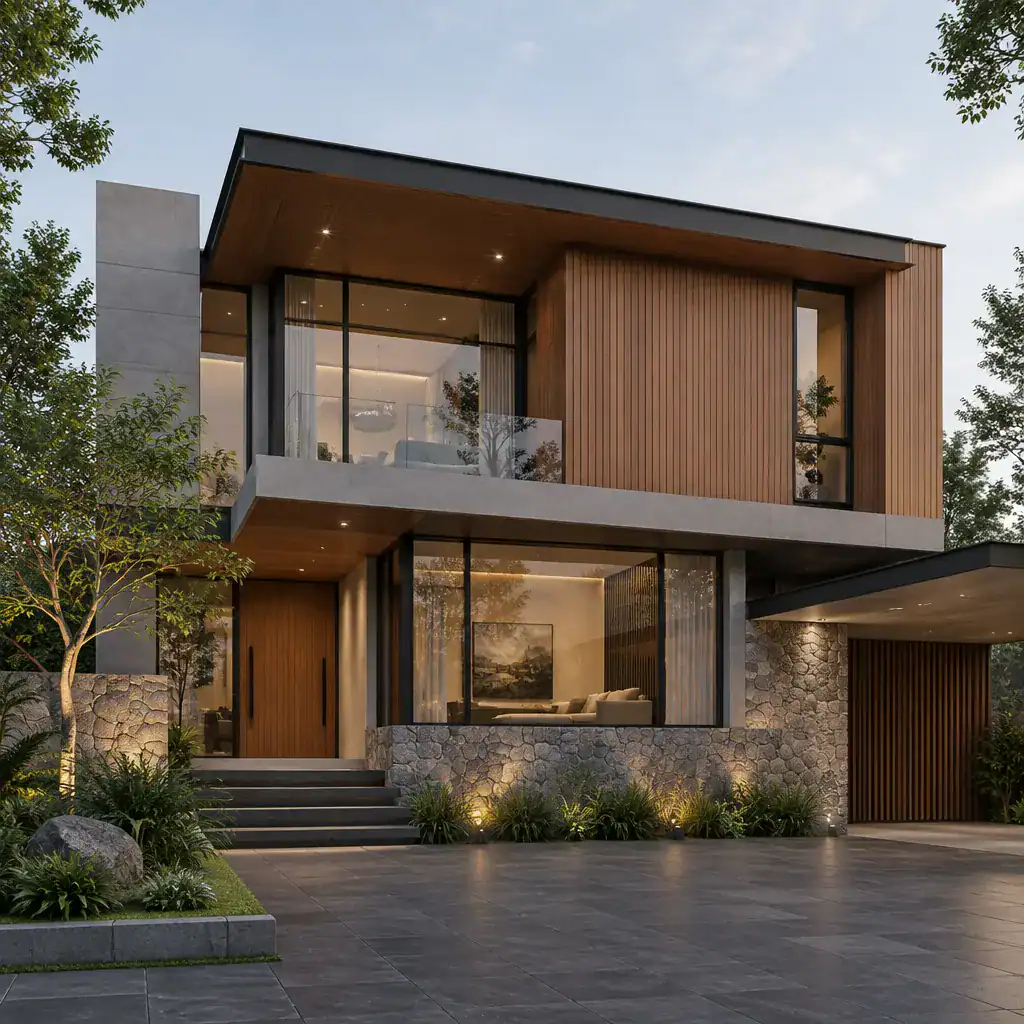
For example, warm vertical timber can sit comfortably against cool gray concrete, natural stone at the base of a wall, clear glazing, and matte black frames. Carry this logic into the roof edge, front door, paving, boundary walls, and outdoor furniture. Repeating compatible tones helps the exterior feel composed, even when different materials are used.
Visual contrast should not become material conflict. Compare color temperature, reflectivity, and texture: a highly glossy surface beside rough timber may feel more abrupt than matte metal or honed stone. Clean junction details are equally important. Align reveals, trims, and material edges with windows, corners, and floor lines so that the modern villa exterior design with wood cladding reads as one coherent architectural system.
Plan Wood Cladding for Sun, Moisture, and Exposure
A facade concept should respond to its specific site. Assess direct sunlight, rainfall, humidity, wind-driven weather, ventilation, drainage, and the proximity of vegetation or water. These conditions influence the selected cladding product, finish, exposure strategy, and likely maintenance priorities.
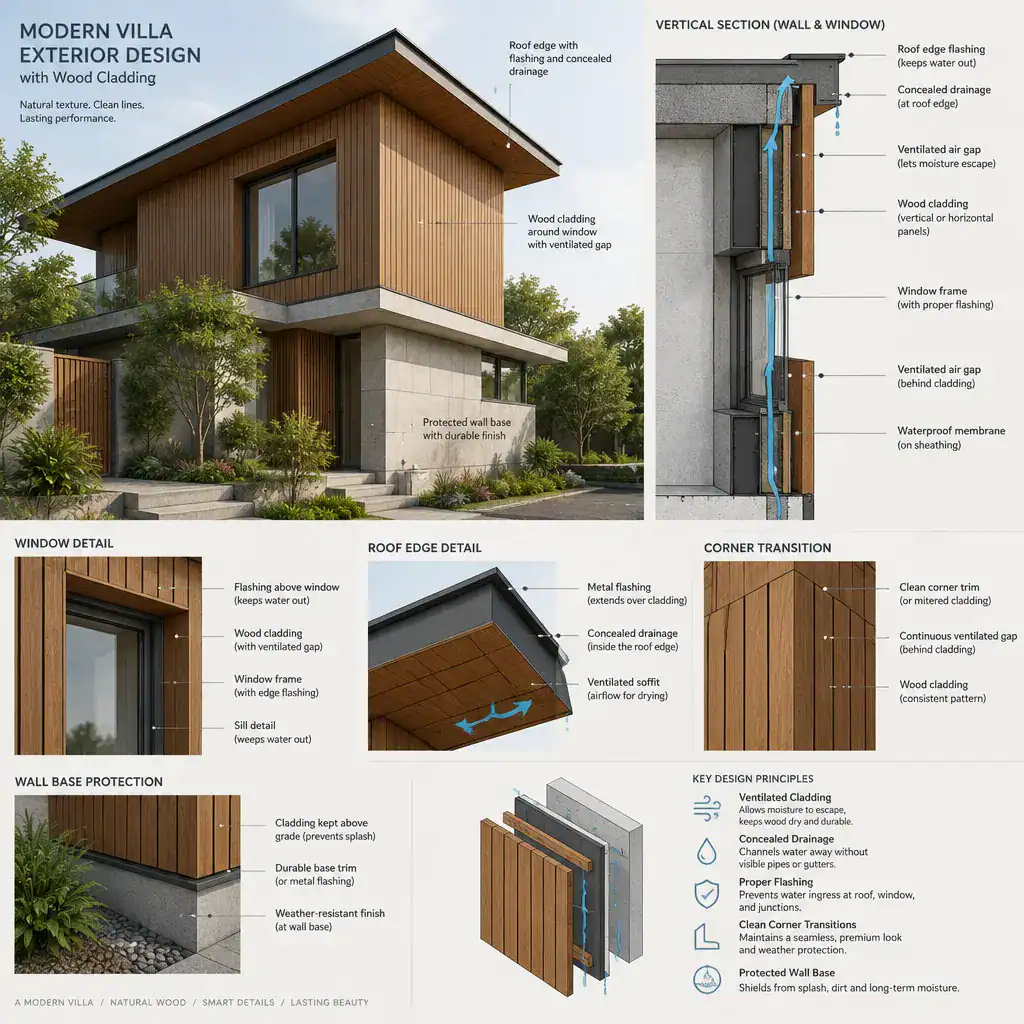
Check the chosen product against the manufacturer’s exterior-use guidance and applicable local building requirements. Pay close attention to detailing around windows, doors, roof edges, corners, and the wall base. These transitions need to manage water, allow appropriate movement, and avoid trapping moisture behind or around the cladding.
Discuss the substrate, ventilated cavity, drainage approach, fasteners, fire considerations, and installation sequence with qualified professionals. An architect, builder, and cladding supplier can help confirm that the aesthetic layout is compatible with the intended wall system. This early coordination is more reliable than trying to solve technical junctions after the visual design has been approved.
Build a Realistic Maintenance and Aging Plan
Maintenance requirements vary with the wood species or cladding product, finish, local climate, degree of exposure, and manufacturer instructions. Decide early whether you prefer to maintain a more consistent original tone or allow the surface to develop a naturally weathered appearance. Both can suit a contemporary villa when the choice is deliberate.
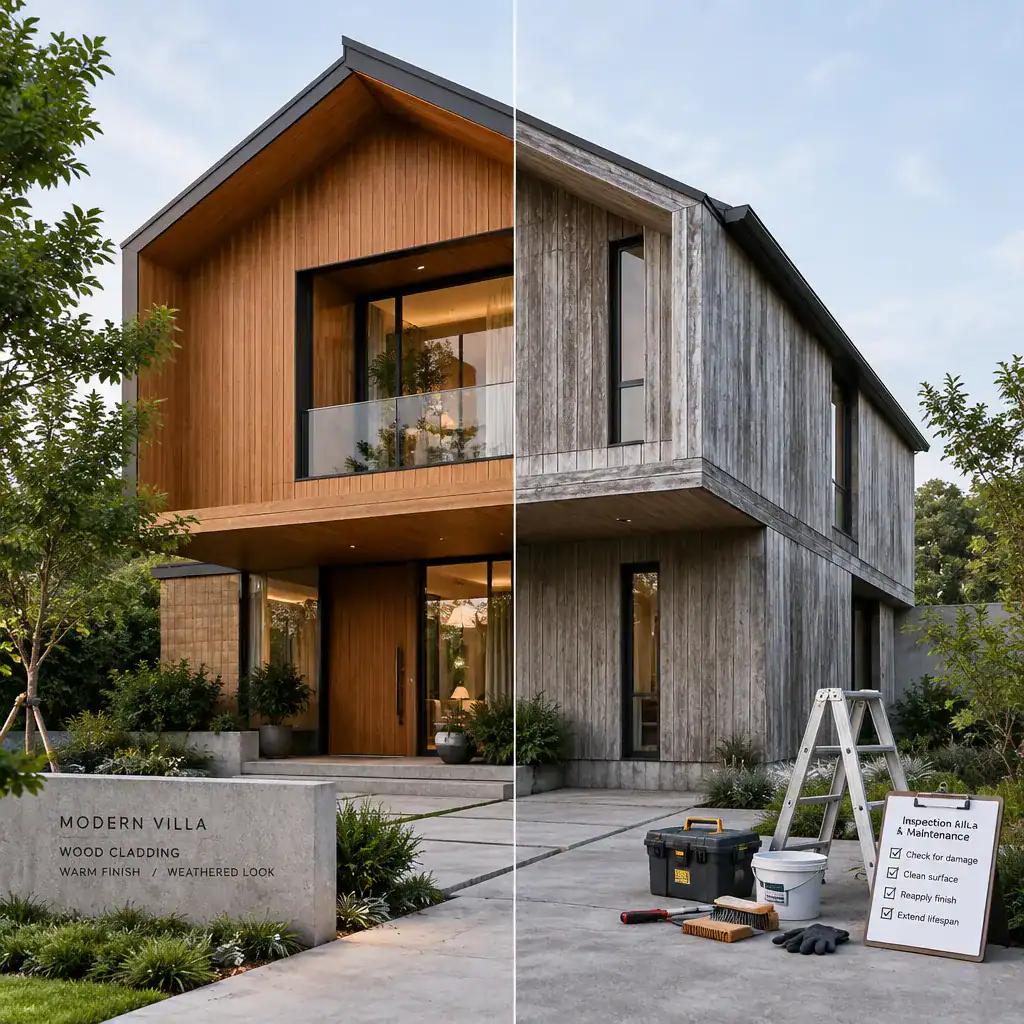
A warm, finished appearance may require periodic care to preserve its intended color, while an intentionally weathered silver-gray look may place more emphasis on even exposure and thoughtful facade composition. Protected areas can age differently from exposed walls, so consider how overhangs, balcony recesses, and landscape shade may affect visual consistency.
Plan practical access for inspections and maintenance. Establish a routine for checking joints, fasteners, finish condition, moisture-prone areas, and damaged boards. Before purchasing, request written care instructions, refinishing expectations, warranty terms, and information about replacement options. A realistic upkeep plan allows a modern villa exterior design with wood cladding to remain convincing long after installation.
Successful wood-clad villa facades rely on coordinated composition, appropriate material selection, careful detailing, and a clear plan for aging. Take decisions about cladding placement, board direction, tone, companion materials, site exposure, and maintenance responsibilities to your architect, builder, or supplier. Evaluate real samples in the intended setting and assess site conditions before choosing a facade solely for its appearance.