
Textured concrete gives a minimalist villa facade visual depth without depending on ornamental detail. Its character comes from the interplay of surface relief, tone, scale, proportions, adjacent materials, and changing daylight. A successful modern villa exterior design with textured concrete walls is not simply about selecting a finish; it is about coordinating the wall treatment with openings, massing, lighting, landscaping, and buildable details.
Before committing to this direction, consider the mood you want to create, from calm and refined to bold and sculptural. The following ideas show how concrete texture can become the primary architectural expression while remaining compatible with the practical needs of a home and site.
Choose a Textured Concrete Finish That Supports the Villa’s Character
There is no single correct textured concrete finish for a contemporary villa. Board-formed impressions can introduce linear warmth and a crafted appearance, while a subtle vertical texture can make tall walls appear more elegant. Rough exposed-aggregate effects tend to feel more rugged and tactile, whereas softly ridged surfaces can create quiet movement across broad facade planes. The best choice depends on the intended character of the villa and the scale of the architecture.
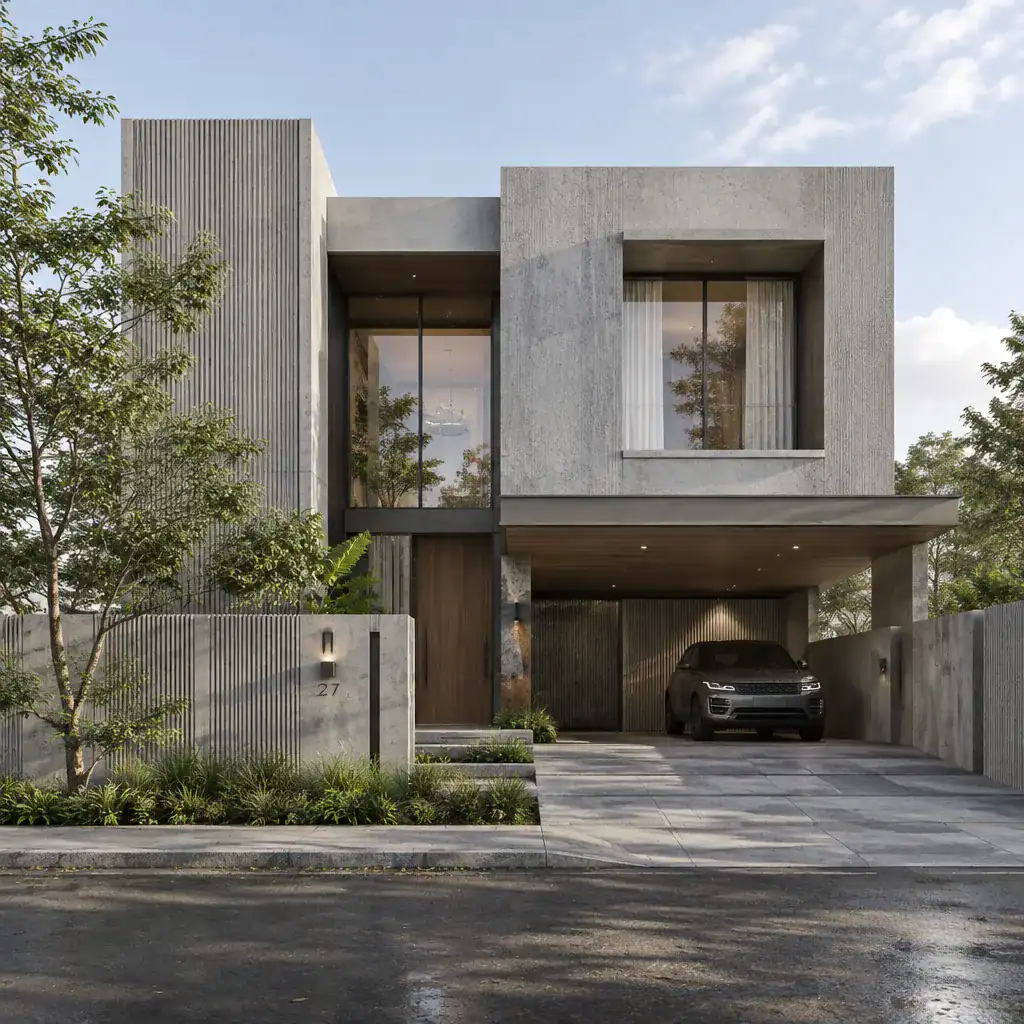
Texture scale and repetition strongly affect the overall composition. Fine, evenly spaced grooves can support a calm and ordered facade, while deeper patterns or irregular relief can make the building feel dramatic and monolithic. Applying a highly active finish over every exterior plane may make the design visually busy, so it is often more effective to contrast textured feature walls with smoother concrete areas.
Review physical samples or a site mockup before final approval. Sun angle, wall orientation, pigment variation, formwork quality, and installation technique can all change how a finish appears in real conditions. Local climate, rain exposure, drainage strategy, and advice from qualified design and construction professionals should guide the final material specification.
Balance Concrete Walls With Warm and Contrasting Exterior Materials
Concrete becomes more inviting when it is paired with materials that bring warmth, reflection, or fine detail. Natural timber cladding at an entry recess, for example, can soften a substantial concrete volume. Stone paving can anchor the house to the ground, while glass and dark metal-framed openings introduce a clean contemporary contrast. In a modern villa exterior design with textured concrete walls, these secondary materials should support rather than overpower the concrete.
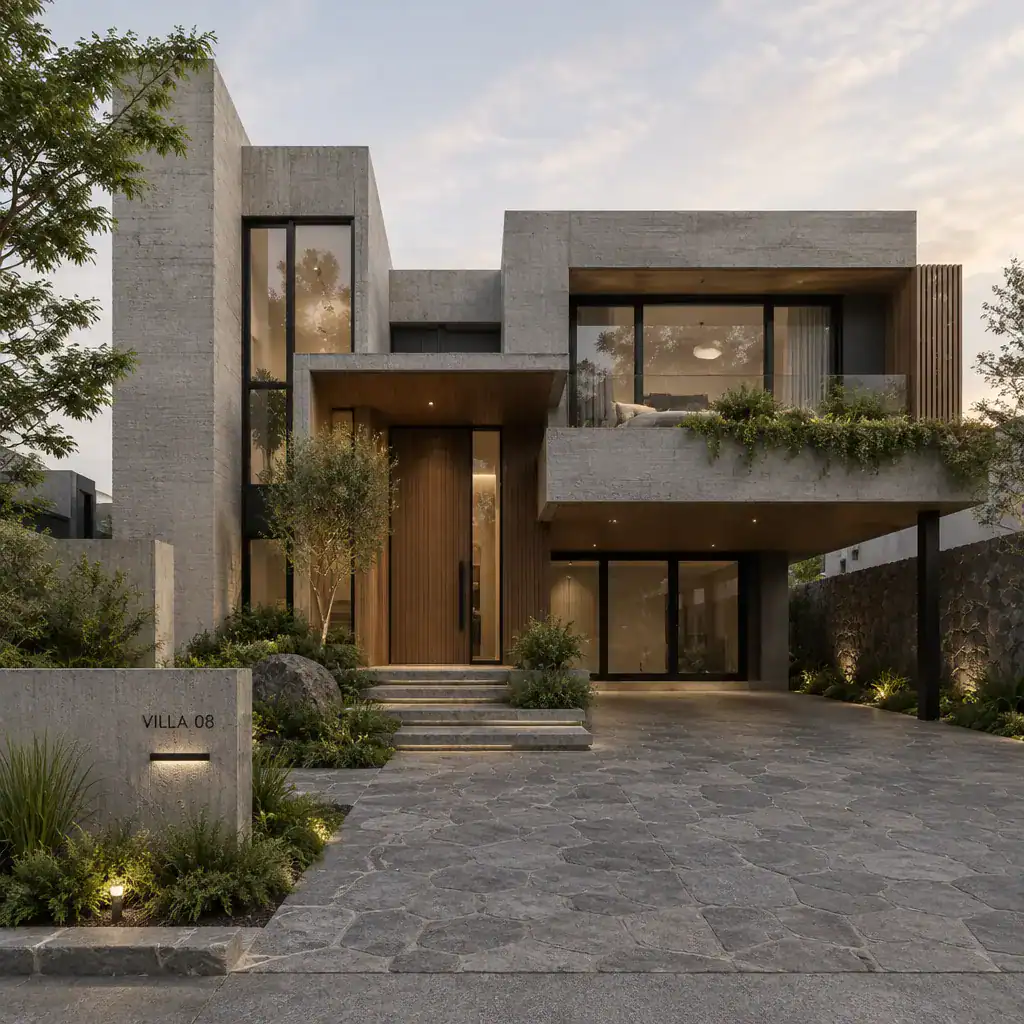
Warm-toned wood, bronze-like metal, or pale natural stone can make a concrete-centered facade feel more welcoming. Conversely, charcoal metal screens, black window frames, and dark garage doors can sharpen the composition and reinforce a crisp, architectural look. The preferred balance depends on whether the home should feel softer and resort-like or more urban and sculptural.
Repeat selected materials across the entry, balcony screens, garage door, boundary wall, and outdoor paving to establish continuity. Keep the palette controlled: a small number of well-coordinated finishes allows the textured concrete to remain the main visual focus.
Shape the Facade With Openings, Shadows, and Layered Massing
Textured concrete gains presence when it is shaped by shadow. Recessed windows, projecting upper volumes, covered terraces, vertical screens, and deep entry portals create layers that make the facade more dynamic throughout the day. Rather than treating the concrete as a flat background, use the wall depth as part of the villa’s architectural composition.
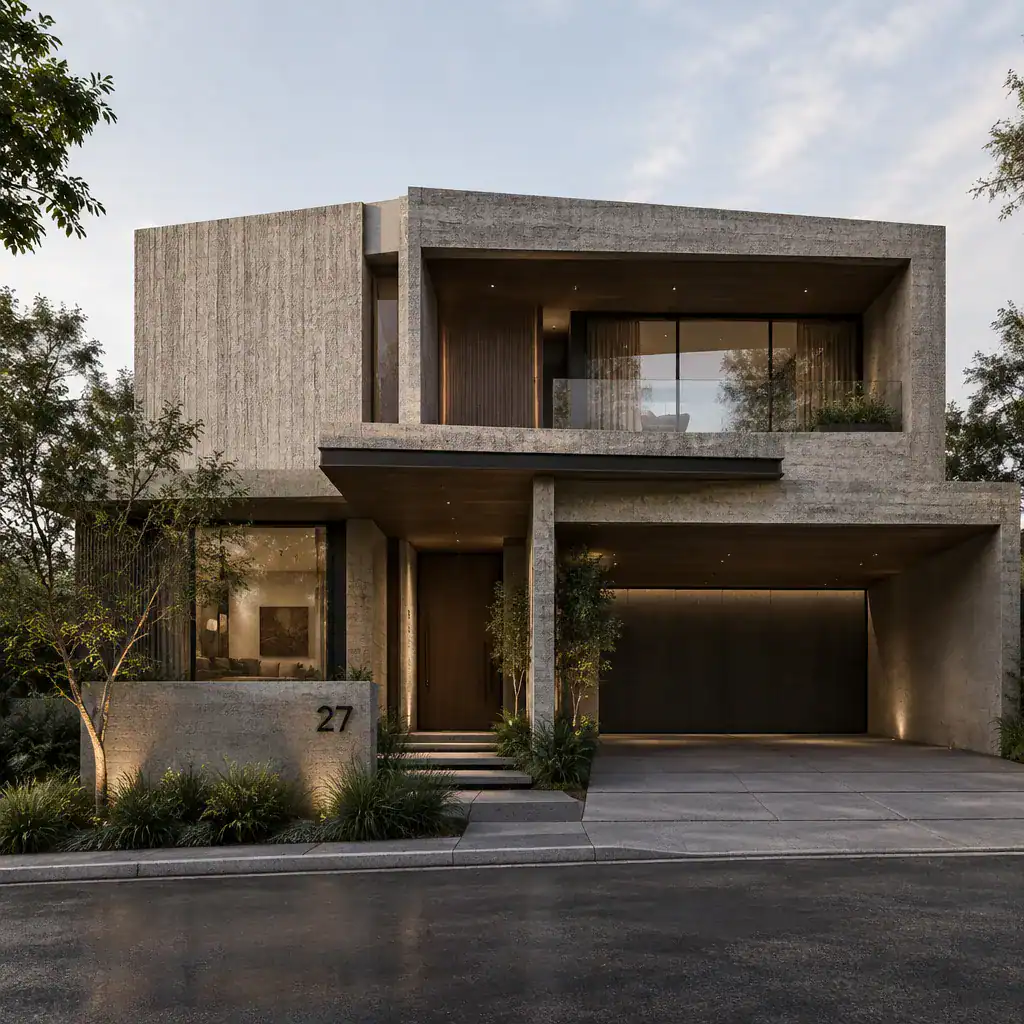
Balance solid wall areas with glazed openings carefully. Large glazing can bring light and views, but too much transparency may weaken the grounded quality of a concrete facade. Generous solid planes, placed alongside purposeful windows and doors, can feel private and composed without becoming heavy. Deep reveals also add shade and help visually frame the texture around each opening.
Overhangs, setback entries, and crisp shadow lines can emphasize surface relief while responding to practical needs. Their placement should connect to privacy, desired views, natural ventilation, solar conditions, and the arrangement of rooms indoors. This ensures the exterior is a direct expression of how the villa works, not just an applied visual treatment.
Use Exterior Lighting to Reveal Concrete Texture After Dark
After sunset, well-planned lighting can reveal concrete relief in a way daylight cannot. Grazing light placed close to a wall can pick up grooves, ridges, and formwork impressions, while concealed linear fixtures can wash broad surfaces with a controlled glow. The goal is to show dimension without making the facade appear flat or overly theatrical.
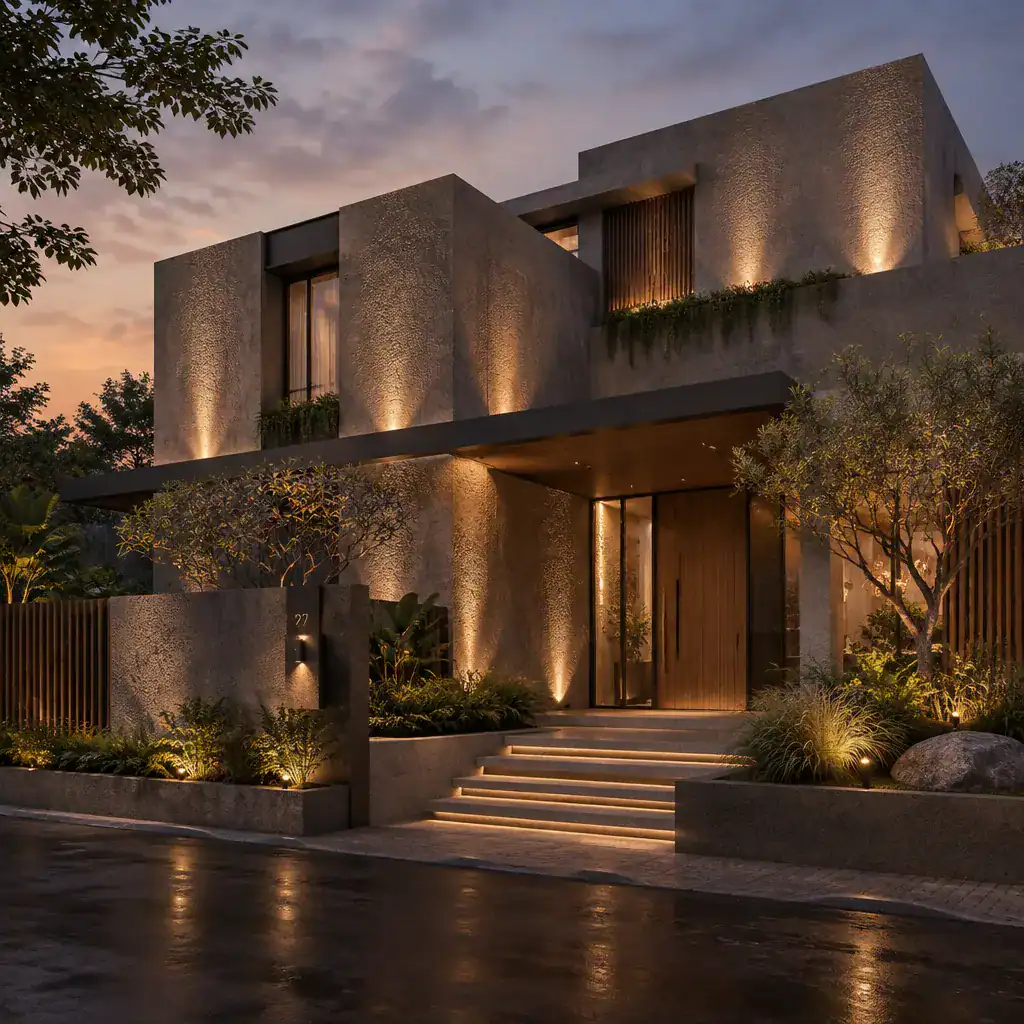
Prioritize light at entries, circulation paths, terraces, steps, and landscape edges, where it improves both atmosphere and nighttime movement. A recessed entrance can benefit from warm, indirect illumination, while low-level path lighting can guide visitors toward the front door without competing with the architecture.
Avoid excessive brightness, glare, and randomly placed fixtures. Too many visible lights can distract from the carefully composed surfaces of a modern villa exterior design with textured concrete walls. Coordinate fixture locations early with the facade texture, electrical layout, drainage considerations, and applicable local requirements.
Complete the Concrete Villa Exterior With Restrained Landscaping
Landscaping should frame a textured concrete villa rather than conceal it. Sculptural grasses, low shrubs, small trees, gravel beds, stone paving, and simple water elements can soften the hard geometry of the structure while preserving clear views of the facade. A restrained planting approach often suits concrete because it lets both architecture and greenery retain their individual presence.
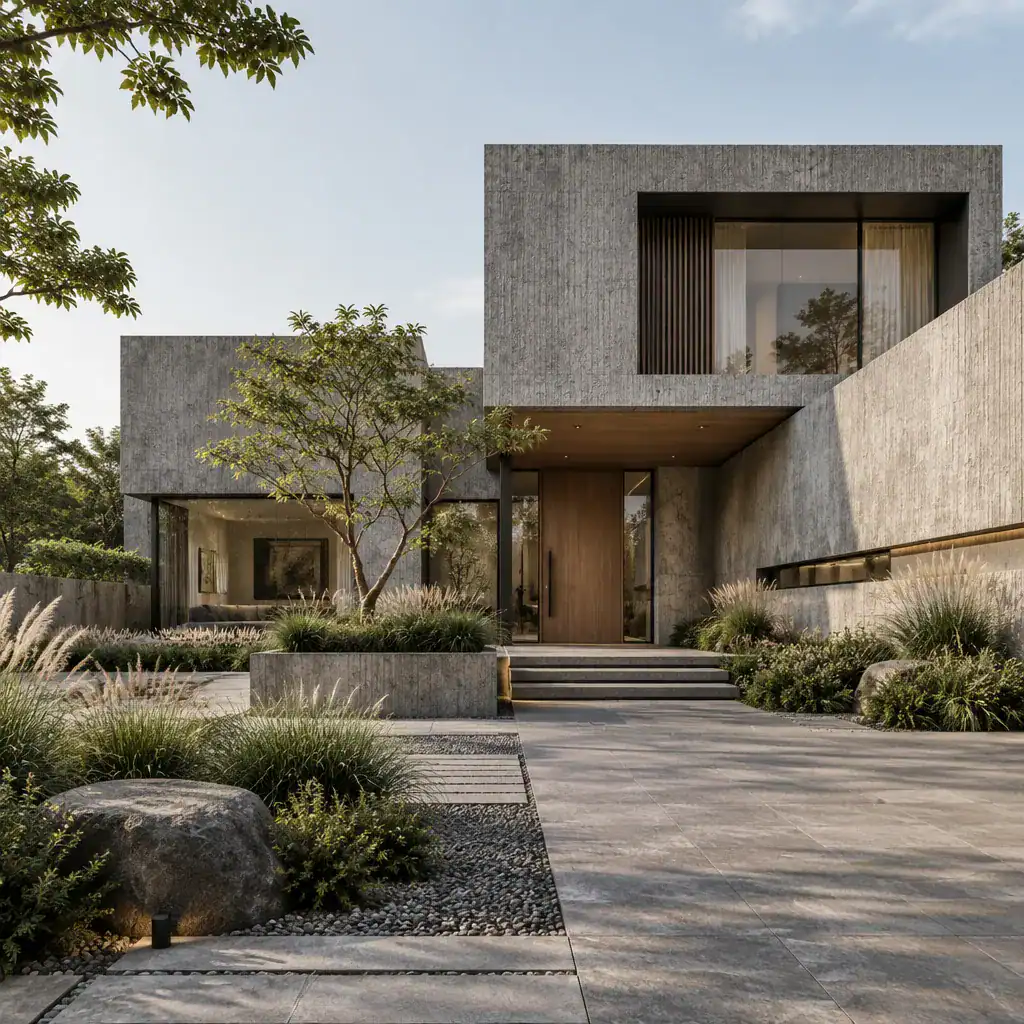
Use organic plant forms to contrast with the linear quality of concrete walls, screens, and window frames. Layered greenery near the arrival path can make the entrance feel more relaxed, while a low wall or courtyard planting zone can add privacy without blocking daylight. Paving and gravel should be selected as part of the material palette, not as disconnected site finishes.
Coordinate plant scale and placement with important sightlines, privacy needs, maintenance access, drainage, and local climate. Carry the same visual language from the driveway to the courtyard, terrace, and boundary treatment so the site feels like a unified extension of the villa.
Review Practical Details Before Specifying Textured Concrete Walls
Strong visual concepts require consistent detailing. Substrate preparation, joint locations, edge conditions, water management, and surface protection all influence how a textured concrete wall will look over time. Plan joints so they align with facade geometry where possible, protect window openings with well-considered detailing, and ensure base conditions account for splashback and drainage.
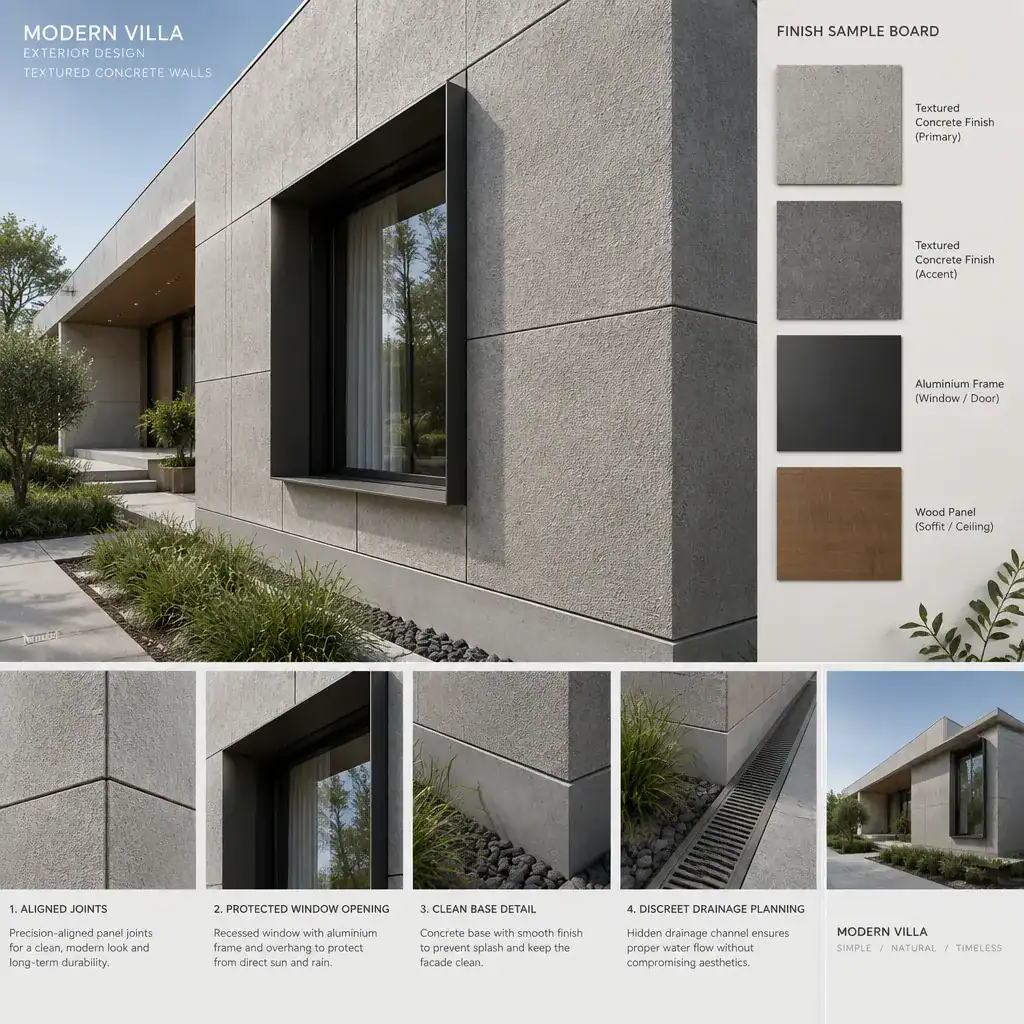
Consider how dust, staining, weather exposure, cleaning access, and possible repairs may affect the selected texture. Deeper or more irregular surfaces may create a distinctive look, but they should be evaluated with realistic maintenance expectations for the site. Ask qualified contractors or material suppliers for samples, written finish descriptions, installation guidance, and maintenance information before approving the work.
Also confirm that the design complies with applicable local building, drainage, fire, accessibility, and planning requirements. Professional guidance is especially valuable when coordinating textured finishes with waterproofing, openings, exterior fixtures, and site conditions.
Textured concrete is most effective when it is part of a complete facade strategy rather than an isolated finish. Proportions, material accents, openings, shadow, lighting, landscape, and durable detailing should all work together to create a composed exterior.
Start by defining the mood you want the villa to convey, then compare texture and material combinations through samples, visual studies, or mockups. With careful professional design and construction input, a modern villa exterior design with textured concrete walls can translate from an inspiring concept into a cohesive and lasting home exterior.