
A modern villa can use stone as a confident architectural accent without losing the clean lines that make contemporary homes feel calm and composed. The key is to treat stone as part of the overall facade composition, not as a finish applied everywhere. This guide focuses on visual planning, material coordination, and design choices rather than construction specifications.
Stone accents bring texture, visual weight, and a welcome connection to natural materials. Whether you are renovating an existing home or planning a new build, the decisions around placement, color, texture, companion finishes, lighting, and landscaping all shape the final result. A well-planned modern villa exterior design with stone accent facade can feel grounded and distinctive while remaining refined.
Choose the Right Role for Stone on a Modern Villa Facade
Start by deciding what stone should accomplish on the elevation. In a contemporary composition, it often works best as a focused element that guides the eye toward an important architectural volume, rather than as a dominant cladding across every wall.
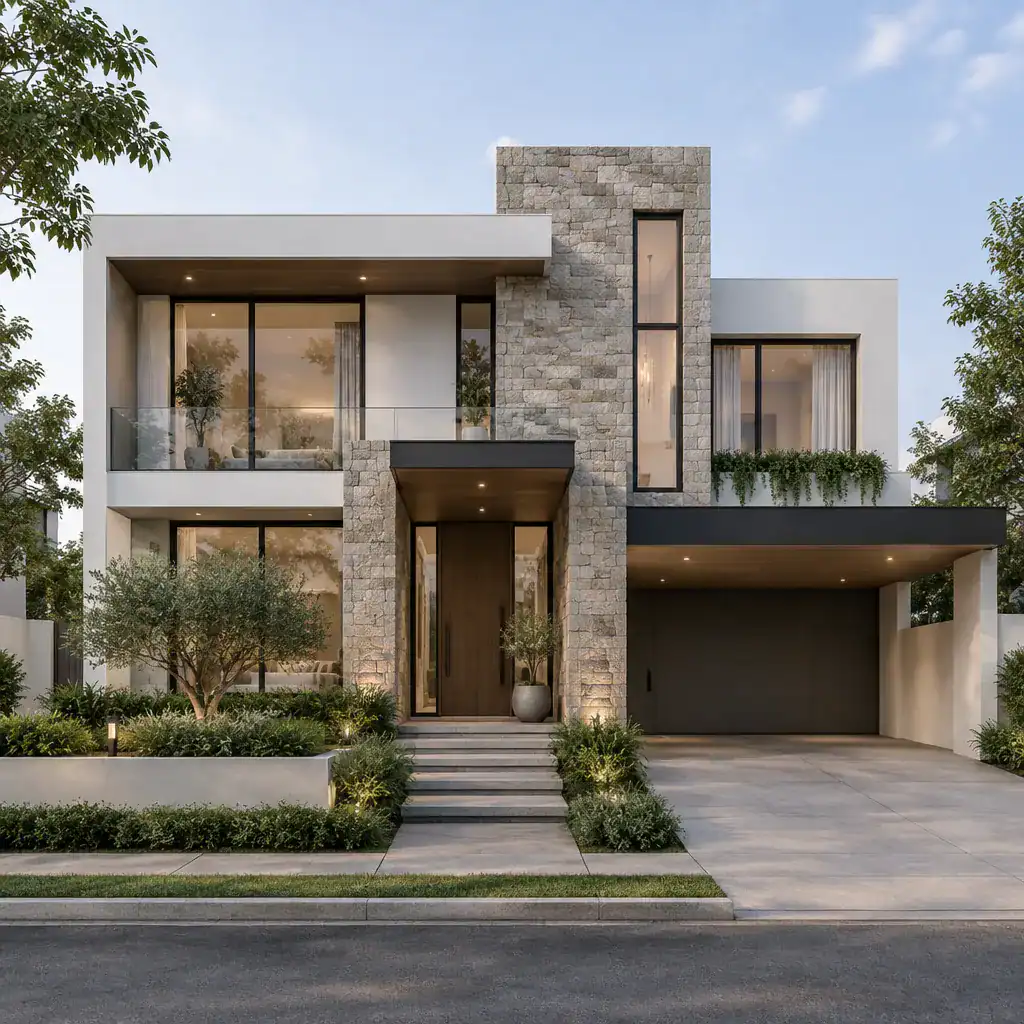
An entry portal is one of the clearest uses for stone because it gives the approach a sense of arrival. Stone can frame the front door, extend upward through a double-height volume, or form a vertical feature wall that visually connects the ground floor to the upper level. Other effective locations include a chimney volume, a ground-floor base, a partial side elevation, a boundary wall, or a low landscape wall near the entrance.
Concentrated placement creates a focal point and lets smooth surfaces, glazing, and shadow lines remain visible. By contrast, broad stone coverage can make a facade appear heavier, especially on a villa with modest openings or compact proportions. Before choosing the coverage area, study the building massing, entry sequence, window arrangement, and the relationship between lower and upper floors. The stone zone should support these existing lines rather than interrupt them.
Explore Stone Colors and Textures That Support Contemporary Architecture
Stone color and surface character can move the same villa in very different aesthetic directions. There is no single best option; the right selection depends on the atmosphere you want to create and the finishes surrounding it.
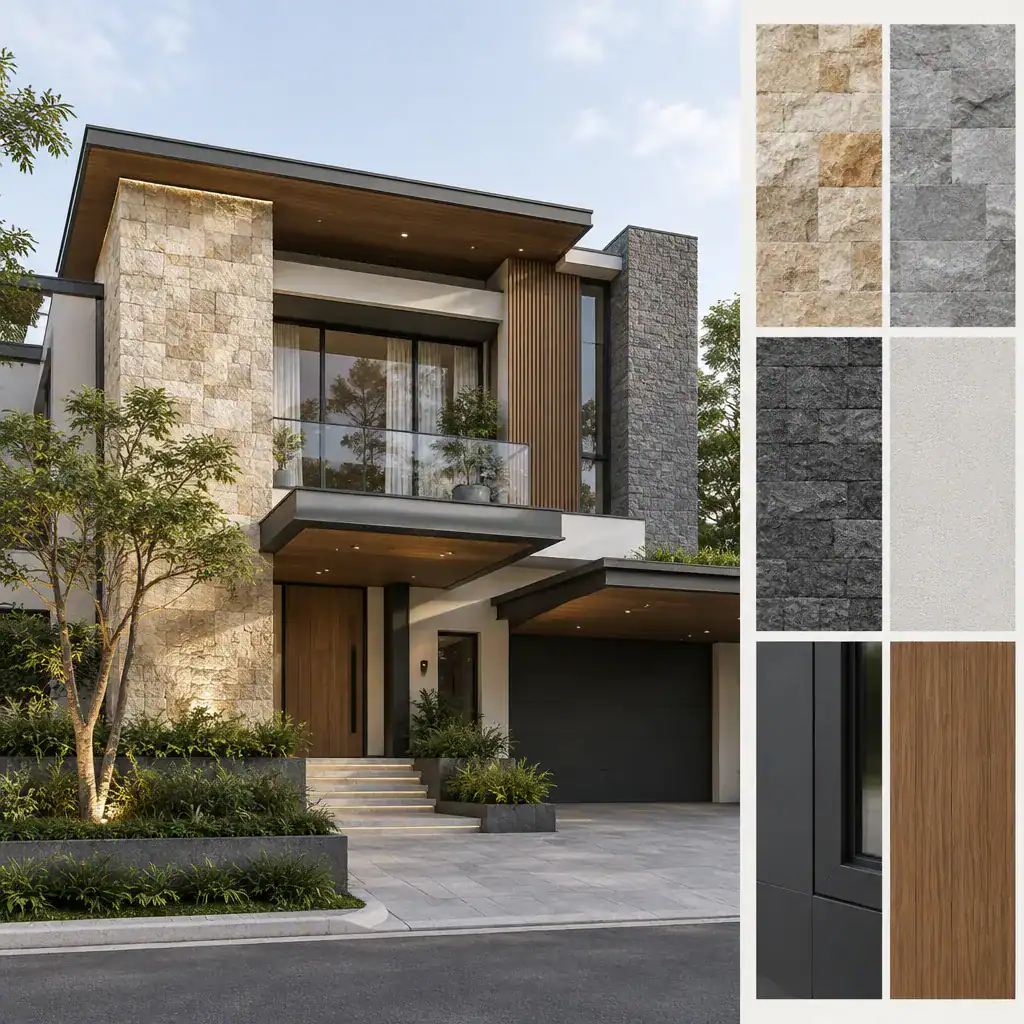
Warm beige stone can soften crisp white stucco and pair naturally with timber-toned details. Cool gray stone often supports a quieter, more architectural palette with concrete-like walls and black frames. Charcoal stone can provide dramatic contrast, particularly when used in a limited vertical panel or recessed entry volume. Mixed natural tones may feel more organic, but they need a disciplined supporting palette so the exterior does not become visually busy.
Texture matters as much as color. Split-face and stacked stone produce pronounced shadow and a rugged presence. Ledgestone offers a layered linear effect that can complement horizontal architecture. Smooth-cut stone feels more tailored and restrained, while irregular stone can introduce a more relaxed, natural character. Compare physical samples beside the selected paint, roof finish, window frames, and paving at different times of day. Also confirm local availability, weather suitability, installation requirements, and expected maintenance with appropriate professionals before making a final choice.
Coordinate Stone With Glass, Concrete, Metal, and Wood-Look Finishes
A successful material palette depends on contrast with control. Rough stone becomes more expressive when it sits beside smooth stucco or concrete-like planes, allowing each surface to retain its own role.
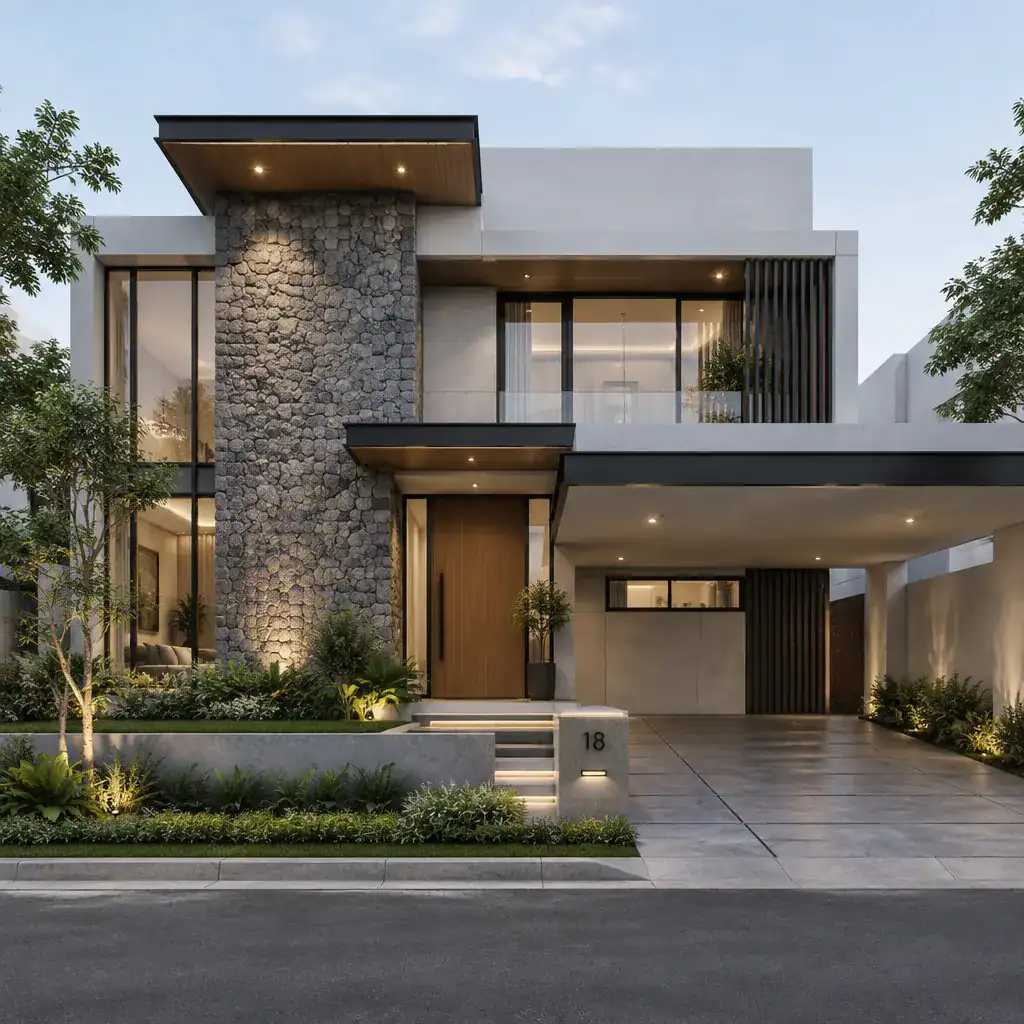
Large glass openings and slim dark metal frames can reinforce the contemporary character of a stone-accented villa. Because masonry carries visual weight, expansive glazing can provide useful lightness and reflection. The balance is important: a dark stone feature may suit black or bronze frames, while pale stone can work beautifully with softer gray, warm metallic, or deep charcoal trim.
Wood-look soffits, slatted screens, and a warm-toned entry door can add welcome warmth, but they are most effective when used selectively. Give each material a clear task: use a primary finish for the main wall planes, stone for the architectural accent, metal for trim and framing, and wood-look elements for entry-scale warmth. This hierarchy helps a modern villa exterior design with stone accent facade look intentional instead of assembled from competing features.
Use Lighting and Landscape Design to Strengthen the Stone Accent
Lighting can reveal the depth and shadow of stone after sunset while making the entry and paths easier to navigate. It should enhance the facade quietly, not turn the feature wall into a source of glare.
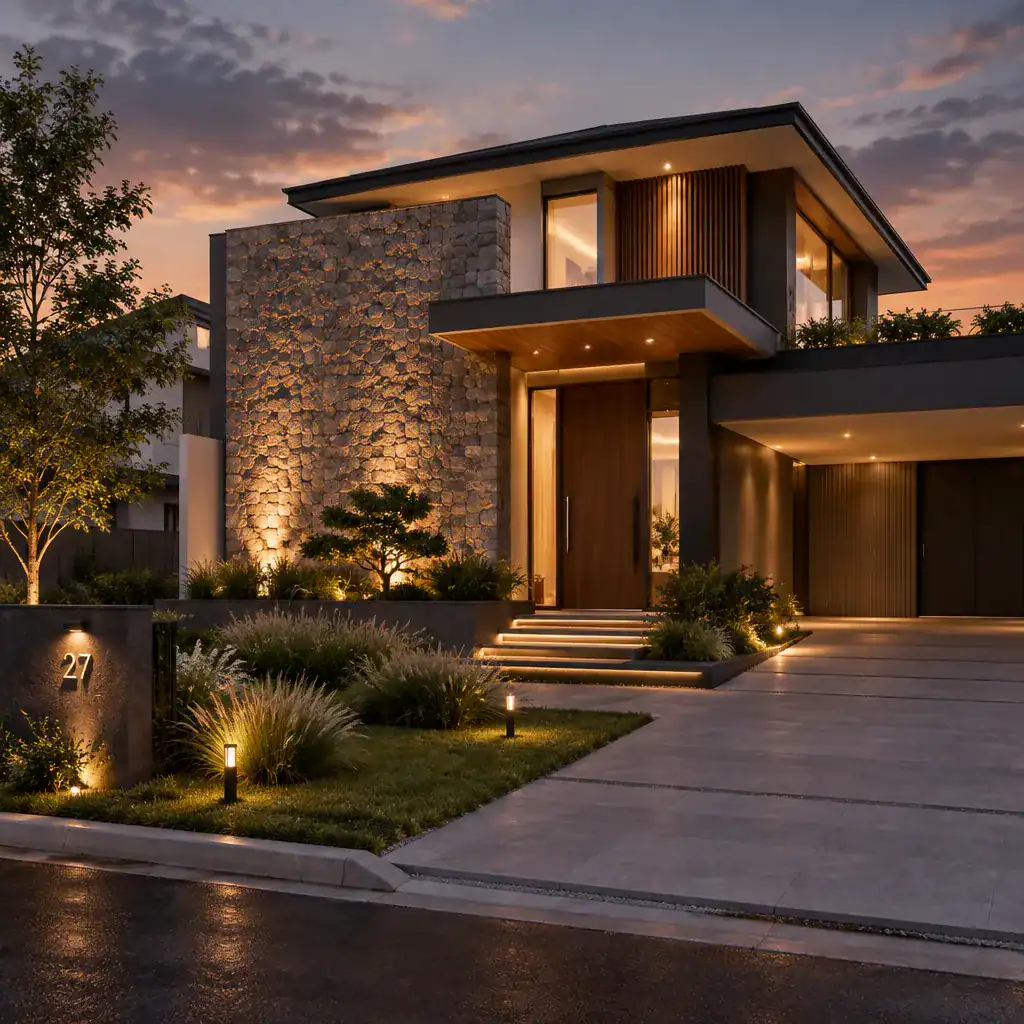
Grazing light can emphasize a textured stone surface, while carefully positioned wall-mounted, recessed, or concealed fixtures can define the entry volume and adjacent circulation routes. Fixture placement, wiring, and electrical design should be developed with qualified professionals. Review the intended effect in both daytime and nighttime conditions, since a stone texture that appears subtle in sunlight may create much stronger shadows after dark.
Landscape elements can extend the facade language into the site. Restrained planting, structured shrubs, ornamental grasses, gravel, clean paving, planters, and low walls can frame the stone without concealing it. Repeat a related color from the stone in paving or planter finishes, but avoid matching every element too literally. The landscape should guide attention toward the entrance and make the exterior feel settled within its setting.
Review Proportion, Maintenance, and Project Feasibility Before Finalizing
Before committing to a final elevation, review the facade as a complete composition and as a practical exterior surface. A compelling concept should still work through corners, openings, weather exposure, cleaning, and long-term upkeep.
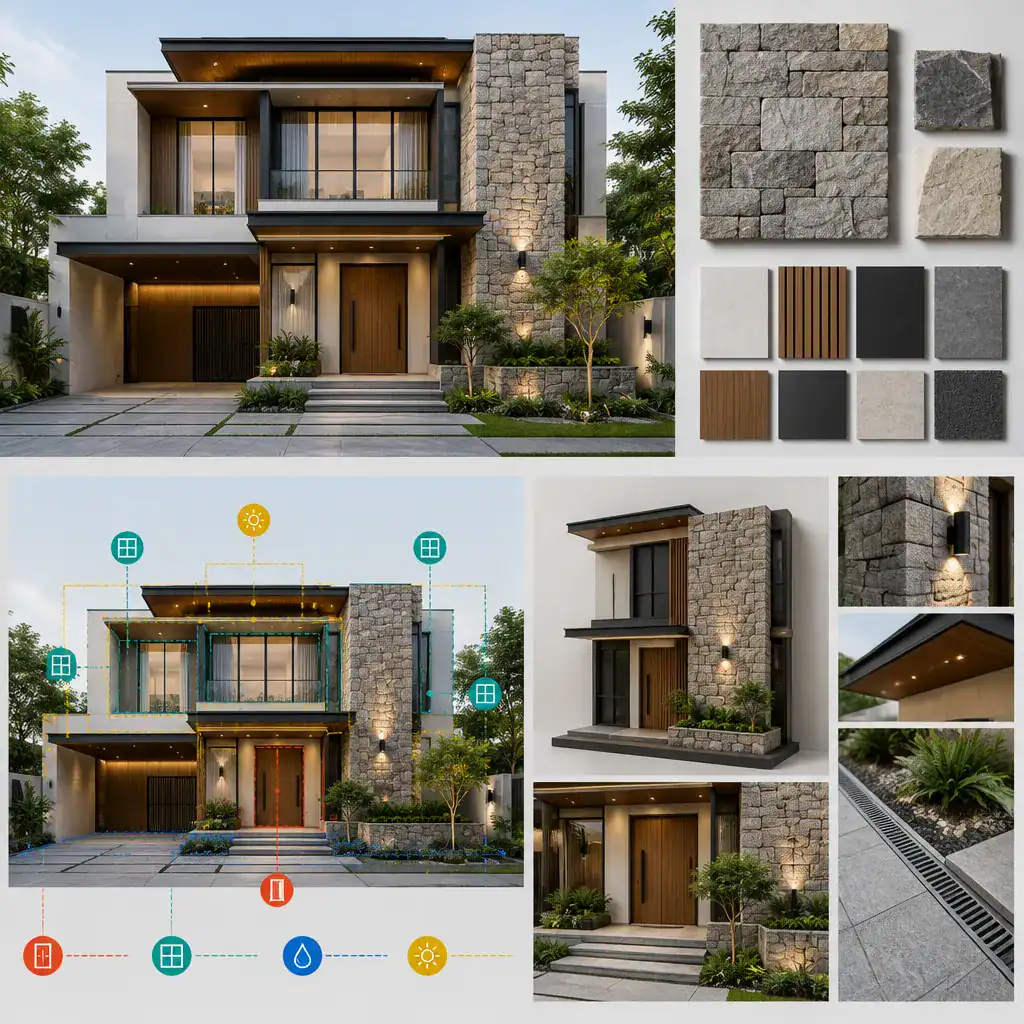
Review visual balance between stone-covered and smooth areas, the scale of the stone field, joint lines, corner transitions, and window alignment. Check whether the entry feature relates clearly to the upper floor and whether the stone ends at logical architectural lines. Elevation drawings, physical finish boards, and a small facade mock-up can make these relationships easier to assess before a large area is finished.
Practical discussions should cover cleaning access, drainage around the facade base, local climate exposure, material sourcing, the proposed installation method, and compatibility with the existing wall assembly. Ask licensed architects, contractors, or relevant authorities to confirm structural, waterproofing, fire-safety, and local building-code requirements. This review stage helps turn a modern villa exterior design with stone accent facade from an attractive idea into a coordinated project brief.
The strongest modern villa stone facades use stone intentionally within the larger massing and material hierarchy. Define the role of stone first, compare its color and texture, coordinate the surrounding finishes, and then use lighting and landscape to reinforce the composition. Finally, verify feasibility through samples, elevations, mock-ups, and discussions with a qualified design and construction team. Used this way, a modern villa exterior design with stone accent facade can remain timeless, balanced, and personal rather than visually overworked.