
A statement door can turn a bungalow entry into the focal point of the facade without requiring a full exterior renovation. The strongest result feels intentional rather than oversized: it responds to the home’s low roofline, porch depth, siding or masonry, and the daily needs of the household. Start by defining the mood you want, then compare door form, color, glass, hardware, lighting, and the surrounding porch as one composition.
The right choice depends on the existing facade, your preferred level of privacy, and practical conditions such as exposure to rain, the current opening, and local installation requirements. Use the ideas below to narrow the visual direction first, then confirm fit, performance, and installation details with a door supplier or qualified professional.
Choose a Statement Door Direction That Fits the Bungalow
Before choosing a finish, decide what kind of presence the door should have. A bungalow statement front door can be traditional, craftsman-led, colorful, or quietly contemporary, provided its scale relates to the porch and facade rather than competing with them.
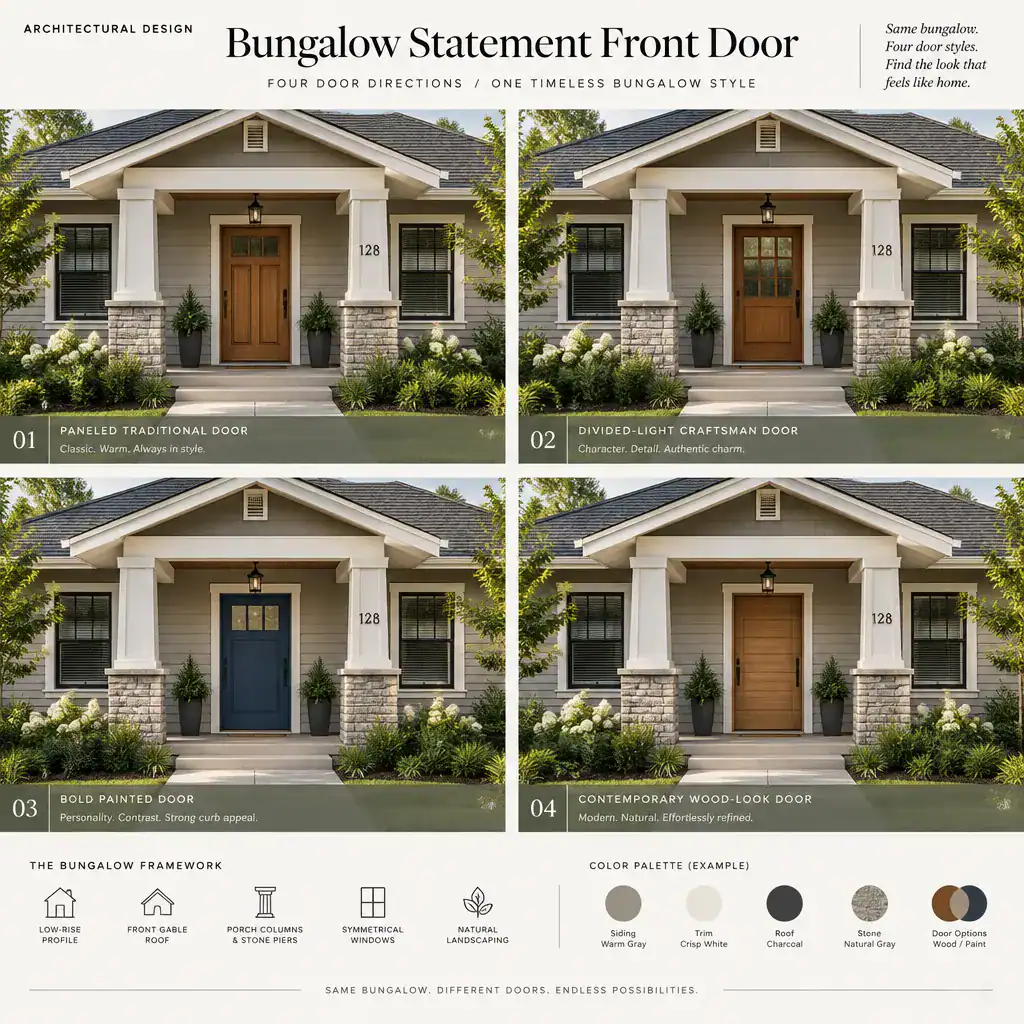
A traditional paneled door is often a natural fit for a bungalow with simple trim, masonry piers, or period details. Its raised or recessed panels add depth without demanding attention through color alone. Keep the panel layout proportionate: overly tall, ornate, or heavily segmented panels can look disconnected from a compact, low-rise facade.
A craftsman-inspired door with divided upper glass brings daylight and a familiar bungalow character. Align its muntin pattern with nearby windows where possible, but avoid trying to match every line exactly. A few well-proportioned glass divisions, paired with a solid lower portion, often feel more settled than an intricate pattern.
A bold solid-color door creates a clear focal point on a restrained facade. Deep blue, muted green, oxblood, charcoal, or a warm earthy tone can work well when the porch, siding, and trim remain supportive. This direction is especially useful when the architecture is simple and needs one recognizable point of interest.
A contemporary wood-look door can introduce warmth while remaining streamlined. Choose a grain, stain tone, and panel pattern that echo the home’s natural materials rather than creating a sharp contrast. On a detailed bungalow, a simple wood-look slab or subtle horizontal detail may be enough; on a plainer facade, it can provide welcome texture.
Use the home’s roofline, window proportions, facade materials, and porch width as your reference points. The door should carry visual weight, but not become so glossy, tall, dark, or visually busy that it overwhelms the rest of the entrance.
Use Color, Material, and Glazing to Create the Focal Point
Color, material, and glass determine whether the entrance feels energetic, warm, formal, or understated. A bungalow statement front door in a saturated paint color can give a neutral exterior personality, while natural wood or a wood-look finish brings depth and softness. Restrained neutrals such as charcoal, black, warm gray, or softened navy can still stand out through contrast and texture.
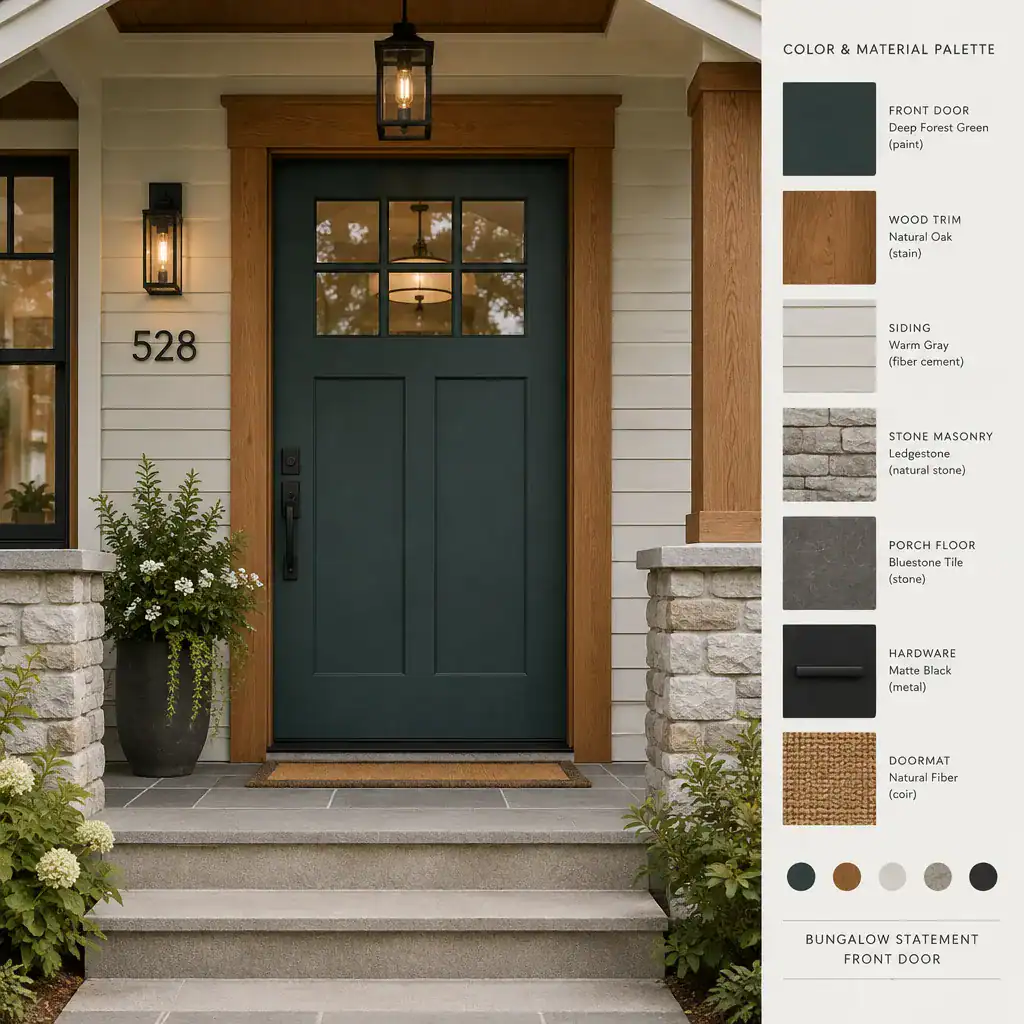
Do not select the finish in isolation. View samples next to existing siding, brick or stone, porch flooring, trim, and roof-adjacent colors. A paint color that looks balanced on a small swatch may appear much brighter in direct sun, while a wood tone can shift noticeably beside cool masonry or warm red brick.
Glazing changes both the look and function of the door. Clear glass offers the greatest visual openness and daylight, but it also reveals more of the interior. Frosted, textured, seeded, or obscured glass can preserve light while improving privacy. Smaller upper panes suit a more traditional or craftsman direction, while a larger vertical insert can feel cleaner and more contemporary.
If the entry has sidelights or a transom, treat the glazing as a coordinated group. Matching every pane is not essential, but the glass type, frame color, and visual density should feel related. When privacy is important, consider placing clearer glazing higher on the door or using a more obscured treatment at eye level.
Coordinate the Door With Porch, Trim, and Entry Details
The door works best when the porch and facade make it easy to notice from the street. Frame a bungalow statement front door with trim that is substantial enough to define the opening, but not so layered that the frame becomes the main attraction.
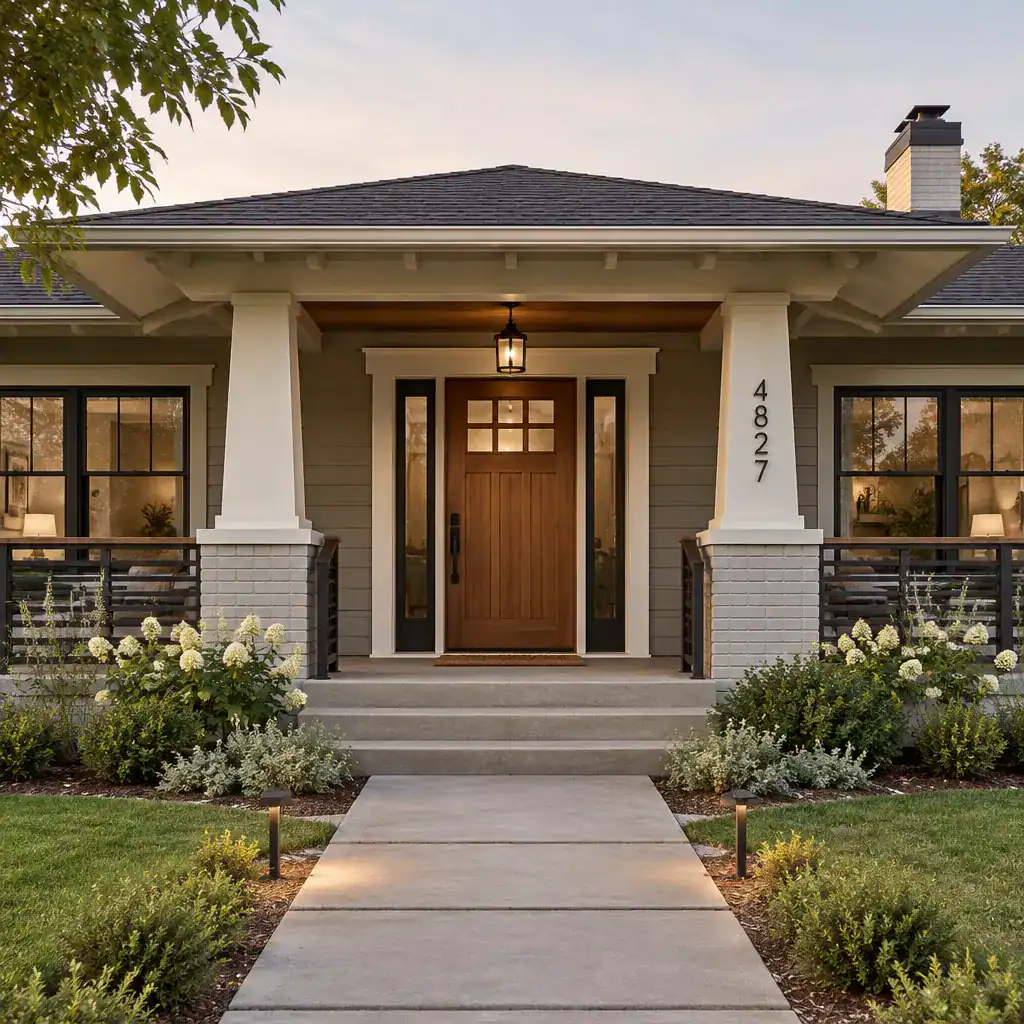
Porch columns, low railings, roof overhangs, steps, and planting establish the setting around the door. Because bungalows are typically horizontal and grounded, these elements should reinforce that calm, welcoming character. For example, a bold door may pair best with quiet column colors and straightforward railings, while a stained wood door can be repeated subtly in a handrail, porch ceiling, or small trim detail.
Limit competing patterns and accent colors. If the door has divided glass, decorative panels, or a strong color, simplify the surrounding trim and decor. Conversely, a plain door can take more support from a contrasting frame, a carefully selected porch floor color, or a house-number plaque.
Review the view from the sidewalk and driveway, not only from directly in front of the porch. The entry should be recognizable at a distance, with a clear path, readable numbers, and enough contrast between the door and adjacent materials. Low, restrained planting can soften the approach without hiding the threshold or narrowing the walkway.
Finish the Entrance With Hardware, Lighting, and Practical Details
Hardware and lighting should complete the entrance rather than distract from it. For a bungalow statement front door, choose a lever, knob, pull, lockset, and knocker only when their shapes and finish support the selected character. A dark bronze or black finish may suit craftsman and painted-door schemes, while brushed nickel, aged brass, or stainless finishes can work when they connect with nearby fixtures and the overall style.
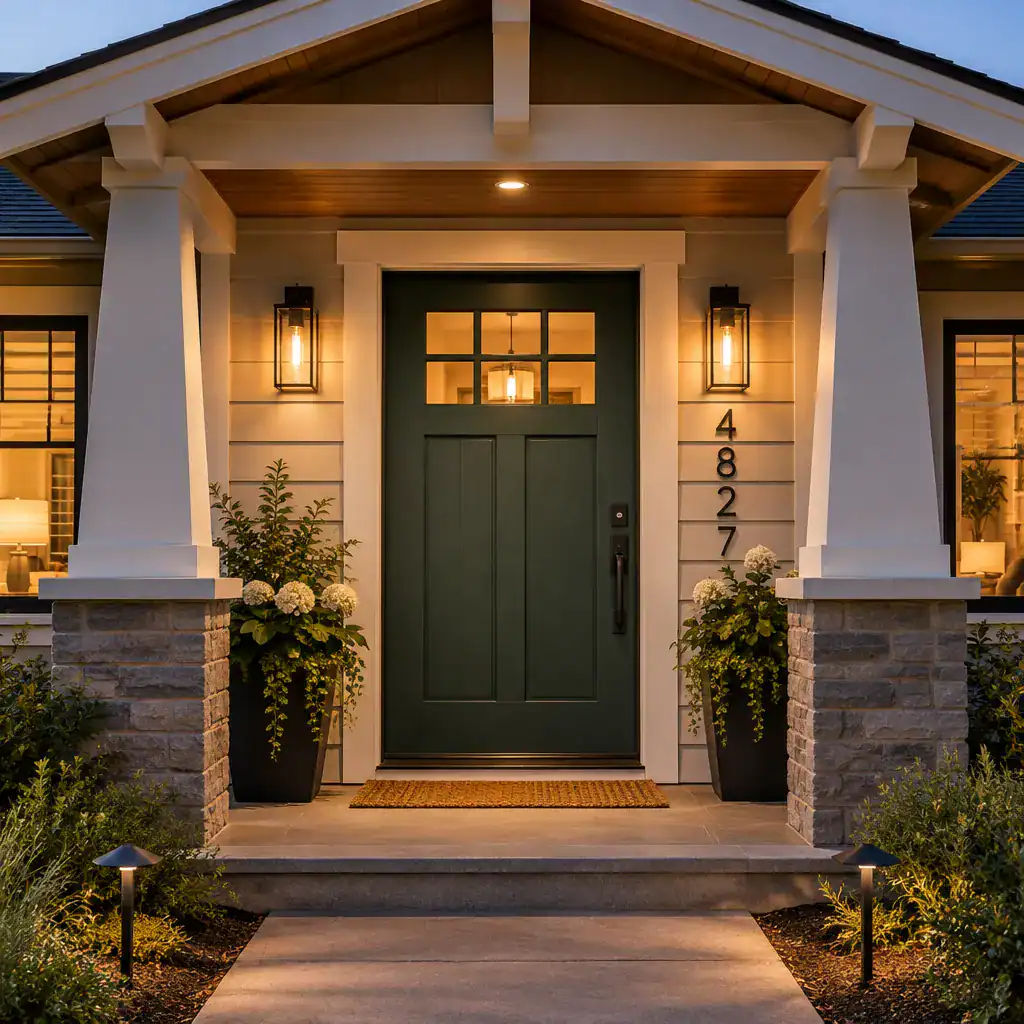
Keep the number of hardware finishes controlled. One primary finish, with a compatible secondary finish if needed, is usually easier on the eye than several competing metals. Select hardware that is comfortable to use and sized appropriately for the door; an oversized pull can make a modest bungalow entrance feel out of balance.
Lighting makes the entry readable after dark. Place porch sconces, a ceiling light, or another suitable exterior fixture so visitors can identify the door, lock, steps, and house numbers without glare. Fixtures should relate to the porch scale and hardware finish, while the light itself should illuminate the approach as well as the door surface.
Before installation, check weather exposure, threshold condition, drainage, door swing, clearance at steps or furniture, privacy needs, and the compatibility of the new unit with the existing opening. Confirm security hardware, sealing details, and any required local approvals with the supplier or qualified installer rather than assuming every door option will suit the site.
A Simple Selection Checklist for Your Bungalow Front Door
Use a short comparison process before making a final choice. Ask whether the door suits the bungalow architecture, creates the level of focal point you want, provides enough privacy and daylight, and coordinates with the porch rather than fighting it.
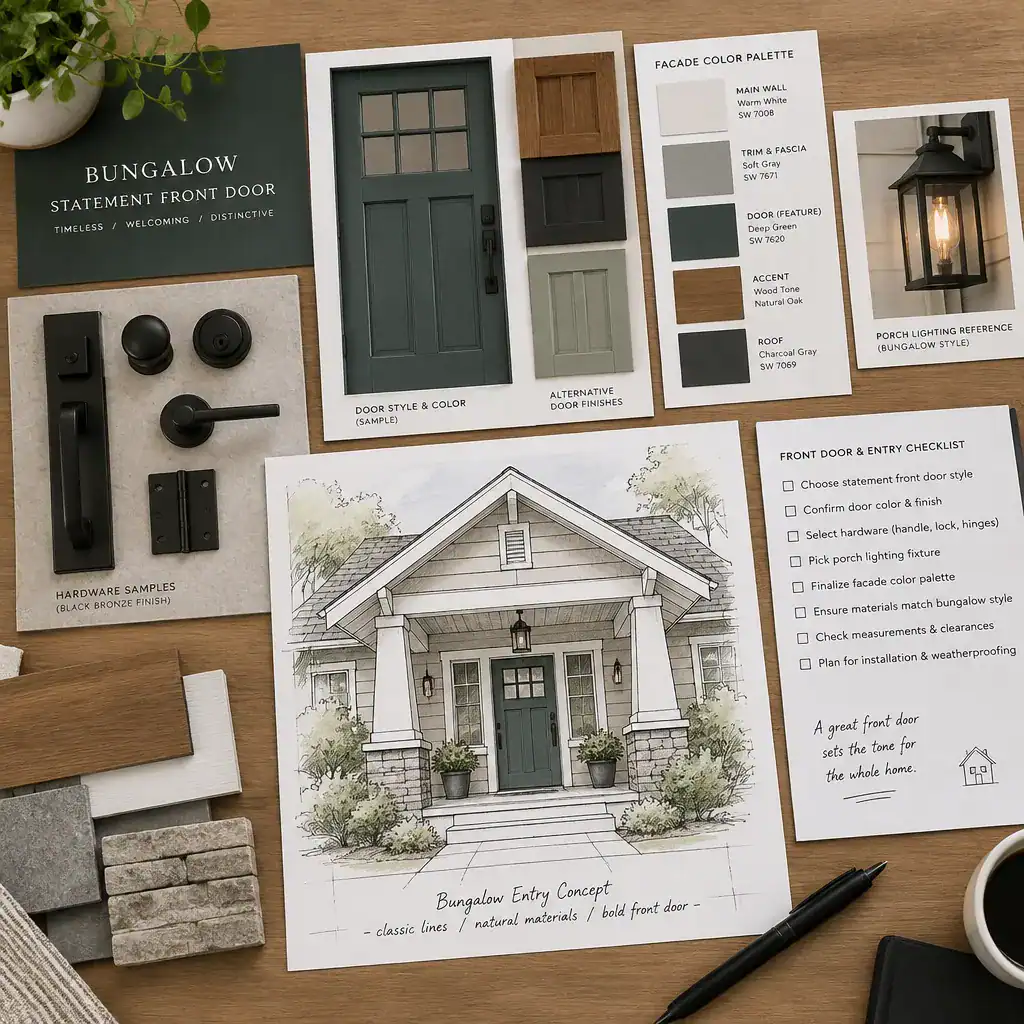
Compare physical samples or digital visualizations against the facade in daylight, shade, and evening lighting. Look at paint, stain, glazing, trim color, hardware, and porch fixtures together. A door that appears ideal in a showroom may read differently beside your actual masonry, siding, and flooring.
Separate appearance decisions from performance and installation checks. First, shortlist the visual direction, color or material, panel layout, and glazing. Then ask the supplier or qualified professional to verify measurements, handing and swing, frame compatibility, threshold needs, weather exposure, hardware preparation, and relevant installation requirements.
A successful statement door is distinctive while still belonging to the bungalow’s facade, porch, materials, and proportions. Choose one clear focal-point strategy, whether that is color, warm wood character, craftsman glazing, or classic paneling, and let the surrounding details support it. Once the visual plan feels cohesive, verify the practical installation requirements before committing to the final design.