
A bungalow’s appeal comes from its approachable scale, prominent porch, and recognizable street-facing facade. The best landscaping supports those qualities rather than competing with them. These adaptable ideas can help you create a welcoming front yard while leaving room for your climate, budget, and personal style.
Successful bungalow curb appeal depends on how the house, front path, planting beds, and entry work together. Before choosing plants or installing hardscape, assess the architecture, sunlight, drainage, local climate, and the amount of maintenance you can realistically provide. The following plan focuses on facade visibility, layered beds, a clear approach, useful lighting, and practical finishing details.
Start With the Bungalow’s Facade and Front-Yard Structure
Begin by studying the front elevation from across the street and from the sidewalk. Notice the porch, roofline, windows, foundation, front steps, and existing views toward the door. A low, broad bungalow usually benefits from planting that follows its horizontal proportions, rather than tall or bulky features that make the home appear smaller.
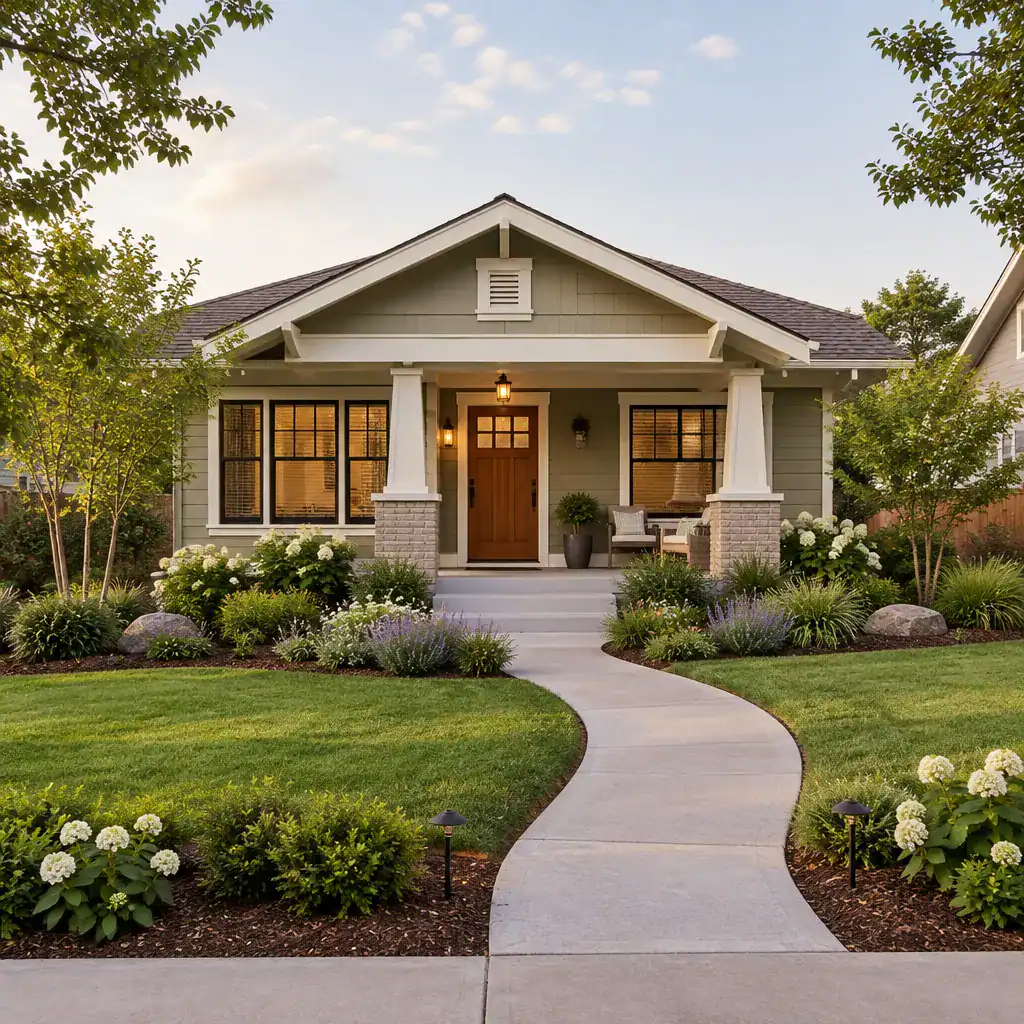
Let the facade guide the shape and scale of the landscape. Bed lines can echo a porch edge or gently soften the foundation, while walkway width should feel comfortable in relation to the steps and entry. Choose one main focal point, such as a painted front door, a well-kept porch, or a distinctive window, and direct attention toward it.
Remove, prune, or relocate anything that blocks the approach or crowds the facade. Overgrown shrubs, mismatched ornaments, and plants placed directly in front of steps can make an otherwise charming home feel hidden. Thoughtful bungalow curb appeal landscaping gives the porch and entry room to remain the visual center.
Build Layered Planting Beds That Complement a Bungalow
Layered planting creates depth while preserving the open, welcoming character of a bungalow. Use low edging plants or groundcover near the walkway, medium-height shrubs through the main bed, and a few restrained vertical accents toward property edges or selected corners. This arrangement adds dimension without creating a solid wall of foliage.
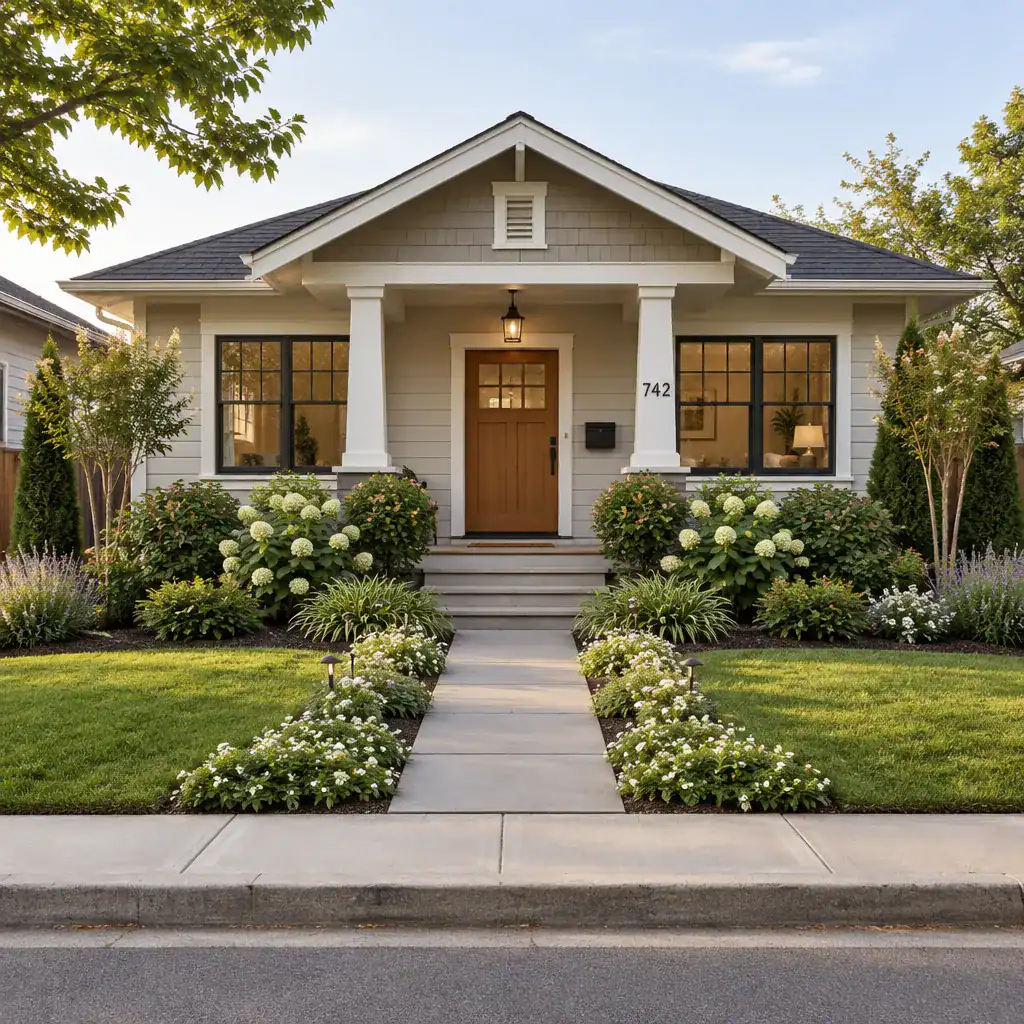
Limit the number of plant forms and colors so the yard reads as one composition. Repeating a few compatible leaf shapes, flower tones, or evergreen forms can connect separate beds and relate them to the home’s exterior colors. Taller plants should frame a view rather than cover windows, house numbers, steps, or the front door.
Plant selection should always respond to site conditions. Check available sun, soil, drainage, mature size, local climate, and the care each plant will need over time. A simple palette of plants that can mature comfortably in the available space is more effective than a crowded bed that needs constant cutting back.
Make the Walkway and Entry Feel Welcoming
The front walkway is both a practical route and a visual invitation. It should provide a clear, direct connection from the sidewalk or driveway to the front door, with edges that remain easy to identify in every season. A gentle curve can suit the informal character of many bungalows, provided it does not make the approach confusing or unnecessarily long.
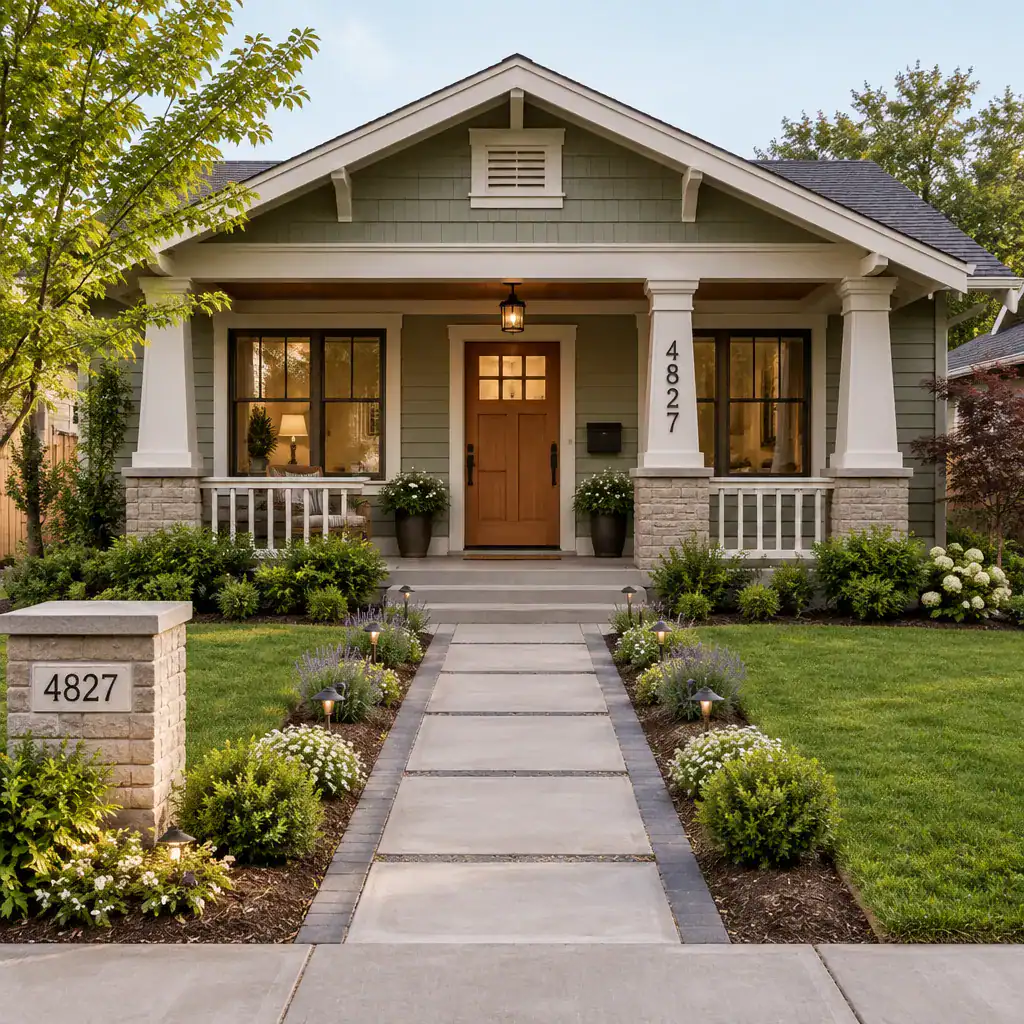
Coordinate path materials, edging, steps, and nearby planting with the home’s existing finishes. For example, the color and texture of a path can relate to porch masonry, siding, trim, or railings without trying to duplicate them exactly. Keep plants beside the path low enough that they do not narrow the walking area, conceal its edge, or create a trip hazard.
From the street, visitors should be able to spot the front door, porch, and house numbers easily. Use planting as a subtle guide toward the entry, not as a screen. When the approach is visible and comfortable, bungalow curb appeal landscaping feels inviting before a visitor reaches the porch.
Add Lighting and Details That Strengthen Curb Appeal
Lighting extends the usefulness and appeal of the front yard after dark. Use layers of illumination: lighting that supports safe movement along the path, porch lighting for the door and steps, and restrained accents for a selected planting bed or architectural detail. The goal is gentle definition, not a brightly lit display.
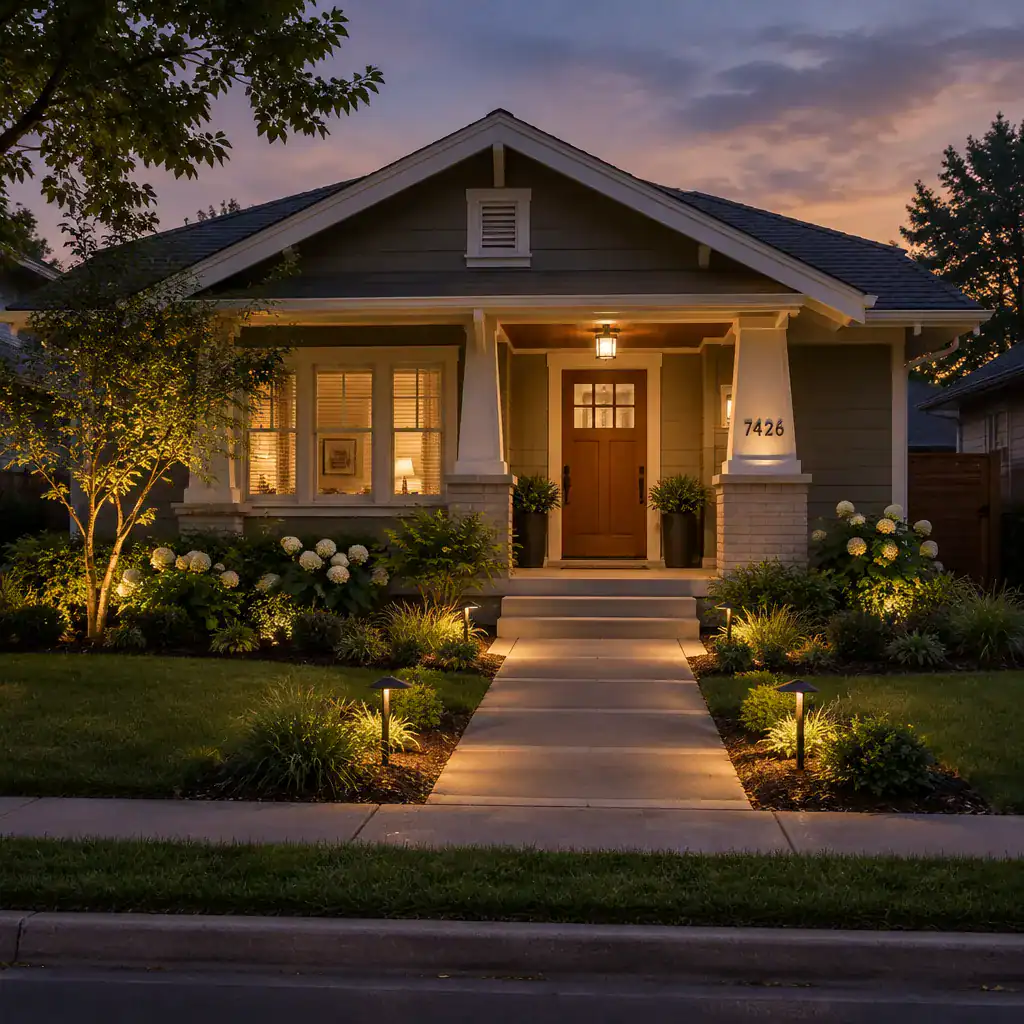
Choose fixture finishes that coordinate with porch hardware, railings, existing exterior lights, and house numbers. This small connection helps the entry feel considered. Keep decorative additions limited to a few useful details, such as a planter near the door, a compact bench on a suitable porch, a coordinated mailbox treatment, or simple edging that clarifies the bed line.
Review the yard in daylight and again in the evening. Seasonal changes matter as well: a bed may look full during one part of the year and sparse during another. Select details that continue to support the home’s character rather than adding accessories that compete for attention.
Create a Practical Bungalow Landscaping Plan
Organize improvements in an order that solves the most important issues first. Start by clearing blocked views and unsafe growth, then define circulation, improve the structure of planting beds, and add finishing details only after the essentials are working. This sequence makes it easier to manage spending and avoid installing decorative features that later need to be moved.
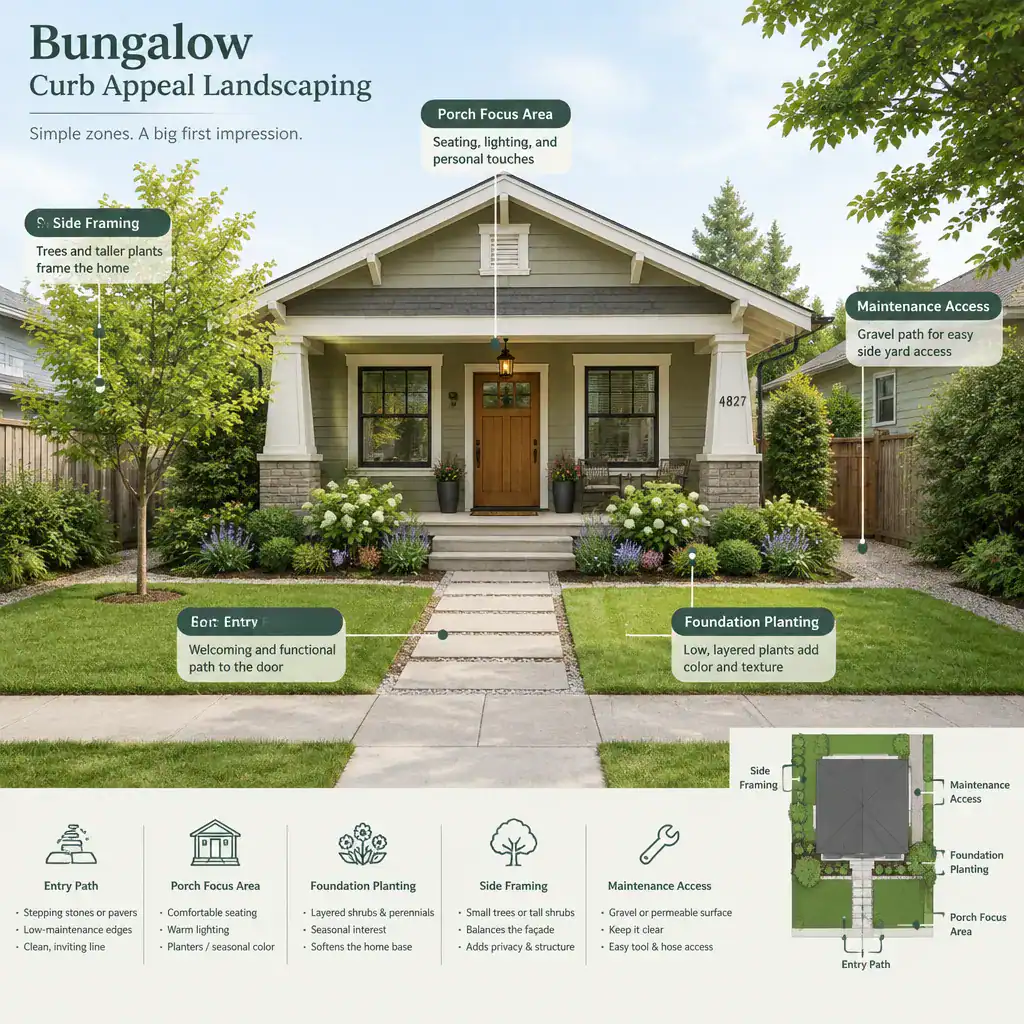
Match the plan to your time, budget, irrigation access, and preferred level of maintenance. A lower-maintenance design may use fewer plant varieties, accessible bed edges, and enough open space for routine care. Before adding trees, drainage features, hardscape, or permanent structures, check local requirements and confirm that the site can handle the proposed work.
Finally, review the plan from the street, sidewalk, porch, and front door. Each view should feel balanced, with a readable path and an unobstructed entry. bungalow curb appeal landscaping is most successful when every element has a clear role and can be maintained as the landscape grows.
The strongest bungalow curb appeal comes from a coordinated relationship between architecture, planting, circulation, and entry details. Begin with visibility, access, and site conditions before adding decorative touches. By choosing improvements that suit the facade and remain manageable over time, you can create a front yard that feels welcoming, cohesive, and true to the home.