
Siding is the largest color field on a bungalow, so it sets the visual tone for the entire facade. The most successful choices do more than look appealing on a sample card: they connect the siding with the roof, trim, porch, windows, front door, and the architectural details that give a bungalow its character. This guide compares classic, modern, light, and muted directions while showing how contrast, undertones, and existing exterior materials can help narrow the options.
How to Build a Bungalow Siding Color Palette
Begin with siding as the dominant color, then build outward with supporting choices for trim, doors, shutters, railings, and porch details. A low-contrast palette, such as warm beige siding with slightly lighter cream trim, creates a unified and quiet facade. A higher-contrast approach, such as deep blue-gray siding with pale trim, draws more attention to window outlines, eaves, and porch structure. Either approach can work for bungalow color schemes for siding when the contrast level suits the home’s details and the look you want to create.
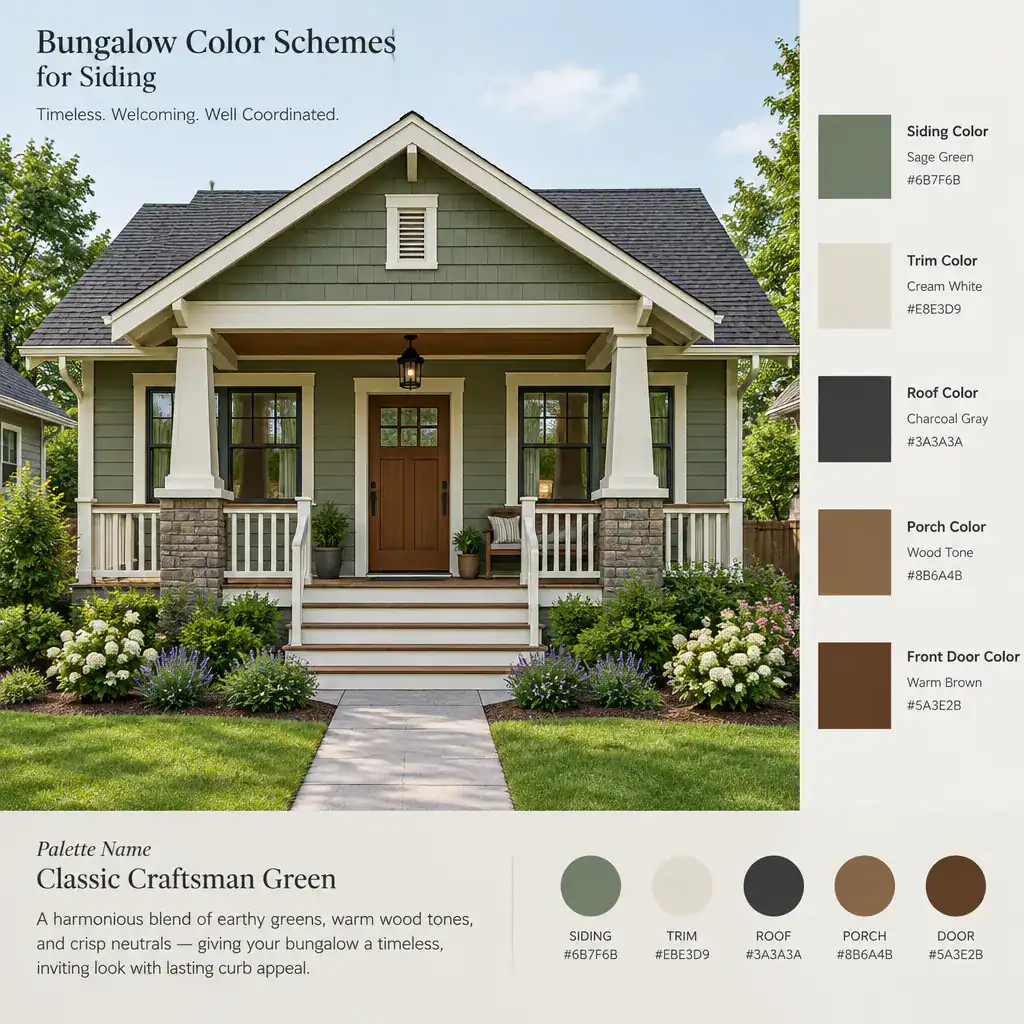
Use permanent materials as boundaries for the palette. Roof shingles, brick or stone foundations, window frames, chimney materials, and existing porch flooring already introduce colors and undertones that the new siding must accommodate. For example, a roof with warm brown or reddish notes may sit more naturally beside taupe, olive, or clay-toned siding than a stark cool gray.
Always review larger samples outdoors. Place siding, trim, and door samples next to one another against the actual facade, then inspect them in morning light, afternoon light, shade, and overcast conditions. A color that appears balanced in a store can look noticeably warmer, cooler, darker, or brighter once it is surrounded by the home’s roof and landscaping.
Classic Bungalow Siding Color Schemes
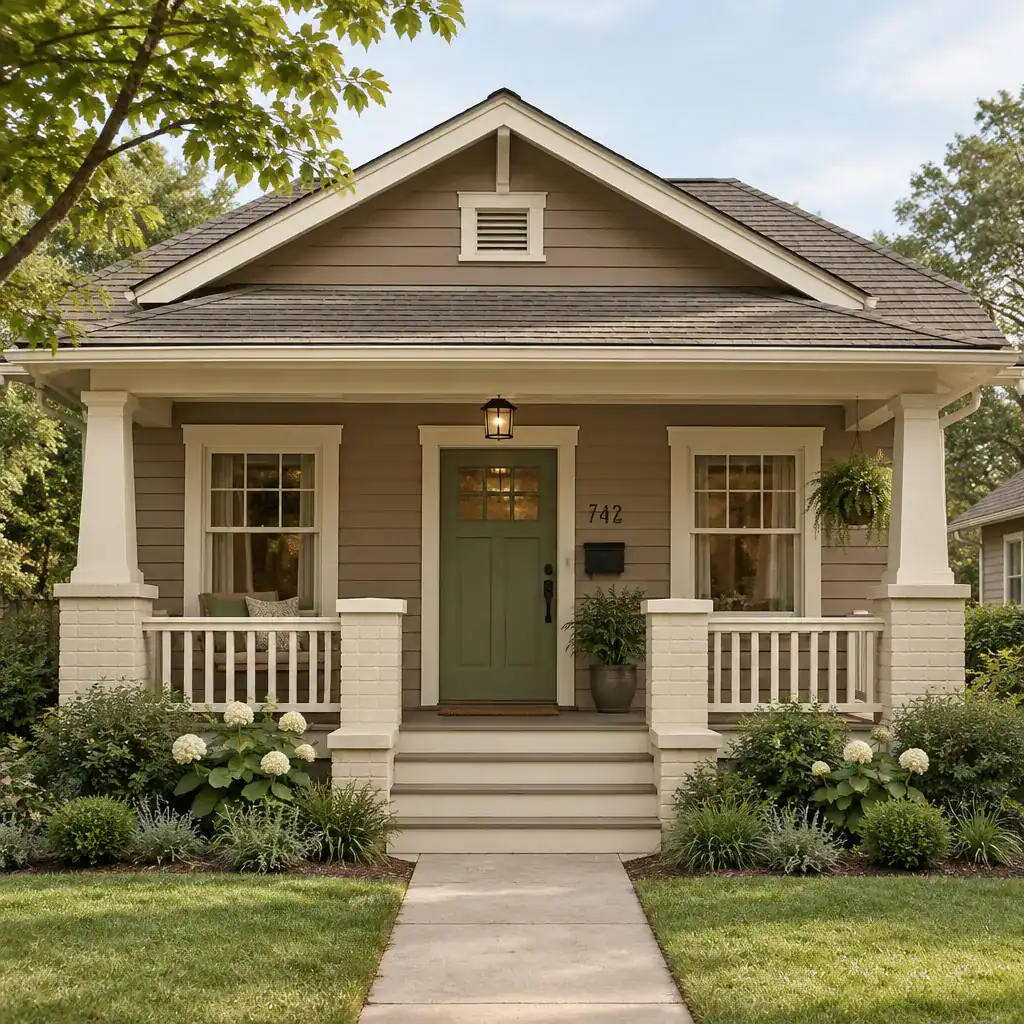
Classic bungalow palettes often rely on warm neutrals and earthy color families that feel settled rather than stark. Taupe, putty, sand, or brown-leaning gray siding paired with cream, soft white, or muted beige trim can give the exterior a timeless, welcoming appearance. A subdued green front door, warm wood porch elements, and a roof that shares the palette’s warmth complete the composition without making it overly decorative.
Earthy options also include sage or mossy green siding, clay-inspired brown-red accents, and softened brown neutrals with natural stone or brick. These colors work especially well when the bungalow has exposed rafters, brackets, divided windows, broad porch columns, or detailed gables. Restrained contrast keeps these architectural elements visible; overly sharp trim can make each feature compete for attention.
Rather than copying a palette exactly, adjust it to the house in front of you. A warm cream trim may be ideal beside a brown roof, while a cooler off-white may better suit charcoal shingles. Existing masonry should receive equal attention, since a stone base or brick chimney can shift how the siding color reads across the whole facade.
Modern Bungalow Siding Color Schemes
A modern bungalow can use deeper or more saturated siding to create a cleaner, more current impression. Charcoal, deep blue, blue-gray, olive, and dark forest green are strong starting points, particularly when paired with crisp light trim or natural wood accents. These bungalow color schemes for siding can make a simple facade feel more defined while retaining the home’s low, grounded proportions.
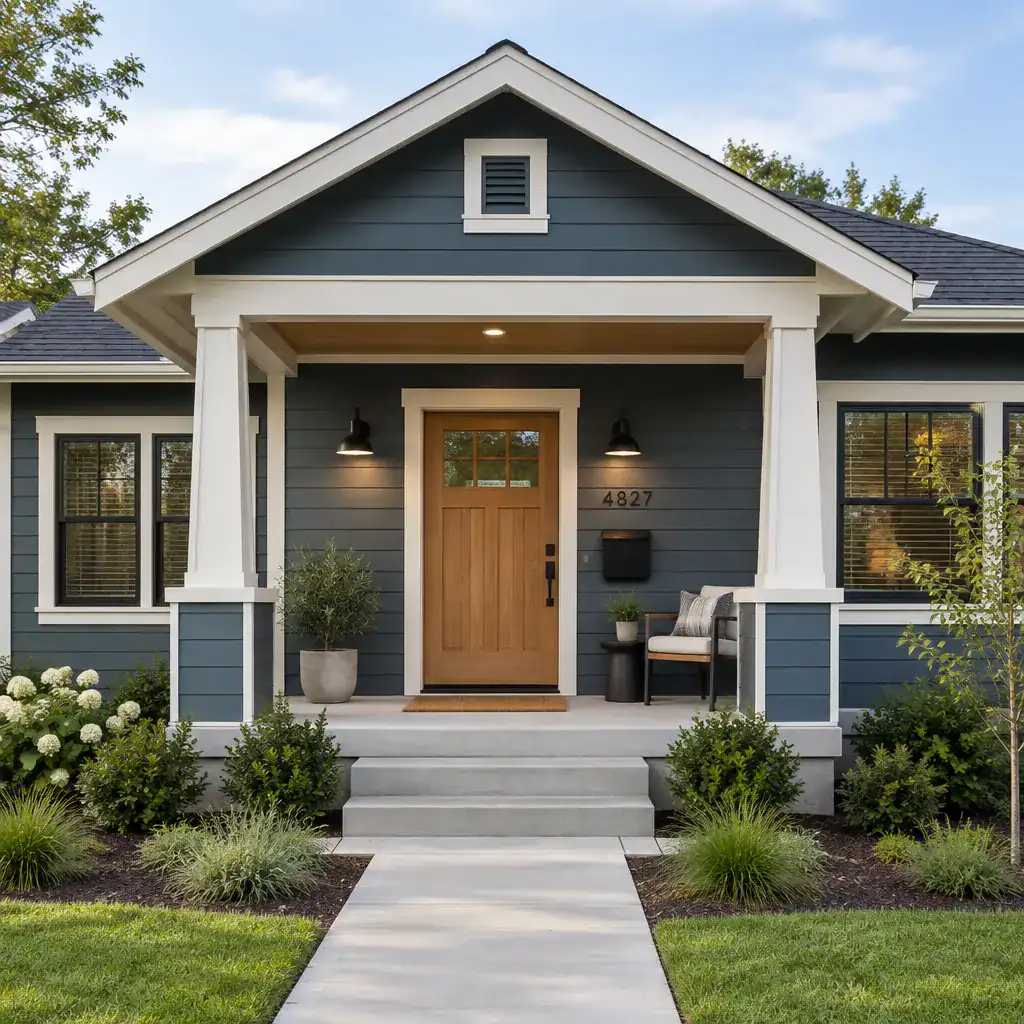
Balance dark siding carefully. Light trim can clarify rooflines and window openings, while a natural wood door or porch ceiling adds warmth. Black lighting and hardware may work as small coordinating notes, but they do not need to become another dominant color. Keep contrast selective so the front door, trim, and structural details each have room to register.
Consider the size of uninterrupted wall areas before choosing a very dark color. Large expanses of dark siding can appear visually heavy, especially on a facade with limited windows or shade from mature trees. Breaking that weight with lighter porch trim, wood elements, or a softer secondary color can maintain definition without diluting the modern direction.
Light and Muted Siding Palettes for a Softer Look
Pale gray, warm white, soft blue, muted sage, and beige-inspired siding create a lighter and calmer exterior mood. These choices can make a bungalow feel open and gentle while still allowing the porch, roofline, and entry to remain distinctive. For a blended look, choose trim close to the siding color; for gentle definition, use a trim shade that is only a few steps lighter or darker.
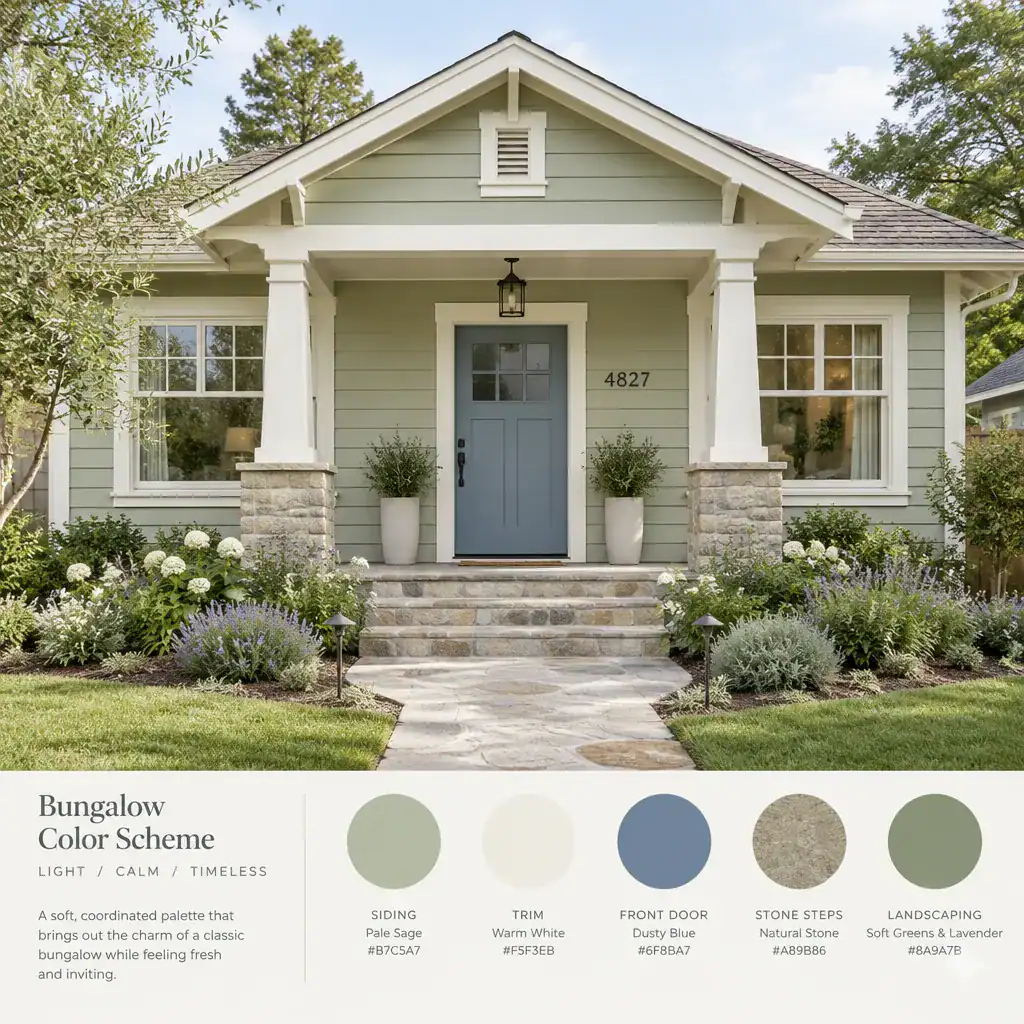
The front door, porch furniture, containers, and planting provide controlled places for extra color. Pale sage siding with warm white trim, for instance, can support a dusty blue door and natural stone steps without becoming busy. A muted palette does not have to be colorless; it simply uses accents in smaller, purposeful areas rather than spreading many competing shades across the facade.
Check the setting before committing to a very light or subdued exterior. Landscaping, neighboring houses, driveway materials, and the amount of shade can all affect the result. A warm white may appear fresh beside green planting but look yellowish against a cool gray roof, while a pale gray can seem nearly white in strong sun and noticeably darker on a shaded side wall.
Choosing Trim, Roof, and Front-Door Colors
Keep the number of dominant exterior colors controlled. Trim can match the siding closely for a seamless effect, or intentionally contrast with it to emphasize windows, eaves, and porch columns. The roof should act as a fixed reference point when comparing warm, cool, light, and dark siding options, because its broad surface has a major influence on the final palette.
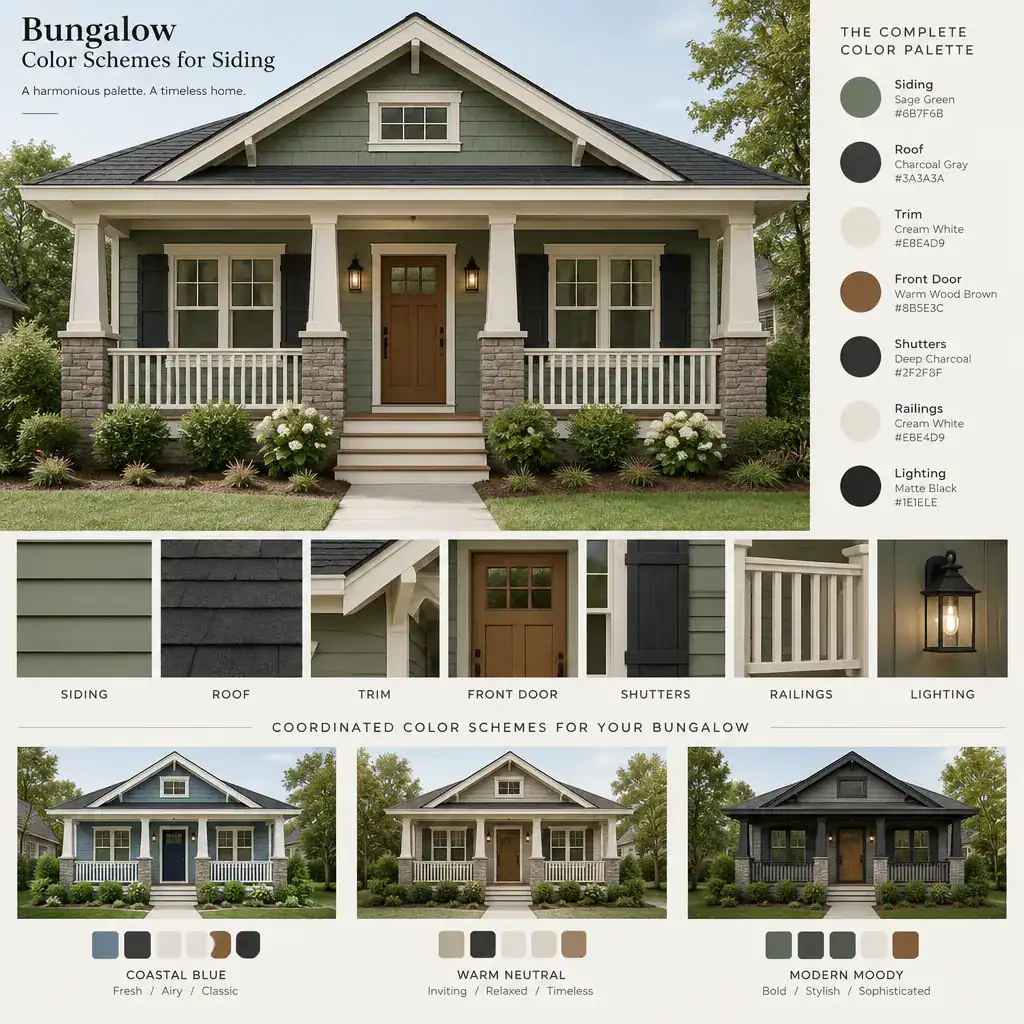
Use the front door as an accent rather than a separate design statement. A muted green, deep navy, warm red-brown, or stained wood door can support the siding color while adding focus to the entry. The best choice complements the porch and facade instead of overpowering both. When testing bungalow color schemes for siding, place the door sample beside the siding and trim rather than judging it alone.
Gutters, shutters, railings, exterior lights, house numbers, and porch screens should also belong to the same visual family. They may be trim-colored, siding-colored, dark neutral, or metallic, but avoid adding unrelated undertones. A cool black railing beside warm cream trim and orange-toned brick, for example, needs to be considered as part of the full composition rather than selected in isolation.
Common Siding Color Selection Mistakes to Avoid
A small sample cannot reliably show how a siding color will behave across an entire bungalow. A shade that looks subtle on a swatch may appear much darker, brighter, or more saturated over broad walls. Test larger samples on multiple facade areas, including sunny walls, shaded corners, and sections near the porch.
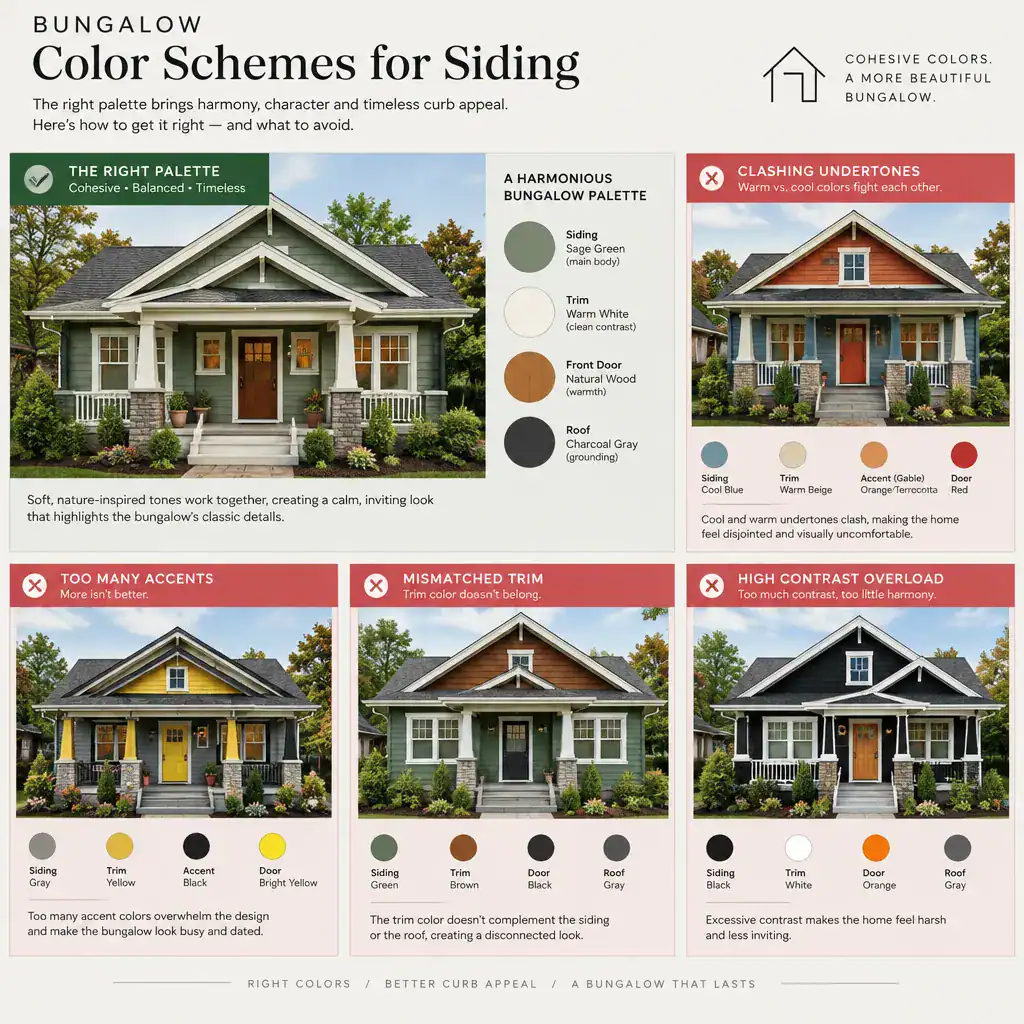
Another common mistake is using too many strong accents. Bungalows often already have visible porch columns, brackets, exposed rafter tails, divided windows, and masonry, so several vivid colors can make the exterior feel fragmented. Let siding remain dominant, reserve the door for a focused accent, and keep trim and secondary elements supportive.
Also compare undertones, not just color names. A gray siding can lean blue, green, violet, or brown; white trim can lean creamy or cool; stone can carry yellow, pink, or charcoal notes. Review the selected combination around windows, corners, porch columns, and the entry before ordering materials or painting the whole facade. This step helps reveal whether the palette feels intentional from every visible angle.
The best bungalow siding scheme coordinates its main color with permanent exterior elements and a limited set of well-chosen accents. Classic warm neutrals and earthy shades offer a grounded starting point, darker modern palettes create stronger definition, and light or muted combinations produce a softer appearance. Compare physical samples in changing light and on several areas of the facade, then choose the direction that works with the roof, masonry, trim, porch, and landscape. That process makes bungalow color schemes for siding easier to evaluate before the final purchase or paint decision.