
A modern barn house interior works best when its architectural character is allowed to show while the styling remains edited and comfortable. Rather than following a fixed floor plan or decorating formula, build a cohesive direction through a considered palette, material mix, layout, lighting plan, furniture selection, and finishing details. The goal is a home that feels warm and grounded without becoming overly rustic, themed, or visually busy.
Establish the Modern Barn House Interior Concept
Start by deciding how rustic or refined the home should feel. A successful modern barn house interior typically pairs honest, tactile elements with clean-lined forms: timber can sit beside smooth walls, while a tailored sofa can soften a space with high ceilings. If the house has visible beams, vaulted ceilings, broad openings, or large windows, treat these features as the foundation of the design instead of covering or competing with them. Carry the same visual language through connected rooms so the interior reads as one calm, intentional environment rather than a collection of unrelated styles.
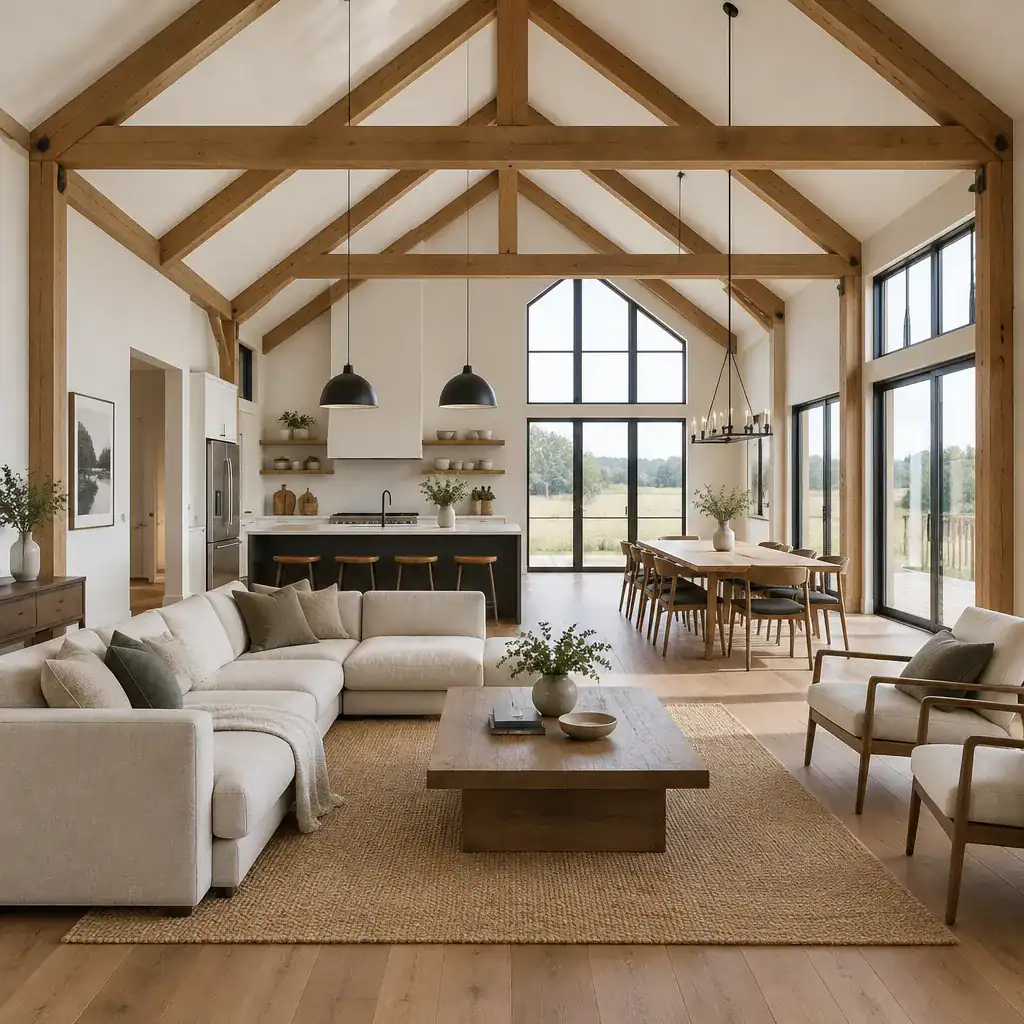
Choose a few defining cues to repeat, such as warm oak, matte black metal, softly textured upholstery, and simple geometric silhouettes. This limited design vocabulary lets the barn-inspired structure remain recognizable while contemporary choices bring clarity and everyday comfort.
Choose a Warm, Restrained Color Palette
Build the palette around warm whites, soft beige, muted taupe, clay-toned neutrals, and the natural variation of wood. These shades support a barn house’s sense of warmth while keeping walls and large surfaces light enough to reflect daylight. Darker notes, including charcoal, deep brown, or matte black, can add definition through window frames, hardware, lighting, and a few furniture pieces.
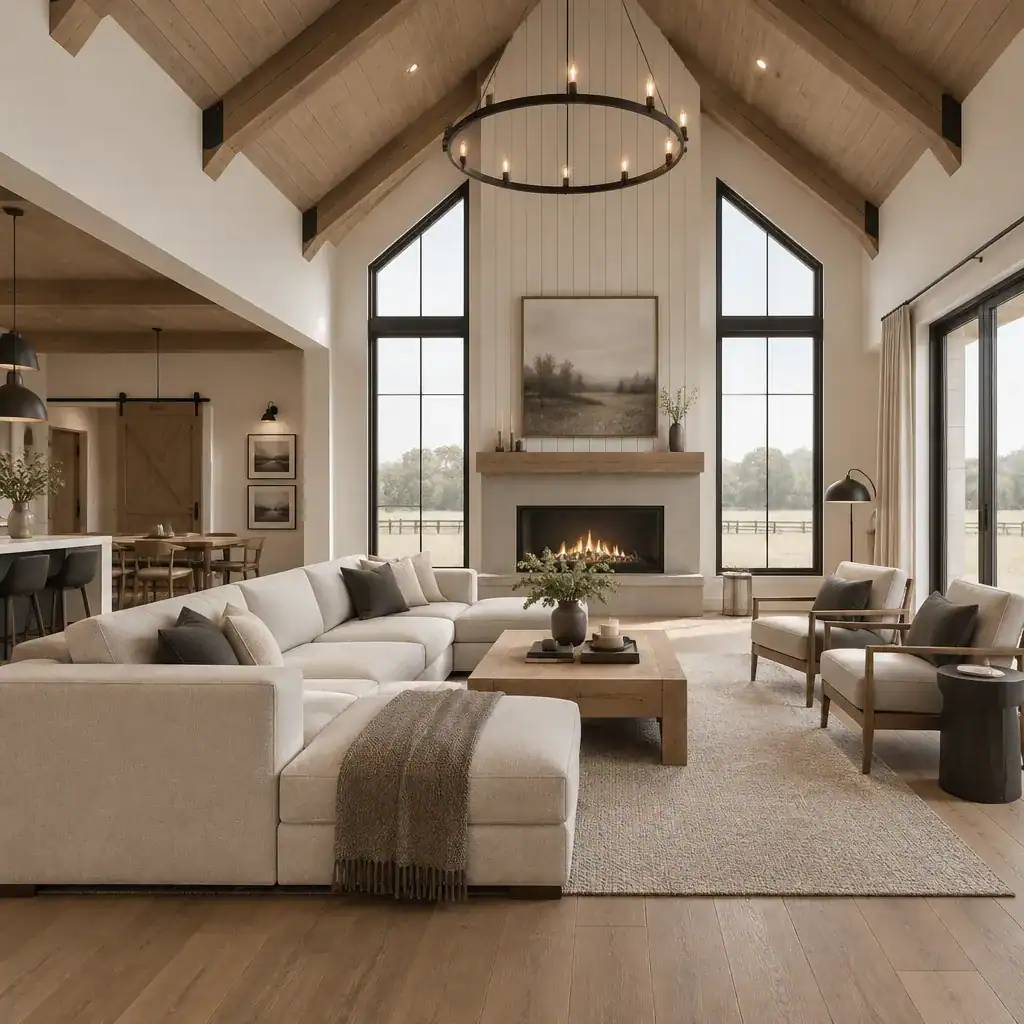
Keep accent colors selective. A single muted green, rust, or dusty blue can appear in cushions, artwork, or ceramics, but too many competing colors can distract from beams, wood grain, and other architectural details. Repeating the same core neutral family from the living room into the dining area and bedrooms also makes open spaces feel more settled.
Layer Natural Materials with Contemporary Finishes
Material contrast gives a modern barn house interior depth without requiring excess decoration. Pair wood flooring or ceiling beams with smooth plaster walls, a stone fireplace surround, clear or ribbed glass, and restrained metal details. The difference between rougher and smoother surfaces creates visual interest while preserving a clean overall composition.
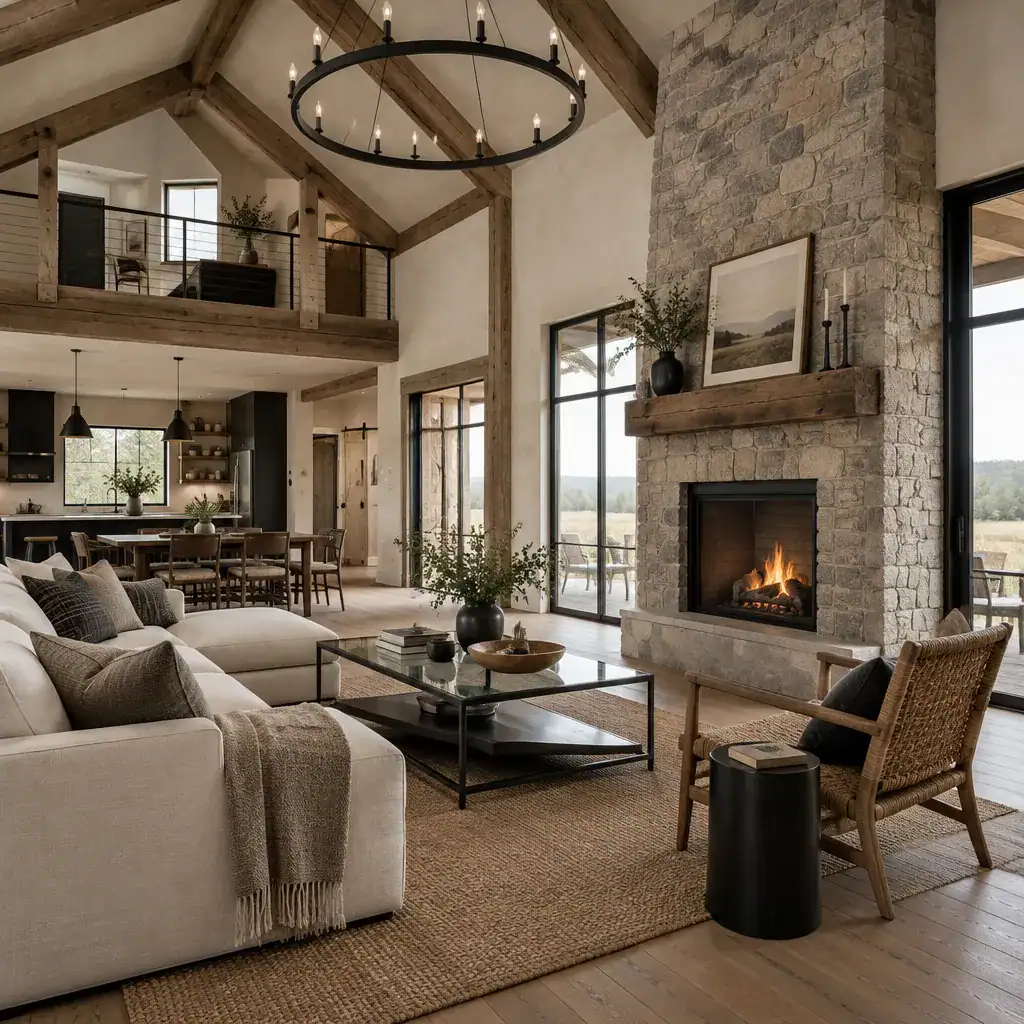
Choose each finish for both its appearance and its practical role. Wood brings warmth, stone offers weight and texture, metal supplies crisp contrast, and glass helps maintain openness. Consider durability and maintenance as well: a heavily textured surface may suit a fireplace focal point, while easy-clean finishes can be more useful in kitchens and entry areas. Repeat a small set of finishes across rooms, such as the same wood tone and metal finish, to create continuity.
Plan Open-Flow Living and Dining Areas
In an open-plan barn-style home, create distinct living and dining zones without interrupting the sightlines. Anchor the seating area with a textured rug, arrange sofas and chairs around a focal point, and use a pendant or chandelier to establish the dining area. Ceiling beams, a fireplace, or a change in lighting can further reinforce each zone while preserving the openness of the room.
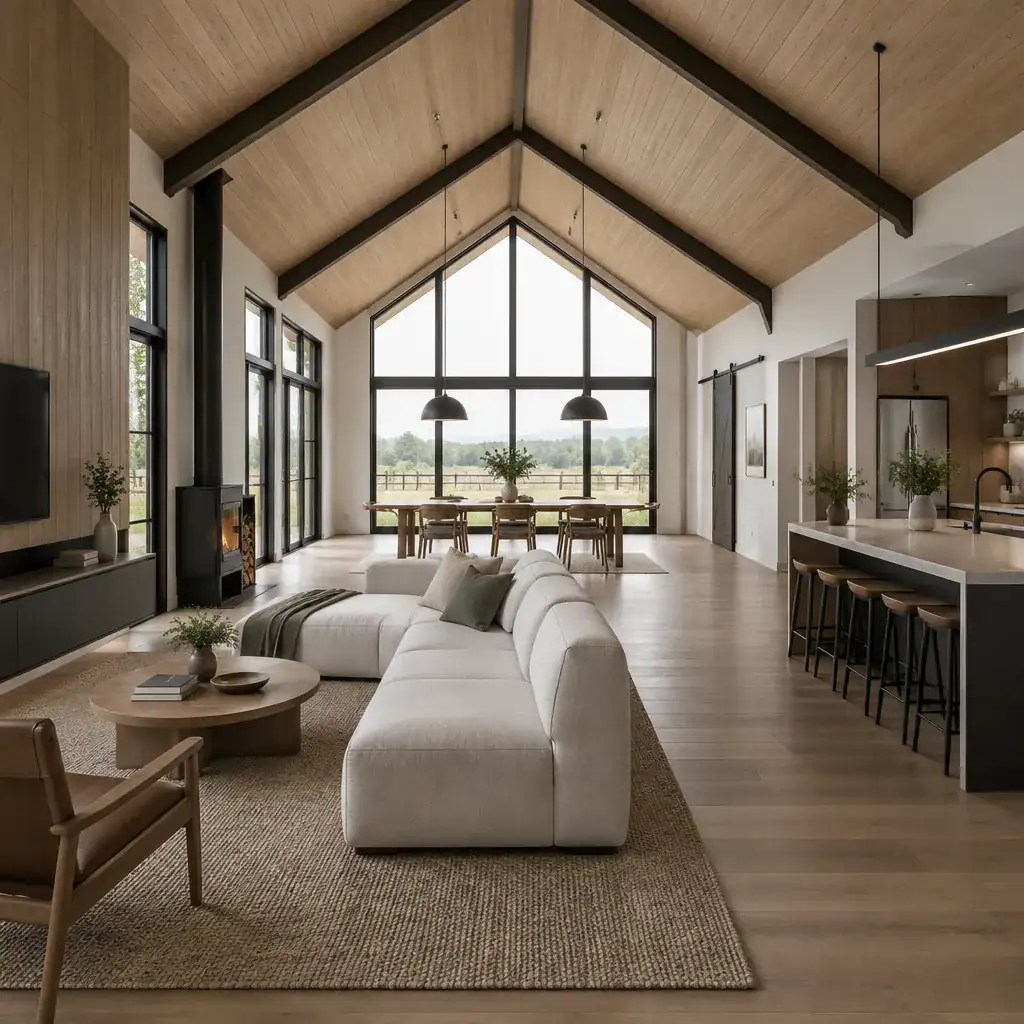
Leave clear paths between doorways, seating, dining chairs, and kitchen access so the space supports daily movement. Furniture should feel appropriately scaled for the room: substantial enough to hold its own beneath high ceilings, but not so oversized that it blocks circulation. Streamlined sofas, simple dining tables, and visually open-leg chairs allow the architecture to remain the main feature.
Add Lighting, Furniture, and Decor with Purpose
Lighting should be layered to make the interior useful and inviting at different times of day. Ambient lighting can come from recessed fixtures or carefully placed ceiling pendants, task lighting can support reading and food preparation, and accent lighting can draw attention to a fireplace, artwork, or timber details. Warm light temperatures generally complement wood, stone, and soft neutral finishes better than harsh, cool illumination.
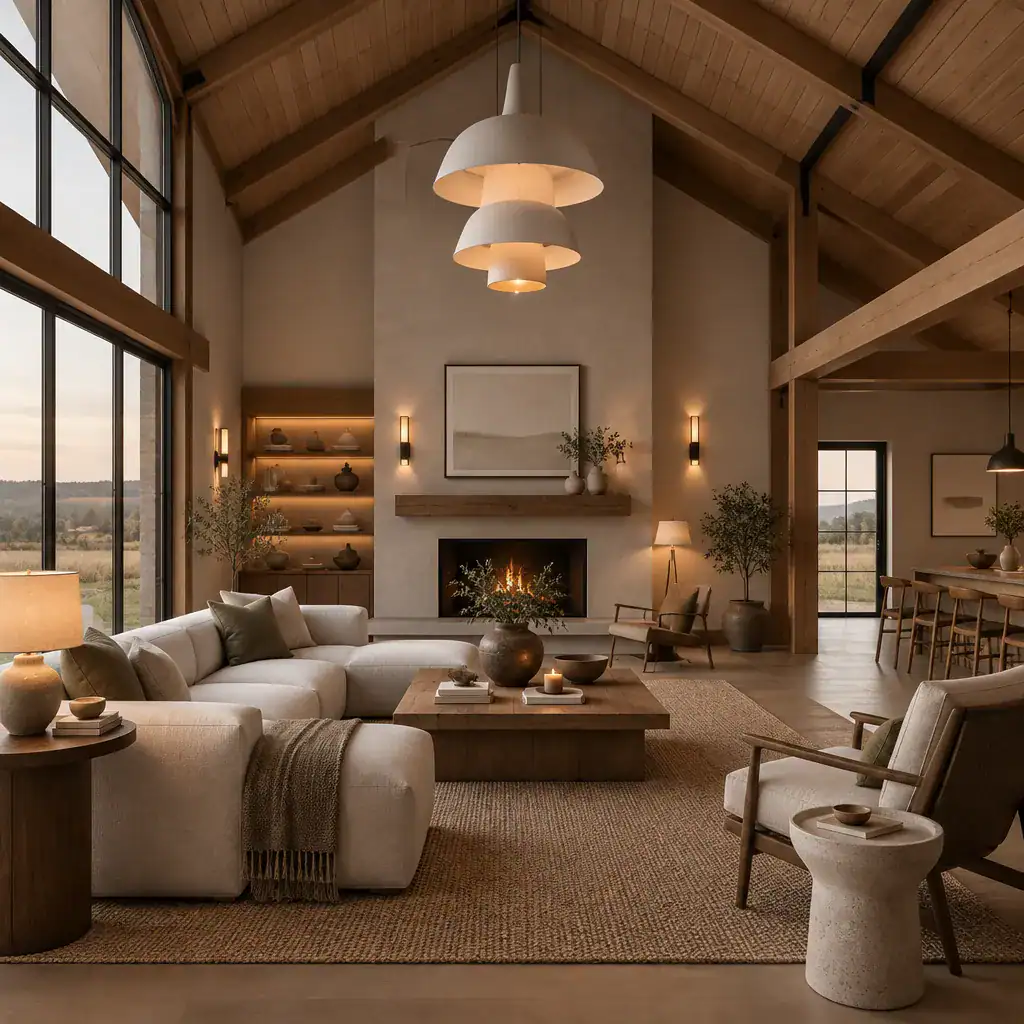
Select contemporary furniture with relaxed, uncomplicated silhouettes, then introduce character through a limited number of rustic or handcrafted pieces. A sculptural wood stool, woven basket, vintage vessel, or handmade ceramic can add personality without turning the room into a farmhouse display. Finish surfaces thoughtfully with a few textiles, restrained artwork, and greenery, leaving enough empty space for the architecture and materials to breathe.
Avoid Common Modern Barn House Interior Mistakes
The most common issue is overloading a room with distressed wood, heavy rustic accessories, signs, or unrelated farmhouse motifs. When every surface makes a statement, the barn-inspired architecture loses its impact. Instead, let one or two textured focal elements stand out and keep surrounding surfaces simpler. Avoid the opposite extreme as well: an all-white, hard-edged scheme can feel cold if it lacks wood, woven fibers, upholstery, and other tactile layers.
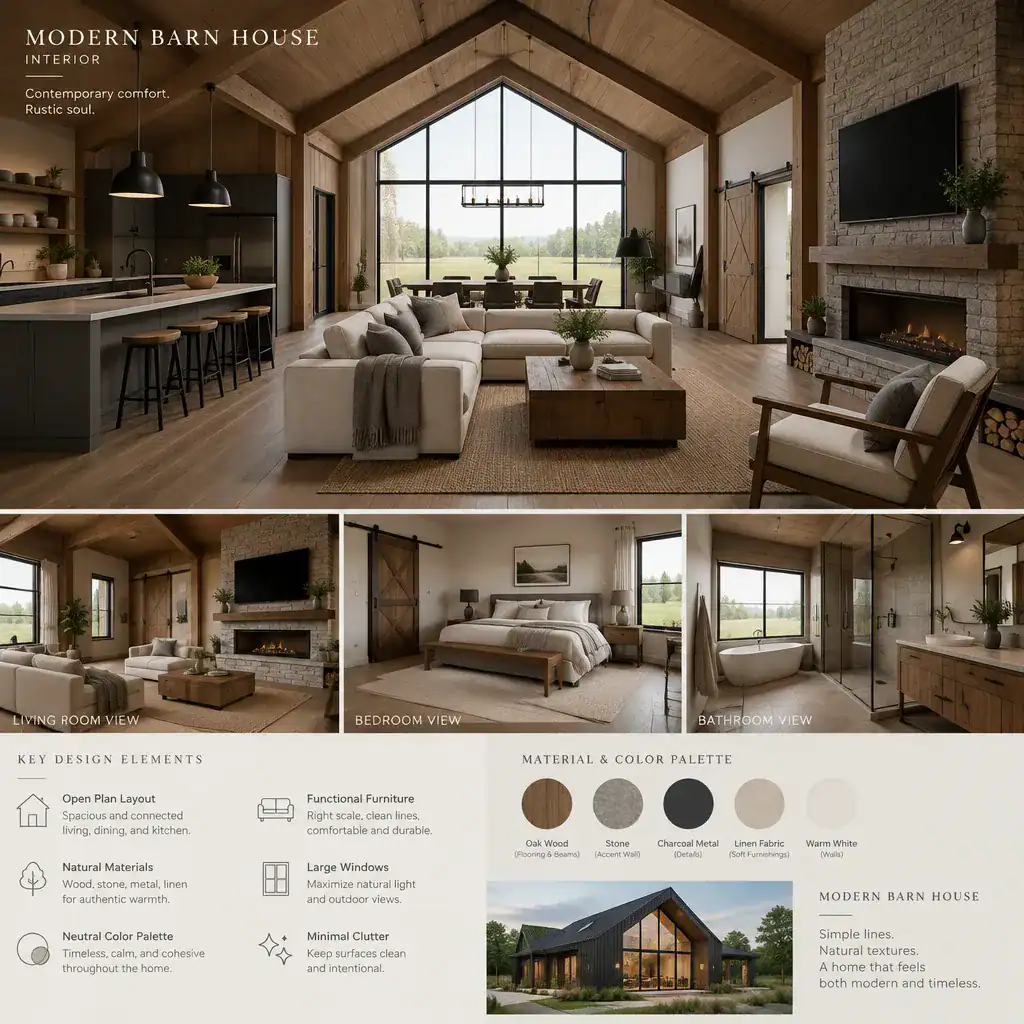
Review adjoining spaces together before finalizing finishes and furnishings. Coordinated color undertones, furniture scale, lighting metals, and repeated materials help rooms flow into one another. A modern barn house interior feels most polished when contrast is deliberate, decorative objects are edited, and each choice supports the larger visual direction.
The strongest barn-inspired contemporary homes rely on consistency rather than an abundance of themed details. By aligning material choices, warm neutral colors, open-flow layouts, and purposeful lighting, you can retain the home’s architectural character while making it fit the way you live. Let the structure guide the design, then use comfortable furnishings and practical finishes to create a space that feels personal, current, and enduring.