
A fireplace gives a cottage living room more than a source of warmth: it creates an architectural center that can organize the seating, establish the material palette, and make the room feel settled. This guide focuses on visual planning for a classic cottage fireplace, from surround character and hearth materials to proportions, placement, styling, and the questions worth taking to qualified installation professionals.
Whether you are restoring an older room or giving a newer space a softer traditional identity, begin by considering how the fireplace will relate to the wall around it, the ceiling above it, and the everyday life of the room. A thoughtful scheme balances a welcoming focal point with comfortable circulation and practical professional guidance.
Defining the Classic Cottage Fireplace Look
The cottage look is usually warm, approachable, and quietly detailed rather than grand. A classic cottage fireplace often has inviting proportions, a simple surround, and surfaces that look tactile, aged, or handmade. Painted timber, limewashed-looking plaster, gently irregular stone, and an uncomplicated wood mantel can all create character without making the room feel overly formal.
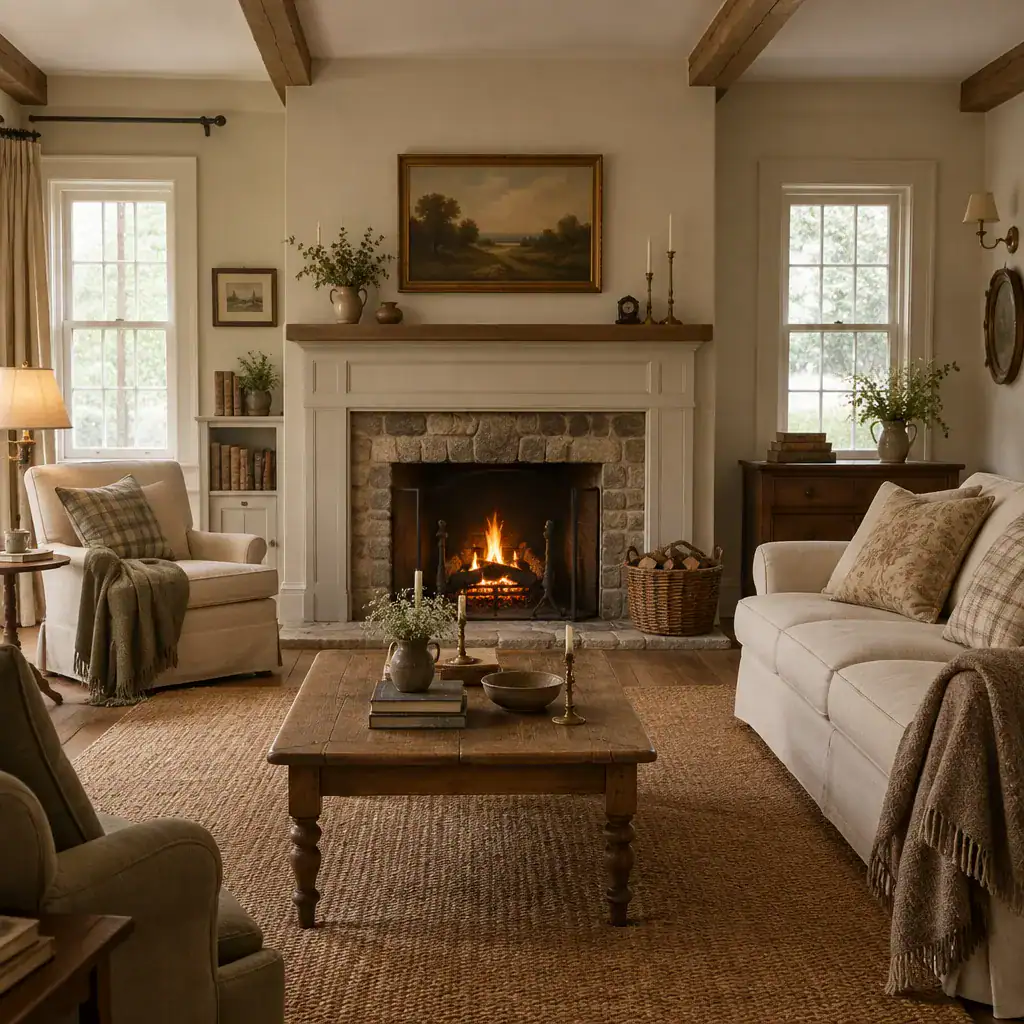
A restrained traditional surround suits many cottages: its clean lines allow the hearth, mantel, and room furnishings to carry the personality. More ornate, period-inspired treatments can work in a room with decorative plasterwork, tall ceilings, or established vintage details, but they may feel disconnected in a modest, plain-walled cottage. Let existing beams, window trim, floorboards, and wall finishes guide the level of ornament.
Create a small mood board before committing to a finish. Include flooring samples, wall color, upholstery, lighting, hardware, and images of furniture you plan to keep. Seeing these elements together helps ensure the fireplace reads as part of the architecture rather than as an isolated feature.
Choosing Surround and Hearth Materials
Material choice sets the visual temperature of the fireplace. Natural stone brings depth and an earthy, rustic note; brick can feel familiar and timeworn; painted wood offers a lighter, more tailored traditional look; plaster gives a soft, quiet backdrop; and tile can introduce crafted color or a neat patterned edge. A classic cottage fireplace does not need every material at once: a limited combination usually feels more convincing.
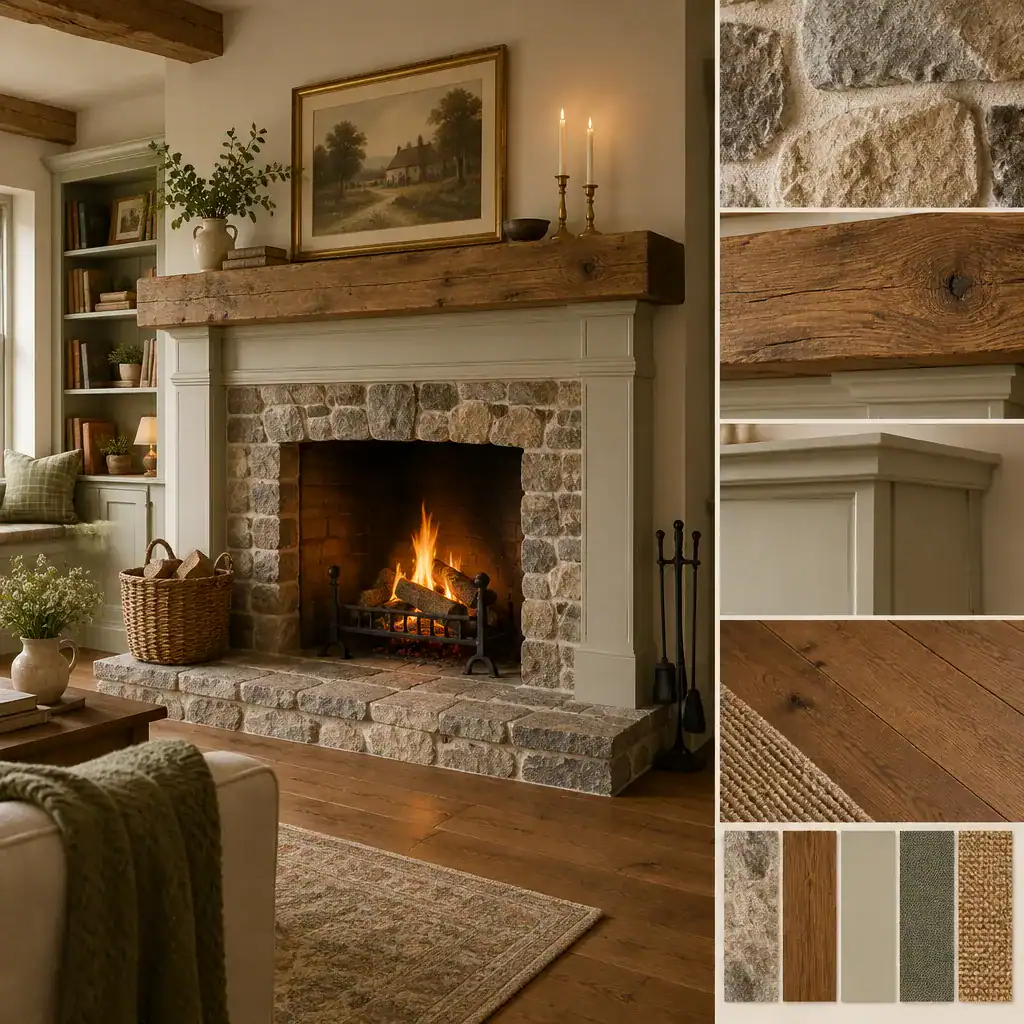
Texture changes the mood. Rougher stone, softened brick, and visible grain feel relaxed and rustic, while smoother plaster, crisp paintwork, and finely cut stone lean more refined. Surface sheen matters as well. Matte or low-luster finishes generally support a calm cottage atmosphere better than highly glossy ones.
The hearth visually grounds the fireplace and can form a useful bridge to the floor. A stone hearth may echo slate, timber, or natural-toned flooring, while brick can complement reclaimed-looking boards and vintage furnishings. Ask qualified professionals to verify heat resistance, code requirements, and compatibility between every selected finish and the intended appliance.
Selecting the Right Fireplace Proportions and Placement
A successful fireplace feels proportionate to its wall, ceiling, mantel, and furniture rather than simply large or small. On a broad wall, a very narrow surround can seem lost; in a compact room, an overly heavy mantel or deep-looking composition may dominate. Consider the visual width of the fire opening, the surrounding wall space, and the relationship between the mantel line and nearby window or door trim.
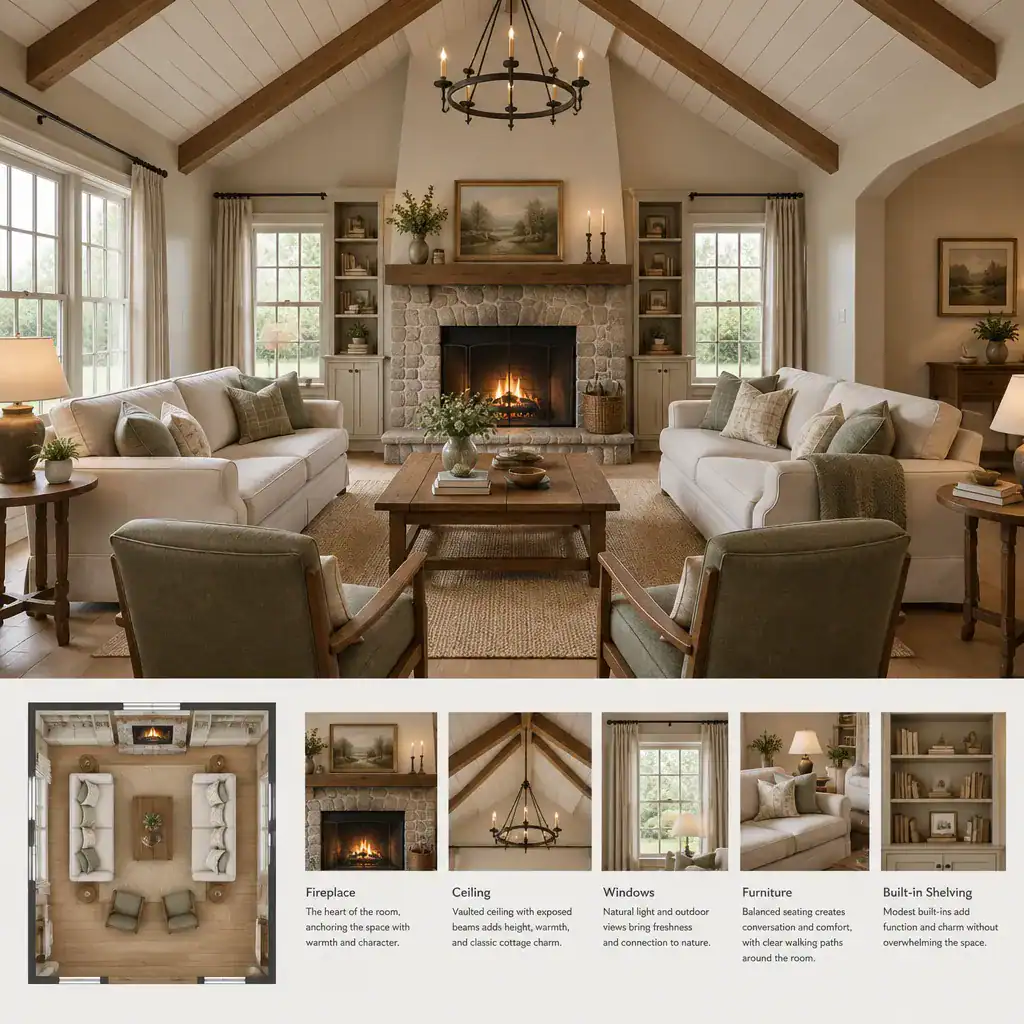
Placement should also support how people move and gather. A centrally positioned fireplace can give seating a natural orientation, while an off-center fireplace may work well when balanced by shelving, a reading chair, or a window. Preserve clear walking routes, and avoid arranging the room so that the focal point interrupts access between doors, seating, and other daily-use areas.
Built-in shelves, shallow alcoves, exposed beams, or existing chimney-breast details can frame the fireplace beautifully, provided they do not crowd it. Use them for visual balance, not excess display. Before finalizing placement or construction, consult a qualified fireplace professional about clearances, ventilation, flue needs, and installation constraints.
Styling the Mantel and Hearth in a Cottage Interior
Mantel styling should feel collected rather than staged. Start with one anchoring piece, such as a softly framed mirror or artwork, then add modest ceramics, candlesticks, a few books, or seasonal branches. A classic cottage fireplace benefits from objects with visible texture and personal character, including handmade vessels, aged brass, woven accents, and simple natural greenery.
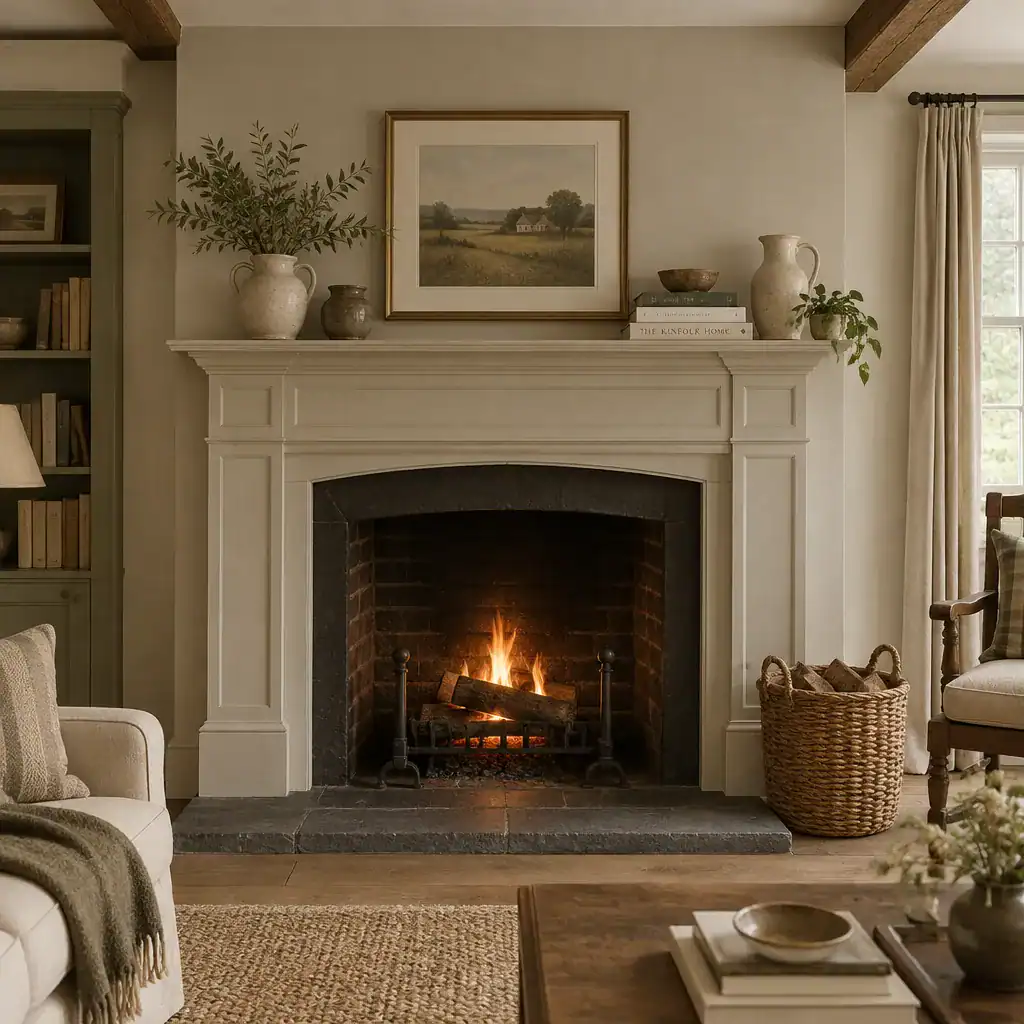
Asymmetrical groupings can look relaxed while remaining balanced. For example, let a taller vase or artwork hold one side of the mantel, then counter it with a lower stack of books and a small candleholder on the other. Repeat a material or color across the arrangement to keep the composition cohesive.
Use soft neutrals, muted greens, warm woods, and restrained accent tones that connect with stone, brick, painted joinery, and upholstery elsewhere in the room. Keep all decorative objects clearly away from the active fire area, and follow the safety guidance supplied by the fireplace manufacturer or installer when decorating the mantel and hearth.
Classic Cottage Fireplace Directions to Compare
Comparing a few clear directions makes selection easier. A painted traditional surround is well suited to light walls, floral or checked textiles, and gently formal cottage furniture. Exposed brick complements timber flooring, practical seating, and rooms with beams or an established rustic feel. A natural-stone hearth can add grounded texture to a simpler room, while a plain plaster finish offers a quiet backdrop for antique furniture or colorful art. A refined dark-stained wood mantel brings contrast and can suit rooms with deeper-toned floorboards, vintage cabinets, or moody wall colors.
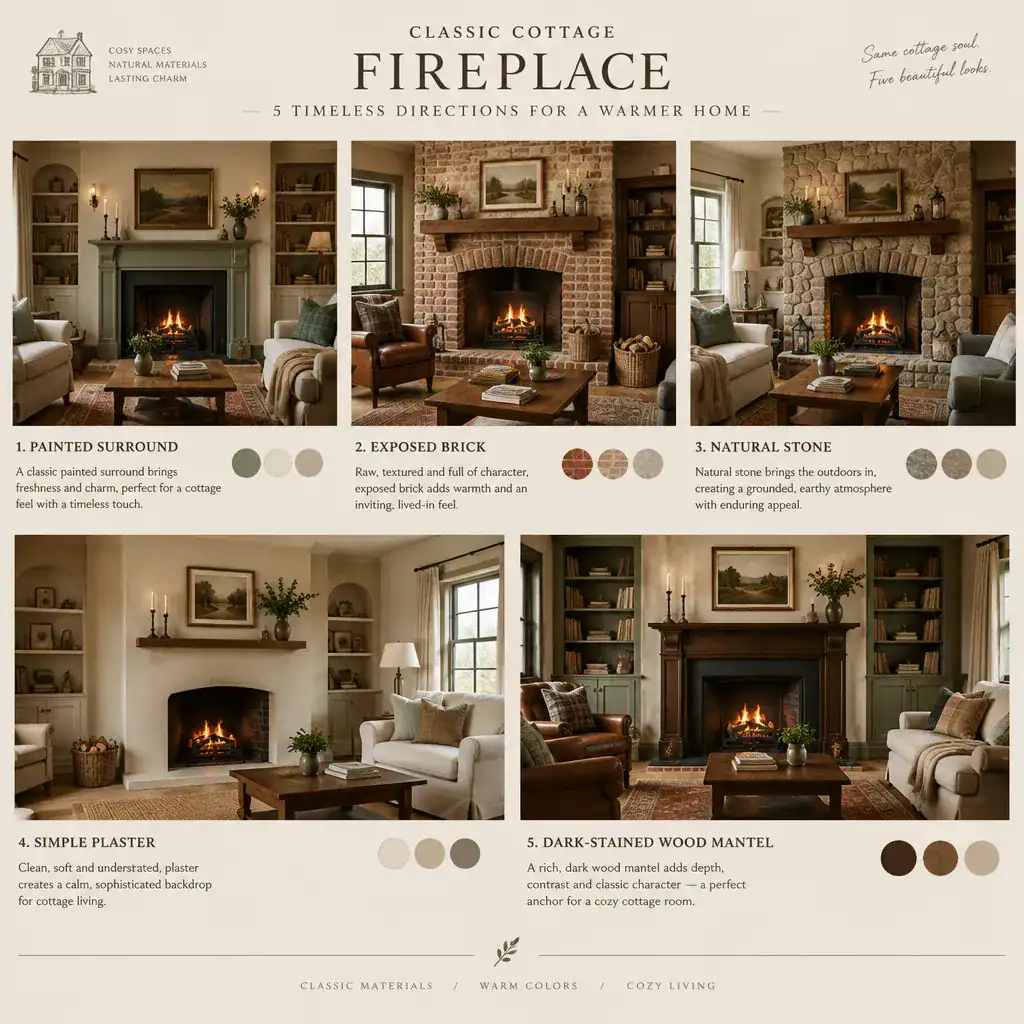
Each direction can still feel cohesive when it responds to the room. Light walls can support darker timber or brick; exposed beams often pair naturally with stone and warm wood; and vintage furniture can soften a clean painted or plaster surround. The goal is not to copy a single period look, but to select a finish language that belongs with the cottage’s existing features.
Review finish samples in the actual room during daylight and evening lighting, since paint, stone, tile, and wood can shift noticeably with changing conditions. As you narrow the design, confirm with qualified professionals that the desired appearance is appropriate for the intended fireplace type and local requirements. This step keeps a beautiful classic cottage fireplace concept connected to realistic installation decisions.
The most convincing cottage fireplace schemes rely on coordinated proportions, tactile materials, and restrained styling rather than a long list of decorative features. Choose one visual direction, repeat its colors and textures across the room, and let the fireplace provide a calm focal point for everyday living. Use your shortlist of images, samples, and layout ideas as a starting point for conversations with qualified designers, installers, and local code professionals.