
A porch is the gentle threshold between a home’s interior and its garden, drive, or village-facing path. The visual goal is not to copy one fixed period formula, but to create an entry that feels modest, settled, and inviting. A traditional cottage porch can achieve that feeling through well-related proportions, familiar materials, and a few purposeful details. This guide covers the structural character, layout, finishes, lighting, furniture, and decor choices that help the space feel cohesive.
Core Features of a Traditional Cottage Porch
Cottage character often begins with an approachable scale: a covered entry that protects the door without overwhelming the facade, steps that feel easy to reach, and details that look appropriate to the home’s overall size. Simple painted posts, restrained railings, modest trim, and a roof line that relates to the main house can make the entry feel like an integrated part of the architecture rather than an added feature.
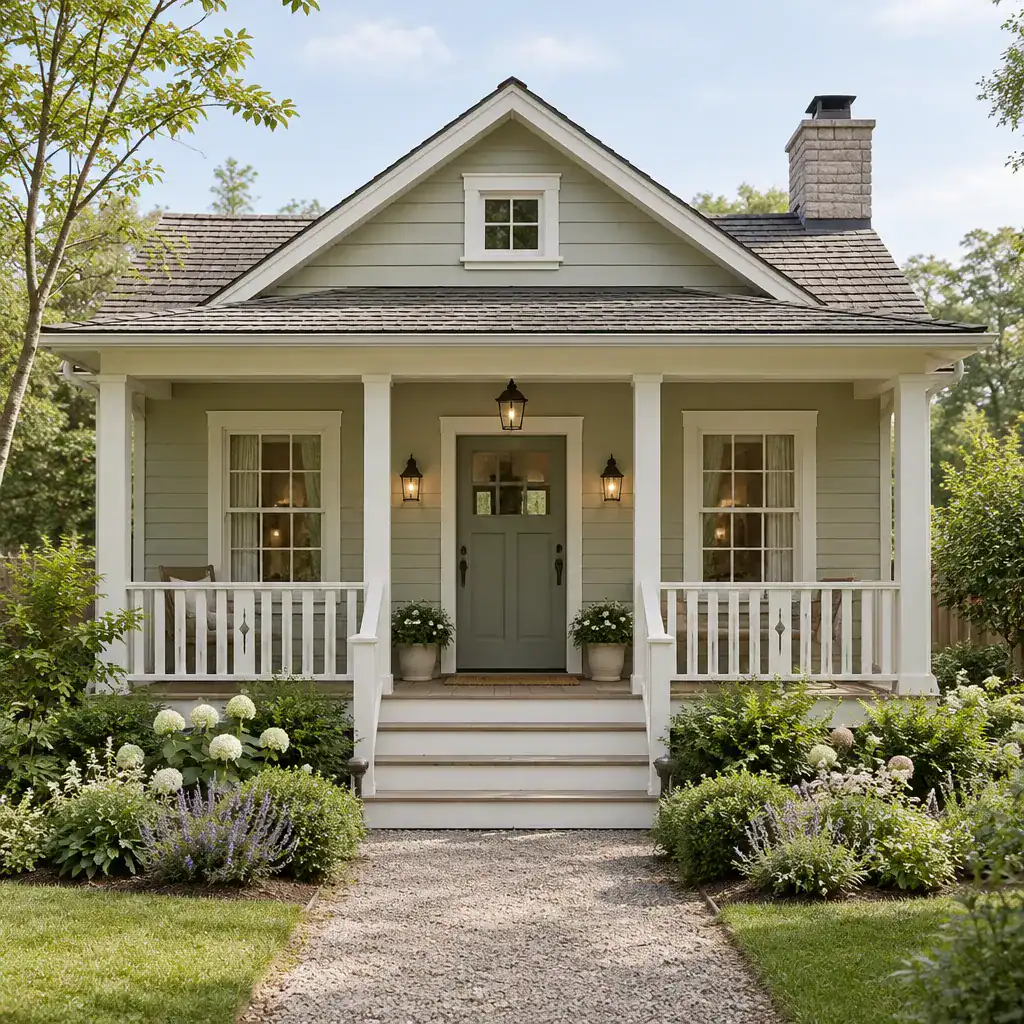
Consider the posts, railings, steps, trim, and roof as one composition. For example, slim posts may suit a small facade, while a heavier railing or oversized roof can make the same entry feel visually crowded. Aligning details with existing window trim, eaves, siding, brickwork, or stone helps the porch belong to the house. A traditional cottage porch is usually most convincing when its new elements repeat the facade’s established rhythm instead of introducing unrelated shapes or ornament.
Choose a Porch Layout That Supports Everyday Use
Start with the route from the approach to the front door. A compact entry porch may only need room for a doormat, a planter, and enough standing space to open the door comfortably. A deeper sitting porch can accommodate chairs or a bench, but it should still preserve a direct, unobstructed path for residents, guests, deliveries, and daily comings and goings.
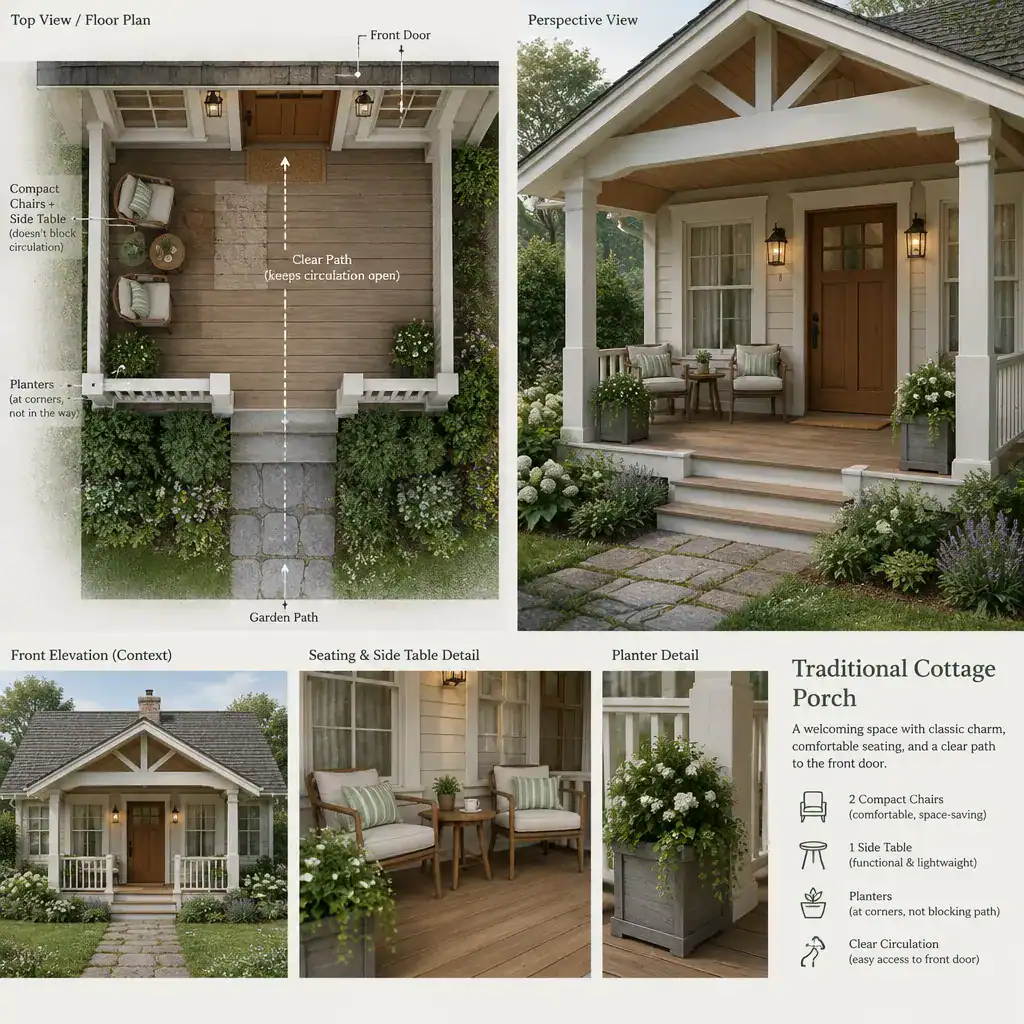
Let the shape of the porch and the available wall space guide the arrangement. A balanced facade with room on both sides of the door can suit matching chairs or planters placed symmetrically. If the door sits to one side, an informal arrangement, such as a small bench along the longer wall with a side table nearby, may feel more natural. Before buying furnishings, imagine opening the door, carrying groceries inside, and passing by seated guests; these everyday movements reveal whether the layout is genuinely useful.
Select Materials, Colors, and Finishes with Cottage Character
Coordinate the floor, painted woodwork, railings, and entry details with the exterior already in place. Painted timber, a textured painted floor, brick or stone steps, and understated metal hardware can all work well when their tones relate to the cottage’s siding, masonry, roof, and door. The aim is a layered appearance with clear connections, not a collection of individually noticeable finishes.
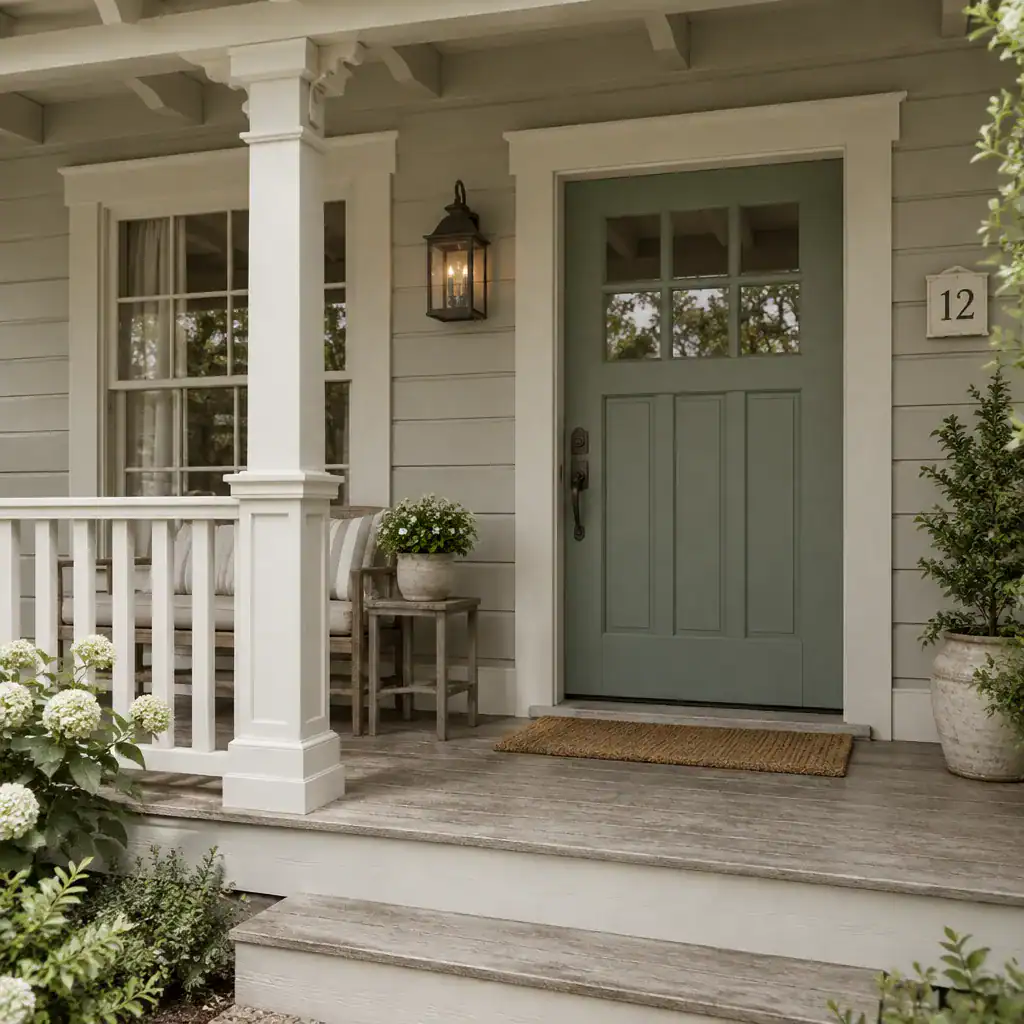
A restrained palette generally gives a small porch more lasting appeal. Neutral whites, soft creams, muted greens, warm grays, or subdued blue-gray tones can support the architecture, while one gentle accent color on the door, cushions, or planting containers adds interest. Texture matters as much as color: matte paint, aged-looking wood, and lightly textured flooring tend to feel quieter than highly glossy or heavily patterned surfaces. Choose finishes with local weather, cleaning needs, and repainting or refinishing requirements in mind, and avoid mixing numerous competing patterns, metals, and accent shades in a limited area.
Furnish and Decorate the Porch Without Overcrowding It
Furniture should fit the available footprint and the way the porch will be used. Two compact wooden chairs and a small table can create a pleasant pause for conversation on a deeper entry, while a single bench may be the better choice for a narrow porch. Select pieces that leave enough room around the door and do not hide the railing, posts, or attractive trim.
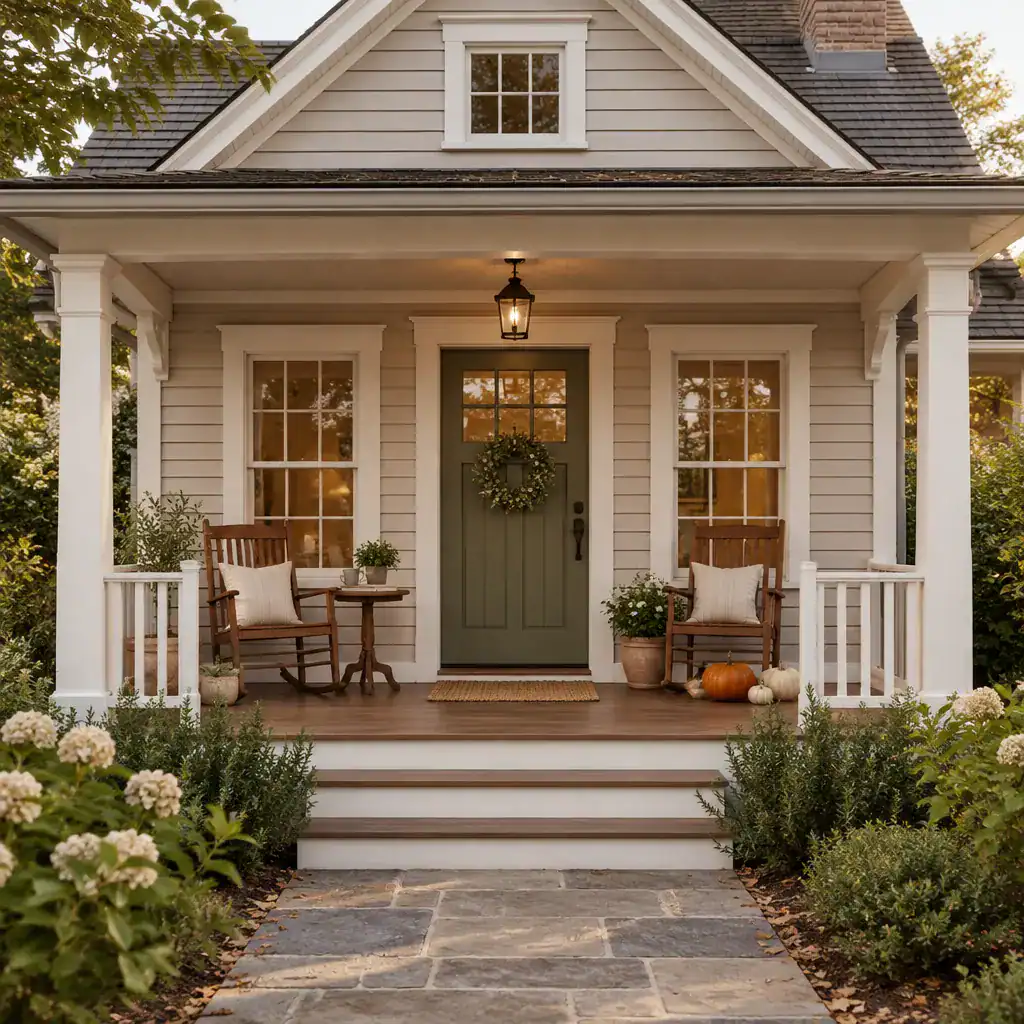
Add comfort in a limited number of layers: weather-suitable cushions, a durable outdoor rug, a pair of planters, and a modest seasonal detail are often enough. Repeat a color from the shutters, door, or garden gate in a cushion edge or pot to make the scheme feel intentional. On a traditional cottage porch, the door and architectural details should remain the focal points, so keep accessories proportionate and remove items that make the entry feel like storage or visual clutter.
Add Lighting and Practical Details for a More Usable Porch
Entry lighting improves visibility after dark while contributing to the porch’s overall character. A simple wall lantern, pendant, or modest ceiling-mounted fixture can suit the setting when its finish relates to the door hardware, house numbers, railing details, and other exterior metalwork. Warm, even light is generally more welcoming than a harsh fixture that draws attention only to itself.
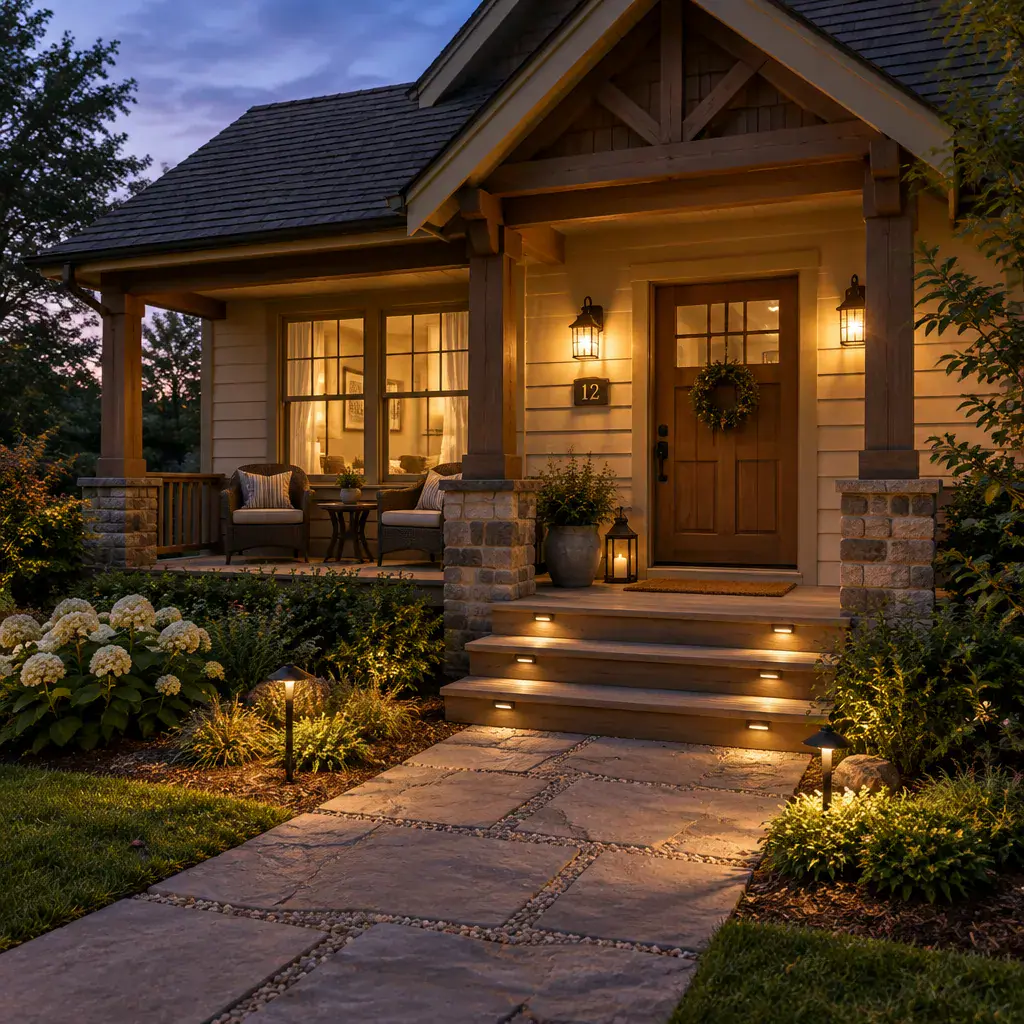
Practical planning also protects the porch’s appearance over time. Account for rain exposure, drainage around steps and planters, access for sweeping and washing, and the durability of rugs, cushions, and furniture. Review the space from the street as well as from the entry path. This wider view can reveal a mismatched fixture, a visible utility item, uneven planters, or an unfinished edge that distracts from an otherwise calm facade.
Traditional Cottage Porch Design Checklist
Before finalizing the design, confirm that the route to the entrance remains clear and comfortable. Check that flooring, paint colors, railings, furniture, lighting, and accessories all relate to the existing facade rather than competing with it. The porch should look connected to the cottage from a distance and work smoothly when approached up close.
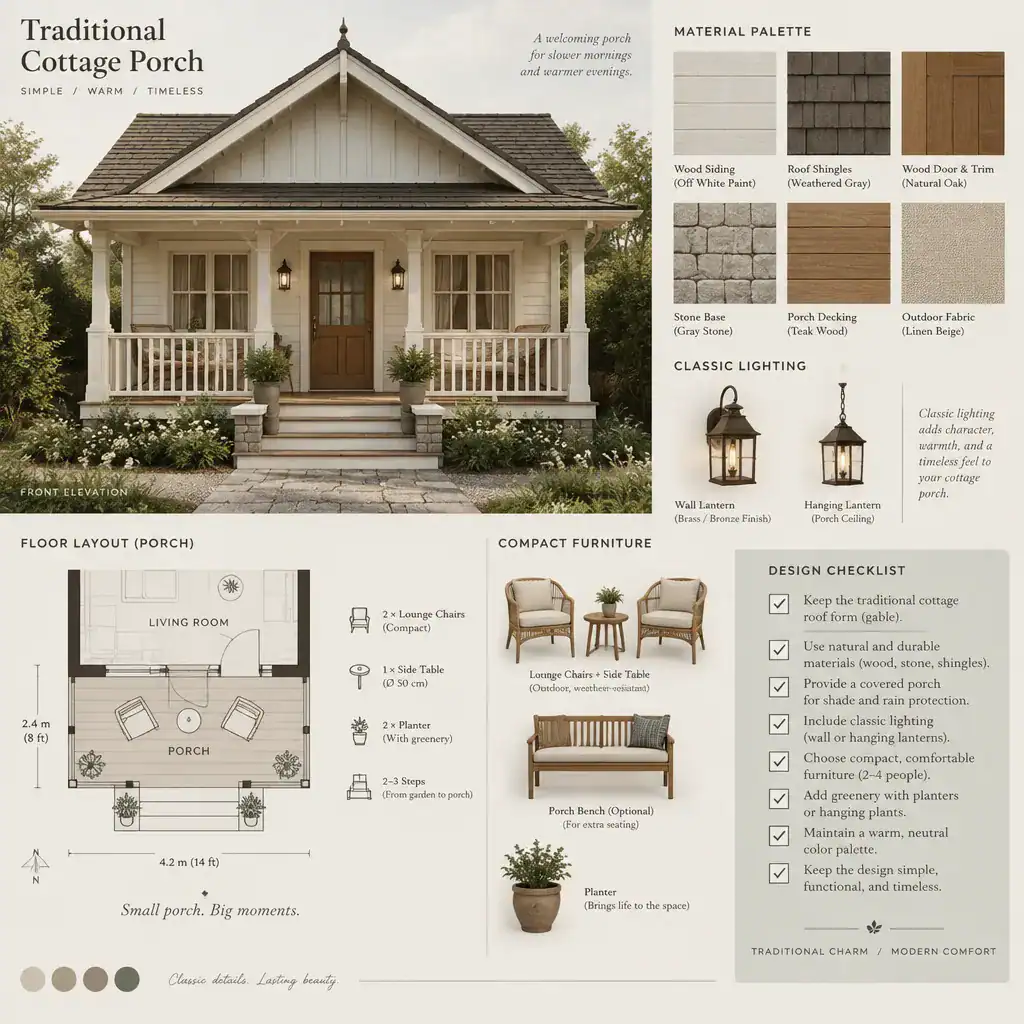
Remove any object that blocks the door, crowds the steps, or pulls attention away from the entry. Then assess comfort, weather suitability, and maintenance: seating should be practical to use, materials should suit their exposure, and the space should be easy to keep tidy. This final review helps distinguish useful detail from unnecessary clutter before purchases or installation decisions are made.
A successful traditional cottage porch combines welcoming proportions, coordinated finishes, and everyday practicality. Begin with the character of the existing facade, then prioritize the changes that improve arrival, comfort, and visual harmony. Even a small update to lighting, paint, seating, or planting can make the entrance feel more complete while preserving its timeless, modest appeal.