
A simple farmhouse approach appeals because it can make a home feel relaxed, welcoming, and connected to rural character without depending on elaborate ornament. Rather than copying every decorative trend, a simple low cost farm house design focuses on useful rooms, familiar forms, durable finishes, and a few details that create warmth.
Construction costs are never fixed by a style alone. They vary with location, labor availability, site conditions, material choices, local regulations, permits, and the final scope of work. The most helpful starting point is to set clear priorities before discussing a plan with a designer, builder, or contractor. The decisions below move from layout and exterior form to materials, interior character, budget planning, and common pitfalls.
Start With a Compact and Functional Farmhouse Layout
Begin with everyday life rather than with a façade. List the rooms your household truly needs, how they will be used, and which activities should happen close together. A kitchen, dining area, and living room that connect naturally can support daily routines and gatherings while reducing the need for long corridors or isolated spaces.
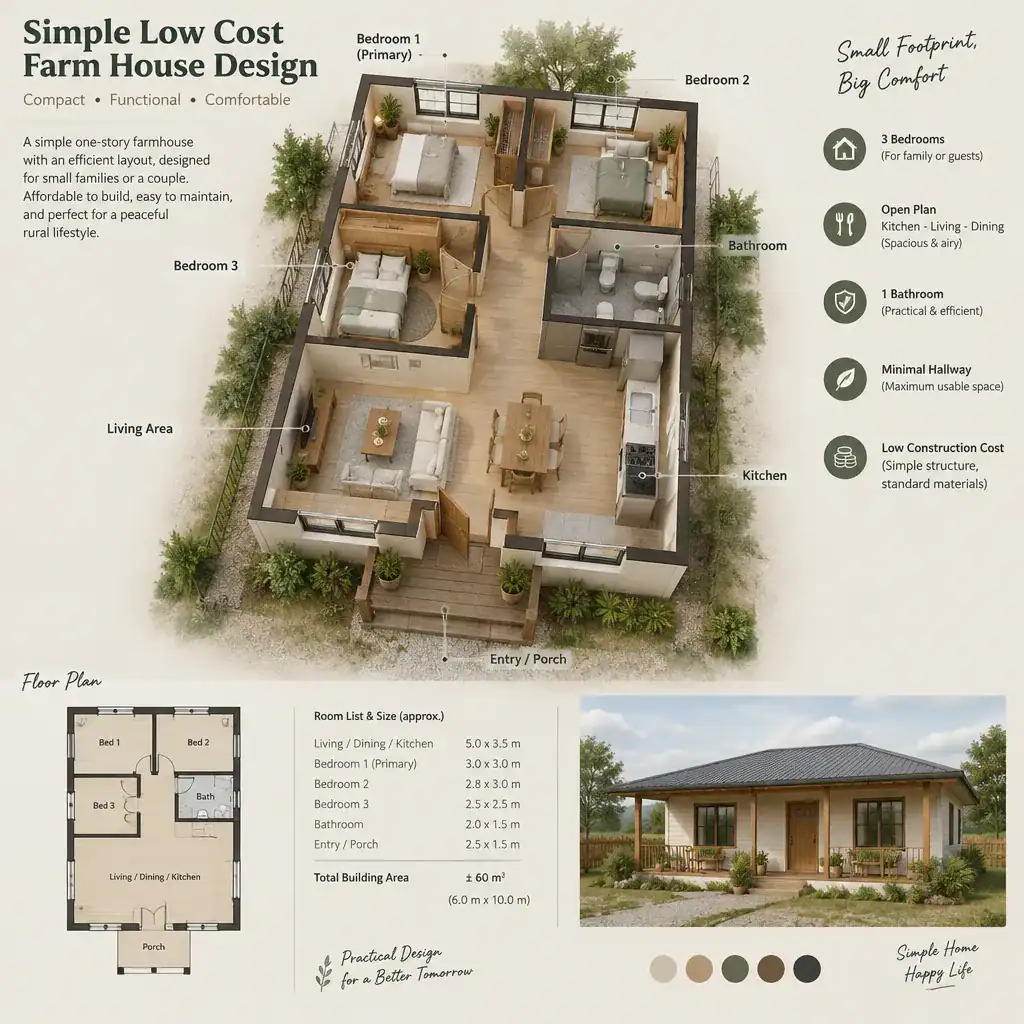
A straightforward footprint, often with a simple rectangular or gently extended shape, is easier to understand and can avoid needless circulation and complicated construction intersections. Group bedrooms where privacy is needed, keep shared areas centrally accessible, and make the entry practical for shoes, bags, coats, and everyday arrivals.
Make rooms work harder before adding square footage. A dining table can also serve as a homework, hobby, or work-from-home surface, while a flexible nook may become a reading corner, storage zone, or occasional guest space. Before finalizing a plan, review storage needs, door swings, furniture placement, natural-light access, and the route from parking or the yard to the kitchen. These checks help a simple low cost farm house design remain comfortable after move-in, not just appealing on paper.
Use a Simple Exterior Form to Create Farmhouse Character
Farmhouse character often comes from a clear silhouette: balanced proportions, an uncomplicated pitched roof, and an entrance that feels easy to find. A modest form can look intentional and inviting when the major elements relate well to one another, without requiring numerous roof changes, bump-outs, or decorative layers.
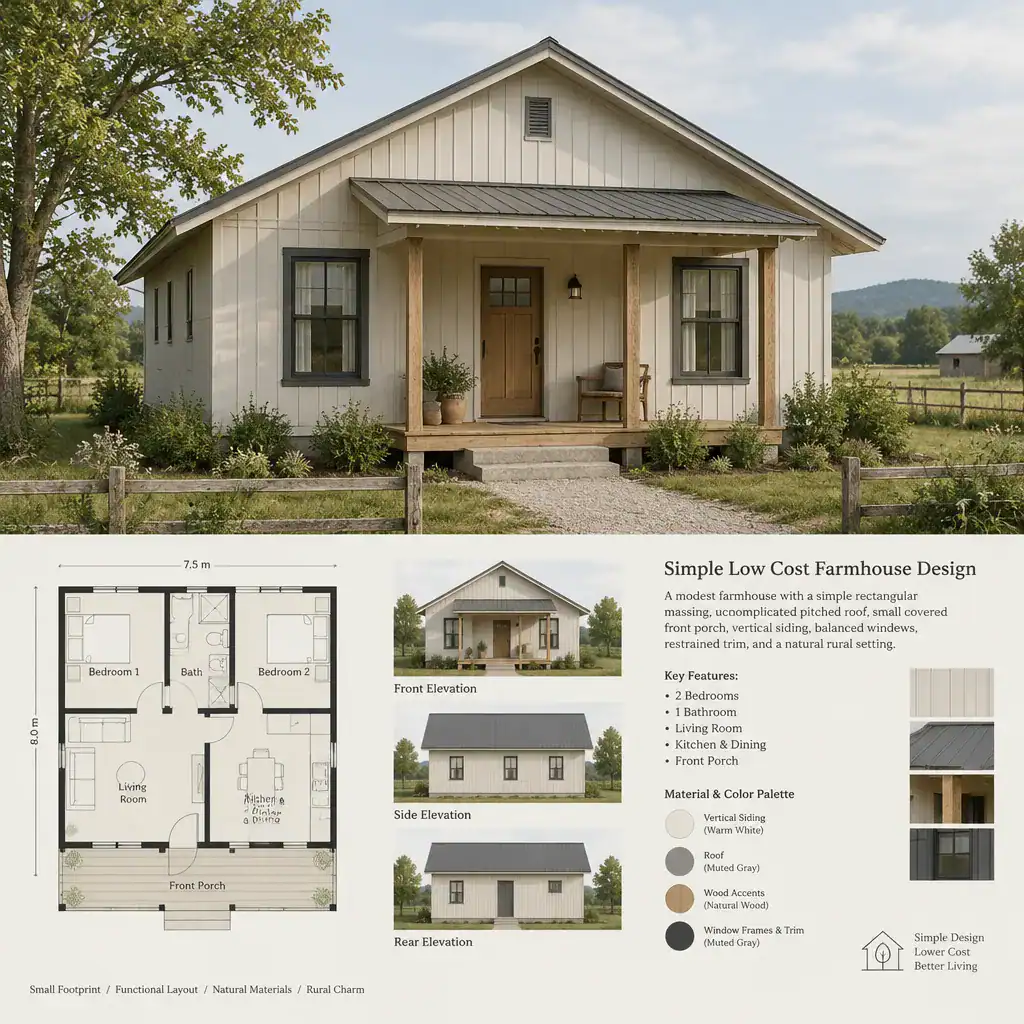
Use exterior details selectively. A small covered porch can provide a useful transition from outdoors to indoors, while vertical siding, practical window sizes, restrained trim, and simple roof overhangs can reinforce the style. These features should be evaluated for weather exposure, the site, local requirements, expected upkeep, and the skills available for installation.
Choose an exterior that belongs in its setting instead of forcing a highly stylized look. A quiet combination of painted siding, simple wood accents, and a limited color palette can feel rural and timeless. The goal is not to reproduce a historic house exactly, but to create a durable, recognizable home with a welcoming presence.
Choose Materials and Finishes That Look Warm Without Overcomplicating the Design
A limited material palette usually creates a calmer result than a collection of unrelated finishes. Repeating a few compatible tones and textures across the exterior and interior reduces visual clutter and makes decisions easier to coordinate. It also helps the home retain its character when future repairs or updates are needed.
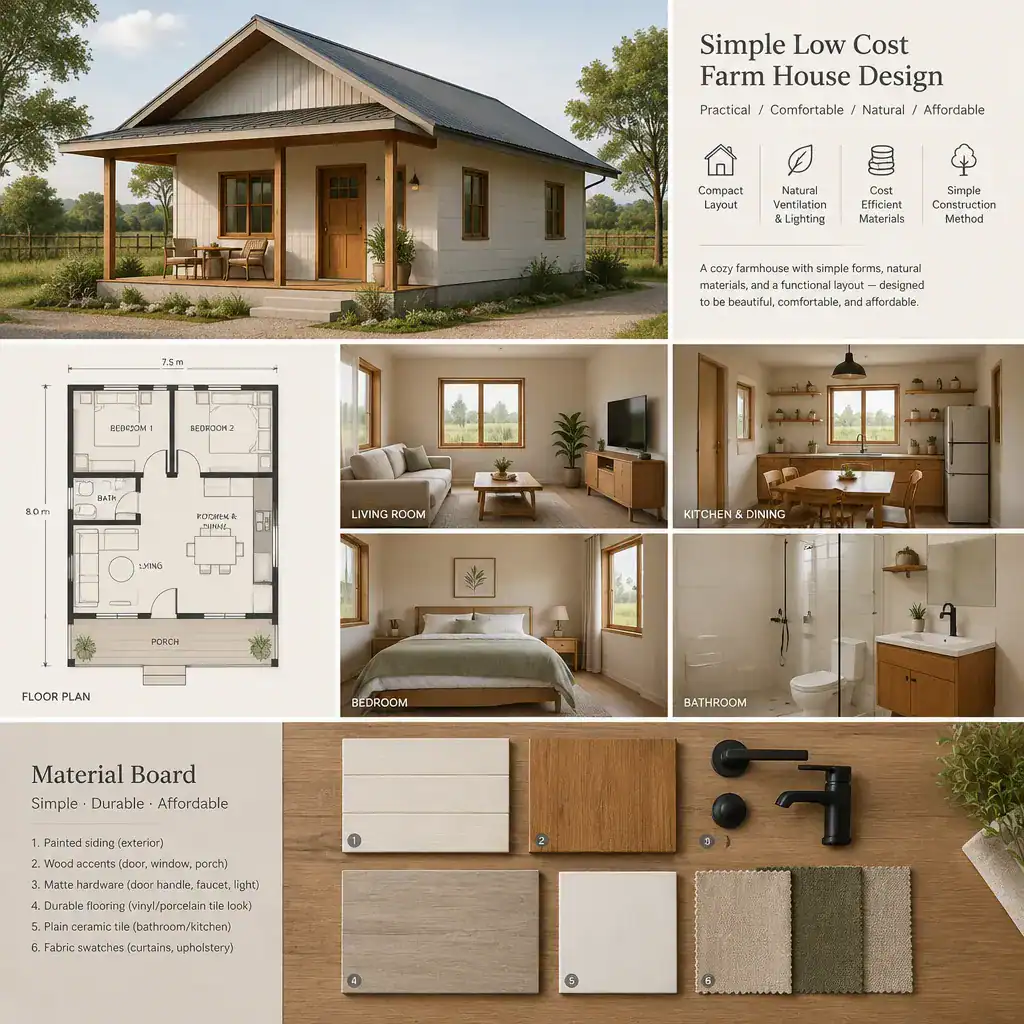
Evaluate every material beyond its first impression. Consider local availability, durability, routine maintenance, installation requirements, replacement options, and how it performs in the local climate. A finish that looks inexpensive initially may be less suitable if it is difficult to source, repair, or maintain in your conditions.
Wood-look surfaces, painted cabinetry or trim, durable neutral flooring, plain ceramic tile, and modest matte hardware can all support farmhouse character when used consistently. Request physical samples whenever possible, view them in the intended light, and ask about long-term care before committing. This measured approach helps a simple low cost farm house design feel cohesive rather than stripped down.
Prioritize the Features That Make the Home Feel Like a Farmhouse
The strongest farmhouse atmosphere is usually created by foundational choices: comfortable proportions, natural-looking textures, useful storage, good airflow, and shared spaces where people can spend time together. These qualities have more lasting impact than filling every room with themed signs, distressed accessories, or decorative objects.
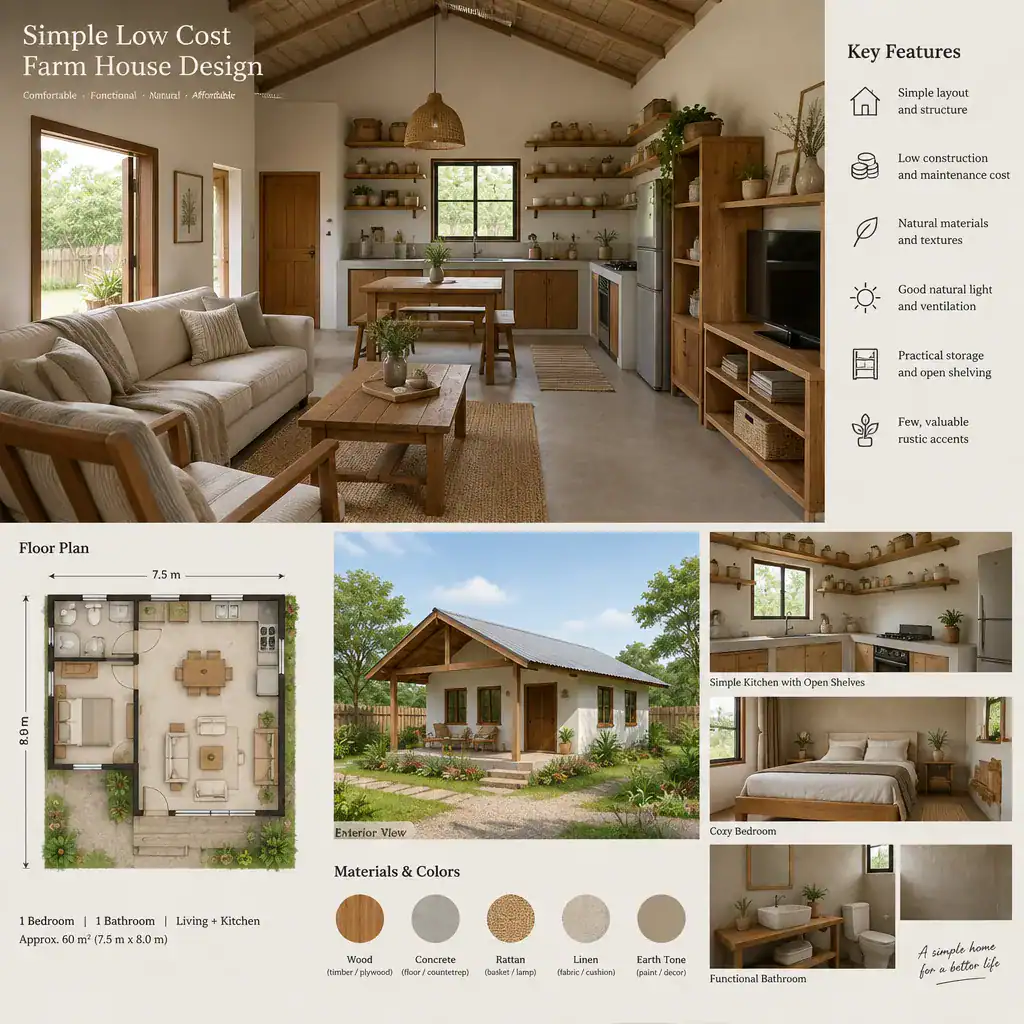
Separate decisions that are difficult to change later from ones that can wait. Layout, openings, ventilation, durable surfaces, and practical storage deserve early attention because they shape daily use. Decorative lighting, wall art, specialty shelving, and accent pieces can often be introduced gradually as the home and budget allow.
A restrained palette of warm neutrals, wood tones, woven textures, and a few coordinated rustic accents can make rooms feel settled without looking overly staged. Select a small number of focal features, such as a practical front porch, a substantial dining table, or open shelving in one useful area, rather than scattering the budget across many minor details.
Build a Budget Strategy Before Selecting Decorative Details
Create a written priority list before choosing decorative finishes. Divide the scope into essential construction decisions, functional upgrades, and optional additions. Essential items may include the building envelope, core room layout, utilities, and required site work, while upgrades and decorative elements can be assessed after the basics are clearly defined.
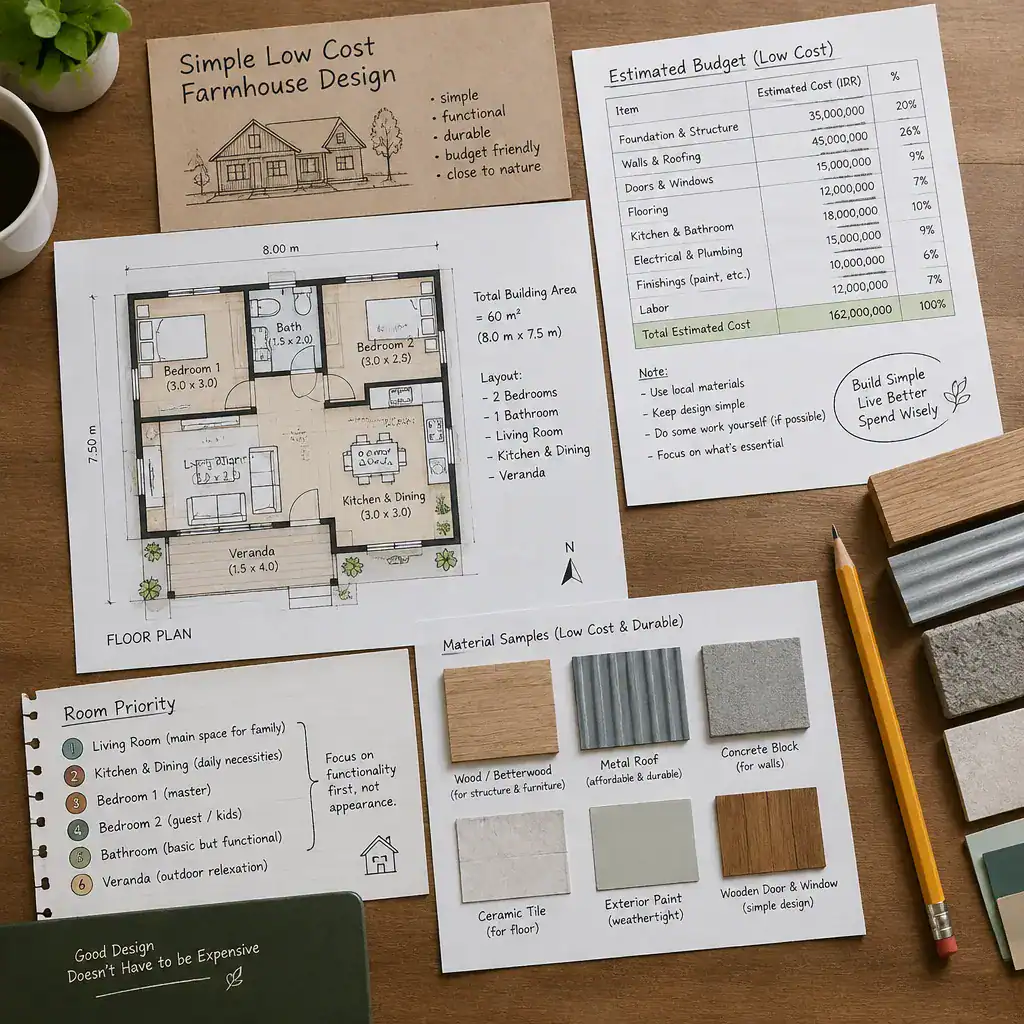
Compare more than the purchase price of materials and finishes. Include installation labor, maintenance demands, replacement availability, and the ease of changing an item later. A simpler choice may be appropriate when it performs reliably and leaves flexibility for future improvements, but each option should still be checked against the project conditions.
Early revisions are generally easier to manage than changes made after major construction choices are fixed. Keep a written scope of work, note assumptions and exclusions, and discuss them with qualified local professionals who understand the site and applicable requirements. This planning discipline gives an simple low cost farm house design a clearer path from inspiration to a buildable project.
Common Mistakes to Avoid in a Low-Cost Farmhouse Design
One common mistake is adding rooflines, exterior projections, and ornamental elements simply because they appear in inspiration images. If a feature does not improve function, weather protection, access, or the overall composition, it may add complexity without strengthening the home.
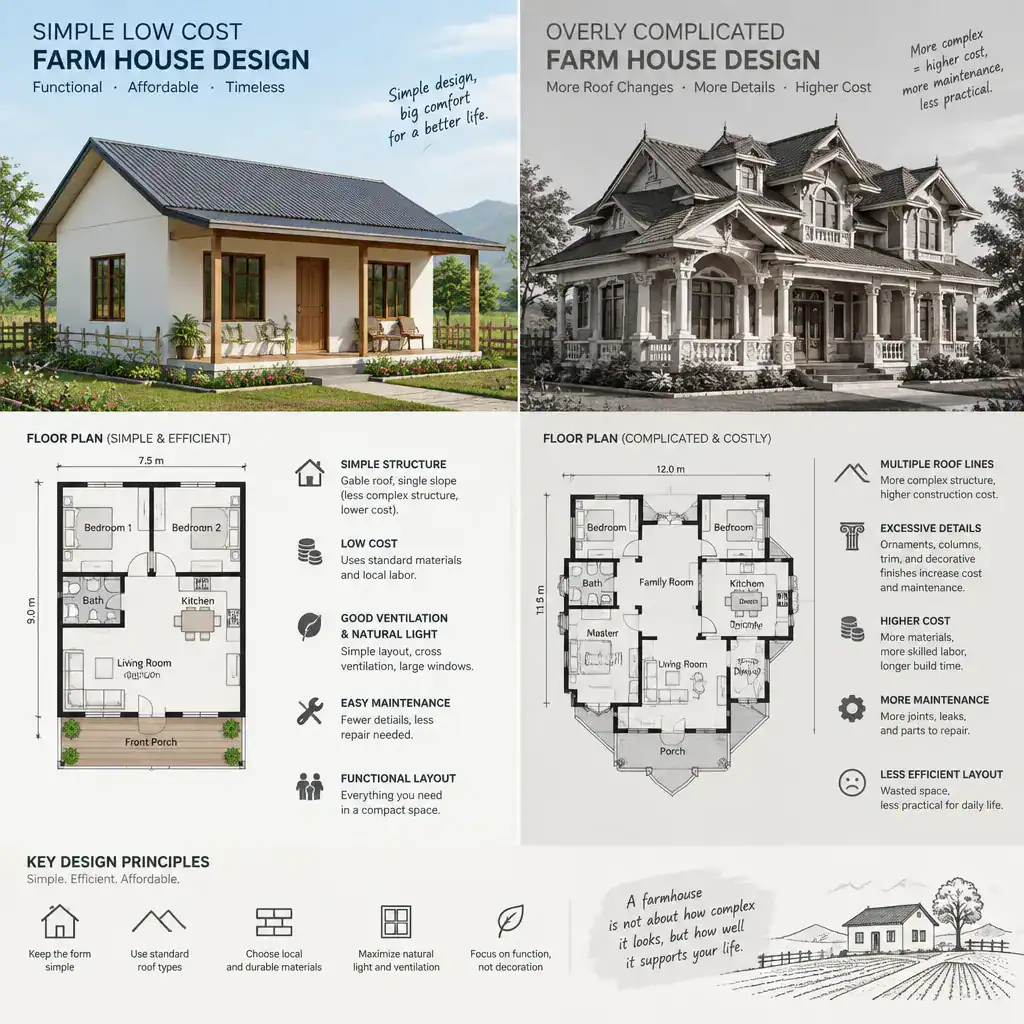
Another risk is choosing materials only for appearance. Confirm availability, maintenance needs, installation methods, climate suitability, and compatibility with nearby materials before making a final selection. A coordinated, modest palette is often more successful than a mix of finishes that demand complex detailing or specialized upkeep.
Do not reduce the scope by overlooking professional review, code compliance, structural needs, drainage, ventilation, or service access. Leave room for storage, mechanical access, and future maintenance from the beginning. A practical plan protects the home’s usefulness and helps prevent decorative decisions from interfering with essential performance.
A low-cost farmhouse begins with a practical layout and a firm list of priorities, not with expensive decoration. Keep the exterior form simple, coordinate materials carefully, and direct attention to the features that improve everyday comfort and durability.
Adapt these ideas to your site, local requirements, household routines, and professional construction advice. With clear planning, a modest farmhouse can feel warm and personal while remaining grounded in sensible construction decisions.