
An english cottage style living room is well suited to everyday life because it puts comfort ahead of formality. The look feels welcoming rather than precious, combining familiar furnishings, softened colors, and details that appear to have been gathered over time. This guide covers the key choices behind the look, from the color palette and furniture plan to textiles, lighting, and the finishing accessories that make a room feel personal.
What Defines an English Cottage Style Living Room?
The character of an english cottage style living room is warm, informal, and gently layered. It takes cues from traditional cottage interiors without requiring a room to look historical or perfectly coordinated. Comfortable seats invite lingering, natural finishes add texture, and a few timeworn-looking surfaces give the space visual softness.
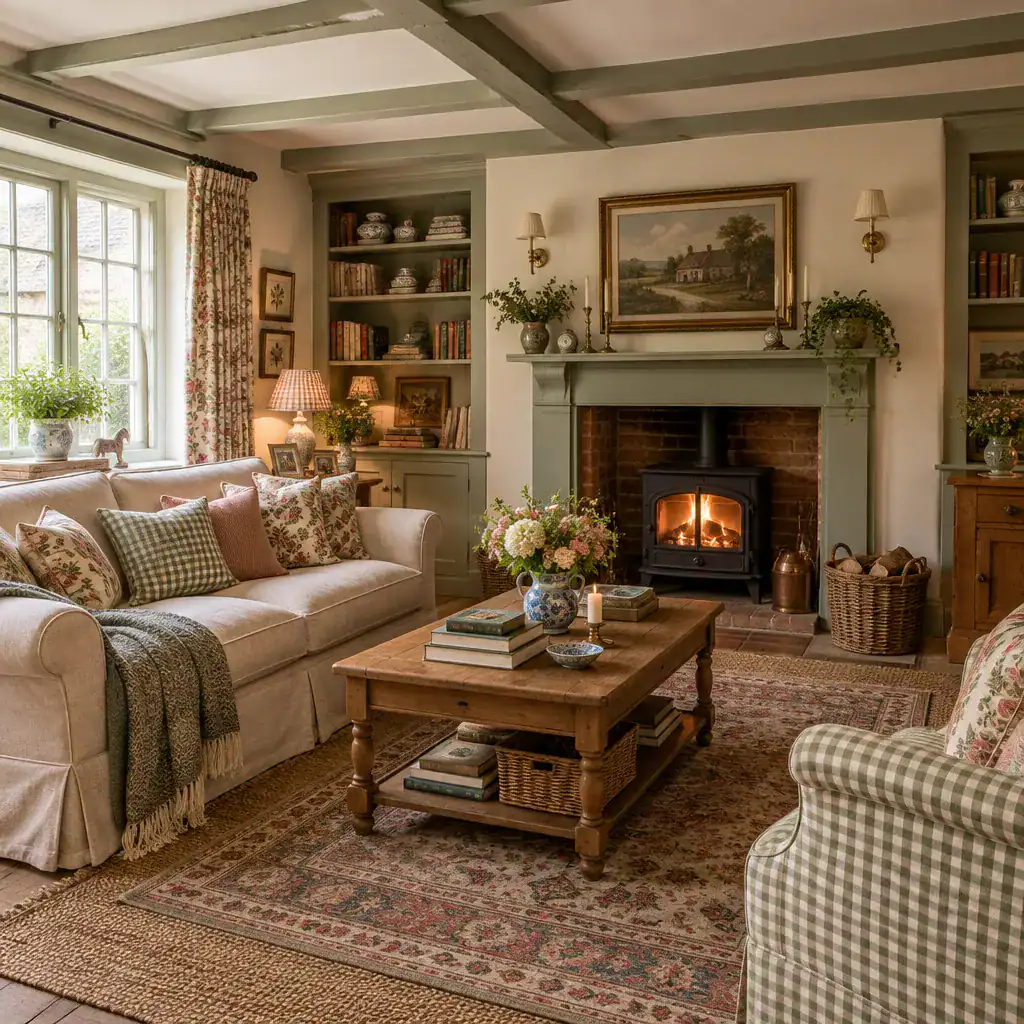
Think of the room as a useful collection of practical and decorative pieces. A painted cabinet may store games and blankets, while a ceramic vase, a framed print, and a stack of well-used books provide character. Patina can come from aged wood, brushed metal, handmade ceramics, or a slightly faded textile; it does not need to mean damaged or neglected finishes. The most successful rooms feel personal and lived-in, with a relaxed mix rather than a staged set of matching furniture.
Build the Right English Cottage Color Palette
Begin with a quiet, nature-inspired base that allows the room’s layers to feel calm. Warm white and cream work well on walls, while sage, dusty blue, muted yellow, soft ochre, and gentle earthy shades can appear in upholstery, rugs, or curtains. These softened hues create a warm backdrop without making the room feel dark or overly themed.
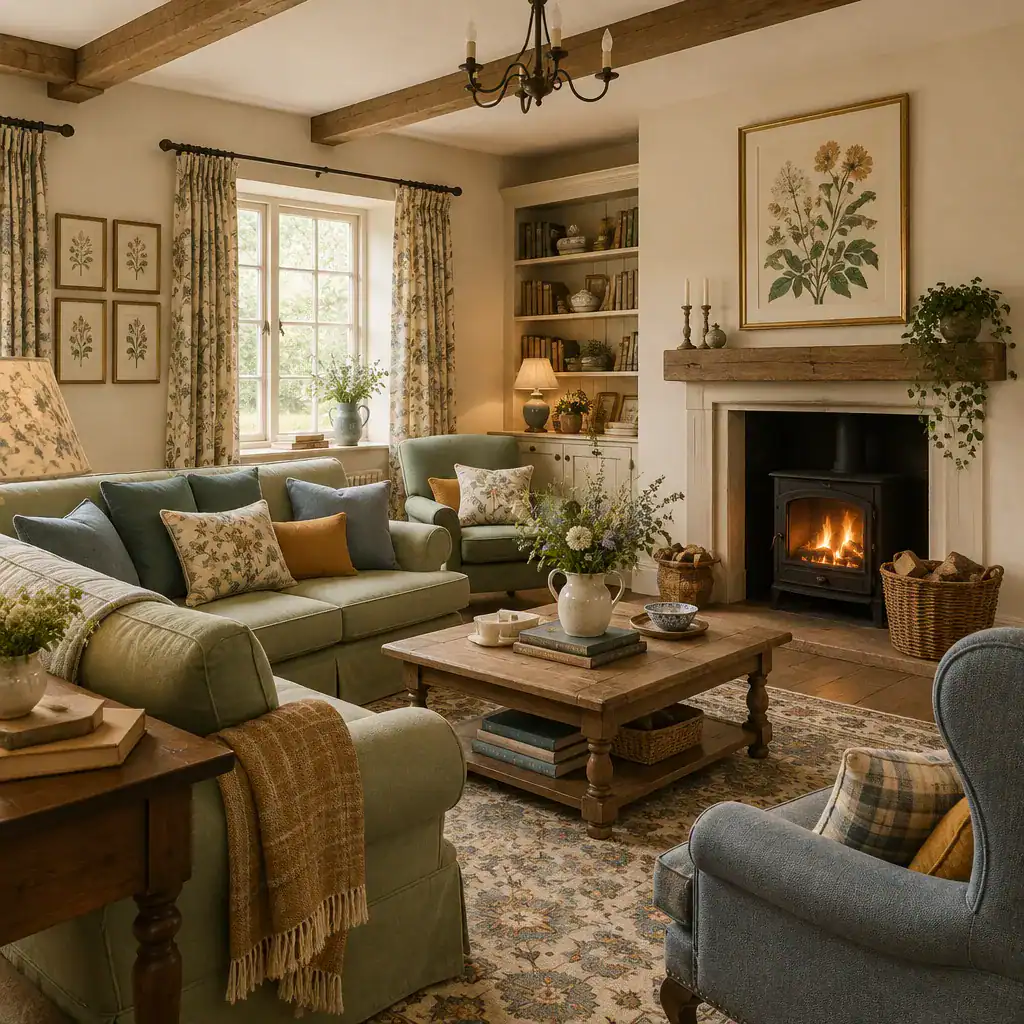
Add definition with one deeper accent, such as moss green, faded brick red, navy, or rich brown. Use it selectively on an armchair, painted trim, a cabinet, artwork, or smaller accessories so it anchors the lighter tones. When mixing florals, checks, stripes, and solids, compare their undertones first. A blue with a gray cast, for example, will sit more naturally beside cool sage and cream than beside a bright, clear blue. Repeating a few related colors across fabrics helps varied patterns look intentional.
Choose Comfortable Furniture and a Livable Layout
For an english cottage style living room, choose seating that encourages daily use: a deep sofa with relaxed upholstery, supportive armchairs, and cushions that add softness without taking over the seat. Pair the main sofa with chairs that complement rather than exactly match it. A sturdy wood coffee table gives the arrangement a useful center, while occasional tables near seats make room for a lamp, drink, or book.
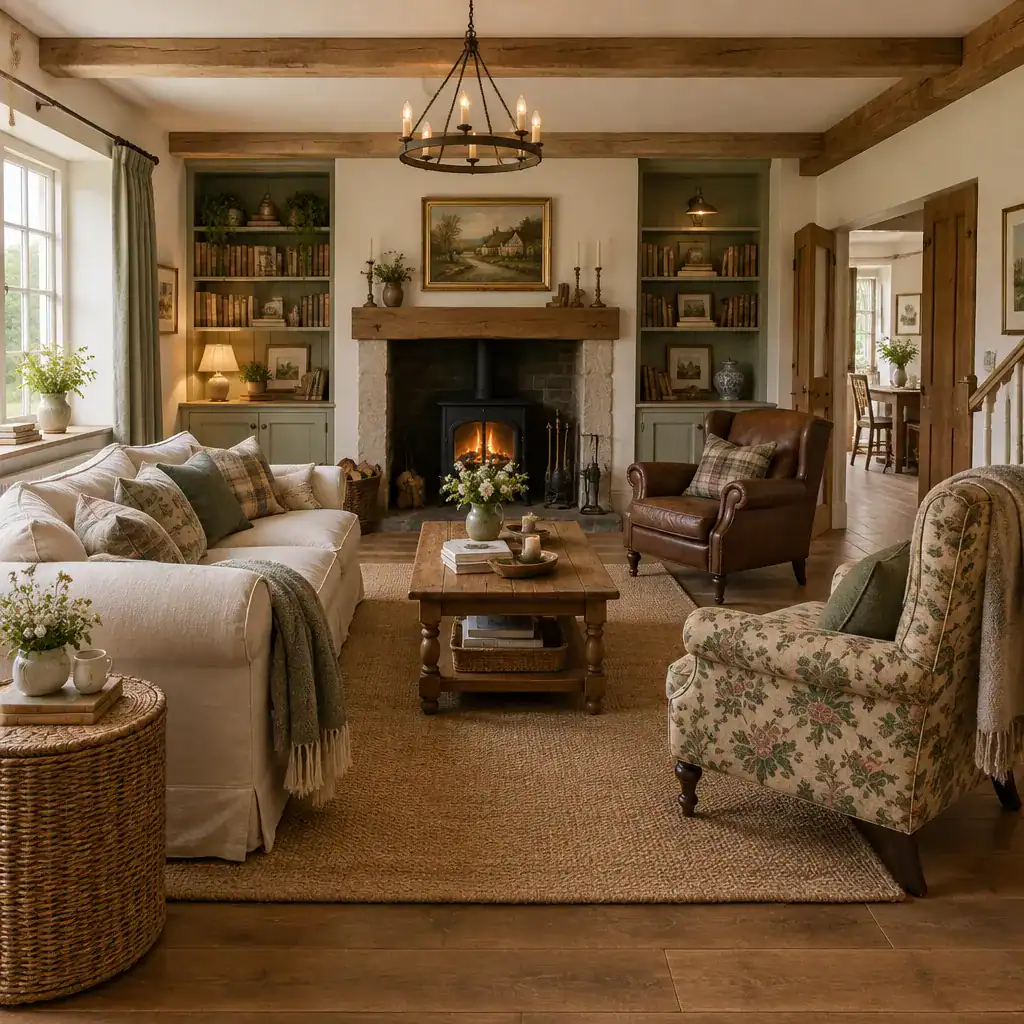
Arrange the largest pieces around a social focal point, such as a fireplace, a window with a pleasing view, or a central conversation area. Keep an easy route through the room so the layout remains practical. Wood tables, painted finishes, woven side tables, and softly aged surfaces reinforce cottage character without requiring every item to be antique. If space is limited, prioritize the seating and one useful table before adding extra pieces.
Layer Textiles, Patterns, and Natural Textures
Textiles are where the room gains much of its cottage warmth. Mix floral prints, checks, stripes, and plain fabrics across cushions, curtains, throws, upholstery, and rugs. Vary the scale: a larger floral can work beside a small check or narrow stripe when both share related colors. This creates variety while keeping the scheme connected.
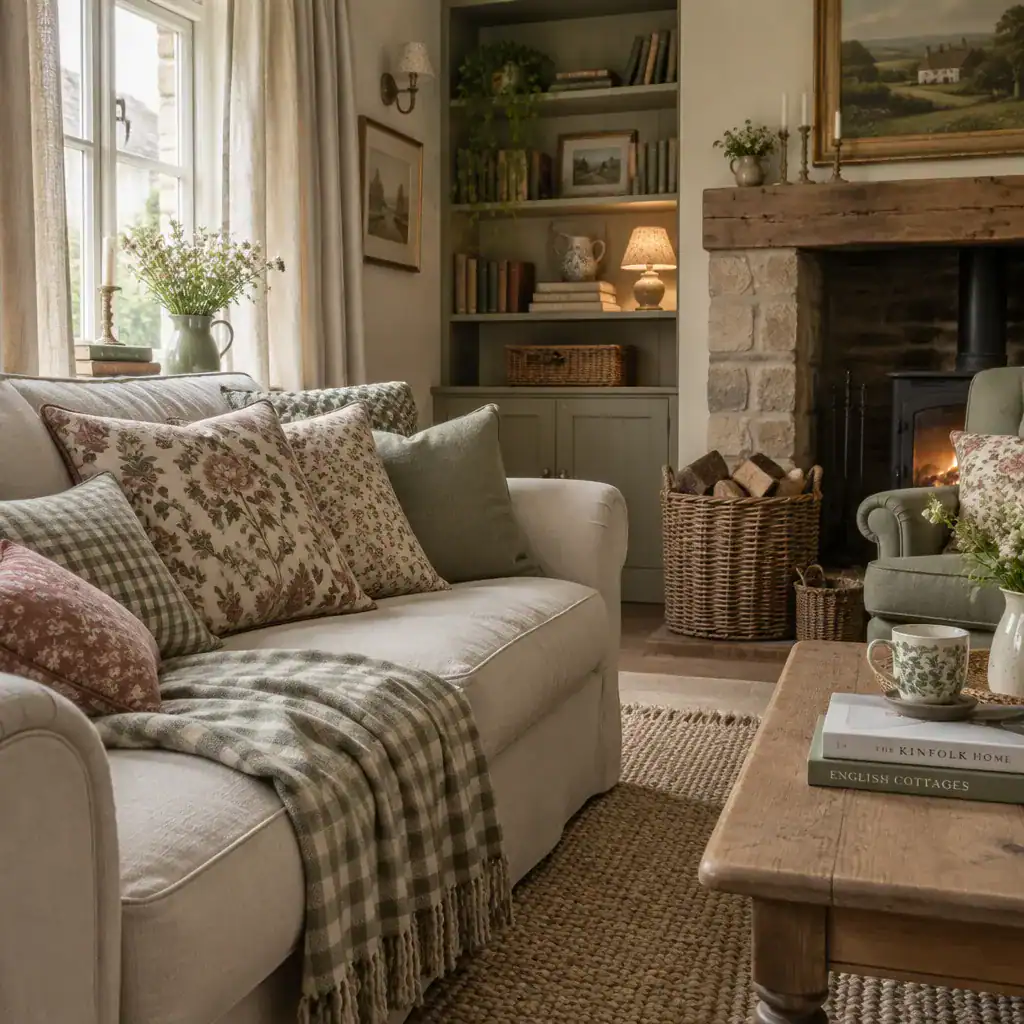
Bring in tactile materials such as linen curtains, cotton cushion covers, wool rugs, woven baskets, natural wood, and ceramic surfaces. These textures make even a restrained palette feel rich and comfortable. Leave some open, solid areas around the patterns, especially on larger upholstery or wall surfaces. That visual breathing space prevents the layered look from becoming busy and lets favorite fabrics stand out.
Finish the Room with Cottage-Style Lighting and Accessories
Create a gentle evening atmosphere with several soft light sources instead of relying on one bright overhead fixture. A table lamp beside the sofa, a floor lamp by a reading chair, wall lights, and a modest central fixture can each contribute useful, flattering light. Shades that diffuse illumination help the room feel settled and welcoming after daylight fades.
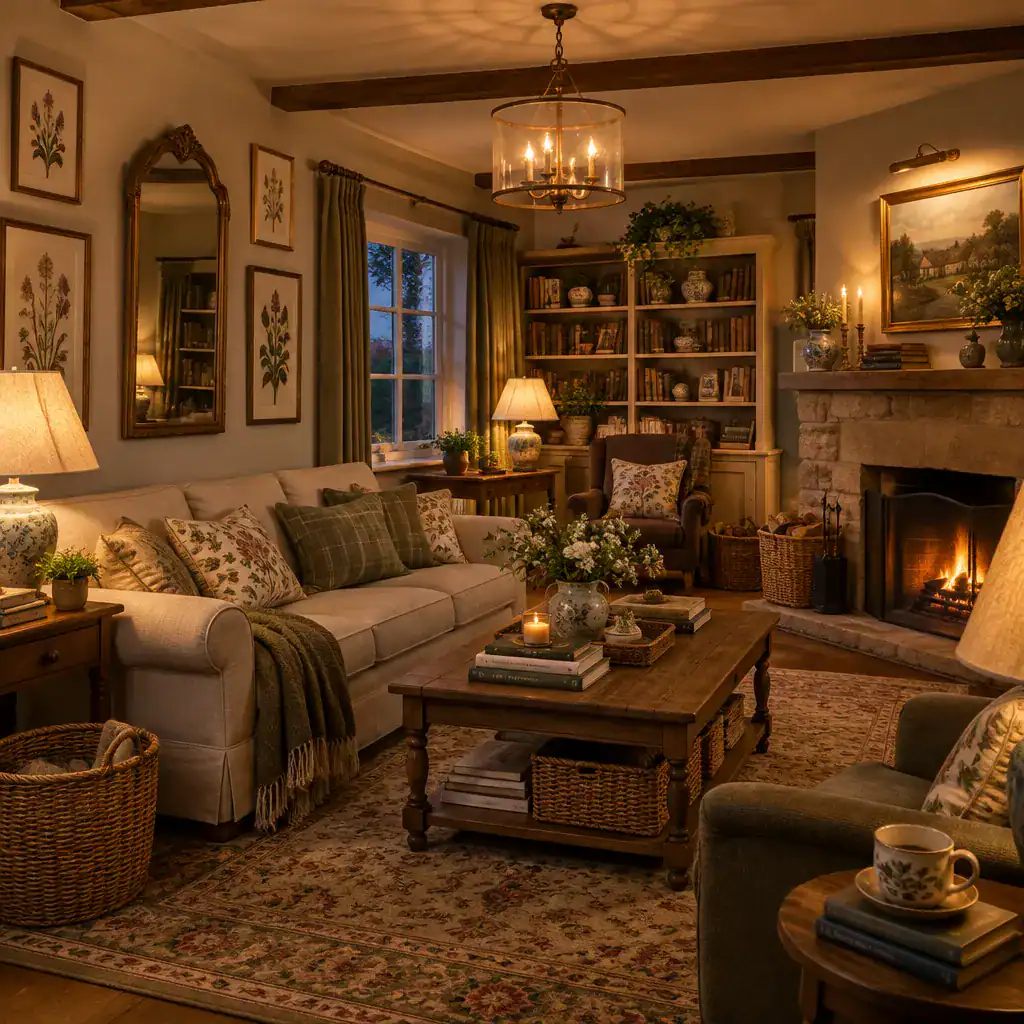
Choose accessories for continuity and usefulness: framed botanical art, books, ceramic vessels, a mirror, baskets, and a few modest objects with personal meaning. Storage is part of the visual plan. A cabinet, trunk, basket, or open shelf can hold blankets, media, and everyday items so the room does not feel chaotic. Edit the arrangement at the end by keeping the most meaningful details visible while ensuring tables and seats remain easy to use.
An english cottage style living room comes together through the relationship between comfort, soft color, layered texture, traditional forms, and personal details. Start with the room’s most important functional need, whether that is family seating, reading space, or a place for conversation. Then add pattern, lighting, and collected accessories gradually, stopping when the room feels warm and useful rather than overfilled.