
A modern cabin brings together the sheltering, nature-focused feeling of traditional cabin living with cleaner forms, simpler interiors, and more intentional connections to the landscape. It can be a quiet weekend retreat, a compact guesthouse, or a polished vacation home designed for extended stays. What unites these variations is not a single floor plan or exterior look, but an approach that balances practical living with warmth, light, and a strong sense of place.
The most successful modern cabin concepts begin with priorities. A smaller footprint may call for efficient circulation and flexible furnishings, while a more expansive retreat may place greater emphasis on privacy, views, and indoor-outdoor entertaining. Timber, lofts, porches, fireplaces, glazing, and refined finishes can all contribute to the experience, but they work best when selected as connected parts of one clear design idea.
Small Modern Cabin
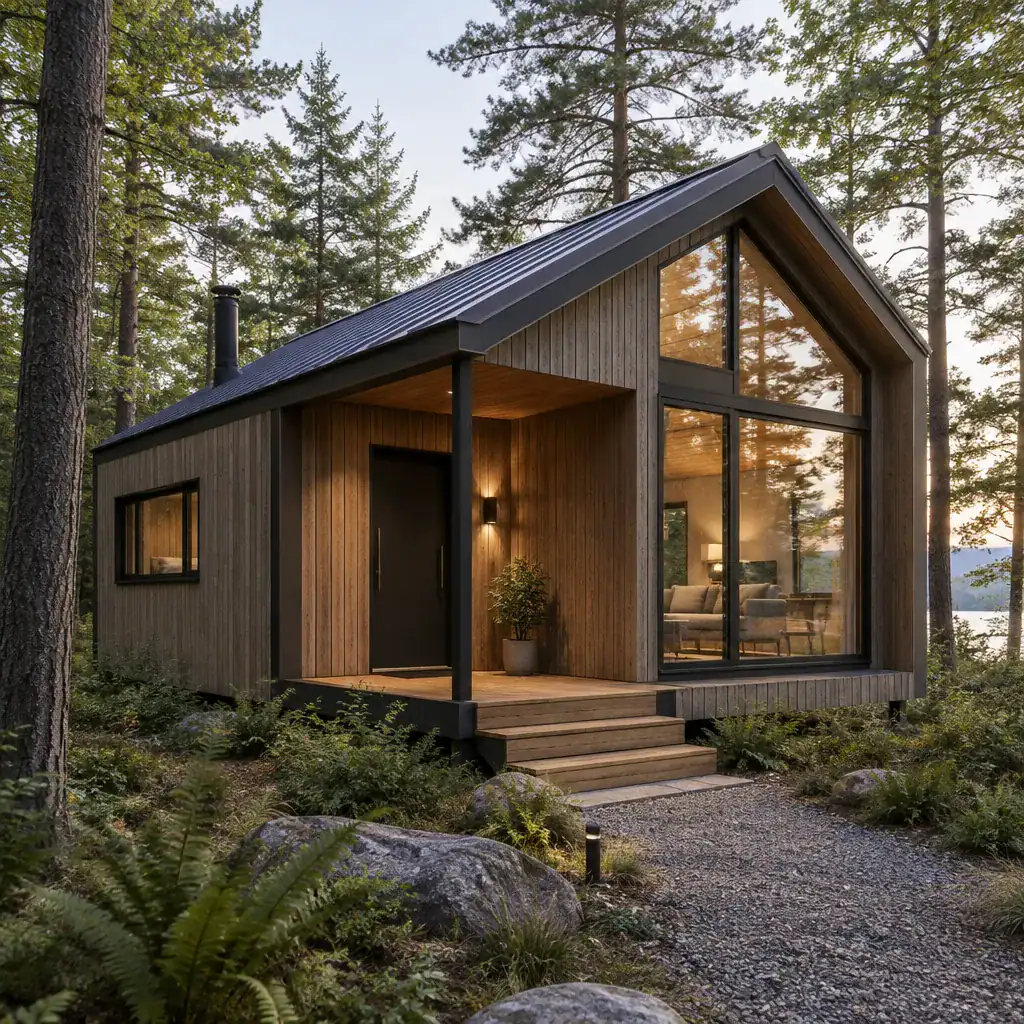
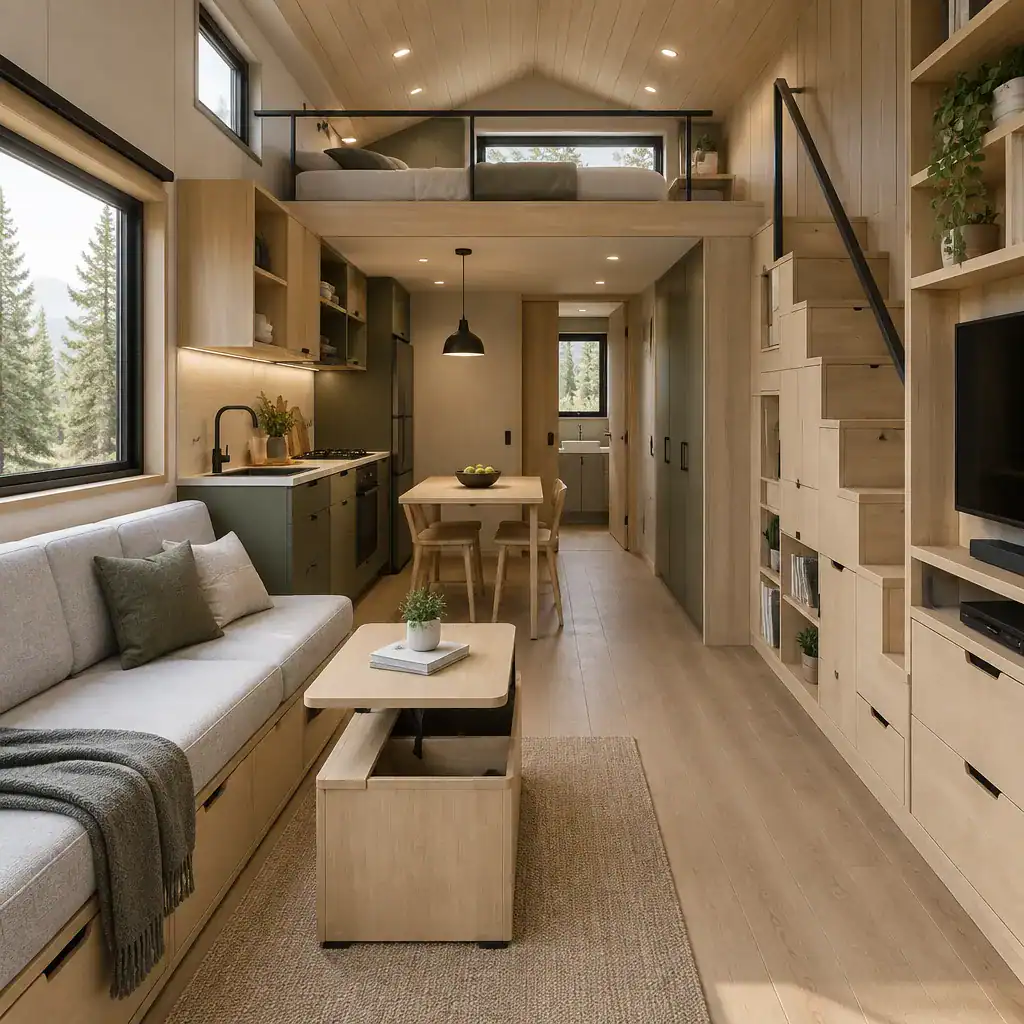
A small modern cabin can feel remarkably complete when the plan gives each area a clear purpose. Rather than dividing the interior into many enclosed rooms, a compact layout often benefits from a shared living, dining, and kitchen zone that keeps daily activities close together. This approach can make the cabin feel open while preserving useful wall space for storage, seating, or simple built-in elements.
Furniture should support the scale of the home rather than compete with it. A streamlined dining table, adaptable seating, and carefully placed storage can help the main room remain comfortable without appearing crowded. Bedrooms and sleeping areas may be more restrained, allowing the shared living space and outdoor areas to carry much of the cabin’s social life.
Generous windows can make a small cabin feel more connected to its setting, especially when they frame trees, water, hills, or open sky. The goal is not necessarily to cover every wall with glass, but to direct attention toward the views that give the site its character. A calm material palette, uncluttered surfaces, and a consistent relationship between interior finishes and exterior surroundings can make a modest cabin feel deliberate and welcoming.
Luxury Modern Cabin
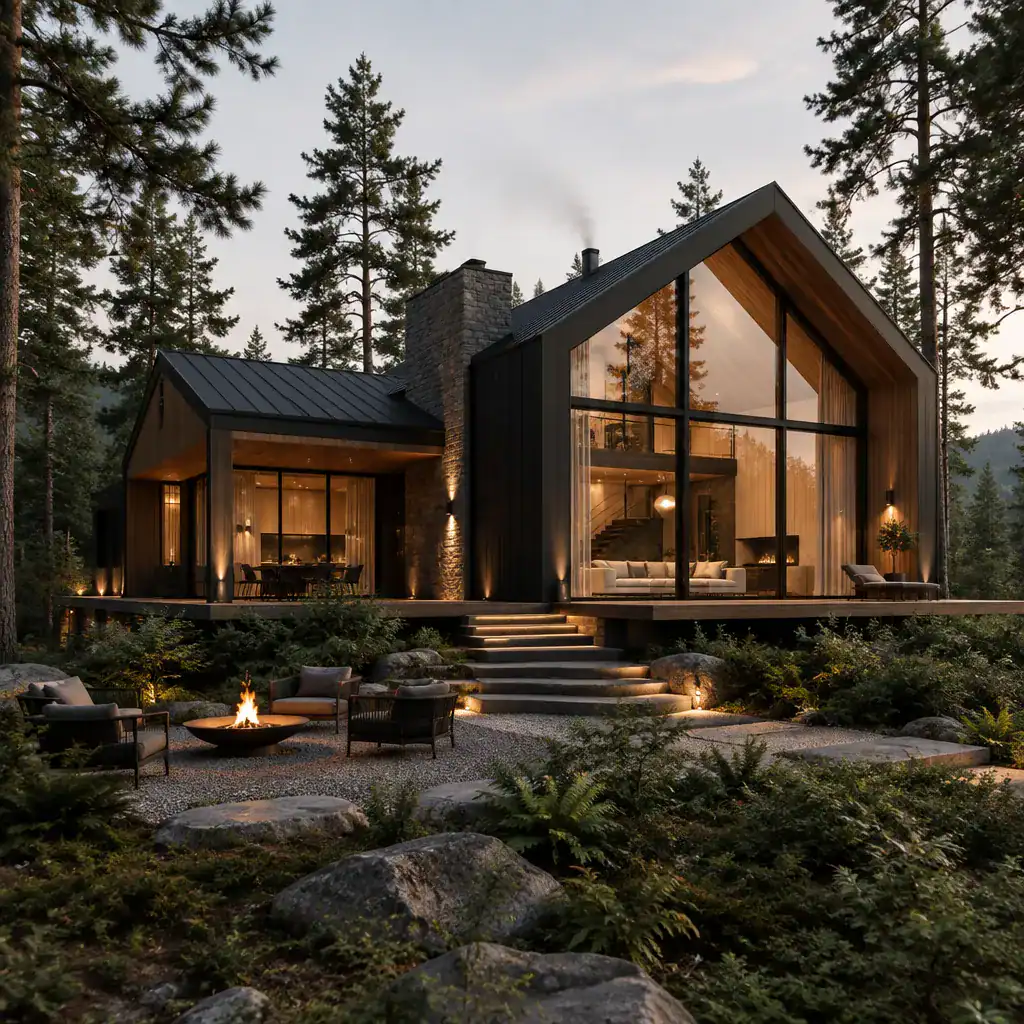
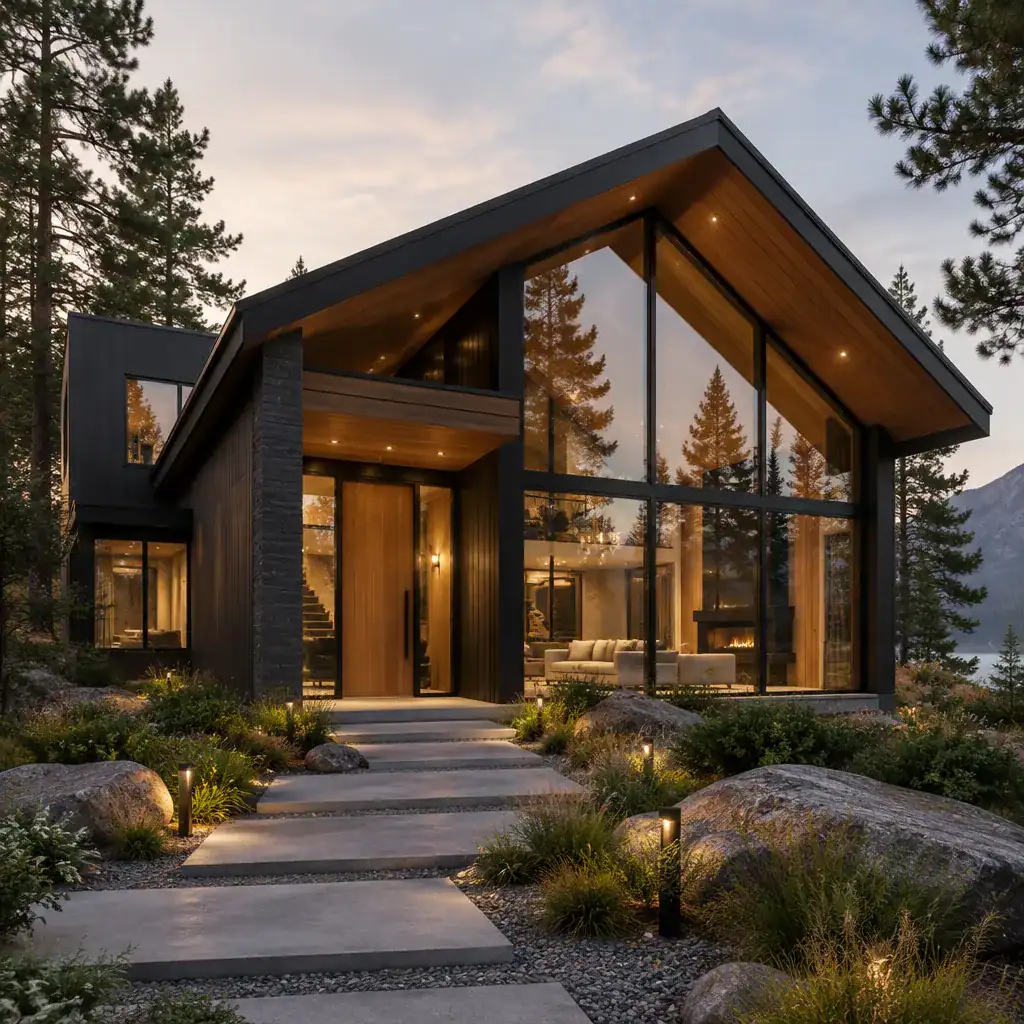
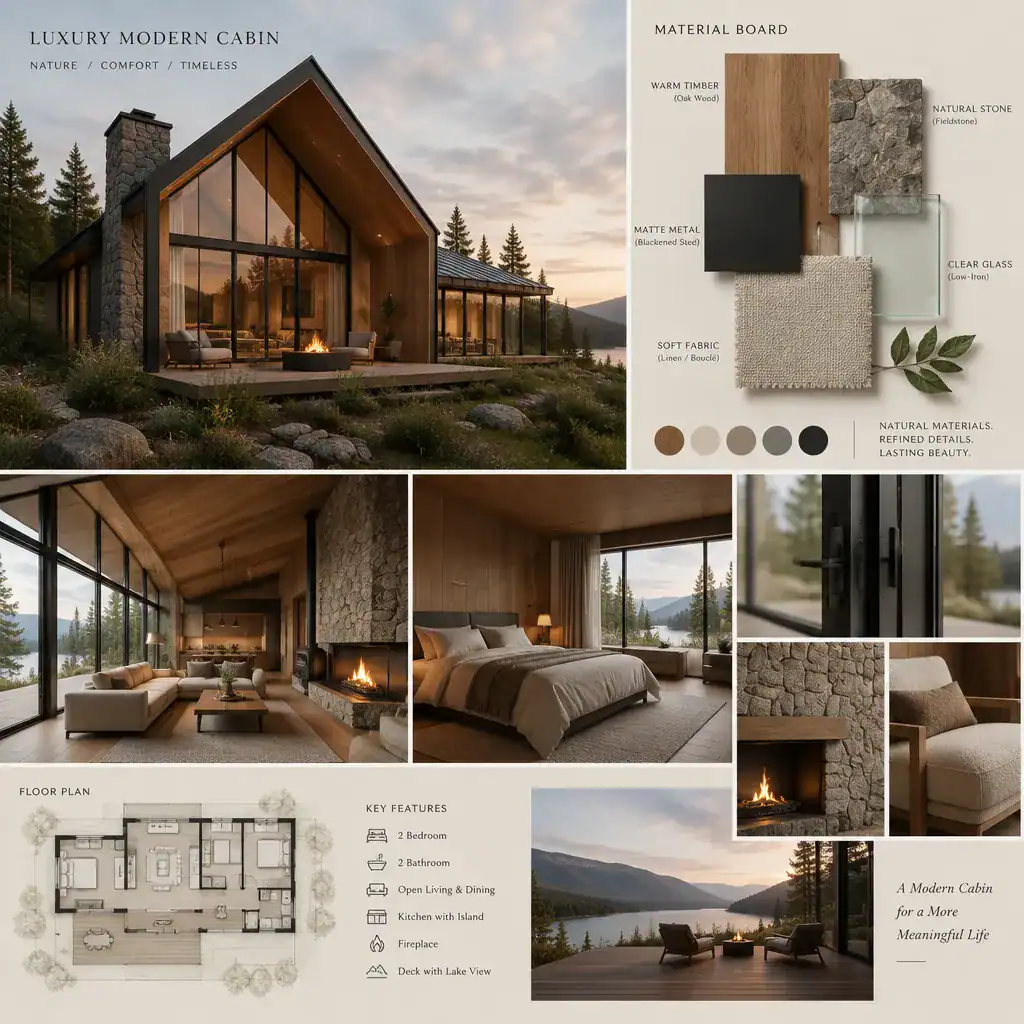
A luxury modern cabin builds on the same planning discipline as a compact retreat, but gives more attention to comfort, privacy, craftsmanship, and the quality of everyday moments. Luxury may appear in a quiet primary suite, a generous gathering space oriented toward a view, a carefully finished kitchen, or an outdoor area that feels as considered as the interior. It does not depend solely on a larger footprint.
In this setting, the transition between spaces becomes especially important. A living room may open toward a covered terrace, while a dining area is positioned to enjoy changing light through the day. Bedrooms can be set apart from more active rooms to create a sense of retreat. Materials such as warm wood, textured stone, dark metal accents, and soft natural fabrics can add richness without making the cabin feel overly formal.
A refined cabin also benefits from visual restraint. Instead of filling every room with attention-grabbing features, choose a few elements that carry the design: a dramatic view, a beautifully proportioned fireplace wall, a timber ceiling, or a sheltered outdoor lounge. This gives the home a calm, resolved character and allows the setting to remain part of the experience.
Modern Timber Cabin
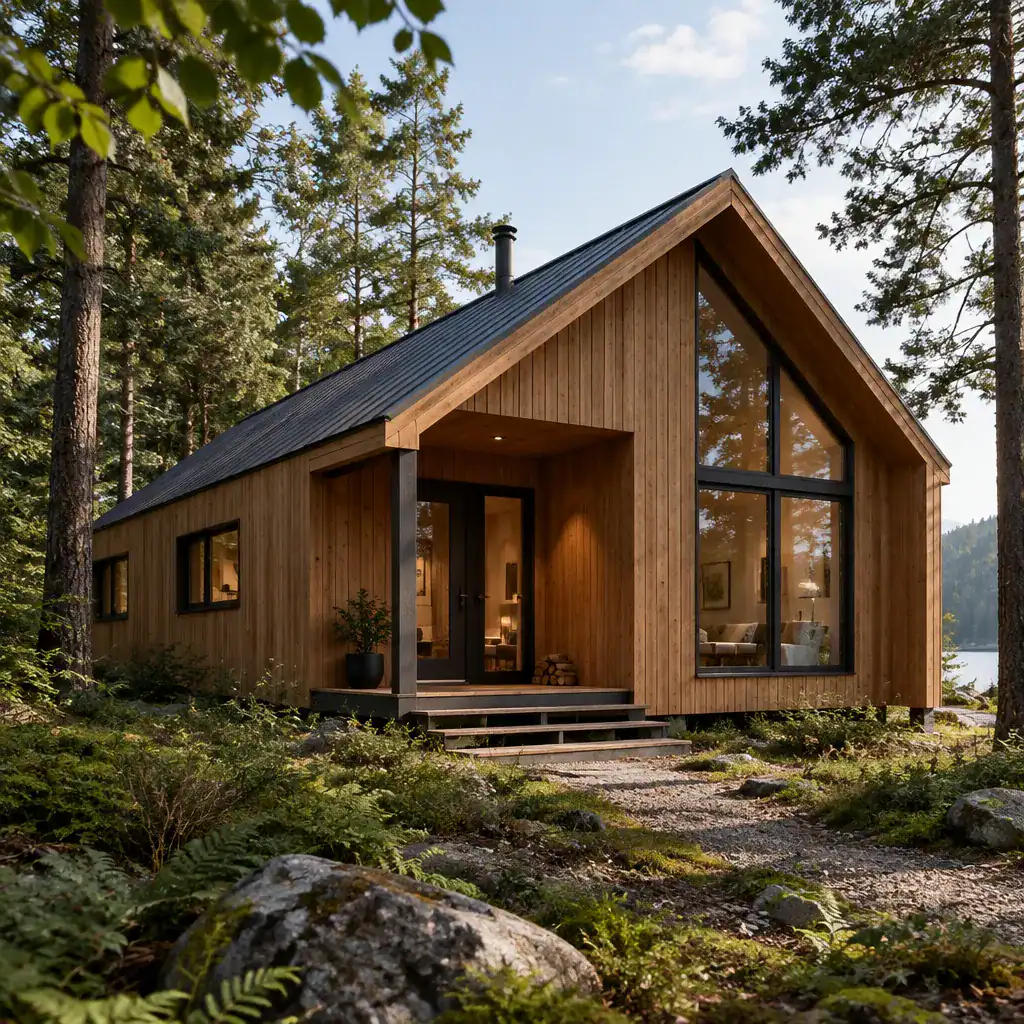
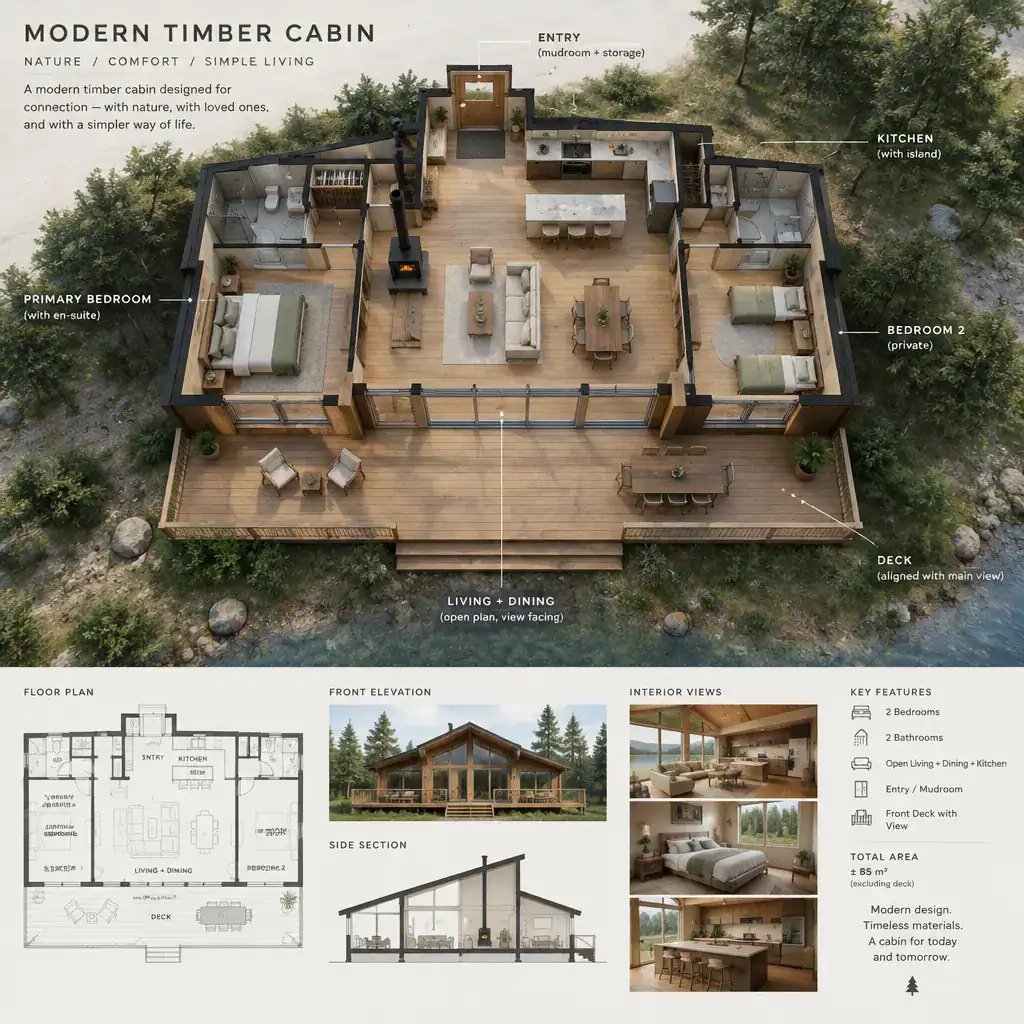
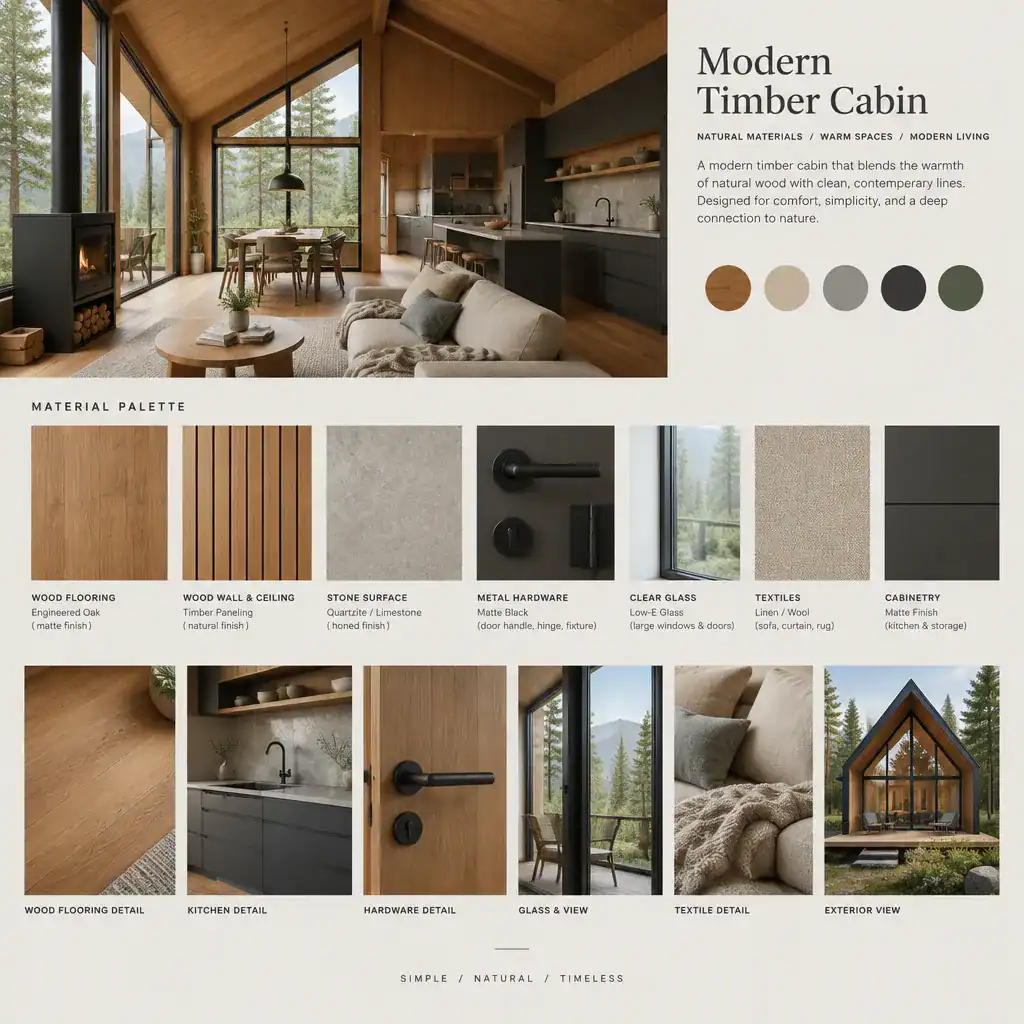
Timber gives a modern cabin an immediate connection to familiar cabin character, yet it can be used in ways that feel fresh and contemporary. Wood may appear as exterior cladding, structural expression, ceiling surfaces, wall paneling, cabinetry, or selected furniture. Whether the tone is pale and understated or deep and dramatic, timber helps soften clean-lined architecture and makes simple forms feel more grounded in their landscape.
The strongest modern timber cabin designs often rely on contrast. Natural wood can sit beside dark-framed windows, simple rooflines, smooth plaster-like surfaces, stone details, or minimal metal fixtures. This contrast keeps the cabin from feeling overly rustic while still preserving the warmth people expect from a retreat in the woods, mountains, or countryside.
Inside, timber does not need to cover every surface. A wood ceiling over an open living room, a paneled entry wall, or a carefully detailed built-in can be enough to establish material continuity. In a smaller cabin, selective use of wood can prevent the interior from feeling visually heavy. In a more luxurious setting, the same material can become a defining expression of craftsmanship and atmosphere.
Modern Cabin Loft
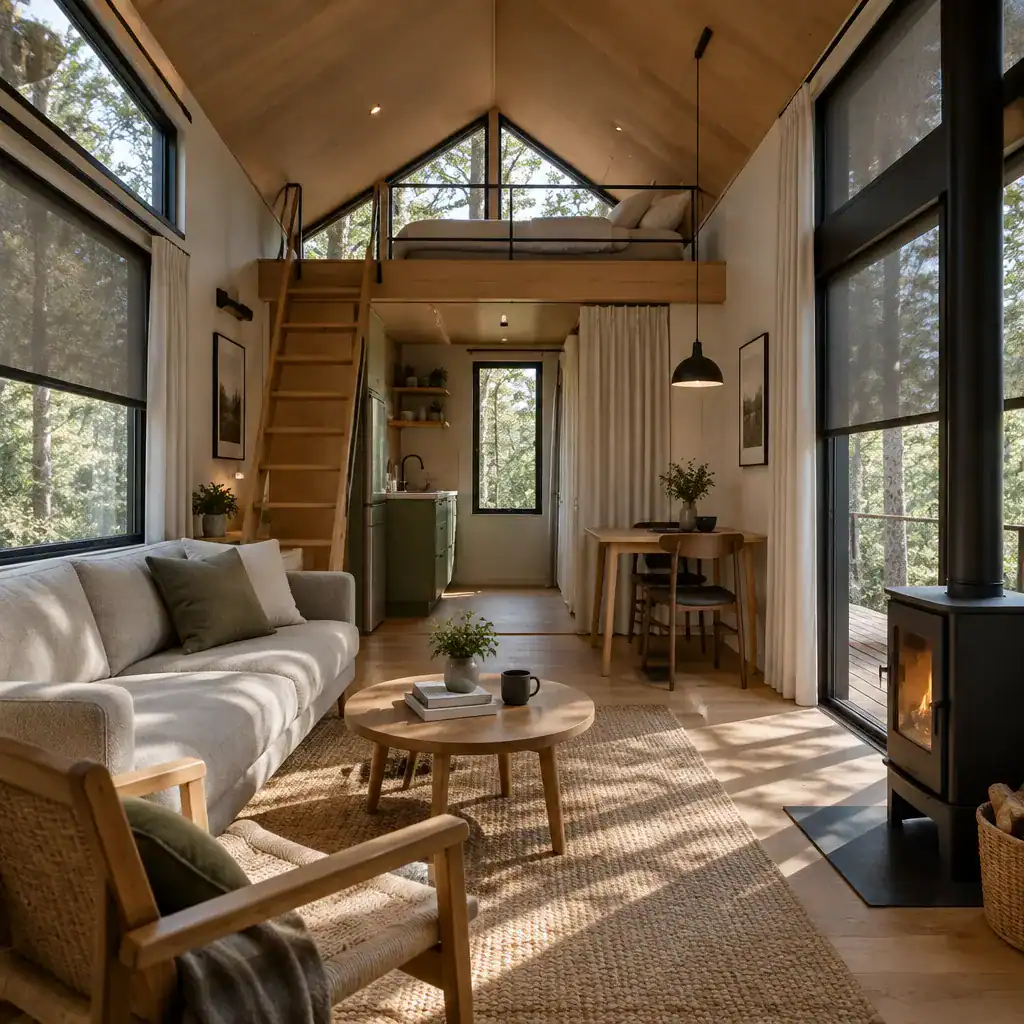
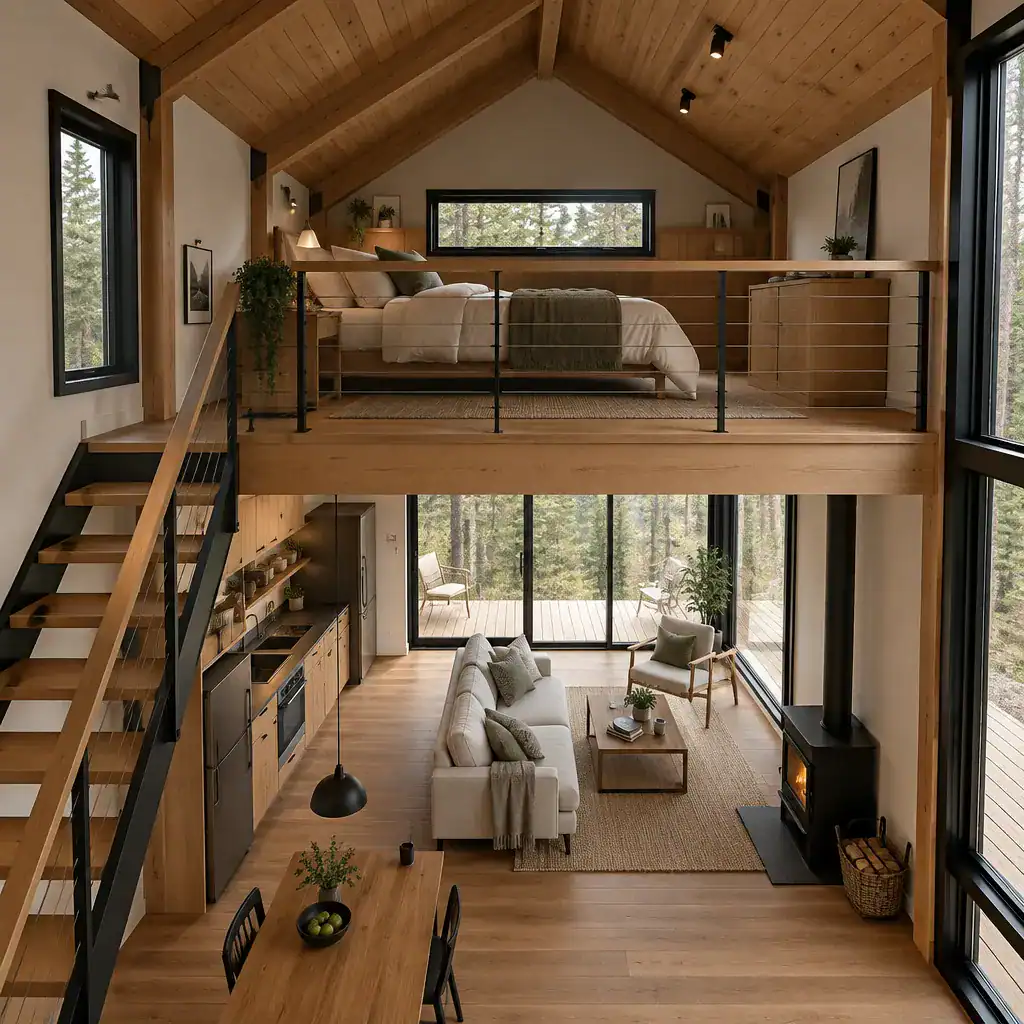
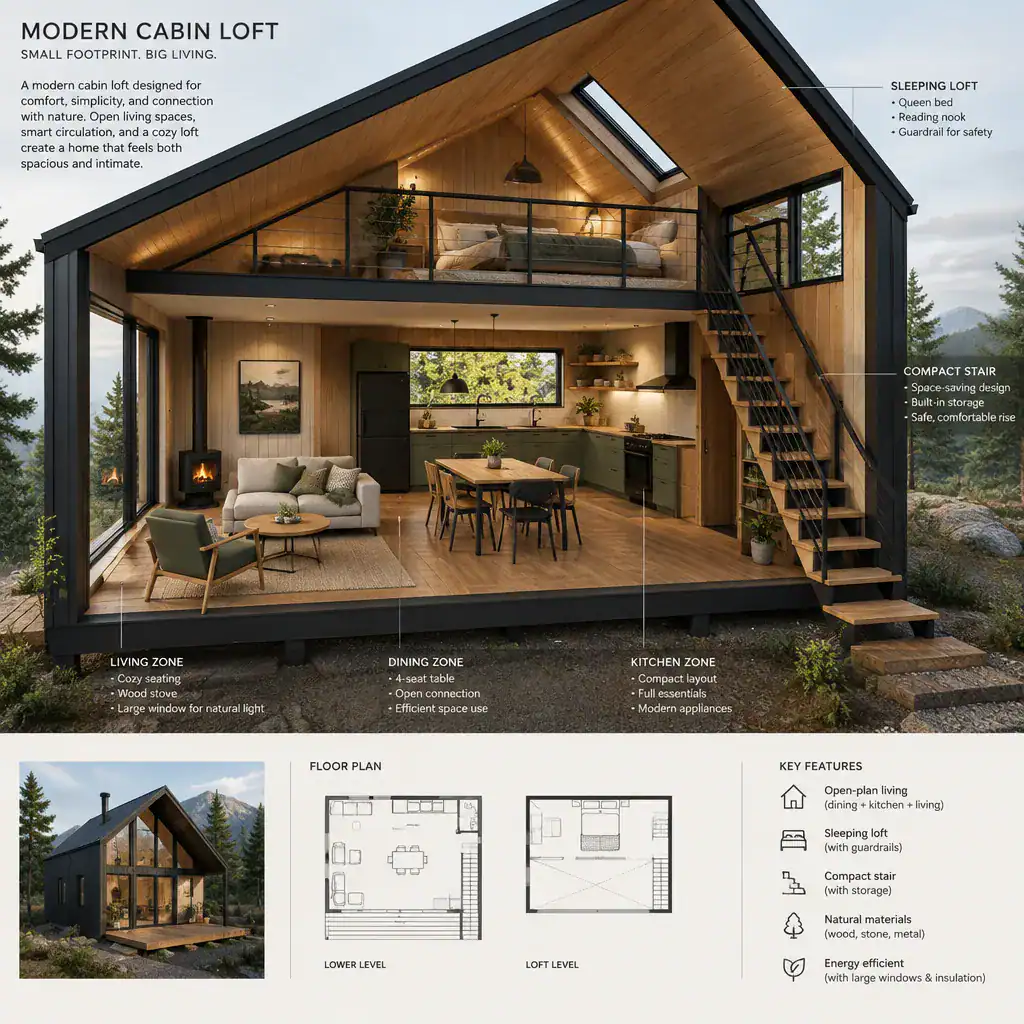
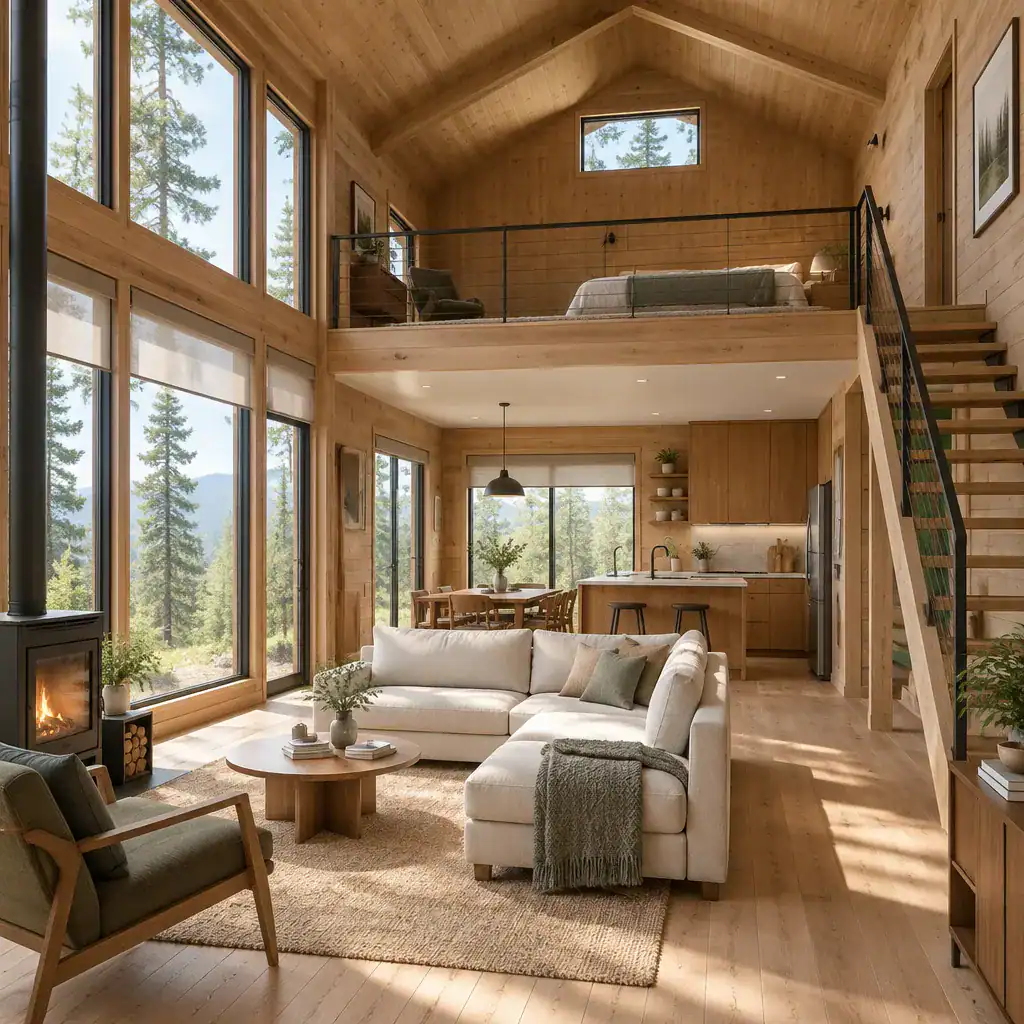
A loft introduces vertical organization to a modern cabin and can make an open interior feel more dynamic. It is often used for sleeping, reading, storage, or another secondary function above the main living area. Below, the living room can benefit from a taller ceiling and a stronger sense of volume, creating an interior that feels more generous than its footprint alone might suggest.
The loft should be considered as part of the whole composition rather than added as an afterthought. Its edge, railing, stair location, and relationship to windows all influence how the main room feels. An open railing may preserve sightlines and daylight, while a more enclosed arrangement can offer greater separation. The right choice depends on whether the cabin is intended to feel social and open or more private and cocooning.
Lighting and storage deserve attention in any loft concept. Windows can bring daylight into the upper level while also shaping the exterior elevation, and built-in storage can help maintain order in a compact cabin. Privacy matters as well, particularly when the loft serves as a sleeping area. A successful design finds a balance between openness, convenience, and the restful atmosphere expected in a cabin retreat.
Modern Cabin Porch
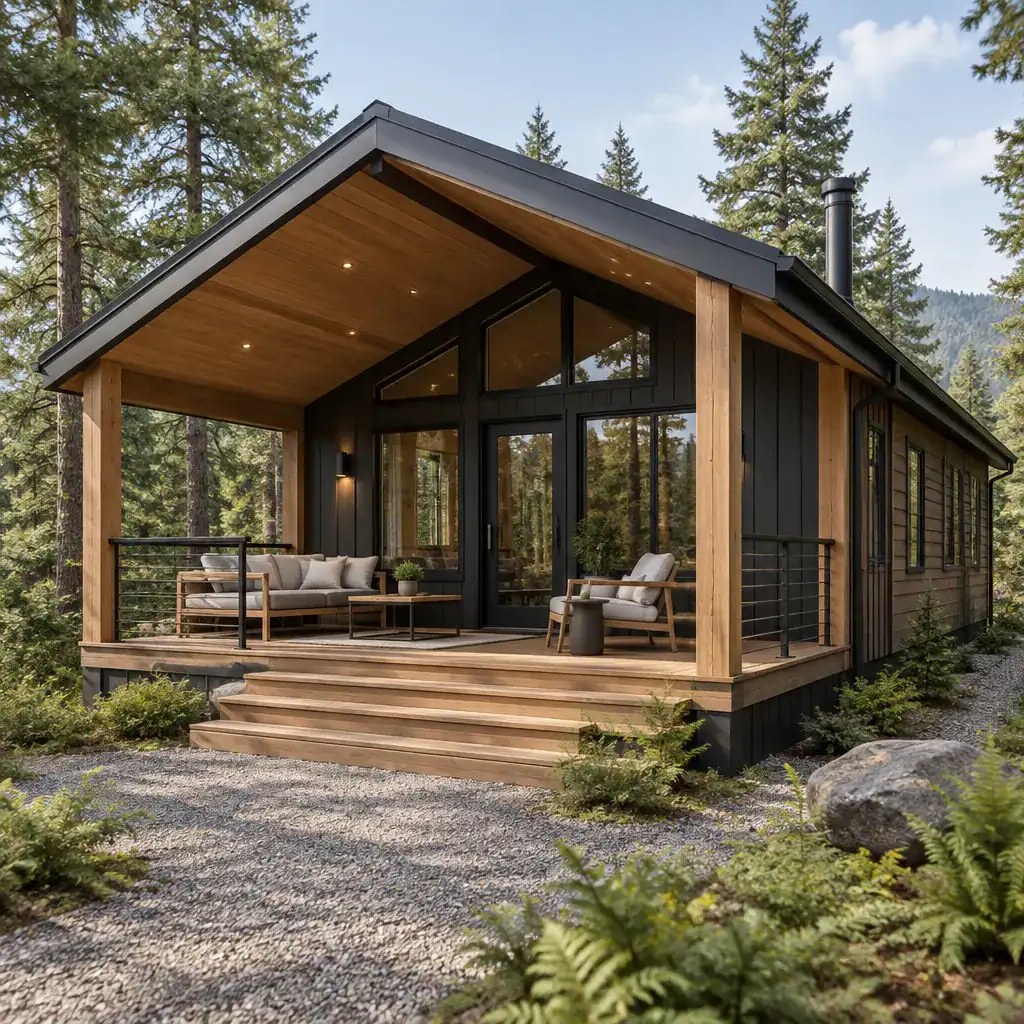
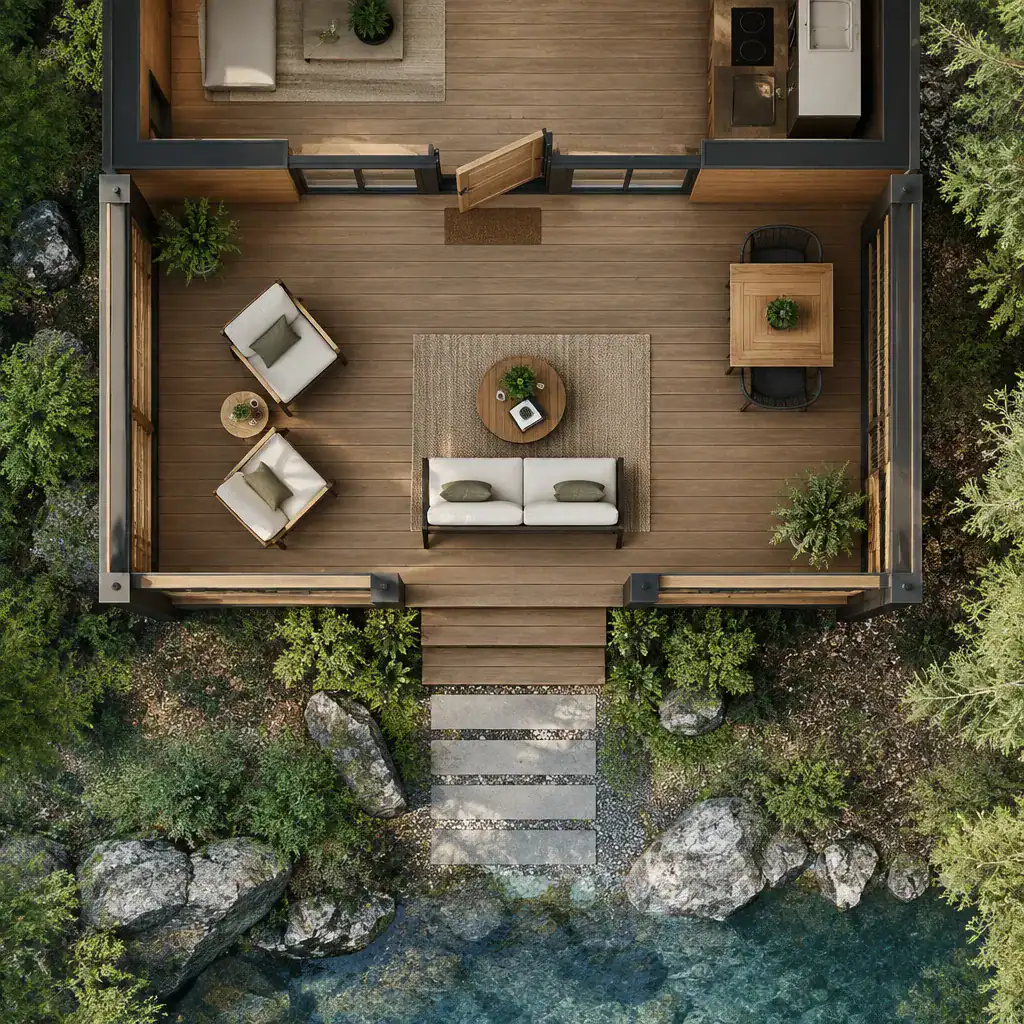
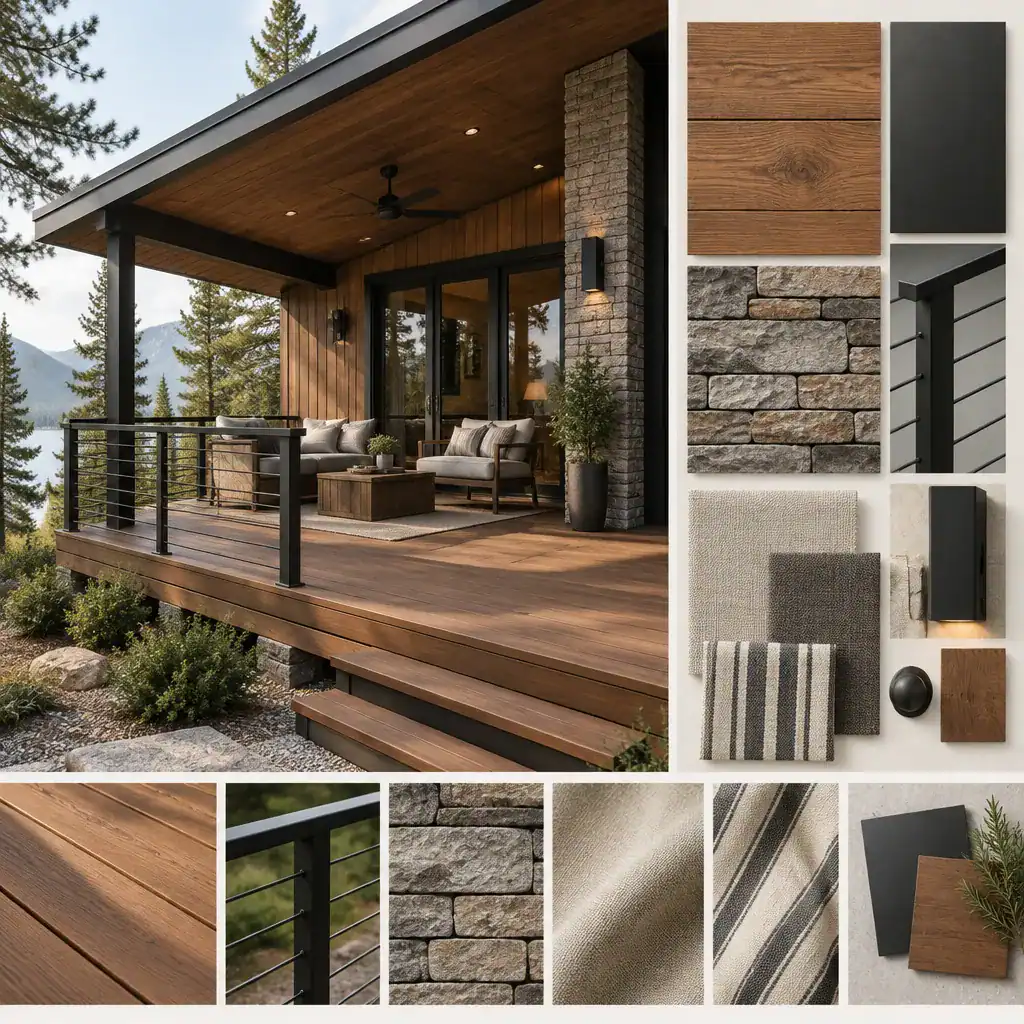
A porch extends the modern cabin beyond its walls and creates a gentle transition between shelter and landscape. It can be a simple covered entry, a broad front-facing sitting area, or a more private outdoor room connected to the living space. Its role is not only functional; it can shape the way residents and guests arrive, pause, gather, and enjoy the setting.
Placement is central to the porch experience. A porch facing a favorite view may become the cabin’s primary place for morning coffee or evening conversation. One placed near the entrance can create a welcoming threshold, while a side or rear porch may offer more privacy. The roofline, columns or supports, and flooring can echo the cabin’s architectural language so that the exterior feels integrated rather than attached.
Seating should match the intended use. A pair of relaxed chairs may suit a quiet retreat, while a larger arrangement can support meals and conversation. Thoughtful lighting and a direct relationship to the kitchen or main living room can make the porch easier to use throughout the day. Even a modest covered area can greatly expand the sense of living space when it is designed around shade, views, and comfort.
Modern Cabin Fireplace
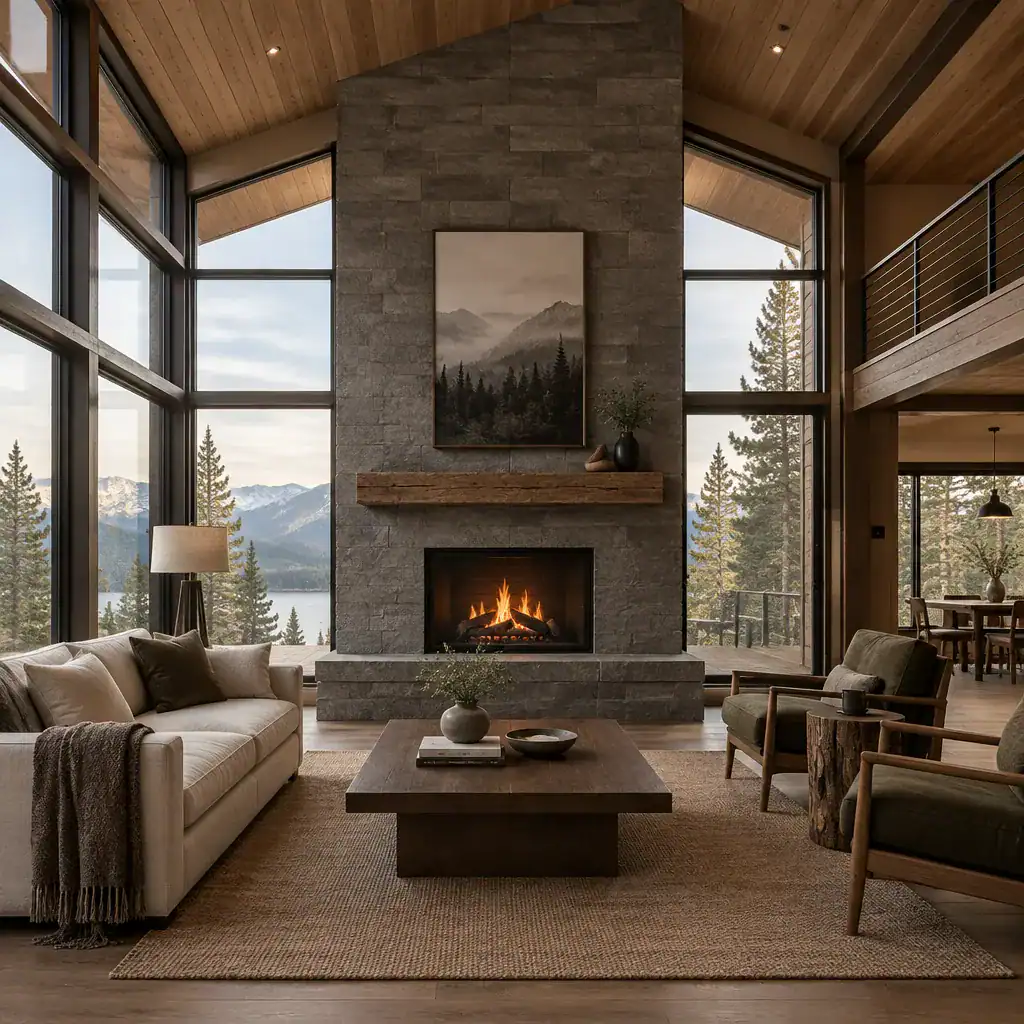
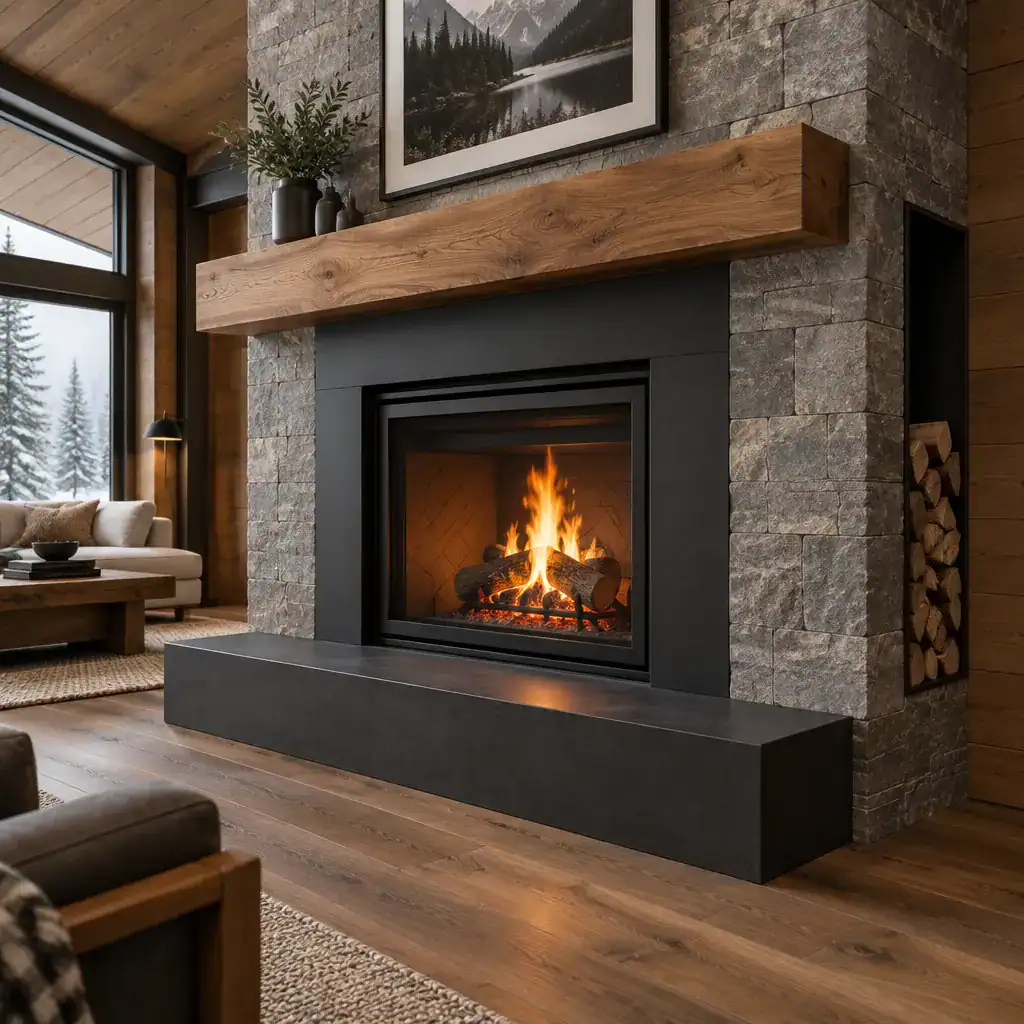
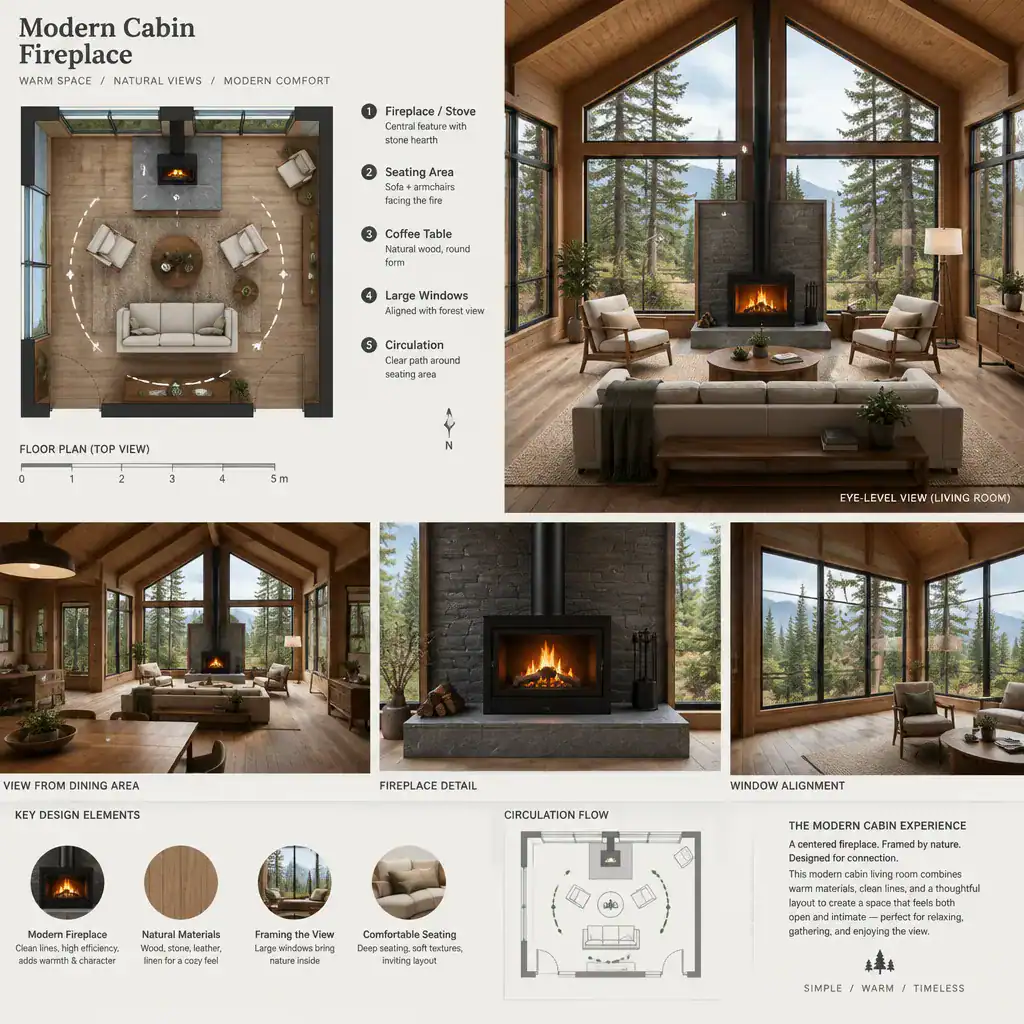
A fireplace can serve as the emotional center of a modern cabin, bringing warmth and a natural gathering point to an otherwise clean, restrained interior. Its visual impact is often strongest when it is placed where it can be appreciated from the main seating area, dining space, or kitchen without interrupting circulation or competing with the best exterior views.
The surrounding materials can help determine whether the fireplace feels rustic, minimalist, dramatic, or softly refined. Stone can add texture and permanence, while timber can connect it to other warm interior surfaces. A smooth, simple surround may suit a more contemporary approach. The key is to coordinate the fireplace with the broader palette so it feels like part of the architecture rather than an isolated decorative feature.
Seating arranged around the fireplace encourages conversation and gives the living room a clear purpose, especially during colder or quieter evenings. In an open plan, the fireplace can also help define the living area without requiring additional partitions. By keeping the composition simple and allowing room for both the flame and the surrounding materials to stand out, a fireplace can reinforce the welcoming character that makes cabin living so appealing.
A modern cabin is most compelling when its features support one another. Efficient planning can make a small footprint feel generous, timber can bring warmth to contemporary forms, a loft can add useful vertical dimension, and a porch can deepen the connection to the site. A fireplace or another carefully chosen focal point can then bring the interior together.
There is no need to include every possible feature in one design. The right modern cabin responds to its landscape, intended use, available space, and the atmosphere its owners want to create. By choosing a few priorities and carrying them consistently through the layout, materials, outdoor spaces, and interior details, a cabin can feel both current and deeply rooted in the enduring appeal of retreat living.