
A fireplace is often the visual and social center of a cabin living area: the place where seating gathers, conversation settles in, and the room feels most connected to the landscape outside. A successful modern cabin fireplace keeps that sense of warmth while introducing cleaner geometry, quieter detailing, and an intentional relationship with timber, stone, and natural light.
The design challenge is not to remove the cabin character, but to edit it. Rather than layering rough stone, oversized logs, heavy mantels, and decorative accessories all at once, a contemporary approach gives a few natural materials room to stand out. Before selecting a concept, consider the firebox form, the scale of the surround, finish coordination, room layout, styling, and the technical requirements of the chosen system.
Choose a Fireplace Form That Establishes a Modern Cabin Focal Point
Start with the overall fireplace form, because it sets the visual language for the entire living room. A clean-lined built-in fireplace can sit within a flush wall or a simple floor-to-ceiling chimney breast, creating a composed architectural feature. A wall-mounted composition can feel lighter and is often well suited to a compact cabin or a room with broad window views. For cabins that need more visual weight, a substantial masonry-style fireplace wall can still feel current when its shape is simple and its details are restrained.
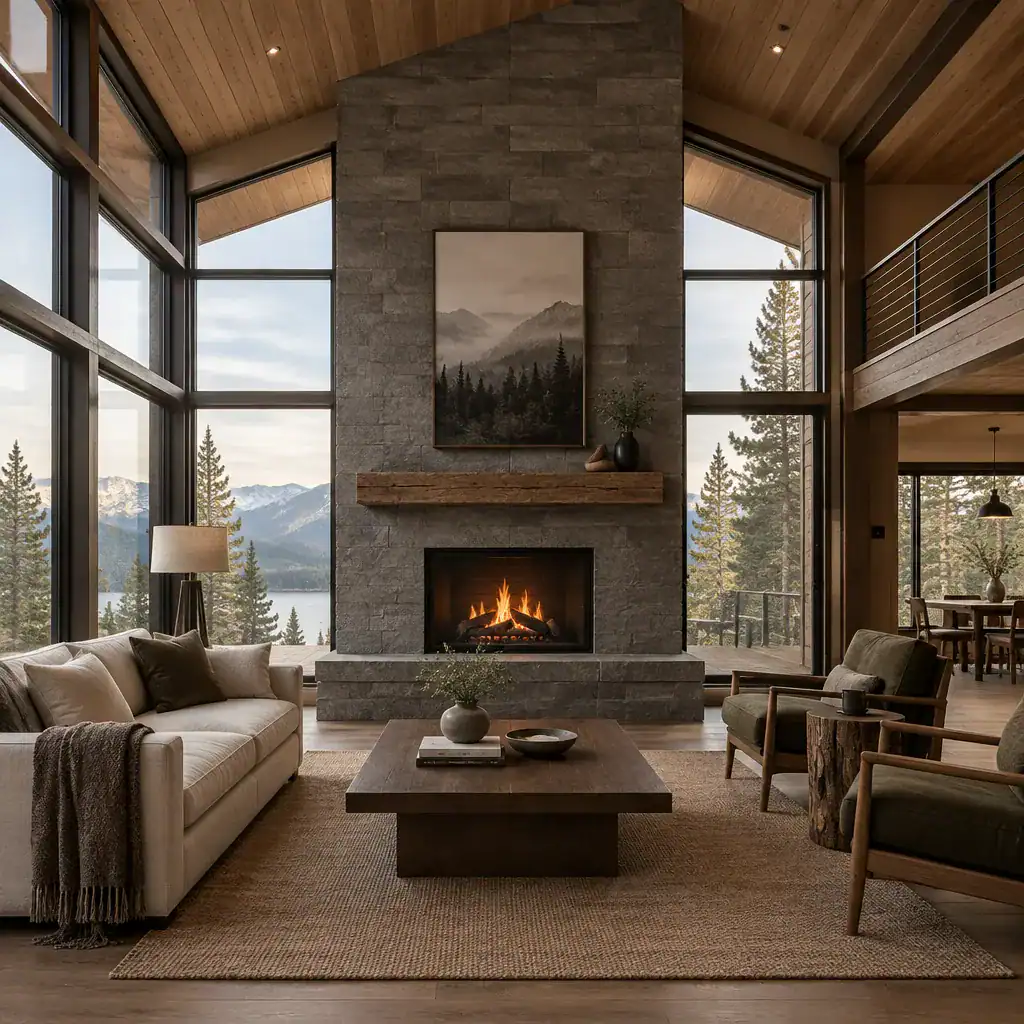
Match the scale to the room rather than choosing the largest possible firebox. In a tall great room, a vertical surround or full-height wall can connect the fireplace to a vaulted ceiling. In a lower or smaller room, a wide horizontal firebox and lower surround may make the composition feel balanced without making the room feel crowded. Consider nearby windows, the width of the seating area, and the amount of uninterrupted wall available.
A deep, decorative mantel naturally leans rustic, while a thin timber shelf, a slim stone ledge, or no mantel at all produces a more contemporary result. Mantel-free designs are especially effective when the surround material has enough texture or tonal variation to remain interesting on its own. The goal is for the fireplace to anchor the room while allowing exposed wood ceilings, forest views, and other natural cabin features to remain visible.
Balance Natural Cabin Materials With Contemporary Finishes
The most convincing modern cabin fireplace compositions combine tactile cabin materials with finishes that have a crisp, edited appearance. Stone, wood, concrete-look panels, dark metal, and tile can work together, but each additional surface adds visual activity. A limited palette generally feels more deliberate than a surround that introduces several competing colors, patterns, and textures.
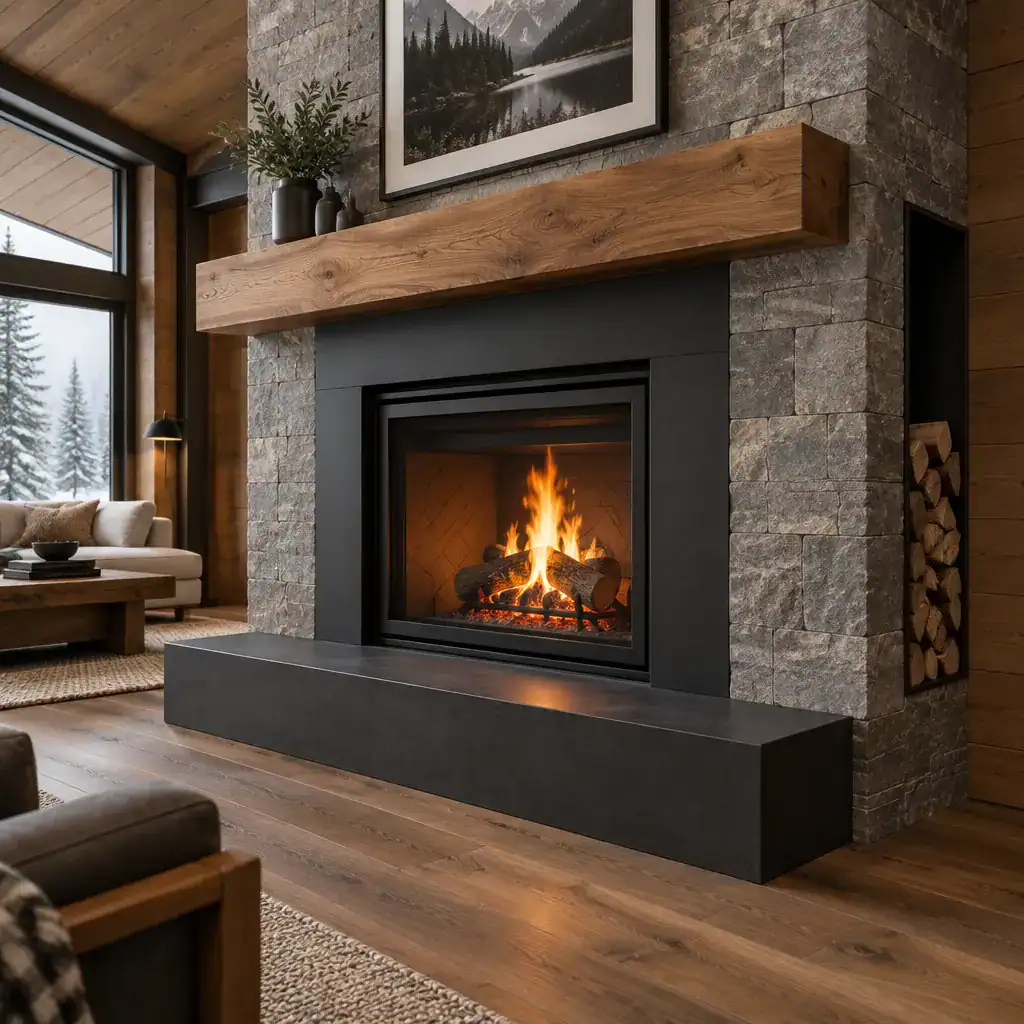
Textured stone brings warmth and depth, particularly when the rest of the room uses smooth drywall or flat-panel cabinetry. Choose stone with a relatively consistent color range and a clean edge treatment to avoid an overly rustic effect. In contrast, smooth plaster, large-format porcelain, concrete-look cladding, or a simple painted surround creates a sharper modern backdrop. Blackened steel or dark metal trim can define the firebox and provide contrast against pale timber or stone.
Coordinate finishes with what is already prominent in the cabin. Warm oak flooring, cedar ceilings, and exposed beams may pair well with soft gray stone, clay-toned plaster, or charcoal metal. Cooler flooring and darker stained wood may benefit from warmer tile or a lighter mineral finish. Look at the fireplace from across the room as well as up close: its color and texture should relate to floors, walls, beams, and built-ins without duplicating every material in the space.
Plan the Fireplace Layout Around Comfort and Practical Use
A fireplace looks best when the furniture plan makes using it easy. Arrange primary seating so people can enjoy the flame without twisting awkwardly, and preserve comfortable circulation between the entry, kitchen, windows, and seating zone. In a larger cabin, a pair of sofas facing each other with the fireplace at one end can create a sociable gathering area. In a smaller room, a sectional or two lounge chairs may define the hearth zone without blocking movement.
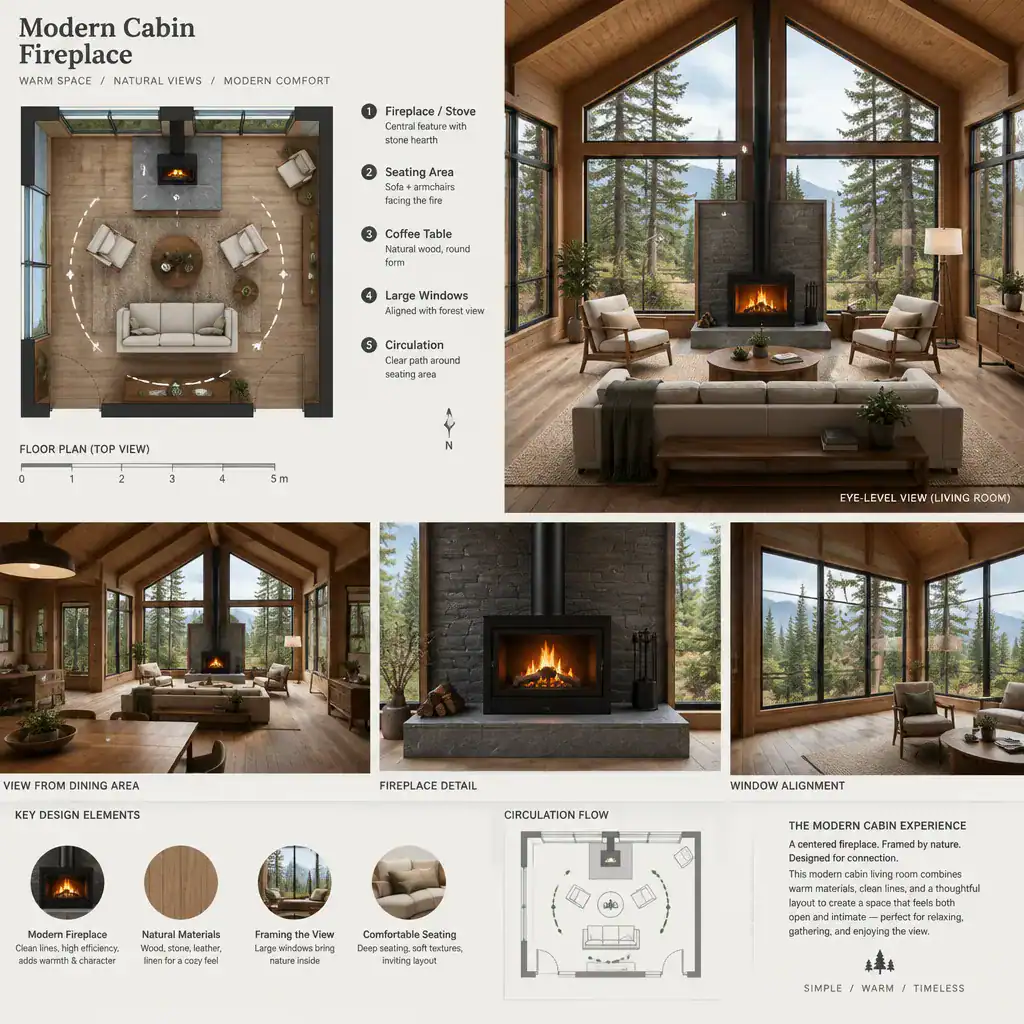
Think carefully about viewing angles and media placement. A television above the fireplace can simplify the wall layout, but it may not suit every firebox height, room geometry, or preferred viewing position. A nearby media wall, concealed cabinet, or pivoting mount may offer a more comfortable alternative while keeping the fireplace visually central. Avoid letting equipment, cords, or large speakers interrupt an otherwise clean composition.
Clearances, ventilation, chimney routing, fuel supply, electrical needs, and installation details depend on the selected fireplace system. Confirm all requirements with qualified installers and applicable local regulations before finalizing dimensions, surround materials, or adjacent cabinetry. A carefully sized hearth or non-combustible zone can also improve both use and appearance, establishing a grounded base for the fireplace while protecting surrounding finishes as required.
Style the Surrounding Area Without Losing the Fireplace’s Impact
Once the architectural composition is in place, use furnishings and decor to support rather than compete with it. Low-profile seating, a simple area rug, and layered textiles can make the hearth area inviting while preserving sightlines to the fire. Choose natural textures such as wool, linen, leather, woven fibers, and matte wood, then keep the color palette muted enough that the fireplace remains the strongest focal point.
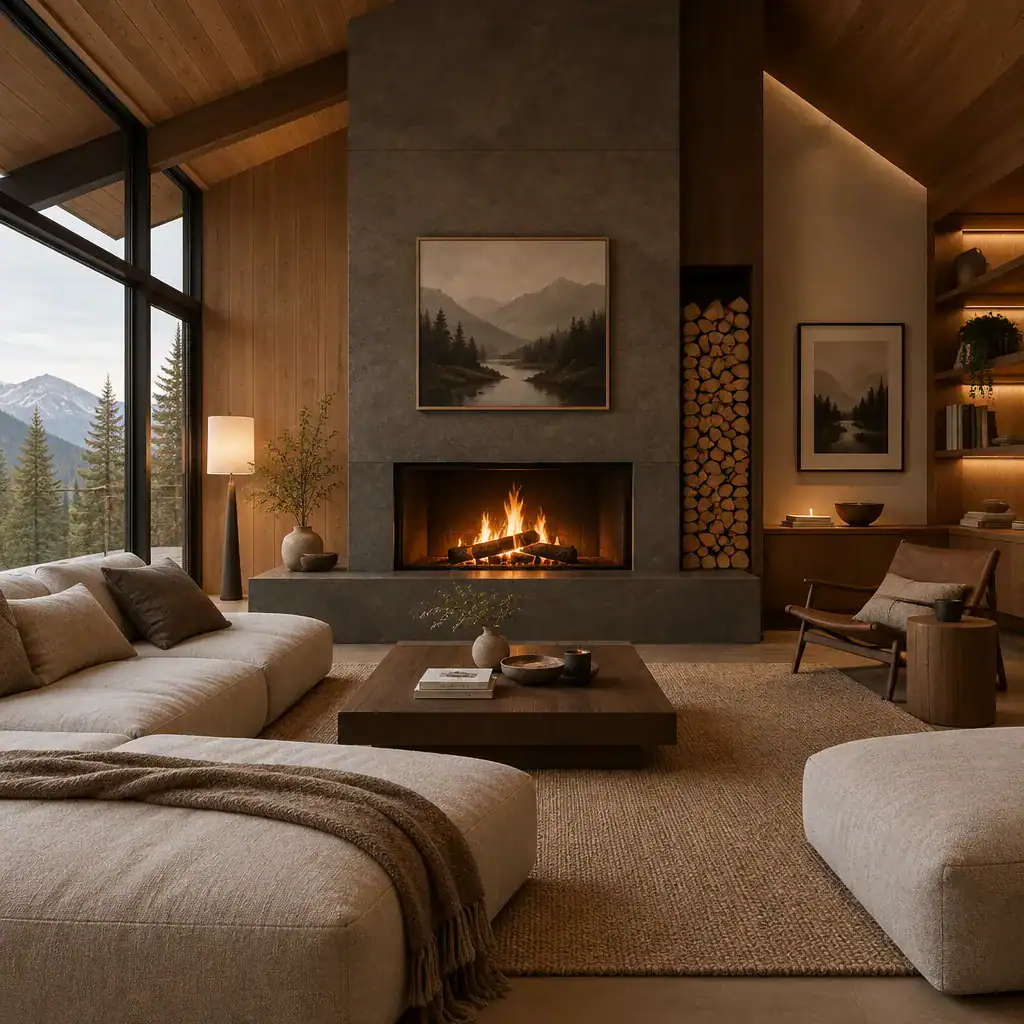
Lighting should add warmth without turning the fireplace wall into a display zone. Soft floor lamps, dimmable sconces, or discreet recessed lighting can bring out the texture of stone and timber after dark. One understated artwork piece or a small sculptural object may be enough near the surround. Avoid filling a mantel or hearth ledge with many small accessories, especially in a room where the firebox is meant to feel calm and contemporary.
Built-in shelving, neatly integrated firewood storage, and concealed cabinetry can add useful function to a modern cabin fireplace wall. Keep these elements symmetrical or intentionally offset, with clean reveals and a finish that relates to the rest of the room. Storage should be convenient for everyday living, but its visual presence should remain secondary to the fireplace itself.
Review Key Decisions Before Selecting the Final Fireplace Design
Before ordering materials or beginning construction, compare each concept as a complete composition. Review the fireplace type, firebox proportions, surround material, hearth treatment, installation location, and fuel or energy system together. A beautiful stone sample may not be the right choice if its scale conflicts with the room, while a preferred firebox may require a different wall depth or venting route than initially expected.
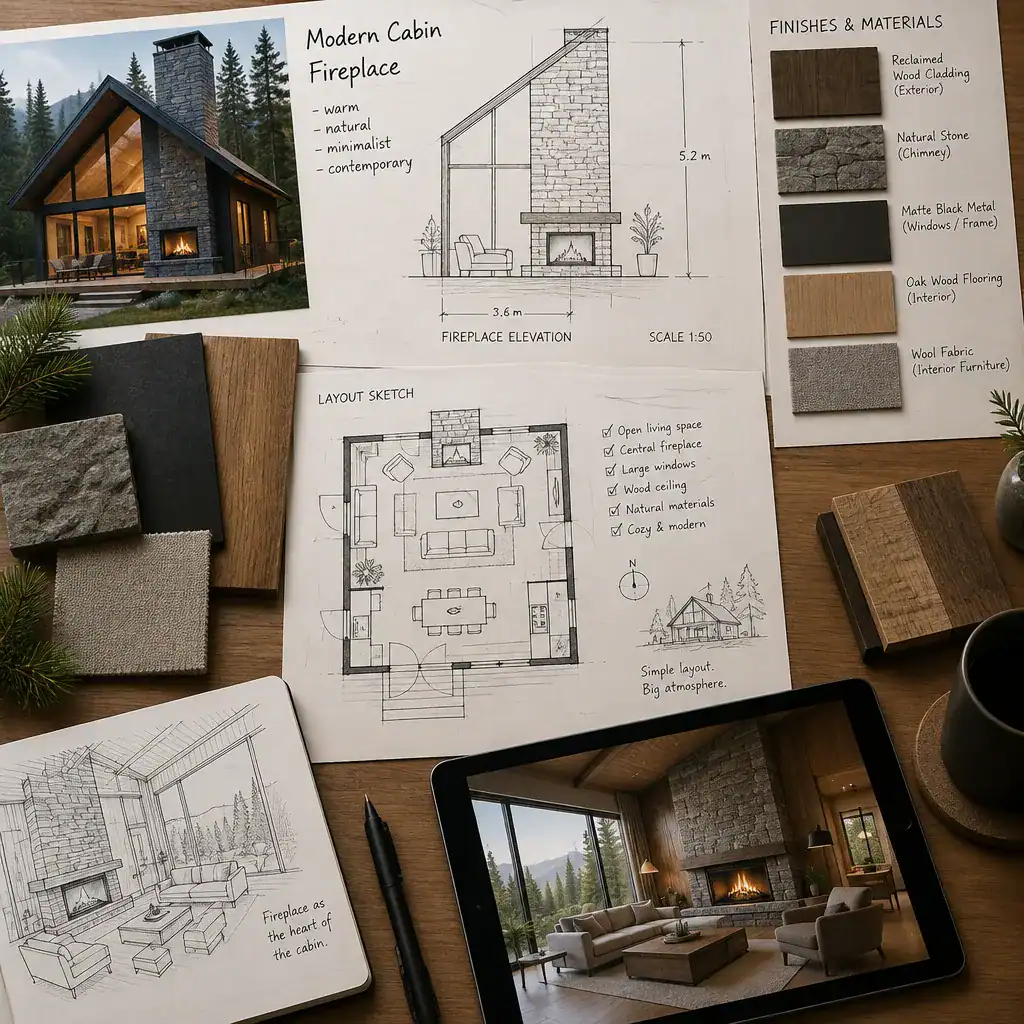
Use a practical checklist that includes room dimensions, ceiling height, furniture placement, window locations, finish samples, and the intended location of media equipment. Also assess maintenance access, cleaning needs, ash or fuel storage where relevant, and how the fireplace will function during ordinary weekends rather than only in styled photos. These everyday considerations help turn a dramatic feature into one that is pleasant to live with.
Collect reference images that show the mood, material balance, and proportions you prefer, then share them with an architect, interior designer, or qualified installer. When structural changes, ventilation, chimney work, or new utility connections are involved, professional review is particularly important. Confirm the final design against local requirements and the specifications for the selected system before committing to finishes or construction.
The strongest modern cabin fireplace designs connect contemporary form to the cabin’s natural setting instead of treating the two as opposites. Prioritize proportion, a harmonious material palette, safe professional installation, and comfortable daily use. With those decisions in place, your chosen direction can become the foundation for a fireplace plan that feels personal, enduring, and right at home in the retreat.