
The phrase 000 to 1 is ambiguous in a cabin-planning context. It does not have to point to one established architectural term, a fixed layout, or a ready-made building type. Instead of assuming a meaning, use it as a prompt to define the kind of cabin you actually want.
On its own, 000 to 1 does not confirm a cabin size, room arrangement, floor plan, or construction approach. A clearer starting point is to identify your intended use, site, daily needs, and preferred look before comparing designs. This guide turns an undefined search into practical decisions that can shape a useful cabin brief.
What Needs to Be Clarified Before Choosing a Cabin Plan
Start with the cabin’s primary purpose. A weekend retreat may prioritize easy arrival, relaxed shared space, and low-maintenance finishes, while a guest cabin may need privacy and simple amenities. A rental unit may require durable materials and intuitive circulation, whereas a full-time residence needs more attention to everyday storage, work routines, and seasonal comfort.
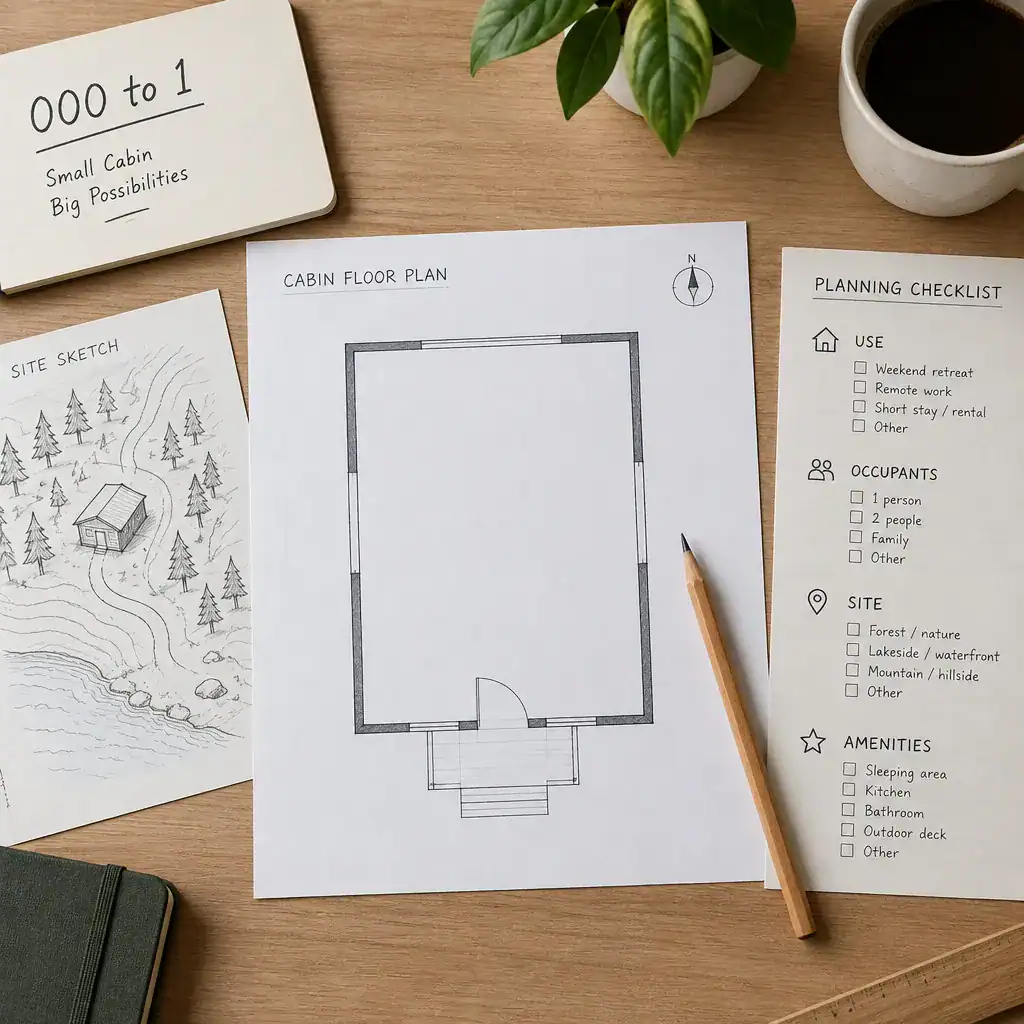
Next, decide what your search is really seeking: a cabin plan, a visual design style, a floor-plan idea, or a broader construction concept. These are related but different needs. A plan focuses on how spaces connect, while a style explores the exterior character and interior atmosphere.
Important missing inputs include the number of occupants, sleeping preferences, accessibility needs, site access, terrain, views, climate, desired amenities, and applicable local requirements. Once those priorities are clearer, replace 000 to 1 with targeted searches such as “small cabin plan with private sleeping area,” “modern woodland cabin exterior,” or “cabin layout for weekend guests.”
A Flexible Cabin Concept for an Undefined Starting Point
For an undefined idea, a flexible cabin concept can begin with a simple shared living area, a practical sleeping zone, and an efficient service area for essential daily tasks. This creates a useful planning framework without claiming a particular room count or presenting a final construction plan.
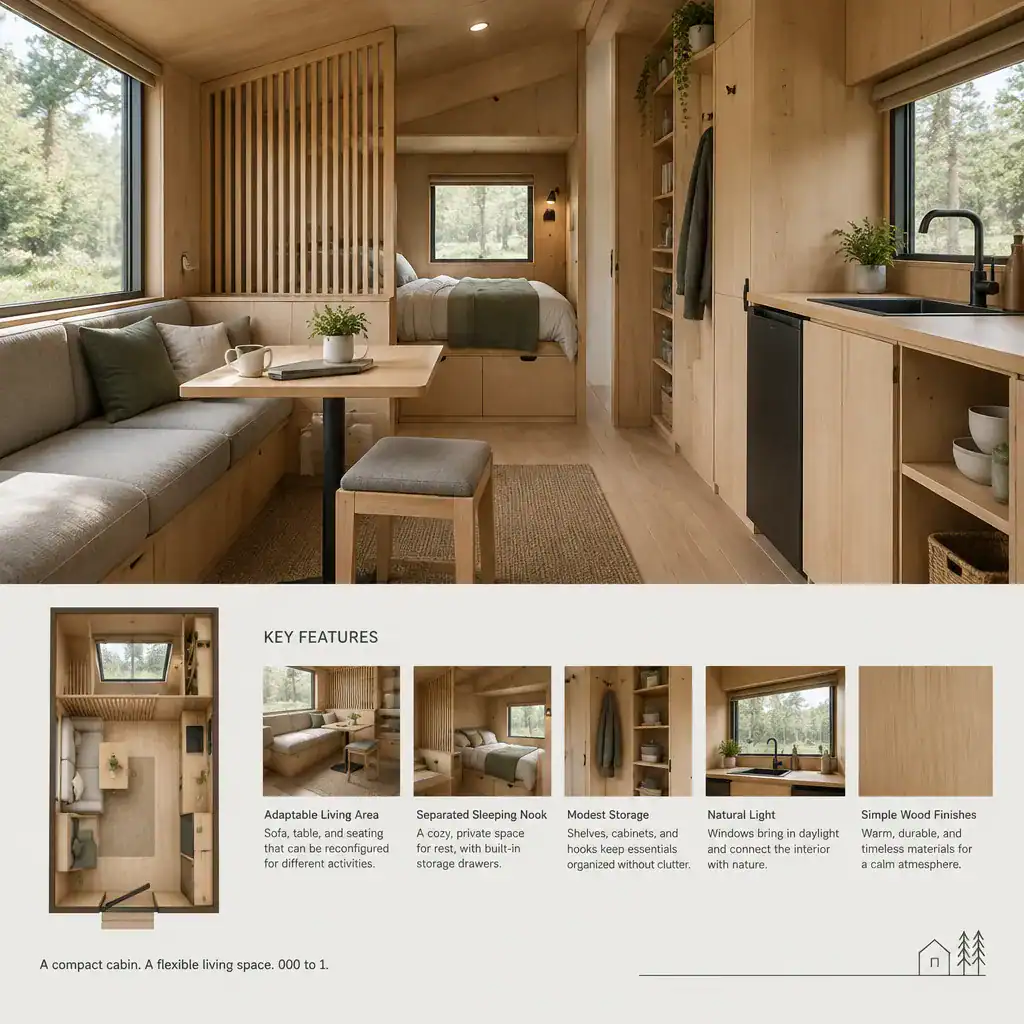
An open, adaptable arrangement can work for many uses. The shared area can support sitting, eating, reading, or casual entertaining; the sleeping zone can be arranged for either openness or greater separation; and the service area can bring cooking, bathing, and utility needs into a compact, logical relationship. The best balance depends on how the cabin will be used rather than on an assumed interpretation of 000 to 1.
Site and routine should guide window placement, entry locations, storage, and circulation. Windows may frame a view or capture daylight, while an entry can be planned around muddy boots, outdoor gear, or a welcoming porch approach. Storage belongs near the activities it supports, and circulation should allow people to move through the cabin without cutting awkwardly through private or work-focused areas. Treat this as a descriptive concept to refine, not as a construction recommendation.
Design Directions That Can Shape the Cabin
A cabin can take several broad visual directions, and none is the single correct reading of an unclear phrase. Rustic character often emphasizes textured wood, natural stone, and a relaxed connection to the landscape. Modern cabin design may use cleaner lines, larger areas of glazing, and simplified detailing. Minimalist cabins reduce visual clutter, while traditional cabin character can draw on familiar roof forms, porches, and classic cladding patterns.
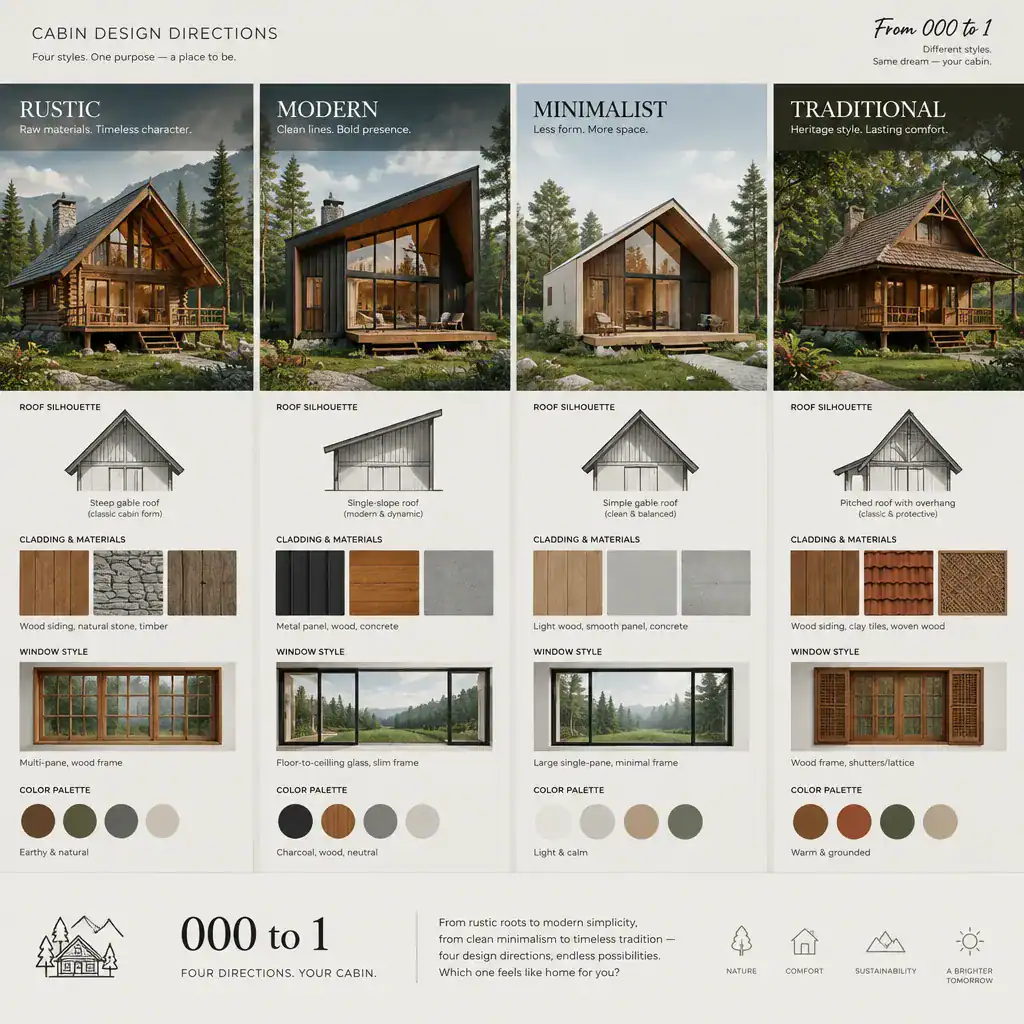
Roof form, window proportions, exterior cladding, and porch treatment strongly influence identity. A prominent pitched roof can feel familiar and sheltering, while a simpler roofline can create a more contemporary impression. Window groupings affect both the facade and the interior light, and a porch can serve as a practical transition between indoor and outdoor living.
Materials and colors should support the atmosphere you want. Weathered timber and muted earth tones can feel grounded; light woods and restrained neutral colors can feel calm and modern; darker cladding can help a cabin recede into a wooded setting. Choose a consistent direction before refining furniture, finishes, and decorative details so every later decision works together.
Questions to Answer Before Moving From Idea to Plan
Before moving from inspiration to a plan, ask how many people the cabin should accommodate and whether sleeping areas need visual or acoustic privacy. Consider how often visitors will stay, whether the cabin needs to adapt to changing household needs, and which moments of the day deserve the most space and light.
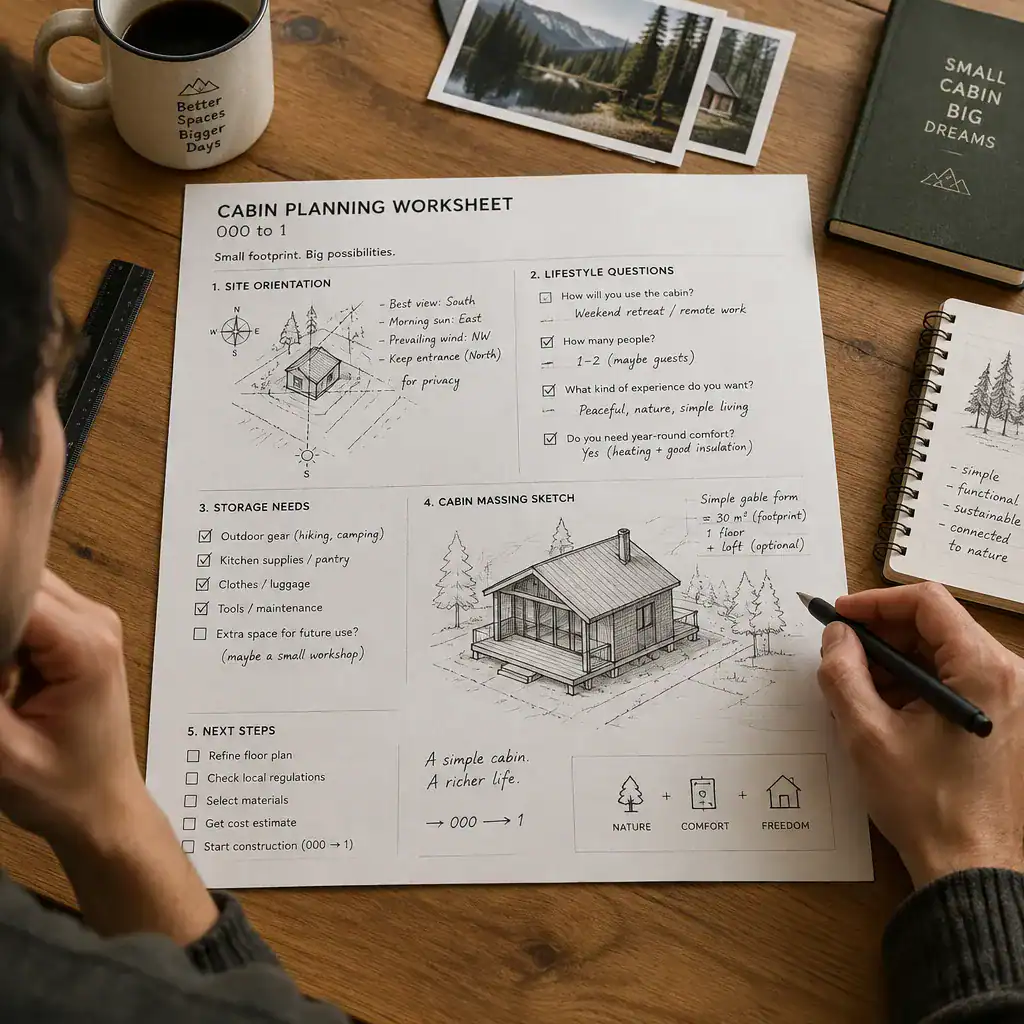
List the functions that are essential to your routine: cooking, bathing, storage, working, entertaining, and outdoor living. Rank them rather than treating every feature as equally important. This helps reveal whether the concept should emphasize a generous shared area, better gear storage, a focused work nook, a sheltered outdoor zone, or a more private sleeping arrangement.
Review site conditions early, including access, orientation, views, terrain, climate, drainage considerations, and local rules that may affect what is possible. Inspiration images can help define preferences, but decisions involving siting, permits, structural systems, utilities, and compliance should be confirmed with qualified local professionals. Turning 000 to 1 into written answers about use, site, and priorities makes those conversations more productive.
The phrase “000 to 1” should be clarified before it is used to select a cabin plan. Focus first on intended use, occupants, layout priorities, site conditions, and a consistent design direction. Then combine those answers into a specific cabin planning brief that describes what you need, what you prefer, and what local professionals should help verify.