
A traditional English cottage is best understood as an inviting design approach, not a single fixed house type. Its appeal comes from modest scale, tactile surfaces, age-inspired details, and an easy relationship between the home and its garden. Whether you are renovating an older property or softening a newer one, the look can be adapted selectively. Focus on proportion, texture, and a few convincing materials rather than trying to reproduce every historical feature.
Defining Features of a Traditional English Cottage Exterior
The exterior usually feels compact and welcoming, with a pitched roof, a visible chimney, small-paned windows, and an entrance that is simple rather than grand. A timber door, shallow porch, or small canopy can create a natural focal point. These elements give a traditional English cottage a human scale that feels comfortable from the street.
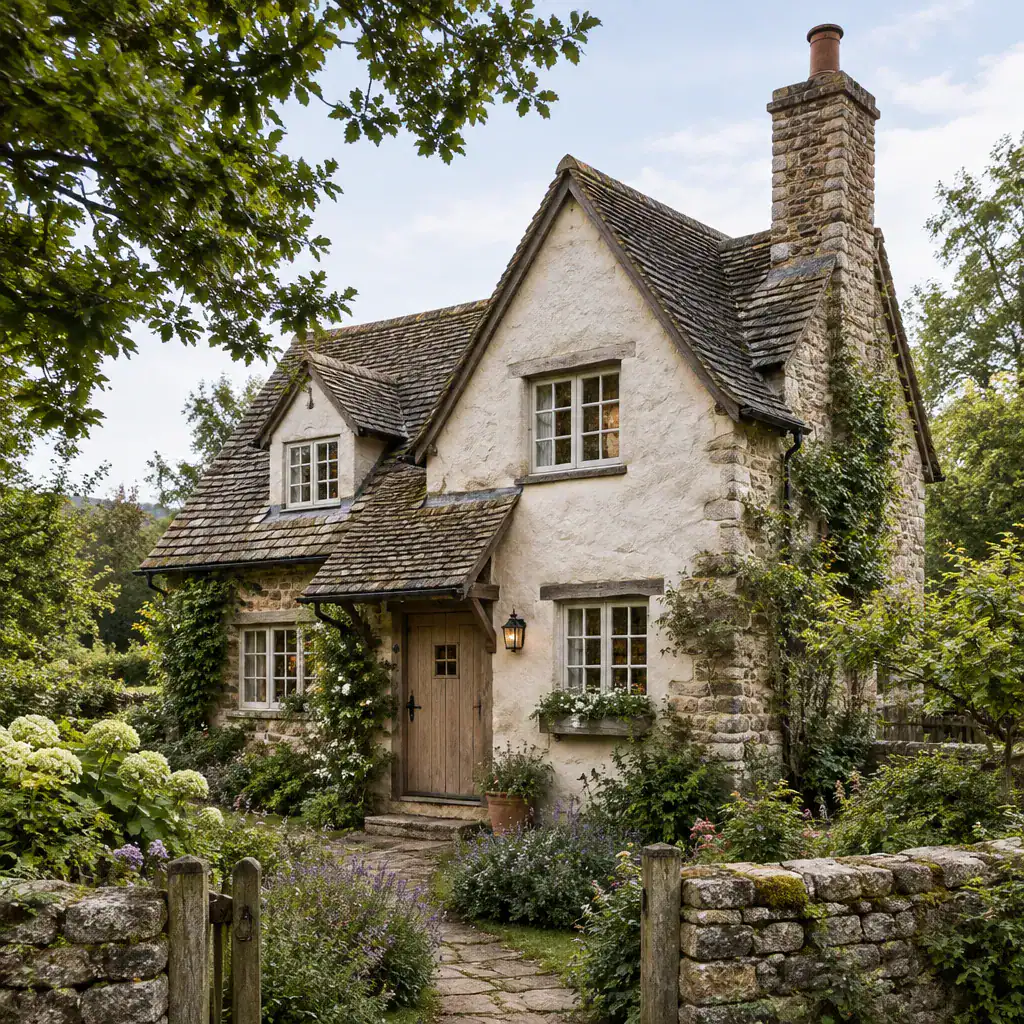
Character often comes from slight irregularity: uneven rooflines, an off-center chimney, a projecting bay, varied wall texture, or handmade-looking joinery. The facade should appear settled into its site, supported by mature planting and materials that relate to the surroundings. This is different from attaching rustic accessories to an otherwise sleek contemporary facade; authentic cottage character begins with the overall form, window rhythm, surfaces, and entrance, not with decorative props alone.
Materials, Colors, and Details That Build Cottage Character
Stone, brick, timber, plaster, and clay-toned roof materials bring the natural warmth that makes this style enduring. Their value lies in visible texture and tonal variation, whether that is weathered stone at the base of a wall, softly textured plaster, or a timber lintel above a door. Choose materials that work together and suit the existing building rather than introducing many unrelated finishes.
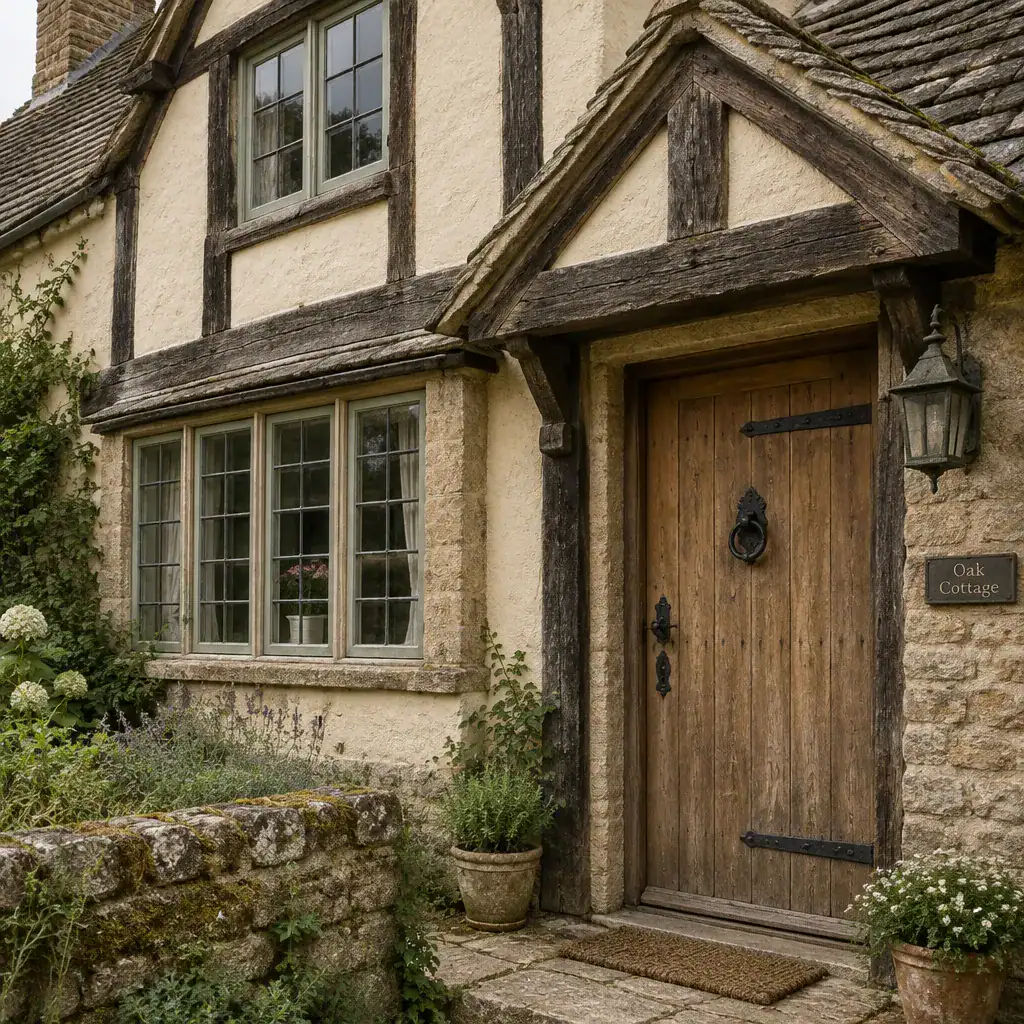
Keep the color palette restrained: warm off-whites, muted sage or moss greens, soft gray, faded blue, brick red, and other earthy tones are easy to layer. Divided-light or leaded-style windows, uncomplicated shutters, aged metal hardware, timber beams, and modest traditional-style lights can reinforce the effect. A traditional English cottage feels collected over time when these details share a consistent level of simplicity instead of competing for attention.
Cottage Garden and Outdoor Setting
An informal garden helps the house feel connected to the landscape. Climbing roses, vines, mixed flowering borders, shrubs, herbs, and leafy perennials create the soft, layered planting that suits a cottage facade. Favor varied heights, bloom times, foliage shapes, and gentle transitions over rigid symmetry or sharply clipped forms.
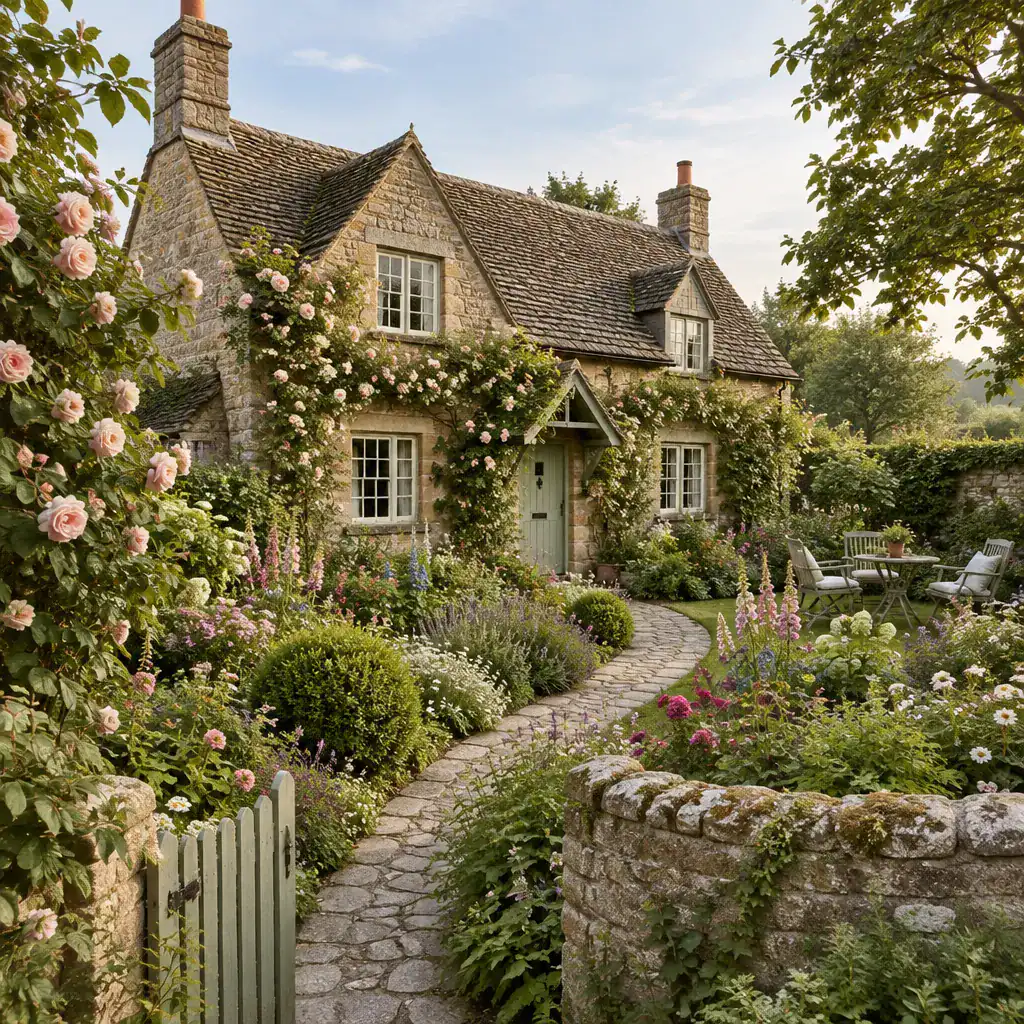
A curved stone, gravel, or brick path can lead naturally to the entrance, while a low weathered wall, modest gate, or small seating nook provides structure without making the garden feel formal. Repeat colors or materials from the facade in the path, planters, or gate. The goal is a calm setting in which the garden frames the door, windows, and roofline while still responding to the local climate and site.
Traditional English Cottage Interior Ideas
Inside, cottage character comes from comfort, utility, and continuity with the exterior. Natural wood, plaster-like wall finishes, stone or brick around a simple fireplace, and painted cabinetry create a grounded backdrop. Exposed beams can be striking where they are original or structurally appropriate, but a room does not need them to feel warm and established.
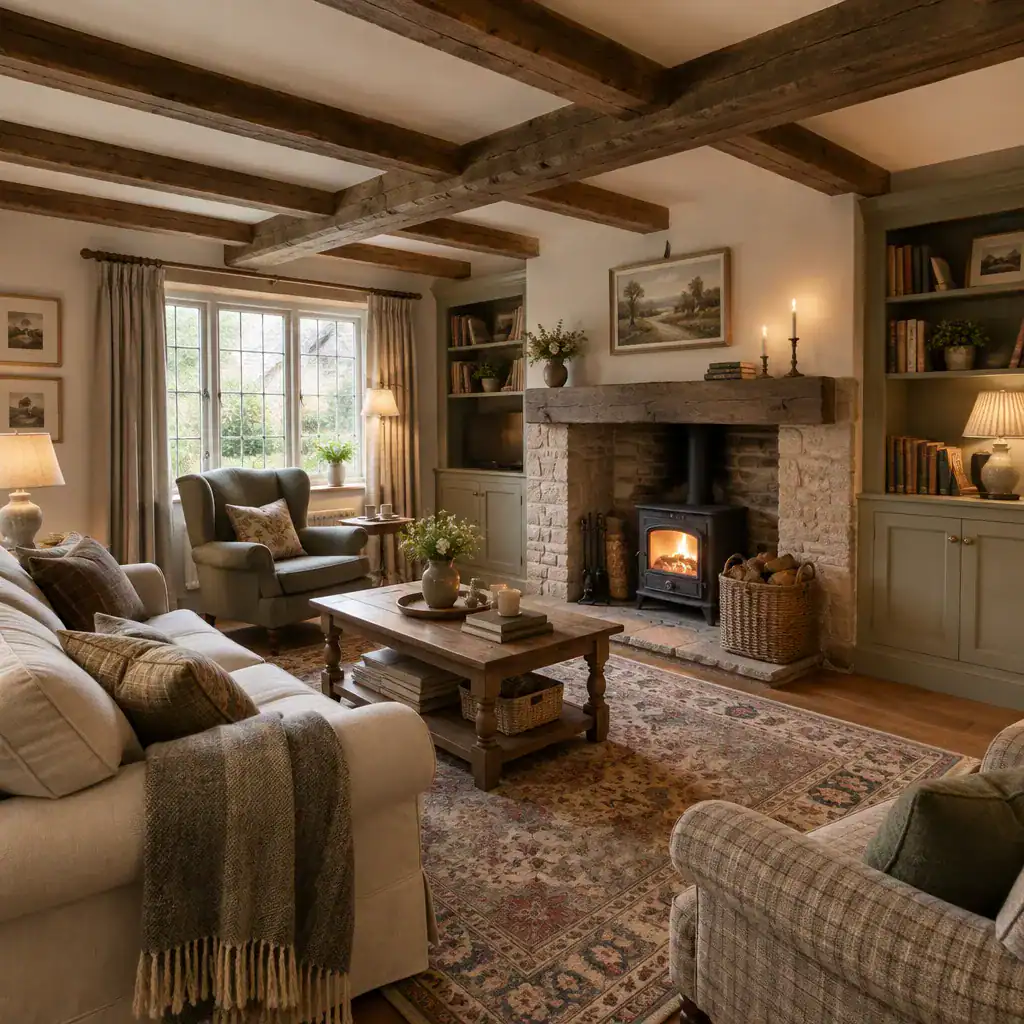
Build rooms around useful, comfortable furniture: upholstered seating, a sturdy dining table, wooden floors, practical shelving, and cabinetry that supports daily life. Patterned rugs, checks, florals, stripes, and natural textiles add softness, especially when balanced with open surfaces and adequate storage. Layer ambient, task, and accent lighting so corners feel welcoming after dark. Mixing inherited-looking pieces with clean-lined newer ones keeps a traditional English cottage interior personal rather than staged or overly imitative.
How to Adapt the Look for a Modern Home
You do not need a period house to borrow the most effective cottage cues. A welcoming painted or natural-wood door, divided-light windows, natural textures, muted wall colors, and layered textiles can make an immediate difference. Select the elements that fit your home’s proportions instead of forcing a picturesque effect onto an incompatible facade.
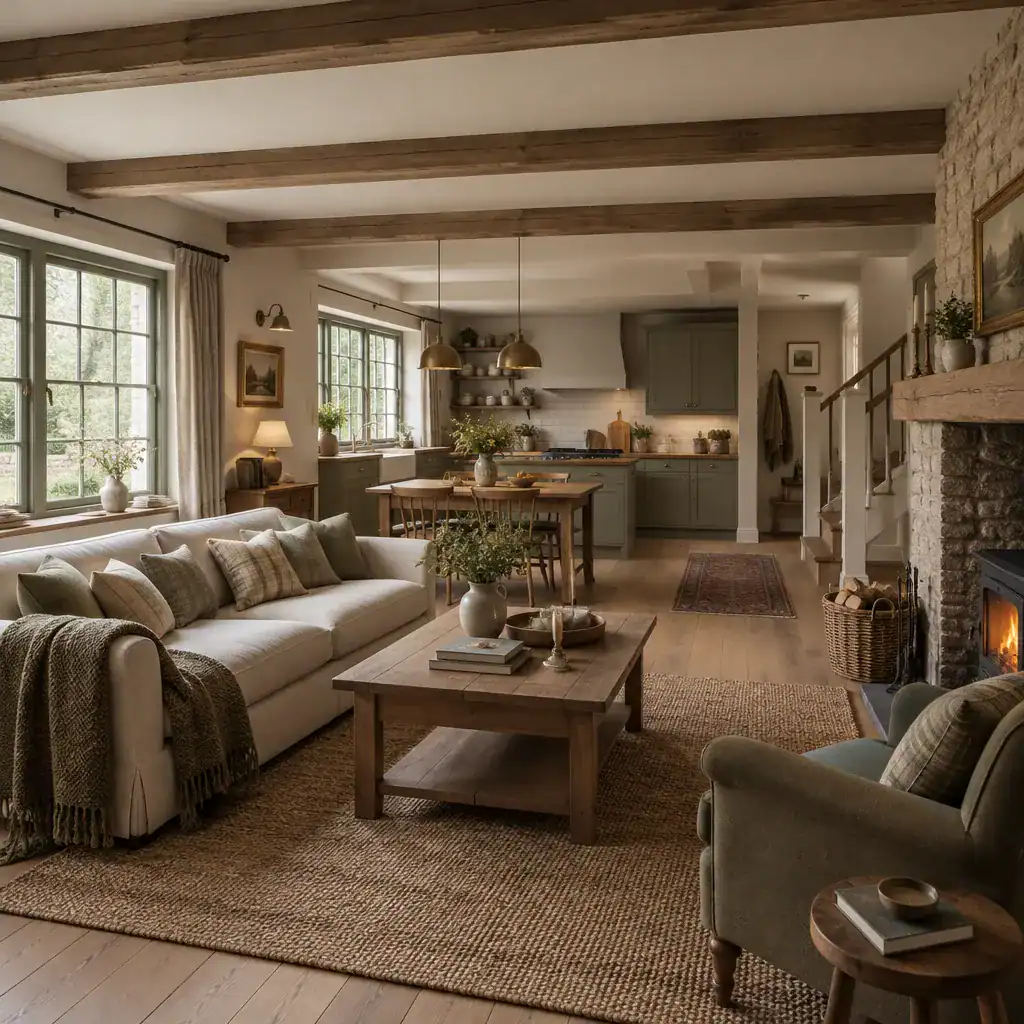
Pair heritage references with contemporary comfort through efficient storage, durable finishes, clear circulation, and practical lighting. Use a limited number of well-chosen details, such as aged brass hardware or a classic window treatment, rather than applying cottage motifs in every room. Consider climate, maintenance, and existing architecture when choosing exterior finishes and planting. The most successful interpretation is a home that feels naturally lived in, not a themed replica.
The enduring appeal of this look lies in the connection between modest architecture, natural materials, soft colors, informal landscaping, and relaxed interiors. Let the existing structure lead the decisions, then use compatible details to strengthen its personality. Begin with one cohesive area—an entrance, living room, garden border, or material palette—and allow the rest of the home to develop from that foundation.