
A ranch house patio works best when it feels like a natural continuation of the home rather than a separate feature placed in the yard. The contemporary approach is less about adding visual drama and more about refining the essentials: clean lines, a restrained mix of materials, inviting places to sit, and a calm connection between interior and exterior spaces. This guide offers design direction for homeowners planning a new patio or refreshing an existing one.
Because ranch houses are typically broad and low in profile, the patio should reinforce that grounded character. Consider the layout, transitions at doors, hardscape finishes, furniture, shade, lighting, and planting as parts of one connected composition. These are design concepts and planning considerations, not site-specific engineering or construction advice; drainage, levels, regulations, and installation details should be reviewed with qualified local professionals.
Start With a Patio Layout That Extends the Ranch House
Let the horizontal character of the house guide the patio plan. A long, simple patio edge, aligned paving joints, and broad zones that relate to the rear façade can make the outdoor area feel visually connected to the architecture. Rather than treating the entire surface as one undefined expanse, organize it around the activities your household values most.
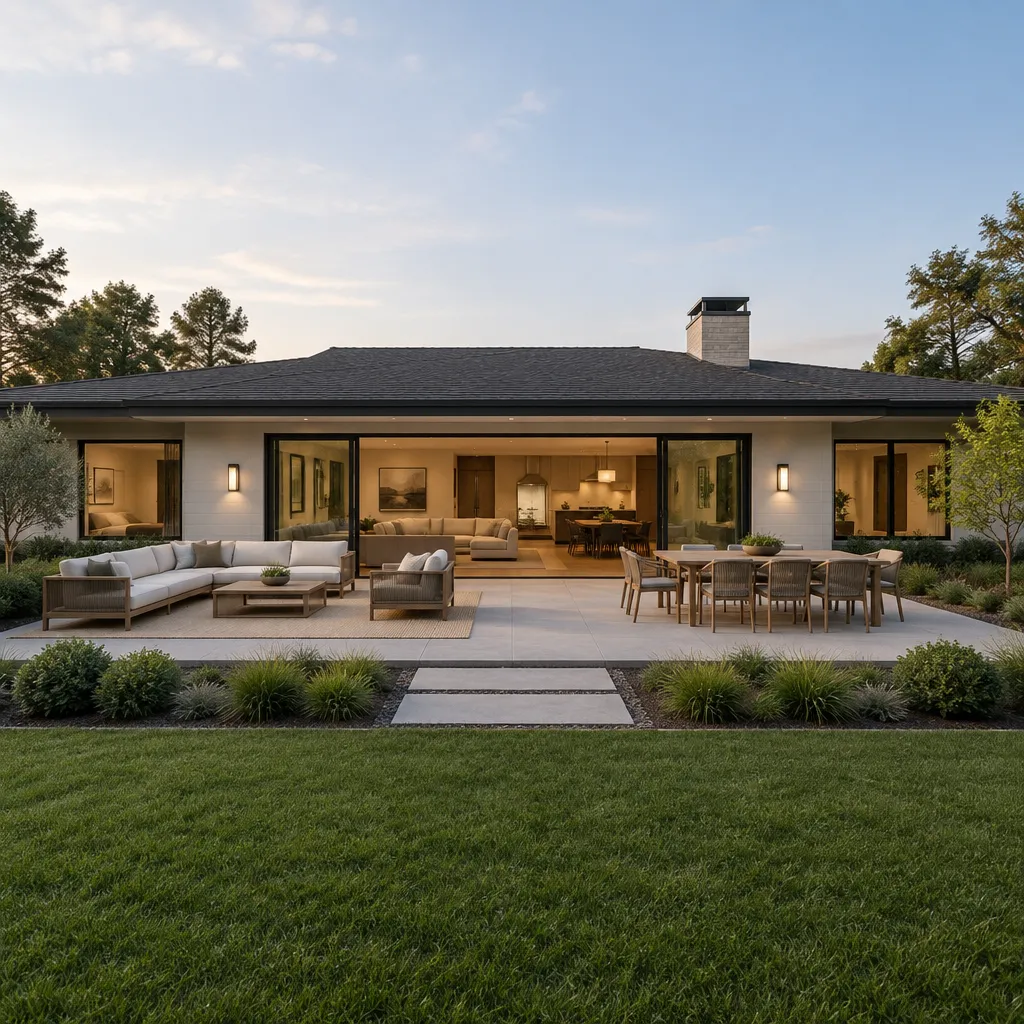
A dining zone may sit closest to the kitchen or the most convenient exterior door, while a lounge zone can face a garden view, fireplace feature, or quieter part of the yard. Keep circulation clear between doors, seating, and the garden so people do not need to cross through a conversation area to move around. A focal element, such as a planted view, sculptural pot grouping, or compact fire feature where appropriate, can provide orientation without dominating the entire patio.
Door positions, sightlines from major rooms, afternoon sun, privacy, and the path from driveway or side yard all affect the best arrangement. Before choosing finishes, make a simple zoning sketch. Draw doors, existing views, likely furniture footprints, and walking routes. This quick test can reveal whether the plan feels comfortable before money is committed to paving or built features.
Choose Contemporary Materials That Complement the House
A restrained material palette helps the patio feel current while still belonging to a ranch house. Concrete-look paving can create a crisp architectural base, natural stone can introduce quiet variation, wood accents can add warmth, and charcoal or black metal details can provide definition. The goal is coordination, not exact matching, with the home’s siding, brick, stucco, roof tones, or trim.
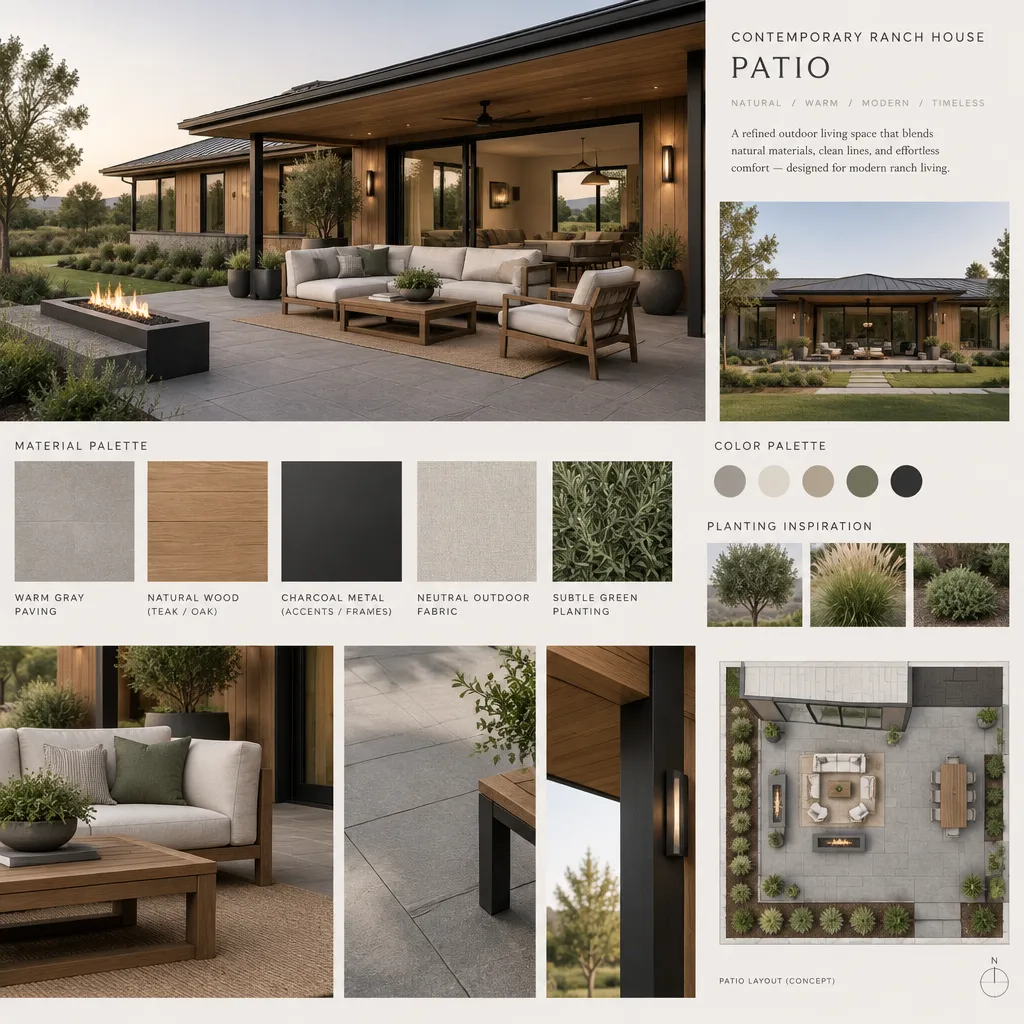
Choose color and texture with the scale of the house in mind. Warm gray or sand-toned paving may support a relaxed facade, while a deeper edging detail can sharpen the geometry. Large-format visual patterns often read as calmer than busy, highly contrasted layouts, especially beside a low, expansive home. Limit the scheme to a few complementary finishes so the patio does not become visually fragmented.
Material selection also needs practical review. Local climate, drainage conditions, slip resistance, installation methods, and maintenance expectations can influence which options are appropriate. Discuss those factors with qualified professionals before finalizing a surface or detail. A well-composed contemporary ranch house patio relies on visual restraint, but it should also suit the conditions of the specific site.
Coordinate Furniture, Shade, and Outdoor Comfort
Furniture should support outdoor living without making the patio feel crowded. Low-profile sofas, streamlined lounge chairs, simple dining tables, and open-base pieces tend to suit contemporary ranch architecture because they preserve broad views and an uncluttered feeling. Select forms that feel substantial enough for the patio but not overly ornate or tall against the house.
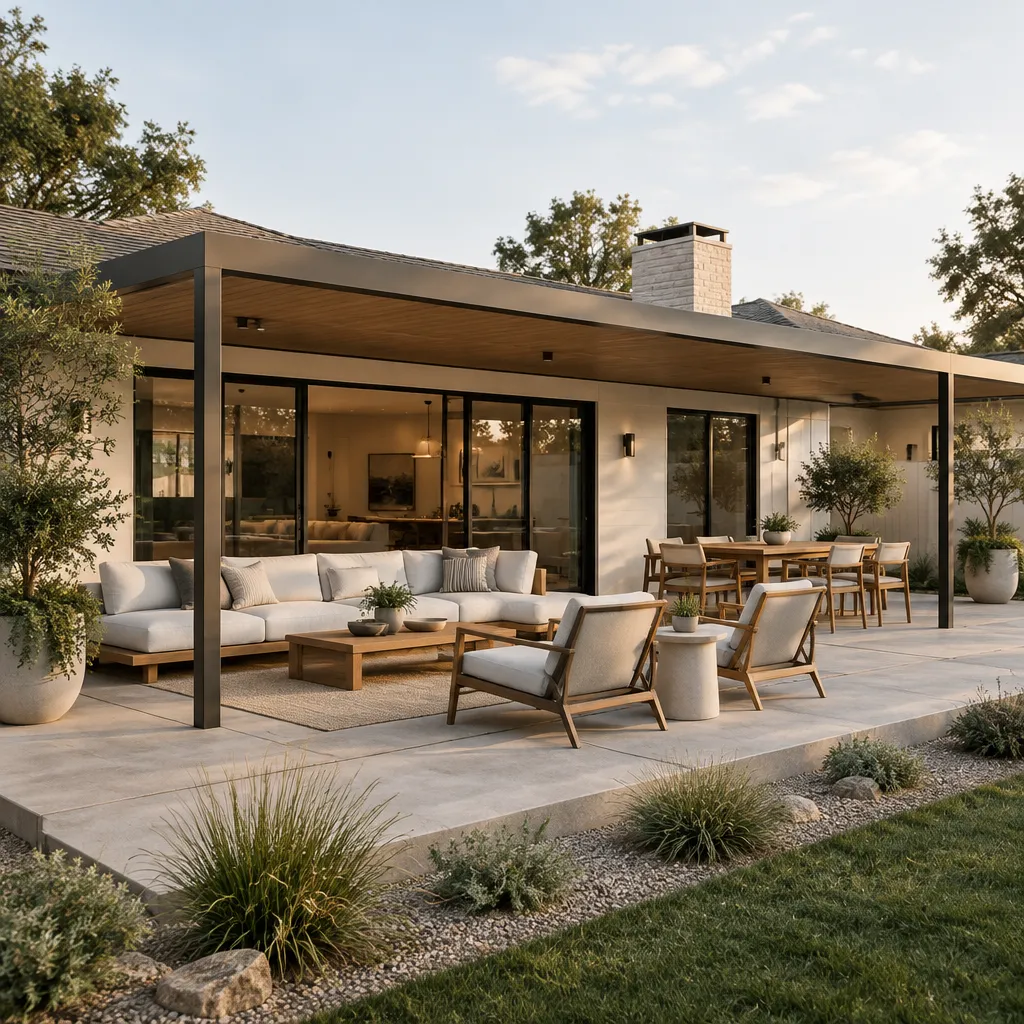
A lounge arrangement can create a casual place for conversation and reading, while a dining arrangement supports meals near the kitchen. If the patio serves several purposes, use flexible pieces such as movable chairs, occasional tables, or benches that can shift between groups. Leave adequate room around each arrangement so everyday movement remains easy.
Shade can come from a structure, an umbrella, or nearby trees and planting, depending on the site and the desired architectural effect. A minimal shade structure may echo the home’s strong horizontal lines, while an umbrella can keep the layout more adaptable. Choose weather-appropriate products and finishes that match your willingness to maintain them. Comfort also depends on circulation, surface heat, wind exposure, and local conditions, so avoid treating one furniture or shade solution as universal.
Use Lighting and Planting to Add Depth Without Visual Clutter
Lighting and planting give a patio dimension after dark and throughout the seasons, but both are strongest when used with purpose. Divide lighting into functional illumination for entries and movement, ambient light for gathering areas, and accent light for a wall, planting bed, or focal feature. This layered approach avoids making every edge or object compete for attention.
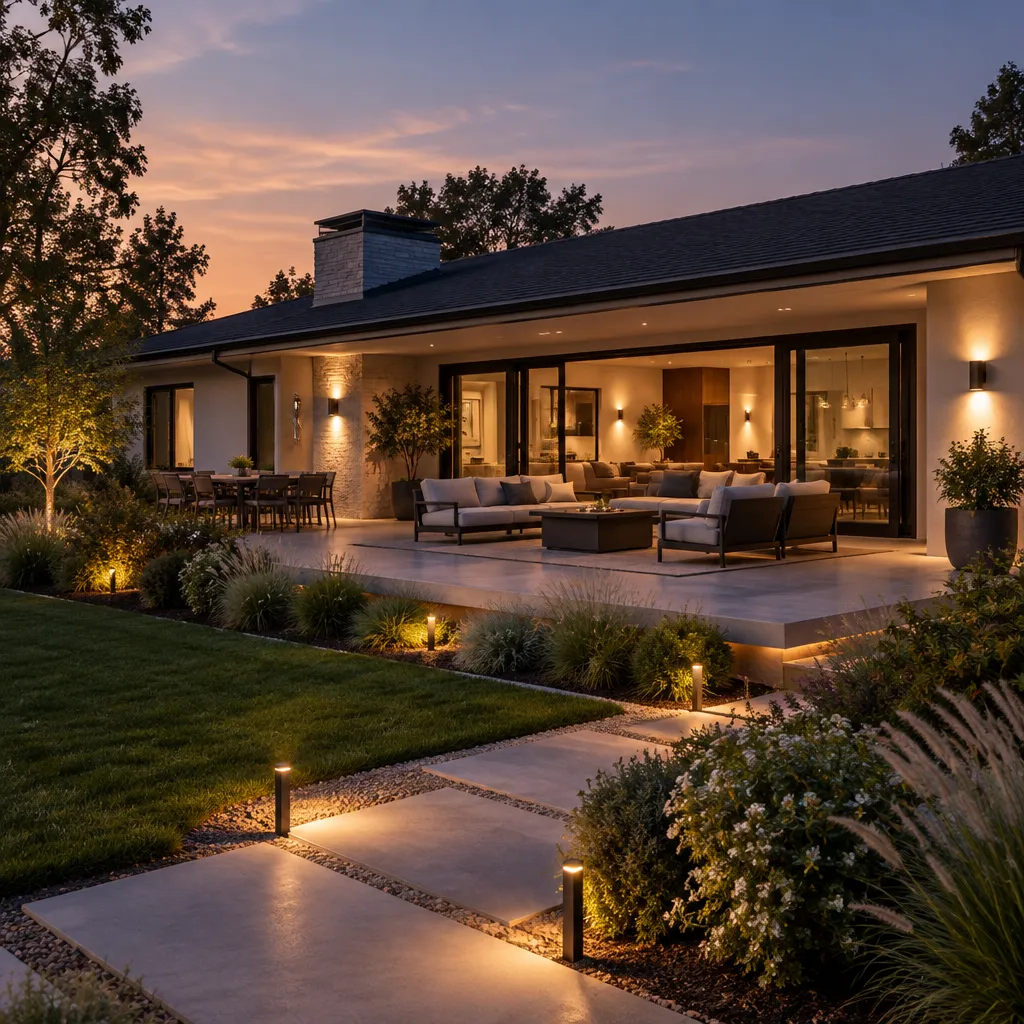
Planting can soften paving edges, frame a view from the house, and establish privacy while preserving the clean geometry of the patio. Repeated grasses, shrubs, or structural perennials often create a more composed effect than a large mix of unrelated colors and forms. Keep height controlled near important sightlines, then use taller planting strategically where screening is wanted.
A limited color direction and repeated plant forms can make a contemporary ranch house patio feel intentional rather than overly decorated. Plan fixture locations, irrigation needs, maintenance access, and plant suitability early, especially where planting meets paving or walls. Local landscape and lighting professionals can help validate choices that depend on regional conditions and site constraints.
Contemporary Ranch House Patio Concepts to Adapt
These concepts are adaptable starting points rather than fixed plans. Each can be adjusted to suit the home’s existing finishes, the size and shape of the outdoor area, and the way the household intends to use it.
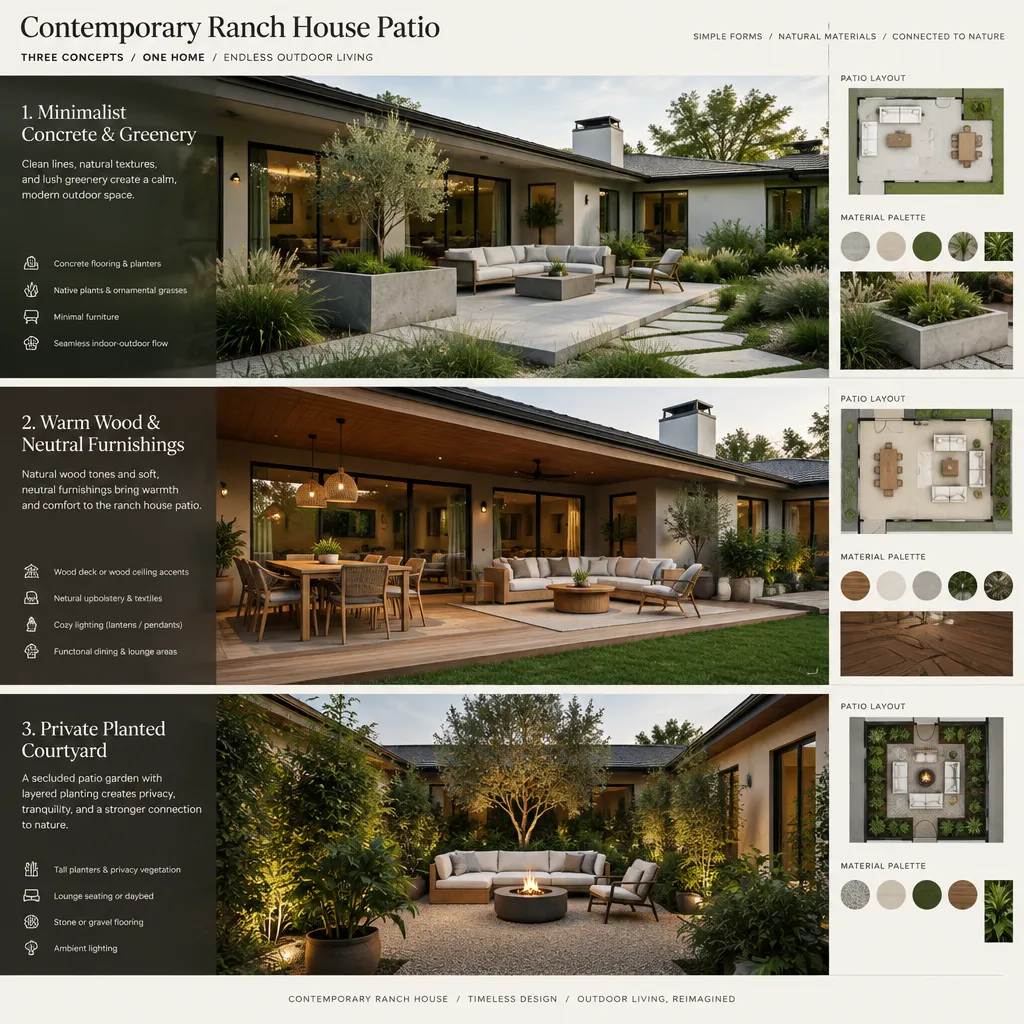
The minimalist concrete-and-greenery concept creates a calm, architectural setting. Use a simple gray paving field, limited furniture with dark frames, and concentrated planting in repeated green tones. This direction suits homeowners who prioritize open space, clear geometry, and a quiet visual relationship with the house.
The warm modern concept pairs neutral paving with wood-toned accents, soft outdoor upholstery, and relaxed furniture arrangements. It is useful for households that want contemporary clarity without a stark appearance. A wood screen, teak-style table, or warm-toned planters can introduce contrast while the overall palette remains edited.
A courtyard-inspired concept places privacy planting around a more contained outdoor room. A compact focal feature, such as a small water element, fire feature where suitable, or sculptural planter, can anchor the space. This approach is especially adaptable when views need screening or when the patio should feel more sheltered, while still maintaining defined zones and clean lines.
A Practical Checklist Before Finalizing the Patio Design
Review how the patio meets the house before approving a final concept. Check that doors open into clear paths, sightlines from indoor rooms feel intentional, level changes are understood, and circulation connects dining, lounging, garden access, and service areas comfortably. The patio should support daily movement as well as occasional entertaining.
Confirm that furniture, shade, lighting, planting, and storage align with the activities you expect to have outdoors. Ask whether cushions, serving items, garden tools, or movable accessories have a logical place when not in use. Then review site-specific matters, including drainage, local regulations, material suitability, and any professional installation needs.
Finish with one final layout and palette edit. Remove features that do not serve a clear purpose, reduce competing finishes, and make sure each major element contributes to the low-profile contemporary character. This final review often makes the difference between a collection of good ideas and a cohesive outdoor space.
The strongest contemporary ranch house patios balance architectural connection with practical zoning, material restraint, and everyday comfort. Begin with the existing house, then choose a direction that fits your site, lifestyle, maintenance expectations, and current exterior finishes. Whether you prefer a minimal green setting, a warm modern retreat, or a more private courtyard composition, the best result will feel connected rather than added on.
Use the planning ideas as a framework, then validate technical decisions, local requirements, drainage approaches, and installation details with qualified professionals. With that process in place, a contemporary ranch house patio can become an enduring extension of the home and a comfortable setting for outdoor life.