
A porch is the threshold between a cottage’s indoor life and its garden, street, or surrounding landscape. It should make arrival feel inviting while providing a useful place to pause, sit, greet guests, or enjoy fresh air. A successful classic cottage porch balances traditional character with relaxed comfort rather than treating the entry as a purely decorative feature.
Before updating the space, consider the existing architecture, exposure to weather, preferred colors, available floor area, and how the household will use the porch. The following planning approach moves from structural character and material selection to furniture, lighting, plants, and the finishing details that make the whole exterior feel coordinated.
Architectural Details That Define a Classic Cottage Porch
Cottage character begins with a welcoming entry and proportions that look naturally connected to the house. A gently pitched porch roof, simple painted posts, modest railings, and traditional trim can frame the front door without overpowering the facade. Aim for a balanced composition in which the door, porch roof, windows, and visible garden areas feel visually related.
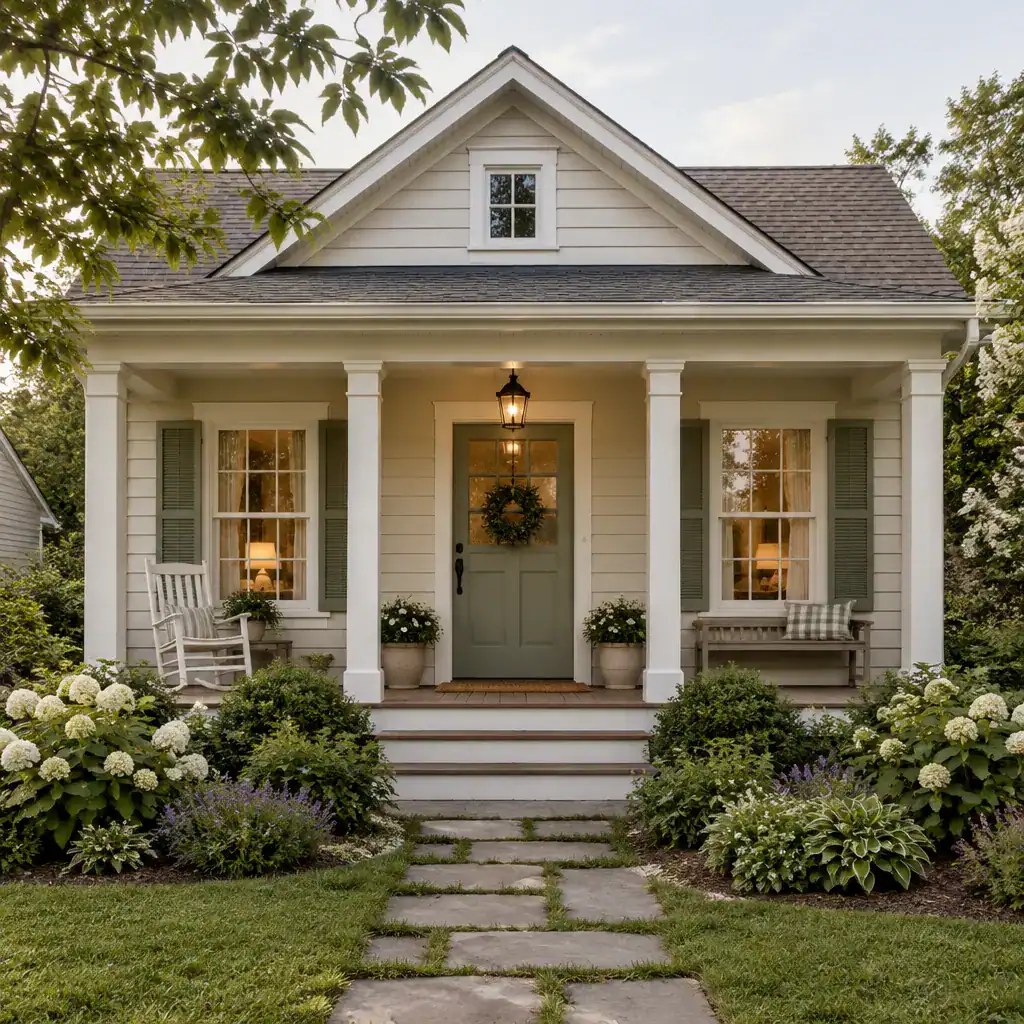
Coordinate columns, brackets, posts, shutters, and window trim as parts of one exterior language. For example, restrained brackets can echo trim details around windows, while porch posts may repeat the finish used on other painted woodwork. Too many decorative profiles, contrasting shapes, or unrelated period details can make a small facade appear busy.
Work with the cottage’s existing roofline, window placement, door style, and overall scale instead of forcing a porch style that does not belong. Any structural alteration, including changes to roofs, supports, guardrails, or steps, should be reviewed in light of local building requirements and the home’s current condition.
Materials and Color Combinations for Cottage Character
Materials influence whether the porch feels crisp, warm, rustic, or formal. Painted wood offers familiar cottage softness and flexibility in color, while natural wood accents can add warmth when they suit the home’s exterior. Masonry can provide visual weight at steps or column bases, and durable porch flooring may be a practical choice where moisture, sun, or frequent use are concerns.
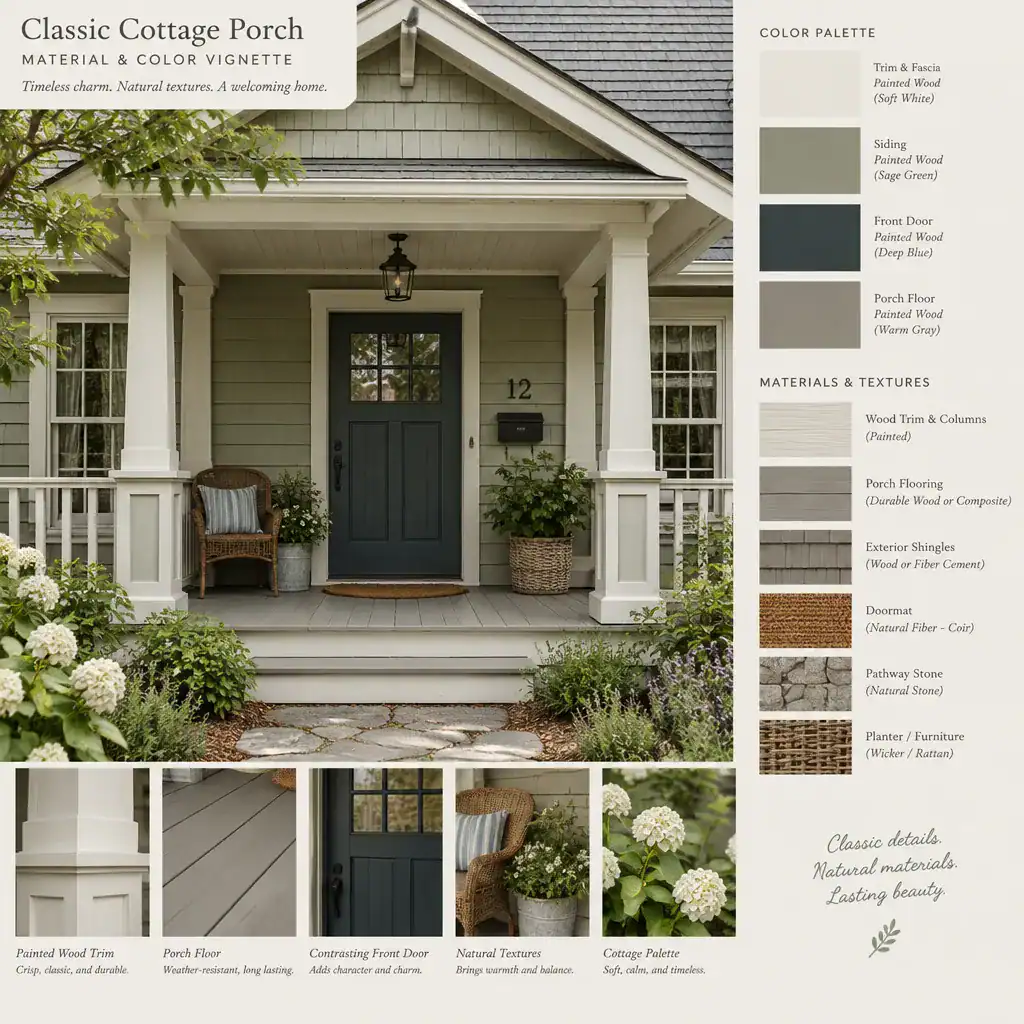
There is no single best material for every home. Compare options according to climate, moisture exposure, maintenance expectations, installation requirements, and manufacturer guidance. A finish that looks appropriate but cannot withstand the porch’s conditions will quickly undermine the intended effect.
Build a restrained palette from the cottage exterior. Soft white, warm cream, gentle gray, faded blue, sage, or muted taupe can create a calm foundation across siding and trim. Add depth through a coordinated porch ceiling and floor, then use a carefully selected door color as an accent. Natural textures, such as timber grain or subtle stone, can keep the scheme from feeling flat without introducing competing colors.
Comfortable Furniture and Functional Porch Layouts
Choose furniture according to the usable floor area, the path to the front door, household routines, and the way the porch should function. A small entry porch may only need a bench or one rocking chair, while a deeper porch can accommodate a compact conversation grouping or a swing. An classic cottage porch does not need every traditional furnishing at once; a few suitable pieces are usually more comfortable and convincing.
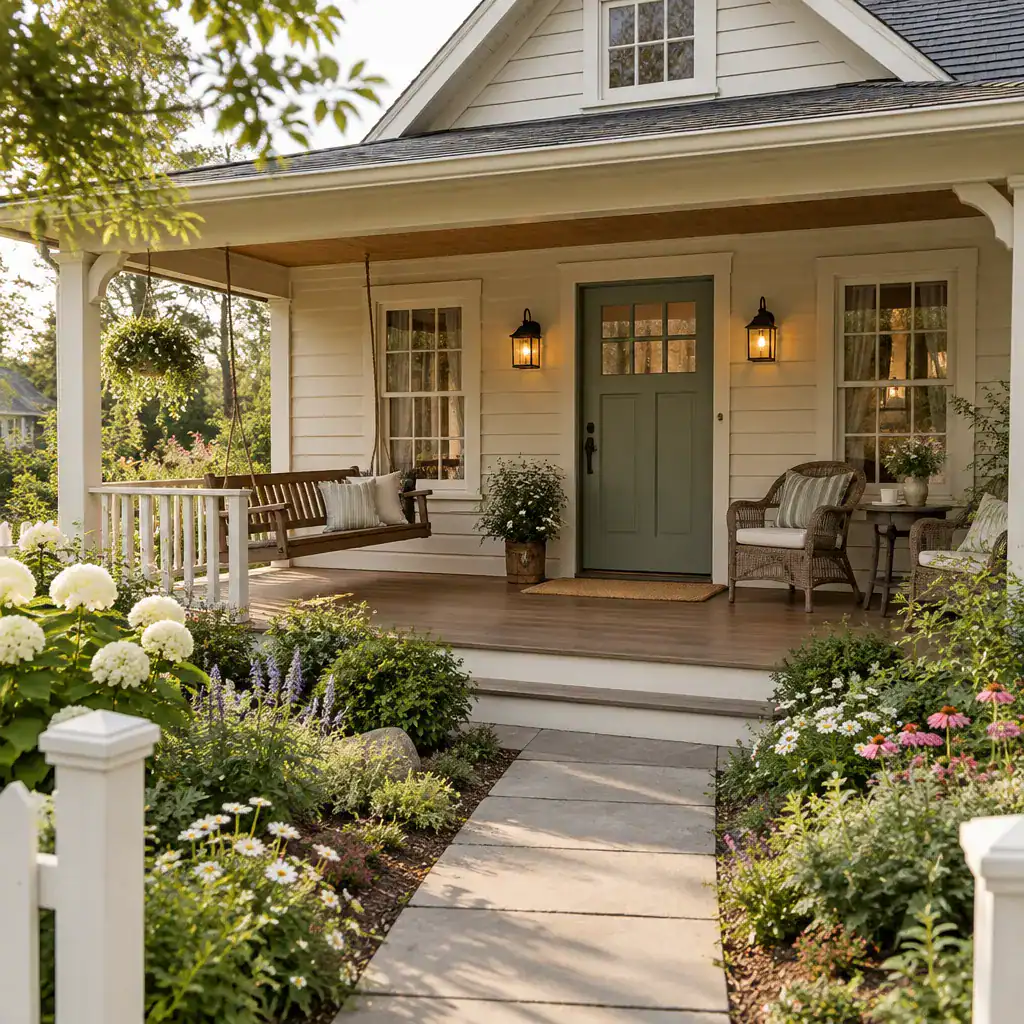
Keep circulation clear from steps to the entry. Place seating along a wall or toward a garden view when possible, leaving an unobstructed route for guests, deliveries, and everyday movement. A small side table makes a chair or swing more useful, while outdoor cushions and textiles can add softness without filling every open surface.
Arrange the porch around its intended experience. Chairs angled toward each other support conversation; a bench beside the door creates a practical waiting spot; and a swing facing the garden encourages slower, quieter use. Select furniture with a scale that complements the porch rather than crowding it.
Lighting, Plants, and Decorative Finishing Touches
Porch lighting should make the entry safer after dark while reinforcing the cottage’s architectural mood. A well-proportioned wall lantern, pendant, or ceiling fixture can provide a warm welcome without looking overly ornate. Consider how the light will reach steps, the lockset, and walking paths, as well as how the fixture relates to the door hardware and trim.
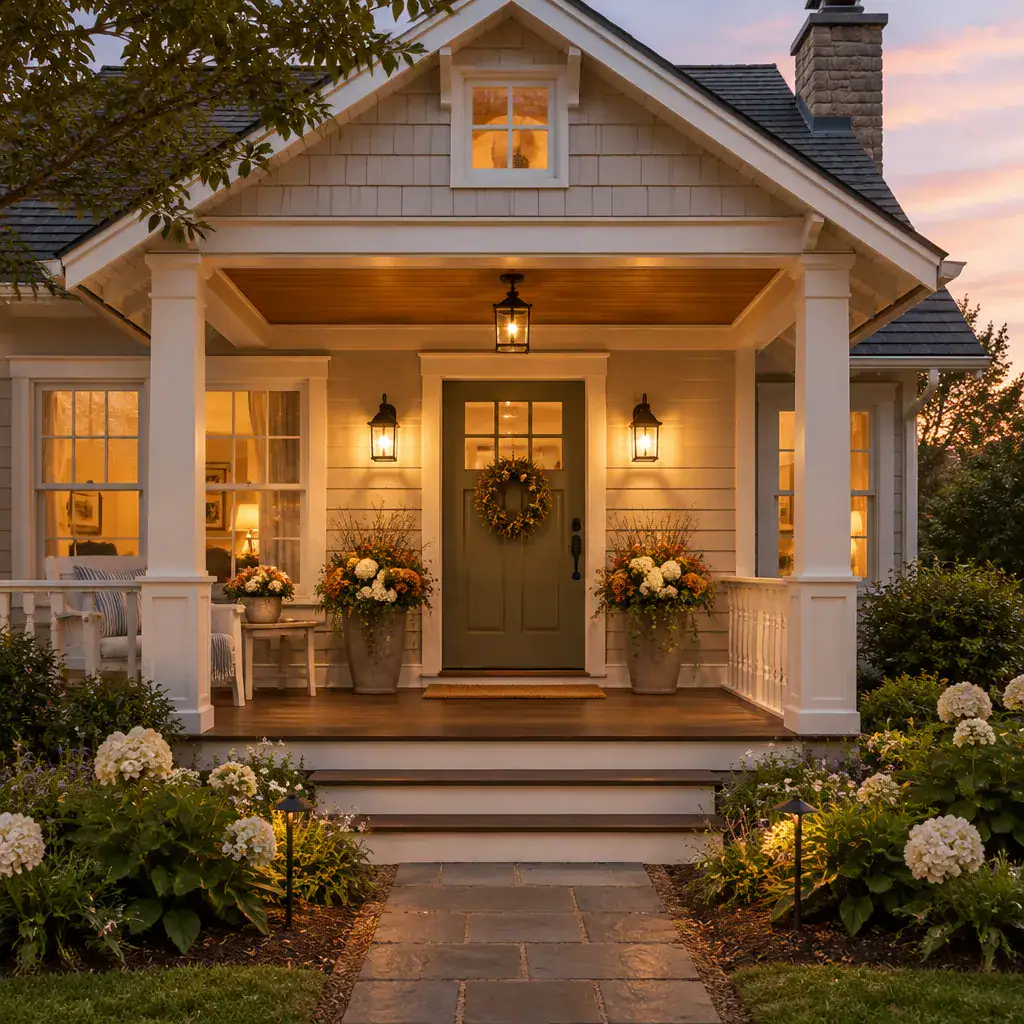
Container plants, hanging baskets, and climbing greenery bring the porch into conversation with the landscape. Use them to soften edges or frame the entry, but avoid placing so much foliage in front of the facade that windows, railings, and architectural details disappear. Choose planters that relate to the color palette, and account for watering, seasonal changes, wind, and weather exposure.
Finish with a limited selection of useful accessories: a durable doormat, a pair of planters, a simple lantern, or seasonal cushions may be enough. Coordinated details create a collected look, whereas too many signs, ornaments, and unrelated textiles can make the entry feel cluttered. Select outdoor-rated items where exposure and maintenance are likely to be concerns.
How to Keep the Porch Classic Without Making It Feel Dated
A timeless porch relies on good proportions, quality-looking finishes, and an edited approach to decoration. Traditional references should feel integrated into the house, not applied as a theme. Combining familiar cottage forms with durable materials, supportive seating, and practical lighting allows the space to feel current while retaining its welcoming heritage.
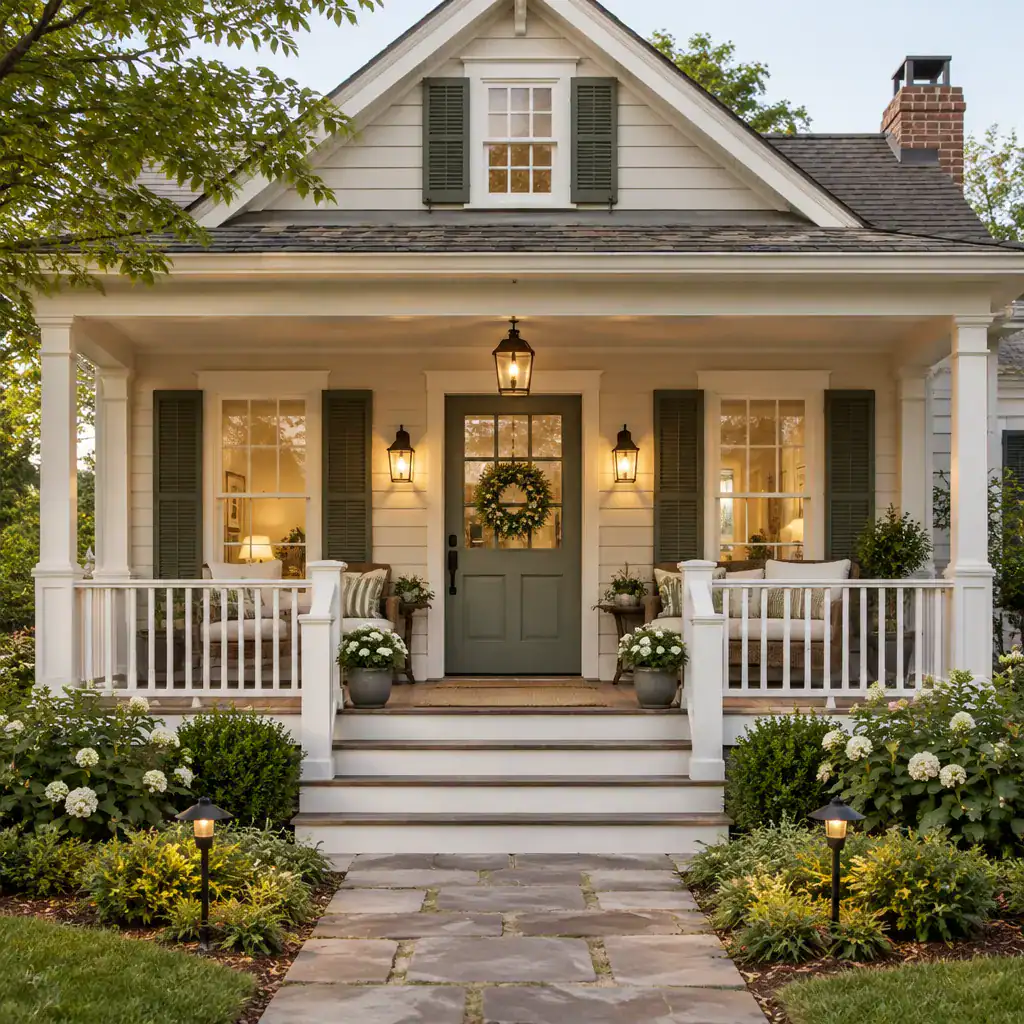
Watch for common problems that can weaken the design: finishes that do not relate to one another, oversized furniture, blocked entrances, excessive accessories, and accent colors that compete with the house. A porch should look layered but still easy to enter, clean, and maintain.
Before finalizing an update, review the structure and confirm that its details suit the home. Check whether materials are appropriate for the local weather and expected upkeep, whether colors coordinate across siding, trim, door, ceiling, and floor, and whether furniture leaves room for comfortable circulation. Also confirm that lighting supports safe arrival and that plants and decorative pieces can be maintained through changing seasons. This review helps an classic cottage porch feel intentional rather than overly styled.
The most successful classic cottage porch feels like a natural extension of the home: welcoming from the street, comfortable for daily life, and connected to the surrounding landscape. Prioritize proportion, coordinated materials, practical movement, and a small number of meaningful details. When the design reflects the cottage’s architecture, local conditions, and the way the household actually uses the space, it can remain appealing for years to come.