
A traditional English cottage is appealing because it feels welcoming rather than grand: its scale is intimate, its finishes appear hand-worked, and its rooms and garden seem naturally connected. This guide explores the façade details, materials, interior atmosphere, functional rooms, and landscape choices that can create that feeling. The goal is design direction, not a rigid formula; cottages vary widely by setting, age, and the needs of the people who live in them.
Defining Characteristics of a Traditional English Cottage
The visual language of a traditional English cottage begins with modest proportions and an informal silhouette. Steep pitched roofs, substantial chimneys, compact window openings, and sheltered doorways create a sense of enclosure and warmth. Rather than looking perfectly balanced, many successful cottage-inspired homes use gentle asymmetry: a roofline may step down over an addition, a door may sit slightly off-center, and windows may respond to the room arrangement inside.
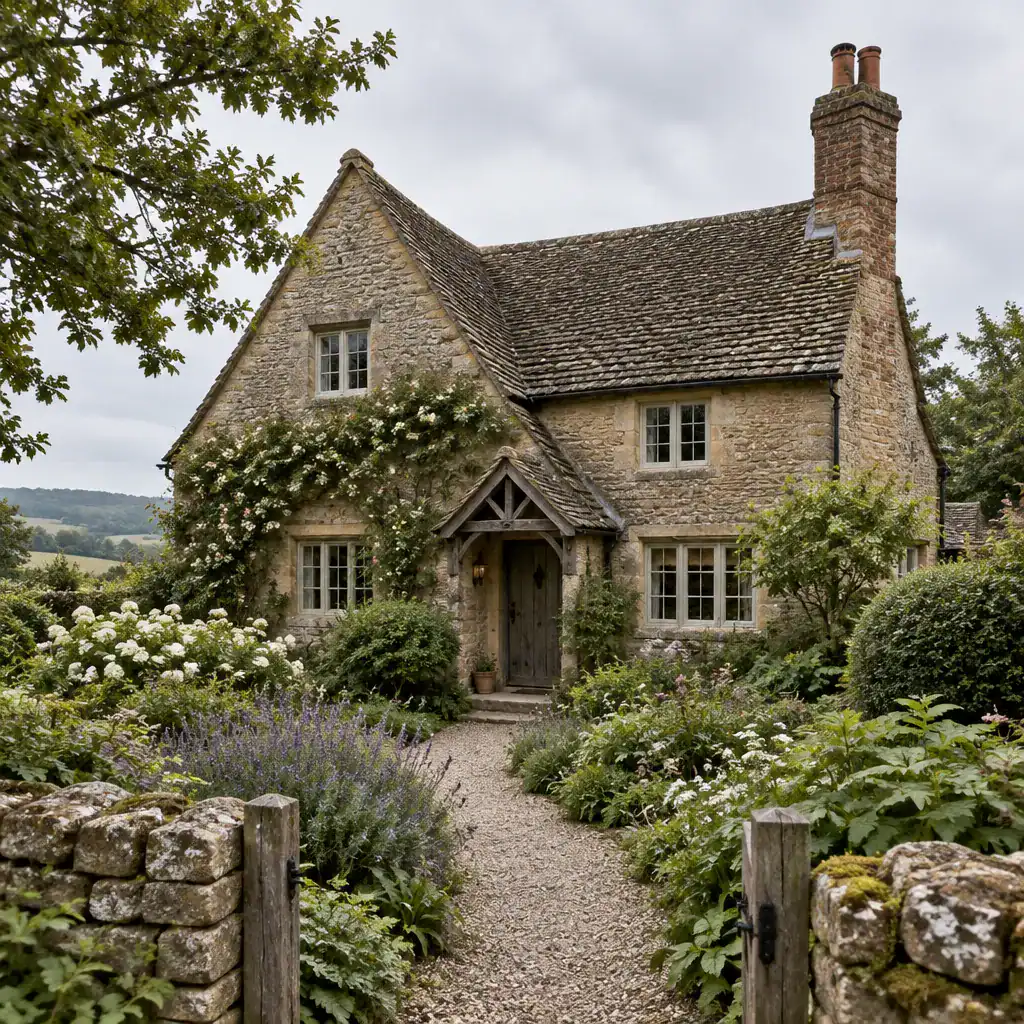
These irregularities should feel believable, not applied as decoration. A recessed entry, varied roof planes, or a carefully placed dormer can make a home feel settled over time, while random false shutters, exaggerated trim, or too many ornamental details can push the result toward a themed appearance. Start by studying the existing building, its roof shape, and nearby homes. Local materials, planning constraints, climate, and neighborhood character should guide which cottage references make sense.
Exterior Materials and Façade Details That Build Character
Materials give a cottage-inspired exterior much of its credibility. Stone, aged-looking brick, limewashed masonry, painted timber, and textured natural-looking roofing can all work well, although the best combination depends on the region and the home’s architecture. A traditional English cottage often feels most convincing when its surfaces have visual depth and a restrained, weathered quality rather than a uniformly new finish.
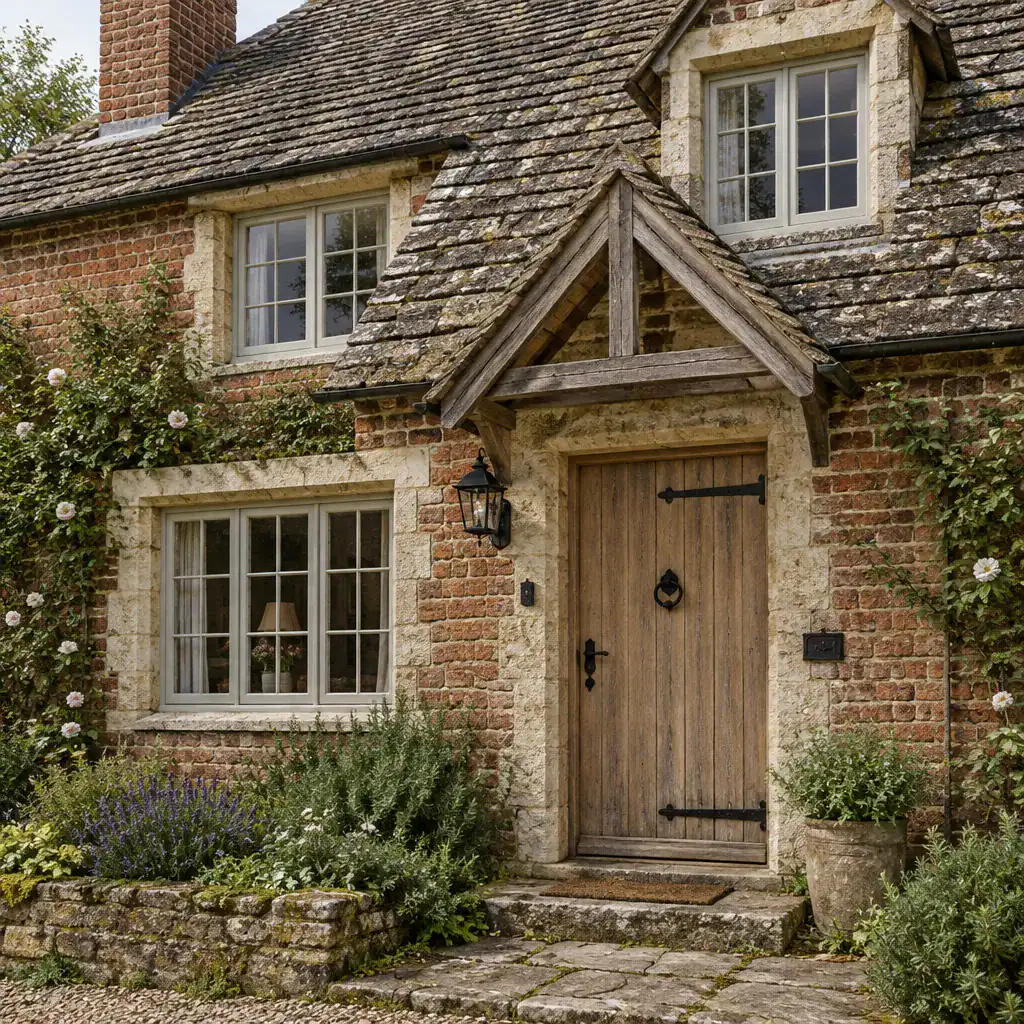
Choose muted colors that relate to the landscape, such as soft cream, warm gray, mossy green, faded blue, brick red, or deep brown. Timber plank doors, multi-pane or leaded-style windows, simple shutters where appropriate, and black or aged-metal hardware add detail without demanding attention. Keep trim modest and proportions consistent. A limited palette of complementary masonry, roof, woodwork, and metal finishes will usually feel more authentic than trying to include every recognizable cottage feature at once.
Interior Design Ideas for a Warm Cottage Atmosphere
A warm cottage interior relies on texture, comfort, and a palette that echoes the outdoors. Use linen, wool, cotton, woven fibers, natural wood, painted surfaces, and tactile rugs to make rooms feel layered. Soft neutrals can provide a calm backdrop for earthy greens, muted ochres, dusty blues, or warm reds. The aim is a home that feels collected and lived in, not overly coordinated.
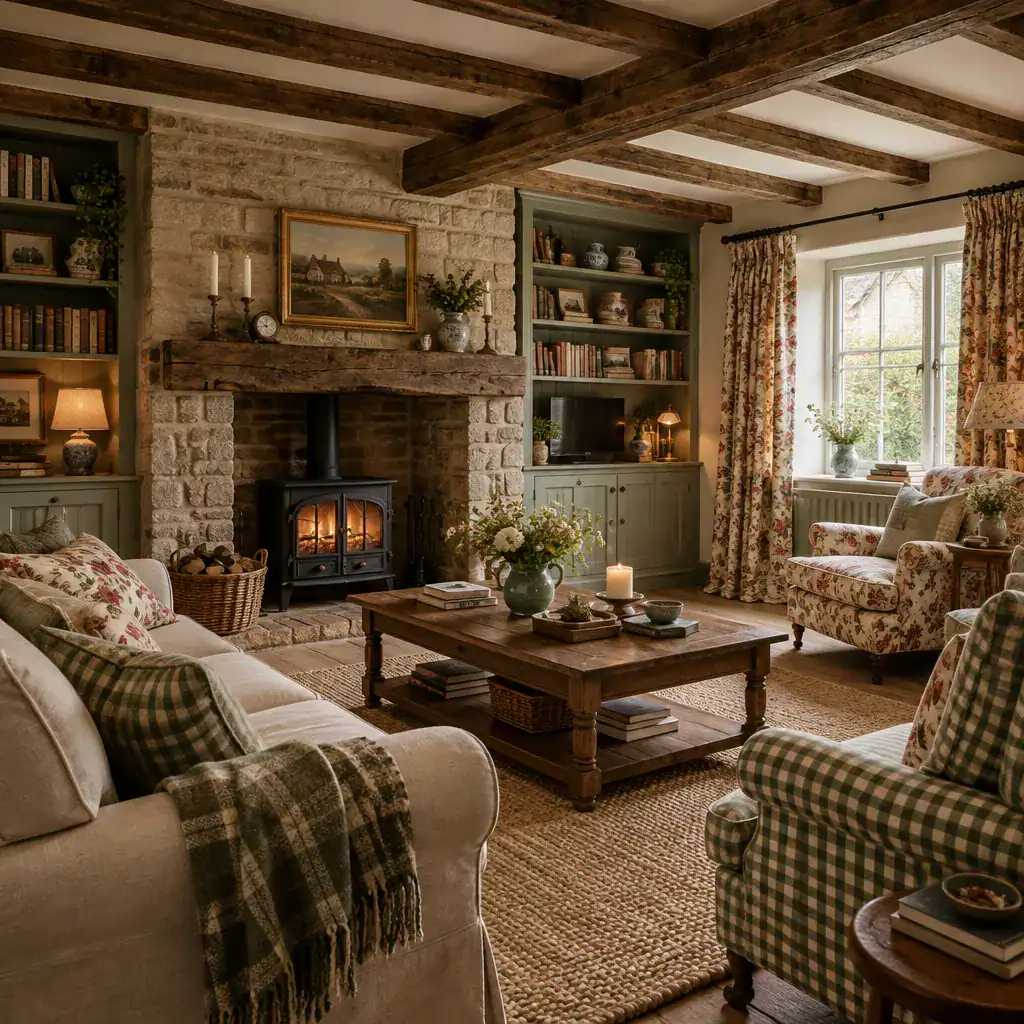
Where the architecture allows, exposed or visually emphasized beams, a stone or brick fireplace, built-in shelving, and window seats can reinforce the character of a traditional English cottage. Mix floral, checked, striped, or lightly textured fabrics with quieter walls and larger upholstery pieces so patterns do not overwhelm the room. Display meaningful ceramics, books, baskets, and artwork in small groupings, but preserve clear pathways and useful surfaces. Good circulation and adequate storage keep layered décor from becoming clutter.
Kitchen, Bathroom, and Lighting Choices for Traditional Character
In the kitchen, painted shaker-style cabinetry, simple paneling, natural-looking counters, classic pulls, and a farmhouse-style sink can establish cottage character without sacrificing daily convenience. Open shelving is useful for a small, edited collection of dishes or pantry staples, but closed storage remains important for maintaining an orderly room. Wood accents and simple ceramic tile can bridge the kitchen with the rest of the house.
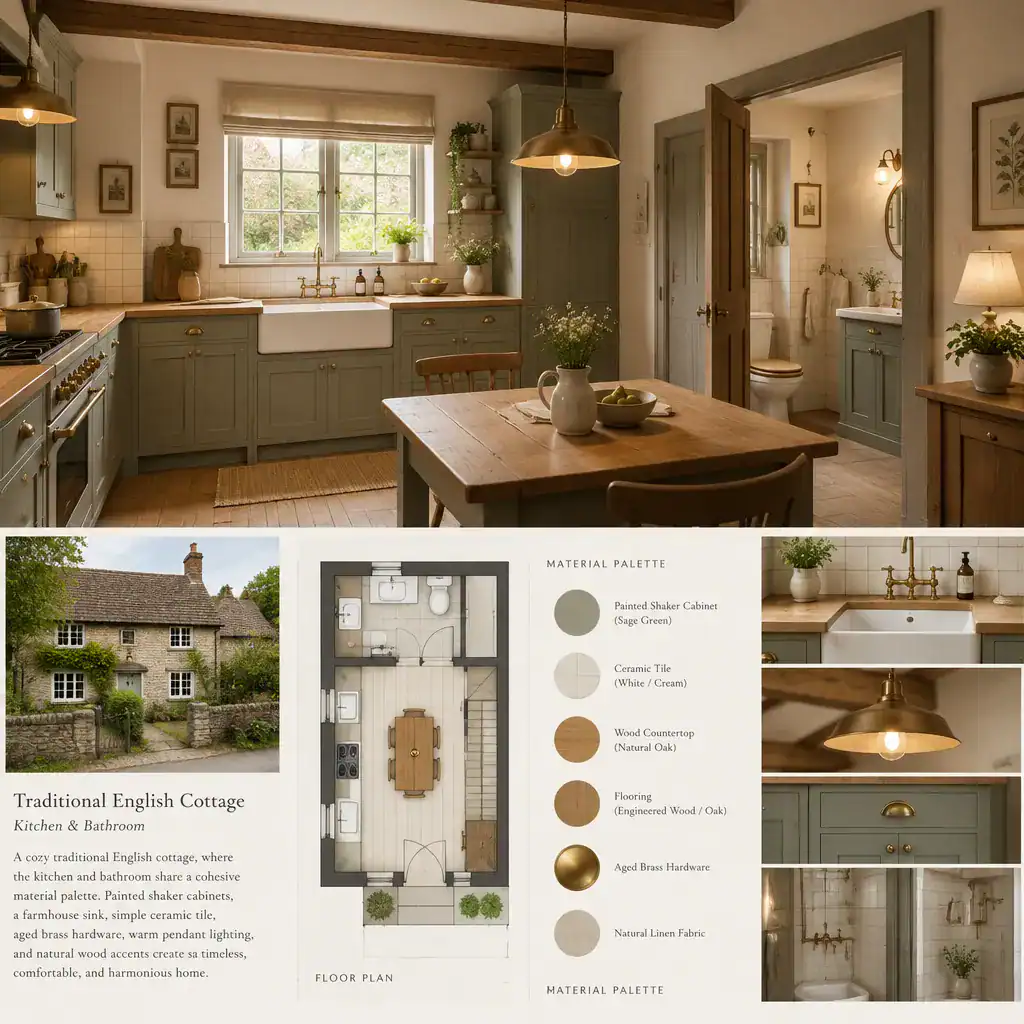
Bathrooms benefit from equally understated choices: straightforward tile layouts, traditional-inspired taps and fixtures, painted wood, and warm metal accents tend to age more gracefully than highly decorative finishes. Layered lighting is essential throughout the home. Combine pendants, wall sconces, table lamps, and discreet ambient lighting instead of depending on one bright central fixture. Behind the visible style, prioritize ventilation, durable surfaces, sufficient storage, safe electrical work, and current building requirements. A well-planned traditional English cottage should be as practical as it is atmospheric.
Cottage Garden and Entryway Ideas That Complete the Design
The garden should feel like a natural extension of the house rather than a separate, sharply formal zone. Informal planting, mixed-height borders, climbing plants, low hedging, and seasonal flowers soften masonry and help the cottage sit comfortably within its site. A winding stone or brick path can create a relaxed approach, especially when it leads to a modest covered doorway or a simple timber gate.
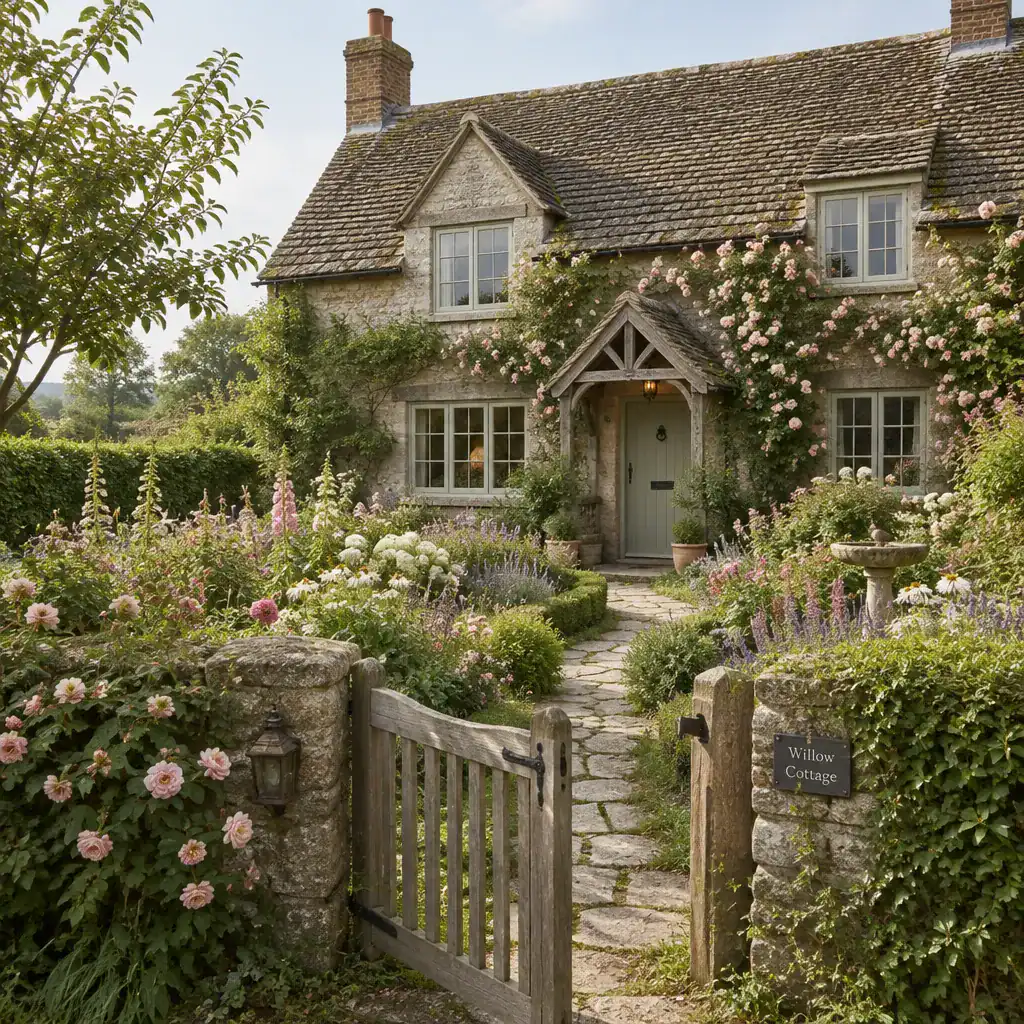
At the entry, include practical elements such as weather-resistant paving, a place to pause out of the rain, and indoor or sheltered boot storage. Repeat façade colors and materials in garden walls, paths, planters, or gates so the landscape supports the architecture without competing with it. Before selecting plants or hardscape, consider drainage, sun exposure, soil, maintenance time, and accessibility. The most charming garden is still one that works reliably for the household and the actual conditions of the property.
How to Modernize a Traditional English Cottage Without Losing Its Charm
Modernization works best when character-defining features are protected and performance upgrades remain visually quiet. Original-looking proportions, masonry texture, roof form, window rhythm, and interior focal points deserve careful attention, while insulation, heating, lighting, appliances, glazing, and storage can be improved to meet contemporary expectations. The objective is not to freeze a home in the past, but to make it comfortable for present-day living.
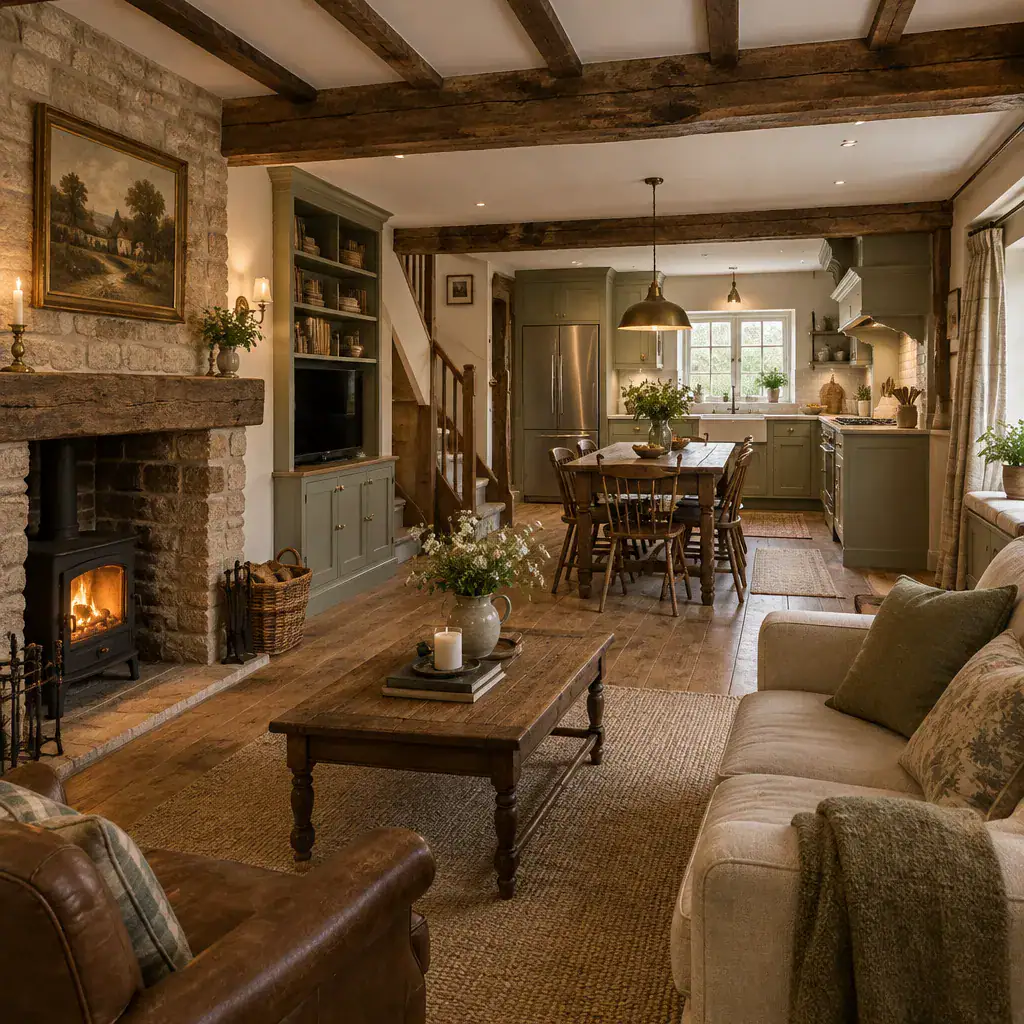
Conceal or integrate modern equipment where possible, select additions that respect the main building’s scale, and use a limited material and color palette to connect old and new areas. Built-in storage can reduce visual noise, while efficient lighting and carefully positioned appliances preserve the calm atmosphere of a traditional English cottage. Avoid heavy faux-aging, excessive novelty accessories, and large, incompatible extensions that ignore the home’s modest massing. Thoughtful restraint is more effective than imitation.
The strongest cottage-inspired homes are shaped by proportion, honest-looking materials, warmth, restrained decoration, and a close relationship with the landscape. Rather than copying every traditional detail, choose a small, consistent set of references that suits the building and site. When historic character is balanced with real household needs, durable upgrades, and local conditions, the result can feel timeless while remaining genuinely comfortable to live in.