
Farmhouse traditional style is a welcoming design direction built on practical forms, familiar materials, and rooms that feel comfortable enough for everyday life. Rather than collecting unrelated rustic objects, it brings architecture, finishes, furniture, and decoration into a balanced whole.
Whether you are updating one room or shaping a full farm house concept, begin with the home’s existing character. Rooflines, wall finishes, flooring, storage needs, color choices, and furnishings should work together. The following guide outlines the decisions that help create a warm, traditional result without making it feel overly themed.
What Defines Traditional Farmhouse Style?
Traditional farmhouse style balances simplicity and usefulness with warmth and familiar detailing. It often favors straightforward shapes, comfortable proportions, durable finishes, and a quiet sense of craftsmanship. A pitched roof, covered porch, painted millwork, natural wood, and classic furniture can all support the look when they are used with restraint.
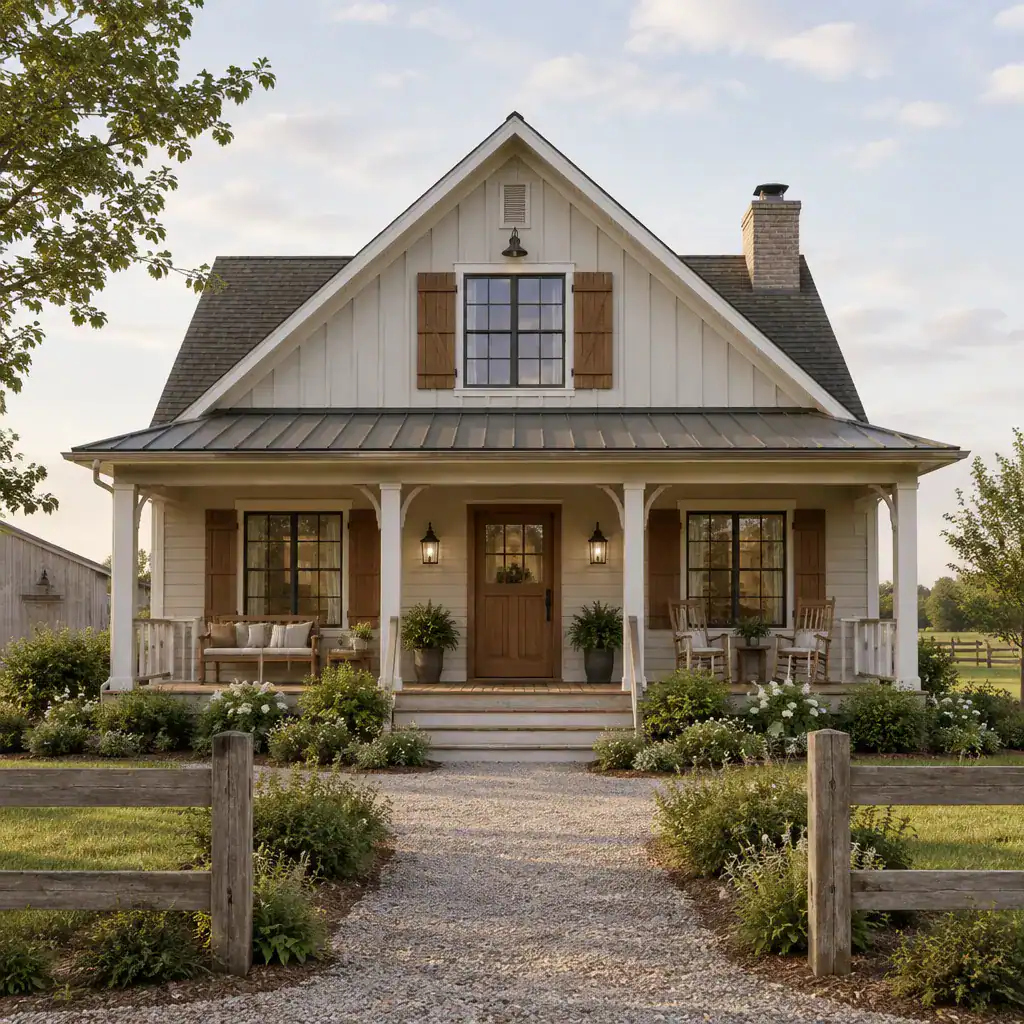
The strongest spaces feel settled rather than staged. Recognizable farmhouse forms can sit alongside understated traditional details, such as multi-pane windows, simple trim, paneled cabinetry, or an honest wood door. The goal is not to recreate a theme, but to make practical design choices that give a home a welcoming, lasting character.
farmhouse traditional style differs from a room crowded with distressed signs, novelty motifs, and mismatched vintage accessories. Let the architecture and a small number of meaningful details carry the visual story, leaving enough open space for the home to feel calm and usable.
Exterior Architecture and Curb Appeal Ideas
A traditional farm house exterior usually begins with clear roof forms, balanced openings, and a porch that gives the entry a useful, inviting transition. A simple gable or pitched roof, a centered or visually balanced front door, and evenly placed windows create an orderly facade. Multi-pane windows, modest shutters, and a solid wood or painted entry door can add traditional interest without making the elevation busy.
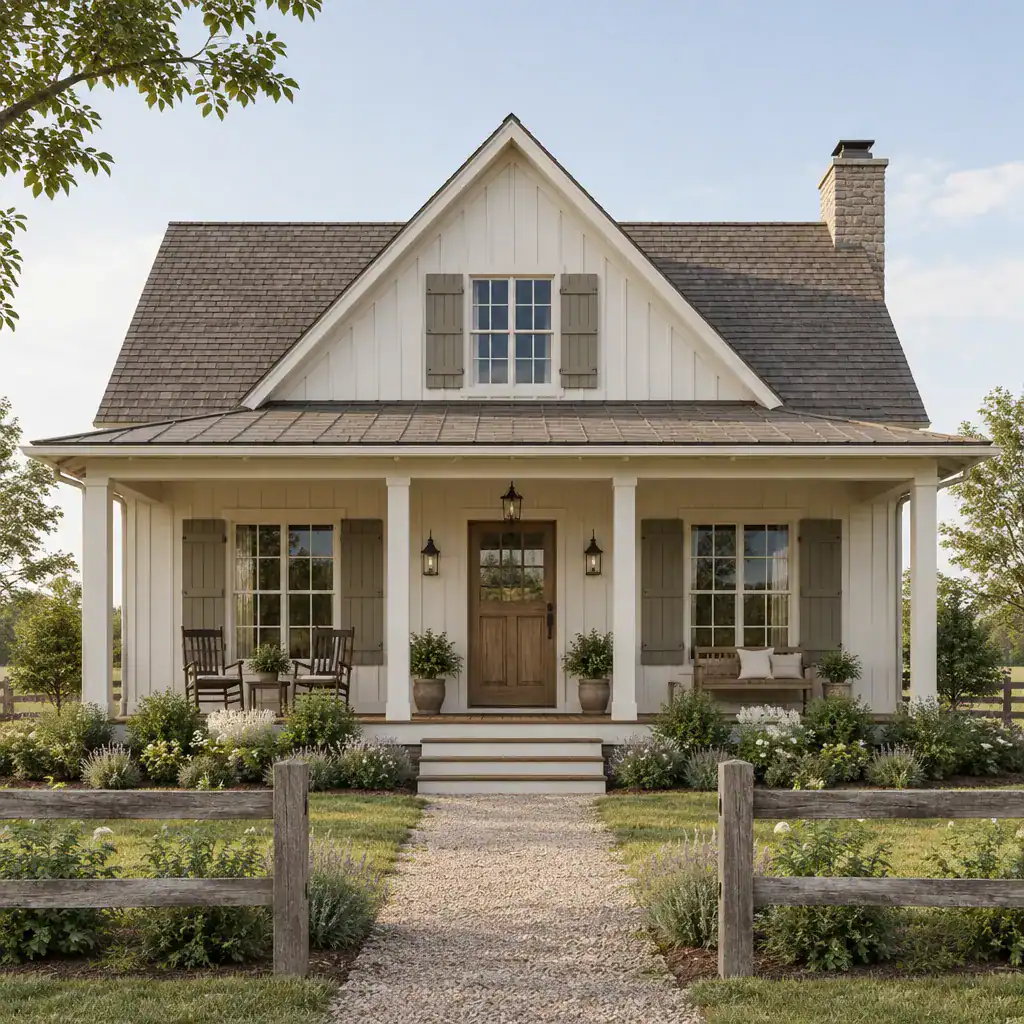
Choose materials that look appropriate together. Neutral lap siding or board-and-batten siding can pair well with a masonry chimney base, stone foundation accents, or natural wood porch posts. Keep the palette limited: for example, warm white siding, charcoal roofing, muted shutters, and one wood-toned entry feature. This approach creates farmhouse character while preserving a traditional appearance.
Limit exterior details to those that have a clear role. A porch light, shutters where they suit the window proportions, and simple railings may be enough. Before finalizing choices, consider regional building patterns, local regulations, climate exposure, maintenance expectations, and materials readily available in your area. These factors should guide the final design as much as visual preference.
Interior Materials, Colors, and Architectural Details
Build the interior around materials that feel natural, durable, and connected from room to room. Wood flooring, painted cabinetry, stone or brick accents, and hard-wearing work surfaces provide a practical base. Painted finishes can keep rooms light, while wood brings depth and a sense of age without requiring every surface to be rustic.
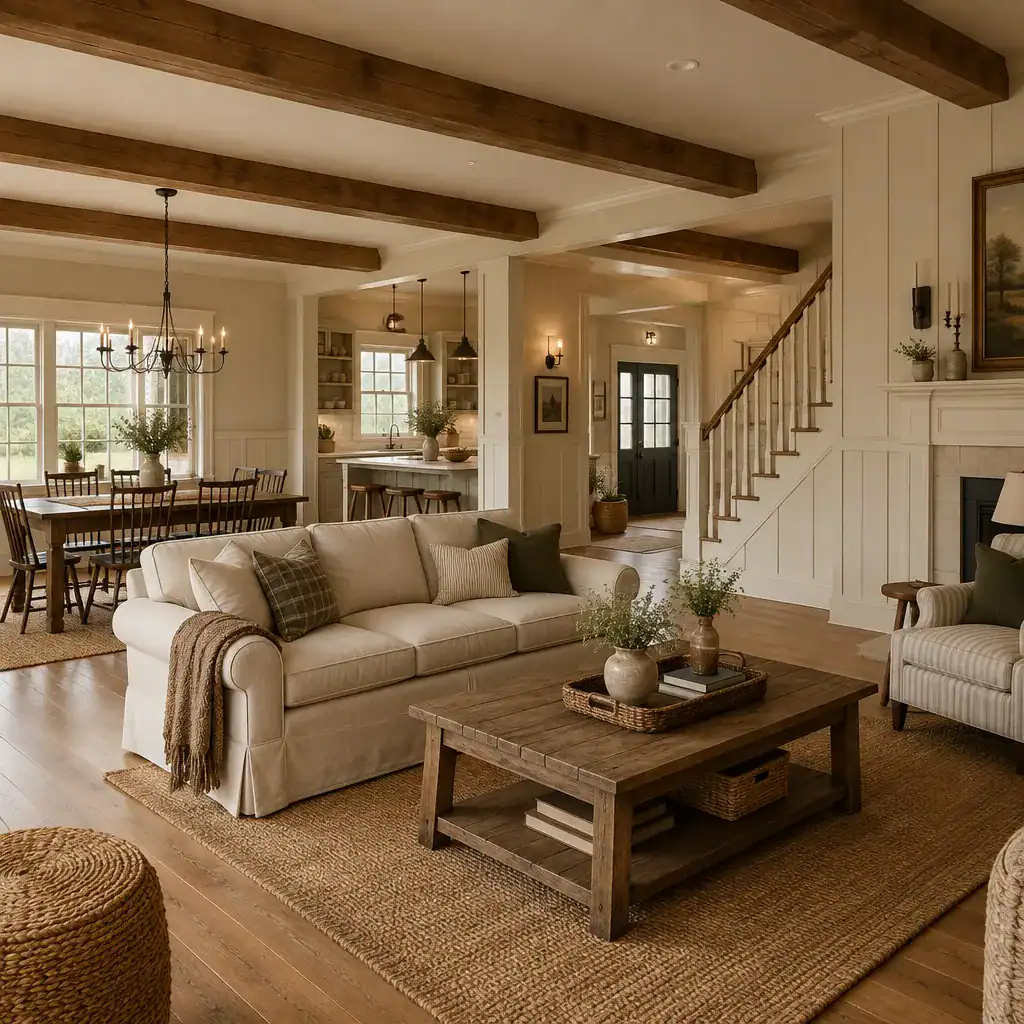
Use warm neutrals as the main palette, such as soft cream, oat, warm gray, putty, or gentle beige. Add contrast through restrained accents: deep green, muted blue, weathered black, brown, or burgundy can work in cabinetry, textiles, lighting, or an occasional focal wall. A controlled palette helps farmhouse traditional style feel collected and cohesive rather than overly decorative.
Architectural details should support the scale and purpose of each room. Simple wall paneling, classic trim, modest molding, ceiling beams, and built-in storage can add character where appropriate. Repeat related flooring tones, hardware finishes, and wall treatments throughout the house so individual rooms feel like part of one connected interior.
Room-by-Room Ideas for a Traditional Farm House
In the kitchen, prioritize storage, durable work surfaces, and cabinetry with a classic profile. Shaker-style or simple framed doors, a practical pantry, wood or painted island seating, and pendants with uncomplicated shapes can establish the mood. Decorative items should be useful or easy to edit, such as a ceramic crock, a cutting board, or a small arrangement of seasonal branches.
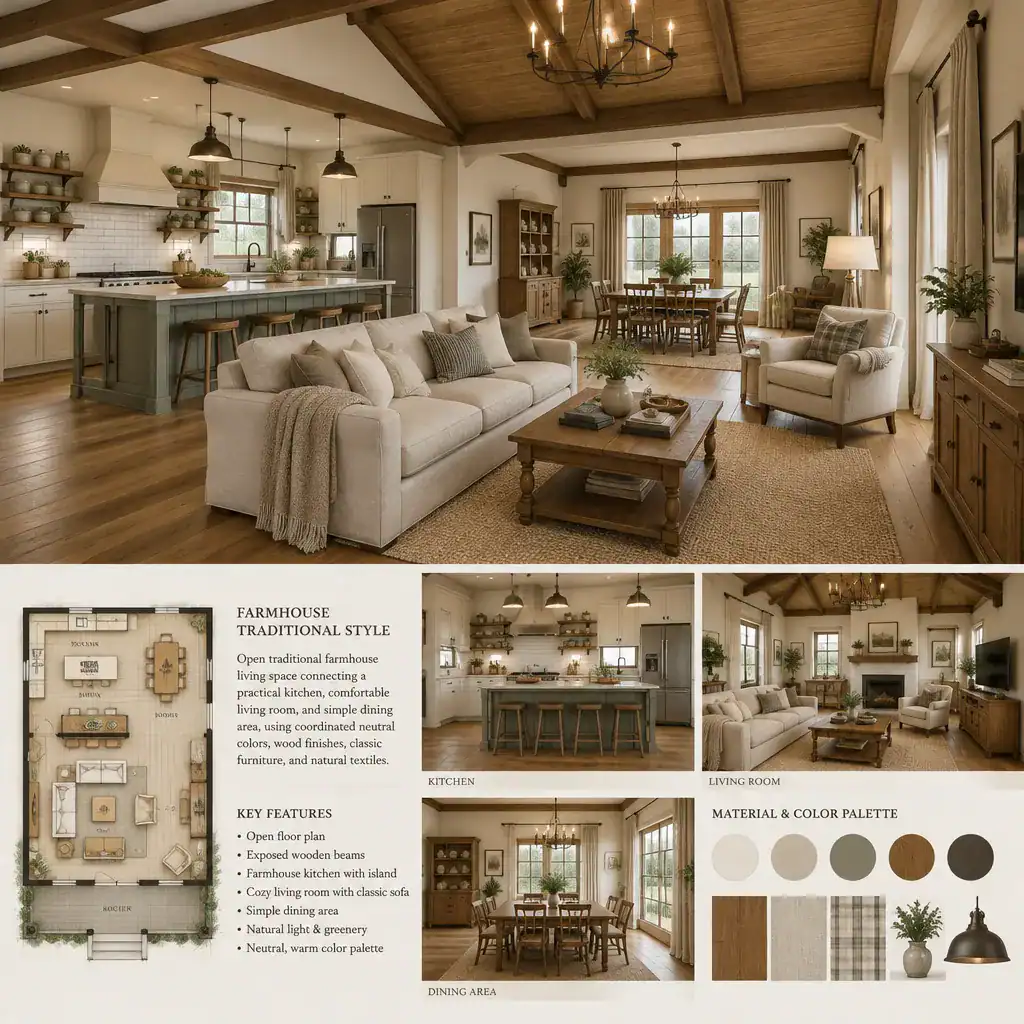
In the living room, choose comfortable seating and arrange it around conversation, a fireplace, or another natural focal point. A balanced layout, wood occasional tables, woven textures, and a rug with a muted pattern create warmth without reducing circulation. If a fireplace or focal wall suits the home, keep its finish simple enough to relate to the rest of the architecture.
Entryways and dining areas benefit from furniture that works hard. A bench, console, hooks, or closed storage can make an entry more useful, while a substantial dining table and classic chairs create an easy gathering place. Carry familiar materials into both spaces through wood finishes, woven lighting, or traditional artwork.
For bedrooms and bathrooms, maintain a quieter version of the style. Calm wall colors, painted or wood furniture, simple bedside lighting, classic plumbing fixtures, and understated bedding or towels are often sufficient. This keeps private rooms restorative while still connected to the larger home.
Furniture and Decoration That Complete the Look
Select furniture with practical silhouettes and visible craftsmanship. A sturdy wood table, upholstered sofa with straightforward lines, spindle-back chairs, a painted cabinet, or a simple bed frame can all complement traditional architectural details. Avoid matching every piece too closely; related wood tones and finishes usually feel more natural than a complete furniture set.
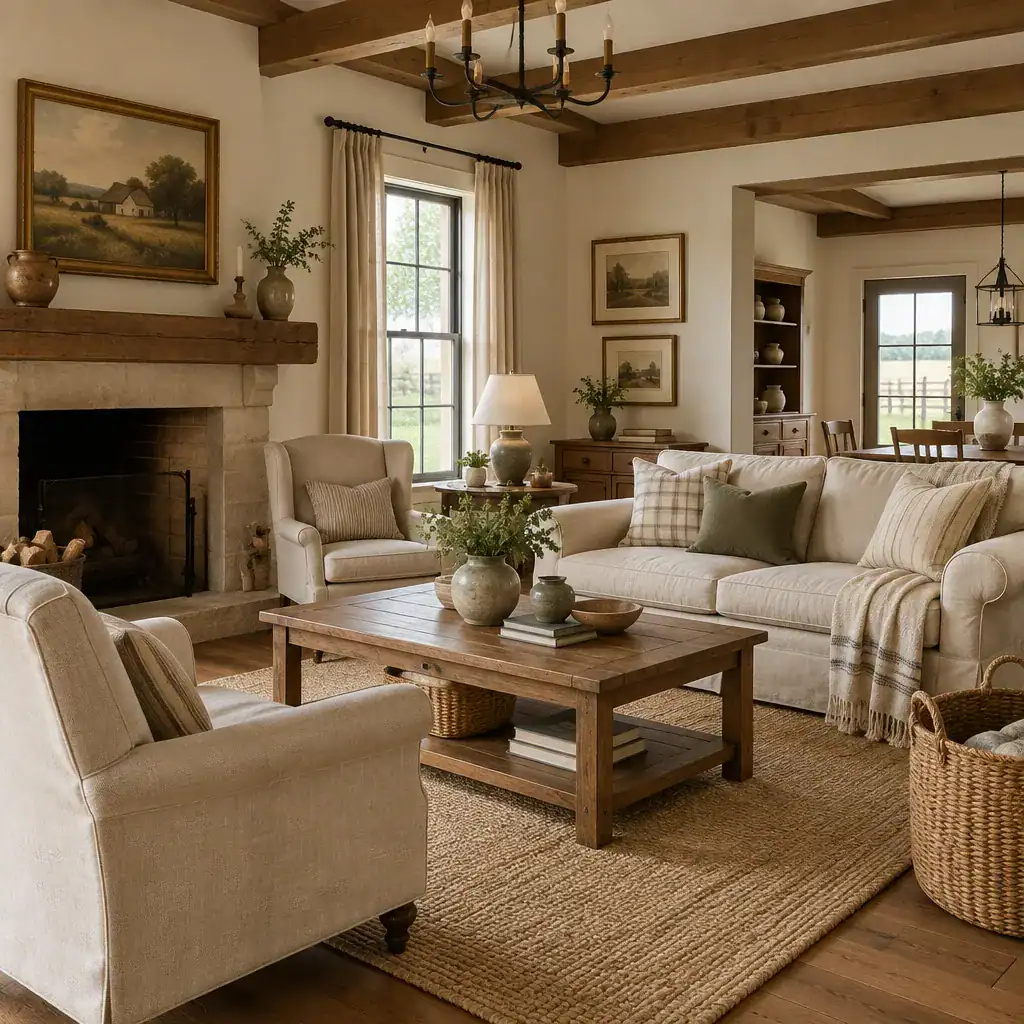
Textiles add softness to durable materials. Linen-like upholstery, cotton throws, woven baskets, natural-fiber rugs, and full curtains can make rooms feel layered and lived-in. Choose a few patterns in compatible colors instead of introducing many competing checks, florals, or stripes.
Functional decor is especially effective in this setting. Pottery, baskets, framed artwork, vintage-inspired tools or vessels, books, and restrained greenery can bring personality to shelves and tables. farmhouse traditional style is most convincing when decoration looks purposeful, so leave some surfaces clear and allow a few personal accents to stand out.
How to Keep the Style Cohesive and Livable
Create a shared visual thread before making major purchases. Repeating a small range of wood tones, metal finishes, paint colors, and lighting styles helps the exterior and interior read as one home. For example, if dark bronze hardware appears in the kitchen, it can reappear in entry lighting, bathroom fittings, or interior door hardware in a related finish.
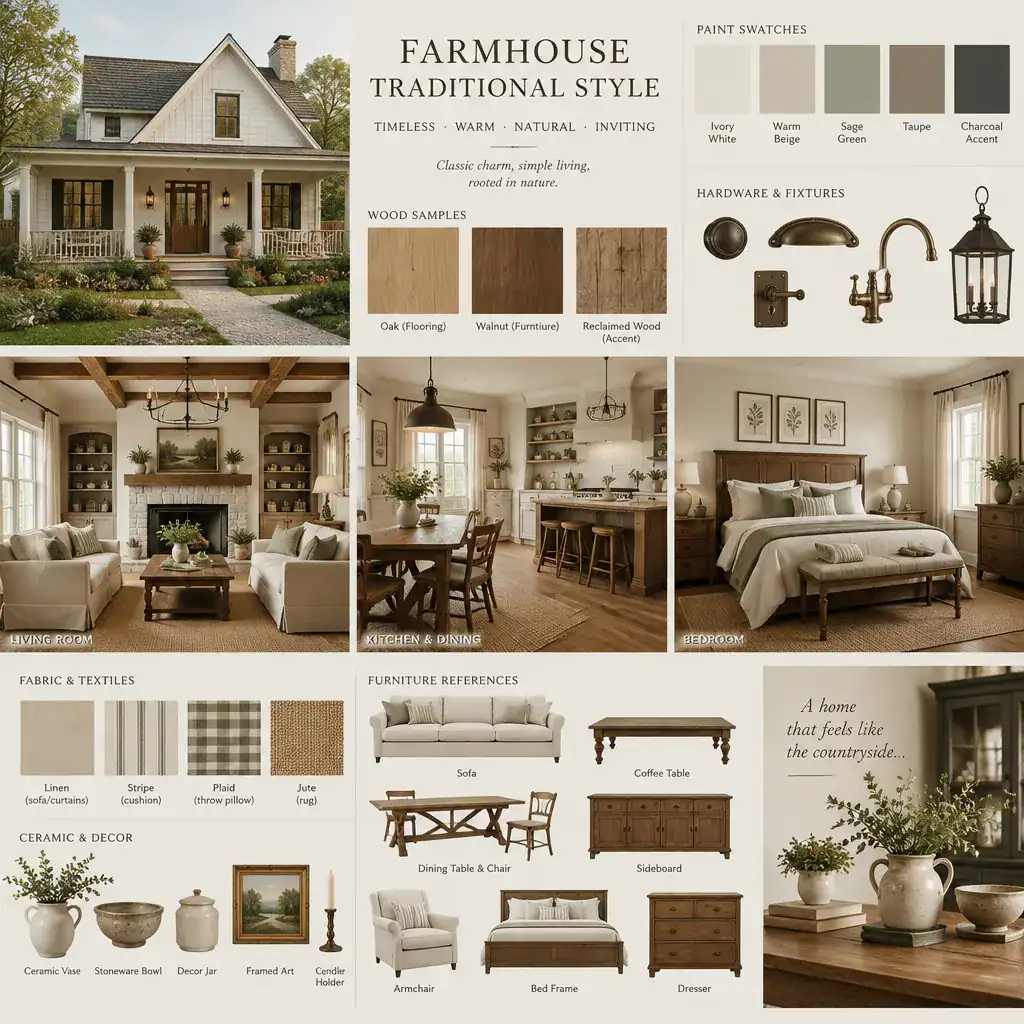
Balance traditional detail with open space, practical storage, and clear circulation. A beautiful room must still accommodate daily routines, cleaning, guests, and changing household needs. Adapt farmhouse traditional style to the home’s scale, existing architecture, budget, maintenance requirements, and your own preferences rather than forcing every popular feature into the plan.
A mood board or finish schedule is a useful planning tool. Gather paint swatches, flooring samples, cabinet finishes, hardware references, fabric samples, and images of furniture before ordering. Reviewing them together makes it easier to see whether colors, textures, and proportions are coordinated, and it can prevent expensive choices from feeling disconnected later.
Traditional farmhouse style succeeds when practical architecture, familiar materials, comfortable furnishings, and restrained decoration reinforce one another. Start with the home’s architectural character, then choose finishes and furniture that support it instead of competing with it. The best result feels functional, personal, and consistent—warm enough to welcome people in, yet simple enough to live with every day.